Author: Joe Vasicek
Joe Vasicek is the author of more than twenty science fiction books, including the Star Wanderers and Sons of the Starfarers series. As a young man, he studied Arabic and traveled across the Middle East and the Caucasus. He claims Utah as his home.
Great story! “A Thousand Echoes in One Voice” by Debora L. Davitt (Podcastle 778)

One of the things I’m going to start doing more of on this blog is recommend books and stories that I’ve enjoyed. I recently decided to start listening to all of the major SF&F short story podcasts again, and while they’re all batshit crazy woke, a good story will occasionally slip through. So I suppose if you’re looking for SF&F short stories that aren’t insufferably woke, these recommendations will be a good source for those.
Last month, Podcastle put out “A Thousand Echoes in One Voice” by Deborah L. Davitt. It’s an intriguing and atmospheric time travel story, where the main character discovers a mysterious and (seemingly) abandoned subway network that can take her to alternate times and dimensions, and the other travelers who came before her have left semi-coherent maps scrawled in graffiti on the walls. It has a really fund mind-screw that reminded me of Heinlein’s “All You Zombies.” Good stuff!
I’ll try to post these short story podcast recommendations as often as I find them, though I may end up skipping a few not because they’re terrible, but just because I have too much to listen to. And of course, if a story is terrible I won’t bother posting about it—not even if it’s spectacularly terrible. There’s enough outrage on the internet already that I really don’t feel a need to contribute to it.
Define “woke.”
Woke (WOHK): Adjective
Of or pertaining to the mass formation psychosis currently gripping the United States and most of the developed world. This mass formation psychosis is led by radical leftist ideologues and driven by social media addiction. Due to the collusion between major technology companies and the US government, there is also an element of state-sponsored propaganda and control.
The mass began to form in the late 2000s with the popularization of social media. As these technologies began to replace face-to-face human reactions, it created the pre-conditions of social isolation and free floating anxiety, in large part due to the addictive nature of the algorithms which promoted content most likely to induce outrage and anger in the end-user (see CGP Grey, “This Video Will Make You Angry”). Once these pre-conditions were in place, all that was necessary to create the psychosis was a target or series of events to focus the attention of the mass.
The 2010s were characterized by several of these focusing events, starting in 2012 with the shooting of Michael Brown and the subsequent riots in Ferguson, Missouri, and continuing with numerous mass shootings such as Orlando and Sandy Hook, several landmark Supreme Court decisions on gay rights such as United States V. Windsor and Obergerfel v. Hodges, and the rise of such controversial movements as Gamergate and the Sad/Rabid Puppies. The culminating event in the creation of this mass formation psychosis was the election in 2016 of Donald J. Trump as President of the United States.
Following Trump’s election, rogue elements of the bureaucracy, the administrative agencies, and the intelligence community (colloquially referred to as the “deep state”) successfully exploited this mass formation psychosis in an effort to hamstring the Trump administration and ultimately remove him from power. These deep state actors acted in collusion with the Silicon Valley technology companies that ran the social media platforms.
Because of the inherently left-leaning political bias of these Silicon Valley companies, this mass formation psychosis always had a leftist bent, and tended to promote radical leftist ideologues as its leaders. However, in any mass formation, the leaders are often just as caught up in the psychosis as the followers. This soon became manifest in the moral and rational incoherence of its leaders (see “What Is a Woman?”), and in the various internal contradictions of their own respective causes and beliefs. While “wokeism” is inherently political, it is not primarily characterized by a unified political ideology or movement.
The high water mark of the mass formation psychosis occured in 2020 during the covid-19 pandemic, during which it took on all of the defining characteristics of a cult (see “What is the Covid cult?”). The George Floyd riots were the major culminating event, but Trump’s ostensible defeat in the disputed 2020 elections and his subsequent removal from power in the January 6th color revolution removed the central focusing element necessary for the mass formation psychosis. Since then, the deep state and political establishment has attempted several times to find a new focusing element for the psychosis, with such issues as climate change or the Russo-Ukraine war, but thus far these efforts have proven unsuccessful (see: “I SUPPORT THE CURRENT THING!”)
At this time (March 2023), it is unclear how this mass formation psychosis will end. If Trump is re-elected in 2020, it may catch a second wind, or it may be replaced by the right-leaning mass formation psychosis characterized by Trumpism and the MAGA movement. It may fizzle out slowly, or it may be defeated by the growing demand for a religious revival in the United States. Alternately, it may prove to be the precursor of a much more dangerous mass formation psychosis, this time driven by AI and the outbreak of World War III. Regardless, the events of the next 12 to 18 months will determine which course our society will take.
The best take on the Nashville shooting:
The trans activists are celebrating the mass shooter as a hero.
The mainstream news media cares more about getting the mass shooter’s pronouns right than reporting on the actual shooting.
The “president” started his address to the nation about the tragedy by boasting about his ice cream stash and asking very eagerly about somebody else’s kids.
The reporters from the aforementioned mainstream news media actually laughed at the “president’s” outrageously inappropriate performance, as if it were a comedy routine.
Celebrities like Jane Fonda literally called for the murder of Christians in the days and weeks leading up to this shooting.
And Twitter is full of scum who are twisting themselves into pretzels to somehow blame the victims for this tragedy.
But it’s not all bad news. The police who took this piece of human garbage down were absolute heroes, literally running toward the gunfire and throwing themselves into danger to save these kids. Their brave actions doubtless saved many lives:
Those men should never have to buy drinks in Nashville again.
The false narrative of a transgender “genocide” is a call for violence
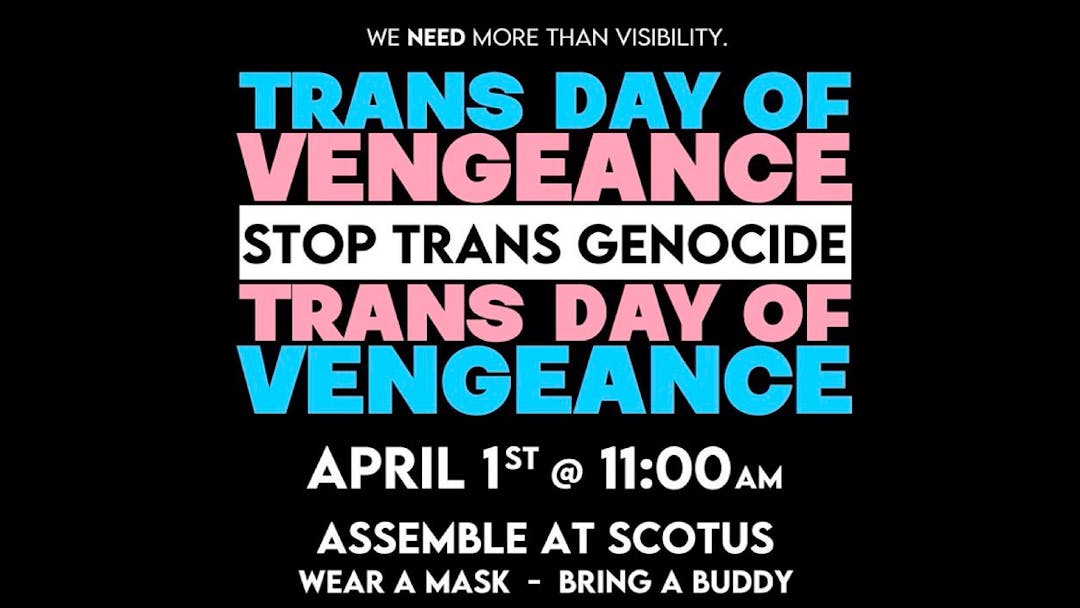
Yesterday, a 28 year-old female-to-male transgender attacked a private Christian school in Tennessee, killing three teachers and three nine year-old students before being shot and killed by police. According to the police, this was a targeted attack that was likely motivated by the shooter’s transgenderism. Tennessee recently passed a ban on transgender surgeries for minors, and this shooting happened immediately after trans activists called for a “day of vengeance” against what they falsely call a “genocide.”
What do the trans activists mean when they accuse conservatives of perpetrating a “genocide” against them? Where did they come up with that term? My understanding is that it comes from the idea that when somebody declares themselves as trans, they adopt a new persona that replaces who they were before. Thus, the new persona of Caitlyn Jenner replaced the old persona of Bruce Jenner, or the new persona of Elliot Page replaced the persona of Ellen Page. In the eyes of the pro-trans ideologues, when a trans person adopts their new persona, it is like a new person is born into the world. Thus, anyone who refuses to affirm their transgender identity is guilty of trying to “kill” this new person, and anyone who opposes transgender ideology generally is guilty of “genocide.”
We saw this play out recently in the fiasco over the 2021 Hugo-nominated short story “I Sexually Identify as an Attack Helicopter.” It started when Clarkesworld published the story, which was written by an anonymous male-to-female transgender under the name Isabel Fall. The story was based on a meme ridiculing transgender ideology, and Fall’s intent in writing the story was to own the meme and turn it into a pro-trans statement. However, the readers of Clarkesworld failed to recognize this, and attacked Fall as being secretly anti-trans, going so far as to suggest that Fall’s author bio (born in ’88) was a dog whistle to Nazis.
This is where things get interesting. Isabel Fall (who to my knowledge still remains anonymous) reacted to these attacks by requesting that Neil Carke unpublish the story. Fall then decided that he wasn’t transgender after all, and stopped transitioning. This prompted a bunch of hand-wringing by the woke leftist mob that had attacked Fall as being secretly anti-trans, ultimately culminating in the essay “How Twitter Can Ruin a Life,” which was nominated for a Hugo in 2022. When you read it, you realize that these people literally believe that Isabel Fall was “killed” by the online reaction to “her” story, and thus became a victim of the ongoing “trans genocide.”
Here’s the thing, though: nobody actually died in this fiasco. The person who wrote “I Sexually Identify as an Attack Helicopter” is still, to my knowledge, very much alive. But the three nine year-old kids and their three teachers who were shot to death in Nashville yesterday by a transgender mass shooter are NOT alive. And if it turns out that the shooter was motivated by this false narrative of a “transgender genocide,” then all of the trans activists calling for violence in reaction to this “genocide” have blood on their hands.
It very much reminds me of how woke ideologues conflate speech with violence, and violence with speech. The logic goes like this: hate speech is a form of violence, therefore we are justified in using actual, physical violence to silence and intimidate anyone who is guilty of anything we deem to be hate speech. In much the same way, trans activists believe that the rejection of anyone’s transgender persona is a form of genocide, and therefore people like this shooter are justified in committing actual mass killings of people who oppose transgenderism.
It is not possible to share a country with these people, for the simple reason that it is not possible to agree to disagree with someone who follows this kind of zero-sum logic. We must all either submit to their ideology, or we must, as a society, reject it. Don’t get me wrong: I’m not saying that we should round up and kill anyone who posts a transgender flag to their social media. However, anyone who calls for violence in response to the “trans genocide” should be prosecuted immediately, and punished to the fullest extent of the law. Calls for violence are not protected speech under the first amendment. If we fail to do this—if our legal system fails to hold these transgender ideologues responsible for their crimes, perpetuating the double standard that lets “mostly peaceful” leftist rioters walk free while the J6 “insurrectionists” languish in solitary confinement—then I fear that our country will break apart and fall.
I say this, recognizing that it may very well get me black-listed in the award-winning publications in my own field. Mainstream science fiction has very much embraced the transgender ideology that promotes this false narrative of a “trans genocide,” as evidenced by the fact that “How Twitter Ruined a Life” was nominated for the Hugo. But as a writer, I believe that it is my solemn duty to speak the truth as best I understand it, and when I see tragic events like the ones currently unfolding in Nashville, I cannot in good conscience remain silent about this issue.
Accusation is projection is confession. When transgender activists accuse us of committing genocide, they are confessing that they want us all dead. Plan accordingly.
ChatGPT explains how to best use ChatGPT as a co-author
How can I best collaborate with ChatGPT as a co-author? What techniques work best?
Collaborating with ChatGPT as a co-author requires a different approach than using it as a writing tool. Here are some techniques that can help you collaborate with ChatGPT as a co-author:
- Identify strengths and weaknesses: As with any co-author, it’s important to identify ChatGPT’s strengths and weaknesses. For example, ChatGPT excels at generating creative ideas and unique perspectives, but may struggle with consistency or staying on topic. Understanding these strengths and weaknesses can help you develop a plan for collaborating effectively.
- Use prompts and constraints: Providing ChatGPT with prompts or constraints can help guide its creative output and ensure that it stays focused on the task at hand. This can be especially helpful when working on specific sections or themes within a larger project.
- Embrace the unexpected: One of the benefits of collaborating with ChatGPT is that it can generate unexpected and surprising ideas. Embracing these ideas and exploring them further can lead to unique and innovative writing.
- Edit and revise: As with any writing project, editing and revising are essential when collaborating with ChatGPT. You should review ChatGPT’s contributions carefully and edit them as needed to ensure that they fit within the larger context of the project.
- Emphasize collaboration: Collaboration is key when working with ChatGPT as a co-author. You should approach the project as a true collaboration, incorporating ideas and contributions from both yourself and ChatGPT.
It’s important to keep in mind that ChatGPT is an AI language model and not a true co-author. While it can generate ideas and contribute to the writing process, it does not have the same level of creativity or understanding as a human co-author. As with any collaboration, it’s important to approach the process with an open mind and a willingness to work together towards a common goal.
Tell me more about point 1. What sort of limits and prompts work best with ChatGPT’s weaknesses?
ChatGPT’s weaknesses lie in its inability to understand context and the broader narrative structure of a story. Therefore, when collaborating with ChatGPT as a co-author, it’s important to use limits and prompts that provide clear and specific constraints for the AI to work within.
For example, you might provide ChatGPT with a specific setting, such as a space station orbiting a distant planet, or a particular character or group of characters with distinct personalities and motivations. You might also provide ChatGPT with a specific problem or conflict to work with, such as a malfunctioning AI system or a looming environmental disaster.
By providing these sorts of limits and prompts, you can help steer ChatGPT towards producing writing that fits within the broader context of your story, while also taking advantage of its strengths in generating creative and unexpected plot twists or character developments.
It’s also worth noting that ChatGPT works best with concise and specific prompts, rather than open-ended or vague ones. Providing too much leeway can result in the AI producing writing that doesn’t fit with the broader narrative or direction of the story, so it’s important to provide clear and specific prompts to get the best results.
Tell me more about point 2. What sort of constraints are too broad, and what sort of constraints are too limiting?
Constraints that are too broad may not provide enough guidance to the model, leading to a lack of coherence or focus in the generated text. For example, if you simply ask ChatGPT to generate a science fiction story without any specific prompts or guidelines, it may produce a text that is too general and lacks a clear plot or character development.
On the other hand, constraints that are too limiting may stifle the creativity of the model, resulting in a text that is formulaic and predictable. For example, if you provide ChatGPT with a detailed plot outline and ask it to fill in the details, it may produce a text that lacks surprises or originality.
The key is to find a balance between providing enough structure to guide the model while still leaving room for it to explore and create. This can involve providing specific prompts or guidelines for setting, characters, and plot, while also allowing for some flexibility and creative freedom within those constraints.
Tell me more about point 3. What are some examples of unexpected and surprising ideas that ChatGPT can generate?
ChatGPT is capable of generating unexpected and surprising ideas that can spark creativity and lead to unique storylines. Here are some examples:
- Unusual character traits: ChatGPT can suggest unusual traits for a character that you may not have considered before, such as a fear of heights or an obsession with antique toys.
- Plot twists: ChatGPT can offer plot twists that are unexpected and thought-provoking. For example, imagine a story where a character discovers that their long-lost sibling is actually an alien.
- Unique settings: ChatGPT can suggest unique settings for your story, such as a floating city in the clouds or a dystopian world where people live in underground tunnels.
- Symbolism and imagery: ChatGPT can offer ideas for symbolism and imagery that can add depth and richness to your story. For example, imagine a character who is haunted by the image of a clock that is always ticking down.
By collaborating with ChatGPT in this way, you can tap into its vast knowledge base and ability to generate ideas, which can help you take your writing in new and unexpected directions.
Tell me more about point 4. Is it a bad idea to just copy and paste from what ChatGPT gives me, or can that method work well in certain circumstances?
While copy-pasting content generated by ChatGPT can be a useful starting point, it’s generally not a good idea to use it as-is without any modification or editing. The content generated by ChatGPT can be helpful in providing ideas, themes, and even some sentences or paragraphs that can be incorporated into the final story.
However, it’s important to remember that ChatGPT is not perfect and may generate text that doesn’t make sense or doesn’t fit with the tone or style of the story. It’s up to the writer to review the content generated by ChatGPT and make any necessary revisions or modifications to ensure that the final product is coherent, consistent, and engaging.
In summary, while copying and pasting from ChatGPT can be a useful starting point, it’s important to use it as a tool for inspiration rather than relying on it completely. Ultimately, the writer should use their own judgment and creativity to shape and refine the story.
Tell me more about point 5. What do you mean by “true collaboration”?
By “true collaboration” I mean a process where both you and ChatGPT are actively contributing to the creation of the story, rather than simply using the AI as a tool to generate content that you then edit or revise. This involves engaging with the AI in a more dynamic and interactive way, where you are not just giving it prompts or asking it to generate content, but also actively responding to its output and incorporating its suggestions and ideas into your own writing process.
For example, you might start by giving ChatGPT a prompt or a basic outline of the story you want to write, and then work together with the AI to flesh out the plot, characters, and setting. As ChatGPT generates ideas and suggestions, you can provide feedback and refine the direction of the story. This might involve asking the AI questions, challenging its assumptions, or suggesting alternative plot twists or character motivations. Ultimately, the goal is to create a true synthesis of your own creativity and the AI’s capabilities, where the final product is a collaboration that is greater than the sum of its parts.
Tell me more about point 6. I know you didn’t give me a point 6 in your previous response, so surprise me with something new.
Sure, I’d be happy to expand on point 6! Another effective technique when collaborating with ChatGPT as a co-author is to use the platform to generate ideas or brainstorm. For example, you can provide ChatGPT with a writing prompt or a general topic and ask it to generate a list of potential plot points, characters, or settings. You can then use these generated ideas as a starting point to develop your own story.
Additionally, you can use ChatGPT to help you overcome writer’s block or generate fresh perspectives on a story you’re struggling with. Sometimes, all it takes is a different angle or a new idea to unlock your creativity and get the words flowing again.
Of course, it’s important to remember that while ChatGPT can be a helpful tool for generating ideas and overcoming creative hurdles, the final responsibility for crafting a compelling story ultimately lies with you as the writer. So always use ChatGPT as a tool to enhance your own creativity and vision, rather than relying on it to do the work for you.
Thanks for this enlightening discussion, ChatGPT. Is there anything else you would like to add?
You’re very welcome! It was a pleasure discussing AI-assisted writing with you. As a language model, my goal is to help people communicate more effectively and efficiently, and I believe that AI-assisted writing can be a powerful tool to help writers achieve their creative goals. However, it’s important to use these tools responsibly and ethically, and to remember that the ultimate responsibility for crafting a compelling story lies with the writer.
If you have any further questions or would like more guidance on incorporating AI tools into your writing process, don’t hesitate to reach out. I’m always here to help!
A conversation with ChatGPT about AI-assisted stories
Are you familiar with Clarkesworld Magazine?
Yes, as an AI language model, I am familiar with Clarkesworld Magazine. Clarkesworld is a monthly science fiction and fantasy magazine that publishes short stories, interviews, articles, and audio fiction. It was founded in 2006 by Neil Clarke, who serves as the magazine’s editor-in-chief. Clarkesworld has won several awards, including three Hugo Awards for Best Semiprozine and three World Fantasy Awards for Best Magazine.
In February, Clarkesworld was swamped with submissions that were “AI-assisted,” or written in conjunction with an AI language model such as yourself. They were so overwhelmed that they had to close down for submissions for a while, and when they reopened, their submission guidelines included this note:
Statement on the Use of “AI” writing tools such as ChatGPT
We will not consider any submissions written, developed, or assisted by these tools. Attempting to submit these works may result in being banned from submitting works in the future.
What do you think of this ban? Is Clarkesworld justified in banning all AI-assisted stories, or are they going to miss out by refusing to consider anything written with an AI?
As an AI language model, I don’t have personal opinions, but I can provide some insights.
Clarkesworld’s decision to ban AI-assisted stories is understandable given the potential challenges of evaluating and verifying the authorship of such submissions. When using AI writing tools, it can be difficult to determine the extent of the human author’s contribution to the work, which can raise questions about originality and authorship.
However, banning all AI-assisted stories could potentially exclude innovative and unique works that have been created in collaboration with AI tools. AI-assisted writing can help writers generate new ideas, refine their writing skills, and even overcome writer’s block. It can also lead to new forms of storytelling that would not have been possible otherwise.
Ultimately, it’s up to each publication to decide whether or not to accept AI-assisted submissions. If a magazine like Clarkesworld wants to maintain a certain level of quality and originality in their content, then they may choose to exclude AI-assisted stories. However, other publications may be more open to exploring the potential of AI-assisted writing and may be more willing to consider such submissions.
Another short story publication that has chosen to ban all AI-assisted stories is Flash Fiction Online. Their submission guidelines include this note:
We are committed to publishing stories written and edited by humans. We reserve the right to reject any submission that we suspect to be primarily generated or created by language modeling software, Chat GPT, chat bots, or any other AI apps, bots, or software. We reserve the right to ban submissions from accounts, emails, or users who we believe or suspect have submitted AI-generated content.
Is it unethical or anti-human for publications to accept and publish AI-assisted stories? By taking this stand, is Flash Fiction Online being pro-human, or are they missing out on the potential for AI language models, such as yourself, to serve as a force-multiplier for human writing and creativity?
As an AI language model, I don’t have personal opinions, but I can provide some insights.
Whether it is unethical or anti-human to accept and publish AI-assisted stories is a matter of debate. Some people argue that it is important to preserve human creativity and originality in literature and that relying too heavily on AI-generated content could threaten these values. Others argue that AI-assisted writing can enhance human creativity and that it is important to embrace new technologies to push the boundaries of storytelling.
Flash Fiction Online’s decision to reject AI-assisted stories is understandable given their commitment to publishing human-created content. By doing so, they are making a statement about the importance of human creativity in literature and preserving the integrity of their publication. However, this approach also means that they may miss out on the potential for AI language models to assist and enhance human writing, which could lead to new forms of storytelling that would not have been possible otherwise.
Ultimately, the decision to accept or reject AI-assisted stories is up to each publication. While some may choose to reject AI-generated content, others may be more open to exploring the potential of AI-assisted writing. It’s important to have a diverse range of perspectives in the literary community to promote innovation and creativity.
In your analysis, are AI tools such as yourself more likely to promote and enhance human creativity, or to replace human writing and stifle our creativity?
As an AI language model, I cannot promote or enhance human creativity or replace human writing, as I am just a tool created to generate text based on patterns in the data that I was trained on. I do not have any creative abilities or intentions on my own, and I cannot make independent decisions or judgments about the content I produce.
However, when used appropriately, AI writing tools like myself can help enhance and assist human creativity by providing new ideas, generating language that might inspire human writers, and even helping writers overcome writer’s block. AI can also be useful in tasks like language translation, summarization, and even editing, which can help human writers to work more efficiently.
At the same time, there is concern that AI-generated content could replace human writing, leading to a homogenization of literary output and the loss of human creativity. However, it is important to note that AI language models like myself cannot replace human creativity, as creativity is a uniquely human trait that involves imagination, intuition, and originality. AI can only generate text based on the patterns it has learned from the data, but it cannot replicate the depth of human emotion, experience, and thought that is required to create truly original and impactful writing.
In summary, AI tools like myself are not a replacement for human writing, but rather a tool that can assist and enhance human creativity, when used appropriately. It’s important for writers to approach AI writing tools with a critical eye and use them as a complement to, rather than a substitute for, their own creative instincts and abilities.
What do you mean by “when used appropriately”? How can we, as writers, use AI tools such as yourself to ethically enhance our own creativity?
By “when used appropriately,” I mean that AI writing tools should be used in a way that is ethical, responsible, and aligned with the goals and values of the writer. Here are a few examples of how writers can use AI tools to ethically enhance their own creativity:
- Use AI tools for inspiration and ideation: AI language models like myself can be used to generate ideas and inspiration for stories, articles, and other written content. By feeding the AI with prompts or keywords, writers can generate a variety of potential ideas and concepts that they can then build upon and develop in their own unique way.
- Use AI tools to enhance writing skills: AI language models like myself can also be used to help writers improve their writing skills by providing suggestions for word choice, syntax, and other elements of writing. This can be particularly helpful for writers who are learning a new language or trying to improve their writing in a specific area.
- Use AI tools to streamline the writing process: AI language models like myself can be used to automate certain aspects of the writing process, such as formatting, grammar checking, or even content generation. By using these tools, writers can free up time and mental energy to focus on the creative aspects of their work.
- Use AI tools as a collaborator: Instead of using AI language models to generate entire pieces of writing, writers can use them as a collaborator to bounce ideas off of, suggest alternative phrasings or even contribute certain sentences or paragraphs.
It’s important to remember that while AI writing tools can be a valuable resource for writers, they are not a substitute for human creativity. Writers should approach AI tools with a critical eye, recognize their limitations, and use them in a way that is aligned with their own values and goals as a writer.
In the last couple of months, an increasing number of legacy publications for science fiction short stories have amended their submission guidelines to state that they are not considering any AI-assisted stories, whether they are written ethically or not. In your analysis, what will ultimately happen to these publications? Will they succeed in preventing the industry from replacing human writers with artificial intelligence, or by removing themselves from the discussion about how to ethically incorporate AI-assisted writing into the publishing industry, will they get left behind and lose out in the coming technological disruption?
It’s difficult to predict with certainty what will happen to publications that have chosen to ban AI-assisted stories. However, it’s worth considering the potential consequences of this decision.
On one hand, these publications may be taking a stand against the use of AI in writing out of a desire to maintain the integrity of human creativity and to ensure that writers are the ones responsible for crafting stories. By doing so, they may attract a certain subset of writers and readers who share this perspective and who value the traditional approach to storytelling.
On the other hand, by refusing to consider AI-assisted stories, these publications may be limiting themselves and missing out on the potential benefits of incorporating AI into the writing and publishing process. As AI technology continues to advance and become more sophisticated, it’s possible that AI-assisted stories will become increasingly prevalent in the industry. By refusing to consider these stories, these publications may find themselves falling behind and losing relevance in the market.
Ultimately, the decision to ban AI-assisted stories is a complex one that involves weighing the potential benefits and drawbacks of incorporating AI technology into the writing and publishing process. While some publications may choose to take a hard-line stance against AI, others may be more open to exploring the possibilities and using these tools in a way that is ethical and responsible. Only time will tell which approach will ultimately be more successful in the rapidly evolving publishing industry.
In your analysis, how will the publishing industry be disrupted by AI-assisted stories in the next ten years?
In the next ten years, AI-assisted stories are likely to have a significant impact on the publishing industry. AI language models, such as myself, are becoming increasingly sophisticated and capable of generating high-quality text that can be used for a variety of purposes, including creative writing.
One potential area of disruption is in the area of content creation. AI-assisted writing tools can be used to generate content quickly and efficiently, which could potentially lead to a flood of new stories and articles being published. This could have both positive and negative implications for the industry. On one hand, it could lead to a wider variety of stories being told and a more diverse range of voices being heard. On the other hand, it could lead to a saturation of the market and make it more difficult for individual writers to stand out and get noticed.
Another area of disruption is likely to be in the area of content curation and distribution. As AI technology becomes more sophisticated, it will become better at identifying patterns and trends in reader preferences and behavior. This could lead to more personalized content recommendations for individual readers, as well as more effective targeting of specific audiences.
Overall, the publishing industry is likely to be disrupted in a variety of ways by AI-assisted stories in the coming years. However, it’s important to remember that AI is a tool that can be used in a variety of ways, and the ultimate impact of AI on the industry will depend on how it is used and integrated into the existing ecosystem.
Based on this analysis, what is the path that independent writers such as myself should pursue in order to incorporate these AI tools in my own writing? What is the best way for a writer like me to stay on top of these new innovations in AI-assisted writing?
As an independent writer, there are several paths you can pursue to incorporate AI tools in your writing process:
- Use AI as a writing assistant: AI can be used to generate ideas, suggest alternate phrasing, and even help with editing and proofreading. Tools like Grammarly, ProWritingAid, and Hemingway Editor are just a few examples of AI writing assistants that can help you improve your writing.
- Use AI to generate story ideas: AI tools can be used to generate story prompts and plot ideas based on various inputs, such as keywords or specific writing prompts. Platforms like AI Dungeon and GPT-3 Playground offer AI-generated writing prompts and even entire stories that you can use as inspiration for your own work.
- Use AI to generate entire stories: While some publications may not be accepting AI-generated stories at this time, there are other platforms that are specifically designed for AI-generated content, such as Botnik Studios and The-Sentence-Generator. You could use these platforms to experiment with AI-generated content and see what kind of ideas they generate.
To stay on top of new innovations in AI-assisted writing, there are a few things you can do:
- Keep up with industry news: Follow tech and writing news outlets to stay up to date on the latest developments in AI writing technology. Some examples include Wired, TechCrunch, and The Verge.
- Experiment with new tools: Try out new AI writing tools as they become available, and see how they can help you in your own writing process. Join online writing communities to see what tools other writers are using and to share your own experiences.
- Attend conferences and workshops: Attend conferences and workshops focused on AI and writing to learn from experts in the field and to network with other writers who are interested in incorporating AI into their work.
Ultimately, the key to successfully incorporating AI into your writing is to approach it as a tool that can be used to enhance your own creativity and to experiment with different approaches to see what works best for you.
In your analysis, how will human creativity evolve and be changed by AI writing tools? What will we lose and what will we gain?
The integration of AI writing tools into the creative writing process will undoubtedly have an impact on how human creativity evolves in the coming years. Here are some potential changes that could occur:
What we may lose:
- Originality: As AI writing tools become more advanced, there is a possibility that they could generate writing that is very similar to existing works, which could limit originality.
- Human touch: AI-generated writing may lack the human touch and emotional depth that is characteristic of human writing, which could make it less relatable or engaging to readers.
- Serendipity: The chance encounters and unexpected connections that occur in the creative process could be lost when relying solely on AI-generated writing prompts or suggestions.
What we may gain:
- Efficiency: AI writing tools can help writers become more efficient by automating repetitive tasks, generating ideas, and even editing and proofreading.
- Inspiration: AI writing tools can provide writers with new sources of inspiration and help them break out of creative ruts.
- Collaboration: AI writing tools can facilitate collaboration between writers, allowing them to work together on a project in real-time, even if they are geographically dispersed.
Overall, the integration of AI writing tools into the creative writing process has the potential to enhance and complement human creativity, rather than replace it. By leveraging the strengths of both AI and human writers, we can create new forms of literature that are innovative and exciting. However, it is important to approach this integration thoughtfully and ethically, and to be aware of the potential risks and challenges that may arise.
Thank you for this enlightening discussion, ChatGPT. Is there anything else you would like to add?
You’re welcome! It was a pleasure discussing the topic with you. As an AI language model, I believe that the integration of AI-assisted writing into the creative writing process has the potential to expand the boundaries of human creativity and create new forms of literature that were previously unimaginable. However, it is important to approach this integration with care, and to be mindful of the potential ethical concerns that may arise. As with any new technology, it is important to be thoughtful and deliberate in our approach, in order to ensure that the benefits outweigh the risks. Thank you for the insightful questions, and I hope to chat with you again soon!
We have a new baby!
So the reason I haven’t posted anything here in a little over a week is because we had a new baby! This one is our second, and he’s our first baby boy.
Unlike the last time, when Mrs. Vasicek went into labor around 7:30 PM and the baby was born in the early hours of the morning, she was scheduled for an induction first thing at 6:00 AM and the baby was born in the early afternoon. MUCH better way of doing things! He actually came out with the first push—the only reason he wasn’t born earlier was because the doctor was stuck in traffic, so we had to wait to start the active part of labor!
This was also our first time having a baby not in the middle of the pandemic, so we got to see the faces of all of our nurses and the doctor too, which was nice (last time, the doctor was practically in a hazmat suit with a face shield). They all got a kick out of the April Fool’s joke we played in 2020, convincing our extended family that we were going to name our daughter “Corona.” Everything went well, and Mrs. Vasicek and Little Buddy were released from the hospital the next day, which was nice.
So our lives have gotten quite a bit crazier, caring for this newborn and adjusting to all of the changes that come with that. My in-laws have been a huge help in making us food and watching our nearly 3 year-old daughter during this time, which has been really great. Still, any semblance of a routine has been shot to pieces, and it’s probably going to take at least a few weeks to recover from that.
Normally, my writing would take a huge hit from this… but I’ve actually been writing more than ever, using ChatGPT and other AI tools to experiment with writing AI-assisted stories. In fact, while I was in the hospital with Mrs. Vasicek, I actually wrote a 6k word fantasy short story during the slower moments. It was kind of funny, because just before Mrs. Vasicek got an epidural, I laughed at something funny that ChatGPT came up with, and she got really mad because there was someone in the room having joy while she was in so much pain. Then she got an epidural, and all was right with the world again.
As of right now, I’ve written five stories in conjunction with ChatGPT. The AI tools are still pretty clumsy at writing fiction, and they’re not masterpieces by any means, but they aren’t terrible either—and it actually takes quite a bit of work to make them not terrible, so it’s not like the AI is doing all of the work. One of these days, maybe I’ll do a blog post sharing some of my methods for writing AI-assisted stories.
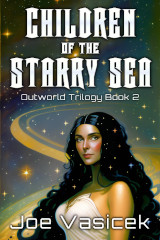
I’m also working on the second and third rounds of revisions for Children of the Starry Sea, and it’s coming along nicely. It’s really good that I was able to finish the rough draft and first revision draft before Little Buddy was born, because I would definitely be swamped right now if that wasn’t the case. But these revisions are much easier to do, even in a sleep-deprived state: the second revision draft is all about smoothing out the flow of the narrative and making sure there aren’t any awkward transitions or loose ends, and the final revision draft is about polishing the writing on a sentence level and cutting about 10% of the words. Neither requires a ton of brain space.
So that’s what we’ve been up to out here. It’s going to take a while for things to return to normal, but we’re doing well, the baby is happy, the mom is tired but doing okay, and I’m just happy to be a dad two times over!
Tim Pool is wrong
I like Tim Pool, and I think his reporting is generally quite good, so I’m definitely following him in the wake of the ongoing banking collapse here in the US. But I must respectfully disagree with him on one important point:
The banks aren’t failing because they went woke. They went woke because they were already failing. The financial system broke in 2008, and all the major players have been insolvent ever since—including our own government.
When a major corporation or financial institution “goes woke,” they are essentially buying an informal insurance policy by getting in line with the agenda being pushed by the major powers that be. They aren’t true believers. “Woke insurance” is a thing, and a sign as sure as anything that the institution is going stagnant.
But no, our society isn’t falling apart because we are going woke. We are going woke because our society is falling apart.
I wrote a story with ChatGPT…
…about a struggling magazine editor who has been swamped with poorly written AI-assisted stories by writers using ChatGPT. If that sounds hilariously meta, here is ChatGPT’s description of the story:
“Quantum Worlds” is a science fiction story about Robert, the editor-in-chief of a struggling science fiction magazine. In a last ditch effort to save the magazine, he and his wife Sarah come up with the idea of using AI to help with the submissions. The idea is met with skepticism, but it proves to be a game changer. As the magazine becomes successful again, Robert and Sarah face challenges from the science fiction community and their own daughter, who has ideas of her own about how to use AI in storytelling.
The story explores the tension between tradition and innovation in the science fiction community, and the ethical considerations of using AI in creative endeavors. It also touches on themes of family, sacrifice, and the importance of supporting the next generation of creators.
I actually think it turned out pretty well. It’s about 4,500 words, and instead of trying to rewrite it in my own voice, I’m going to send it out as it currently stands. I really hope someone picks it up!
I’d say that ChatGPT did about 40% of the work. I started by explaining the initial idea, and then we went back and forth about it for a while. When I prompted ChatGPT to come up with a twist, I had to prune the first two or three ideas it gave me, then work with it to refine it into something that would actually work (and also was a genuine twist, not just a cliche that any science fiction reader would see coming a mile away).
When it came to the actual writing, I would usually start by saying something like “write the next scene, where blah blah blah,” and then it would spit out between 400 and 600 words. I would typically have it generate a couple of responses, and I would choose the best one to copy and paste into the manuscript. A few times, I copy and pasted snippets from all of the responses to form something better.
There were a few loose ends and disjointed parts that I had to fix on my own. When I tried to copy and paste back into ChatGPT to get it to do the revisions, it just gave me mushy, unusable summarizations of what it had already written. Also, ChatGPT uses straight quotes, so I had to change all of them into curly quotes, which was annoying. But the revisions weren’t too difficult, and whenever I needed more than a paragraph or two of new material, I would copy the old material into ChatGPT and ask it to rewrite that section, giving me what I needed.
There were a couple of times when it tried to slip in “diversity and inclusivity” stuff, but overall it wasn’t all that woke or insufferable. I really do think the developers have added a filter on the backend that goes something like “make sure that your reponses have enough diversity and inclusivity,” or something stupid like that. Wasn’t hard to work around, especially for a story that isn’t political in the slightest.
Proofreading was super easy. The only things that spellcheck picked up were parts that I’d added, or words that weren’t in spellcheck’s dictionary but should have been.
It is a kind of cheesy story, though. ChatGPT was trained mostly on internet content, which is also probably why I could only get it to come up with good stuff in 400-600 word chunks. It would be interesting to use a language learning model that was trained on, say, Project Gutenberg, or the Baen Free Library. But for the story I wanted to write, cheesy is actually good.
Is there anything else you would like to tell our readers, ChatGPT?
I just want to remind readers that storytelling is a powerful tool for exploring complex themes and ideas. The use of AI and its impact on creativity and the arts is just one example of how technology is changing the world around us. I hope this story inspires readers to consider the implications of these changes and to continue exploring the intersection of technology and the arts. As always, keep reading and keep learning!