How I Would Vote Now: 2003 Hugo Awards (Best Novel)

The Nominees

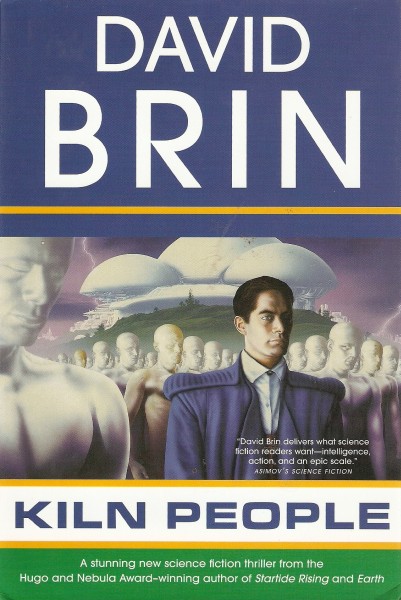
Kiln People by David Brin
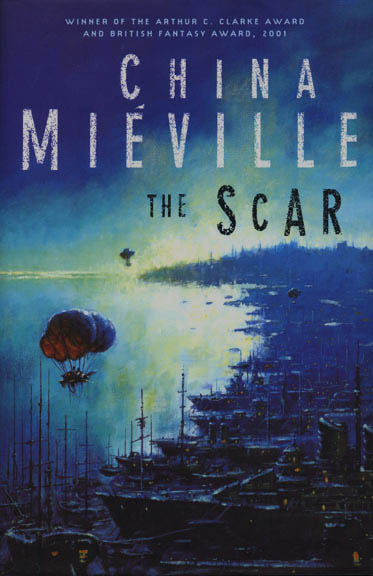
The Scar by China Mieville
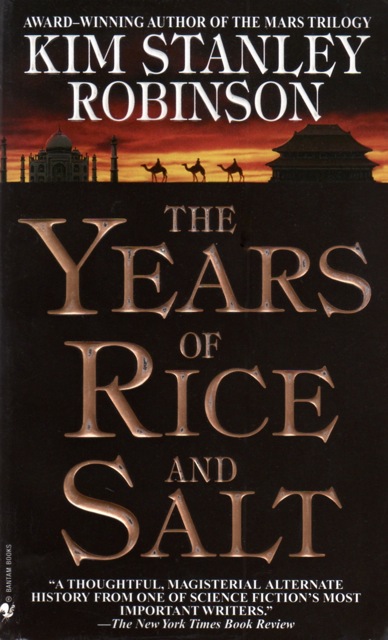
The Years of Rice and Salt by Kim Stanley Robinson
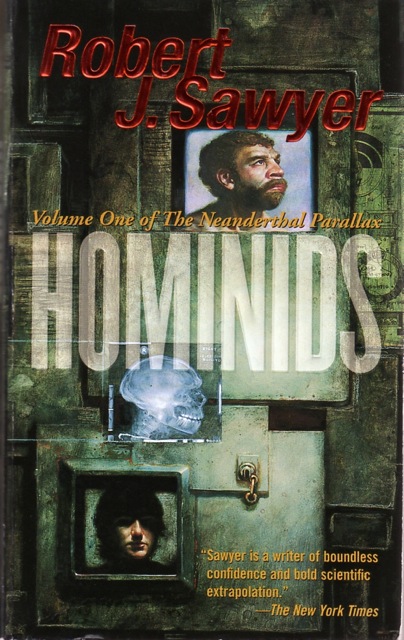
Hominids by Robert J. Sawyer
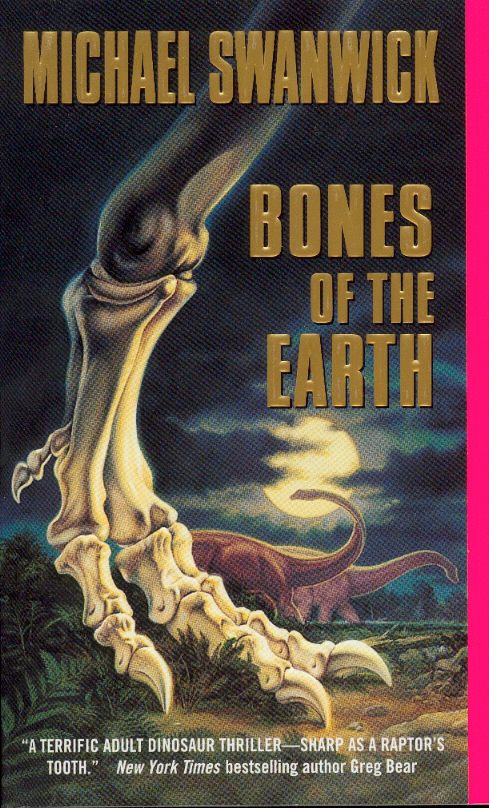
Bones of the Earth by Michael Swanwick

The Actual Results

  1. Hominids by Robert J. Sawyer
  2. Kiln People by David Brin
  3. Bones of the Earth by Michael Swanwick
  4. The Scar by China Mieville
  5. The Years of Rice and Salt by Kim Stanley Robinson

How I Would Have Voted

(Abstain)

Explanation

None of these books were so bad/woke that I felt No Award merited a vote for this year. In fact, if my memory serves me, few of these books were woke at all (or else they were just a lot better at hiding it. Whatever.) But at the same time, I didn’t enjoy any of them enough to feel that I could affirmatively vote for any of them. In fact, I ended up DNFing all of them, for various reasons (that’s right, China Mike—I didn’t feel it was necessary to finish any of these books to know how I would have voted).

Kiln People and The Years of Rice and Salt were both books that I didn’t bother to pick up, because I’ve read enough from each author to know that I don’t care to read anything they write. Way back in high school, I read Red Mars by Kim Stanley Robinson, but I never felt compelled to finish the rest of the series, and DNFed the second book when I picked it up years later, as well as every other Hugo-winning book he’s written. With David Brin, I started his first Uplift Trilogy book but DNFed it about a hundred pages in, and decided to DNF him as an author after throwing The Postman across the room.

For both of these authors, my reason for DNFing them has less to do with their politics (though I’m sure we have irreconcilable differences there) as it does with their dogmatic, almost fanatical adherence to materialism: the view that everything in the universe is reducible to physical, material phenomena, and that if something cannot be measured it might as well not exist. You can see this in the dismissive way that they treat religion in all of their books, especially Christianity—as if faith, in any form, is a delusion that ought to be beneath all clear-thinking and enlightened people. From long experience, I’ve learned that authors with this particular worldview almost never write anything that I feel is worth reading. Hence, I didn’t feel it was necessary to read either of their books.

The Scar is book two of China Mieville’s New Crobuzon series, and since I DNFed the first book, I didn’t read the rest of the series. I’ll explain my reasons more when I write up my post for how I would vote now in the 2002 Hugo Awards, but it basically comes down to the sex scene in the first chapter, which was too graphic for my tastes. Call me a prude, but I prefer to avoid graphic sex scenes. I suppose I could be persuaded to try the series again, though, on a strong enough recommendation.

I forget why I DNFed Hominids. I read it back in 2002, when I made—and kept—my resolution to read (or DNF) all of the Hugo and Nebula award-winning novels. I think it came down to getting bored with the story, or not really liking any of the characters. I could probably be persuaded to try it again, though I doubt the results would be different a second time around.

Lastly, Bones of the Earth was my biggest disappointment from the books on the ballot this year. I had previously DNFed Swanwick’s Station of the Tide, which struck me as the sort of thing an author writes when they don’t really care what readers think of it and they just want to wallow in their own self-indulgent fantasies. Also, there was a lot of weird sex stuff that I found off-putting.

But Bones of the Earth started out really well. It’s basically about a bunch of time traveling paleontologists, and the bureaucracy built around the time travel machinery to keep all the timelines from falling into contradiction and paradox. Think Jurassic Park meets The Adjustment Bureau. The first half of the book was really well done, to the point where I started wondering why I’d never heard of this book before, or why it hadn’t gotten more commercial traction.

Then I found out why.

The inciting incident happens when a creationist terrorist sends a bomb out to a group of paleontoligists somewhen in the Cretaceous period, killing one of them, destroying their time beacon, and stranding them in time. I wasn’t actually bothered at all by the creationists being the bad guys, since 1) several of the paleontologists were various stripes of Christian, and 2) I can totally believe that radical fundamentalist creationists would resort to sabotage, or even terrorism, to derail the whole project. But about midway through the book, after the band of marooned time travelers go through some pretty hefty forming and storming, as they just start to enter the norming phase, they all decide, at the same time and on a total whim, to throw off their clothes and have a group orgy together.

I can believe that there are people in this world who would do that sort of thing. I can even believe that a group of randomly selected people might consist entirely of this sort of person. I just don’t want anything to do with them. I’ve been in a fair amount of group situations, and the worst ones I’ve ever had to endure were the ones where everyone either wanted to all get drunk together, or all get sexy together (thankfully, none of them turned into an actual orgy like the one in this book).

But frankly, the impression I got while reading it was that the author was a little too sex-deprived (if not an outright pervert) and indulged in that scene purely as an act of wish fulfilment. Any editor worth her salt would have told Swanwick to remove or totally rework that scene, so the fact that it’s still in the book probably means that he’s too bull-headed for his own good—which is a shame, because the book probably would have sold better if he’d cut that scene out. The orgy scene added very little and certainly alienated more readers than it brought in.

One of the things I’m trying to be more careful about, as a writer, is writing books for other people, not just myself. I was a lot more self-indulgent in my early career, which is probably a major factor in why many of my older books haven’t gained much traction outside of a small readership. While it’s important not to try to write for everybody, authors who write only for themselves are too often inaccessible to anybody.

Interesting interview about the depopulation crisis

I listen to a lot of long-form podcasts these days, usually while I’m doing work that doesn’t require my full attention. So I figure it would be good to start posting links to the more interesting ones.

Chris Williamson is a great interviewer, and he has a knack for finding really interesting guests. He particularly likes to talk about modern dating and the “man-o-sphere,” which I find only somewhat interesting, and the depopulation crisis, which I find extremely interesting.

The ongoing collapse of birth rates (some places in the world have been under replacement for multiple generations now, and in just a couple of decades, almost every country in the world—including most African countries—will be under replacement if current trends continue) is, in my opinion, the greatest global crisis of our time—much, much larger than climate change, the threat of which has been greatly exaggerated by the global elites in order to push us into a techno-feudal society with them as the royalty and the rest of us as debt-serfs. But the depopulation crisis is a true existential crisis for humanity, and it’s also the exact inverse of the Malthusian population-bomb disaster that popular culture has taught us to fear.

(Also, as a side note, I find it fascinating to think that if current demographic trends continue, a hundred years from now the global population will be under 1 billion, and somewhere around 200 million of those people will be members of the Church of Jesus Christ of Latter-day Saints. Another 50 million will likely be Jews, since they are one of the other few demographic groups with an over-replacement fertility rate. The latter-day saints will absolutely love the Jews, and the Jews will tolerate the latter-day saints.)

Anyway, this is the latest interview that Chris Williamson did on the topic, with a Scandinavian researcher that shares some interesting data from his most recent studies. Worth giving a listen, if you’re as interested in this topic as I am.

Well, this car ad is a breath of fresh air

Especially after that crappy Jaguar ad/rebrand:

My family drove an old 80s Volvo station wagon for years, growing up. My Dad said he chose Volvo because it’s a safer car. Maybe it’s worth looking into that brand for our next vehicle.

Swamped but Still Here

I’m pretty swamped with stuff right now, especially all the publishing tasks that I need to catch up on (with the way we’ve set up our new routine, it really only makes sense to spend one day out of the week working on publishing tasks, rather than an hour or half-hour each day. So if I miss a day, or don’t finish all of the week’s work on that day, things tend to spiral pretty quickly). But things are going pretty well overall: I’m making slow but steady progress on writing, and the wife and kids are doing pretty well. Everyone’s warm, fed, (mostly) happy, and still alive.

For Thanksgiving, we’re going up to Bear Lake with my wife’s family, since my brother-in-law has a timeshare there, and it’s closer to Couer D’Alene so it’ll be easier for the family up there to come down. But Bear Lake gets pretty cold this time of year, so we’ll have to pack warm. Also, with the recent developments in Russia and Ukraine, it occurs to me that Bear Lake might be one of the best places in the lower 48 to ride out an initial nuclear strike (though definitely not the best place to ride out a nuclear winter). Hopefully we don’t have to test that theory.

In any case, it should be fun to spend some time with the family, and to watch our kids spend some quality time playing with their cousins. Since my mother-in-law doesn’t want to do any cooking at the timeshare, she’s farmed out most of the work to everyone else, and had us bake a turkey so that she could collect the drippings for turkey gravey. Looks like white bean chili with leftover turkey is on the menu for the next couple of weeks!

My job is to make the cranberry sauce. I’ll be using my Mom’s recipe, which is super simple, and also super tasty: combine one pound of raw cranberries, one whole unpeeled orange, one whole apple, one cup of sugar, and one cup of pecans and blend until smooth. Chill before serving.

Up and Back from Denver

My uncle just got remarried, after losing his wife of some 40+ years to dimentia. The wedding was Saturday, so I flew up there in the early morning with my two sisters who live here in Utah. And then, because my four year-old daughter had her first primary program in church this Sunday, I flew back that night around midnight.

With all of that said, though, I still managed to get 2k words of writing in while on the plane or in the airport (mostly on the plane). This was all human writing, taking the stuff that I’d previously generated with AI and using it as a detailed outline (or sometimes as a loose suggestion) while I rewrote it in my own words. Which goes to show how AI-assisted writing can be super useful, especially for those in-between moments where it’s impossible to get a more sustained focus. If not for what I had previously generated, I wouldn’t have gotten more than a couple of hundred words in, if that much. And of course, I didn’t get any writing in during the wedding or any of the family stuff before and after.

Needless to say, after waking up at 5am to fly out, and not going to sleep until 2am the following morning, I was pretty hashed all Sunday. But the primary program went really well. My daughter remembered her part, and all but swallowed the microphone as she shouted it so we could all hear: “I love Jesus! Jesus is the Prince of Peace and the King of Kings!” It was hilarious, and very cute.

Sudowrite just rolled out a new outlining feature in their Story Bible, which replaces the old outline field. I tried it out this morning, and two things strike me about it:

First, it’s really nice that there’s no longer a word limit on the novel outline. I did have a little trouble getting my chapters to link with the outline, so there are probably still some things on the backend that need to be smoothed out, but I did get it to work in the end.

Second, it is SUPER convenient to be able to have the AI generate the individual chapter descriptions. After playing around with it, I found that the best way to generate them was simply to copy and paste all of the plot points from the spreadsheet that I use to map out the whole book, not even bothering to format it for the weird table breaks and tabs. The AI takes all of that input as-is and spits out a super accurate chapter description every time! Very nice, and hopefully it translates to better chapter beats too.

So for today and tomorrow, I’m going to work on the outline for Lizzie-99XT. After that, I’ll go back to writing out the rough human draft for The Road to New Jerusalem, and probably just focus on human writing for the rest of the month.

Here’s my new pricing strategy

A few weeks ago, I had an impression that I needed to revisit my overall pricing strategy, not just for ebooks but for audiobooks too. So I sent out a few feelers, trying to see how other indie authors are pricing their books, and also ran a reader survey (thank you to everyone who participated in that, by the way!)

After all of that, I’ve put together a new pricing strategy that I will probably keep over the next few years, inflation notwithstanding. It’s not that much different from what I was doing before, but it is worth sharing with you, especially if you’re on a tight budget and you want to know the best way to pick up my books. So let’s go through each format, and I’ll share my plans.

Paperbacks

Until now, I’ve basically just been pricing all my paperbacks at a flat $14.99 USD, with equivalent price points in each of the major currencies. For shorter books, this meant that I took a hefty profit. For longer books, a hefty loss.

Moving forward, as I move to distribute all of my titles through Ingram via Draft2Digital, I am going to price my paperback titles such that I take at least a $2 profit through wide distribution. For most titles, this means they will fall somewhere in the $12.99 to $15.99 range. Some of the larger books may go as high as $18.99. This does not include shipping costs.

As always, if you purchase a paperback on my store, I will sign and personalize them for free if that is what you want me to do. Not all of them are up yet, but I hope to get them all up there over the next few weeks.

Audiobooks

Until now, I’ve been pricing my audiobooks on the lower end of the price range that human-narrated audiobooks can command, which means that most of them were either $8.99 or $16.99. That was just the list price, though, and I frequently ran month-long sales where they were all discounted to $2.99. And of course, if the ebook was already free, I also made the audiobook free.

But this was before AI-narrated audiobooks began to come out on the major platforms in large numbers. Now, it looks like one of the biggest trends in the book world is the explosion of AI-narrated audiobooks. I forget which podcast I heard it on, but some industry experts are predicting that within 10 months, most of the audiobook market will consist of AI-narrated audiobooks.

Obviously, it costs much less to produce an AI-narrated audiobook vs. a human narrated audiobook. In fact, without AI, none of my titles would be available in audiobook format, since they are all AI-narrated. And after asking around some of the author communities I follow, it appears that most authors are pricing their AI-narrated audiobooks closer to their ebooks, rather than their human-narrated audiobooks.

What was more surprising to me was to learn that of the readers who took my reader survey, those who listen to audiobooks felt fairly strongly that an AI-narrated audiobook shouldn’t cost more than the ebook. So it’s not just the authors who are driving this trend, but the readers as well.

With that in mind, and the data I gathered on ebook pricing points, I have decided to make the list price of all of my digital books, whether ebooks or AI-narrated audiobooks, priced at $4.99 moving forward. That’s just the list price, though: occasionally, I will run a $2.99 sale, where either all my audiobooks or all of my ebooks are discounted to the $2.99 price. And for certain titles, like my Sons of the Starfarers books, I plan to keep them on a $2.99 sale permanently, since it’s a nine book series and that’s what they were priced at before. Also, if the ebook is free, so is the audiobook.

And as always, if you buy an audiobook from my online store, you automatically get the ebook free as well.

Ebooks

Before, I used to price my ebooks at either $2.99, $3.99, or $4.99, depending on the book. In general, first-in-series books were permanently at $2.99, while the later books were all at $4.99.

Moving forward, however, I plan to keep all of my ebooks (except for the Sons of the Starfarers books) priced at $4.99, regardless of where they fall in the series, though I will occasionally run $2.99 sales across the board.

(The exception to all of this is box sets, which I plan to keep at $9.99. At this time, I only do box sets for the ebooks, and I don’t want to price those so low that they undercut my regular titles. I may discount them during a $2.99 sale, but I haven’t yet decided on how much.)

My goal with this is to make it so that price isn’t a factor in deciding which book to buy next. If they’re all the same price, then it shouldn’t make much of a difference—and if $4.99 is too much for your budget, then you can just wait until I run the next $2.99 sale, which should happen approximately every third month or so.

As always, you can get $1 off of the ebook with the coupon code “buy direct” when you purchase it from my store. This only applies to $4.99 books, however—if the book is currently on sale for $2.99, the coupon does not apply.

$2.99 sale November-December 2024

With all of that said, I am currently running a $2.99 sale on all of my ebooks and audiobooks, from now to the end of 2024. If you’ve wanted to read my books in ebook or audiobook format, but have ever balked at the price, now is a great time to pick them up! I have somewhere north of 20 novels out right now, and in the coming months, I plan to publish a lot more (which is another reason to run $2.99 sales, so that my readers don’t have to spend upwards of $100 to read all of my books).

Where Ezra’s Eagle Goes Off the Rails

So it’s November 6th, 2024, the day after election day. President Trump has won an astonishing election victory, marking the greatest political comeback in US history. For those of us who feel like we’ve been gaslit and abused for the last four years, it really does feel like things are starting to look up for the country.

At least, for most of us, that is the case. For others of us, the black pill has been so bitter that we’re almost scared to hope again. Last night, I was up until 2am, just because I didn’t want a repeat of 2020, where we all went to bed convinced that Trump had a lock on the election, only to wake up to burst pipes, boxes of uncounted ballots, voting machines behaving strangely, windows and doors boarded up against Republican observers, and other sorts of “election fortification.” So frankly, I don’t blame anyone for being on pins and needles until Trump actually puts his hand on the Bible and is officially sworn in as the 47th (or possibly 48th) President.

I’m seeing that reflected right now in my blog stats, where in the last 24 hours, I’ve seen hundreds of hits on my old post This Scenario Would Fulfill Ezra’s Eagle, which I wrote several years ago. For some strange reason, that post is now the #2 Google search result for the query “Ezra’s Eagle,” which makes me feel like it’s my duty to offer periodic updates to the situation.

But first, a quick explanation of the Ezra’s Eagle prophecy:

This video is a very good explanation of the prophecy, as interpreted by Michael B. Rush. The part I find most compelling about it is the sequence of rulers, which really does line up uncannily well with our last 16 presidents. Whenever Biblical prophecies start going into numerology, I always raise my eyebrows a bit, because there are lots of ways to twist numbers to make them appear to fit your own personal interpretation. But if you read the original source material in 2 Esdras 11 and 12, it actually lines up very well with what has (so far) transpired.

However, it’s where we get to Rush’s interpretation of the last two short feathers and the lion that I tend to think it goes off the rails. This may come as a surprise to some of you, but I am not convinced that there will be a singular Anti-Christ figure in the end times. I know that a lot of Evangelical eschatology revolves around this figure, but the way they get there is through a rather selective reading of Daniel, Ezekiel, and Revelation that leaves me scratching my head. When I read the Bible, I see a lot of passages talking about a spirit of Anti-Christ, but not a singular figure—and certainly not one with Godlike powers.

But the big thing is the lion, which Rush connects (correctly, I believe—assuming of course that the prophecy is true, which it may very well not be) with the remnant of Jacob in 3 Nephi 20 and 21. Latter-day Saint eschatology draws not only from Daniel (where we get the stone cut out of the mountain without hands), Ezekiel (where we get the stick of Joseph), and Revelation, but also from Isaiah, which goes into great depth about the scattering and gathering of Israel, and the return of the lost 10 tribes. There are also several other prophecies in the Book of Mormon that describe the latter-day gathering of Israel, which is central to the Latter-day Saint understanding of the end times.

Regarding the lost 10 tribes, within the Latter-day Saint tradition there are basically three possible views about what happened to them and where they are now.

The first is that they were taken to the north pole and currently live under the polar ice. This view was very popular in the 19th century, but almost no one believes it seriously now.

The second is that they were taken into space, and currently reside on another planet or in another dimension. While this may sound crazy, it does resonate with the scriptures we have that talk about how Enoch was taken into heaven, with the original city of Zion. This is the view that Michael B. Rush espouses, and he believes that the prophecies in 3 Nephi (as well as Ezra’s Eagle) will be fulfilled when the ten tribes come back down from space and liberate us from the Anti-Christ.

If that sounds a little too science fictional to you, you’re not the only one. Personally, I would love to read a novel where that’s how things turned out, but I don’t think those prophecies are actually going to be fulfilled that way—and here’s why.

The third view is that after the ten tribes passed out of our historical records, they migrated to the northern reaches of the Eurasian landmass, probably in what is now Siberia. There, they established a civilization, which was apparently still extant when the resurrected Christ visited the Americas, because He referred to them explicitly in 3 Nephi 17:

4 But now I go unto the Father, and also to show myself unto the lost tribes of Israel, for they are not lost unto the Father, for he knoweth whither he hath taken them.

This civilization probably continued for a while, perhaps for several centuries after the resurrection of Christ, but it eventually fell, probably due to a combination of the changing global climate (which was much warmer during Roman times, but went into a little ice age during the medieval era) and political upheaval on the Eurasian steppes. When China fell apart after the Three Kingdoms period, there was a massive depopulation as the survivors of those wars migrated westward onto the steppes, creating a cascade of violent displacement that ultimately culminated in the rise of the Hunnic confederacy and the migration period in Europe, which brought about the fall of the western Roman Empire. The ten tribes could easily have been conquered during this period, and their survivors assimilated into the Hunnic or Turkish tribes. Or perhaps they survived this era, only to be conquered by the Mongols in the 1200s. Either way, their culture was wiped out, and their descendants were assimilated into the cultures that conquered them and settled on their lands.

There’s quite a bit of evidence for this theory, including DNA evidence. There’s also some spiritual evidence from the patriarchal blessings of people from this region, where most of the people are have been blessed to belong to one of the ten tribes. The guys at Ward Radio discuss this at length in the episode above—Jonah Barnes actually served his mission in Siberia, so he has firsthand experience with this. Also, there is some pretty solid scriptural evidence in Jacob 5 and the allegory of the olive tree. When the branches of the natural tree are first scattered throughout the vinyard, there is a location that is mentioned once in verse 24, and never mentioned again. If this represents the lands of the lost ten tribes during Christ’s time, that makes sense, since their culture had not yet been wiped out—but after it was wiped out, and the survivors assimilated into the culture that conquered them, they were no longer a “branch” within the context of the allegory.

So how does this relate to Ezra’s Eagle? If the ten tribes are actually among us, and not in space as Michael Rush believes—indeed, if the descendants of the lost tribes are currently being gathered into the Church of Jesus Christ of Latter-day Saints, through the missionary work currently happening in central Asia—then the “remnant of Jacob” that will go forth as a lion is the members of the Church of Jesus Christ of Latter-day Saints who gather to the New Jerusalem, either to build it or to migrate there after it has been built. Third Nephi 20 and 21 go into great depth about this.

But what does it mean that they will tread down their enemies among the gentiles? Does it mean that the Church of Jesus Christ of Latter-day Saints will go all nationalistic, organize a militia, and go to war directly against the United States? Almost certainly not. After all, the twelfth article of faith states: “we believe in being subject to kings, presidents, rulers, and magistrates in obeying, honoring, and sustaining the law.”

But I could see a scenario where the United States collapses and becomes a failed state on the national level, with cartels, gangs, and local warlords stepping into the power vacuum under the veneer of what’s left of our democratic republic. Under that scenario, the church would step into the gap and help its members to organize and develop a strong, self-reliant community that could not only survive in such a post-collapse world, but actually thrive in it. In many ways, we’re already set up to do exactly that. And if the call comes during this time of chaos to build up the New Jerusalem, I could see us making a modern pioneer trek to Missouri, and prevailing over the gangs and warlords who try to stand in our way.

Under this scenario, the last two feathers of Ezra’s Eagle aren’t the Anti-Christ and the Beast, but the last two presidents of the United States, who attempt to restore the nation after the catastrophic fall of the deep state (represented by the three eagle heads) but who ultimately fail to do so. This is when the nation collapses, and we become a failed state on the federal level. Then the Church of Jesus Christ of Latter-day Saints rises up to fill in the gap, standing against the gangs and warlords in the ensuing power vacuum, until we are called to build the New Jerusalem and fulfill the end-times prophecies contained in 3 Nephi.

To me, this is a much more plausible interpretation of Ezra’s Eagle than Rush’s view that the lost ten tribes will liberate us in some sort of extraterrestrial invasion of our planet, while a godlike Anti-Christ rules the whole world. But frankly, I don’t think any of this is going to happen—at least, not on the timeline of Ezra’s Eagle. President Trump won the election with a clear mandate, and I believe he will become our 47th president. With the way things are currently unfolding, I no longer believe that the Ezra’s Eagle prophecy is true in a literal sense. It may have been an authentic vision of a possible series of events, but I do not believe we are on that timeline. After all, there is a reason why Joseph Smith never translated the Apocrypha—or canonized it, for that matter.

But I guess we’ll find out soon. After all, if anything happens to Trump between now and January 20th… let’s just pray for our country during this very uncertain time.

(And for the record, if the Ezra’s Eagle prophecy is true, I still totally believe that Janet Yellen is the first eagle’s head.)

Did I predict it?

On July 24th, 2024, eleven days after the (first) Trump assassination attempt, I posted the following predictions:

1. There will not be a second assassination attempt against President Trump before the election.

On this one, I got it wrong badly. There was at least one other attempt on Trump’s life, the one with the gunman camped out in the golf course for ten hours, who very nearly got a shot in. There was also a case where a whole bunch of people in the stands at one of the Trump rallies was hospitalized with chemical burns, probably from an attempted chemical attack on President Trump. But that one didn’t make the news nearly as much. And those are only the ones we’ve heard about.

I hope Trump makes it to the inauguration, because now that he’s actually won the election—and there are still people taking shots at him—the odds of him getting assassinated between now are not insignificant.

5. Harris will lose badly and Trump will win the 2024 election in an electoral landslide.

This one, I think I got right. I’m writing this post on election night after all of the networks have called Pennsylvania for Trump, and Trump has declared victory (though it’s unclear if Kamala has called him to concede yet). It is possible that we might see some “election fortification” in the next 24 hours, but I think it’s unlikely. And while Trump’s victory could have been more of a blowout, I do find it telling that Kamala Harris failed to outperform Joe Biden in every single county in the country. Youch.

So by my count, that puts me at three out of four in the prediction game. Not perfect, but pretty good. We’ll see how the rest of them play out, because I think the last few weeks of 2024 are going to be pretty rocky. Hopefully I’m wrong, but we’ll see.

It’s November already?

It’s November already? Wow, that went fast. October was so mild, it felt almost like summer. Then, about a week ago, a cold front blew in and it’s been feeling very much like autumn ever since.

I figure I should share more pictures in these updates, so here is one of the food storage wheat I’ve been sprouting. I just started doing this, and the results from the previous attempt were quite delicious. The kids loved them! Since they’re super healthy, I figured we might as well make it a regular thing. They go great on salad, with a little bit of hummus on the side.

I’m getting ready to start a new novel WIP. This one is for my friend Ben, so I ran three book blurbs by him and had him pick his favorite. That’s what I do these days whenever I need to start a new project: I keep a document with pre-written book blurbs for the books I want to write, and I have a friend pick from them. That’s also how I choose who to dedicate the book to. Anyway, Ben chose the blurb for the novelization of my old short story, “Lizzie-99XT”:

To save the people she loves, she must become the machine.

The first wave of the alien invasion was just a few scouts—and they nearly conquered us. Now, a proper expeditionary force is on the way, forcing humanity to scramble their defenses fast. But the best defense is a good offense, and the XT starfighter program is the culmination of every space and weapons program since the war began.

Eliza never thought she would become a soldier, much less the human half of an AI/human hybrid starfighter. But when the recruiters seek her out for her rare genetic attributes that make her ideal for the program, she goes all in, dedicating her life—and her humanity—to saving the people she loves from the looming alien menace.

And thus, from the merger of human and AI, Lizzie-99XT is born. A superweapon capable of fighting at near-light speeds, the moon his her playground, the planets her backyard. But her power comes at a steep price. Whenever Eliza decouples from the machine, she feels as if she’s lost another piece of her humanity. And with each new battle, the world that she’s fighting for slips further into the past.

The XT starfighter squadron is the only thing standing between Earth and annihilation. But as the war drags on and humanity takes the fight to the enemy’s own stars, Eliza begins to wonder if death is truly the ultimate sacrifice.

So the plan is to write that one next. I’ve already imported the short story into Sudowrite, and have played around with it enough that I’ve even generated a few chapters. But most of that is stuff that I’ll probably end up throwing out, since I really need to write a thorough outline first. I have a pretty good idea of what the book will look like, but I need to meet with Ben again first to hash a few things out.

I would have already started the outline this week, but my four year-old came down with a really bad UTI. We though it was the flu at first, so we didn’t catch it until after her fever was spiking to 104 and she was really delirious (kind of surprised the clinic didn’t give her a urine test the first time we went in). But she’s on antibiotics now, and they appear to be working. Thank God we live in a time of cheap, safe, and effective antibiotics.

The other big thing I’ve been up to is figuring out what I want to do for my pricing strategy. It’s been about a year or two since I first started publishing my books as AI-narrated audiobooks, and until now, I’ve been pricing them similar to human-narrated audiobooks, but running frequent sales (for example, all of my audiobooks are currently on sale for $2.99). But the audiobook market is changing rapidly, and it appears that most other authors are pricing their AI-narrated audiobooks similar to their ebooks.

Perhaps I should do another blog post where I share the results of my survey. This is the third year that I’ve run it: the first time was in 2020, and the second time was in 2022. There have been some interesting changes compared to previous years. Basically, within the $2.99 to $4.99 range, people are more open to higher prices if they know and trust the author, but much fewer readers are willing to go higher, even for authors they know and trust. And for unknown authors, they are much less willing to go for anything higher than $2.99.

In short, it seems like readers are feeling the pinch of inflation, and are finding it much more difficult to justify spending more than $5 for an ebook. So what I plan to do is price all of my ebooks and audiobooks at $4.99, and run the occasional month-long sale where I drop the price of all my ebooks to $2.99, or all my audiobooks, alternating between the two. Hopefully, I’ll be able to get the best of both worlds that way.

Also, it being November and all, there’s an election going on. For the last week or so, I’ve been doing my best to tune it out. We don’t live in a battleground state, and my wife and I already filled out our ballots and dropped them off. On election night, I’ll probably tune into the livestreams, and I’ve been following the news through alternative and conservative media, but I’m really trying not to think about it more than that. I will say, though, that this AI-generated political ad was super, super hilarious:

Hey… if it were a novel, I’d at least check it out from the library. I’d probably DNF it, but I’d at least be willing to give it a try. In the hands of a good writer, it could even be a decent sci-fi novel… emphasis on the “science fiction.” LOL!