I was not expecting to get as much out of this podcast as I did. Triggernometry is a fantastic long-form podcast, and the guest for this one is the guy who made the suits for Jordan Peterson, among other people. He has some fascinating insights into our current culture and where, from his view, it appears to be heading.
Author: Joe Vasicek
Joe Vasicek is the author of more than twenty science fiction books, including the Star Wanderers and Sons of the Starfarers series. As a young man, he studied Arabic and traveled across the Middle East and the Caucasus. He claims Utah as his home.
Queen of the Falconstar currently free
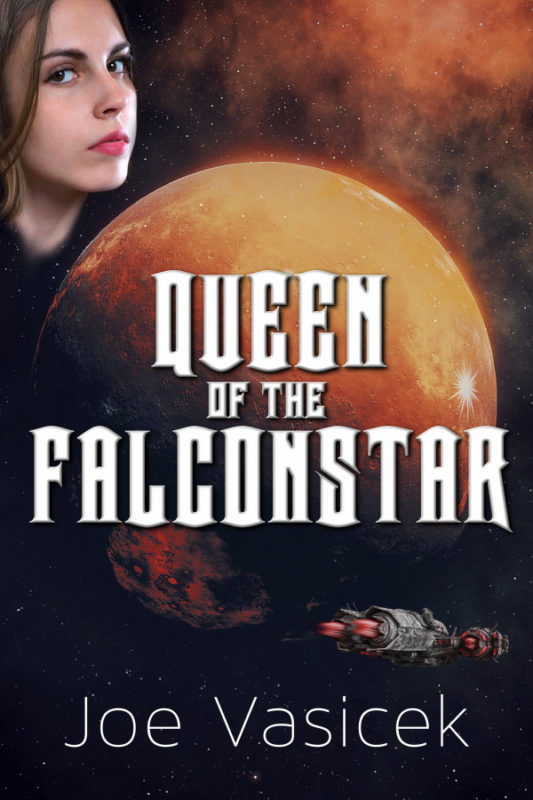
Queen of the Falconstar is one of my lesser-known novels, probably because I haven’t finished the trilogy yet (and when I do, I will definitely get better cover art). But I’m currently writing the second and third books, and hope to publish them both later this year, so I figured it was a good time to run a free sale on the first book.
If you want to pick up this novel, you can get the ebook free through this weekend on my online store, or wherever you get your ebooks. Or you can pick up the AI narrated audiobook for $4.99 on my online store, and get the book free as well (as a side note, the book is always free whenever you get the audiobook from my online store). And if you want a print copy, I will sign and personalize it for free if you purchase it from my online store (ebook free with purchase as well, but shipping only for the US. Check Amazon for the paperback if you are international.)
Queen of the Falconstar
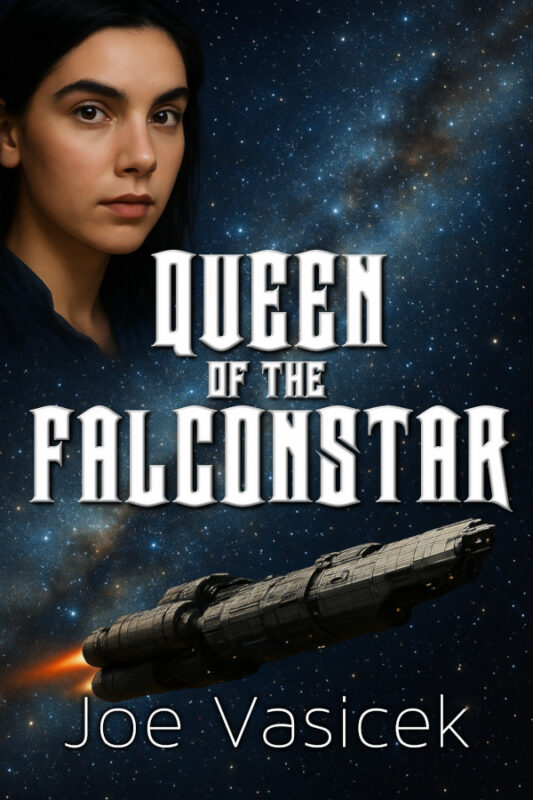
She volunteered to be a captive. Now she must become a queen.
Zlata has always dreamed of escaping the stifling monotony of Graznav Station, but not like this. When space nomads raid her home, she volunteers as their captive to save her friend Sonya from a worse fate. Brought aboard the Falconstar as a slave to the enigmatic Lord Khasan Valdamar, Zlata quickly realizes that her only path to survival lies in the treacherous world of intra-clan power politics. Using her cunning and ruthless pragmatism, she must navigate betrayal, conspiracy, and deadly power games to rise from slave to queen—all while her friend is slated to be sold as a slave.
About the Book
Zlata never wanted to be a hero. She just wanted off Graznav Station.
When nomadic space raiders from beyond the Outworlds attack her home and carry off her friend, Zlata makes a split-second decision and volunteers to be taken captive with her. It’s an impulsive decision that will either save them both—or doom them to lives of slavery among the stars.
Aboard the warship Falconstar, Zlata becomes the property of Lord Khasan Valdamar, a fierce warrior-lord whose star clan teeters on the edge of extinction. Hunted by his enemies and betrayed by his allies, Khasan desperately needs to restore his clan’s shattered honor. What he doesn’t need is a scheming slave with dangerous ambitions of her own.
But Zlata is no ordinary captive.
Cunning. Ruthless. Pragmatic. She sees opportunities where others see only chains. In the treacherous world of Hameji politics—where honor is won through blood, and betrayal lurks in every shadow—Zlata begins an audacious climb from slave to queen.
Order Now










Preview
Some of the links in the page above are "affiliate links." This means if you click on the link and purchase the item, I will receive an affiliate commission. You will not receive any additional charge.
As an Amazon Associate I earn from qualifying purchases.
Great interview about conservatives and art
This isn’t exactly a long-form podcast episode, but it is a really great interview on a subject that is near and dear to my own heart. Andrew Klavan is a fantastic author—I’m currently reading his latest Cameron Winter novel, A Woman Underground, and loving it—and of the Daily Wire hosts, he gives the most interesting commentary and insights on cultural issues (which isn’t surprising, given his age and Hollywood background).
Has Brandon Sanderson gone woke?
Update (11 Jan 2025): Brandon has addressed this question with his blog post On Renarin and Rlain, and I have responded with Yes, Brandon Sanderson has gone woke.
This is a genuine question: I don’t have any new information or tea to spill. But there have been some rumblings recently that make me wonder if Brandon has gone over to the woke side—or indeed, if he was always quietly there to begin with.
Most of these rumblings have come from the recent videos that Jon Del Arroz has put out on the subject. Before you post your angry comments, know that I am already aware that JDA is an extremely polarizing figure (which doesn’t necessarily speak ill of him—or good, for that matter). Personally, I don’t have a strong opinion about JDA either way: I don’t know him personally, so I can’t speak to his character, and while he does seem to have the right enemies, that only says so much. A lot of his content does seem to be clickbaity and hyper-partisan, and the way he wears his Christianity on his sleeve can make me uneasy at times (though I do appreciate that he’s open about his beliefs).
With all of that said, JDA has broken some very interesting and important stories in the recent past, such as the very serious sexual abuse allegations against Neil Gaiman—and more importantly, the way the publishing industry and legacy media have been working to downplay that story and even cover it up. So when he started covering the controversy surrounding Brandon Sanderson’s recent release of Wind and Truth, the fifth book in the Stormlight Archive, and how some of his fans are reacting to what they perceive as a woke sell-out, I perked up.
But the thing that prompted me to write this blog post is what Brad Torgerson posted, and which JDA quotes in the above video. I’ve chatted with Brad on several occasions, and I know and like him a lot. He’s also a bit of a polarizing figure in the fandom, mostly for spearheading the Sad Puppies movement in 2015, but he’s always struck me as a good guy and completely undeserving of most of the crap that he’s taken, including some local convention drama. Brad and I are both Utah writers, and we both run in the same circles, though we only cross paths maybe a couple of times a year.
As for Brandon, it’s been a few years since the last time I spoke with him, but I did take his writing class at BYU, and one of the members of his writing group is also a member of our writing group. In fact, I’m very curious to talk with her the next time we meet, because a couple of months ago she did cryptically mention that there were a couple of things in the early draft of Wind and Truth that she read that she really, really did not like, and advised Brandon to cut. Are those the same things that are behind the controversy now. Perhaps—though she did make it seem like Brandon’s agent and publisher were also advising him to cut them, so whatever it was, I don’t think he added it because they pressured him to, and he “sold out,” as JDA characterizes.
Also, I think JDA takes it a little too far when he says that Brandon is denying his faith. As a member of the Church of Jesus Christ of Latter-day Saints, I’ve served in a bishopric before, and participated in church disciplinary councils where excommunication and disfellowshipment were on the line. From what I can tell, nothing that Brandon has said or done would warrant a formal church council—not even donating to the Utah Pride Center, though if I were his bishop, I would want to talk with him about that. The church is a place for sinners and doubters, which we all are in some degree. If Brandon were to explicitly denounce the Family Proclamation, that might (or might not) warrant a disciplinary council, but I don’t think it’s fair or accurate to say that Brandon has denied his LDS faith.
With that said, if Brandon is putting gay romances and transgender characters in his books, that’s awfully hard to square with the Family Proclamation, which explicitly states that “marriage between a man and a woman is ordained of God” and “gender is an essential characteristic of individual premortal, mortal, and eternal identity and purpose.” Personally, I sustain the Family Proclamation wholeheartedly and without reservation, and it saddens me to see other members of my faith take issue with it. I firmly believe that these are the words of living prophets, with the same scriptural authority as the Bible and the Book of Mormon, and I look forward to the day when the Family Proclamation is officially canonized in the Doctrine and Covenants, which I expect it will be.
You have to leave some room for nuance, though. My book Queen of the Falconstar, which is currently available as a free ebook (no, I didn’t plan it that way), has a LGBT main character, whose bisexuality is an important part of the plot. The book does not “celebrate” her bisexuality, or promote it as a morally justified lifestyle choice—in fact, it’s a major driver in her downfall in the second book, which I’m currently writing. When I was writing the first book, there were many times when I wondered if I should scrap this part of her character, but when I prayed about it, I got the distinct impression that I should keep it in. In fact, there were many times when I wondered if I should trunk the whole book, and the only reason I ultimately wrote and published it was because I felt prompted by the Spirit that God wanted me to write this book.
Of course, stating it in these terms means I’ve basically alienated everyone from either side of this issue. But it’s true. The book is neither woke nor anti-woke: it has a bisexual main character whose sexuality is a liability and an obstacle. Guaranteed to offend both sides. Also, I firmly believe that this was a book God wanted me to write—and for that reason, I’ve been careful not to write it in such a way that it disparages or denies the Family Proclamation, though the characters themselves would probably not agree with it. Which is also guaranteed to offend basically everyone.
Enough about Queen of the Falconstar. I only bring it up to make the point that you have to leave room for nuance, if you want to write truthfully. But if Brandon’s conservative fans feel he has betrayed them, that feeling is totally legitimate—and frankly, the part of this story that interests me the most. Is that what’s going on here? I’ve only ready partway through book 2 of the Stormlight Archive, so I’m not up to date on the series. A cursory glance at the Goodreads reviews shows that there’s some interesting discussion about this, but I’m not connected enough with the Sanderson fandom to really say what that means.
However, I did find this article on Brandon’s blog, dated back to 2023, which makes me think that he’s always been symathetic to some, if not all LGBTQ causes. Then again, he does talk about how his LGBTQ friends have been “patient” with him as he’s “come a long way,” so maybe there has been some recent influence on him? I honestly don’t know, though I suspect that all those sensitivity readers have been leaning on him pretty hard. His scalp has got to be worth quite a lot.
Jon, if you’re reading this, thanks for covering this story. I’m not particularly close to Brandon anymore, but I do run in many of the same circles here in Utah, and count him as an early mentor of mine, so I’m following this story with interest. Also, thanks for reading from the Family Proclamation on your channel. If you want to talk, feel free to leave a comment or shoot me an email.
Farewell to 2024!
It’s new year’s eve, finally! Another year, another voyage around the M-class dwarf star we call Sol!
A lot of other writers and podcasters are doing recaps of their year, highlighting some of their best moments as well as analyzing what they learned and what changed. Generally, though, these people are either single or have producers and assistants to help them with their content. Since neither of those is true for me (I literally just put my son down for a nap, though it sounds like it will be a while before he falls asleep), I’ll just write a quick blog post with some off-the-cuff thoughts.
It’s been a very busy and eventful year for me, writing-wise, though most of that probably won’t be visible from the outside until about the middle of next year. I’ve totally reworked my writing process in ways that should start yielding a lot of new books around then, and hopefully continue to yield them for the forseeable future. If successful, I will probably write a non-fiction book about it sometime, but that’s still in the nebulous future.
I published four novels this year, all in a new series, and I’m currently writing two more in the same series (the Sea Mage Cycle). Interestingly enough, it’s one of my best rated series, which probably shows how much I’ve improved as a writer since I first started indie publishing. Also, it’s much more of a fun adventure fantasy series than some of my other stuff, which either tends toward sprawling, ambitious space opera or sober dystopian think-pieces, both of which tend to take themselves a little too seriously. But I’m happy writing fantasy adventure, so if it turns out I can carve out a comfortable niche in this subgenre, I’ll certainly enjoy leaning into it.
Four novels in a year is about four times what I typically produce, but I was starting to feel a little burned out, so after taking a break to write some AI-assisted short stories, I decided to take some lessons from the experience and spend the rest of the year reworking my creative process. It didn’t take long for me to learn that writing quality AI-assisted novels isn’t that much harder than writing quality AI-assisted short stories—indeed, in some very key ways, it’s actually easier. So since novels are much more lucrative than short stories, I decided to stop writing them and to focus exclusively on novels.
I still plan to keep putting out a new title every month in 2025, just like I have for the last several years. Until now, most of those titles have been short stories, simply because I wasn’t able to write fast enough to regularly publish anything longer. But this year, I’m hoping to put out at least five novels, perhaps more, especially if I can get to the point where it only takes a month to write them. On the off months, I will republish old short story singles, so if there are any that you remember that you want to see again, let me know and I’ll put them into the publishing queue.
I’ll have to write at length with how I’ve reworked my writing process, and not just from the AI angle. I’ve also figured out how to hack my ADHD so that a lot of the things that used to be liabilities (a hyperactive, easily distractible mind, a hunger for novelty, a constant desire to start new projects or to chase new ideas, etc) are now assets instead of liabilities. But to really get into that, I first need to write about how I hacked my ADHD to read more books—which would probably make a great blog post for January 2025, since I’m sure many of my readers are making resolutions to read more books. I used to struggle to read more than thirty or forty books in a year, but now I consistently finish a book every 2-5 days, and have been for the last year and a half. So that should make a very interesting post.
On a more personal note, my big resolution for this year is to hike Mount Timpanogos at least once, and be in good enough shape that it doesn’t totally wipe me out. It should be too hard. I enjoy hiking, but I’ve put off hiking Mount Timp for years, assuming I would get around to it some other time. Well, I’m 40 now, so if I don’t do it soon there’s a chance I may never do it. Besides, it would be great to get back into hiking again, and perhaps even tackle some truly difficult mountains, not just the big local one that’s emminently doable. But for this year, it’s Mount Timpanogos (and maybe Mount Nebo, if Timp isn’t enough of a challenge).
The kids are getting older, and we’ll probably have to figure out homeschooling before the end of this next year. We’re also moving back into our house in Orem, after my wife gets her PhD. Before we do, I’d like to build a little free library that we can post on the corner of our property, and maybe even a bench, if I can get around to it. But the library is definitely something I want to finish before we move back in. Should be a fun woodworking project.
So that’s what we’re up to around here. Definitely looking forward to another long trip around the sun!
How I Would Vote Now: 1992 Hugo Awards (Best Novel)
The Nominees
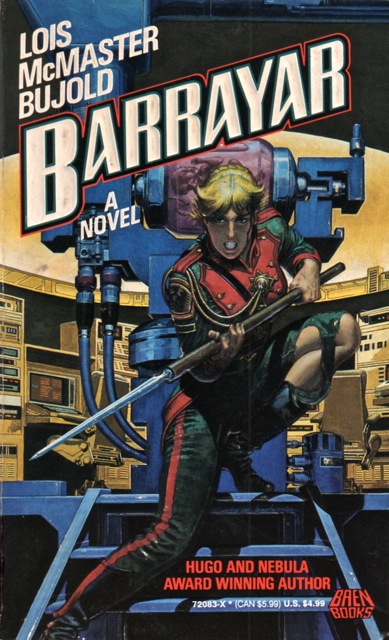
Barrayar by Lois McMaster Bujold
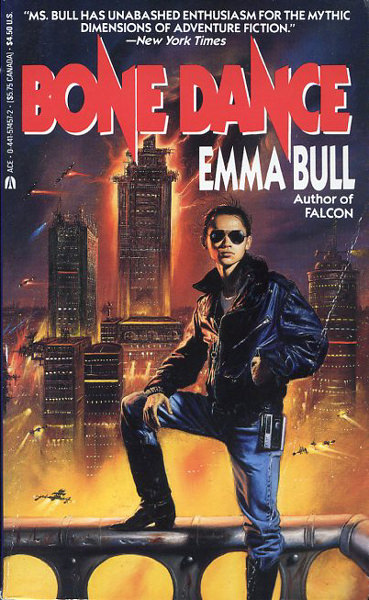
Bone Dance by Emma Bull
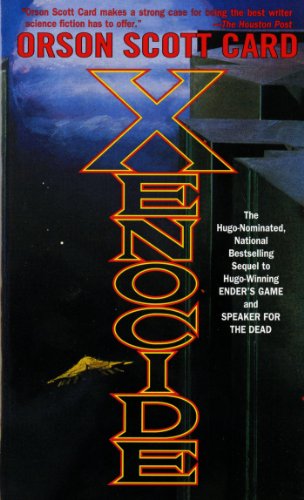
Xenocide by Orson Scott Card
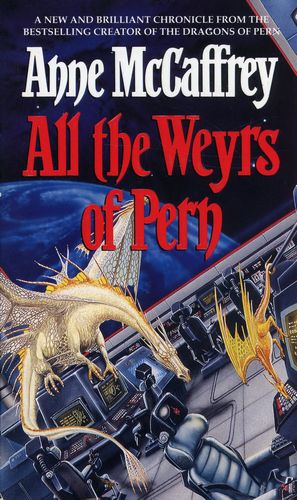
All the Weyrs of Pern by Anne McCaffrey
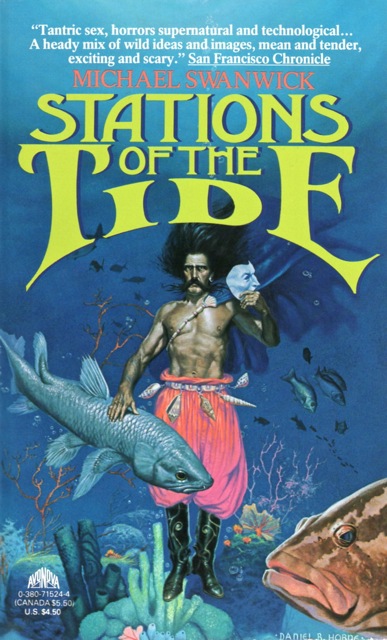
Stations of the Tide by Michael Swanwick
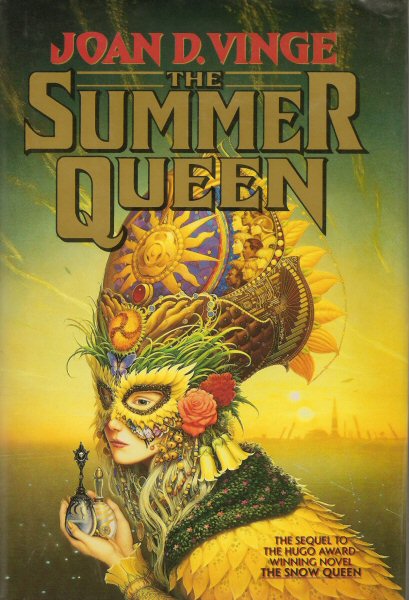
The Summer Queen by Joan D. Vinge
The Actual Results
- Barrayar by Lois McMaster Bujold
- Bone Dance by Emma Bull
- All the Weyrs of Pern by Anne McCaffrey
- The Summer Queen by Joan D. Vinge
- Xenocide by Orson Scott Card
- Stations of the Tide by Michael Swanwick
How I Would Have Voted
- Xenocide by Orson Scott Card
- Barrayar by Lois McMaster Bujold
Explanation
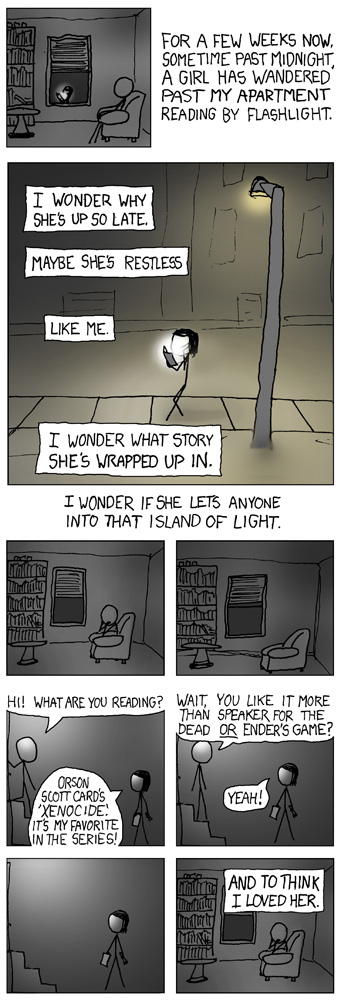
I have a confession to make. That girl from the XKCD comic who loves Xenocide more than the first two books in the Ender’s Game series? …yeah, that’s totally me. Ender’s Game is a science fiction classic, and one of the best books to ever win a Hugo Award (second only to Dan Simmon’s Hyperion, in my opinion), and Speaker for the Dead is a worthy sequel that is superior in many ways to the first book. But Xenocide totally blew me away when I read it back in college. The superintelligent AI Jane, who lives in the ansible connections between planets, is one of my favorite sci fi characters of all time. Also, the concept of the philotic web is one of the most fascinating and exciting sci fi elements I’ve ever wrapped my head around. I also thought it was really fascinating how the post-Earth humans have developed a heirarchy of alienation, and how that influences the ethical decision of whether to make peace or make war with the aliens they encounter.
In short, there was lots of really high concept stuff in Xenocide that blew my mind in just the right way. Also, the story had me hooked from the first page, and the characters are some of the best I’ve ever read. Orson Scott Card has a lot of strengths, but his greatest strength is in writing characters, and he was definitely on his A game with this book. So yeah, go ahead and slam the door in my face—Xenocide is my favorite book in the Ender’s Game series.
Barrayar is classic Bujold, and one of the best books in her Vorkosigan saga. Even though it doesn’t feature Miles directly, Cordelia is such a badass that she more than makes up for his not-quite absence (after all, she is pregnant with Miles while all the action goes down). The political intrigue is everything you’d expect from a good Vorkosigan book, and there’s no shortage of action or things blowing up. But the thing that makes it most satisfying is how everything ties into the later books—in fact, I would go so far as to say that Barrayar is the best place to start with the Vorkosigan Saga, followed by The Warrior’s Apprentice, and then maybe Shards of Honor just to get a little more background before going on with the rest of the series. I definitely wish I’d started with Barrayar. And if you can, listen to the audiobooks, because Grover Gardner’s narration of them is quite excellent.
So those were the books from this year’s ballot that I enjoyed. As for the others, I DNFed them all, though I didn’t even pick up The Summer Queen because I had already DNFed the first book in the series, for reasons that I’ve since forgotten. I’ll try to refresh my memory when I cover The Snow Queen in How I Would Vote Now: 1981 Hugo Awards (Best Novel). Maybe it’s one I should try to pick up again.
I also didn’t pick up All the Weyrs of Pern, because I DNFed that series with the second book. I read the first Dragonriders of Pern book way back in college, and thought it was okay, but it didn’t really hook me enough to read the rest of the series. Last year, I tried to pick up the second book, and was totally blown away by how overpowered the dragons are. Seriously—they can teleport anywhere instantaneously through space and time? How can anything possibly threaten them? Then the book started turning into a soap opera between the dragonriders, and I mentally checked out.
(As a side note, I would say that the Dragonriders of Pern books are the kind of grim-bright books that tend to do well in a second turning, and not a fourth turning. Even though the characters are literally saving the world as part of their job description, they’re so OP that the world is never really in any danger of falling, so the books are a lot more slice-of-life and cozy escapist fantasies. Check out my blog post on the generational cycles of fantasy and science fiction for a more in-depth discussion of this sort of thing.)
Stations of the Tide never really hooked me, and had some weird sexual content that turned me off pretty fast, if I remember correctly. Overall, it felt like the sort of book that was written primarily for the author, and not for any actual reader—kind of like how a movie studio will sometimes let a director make a pet project that no one but the director really likes, just so they can get them to make the blockbusters that everyone goes to see.
As for Bone Dance, it seemed like an interesting post-apocalyptic novel, but the main character was so androgenous that I just had no desire to read past the second chapter. I know this wasn’t typical of books written in the 90s, but these days it’s become so trite to write women who think, act, and look like men that I really have no desire to read that sort of thing. I’d much rather read about manly men and womanly women. Also, I don’t really want to read about lesbians in Minnesota. There’s a reason why Minnesota is now the California of the midwest.
Cool timelapse of a pine tree growing
It’s crazy how alien this looks, with all of the needles constantly springing out of it!
How I Would Vote Now: 1974 Hugo Awards (Best Novel)
The Nominees

The People of the Wind by Poul Anderson
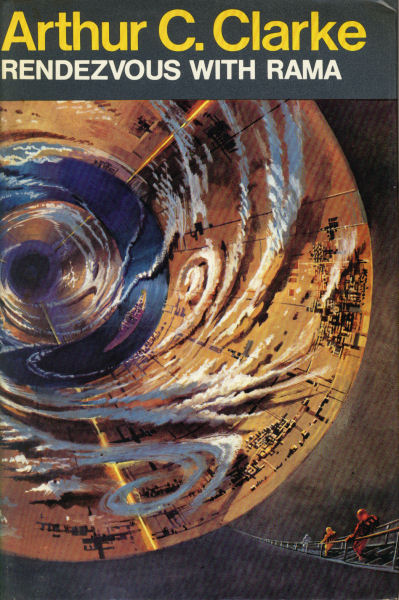
Rendezvous with Rama by Arthur C. Clarke
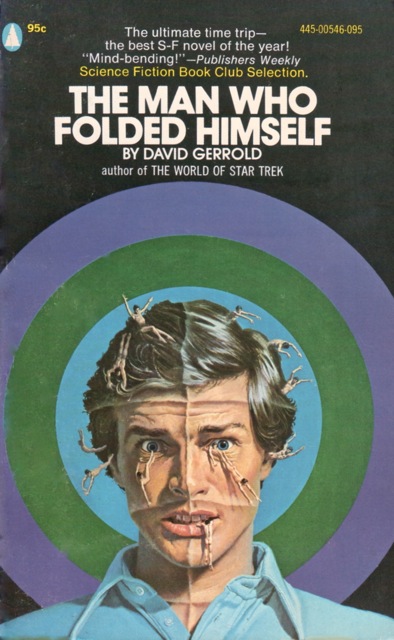
The Man Who Folded Himself by David Gerrold
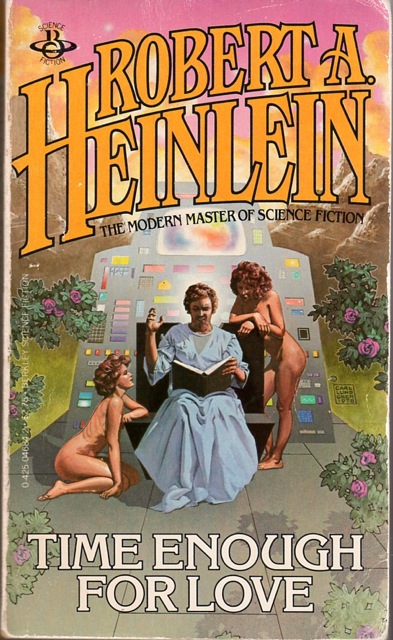
Time Enough for Love by Robert A. Heinlein
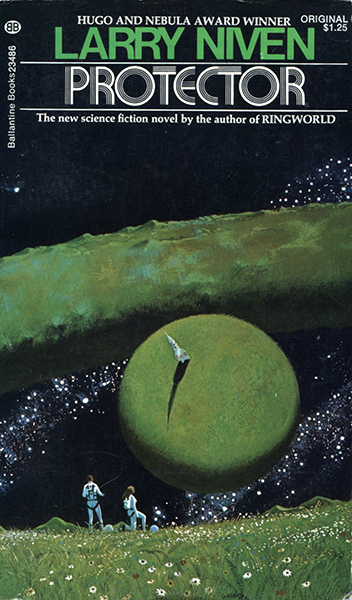
Protector by Larry Niven
The Actual Results
- Rendezvous with Rama by Arthur C. Clarke
- Time Enough for Love by Robert A. Heinlein
- Protector by Larry Niven
- The Man Who Folded Himself by David Gerrold
- The People of the Wind by Poul Anderson
How I Would Have Voted
- Protector by Larry Niven
- No Award
- Rendezvous with Rama by Arthur C. Clarke
- The People of the Wind by Poul Anderson
Explanation
I really enjoyed Protector. It was a great sci-fi space opera novel, with interesting characters, fun worldbuilding, an intriguing premise, a deep sense of wonder, lots of suspense, and some really unexpected twists and turns. It was also a very good hard SF novel, where the rigorous scientific accuracy actually drove the story and made it even stronger. That can be a very difficult thing to pull off, since in the hands of an unskilled author, the harder the science fiction elements become, the more dry and cerebral the story tends to become as well, but Larry Niven is a very skilled author and he pulled it off quite well in this one. In particular, the long-distance space battle that covered the last hundred pages or so had me thrilled right through to the end.
In contrast, Rendezvous with Rama was the kind of hard SF that tends to bore me. There was nothing wrong or objectionable about the story, but it was kind of slow, and didn’t build up very much suspense, aside from the central premise, which was basically “ooh, an abandoned alien starship—and we get to go inside!” I should probably try to read it again, though, because Arthur C. Clarke is definitely not an unskilled author, and Rama is one of the classics.
Poul Anderson, though… I don’t know what it is, but reading his books is like trying to walk through a brick wall. The parts that I have the most questions about, he doesn’t explain at all, and the aspects of his stories that I care about the last (particularly the worldbuilding elements) he explains in soporific detail. His characters all feel like wooden marionettes, and whenever they move, they seem off or contorted in some way, doing and saying things in ways that I would least expect.
Maybe it’s just me, but I’m beginning to think that Poul Anderson just isn’t a very good writer, and his success was mostly due to the good fortune he had to be writing in a time when any book with a rocketship on the cover was guaranteed to be snapped up by hungry science fiction fans. I’ll try a couple more times to read him, but at this point I’m just about ready to give up on this author.
I did not even try to read Time Enough for Love. I’ve been burned enough by Heinlein to know that anything of his that 1) is longer than his juveniles, or 2) has a half-naked (or in this case, fully naked) woman on the cover is guaranteed to turn me off. Time Enough for Love fails both of those counts, so it got a hard skip.
I know that a lot of people love Heinlein, especially the kind of science fiction reader who otherwise aligns with my own reading tastes. But my own experience with Heinlein is all over the map: some of his books, like Farnham’s Freehold and Citizen of the Galaxy, I absolutely loved, and even count as major influences on my own writing. Others, however, like Stranger in a Strange Land and The Moon is a Harsh Mistress, I just couldn’t stand at all. With some, like Double Star, I was glued to the page all the way through, while others, like Have Space Suit, Will Travel, never really hooked me at all (if I weren’t listening to that one on audio, I don’t think I ever would have finished it). So at this point, I’ve more or less decided to limit my reading of Heinlein to his juveniles, unless it comes with a strong recommendation.
Which brings me to The Man Who Folded Himself, which is one of the most disgusting Hugo-nominated books I have ever DNFed, and the main reason why I put No Award on the ballot for this year. A better title would be The Man Who Fucked Himself, since that is both more memorable and more accurate to the story. It starts out as a delightful little time travel novel, but soon turns into a homo- / mono-erotic sexual fantasy. I quit just before the money shot, but I am 100% convinced that Gerrold is a pederast, if not an outright pedophile. Disgusting!
In fact, I had such a horrible experience with The Man Who F***ed Himself that I have started a ChatGPT thread specifically for the purpose of screening these Hugo-nominated books for woke and explicit content. If ChatGPT gives me a synopsis that doesn’t pass my smell test, I’m going to pre-emptively skip it, since I don’t want to expose myself to anything like The Man Who F***ed Himself again. Any book that I skip in this way will get ranked below No Award, and I’ll include ChatGPT’s synopsis in the review.
On the plus side, that probably means I’ll get through this How I Would Vote Now blog series a lot faster.
Two more fascinating pro-natalist podcast episodes
Ward Radio is a Latter-day Saint podcast that tackles all aspects of Mormonism, from rebutting anti-Mormon arguments and debating various models of Book of Mormon geography to running deep dives on ancient apocryphal texts and fringe scientific theories. They also tackle cultural issues too, and in these two podcasts, they specifically look at the depopulation crisis from a Latter-day Saint point of view. The first one is all the main co-hosts of the podcast, and the second one is the main host’s wife and a bunch of her friends / guests from other LDS podcasts.
If current demographic trends continue, then a hundred years from now, the world population will be under 1 billion, and about 200-250 million of them will be members of the Church of Jesus Christ of Latter-day Saints. Another 50-100 million will be Amish, and maybe another 50-100 million will be Jewish. The Latter-day Saints will absolutely love the Jews and the Amish, to the point of annoying everyone else around them, and the Jews and the Amish will grudgingly tolerate the Latter-day Saints.
How I Would Vote Now: 1989 Hugo Awards (Best Novel)
The Nominees

Falling Free by Lois McMaster Bujold
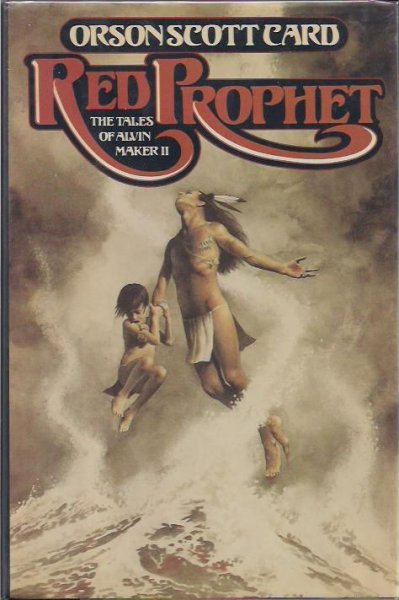
Red Prophet by Orson Scott Card

Cyteen by C.J. Cherryh
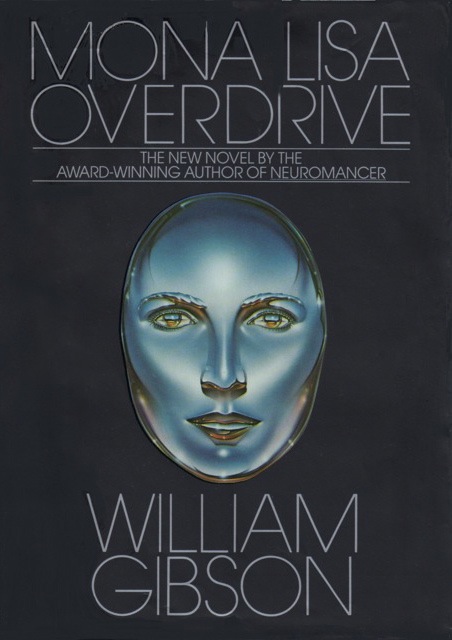
Mona Lisa Overdrive by William Gibson
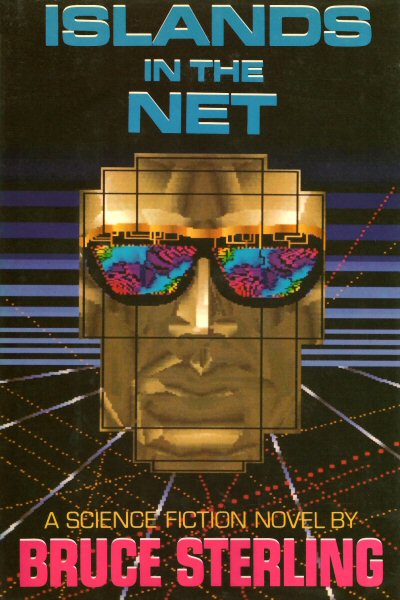
Islands in the Net by Bruce Sterling
The Actual Results
- Cyteen by C.J. Cherryh
- Red Prophet by Orson Scott Card
- Falling Free by Lois McMaster Bujold
- Islands in the Net by Bruce Sterling
- Mona Lisa Overdrive by William Gibson
How I Would Have Voted
(Abstain)
Explanation
Another year where the books were fine, but not to my personal liking (or else they were, but… we’ll get to that). I found no reason why I should give “no award” a vote over any of these books, but I DNFed most of them, though I could be persuaded to try some of them again. But overall, there was nothing in this year’s ballot that really blew me away (except… we’ll get to that shortly).
First, I didn’t read Mona Lisa Overdrive because it was the third book in a trilogy, and I DNFed the series with the second book. The first book, Neuromancer, I read back in college, and while I enjoyed it at the time, even back then I felt that it was right on the edge of being too explicit. Today, I would certainly find it too explicit—in fact, that’s why I DNFed the second book. These days, I just really don’t want to read a book with lots of sex, drugs, and pointless violence. Just not interested in any of that.
Islands in the Net is another gritty cyberpunk novel, but I actually didn’t find it too explicit at all. Perhaps that’s because the two main characters were married and had a family. In fact, compared to Neuromancer, or even The Matrix, it didn’t feel all that gritty at all to me. But reading it in the 2020s, all of the future predictions just made me laugh, especially the idea that internet piracy would allow the quasi-failed states of South and Latin America to get super, super rich, by hacking into the banking networks and siphoning off everyone’s money. Also, while I can understand (and even, to a degree, agree with) the idea that corporations would exercise more power over people’s lives than their own governments, I don’t think Sterling portrayed it in a realistic way. He should have studied East Asian history and society, particularly the Yakuza, to see what that would really look like.
Ultimately, though, the story just slowed down so much that I decided to skip to the end, and I’m glad I did, because the married couple broke up for the stupidest reason in the world, and the big bad turned out to be a bunch of terrorists stealing a nuclear submarine and threatening to launch their nukes and end the world… which is honestly such a boomer trope that it made me role my eyes. Don’t get me wrong—I’m very sanguine about the threat of nuclear war, especially with what’s going on in Ukraine right now (hopefully things haven’t gone nuclear by the time this post goes live), but it’s a uniquely boomer trope to think that history will end when the first nuke of the war goes off, and that all stories have to have clear good guys and bad guys (or at least clear bad guys) and that the whole story can be reduced to “stop that nuke!”
Anyways, I don’t know if that mini-rant makes any sense, but the point is that Islands in the Net didn’t impress me. It wasn’t terrible, but it didn’t hold my interest or blow me away.
I DNFed Cyteen because I got bored around the second or third chapter, though I probably could be persuaded to try it again. I’ve enjoyed many of Cherryh’s other Alliance-Union books, especially Merchanter’s Luck and Voyager in Night, but it’s been years since I read any of them. Just couldn’t get into this one.
Of all the books from this year, Falling Free is the one that I should probably try again. I forget why I DNFed it, which probably means that I just lost interest, or didn’t connect with any of the characters. Also, this was around the time that I was becoming disillusioned with Lois McMaster Bujold, after my wife DNFed Gentleman Jole and the Red Queen and told me all about that one. I used to really love all of Bujold’s novels, and still do enjoy the early Vorkosigan books. But this one, while technically in the same universe, isn’t really a Vorkosigan novel, which is probably a big reason why I just lost interest. But I could be persuaded to try it again.
Which brings us to Red Prophet by Orson Scott Card…
I thoroughly enjoyed this book. It’s definitely a worthy sequel to Seventh Son, and while it had some minor issues, especially toward the end, it definitely ranks up there with Card’s best.
However… this is book two of a seven book series, where the first book came out in 1987, nearly forty years ago… and the seventh book hasn’t even been written yet! In fact, it’s been twenty-one years since book six came out—in fact, more time has passed since the sixth book came out than between the publication of the first book and the publication of the sixth!
What the heck, Card? It’s bad enough that you probably won’t ever finish your Women of Genesis series—will you never finish your flagship fantasy series either? At this point, you’re worse than George R.R. Martin, since at least Martin has only dropped the ball on one fantasy series, not two.
For that reason, I refuse to read any more Alvin Maker books until the last book has finally come out. Also, if the 1989 Hugo Awards were held today and I got to vote on them, I would not vote for Red Prophet, even though it’s a fantastic book. I just can’t justify voting for an author who lets multiple decades go by without doing the damn work to finish what he’s started.
(And yes, I know I have a couple of unfinished trilogies of my own. I’m working on it. Captive of the Falconstar and Lord of the Falconstar should come out next year, and I will probably start work on The Sword Bearer and Return of the Starborn Son in just a few months. In my defense, though, I haven’t let more than a decade pass since I published the last book in any of those series.)