Torn between projects and some new thoughts on the creative process

So I have a confession to make: a couple of days ago, when I was in something of a rough spot with my current novel, Stars of Blood and Glory, I had this overwhelming urge to go back and revisit Star Wanderers.  In two days, I went through everything I’d written up to the point where I’d gotten stuck, and something just clicked.  All of a sudden, I knew exactly where to take the story.

So today, I sat down and wrote the next scene…and man, it was hot!  The words were flying, the characters were leaping off the page (and almost into the sack with each other–almost, but not quite)–it was awesome!  The flame for this project has definitely been rekindled, and I’m really enthusiastic to get it rolling again.

Trouble is, I’m already working on Stars of Blood and Glory–and making some good progress on that one as well.  In fact, I’m still quite excited about it.  I’ve got all the twists planned out, the characters are really coming alive, and while the manuscript is still pretty rough, none of the problems are too serious to stop the creative process.

But sometimes…well, sometimes I feel like I’ve been writing so fast on this one, that the story hasn’t had time to really percolate.  I’ll have the next few scenes planned out, but I just won’t want to write them–not because I’m lazy, I don’t think, but because it hasn’t really clicked yet in my mind.

This is something I’m slowly coming to grips with.  The creative writing process isn’t something you  can completely capture with metrics (like daily/weekly word counts, hours worked, writing rates etc). There’s a whole lot of mental-space work that, on the outside, looks a whole lot like procrastination or laziness–and can easily degenerate into that, if you aren’t careful.  However, these mental activities are absolutely crucial, because they serve to refill the creative well.  Without them, writing becomes painfully difficult, and the quality of the stuff you do manage to put out tends to suffer.

That’s what I’m starting to notice, in any case.  I’ve found it somewhat helpful to go on a long walk each day, like maybe for an hour or more, but I wonder if it might also be helpful to have multiple projects to fall back on, so that even if I’ve got to refill the well for one of my projects, I can still be actively creating.

Because it’s more complicated than just outlining the next chapters.  The best scenes to write are the ones that go off in their own direction, without any planning (or perhaps minimal planning) on my part.  Discovery writing is definitely a part of my process.  To make that happen, however, I have to get a real feel for what’s happened up to that point, and think through all the implications of their possible choices.  If I do it right, something I haven’t considered comes to mind, and it helps the scene to come to life enough for me to write through it.

So yeah.  For Star Wanderers, the ideas have been percolating since a conversation I had with my brother in law and former roommate over Christmas break.  For Stars of Blood and Glory, I feel almost as if I’m going too fast to percolate–or that at least I need to take a little time off here or there.  And the real trouble is that I’m probably going to be going overseas in a couple of weeks–which means that all the free time I enjoy right now is probably going to become extremely scarce in the near future.

So I’m going to do my best to finish Stars of Blood and Glory before the end of the month, but if I’m not getting enough prewriting in to do the story justice, I’m not going to push it.  And when I’m not working on that one, I’ll work on Star Wanderers, since I’m really in love with this project (seriously, very much in love) and it’s not in my heart to put it off any longer.  I just hope that it doesn’t get in the way…

Anyhow, if I’m going to pound out another 4k to 5k tomorrow, I’d better get to bed.  I’ll leave you with this:

Man, I need to get this girl to do the soundtrack for my life. Either that, or my next book, which pretty much amounts to the same thing. 😛

G’night!
Trope Tuesday: Big Damn Heroes

You know the drill.  The clock is ticking down to zero, the evil hordes are swarming through the gates, the virgins are about to be sacrificed and the damsel in distress is about to be lost forever–and then the  heroes show up in all their glory to save the day.

This happens all the freaking time, which means that if you want to make a living telling stories, this is not a trope that you should ignore.  And with good reason.  Not only does it give the writer ample opportunity to play with suspense and action, but it arguably lies at the very core of what makes a hero a hero:

David Gemmell, according to this interview with Ian Graham, defined a hero simply as “someone who does heroic things.” They might not always take the right side, or they might not even care about doing what is right, but when the universe conspires to bring them to a moment of decision, they make the choice that all of us would like to think that we would take and do something extraordinary.

I like this definition of a hero.  It strikes me as a lot more honest than the perpetual do-gooder whose only motivation is Truth, Justice and the American Way (though those characters can–and do–have Big Damn Hero moments of their own).  Also, it means that true heroism is not contingent upon actually winning.  History may be written by the victors, but that doesn’t cheapen the experience of those who actually lived it.

Of course, if the heroes don’t save the day, it’s pretty hard to pull off a crowning moment of awesome without bringing in the Bolivian Army.  Either the heroes find out that they’re too late, or they make things worse, or (as is so common with Othar Tryggvasson of Girl Genius) they just prove that their ego is too big for its own good.  When taken to the extreme, the heroes may even be in danger of turning to the dark side.

The biggest danger with this trope is turning it into a Deus Ex Machina.  The thing that makes Big Damn Heroes so incredibly satisfying is the sense of climax when they show up to save the day.  Thus, proper foreshadowing is key.  Yes, the rule of cool still applies, but if that’s all you rely on, you’re not going to be able to pull it off to maximum effect.

One of my favorite examples of this trope is Liam Neeson in Taken.  Plenty of action movies are more violent, but few are more satisfying.  It’s the perfect pick-me-up after a long crappy day at the office–not that I work in an office anymore.  I wonder why…

In any case, this is a great trope to look out for, and definitely one to master, especially if you’re writing any sort of action-adventure story.

Halfway to 10k

I was going to post my ebook numbers for December and a report for the last quarter, but then I got caught away in my latest novel, Stars of Blood and Glory and wrote over 5.6k words for the day.

This is probably the most new material I’ve written in a single day since 2009–perhaps ever.  Revising tends to come a lot easier for me, so I’ve spent a lot of time in the past doing that, but this indie publishing gig is making me up my game.  I’m working my way up each day; hopefully I’ll be able to write even more tomorrow and keep up the pace until the book is finished.

Of course, it helps that I’m hanging out at my parents’ place without any obligations or time commitments.  I finished my application to the TLG program last week, and they just sent it out today; with luck, I’ll hear back that I’ve been accepted within the next five days, and then I’ll have a definite idea of how much time I have left before I’m off on the next adventure.  It probably won’t be much longer than two or three weeks at that point.

My (rather lofty) goal is to finish the rough draft of Stars of Blood and Glory while I’m here in Massachusetts, seeing as I have nothing else to compete for my time.  Once I’m overseas, it’ll be a flurry of activity and I’ll probably be lucky just to manage one or two thousand words per day, at least until things settle into some kind of routine.

So that’s the plan for the next few days.  In order to finish this book by the end of January, I’ll have to average over 3k words per day, but I think I can do it.  This story is so much fun–the characters are practically leaping off the page at me, and I’ve got some awesome twists planned.  Space battles, mercenaries, a runaway princess, and opposing princes who are determined to prove themselves men–it’s going to be a clash of epic proportions!  I can hardly wait to write it!

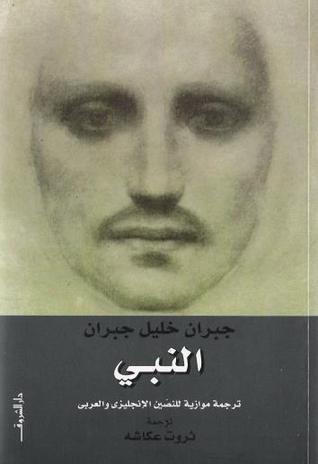
The Prophet by Gibran Khalil Gibran

AL MUSTAFA the chosen and the beloved, who was a dawn unto his own day, had waited twelve years in the city of Orphalese for his ship that was to return and bear him back to the isle of his birth.  And in the twelfth year, on the seventh day of Ielol, the month of reaping, he climbed the hill without the city walls and looked seaward; and he beheld his ship coming with the mist.  Then the gates of his heart were flung open, and his joy flew far over the sea.  And he closed his eyes and prayed in the silences of his soul.

Thus begins The Prophet, a timeless masterpiece by the Lebanese poet Gibran Khalil Gibran.  As the prophet Al Mustafa prepares to leave on his ship, the people of Orphalese come one last time, asking for him to share his wisdom.  And so he does, on a variety of subjects from love to houses, clothes to prayer, beauty, pleasure, and finally, death.

I really love this book, and not only because it gives me a chance to practice my Arabic.  Just about every line in this epic poem is both moving and profound, and gives you pause not only to think, but to feel, and feel deeply.  One cannot help but feel that Khalil Gibran was a man who knew not only great joy, but also great pain in his life–pain which made his soul all the greater.

Like many things Middle East, however, the book is not without controversy. I have no doubt that many of my friends would find some words in this book with which they would strongly disagree.  Even some of my Arab friends don’t like it for (I suspect) that reason.  However, even though I don’t necessarily agree with everything in here, it’s such a thoughtful book and makes so many good points that I can’t help but love it.

The style is very Arab, which is to say it’s a lot wordier and more colorful than most modern English literature.  From what I’ve heard, though, Khalil Gibran wrote this in English first, and then translated it into Arabic.  Still, it has a distinctive Middle Eastern feel to it, which I love.  One of my favorite passages:

Yet I cannot tarry longer.

The sea that calls all things unto her calls me, and I must embark.

For to stay, though the hours burn in the night, is to freeze and crystallize and be bound in a mould.

Fain would I take with me all that is here.  But how shall I?

A voice cannot carry the tongue and the lips that gave it wings.  Alone must it seek the ether.

And alone and without his nest shall the eagle fly across the sun.

That’s exactly how I felt before I left Utah, and one of the main driving reasons why I’m leaving to start a career teaching English abroad.  In dozens of passages like this, Gibran’s words reflect my own feelings even better than anything I could ever write.

I suppose that’s what poetry is all about; using words in such a way that you can really make people feel.  Gibran is a master of that, which is probably why he’s the third bestselling poet in the world (after Shakespeare and Lao-Tzu).  Regardless, this is definitely a book that I will read over and over, in English and in Arabic.

Character Interview: Master Sergeant Roman Andrei Krikoryan

So I recently heard about a really interesting blogfest, where the goal is to blog about the characters in your story, as well as have a little fun with flash fiction.  The prizes look pretty good, too: a couple of free books and a manuscript critique, from a couple of up-and-coming editors.

Not bad…but the 250 word limit on the character interview seemed a little too restrictive.  The idea really caught my imagination, though, so I decided to go ahead and do it for the main character of the book I’m writing now: Stars of Blood and Glory.

It was really fun!  Stuff like this can be great for working out different aspects of your character.  I already knew most of this stuff about Roman, but the exercise helped to solidify it.

And so, without further ado: enjoy!

========================================

Hello, and welcome!  I’m here on the Tajji Flame with Master Sergeant Roman Andrei Krikoryan, one of the Tajji mercenaries in Bringing Stella Home and a major character in the sequel, Stars of Blood and Glory.  How are you doing today, Roman?

How do you do, my friend.

Very well, thank you.  Let’s get started shall we?  First question: What is your biggest vulnerability? Do others know this or is it a secret?

What is my vulnerability?  This is strange question to be asking a mercenary.  Why do you wish to know? <narrows eye>

Um, it’s not meant to be intrusive, more just as ah, um…well, what would you say is your biggest emotional vulnerability?

“Emotional vulnerability”?  Look at me.  I am not a man anymore, but a cyborg; what “emotions” I still feel, they are distant and weak.  Rare pleasures, like sweet, unbidden memories.

I tell this to the doctor every time at check up, but she does not believe me.  She is still young, and wishes to believe that there is some humanity left in me.  Who knows?  Perhaps she is right.  But cyborgs do not die, my friend: their humanity fades until they are a ghost within a machine.

I have wandered the stars for over seventy standard years; I have seen my homeworld conquered not once, but twice.  I have killed many men, I have slept with many whores, I have watched my old friends die, and had other friends watch me, thinking I was dead.  I am old–too old.  And yet cyborgs do not die: they fade.

So if you consider this as “emotional vulnerability,” then this is mine: to be alive, and yet not truly living.  And it is no secret.  I am a man of very few secrets.

What do people believe about you that is false?

Many things, some more false than others.  You cannot be soldier for as long as I without learning how to cultivate a certain, how do I say?  Persona.  My men, they see the side of me that is strong–and it is a true side, for in battle, it is impossible to live a lie.  But the side that they do not see, that is the pain–the memories, the weariness, the silent longing.  It is dull now, but it is still there, even if I do not show it.

And so, if there is something that people believe about me that is false, it is that I feel no pain.  I have always felt pain, until even before the rebellion was lost.  It is way of life for me now.  When the pain finally stops, then I will know that I am no longer human.

What would your best friend say is your fatal flaw? Why?

My best friend is the captain, Danica Nova.  She knows of my pain; she shares in it.  And what would she say is my flaw?  That I suffer in silence, perhaps.  Every time she has question, she is asking me for help, seeking for my guidance.  She believes that everyone must have someone on whom they can lean, that without this, no one can truly stand.  And so she sees me suffering, and wishes that I would talk with her, so that these wounds might heal.

But I do not wish for my wounds to heal.  They are the last thing I have left–the pain which tells me I have not yet faded, that I am still human.  I have lived many years with this pain, and I do not know what would become of me without it.  And so, it is not my friends, but the pain, that has been my constant companion these many long years.

I do not know if this is flaw, but I do know that Danica would say that it is.

What would the same friend say is your one redeeming quality? Why?

That question, I know without a doubt what is the answer.  It is that I will do anything–anything–for my men.  You see my arm, how that it is prosthetic?  I lost the original fighting in a battle that all of us thought we would lose.  If I am fading, it is because I have given my life for my men–and I will continue to do so until I have nothing left to give.

What do you want most? What will you do to get it? 

<laughs> A strange question, with an even stranger answer.  As you can see, I am man of war–but if there is one thing that I wish for, it is peace.  Peace!  And what sort of peace, you may ask?  I will tell you.  I wish for the peace that one feels by coming home. <throws back head and laughs again>

And so you see, my friend, this is a peace that I can never feel.  My homeworld is gone–slagged into oblivion.  My country has been destroyed, my people scattered across a hundred stars. I have nothing left but to keep on fighting; and so, even though I long for peace, I continue to make war, because it is all that I am.

But what will I do to get this peace?  I will tell you.  Since I do not have a homeland, I will find this peace by dying for my men.  It is fitting, is it not?  That the man of war should only find peace in his own death?  This is as it should be.  But it must not be a selfish death–it must be a sacrifice, so that others may live.

Thank you very much, Roman.  I enjoyed writing Bringing Stella Home, and look forward to chronicling your further exploits in Stars of Blood and Glory.

My pleasure.

========================================

As an interesting side note, if Roman had a theme song, this would be it.  Have a great day!

Getting back into things

Sorry I haven’t posted much lately; I just got back to Massachusetts from a cross-country train trip (after spending Christmas between Utah and Texas), and I’m still getting situated here at my parents’ house.  If all goes well, I’ll be leaving by the end of the month to teach English in Georgia; worst case scenario, I sign up for a different program and spend a few more months here than I’d bargained for.

Things on the writing front are going well, though; I’ve been pulling between 1.5k and 2.5k words per day pretty consistently, all on Stars of Blood and Glory.  It’s very refreshing to be working on a new project again, and while I don’t feel like I’m into it as much as I could, with nothing else to distract me hopefully that will soon change.

One other interesting thing I’m doing right now is keeping track of the stats for my writing sessions: how many words I write, what times I start and finish, how many words per hour I average, etc.  The data is turning out to be quite interesting, so once I get to about 50 or 100 data points, I’ll post my findings.  It’s definitely giving me some much needed insight into my writing process.

In the next couple of days, I’ll post the ebook numbers for December and my quarterly report (I might actually combine the two into one post, come to think of it).  Also, I’ll finally get around to sending out the email newsletter, with some goodies like desktop wallpaper for Desert Stars.  If you haven’t yet signed up for the newsletter, you can do that via the form on the sidebar. —>

Finally, to round things out, I’ll link you to this awesome Final Fantasy VI tribute I found on teh internets:

Man, such an awesome, awesome game. I almost did a full length novelization of FF6. Instead, I wrote my first novel. It was definitely the better choice at the time…but a part of me still wants to revisit that world through writing my own fanfic. Someday, maybe…

Trope Tuesday: Xanatos Speed Chess

Well, I can’t say any of this mess was part of my original plan, but it’s all working out so beautifully that I can’t complain.

Tarvek, Girl Genius.

The Xanatos Gambit is when a character plans out a scheme such that all possible outcomes (including abject failure) ultimately benefit that character.  Named after David Xanatos from Gargoyles, it is most often used by villains who are very good at evading karma.

Xanatos Speed Chess, on the other hand, is when the character relies not on setting up an only-win scenario from the beginning, but on being able to adapt and change their plans quickly enough to pull off a victory even after their first few attempts inevitably fail.  For this character, the important thing is not to keep everything from falling apart, but to outsmart their opponent even after everything already has.

Both heroes and villains can play at this game, but the heroes generally tend to be better at it.  Part of the reason for this is that try-fail cycles are much more conducive to Xanatos speed chess than the Xanatos gambit.  The heroes might lose a pawn or two, or even the queen, but that doesn’t stop them from turning defeat into victory.  In fact, depending on the story, it may provide exactly the sort of dramatic tension that makes the ending so awesome.

A good example of this in recent cinema would probably be the new Mission: Impossible movie.  Over and over, the mission falls apart–and the characters respond either by changing the mission or by crafting a new one.  It’s one of the things that makes it such a great spy thriller: the tension is always high, because you never know how they’re going to pull it off.

The opposite of this trope is the Indy Ploy.  This is because Xanatos speed chess is still chess; even though the plans are dynamic, they are still plans, and involve a large degree of calculation and forethought.  With the Indy ploy, the character is just wingin’ it, jumping into the thick of things and making it up as they go along.

The main reason I’m interested in this trope is because my current project, Stars of Blood and Glory, has a strong military plot, and I want one of the characters to be a magnificent bastard.  Let’s just say that if Bringing Stella Home is the Mongol conquests in space, Stars of Blood and Glory is the Battle of Ayn Jalut.  It’s going to be challenging to pull it off, but that’s part of what makes writing so much fun…

Writing Resolutions for 2012

As I write this post, I’m riding on the California Zephyr through western Colorado, going to my parents’ house in Massachusetts before heading out overseas on an adventure that I have no idea where it will take me before the end of the year. It’s an interesting time to make New Year’s resolutions, because so much is up in the air at this point, but two things are for certain: I will continue to write, and I will continue to publish.

A lot has changed for me since 2010. Around this time last year, I was still in query-writing mode, looking for an agent, and getting a little desperate for work. I eventually found work at an alarm company, which lasted through the summer until I realized it wasn’t helping me advance towards my long-term goals. And as for the query-go-round, I made the tremendous paradigm shift into indie publishing around the same time, eventually publishing three novels, three short stories, and one novella. Sales haven’t been spectacular, but they have been earning me a trickle of money that amounts to a few hundred dollars by now. Not quite a living yet, but if I keep at it, it might just become that.

My dream since 2009 has been to make a full-time living telling stories that I love. With all the opportunities made possible through ebooks and indie publishing, I have great hopes of accomplishing that within the next few years. However, I do think it’s going to take time, which is why I’ve decided to go abroad to teach English for a while. It’s the perfect kind of career for young people going through a transitional time in their lives, and I think I’ll find it a lot more enriching than bouncing around dead-end warehouse jobs until the writing starts to take off.

I can’t foresee exactly where this path will take me, but I can take accountability for the things within my control. So with that in mind, here are my resolutions:

1: Independently Publish At Least Two Books in 2012.

This shouldn’t be too hard. Journey to Jordan is already in the queue; all I have to do is make a final self-editing pass and figure out how to insert the photos. Besides that, I have the direct sequel to Bringing Stella Home, Heart of the Nebula, which I should be able to revise, polish, and publish before the end of the year, perhaps as early as summer.

Besides these projects, though, the queue is conspicuously empty, which is why I’ve come up with the following resolution:

2: Constantly Work on Producing New Material.

This is a big one–in the past, I’ve taken time off from new projects to work on major revisions, and as I mentioned in this post, it’s slowed me down a lot more than I would like. I’ve never been able to juggle two projects for more than a week, but this is a skill I should probably learn if I’m going to do this professionally.

I hesitate to put a concrete number like “four completed novel drafts before 2013” because this is an aspect of my writing process that I still need to explore. If I peg myself to a number, I could as easily find that I’ve set it too low as that I’ve set it too high. The important thing at this point is to learn the self-discipline.

3: Read and Review a New Book Every Week.

This is a tricky goal that I’ve tried and failed at before, but I really feel that reading voraciously is going to help my writing more at this point than working on craft or attending conventions. Those are good too, of course, but there’s something about reading and analyzing other works, both inside and outside of your chosen genre. I’ve been slacking off on this a lot lately, and if I’m not careful, my writing will get worse because of it.

With my Kindle ereader and low-priced ebooks, I have a lot of reason to be optimistic about this goal, even though I’ll be on the go for most of the year. It’s like having an iPod for books–and with the sampling system, I don’t have to worry so much about whether or not it’s worth buying the book. Simply download the free sample, and if I’m still interested by the end, click and continue.

4: Experience at Least Three 10k Days.

This ambitious resolution comes from a post I wrote earlier in reaction to this post here. Basically, I want to boost my productivity and break through some mental barriers that have been in place for the past few years, and pushing myself to do a couple 10k sprints will hopefully help to reset my stride at a much higher rate.

At first, I was going to say “three consecutive 10k days,” but with all the uncertainty accompanying my travels and new TEFL career, that doesn’t seem like a good idea at this point. If/when I’ve saved up enough money to take a few months off from everything else, then I’ll set a goal like that.

5: Attempt to Write a Novel in a Week.

This is more of something I want to do for fun, just to see if I can. Apparently, Michael Moorcock used to write novels in three days, and while I’d like to try that too, a week seems like a more realistic goal. At 40,000 to 50,000 words minimum, I don’t even have to break 10k/day to do it. 🙂

So those are my writing resolutions for the next year. As always, I’ll continue to write for this blog, hopefully with a lot more book reviews in the coming months. In the meantime, though, this post is getting long, and I’d better get back to writing.

Happy New Year everyone! Here’s to 2012 and all the possibility it brings!

Back from Texas, or My Last Day in Provo

So!  My Christmas vacation in Texas is over, and I’m on the road again, hanging out here in Utah before catching the train to my parents’ house in Massachusetts and (hopefully) going overseas before the end of the month.

It was a great break!  Great to see my niece and three nephews together.  I swear, my sisters have the cutest kids; it’s going to be a real challenge to find a woman beautiful enough so that my kids will be able to compete!  For Christmas, I gave them all trilobites from my fossil collection.

My favorite moment was probably playing with them at the community park, on the slides and other stuff.  Jane, who is two and a half, likes to wear pretty dresses and run around the playground talking to herself, which is really cute.  Dan, who just started to walk, would climb up to the slides and then stop at the top because he’s too scared to go down.  It was fun watching him discover and explore his world.

On the way back to Utah, we stopped by my old roommate Steve’s place up in Dallas.  He lives in an apartment that is just like a freaking motel…how crazy is that?  Pretty cool, actually.  It was fun to see him again, especially since he’s getting married in April.  Good times.

My sister gave me the gift of her stomach flu, though, which really hit the next day.  Around Amarillo, it got so bad that we pulled over on the shoulder and I fell out of the car vomiting. It was…like something from one of my novels, actually.  We were hoping to make it all the way to Farmington and the Navajo reservation, but ended up in a Hotel 8 outside of Clines Corner for a very miserable night.

The next day was much better, though, and we made good time all the way back to Provo.  My brother in law couldn’t stop talking about the book I’d gotten him, Born to Run, and said that it’s changed his life (he’s a runner…go figure).  We also talked about story structure, Girl Genius, places we’d like to settle down, life plans, etc.  Stopped in Moab for some dinner, and in Bluff to check out this really cool looking historical site.  We switched over in Blanding, and before we knew it, I was pulling us into Provo after driving almost five hours straight.

As a side note, I want to say that I love Southern Utah.  ZOMG, it has some of the most beautiful desolate country I have ever seen.  Inasmuch as I can see myself settling down anywhere, I’d really like to settle down in a place like Monticello or Blanding or Saint George.

Texas is also beautiful, but I’d probably find the rampant consumerism a bit too stifling, and New England winters are far too dark and depressing (unless you have a cozy little cottage with a wood-burning stove).  But Utah–this is my people, living in my kind of country: wild, open, and desolate, where the pioneers are remembered by name and ancient Indian ghosts still haunt the land.

So anyway, I’m back in Provo for a day before heading out on a train late tonight to Massachusetts.  If you’re in the area and want to hang out, give me a call.  This is my last day in Utah for at least the next couple of years or so, and I want to make it count!

My internet access in the next couple of days is going to be spotty, but I want to do a couple more posts to round out the year.  A lot of things changed for me in 2011, so I want to recap that, and I’ve been thinking a lot about my New Year’s resolutions, so I’ll definitely do a post on that as well.  I’ll probably write those on the train, though, so they might not go up until next week.

That’s the plan, anyway.  I hope you all had a wonderful Christmas, and I look forward to hearing from you again soon!

Trope Tuesday: New Year Has Come

Just like a story, every year has a beginning and an end.  For this reason, New Years has become a time to celebrate change, renewal, and the setting of impossible goals which we will all probably break by March.  Over time, this tradition has become so ingrained in our culture that it’s only natural for it to pop up in our fiction.

Most stories that feature a New Year subplot are episodic, such as cartoons, comics, anime/manga, and television shows.  They usually reflect real-world holiday traditions, such as the practice of setting New Year’s resolutions.  Because all stories need conflict (but also because fiction sometimes reflects reality), the characters in these stories are often just setting themselves up for failure in some hilarious way.

At first glance, this might seem depressing.  After all, if most of us will never reach our goals, why do we even bother setting them?  Why torture ourselves with guilt when, in all likelihood, we’re just setting ourselves up for failure?

In some ways, I think it comes down to this quote from David Gemmell:

May all your dreams come true save one; for what is life without a dream?

One of the things that makes us human is that we all need to have some impossible dream to strive for, some sense of hope for the future.  Through our New Year’s resolutions, we tap into that sense that anything is possible, and that we can change who we are and become better people.

For some of us, those resolutions are an effective tool to turn their lives around.  For those of us who lack that kind of will or self-discipline, the act of setting resolutions still helps us reflect on our lives and change in ways that perhaps we don’t immediately perceive.  After all, the truest measure of success isn’t whether you’ve accomplished all your goals, but how much you’ve changed through striving to meet them.

That’s my take on it, anyway.  In any case, a New Year’s story is a great way to give your characters some time for reflection, since it’s probably the most introspective holiday in our Western culture.  It’s a time for beginnings, endings, and chasing impossible dreams.

Happy New Year!