Last day of school

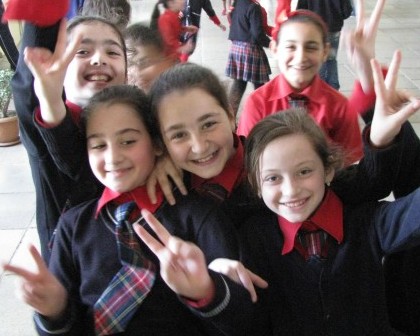
So today was the last day of school in Georgia, with all of the craziness that that entails.  It was kind of sad to say goodbye, even though I’ll probably be coming back to the same school in September.  In the meantime, I’m going to miss being a rockstar to all the 7-12 year olds and giving them high fives after class and in the hallways.

I haven’t posted much about my teaching experience, but it’s generally been positive, though not without its ups and downs.  I’ve met a lot of great people, taught a lot of great kids, and lived in a culture very different from my own.  I’m not sure how I’ve grown yet, or what I’ve learned from the experience, but it isn’t over–I’ll be back after the summer, for a least one more semester.

I asked to be placed in the same school again, though I’ll be changing homestay families.  If they can’t find another family in this district, I asked to be placed in a village near Kutaisi.  It’s impossible at this point to say what will happen, though, and things in this country tend to change without notice.

When I came to Georgia, my goals were to find out if I could balance teaching English with my writing career, to get some useful teaching experience, and to gain some cultural exposure that would enhance my writing.  On all three counts, I think I’ve had success.

My writing productivity has gone down  slightly since coming out here, but I think that has more to do with the homestay and finding a good, quiet place to write.  I’m still writing every day, just 1.5k words instead of 2.5k.  Teaching English isn’t the problem–in fact, it’s probably one of the best careers for aspiring writers, just so long as you know your creative process and have a modicum of self-discipline.  I’ll probably do another post on that later.

As far as teaching experience, I don’t know how much my time here in Georgia is going to help my resume, but it has helped me to have a bit more confidence when it comes to teaching.  I still feel like there’s a lot of room for professional improvement, though, and it’s going to be difficult to get that here.  I like Georgia, though, so I’ll be happy to come back.  If anything, I figure one year looks better on a resume than six months.

And as for cultural exposure, coming out here was definitely a good move.  Living in a developing country changes your perspective in a lot of interesting ways, and Georgia is so different from America that I’m sure I’ll be talking about it for years to come.  How all of this will affect my writing, I don’t exactly know, but I’m sure it will only enhance it.

So yeah, that’s been my experience so far.  The last day of school was kind of bittersweet, but I’m definitely looking forward to coming back!
Trope Tuesday: Deus Ex Machina

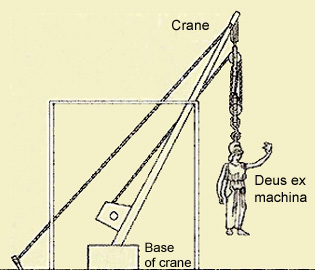
God from the machine. Literally.

This one is by request.  A Deus Ex Machina, or “God from the Machine” ending, is basically when the author writes himself into a corner and pulls something out of his butt to resolve the story.

The term comes from ancient Greek theater, which often employed this technique–probably because the audience was known to get violent when the show didn’t end the way they wanted it to.  Basically, a crane–the “machina,” or machine–would lower an actor playing the role of one of the gods–the “deus”–who would then resolve everything and tie up all the loose ends without the heroes having to do anything.

Sound unsatisfying?  Yeah, I think so too.  That’s why it’s often used as a derogatory term, much like Mary Sue.  HOWEVER, it can be done well.  As always, your mileage may vary, but here are some examples that pull it off:

WARNING! SPOILERS!

  • Watership Down:  A girl saves Hazel from her cat.  Satisfying because it makes sense from the girl’s point of view, and humanizes the story by showing that it really does take place in our world.
  • The Hobbit:  The eagles arrive out of nowhere to turn the tide of the Battle of Five Armies just at the critical moment.  Satisfying because it’s a cavalry ending as well, though some fans don’t like it.
  • Lord of the Rings:  Again, the eagles swoop down and save the day, this time by rescuing Frodo and Sam from the fires of Mount Doom.  Satisfying because after coming this far, we really don’t want a downer ending.
  • Harry Potter and the Sorcerer’s Stone:  Harry is saved by his mother’s love.  Satisfying because of the symbolism and the power of love.
  • Lord of the Flies: Just as the boys are about to kill each other, a military ship arrives out of nowhere and rescues them.  Again, satisfying because of the symbolism, as well as the collective “what have I done” moment.
  • Schlock Mercenary:  Many, many occasions.  Satisfying because it’s brilliantly lampshaded.
  • Monty Python and the Holy Grail: “…the animator had a fatal heart attack!  The cartoon peril was no more!”
  • Raiders of the Lost Ark:  The Nazis capture Indiana Jones and get the Ark of the Covenant, but when they open it, a supernatural force kills them all.  Satisfying because it squares with Indy’s general MO and his pattern of spectacular failures.
  • The War of the Worlds:  The humans are utterly powerless to stop the aliens, but they all die off from germs.  Satisfying because of the underlying message.

Does this mean that it’s a good idea to write off any criticism that your own work suffers from a Deus Ex Machina?  Probably not.  This is one of those things that readers tend not to notice when it’s done well.  If your readers notice it, chances are that something is broken.

As you might guess, there’s a lot of gray area as to what constitutes a Deus Ex Machina, and what is actually something else.  Generally, if the ending is properly foreshadowed, either by a Chekov’s Gun or by good character development, it’s not a Deus Ex.  The foreshadowing removes the “out of nowhere” aspect that readers find so unsatisfying.

Foreshadowing is one way to fix a Deus Ex Machina.  Another way is to toss out the ending and rewrite it from scratch, starting at the point where hero starts getting sidelined.  According to Dan Wells’ seven point story structure, the hero should typically spend the first half of the story reacting to the villain, and the second half getting the villain to react to him.

There are lots of other ways to fix a Deus Ex Machina, but those are probably the biggest ones.  If you have any other suggestions, by all means, suggest away.

Summer To Do list

They say that the three main perks to being a teacher are June, July, and August, and that’s as true for TEFL teachers as it is for any other kind.  I’m spending June in Georgia, but for July and August, I’ll be back in the States.  Instead of vacationing, though, I plan to be working hard at my main career, which is writing.

Here’s what I hope to accomplish:

  • Set up a separate business checking account.
  • Release POD editions of Genesis Earth, Bringing Stella Home, and Desert Stars.
  • Set up an online bookstore to sell direct.
  • Redo cover art for Bringing Stella Home. Completed 2 June 2012.
  • Redo blurbs for all titles.
  • Identify and submit Genesis Earth, Bringing Stella Home, and Desert Stars to prominent sf&f book bloggers.
  • Organize a summer blog tour.
  • Research translation options for all titles.
  • Put proper copyright pages in all titles.
  • Track down all invoices and royalty statements.
  • Switch to the new Kobo publishing platform.
  • Fill out all sections in business plan.

The list might seem a little daunting, but two months should be enough to do most of it, especially considering that I don’t really have any other obligations.  Basically, I want to get everything done that needs to be done in the States, then get back out and spend the rest of the year abroad.

As for writing, don’t worry!  I plan to do that too, as always.  Here’s what my project list currently looks like:

  • Finish the unnamed WOTF project and start publishing it serially.
  • Finish the 3.0 draft of Heart of the Nebula.
  • Send out Stars of Blood and Glory to first readers.
  • Get ready to start Edenfall in the fall.

That last one might be of interest to fans of Genesis Earth.  The reason I haven’t finished Edenfall yet is because…well, this might sound kind of wishy-washy, but it’s because the story hasn’t really called out to me.  For that reason, I decided to put it off and work on other projects that have.

Recently, however, I’ve started to feel the whispering of an intimation that it’s time–that the story is almost ready to come onto the page.  Once it does, I have a feeling that it’s going to be quick–much like the first draft of Genesis Earth.

It’s hard to tell, though, and it may still be too early to know for sure.  The unnamed WOTF project has something to do with it, as well as living here in Georgia.  I have a feeling that rereading Genesis Earth is going to make everything fall into place, but it’s impossible to say. I’ll try doing it at the end of the summer, after I’ve cleaned up my plate a bit, and see what happens from there.

Gah, this sounds so wishy-washy!  I’m a professional writer, after all–why can’t I just pound words out on demand?  But as a creative-type, I’ve learned that that just isn’t the way I work.  There’s such a thing as starting a book too early, and for Edenfall to really shine, I feel like I need to give it a little more time–just a little.

I’m sorry for those of you who have been waiting, but don’t worry!  I definitely haven’t forgotten about it.  And once Edenfall comes to me, I have a feeling that the final book in the trilogy, The Stars of Redemption, won’t be far behind.

That’s the plan for now, anyway.  It’s definitely going to be a busy  summer!

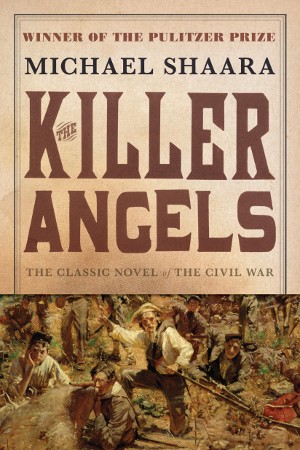
The Killer Angels by Michael Shaara

June, 1863.  In a bid to destroy the Army of the Potomac, Robert E. Lee invades Pennsylvania with an army of 70,000 men.  Using the mountains to screen his movements, he advances toward Harrisburg, fully expecting to secure a victory that will end the American Civil War.

But two weeks into the campaign, Stuart’s cavalry still hasn’t reported back, leaving the Confederate army blind.  Deep in enemy territory, with reports of the Union advance beginning to trickle in, Lee moves his forces to converge on a small town named Gettysburg.

In the titanic clash that follows, friend will fight against brother, generals will knowingly send thousands of men to their deaths, and the fate of the United States of America will lie in the hands of farmers and mountain men, immigrants, West Point classmates, and a New England professor.

This book is awesome.  Epic, in the best and truest sense of the word.  I’m not a civil war buff, but it reduced me to tears.  The scope is tremendous, and yet at the same time the characters feel like real people.

For some, like Chamberlain, the war is about slavery and equality–something that disturbs him when he comes across a black man for the first time.  For others, it’s about states’ rights and self-government.  But for most everybody else–including Robert E. Lee–it’s about a myriad of other things, like honor, duty to country, boredom, a desire to prove one’s manhood, and a hunger to be part of something greater.

What’s remarkable is how so many good people, who more often than not respect the opposing side and hold them in the highest regard, end up getting swept into such a horrific and bloody battle.  No one, especially the generals, have the power to prevent any of it–all they can do is leave it in the hands of God.  And the tragedy of it all is summed up so perfectly in the film rendition of this book, when General Armistead reaches the high-water mark of the Confederacy and falls, only to hear that his friend and classmate on the Union side, General Hancock, has fallen too (skip to 23:15):

“Not both of us!  Not all of us!  Please, God!”

I’ve been to Gettysburg several times, and stood on the ground where the most critical parts of the battle were decided.  And yet, I feel that living as an expat on  the other side of the world has given me a much greater appreciation of my country’s history.  Perhaps that’s one of the reasons why this book was so moving to me at this time.

Here are some of my favorite quotes:

He was a man to depend  on, and there was this truth about war: it taught you the men you could depend on.

According to the now retired General Schwarzkopf, The Killer Angels is “the best and most realistic novel about war that I have ever read.” You really get a sense of what it’s like to be in command–what it’s like to depend on the actions of your men, and what goes through your mind as you lead them.  The only other novel I’ve read that comes close to capturing that is Ender’s Game.

If the war goes on–and it will, it will–what else can we do but go on?  It is the same question forever, what else can we do?  If they fight, we will fight with them.  And does it matter after all who wins?  Was that ever really the question?  Will God ask that question, in the end?”

Robert E. Lee’s words after the Confederate defeat on the third day.  There is, of course, some criticism about how much artistic license Michael Shaara took in portraying the central historical figures.  Regardless, this novel gave me a much greater respect for Lee and his men.  There are no “bad guys” in this book–and therein lies the heart of the tragedy.

In the presence of real tragedy you feel neither pain nor joy nor hatred, only a sense of enormous space and time suspended, the great doors open to black eternity, the rising across the terrible field of that last  enormous, unanswerable question.

Well put.  I’ve never experienced any tragedy on the scale of the American Civil War, but I do know what it’s like to lose family and loved ones, and this captured a bit of that for me.  I can only imagine what it must be like to experience the tragedy of war.

This novel is a classic.  If you have any interest in American history, it is absolutely a must-read.  And even if you don’t, if you enjoy reading stories about war, whether modern, historical, or fantasy, you will almost certainly enjoy this book.

My Muse

A long time ago, I did a whimsical post about my muse and what she is like.  Imagine my surprise when I found a picture of her on Deviant Art!

I had a lot of fun with that post, so I thought I’d revisit it.  Enjoy!


Young Universe by *DestinyBlue on deviantART
My muse is about fifteen years younger than me and three thousand years older. She listens to my philosophical dabblings like a younger sister, but is a lot closer to the pulse and rhythm of this world than I have ever been.

She has a soft spot for Homer and the old Greek epics (I suppose that’s right around the time when she got her start at being a muse), but she’s been deeply in love with space adventures since the days of Wells, Burroughs, and Heinlein. Her love of the stars must have started back in the days of the Greeks and Romans, because that’s the only thing that’s ever on her mind. She’s definitely a night owl and I think she spends her nights stargazing while I’m asleep.

In contrast to my blunt, forward, and sometimes overly-aggressive manner, she doesn’t really speak to me unless she knows that I’m listening. She doesn’t slap me upside the head to get me working, and she usually doesn’t come to me until I’ve been slaving away for a good long while. If I choose not to listen to her, she shrugs and walks away without an argument.

As much as I love to toy with ideas, she likes to touch, taste, see, and smell things directly with her own senses. She’s the kind of person who would take off her shoes to walk barefoot in the grass, even if it makes her late to where she’s going. She’s easily distracted and she never really lets me know where she’s going until we get there. However, if I listen and humbly follow her, she always leads me someplace worthwhile.

My muse is very mischievous. Her favorite thing is to give me random flashes of inspiration when I’m in the middle of something else. I can’t tell you how many crazy ideas I’ve had while driving on the highway, or taking a class, or working a mind-numbing job. She teases me, too–if I don’t write everything down in the moment of inspiration, she won’t tell me again until I fall on my knees and beg her.

My muse looks young and innocent, but don’t be deceived. She’s a wanderer who isn’t likely to settle down anytime soon. Blood, violence, battle, and death excite her. She gleefully urges me to torture and confuse my characters as much as I can. Still, deep down, I think she wants the good to win out in the end, and the evil to be revealed for what it really is.

I have no idea why she chose me out of all the writers out there, but she’s been with me long as I can remember. Whatever I do and wherever I go, I know she’ll always be there.

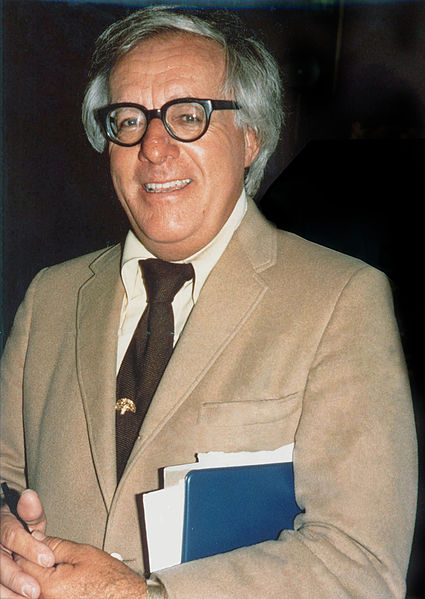
Ray Bradbury, 1920-2012

Ray Bradbury, 1920-2012

Wow.  Ray Bradbury, one of the greatest writers of our time, just passed away at the age of 91.  The news is affecting me a lot more than I thought it would.

My first exposure to Bradbury’s work came in seventh grade, when I read Farenheit 451 as part of the required summer reading.  Most of the books I read in middle school and high school were quite forgettable, but that one stuck with me, especially the scene with the professors scholars sitting around homeless in front of the fire.

Later in college, when I was just starting to find my footing as a writer, I read Zen and the Art of Writing, and it had quite a positive impact while I was still largely insecure about my own writing.  The most memorable piece of advice I gleaned from it was to write about the stuff that really moved me–to infuse all my writing with passion, and not give a damn about those who told me otherwise.  That helped give me the strength to tell the stories that I love, which is now a huge part of everything I do.

My favorite Bradbury work is his collection The Martian Chronicles.  The stories in that book are just amazing, and infused to the core with passion.  I remember breathlessly reading the one about the astronauts who land on Mars, only to find a beautiful Ohio village populated with all of the friends and family that they’d left behind.  Wow.

Whenever I pick up a Bradbury story, it’s like having this little old man clasp his hands on my shoulders and, with a gleam in his eye, shake me until I’m sure I’ll never forget it.  Every story is like a roller coaster, with stunning heights, beautiful views, and drops that make you scream for your life.  It’s awesome.

It brings tears to my eyes to know that he’s gone, but they’re bittersweet tears of the best kind.  The man had a rich, full life, and lived to see his work appreciated for how great it truly is.  At 27 novels and over 600 short stories, with more than 8 million copies in print in at least 36 languages, he has truly left us a great wealth of literature.  Some mourn that the world is a poorer place because of his passing, but I rejoice for how rich the world is because he lived at all.

Goodbye, Ray Bradbury.  Your stories truly changed the world.

Trope Tuesday: Dreaming of Things to Come

When a character in a story has a dream, there’s almost certainly a reason for it.  If it’s not thrown in just to show how scarred or tortured he is (or alternately, how repressed he is), chances are good he’s dreaming of things to come.

I’m a huge fan of this trope, as you may be able to tell if you’ve read any of my books.  It’s a special form of foreshadowing that lends a mystical, otherworldly flavor.  It’s also something that we can relate to: how often have you had a dream that was so powerful, so moving, that it just had to mean something?

When played straight, this trope often implies some sort of all-seeing being who sent the dream on purpose.  However, this doesn’t have to be the case.  I often find it much more satisfying when we don’t know where the dream came from.  It’s very easy to shatter the sense of wonder by over-explaining things, especially when it comes to the dream world.

Of course, the character doesn’t just have to dream of things to come to capture that sense of wonder.  They can also dream of times gone by, discovering something previously unknown about the past, or dream of the truth, working through a previously unsolvable problem in their sleep.  The mystical, otherworldly flavor still holds true for all of them.

As you might expect, this is a fairly common trope in fantasy.  Some prominent examples include:

  • Lord of the Rings
  • The Silmarillion
  • A Game of Thrones
  • The Black Cauldron
  • American Gods
  • Most of the Redwall books
  • Dragonsflight
  • Watership down

Why is so popular?  Even though dreaming is such a common, universal experience, it’s still shrouded in mystery.  It resonates deeply with us because we can all relate to it, and at the same time it opens all sorts of windows into the fantastic because there is so little we understand.

Like I said before, this is sort of a pet trope for me.  Consciously or not, I tend to throw in at least one dream sequence in every book I write.  It seems to have worked pretty well so far, so I don’t think I’ll be changing that anytime soon.

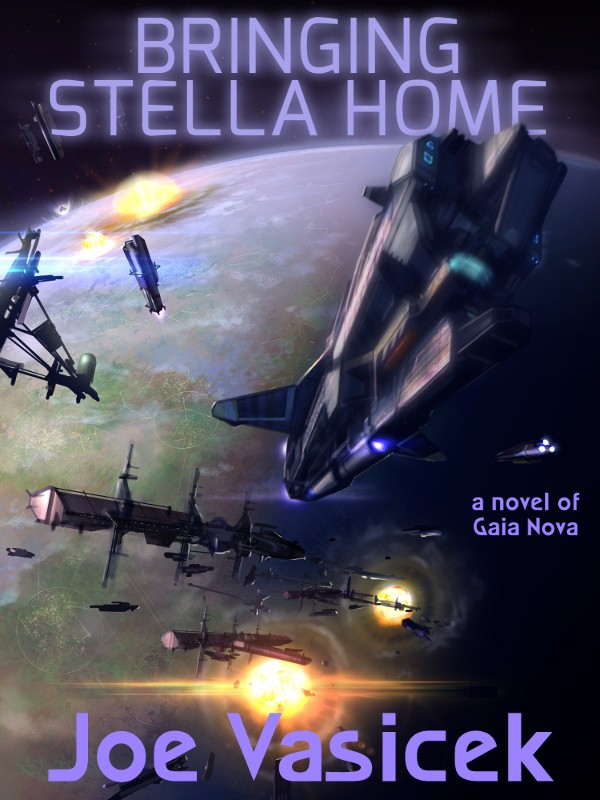
New cover for Bringing Stella Home!

Yep, it’s in!  Here it is:

I decided to redo the cover in preparation for a print-on-demand edition which I hope to release at some point this summer.  The artist is Hideyoshi, who also did the cover art for Genesis Earth and Desert Stars.  He’s great to work with and does some seriously awesome work, so I’m glad he was up for the project!

The other version was okay, but based on the feedback I was getting, I didn’t think it did a good job capturing the real essence of the story.  Oh well–live and learn, I guess. And when it comes to cover art, I still have a lot to learn.

I just uploaded the new ebook version to Amazon, B&N, and Smashwords.  Those sites should update in the next 24 to 72 hours (Smashwords is updated already), while the Kobo, Sony, iTunes, and other versions should update in the next couple of weeks.

I’m not sure if I’ll do desktop backgrounds for this one, but if there’s demand, I’d be willing to do it.  Just shoot me an email and let me know.  My netbook is starting to go, so I probably won’t get to it until July when I’m back in the States, but if/when I do, I’ll release it through the email newsletter, same as the Desert Stars backgrounds.

That’s just about it.  I think I’ve spent more time today staring at this cover than actually writing, so I’d better get back to that.  More good stuff to come–stay tuned!

A few interesting things

In between teaching English and putting in my daily word count (between 1k and 2k most recently), I’ve come across some interesting things worth sharing.  If you’re a fellow writer, I’m sure you’ll appreciate this stuff, but even if you’re just a reader, it’s worth checking out.

First, there’s an excellent article at The Nation on the rise of Amazon and how it took the publishing world by storm.  The author isn’t very pro-Amazon, but he paints a much more reasonable and far-seeing picture than anything I’ve seen from the Amazon-bashers.  If you’re interested in indie publishing at all, it’s a must-read.

The way I see it, Amazon has fundamentally changed the paradigm by cutting out the middle-man, facilitating a direct connection between readers and writers.  Everyone who sees them as some kind of harbinger of the apocalypse is so focused on their particular niche that they fail to see all the positive ways in which the system is being remade.

For example, ebooks never go out of print–never.  Isn’t that awesome?  And yet some people turn around and claim that Amazon is on some kind of crusade to destroy books and literature.  Wha??  Yes, they’re probably cannibalizing mass-market paperback sales, and perhaps even hardcover sales as well, but they’re also opening all sorts of new literary possibilities, the likes of which we haven’t seen since the days of Gutenberg.

Well, so much for that.  The next item is a lot less controversial: it’s a round-table discussion from Adventures in Sci-Fi Publishing in which several writers discuss productivity and various aspects of their writing process.  If you’re a writer, this is definitely worth checking out–it’s probably the most comprehensive discussion on the subject that I’ve heard in a while.

Some of my takeaways: the best way to unblock yourself and get the writing flowing again is to take a walk.  When I listened to the podcast, I was actually taking a walk for that very purpose–and it worked!  Also, if you have the time but the writing isn’t flowing, it’s better sometimes to do something else rather than force it.  If you do try to force it, chances are that you’ll just get a bunch of crap.  For some writers, that’s just part of priming the pump, but for me, I’ve got to take the time to fill the well.

Third, I just listened to a fascinating interview on the Sword & Laser podcast with Todd McAffrey.  I’d tell you what it’s about, but really, they went off on so many fantastic tangents, it’s really more interesting just for that.  The practicalities of space exploration, human-host bacteria and emergent AI, the secrets of the human brain and the potential for long term collective consciousness–reminds me of an uber-nerdy conversation I had at the con-suite for World Fantasy 2010.  Man, those were good times.

To be honest, I took issue with many of McAffrey’s comments.  When it comes to science and engineering, he’s extremely intelligent, but when it comes to bio-ethics, the sociological implications of his ideas, and a general awareness of the proverbial 99% of humanity that still lives on less than $10 USD per day, I think he’s a little too short-sighted.  But if you put us in a room together, the argument would be so fascinating it would definitely be worth listening to.

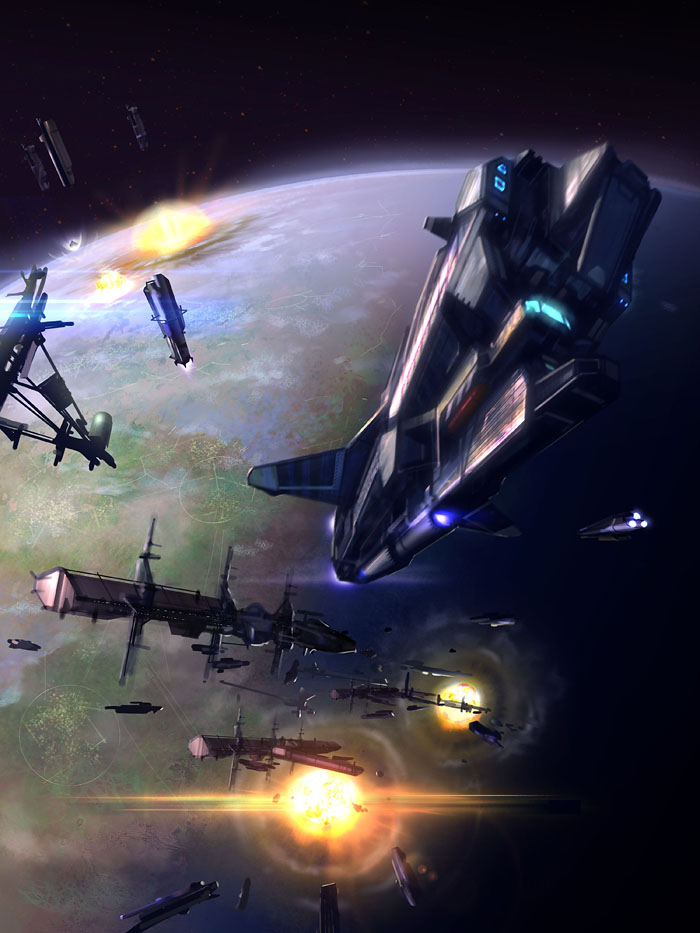
Finally, I just got the new cover art from Hideyoshi for Bringing Stella Home, and it is seriously kick-ass.  Check it out!

Now that is what I call Science Fiction!  Expect to see the updated ebook with the new cover in the next couple of weeks.

Trope Tuesday: Slap Slap Kiss

There aren't enough scoundrels in your life.

Unless you have an unhealthy aversion to kissing books, you’re probably familiar with Slap Slap Kiss.  It’s common in genre romance, but you’ll often find it in science fiction & fantasy too.  When done well, it’s a great way to make sparks fly, but when done poorly…I think you can fill in the rest.

The basic underlying concept is that love and hate are just two sides of the same coin.  Both involve strong feelings for another person, the kind that drive you crazy and make it hard to think straight.  According to this theory, it’s a lot easier to fall in love with someone you hate than to fall in love with someone you don’t really care about.  And once you fall in love, the rest is easy. <snark!>

Kiss Kiss Slap is the Tsundere’s standard MO.  An effective way to end the will they or won’t they? phase, though the trope is so common that you can spot it almost as soon as the slapping starts (Dinosaur Comics has a good commentary on that).  Sometimes happens in conjunction with Foe Yay, though the couple doesn’t have to start out as sworn enemies.  The kiss itself is usually one of those “lovely trick[s] designed by nature to stop speech when words become superfluous.” When set up properly, is often accompanied by a Love Epiphany.

Of course, it’s possible to go too far.  There’s a fine line between “all’s fair” and kicking the dog, and if you cross it…good luck.  Alternately, if the slapping doesn’t cross the line, but the kiss doesn’t live up to expectations, it’s also going to fall flat.  And if the main reason you invoke this trope is because the plot demands it…let’s just say, you’re doing it wrong.

In general, I think it’s important to keep the following in mind:

  • The attraction needs to be properly foreshadowed.  If the characters start slapping each other without even a hint of sexual tension first, no amount of backpedaling is going to make up for it.
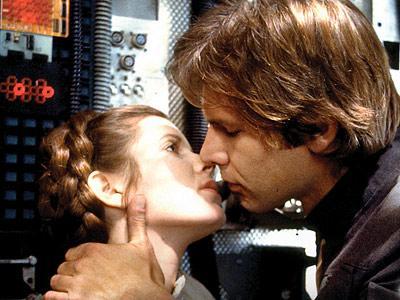
  • Neither of the characters should tear each other down.  There’s a big difference between a slap and a punch (and a roundhouse kick, for that matter).  Even though the characters may abuse each other, they have to have at least some mutual respect.  After all, Han still called Leia “your highness,” and Leia still complimented Han on his “bucket of bolts” (albeit sarcastically).  Once the respect is gone, so is any hint of romance.
  • The kiss needs to be proportional to the slap.  Lots of slap with an innocent little peck is going to feel anticlimactic, while a tap on the chin with a giant make out moment immediately afterward is going to feel melodramatic.  The two need to be balanced in order for the trope to work.
  • The couple should have at least something in common. “Opposites attract” is often just an excuse for shoddy character development.  In real life, if the two people don’t have at least something in common, value-wise and personality-wise, the romance is pretty much doomed to fail.  As always, however, Your Mileage May Vary.

Finally, even though there are a lot of reasons to hate this trope, there’s a reason we keep coming back to it.  What that reason is exactly, I can’t say, but I know it when I see it.  After all, you really shouldn’t over analyze some things.  Like this video:

I think my work here is done.  What sayest thou?