Someday…

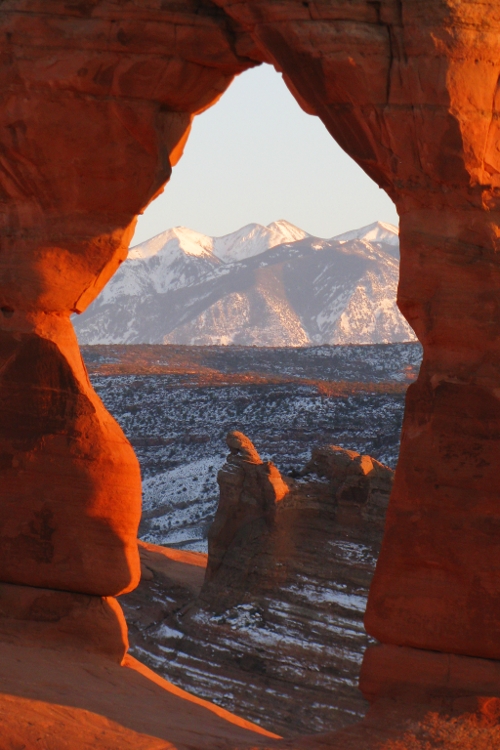
Someday I will settle down, probably in southern Utah or somewhere else in the American West.  I will live with my wife and kids in a small house in the country, one that I’ve built with my own hands. It won’t be larger than 1,000 square feet, but we’ll have at least five acres of land–a small house with a big yard.

We will keep a sizeable garden and grow at least half of the food we eat.  We’ll start with tomatoes, peas, cucumbers, and zucchini, then move on to other crops as our tastes change and our gardening skills improve.  We will keep live chickens, and maybe a cow if it’s not too difficult.  We will eat what we love, love what we eat, and live by the maxim: “Eat food.  Not too much.  Mostly plants.”

In the winter, we’ll stay warm with a wood burning stove.  Everything in our house will all be centered around one main room, which will help to keep our family close.  We’ll sleep in the loft, with the kids on the other side.  Daddy’s writing space will be off in the corner, but not cut off from the rest of the family.

Our house will be well-insulated, so it will be warm in the winter and cool in the summer.  We’ll get our water from a well on our property.  Like good old-fashioned Mormons, we’ll grind our own wheat and bake fresh bread every week.  We won’t own a lot of material things, but we won’t waste anything either.  The people in our lives will always be more important than the things.

When we aren’t at home, we’ll be on the road.  Our children will see the whole country, from the rolling hills of New England to the oil fields of West Texas, from the orchards of California to the skyscrapers of New York.  My wife and I will have seen the world together, and we’ll visit our international friends as often as we can.

Above all else, we will be independent.  No one will own us, and we’ll stay out of debt as much as possible.  Our failures will be our own, as well as our successes.  And when our friends and family need us, we’ll be there.

All of this will happen someday.  That’s my dream.  Someday soon, I’ll find a girl who shares this dream, and together we’ll make it a reality.
New theme

Hey guys, I decided to update my theme to make it a little less cluttered and easier to read.  What do you think?

A lot of the stuff in the sidebar seemed rather useless, so I got rid of everything but the bare essentials (book links, email newsletter, progress bars) and the visitor map.  The header images are from my book covers–they should cycle randomly.

At first, I thought I’d keep the tag splash, but it didn’t seem to fit with the word sizes.  Not sure if I should bring it back or not.  And as for the categories and archives, I’m not sure whether I should keep those somewhere or just get rid of them.

I like this design a lot so far, but I think it’s kind of annoying that the tags and categories are listed at the top of the blog post, instead of at the bottom.  I’ll see what I can do to change that.  I don’t want to tweak the actual theme files if I can avoid it, since they seem to update every now and then and when they do, all the modifications are lost.

I’ll probably make a few minor changes over the next couple of days, until I get it where I want it.  If you have any thoughts or feedback, please let me know.  Thanks!

A Letter From My 2013 Self

tomy2012selfSo shortly after writing up my last blog post, I got an email from myself marked December 27, 2013.  How freaky is that?I don’t know if it’s a glitch or a feature, but apparently in 2013, you can use gmail to send messages back in time.

In any case, the letter is pretty interesting, so I thought I’d post it.  Here it is:

Dear Joe,

Well, it’s been an interesting decade so far, hasn’t it? Not a bad time to be alive–and that’s going to be even clearer by the end of 2013.

Right now, you’re still in the Republic of Georgia, anxious to get on that flight and head back home. Don’t be. You’re going to miss that place, even though it’s hard to feel that way right now. Your time there has changed you a lot more than you realize, though it’s going to take most of the year for you to figure that out.

You’ve picked up some bad habits, mostly from the other expats. Swearing is one of them. Clean up your language–it’s not going to do you any favors, especially back in Utah. Personal hygiene is another. Just because you could go for days without showering back in Rokhi doesn’t mean that you can get away with it in the States.

Money issues are on your mind right now. That’s good. You’ve learned how to be extremely frugal in the past two years, and that skill will serve you well. Don’t be afraid to get a crap job–that’s actually one of the best things you can do right now. The economy hasn’t improved much since you left, but if you look in the right places and speak with the right people, you’ll be able to make ends meet without too much trouble.

Remember, your writing career should be your main focus. Don’t go chasing after the dollar. You’ve experienced a taste of success in the last few months, and you’re going to taste it again. It comes in spurts, though, so be prepared for that. You’ll figure it out–in fact, you’re already most of the way there. Just remember to keep your butt in that chair, and you’ll be all right.

By the way, you really should spend more time on your business plan. Don’t just use it as motivation to write something else–that stuff is actually important. In Georgia, you can get away with winging it, but not in the States. That’s going to take some getting used to as well.

Your biggest anxiety right now is your supposed lack of self-discipline. That’s actually not as much of a problem as you think. After spending a year in Georgia, you might feel incapable of working another honest day in your life, but that feeling will soon pass. In fact, 2013 is going to be a very productive year for you. All that self-discovery is going to pay off in a big way soon. So don’t worry about it so much, and remember, you haven’t written your best book yet.

Perhaps the most important thing about your year in Georgia is that it really lit a fire under your butt. You know what I’m talking about. If you can travel alone to a foreign country, you can work up the courage to ask her out. No, I’m not going to tell you who. You’ll know her when you see her. But you may have to trim the beard. Just sayin’.

You won’t spend the entire year back in the States, but when you do go overseas again, you won’t be alone. No, I won’t tell you who you’ll go with, or where. Some surprises are better left unspoiled.

There’s more I could tell you, but that’s enough for now. You’ll figure things out on your own, same as you always have. Hope for the best, plan for the worst. Follow the path of least regret.

Joe

A Letter To My 2011 Self

Dear Joe,

Well, 2011 has been an eventful year, hasn’t it? It sure didn’t feel like it when you were down in the trenches, but now that it’s over, you’ve got to admit, you sure came a long way.

You’ve discovered a lot of things about yourself since January. In your quest for economic security, you’ve learned that you’d rather work for yourself as a freelancer than be anyone else’s employee. You took the plunge and self-published, something you thought you’d never do (and yes, it’s okay to call it ‘self-published’–the stigma will be dead in another year). You attended your first Wordcon, made a couple of cross-country road trips, worked a ton of crap-jobs just to make ends meet, and now you’re on your way out of the country to try your hand teaching English. It sure seems like a lot, doesn’t it? Just wait. Next year is going to be just as full of changes, though it won’t always seem like it at the time.

I know, I know–cut to the chase and give me some advice already. Well, looking back on what you’re going to go through in 2012, here’s what I have to tell you.

First, don’t stress out so much about the whole self-publishing thing. You’ll figure it out all right. No, I can’t say whether you’re going to hit the turning point before the end of the year. In fact, that’s not even a healthy way to look at it, so stop thinking about it that way. Follow the slow growth model, and don’t angst about sales or price points so much. Keep your butt in that chair, because writing new words is still the most important thing you can do.

Don’t beat up on yourself so much for failing to meet your ridiculously high goals. You’re going to write a novel in the next six weeks, and the rest of the year is going to be a struggle. Right now, you place too much emphasis on your daily word count. Relax a bit, and don’t be too hard on yourself. You’ve still got a lot to learn about your own creative process, so take the time to figure it out.

By the way, you totally rock the beard. Growing it out was a great idea, no matter what your sisters told you back in 2010.

About your upcoming excursion to Georgia, the best advice I can give you is to remember what Spencer told you back in 2008. Adventures are like stories–they each have a beginning, a middle, and an end. You’re going to experience all of that in the next year. No, you probably won’t write another travel journal. Most of your experiences are going to be too personal for that kind of thing anyway. You’re going to accomplish all of your goals, though, so don’t worry–things are going to be just fine.

The most important thing you can do is keep yourself grounded spiritually. I know, I know, that’s always the most important thing. Well, it’s especially true now. Where you’re headed, you’re not only going to be the only Mormon, but the first Mormon to live there. Sundays are going to be a struggle. Everyone is going to think you’re crazy because you don’t drink. You’re going to make wine, though, and that’s going to be an interesting story for your friends back in Utah. Just be sure to keep doing the things you know you should be doing, and everything will turn out all right.

You’re going to love teaching English. Oh, you won’t love everything about it, but it’s something you’re naturally good at, so don’t worry about that. Just try to listen to your Georgian co-teachers and be more considerate of them. And don’t worry about the language. You’ll pick it up pretty quick. Just realize that Georgian verbs are impossible to conjugate unless you’re a native speaker.

I could tell you what your biggest mistake is going to be, but I think it’ll be better if you go ahead and make it. Just be sure to hope for the best, even as you plan for the worst. Follow the path of least regret, and you’ll make some really awesome memories–not to mention some truly amazing friendships.

At this point, I’d tell you you’re on the right path, but that isn’t exactly true. There is no ‘right’ or ‘wrong’ path for you right now, but you’re on a good one, so keep it up and see it through to the end. You’ll be glad you did.

Take care!

Joe

Trope Tuesday: Peking Duck Christmas

pekingduckxmasIt’s Christmas, but for whatever reason (most likely because you’re Jewish), you don’t celebrate.  Or maybe you do celebrate Christmas, but you live in a place where no one else does.

So December 25th comes around and you feel left out.  What do you do?  Simple–you find a cheap Chinese place, or somewhere similarly non-festive that’s open, and you eat out there.  As the tvtropes page adds, bonus points if you bond with the owner despite the language barrier.

This trope is more of a one-liner than anything else, but it pops up here and there.  Jon Stewart used it a couple of times on his show, and Brandon Harris Walker wrote his break-out song about it.  Also, at Elena Kagan’s congressional hearing for the U.S. Supreme Court, she referenced this trope:

Sen. Lindsey Graham (R-SC): Christmas Day bomber. Where were you at on Christmas Day?
Supreme Court nominee Elena Kagan: Senator… I assume the question you mean is whether a person who’s apprehended in the United States—
Graham:(interrupting) Nah, I’m just asking where you were at on Christmas.
Kagan(laughs) You know, like all Jews, I was probably at a Chinese restaurant.
(Laughter from crowd)
Graham: Great answer!
Sen. Patrick Leahy (D-VT): I could just see that one coming…
Sen. Chuck Schumer (D-NY)Because they’re the only places open.

So yeah, there’s actually a fair degree of truth to this trope, as I’m finding out this year.  Due to some poor planning on my part, I’m spending Christmas in Georgia, a full 14 days before the Georgian Orthodox Church celebrates it.  Yeah, December 25th in Tbilisi is pretty much the same as the 24th, or the 26th.

But it’s actually not so bad.  I didn’t eat Chinese last night, but I did go to a local Georgian place with two Frenchmen, an Iranian, a guy from Singapore, a guy from Japan, a Georgian-American, and a global nomad who doesn’t know where he’s from anymore.  Today, I went to the Dry Bridge bazaar and bought myself an ornate mosaic chess board.  I’ll probaby fix some spaghetti tonight and Skype with my family before going to bed.

So yeah, to those of you celebrating Christmas in the western hemisphere right now, merry Christmas!  And to everyone else, I hope you have a great day too!

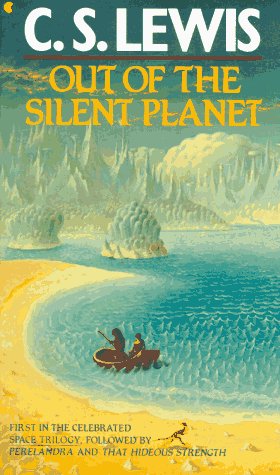
Out of the Silent Planet by C.S. Lewis

out_of_the_silent_planetWhen Doctor Elwin Ransom went on a spontaneous walking tour of rural England, he wasn’t expecting to be kidnapped by a mad scientist and taken to Mars.  He soon escapes, only to find himself lost without any way to return home.

Fortunately, the native Martians soon take him in, teaching the otherworldly stranger of their peaceful, utopian ways.  They are just as astonished to have a visitor from Earth as Ransom is astonished to be their guest.  To them, Earth is a silent planet–the only world with no spiritual connection to the rest of the universe.

The more Ransom learns about the gentle people of Mars, the more he realizes that something evil lurks in the heart of our world–and that contact between the worlds can only hasten the showdown between the forces of good and evil.

I decided to read this book after chatting with Norman Cates at Worldcon 2011, following the “When Faith and Science Meet” panel.  Some fascinating questions had popped up toward the end, especially regarding science fictional universes that are not incompatible with millenialist religions.  Norman asked if I’d read C.S. Lewis’s Space Trilogy, and when I said that most people had told me it isn’t as good as Lewis’s other work, he kind of rolled his eyes and said that it was worth checking it out and deciding for myself.

Well, I didn’t get around to reading it until this summer, but I’m glad I did.  It’s a short read, no more than 180 pages or so, and I finished it in a couple of days.  The world it describes is quite fascinating–a fantastical version of Mars that I’d actually like to visit, perhaps even more than Bradbury’s and Burrough’s.  The kidnapping in the beginning was compelling enough to hook me, but it was the immersive feel of the world that really made the book for me.

This being C.S. Lewis, the more spiritual and allegorical elements of the story lie fairly close to the surface, but it didn’t detract much from the reading experience for me.  It became fairly obvious towards the end that the whole story is basically an attempt to incorporate the Christian millenialist mythos into a mainstream science fictional setting, which is probably where most of the criticism comes from.  If you know that up front, however, and are willing to go along with it, it shouldn’t take much away from the story.  In fact, that might just be what draws you to it.

It’s interesting, because Orson Scott Card tried to do something very similar with the story of Lehi in his Earthbound series, and I think he actually failed where Lewis succeeded.  When I read A Memory of Earth, I felt that Card actually lost the best parts of both the Book of Mormon mythos and his own science fictional world by trying to force them together.  In contrast, Out of the Silent Planet feels much more coherent and compelling, and not artificial at all.

I do feel like things sped up a bit too much at the end, though.  The experience became a little less immersive for me when Lewis went from describing the alien world to bringing the millenialist themes to the forefront.  It’s almost as if the focus of the book itself shifted, and that was a little bit jarring.  I’m a big fan of metaphor, but allegory is a more difficult pill for me to swallow.

That said, I enjoyed the book, and am definitely interested in finishing the rest of the trilogy.  It’s got a lot of merit to it, and is definitely worth checking out no matter what the critics may say.

Hello internets! I’m back (sort of)

So today I said goodbye to my village and moved out to Tbilisi, where I’ll be spending the next week.  It was emotional.  My host mom cried.  It was raining, too, which pretty much reflected the way I felt.  Goodbyes are tough when you’re going halfway around the world.

The last few days have kind of been like a slow-motion whirlwind, a sort of in-between state where I’m not really rooted where I am, but I’m unable to go anywhere else.  Unfortunately, due to some poor planning on my part, I don’t fly back to the States until the 31st, so things are probably going to continue like that for a while.

Well, there are worse places to be stranded over Christmas than Tbilisi.  There’s still a lot in this part of the country that I haven’t seen, not to mention the city itself.  For about $9 a night, I’ve got a roof over my head and a comfortable bed to sleep in, as well as regular internet.  Also, with all that free time, I should be able to get a lot more writing done.

So yeah, when I’m not busy writing or exploring, I’ll definitely be more active here on the blog.  I’ve got a couple of new years-ish posts lined up, and I’ll probably come up with something Christmas-related for Trope Tuesday.  Life day, perhaps?  We’ll see.

In any case, it’s getting late and I’m exhausted.  Good night.

A few quick updates and a new publication

Sorry, no Trope Tuesday post this week.  I’m leaving Kutaisi in a couple of days, to spend Christmas in Tbilisi before flying home.  Needless to say, things are a little upside down right now.

I’m still writing though.  Making progress on The Sword Keeper, though not as much as I’d like.  Once the school year wraps up and I’ve moved out of my village, I hope to dedicate more time and energy to it.  It’s my first serious foray into fantasy, and even with all the challenges, I’m having a lot of fun with it.  If you guys want, maybe I’ll post a scene or two from the WIP.

Speaking of sample chapters, Leading Edge Magazine is publishing the first chapter of my upcoming novel, Stars of Blood and Glory.  It’s coming out in issue 63, which should be available any day now.  It’ll be at least a couple of months until the full-length novel comes out, so if you want a sneak peek, be sure to pick up a copy.

That’s just about it for now.  More later, when things are a bit more grounded.  See you around!

Some thoughts on internet access, self-discipline, and productivity

As many of you probably know, for the past four months I’ve been living in a small Georgian village in the foothills of the Caucasus Mountains.  It isn’t as remote as some places in this country (like Tusheti, where some people still practice pagan animal sacrifices), but my internet access has been limited, especially compared to the 24/7 access I had back in the States.

I knew that coming in, and was actually looking forward to it.  I had the option to buy a USB stick from the phone company that would give me service, but I wanted to experience living off the grid for a while to see if that would increase my writing productivity.  Long story short: it didn’t.

In order to use the internet, I have to take a marshrutka (small passenger bus) about half an hour to Kutaisi, where the most convenient place to get wifi is McDonalds.  I can usually go for two or three days without internet, but so many other things in my life (work, family, publishing) are tied up in it that it’s not a good idea to go much longer.

Since each trip takes a huge chunk out of my day, it’s become a lot harder to keep and maintain any sort of momentum on any of my writing projects.  Also, cutting out the internet hasn’t increased my self-discipline at all, it’s just driven me to find different ways to distract myself.

In the end, I think I actually would have been more productive if I’d ponied up the 70 GEL and bought a USB stick from the phone company.  I certainly would have saved a lot of money, considering all that I’ve spent on these trips to Kutaisi.  But at least I’ve learned a few things from the experience.

First, I’ve learned that all of the high-priority things that I absolutely must do on the internet only amount to an hour or two each week.  And even for most of those things, it isn’t a disaster if I put them off for a day or two.  It’s possible to structure your internet time around everything else in your life, rather than vice versa.  In fact, that’s almost certainly a better way to live.

Second, the enjoyment I get from recreational internet usage maxes out after about two hours.  Anything beyond that, and I become something of a zombie.  It’s a weird feeling when you run out of things to do on the internet, but when you realize that you don’t actually enjoy scrolling down an endless list of photos and status updates, it’s a lot easier to pull back and say “no.”

Third, you don’t need social media to sell books.  I made more in book sales in the first week of this month than I did in the first quarter of this year, and my Facebook and Twitter pages are a wasteland.  It might help you if you already enjoy that sort of thing, but it’s not an absolute requirement for success.  Certainly, you don’t have to open a vein and spill everything.

Fourth, exercising good self-discipline doesn’t mean cutting something completely out of your life, but learning how to properly manage it.  The internet isn’t an either/or thing, it’s a matter of finding and maintaining the proper balance.  In the future, I plan to do what Dean and Kris recommend, which is to have two computers: one for internet usage, and one for writing.

Fifth, for me personally, it’s actually healthy to have a couple of harmless distractions available while I write.  I deleted all of the games off of my computer about a month ago, and I haven’t been able to write more than a thousand words a day ever since–often, much less.  Before, whenever I hit a rough patch, I would play a quick round of super-melee in Star Control II and come back to it with fresh eyes.  Without that, I find myself taking my butt out of the proverbial chair and wandering around until I find something else to do, which inevitably takes more time and energy.  A lot of games (Tetris, Spider Solitaire) are addicting and should be nixed, but for me personally at least, opening up something that isn’t a time-sink can actually help to keep me going.

That’s just about all I can come up with now.  I’m sure there are other lessons to be had, but these are the major ones.  I’m coming back to the States on the 31st, and should be back in Utah in time for LTUE and Conduit.  It’s going to be interesting living with 24/7 internet access again; hopefully, it won’t be too hard to adapt back.

Trope Tuesday: Terraforming

The fantastical element here isn’t that Mars could actually look like this in a millenia or two, but that NASA might actually get the funding.

One of the problems with interplanetary colonization is that Earth-like worlds are fairly rare (though possibly not as rare as we once thought).  In our own solar system, the only other world that comes anywhere close (Mars) is a radiation-blasted desert with only the barest hint of an atmosphere and a surface temperature colder than Antarctica.  To get around this problem, you can do one of two things: build an artificial enclosed environment to house the colony, or change the world itself to make it more Earthlike–in other words, terraform it.

The actual science of terraforming is far too complex (not to mention way over my head) to do it justice in this post.  Instead, I’ll just point you to the Terraforming Wikipedia page as a starting point and focus on how the concept is used as a story trope.

According to tvtropes and Wikipedia, the term came from a 1942 novella by Jack Williamson titled “Collision Orbit.” The concept of changing the environment of an entire planet actually goes back much further, with H.G. Wells subverting the trope in War of the Worlds (instead of humans terraforming other worlds, the hostile Martians try to xenoform Earth to make it habitable for them).  Before the U.S. and U.S.S.R. put probes on the surface of Mars and Venus, it was fairly common for writers to speculate that those planets were able to support human life, at least on a basic, rudimentary level.  Once the science showed that that isn’t actually the case, terraforming as a story trope really began to take off.

Today, this trope occurs commonly across all ranges of the Mohs scale.  Soft sci-fi stories (such as Firefly) use it as an excuse to have planets that look and feel like Earth.  Hard sci-fi stories (such as Red Mars, Green Mars, and Blue Mars) use it as a fundamental premise, or to pose questions like “what is the ultimate destiny of human evolution?” or “how important is it to our species’ survival that we spread out beyond Earth?” Although it’s not something that we as a species have (yet) done, our present science seems to place it well within the range of the plausible, and that means that makes it fair game for any kind of science fiction.

In order to be believable, however, any significant terraforming project requires two things: resources and time.  LOTS of time.  We’re talking on the order of centuries and millenia here.  Because of that, stories that use this trope generally fall into the following categories:

  • The terraforming happened a long time ago and is part of the world’s ancient (or near ancient) history.
  • The terraforming is on-going and directly impacts almost every element of the world’s culture and setting.
  • The terraforming has failed in some way, which may (or may not) make it a key element in the story conflict.

As with generation ships, the scope of this trope spans more than just the interests of a single character–it deals with the ultimate destiny of entire cultures and civilizations.  In hard sci-fi stories, the planet that’s being terraformed may actually become more of a character in itself than the individual people who are terraforming it.  Unless they have some form of immortality, they have little hope of ever seeing the ultimate end of it.

Of course, that almost makes the project more of a religion to the colonists than a science, with all sorts of interesting philosophical and story implications.

Why is this trope so widespread in science fiction?  I can think of a few potential reasons.  First, it hits on some of the key issues that lie at the very heart of the genre, such as the ultimate destiny of humanity and the ethical issues surrounding our ability to play God through the wonders of science.  Also, it captures the imagination in a way that few other tropes can equal.  Because the scope of any terraforming project is so vast, the implications touch on almost every key element of the story, including setting, character, and conflict.

But on an even more fundamental level, it hits on one of the key elements of any fantasy magic system: limitations.  We can’t live on an alien world because the conditions are too hostile, but we can’t just wave our hands to make it Earth-like either.  We have to undergo a painstaking, laborious process that could unravel at any point and throw everything we’ve worked for into chaos.  We have to dedicate our whole lives to the project for dozens of generations before it will ever pay off.  There are no shortcuts–none that won’t strain our readers’ suspension of disbelief, anyway.  But if it all works out, then we will have created a new Earth–and how is that not magic?

Needless to say, I’m a big fan of this trope.  I’ve used it in just about every science fiction story I’ve written, though I probably play with it the most in Star Wanderers.  The main character of that story comes from a world where a terraformation project failed, having severe religious implications that drive the whole series.  Sacrifice is largely set in orbit around a world that is midway through the terraforming process.  Elswhere in the Gaia Nova universe, people build domes just as often to keep humanity from screwing over a terraformed world as they do to provide room to live on one that isn’t.  After all this, though, I feel like I’ve only begun to scratch the surface of this trope.  You can definitely expect to see it in my work in the future.