Nanowrimo anyone?

November is coming up, and with it, nanowrimo.  I’ve always wanted to participate, but every time it rolls around, it seems like I’ve got another project going on that’s more important.

This year is no exception, but I think I have a way around that.  The goal for nanowrimo is just to write something–it doesn’t have to be any good.  I’ve got a bunch of projects I’m currently working on, including Star Wanderers: Deliverance (Part VIII) which I hope to publish by Thanksgiving, but I think I can still do a just-for-fun sort of thing on the side, with the understanding that it doesn’t have to be serious.

What I think I’ll do is write a story where all of the characters from all of my previous books get caught up in some sort of a weird time-space dimensional warping thing, so that they end up in books where they don’t belong and universes where they never existed.  It should be a fun way to revisit some of them, especially the ones from the Gaia Nova books, which I haven’t really done much with in a while.

It’s probably not going to make much sense to anyone who hasn’t read my books, but who cares?  That’s not the point.  I may or may not put it up somewhere for people to read, but it may have some stuff from projects that are either unfinished or unpublished, so it might be a little obtuse even for the fans.  However, it seems like a really fun project, one that I can really run with, and that’s all that really matters for nanowrimo.

As far as my other projects go, right now I’m working on a heroic fantasy novel that’s a prequel of sorts to The Sword Bearer.  I have no idea where it’s going to go, but I’m taking a page from my favorite writer of all time (David Gemmell), with lots of violence, lots of blood, and lots of true grit and heroism.

At the same time, I’m still working on Sons of the Starfarers off and on, though I may end up putting that one on hold for a while as I figure things out with this heroic fantasy story.  It will get done, though–it’s definitely a story I’m itching to tell.  In a couple of reviews and emails, readers have asked whether I’ll ever write an origin story for the Hameji.  Well, that’s what Sons of the Starfarers is going to be, though the connection might not happen until well into the series.

There’s a couple of other Gaia Nova books I’ve been meaning to write for a long, long time, but I don’t know if I’ll be able to get to them anytime soon.  This nanowrimo project might spark something, though, since I’ll be revisiting a lot of those old characters.  And even if the nanowrimo novel itself is pretty bad, if it gets those projects on the back burner simmering again, then that will definitely be something.

Dang, I really want to get started with nanowrimo now!  So many wacky ideas … it’s like writing fanfiction for one of your own books!  In any case, I’d better get back to writing before I get too excited.  Don’t want to spend so much time thinking about writing that it becomes hard when I actually sit down to do it.

Later!

Trope Tuesday: Our Dwarves Are All the Same

Yes, you saw that right: Trope Tuesday is back, at least for the next few weeks.  I dropped out for a number of reasons, most of them having to do with my own interminable disorganization.  I really love writing these posts, though, and you guys seem to love reading them, so I’ll do my best to keep the series alive.  Here goes!

Say the word “troll,” and you could mean one (or more) of a thousand different fantasy creatures.  The things same goes with gods, demons, vampires, fairies, goblins, and to some extent, elves.  But say the word “dwarf” and we all instantly know what you’re talking about.  As tvtropes puts it:

You know them. Gruff, gold-loving, industrious, blunt-speaking, Scottish-accented, practical, Viking-helmed, booze-swilling, Elf-hating, ax-swinging, stout, long-bearded, stolid and unimaginative, boastful of their battle prowess and their vast echoing underground halls and mainly just the fact that they are Dwarves … An entire race of miners and blacksmiths, with names like Dwarfaxe Dwarfbeard and Grimli Stonesack, who are overly sensitive about any perceived slight, always spoiling for a fight, unable to speak two sentences in a row without calling someone “lad” or “lass,” and possessed of a love of gold and jewels that drives them to live in Underground Cities where they dig deep and greedily, (often with catastrophic results).

The defining characteristics of this fantasy race basically include:

  • Short.  Should be self-evident from the name of the race.
  • Expert in smithing, forging, metalworking, and crafting priceless artifacts.
  • Prefer to live underground, mining for ore and precious metals.
  • Bearded to the extreme.  Even their women often have facial hair.
  • Fond of alcohol, and often rowdy or violent when drunk.
  • Weapon of choice is a battle axe (or perhaps a war hammer).

In other words, Tolkien set the standard and everyone since has followed it with little, if any, variation.  Tolkien himself got it from Norse mythology, which had a few key differences (for example, Norse dwarves would turn to stone if they were exposed to sunlight), but once Lord of the Rings hit the bookshelves, all dwarves would ever after be the same.

Why is this?  Well, as fantasy races go, dwarves tend to be more like supporting characters than members of the main cast.  Sure, there are plenty of series that focus on dwarves and dwarven culture, but the cultures that shape world history the most are usually human or elvish.  Dwarves are often content to stay in their dwarven halls and do their own thing, far beneath the surface of the earth.

Brandon Sanderson has an interesting take on this question, which he explains in his famous essay “How Tolkien Ruined Fantasy” (which has since been renamed).  Basically, he argues that the fantasy before Tolkien was all “low” fantasy, or fantasy that loosely uses our own world as a template.  This sort of fantasy may have wizards, or magic, or monsters, but the setting itself looks a lot like something out of the pages of a history book.  Tolkien was the first to really write “high” fantasy, where everything about the world is built from the ground up, and he did such a good job of it that we’ve all been copying him since.  Rather than writing high fantasy in an original vein, most authors have switched out the real world for Tolkien’s and have been writing low fantasy in a Tolkienesque world (at least until the last decade or so).

It’s an interesting argument, but I’m not quite so sure how valid it is.  The process that Sanderson describes basically happens in every genre: someone writes an extremely popular book, and for the next several decades (centuries, in the case of Treasure Island) everyone tries to go back to it in some way.  And yet, how many different kinds of vampires are there?  How many different kinds of cops, or detectives, or spies?

Perhaps Lord of the Rings had a much more overshadowing impact than Dracula or Frankenstein ever did, but consider some of the other fantasy races he basically invented.  Ents never really took off anywhere outside of Tolkien, and trolls never universally became the big, dumb, evil, brutish creatures that they are in The Hobbit.  Elves, which really were popularized in a huge way by Tolkien, have taken on a life of their own, differing fairly significantly from the immortal angel-analogues in Lord of the Rings and The Silmarillion.  Orcs, too, are becoming more like “green klingons” in games like World of Warcraft, with an extensive honor system and intelligence on par with humans and elves.

Is there something about the Tolkienesque dwarf that fulfills a deeper storytelling need, transforming the stereotype into an archetype? Or am I wrong, and dwarves just haven’t had the same makeover as elves and orcs?  I don’t know.  But I like dwarves, and I’m a political nerd, so I’ll leave you with a fascinating Marxist analysis of Dwarf Fortress, and an interesting picture of a female dwarf.


Tarin Portrait by =RachelleFryatt on deviantART

Space Opera promo for free Kindle

Hey, just a quick post to let you know about a group promotion I’m participating in with a bunch of other science fiction writers.  It’s a rafflecopter give-away, where we all pooled together to get a Kindle Paperwhite as the main prize.

There’s a bunch of things you can do to enter–for example, if you download a copy of Star Wanderers: Outworlder (Part I) (or really, just visit the book’s Amazon page through the rafflecopter link) that will get you an entry from me.  Also, besides the Kindle grand prize, a bunch of us are giving away copies of other books to other winners as well.  I’ll be giving away a few omnibus copies of Star Wanderers, so if you haven’t picked one up yet, here’s an opportunity to get one!

Besides my books, there’s a bunch of other books by science fiction writers as well–specifically, space opera like Star Trek or Firefly.  These days, it seems like dystopian fiction and other Earth-based sci-fi dominates the charts, so if you’re looking for an escape to other stars and planets, here’s a chance to find some of that.

The promo ends this weekend, so you should probably check it out today or tomorrow if you want to pick up some of the free books.  Outworlder will still be free after this promo, but I don’t know about the others.

Take care!

Parents: talk to your kids about Dwarf Fortress

DFSo if you’ve been wondering why I seem to have gone missing from the world of the living lately, it’s because I recently started playing Dwarf Fortress.  Those of you who know what Dwarf Fortress is are probably shaking your heads already, but for the rest of you, I’ll endeavor to explain.

Dwarf Fortress is easily the most detailed and immersive fantasy RPG ever created.  In it, you command a group of dwarves as they seek a new life in an unclaimed territory, designing their new home, seeking all sorts of precious metals, and defending their dwarven hordes from all manner of evil monsters. The graphics (what little there are) are basically ASCII, so you do all this by scrolling through an endless array of text-based menus, which sounds rather tedious but is actually what makes the game so awesome.

For every dwarf in your fortress, there is a detailed list with their personal history, their relationships, their likes/dislikes, their strengths/weaknesses, skills–even their thoughts!  And when there’s combat, the game generates a blow-by-blow where you can read exactly what happened to whom, who got injured, and what those injuries exactly were.  This extends to every part of the game, so that when you’re in overworld mode you can actually look up the histories of every person in every civilization.

What really makes it insane, though, are the crazy, crazy ways in which your fortress can die.  Kobolds, Goblins, vampires, were-creatures, tantrum spirals, catsplosions–the possibilities are endless.  If your dwarves are unhappy, one of them might throw a tantrum that sets everyone off so that they all kill each other.  If they don’t have socks, apparently they’ll riot over that as well.  And heaven help you if a forgotten beast gets loose in your dwarven hall.

The learning curve for this game is ridiculously steep, which is why I haven’t gotten into it before now.  I actually tinkered with it a couple of years ago, but could never get into it because I had no idea what was going on.  Some youtube tutorials and the lazy newb pack helped remedy that, and now, sixty some-odd hours later, I feel like I might have an idea of how it maybe works.

The things that make the game appealing are largely the same things that make fantasy appealing: the chance to build and live in a world full of crazy-awesome fantasy stuff.  The graphics might be horrible, but the level of detail is so incredible that with a bit of imagination, you can really immerse yourself in it.

… which is why I probably went a bit overboard.  That tends to happen with me and games–I tend to binge a lot when I first get started, then go cold turkey for a while, then come back for more before gradually easing into a more healthy level of play.  Right now, I’m just getting over that first binge; I’ll probably go cold turkey for a while, taking care of all the things I’ve neglected before easing back in.

But wow, this game has given me a TON of story ideas.  I really want to write about a band of dwarves now, or reread Lord of the Rings, or get back into classic high fantasy in some way.  It’s too early to say whether it’s just a phase or a genuine shift, but I’m happy to follow it out and see where it leads.

In the meantime, I’ve got a bajillion other things to do, and writing currently tops that list.  Later!

Beware the catsplosion.

3am thoughts, or why everyone says to be an accountant

I’ve been reading in bed on my smart phone recently, which is probably a bad idea because it makes it harder to go asleep.  At the same time, though, it tends to get my mind rolling, and when 3am comes around my thoughts tend to go some really interesting places.  Sharing those thoughts is probably going to get me into trouble, but hey, you might find them interesting, so why not?

When I was eight years old, I knew I was going to be a writer.  There was never any question about that.  I spent all my free time making up stories, and my favorite stories were the ones I found in books.  However, I knew I never wanted writing to be my job, because 1) everyone hates their jobs, and I didn’t want writing to ever become something I hated, and 2) everyone knows that writers can’t make a decent living.  Even at the young age of eight, I had bought into some of society’s most pervasive myths about jobs, careers, and how to make money.

Americans are generally horrible with money–we struggle to keep budgets and put all sorts of things on credit, and pay more than twice what our houses are worth by signing mortgage contracts we barely even read.  Because we’re so horrible with money, we tend to see it as a sort of magical force, something that can solve all our problems and make us happy.  Rich people are like powerful wizards or sorcerers, so far above the rest of us that we can hardly fathom their ways.

Nowhere is our stupidity about money more apparent in the fact that most of us spend our lives acquiring it by working for some sort of hourly or salaried wage.  Wages and salaries are basically the same, in that they convert time into money.  That’s why we all measure income in terms of dollars per hour, or salary per year.  But for anyone who understands how money works, that is stupid, stupid, stupid, stupid.  Money comes and goes, but time?  Time is one of the most finite and precious resources known to man.

All of us are going to die someday.  Most people are scared shitless by that fact, so we try to ignore it or put off thinking about it until some unspecified time in the future, like when we’re retired.  But not all of us get the opportunity to put our affairs in order after retiring comfortably from the workforce.  In fact, any of us could die tomorrow, or the next day, or at any other time.  And even if we do all live to be centenarians, our time on this Earth is still finite.  It’s non-renewable, too–you can’t go back and relive that day or that hour or that minute once it’s passed, no matter how much you regret it.

Converting time into money is basically trading gold for lead, or wine for water.  Yet that’s exactly what we do, because money is this strange, magical force that so few of us understand.  And the machines that do all the converting for us are businesses and corporations.

Questions like “where do you work?” “what is your job?” and “what do you make?” are much more common than “what do you do for a living?” That’s because most of us have bought into this idea that money comes from working for someone else, exchanging your time directly for a salary or paycheck. Sure, we do stuff with that time, but we don’t actually own it–the company does. While we’re on the clock, the company owns us and anything we produce. That’s the pact we make in exchange for this magical substance we call money.

It wasn’t until college that I started to become disabused of the childhood notion that I shouldn’t pursue writing as a career path. For one thing, I came to realize that plenty of people love their work–that just because you do something as a job doesn’t necessarily mean that you’ll come to hate it. But it wasn’t until I graduated unemployed in the middle of a recession that I realized how much of a myth it is that writers can’t make a living.

You see, people say that about every career choice–every career, that is, except accounting. That’s because accountants are the ones who work for the businesses and corporations, counting the magical money. Since we all get our money from businesses and corporations, exchanging our time for money, the only career with complete security is the one that the businesses and corporations will always need. After all, they’re not going to go belly up, are they? Not the big ones, anyway. They can’t–they’re the magical machines where all the money comes from.

Of course, anyone who knows anything about money knows that the only real way to make a lot of it is to produce something of value that can scale. It’s not about time at all–it’s about producing something that people want, and producing it in such a way that the more you sell, the more you make. At no point in that equation does time become a variable. It’s certainly a variable in the production equation, but even there, it’s not necessarily the most important one.

The most important thing, though, is that you have to really own what you produce–and that means owning all the failures as well as the successes. When you work for a corporation, it’s easy to shift the blame. It’s a rare case where one person is solely responsible for bringing down the whole collective enterprise. But when you work for yourself, you can’t blame anyone else when things go wrong. You’ve got to be ready to take the risk, and the bigger the payoff then chances are the bigger the risk.

That’s why everyone says that you can’t make a living as a writer. They say the same thing about making a living as a sports caller, or a musician, or a political activist. I’ve even had people tell me that there’s no money in math or in Arabic. They say that because they think that money is supposed to come from corporations, and corporations only really need people who can count their money. Every other part of the business they can either figure out how to do it with robots or outsource the work to India. They might not outsource all of the jobs, but there’s always a risk that they’ll outsource yours (unless you’re an accountant, of course, because corporations always have money).

In the end, though, it’s all just silly. Money isn’t some sort of vague magical force, and it doesn’t come out of the void from businesses or corporations–it comes from making something that people are willing to pay you for. It comes from producing something of value, or at least convincing people that you have something of value. And you don’t need to sell your time at $7.25 an hour or $24,000 per year to do that. You just need hard work, a great idea, and the opportunity to succeed as well as fail.

So can you make a living as a writer/artist/blogger/activist/global nomad/whatever your dream happens to be? Of course! It won’t be easy–you’ll probably fail a lot, perhaps even spectacularly–but it is possible. So why not give it a try? At the very least, you shouldn’t buy into the myth that accounting is the only career path guaranteed to make you any money.

Busy, busy, busy

No, I haven’t dropped off the face of the planet–I’ve just been crazy crazy busy this past week.

On Sunday, after one BSOD too many, I finally switched from Windows to Ubuntu.  I’ve wanted to give Linux a try ever since high school, but I’m not a computer programmer or anything so a lot of it is way over my head.  So far, though, it hasn’t been too bad.  The most complicated thing I had to do was change the firmware on my mp3 player (an iRiver T10 … yeah, laugh, whatever).

This is just an initial impression, but it seems that the difference between Linux, Windows, and Apple is a lot like the difference between cooking your own food, popping a frozen meal into the microwave, and paying someone to cook for you.  With Linux, you have to at least dabble in the actual code in order to get anything to work, but it works WAAAAY better than anything else (just like real food is healthier than fake food).  With Windows, yeah, you can kind of hack stuff, but you’re still at the mercy of Microsoft.  And with Apple, you’re basically paying through the nose for someone to hold your hand every time you use your device.

So anyways, that’s been quite an adjustment, with a steep learning curve that I’m still trying to climb.  Hopefully, I’ll get it all figured out before I publish my next book, because otherwise there will be much wailing and gnashing of teeth.  Actually, scratch that–the wailing and gnashing of teeth will happen anyway (heck, it’s happening now!), but if I don’t have it figured out, there will be wailing and gnashing of teeth AND a delay getting the next book out.  But that’s not going to happen.

The other thing that’s kept me busy (and really, the main thing sucking up all my time) has been a construction job that the temp agency suckered me into taking.  They said it was supposed to end on Monday … but no, it lasted all week.  I did learn a lot of interesting things, though.  For example, I learned how to take out and re-install a toilet.  I also learned that painters are among the most disgusting creatures on Earth, so if I ever want to paint the interior of my house, I’d be better off buying the supplies and doing it myself.

There were a couple of other things that kept me busy, but I’m not sure how much I can talk about them yet.  The most exciting thing has to do with the next issue of Mormon Artist magazine, which should be coming out in about a month.  Also, I’ve been working with some other sci-fi indie writers to put together a group promo–more on that later.

So that’s what I’ve been doing instead of blogging.  I’ve also made some progress in Sons of the Starfarers, though not as much as I’d like.  Ideally, I’d like to finish the rough draft in about two weeks, which is pushing it but definitely possible.  I figure that writing is more important than blogging, so if you don’t see another post here for a while, that’s what I’m up to.

So much for that.  I’ll leave you with this:

Okay, chances are you’ve probably seen it already. Maybe it made you sad, maybe it made you cry, or maybe it made you laugh in a guilty, self-conscious sort of way. However, I am not ashamed to say that I found this clip absolutely hilarious. Sure, maybe it left that poor little girl a bit traumatized, but I’d rather her learn about death from an eagle and a rabbit than from someone in her family passing away.

Rabbits are pests. Eagles are beautiful, majestic creatures who have every right to live as rabbits do. What the eagle did was not malicious, or hateful, or evil–it was natural. Eagles have to eat too, and by golly they sure work for their food a lot more than rabbits do. So here’s to the eagles, the hawks, and all the other majestic birds of prey for being awesome.

I could make a joke here about the rabbit being a PC and the eagle being a Linux user, but it’s getting late and I’d better go write. Later!

SW-VII: REPROACH is now out!

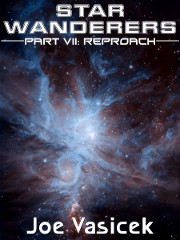
SW-VII Reproach (thumb)If you’ve been wondering what I’ve been up to lately, I’ve been busy publishing a new book!  Star Wanderers: Reproach (Part VII) is now out on Amazon, Smashwords, and Kobo as a $2.99 ebook, and should be up on Barnes & Noble and iTunes in a couple of weeks.

This now brings the total number of books I’ve published to 17.  Part VIII: Deliverance should be out in early- to mid-November, and if things go well, I should be able to put out at least one more ebook before the end of the year.

My main publishing goal, though, is to get print versions out of every Star Wanderers story before Christmas.  I got the first proof of Outworlder a few days ago, and fixed the issues with it over the weekend.  Just have to order another proof and make sure it looks good, then it’s just a matter of clicking a couple buttons and it should be up on Amazon.  Because it’s a small book, it should sell for between $4 to $6–I know there are a lot of books in this series, so I’ll do what I can to keep the prices low!

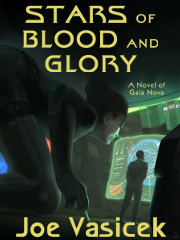
thumb (Stars of Blood and Glory)Speaking of print editions, the trade paperback of Stars of Blood and Glory is now out on Amazon and the CreateSpace store!  If you prefer to read in paper or just want a copy for your bookshelf, you can pick it up now.  I’ve gotten some requests for signed copies, so I’m going to order a few from CreateSpace and try to get those sent out in the next few weeks.  If you’re interested, shoot me an email at joseph [dot] vasicek [at] gmail [dot] com, and I’ll see what I can do.

That’s just about it.  So much publishing–when am I going to get a chance to just write?  It’s been a lot of fun though, and I’m happy to get these books out to you guys.  Next week, I’ll turn my focus back to Sons of the Starfarers and hopefully make some good progress on the first book of that series.

Thanks for reading!

SW-VII: REPROACH coming out soon!

SW-VII Reproach (thumb)So I’ve been working hard at Star Wanderers: Reproach (Part VII) these past few days, and I’m happy to say that it will be coming out sooner than I’d expected!  I finished a quick proofreading and touch up pass today, which mostly involved cutting some unnecessary paragraphs and rewording a few sentences here and there.  I also wrote the author’s note and acknowledgments, so all it needs is another proofreading pass and it should be good to go!

This story wasn’t quite as difficult as Sacrifice, but it certainly was a challenge, and I’m surprisingly pleased with the result.  Revisiting the Star Wanderers story from Mariya and Noemi’s points of view was a great experience, and I did my best to really get into their heads and show what they were thinking.  The themes are a bit unusual for a science fiction story, but if you’ve followed the Star Wanderers this far, it should be another fun and interesting ride!

I suppose this is where I should include an excerpt or something.  I’m not a fan of huge, unwieldy excerpts, so here’s a quickie:

The others laughed with her. As they returned to their work, however, a strange silence fell over them, as if some unspoken tension hung thick in the air. Mariya glanced nervously at her mother, making Noemi wonder if it was something between the two of them. But instead of speaking with Mariya, Salome turned to her.

“About Jerem-ahra,” she said. “He’s a good man, isn’t he?”

“Oh, yes,” said Noemi, slowing down a little as she folded the last of the clothes. “Why?”

“God knows there aren’t many good men where we’re going—the Far Outworlds, I mean.” Salome pulled the bed-sheet taught and tucked it expertly beneath the thin foam mattress. “Not many Deltans out there either. At Zarmina, we’ll be the only ones.”

Noemi frowned. She glanced at Mariya, who was watching her intently out of the corner of her eye. Something was going on here—she didn’t know what it was exactly, but it felt as if they were backing her into a corner.

“Really?” she asked, her arms growing tense. “Just the three of us?”

“And father too, of course,” Mariya interjected. “He wasn’t born Deltan, but he’s as good as one of us now.”

“And Jerem-ahra,” said Salome.

What are they trying to get at? Noemi wondered. Both of them were staring at her now, making her hands feel clammy. It was as if they expected an answer from her, but she didn’t even know what they were asking.

“J-Jeremahra hasn’t been baptized yet,” she said, her voice quavering. “I don’t know how to bring it up. We understand each other when it comes to little things, but—”

“I can talk with him!” Mariya said, smiling cheerily. “I can help translate almost anything for you. And even though he hasn’t been baptized yet, I’m sure he’ll come around eventually. When he married you, he practically married into it—just like daddy. For your sake, he’ll convert before too long.”

That’s odd, Noemi thought to herself. Back on Oriana Station, she did everything she could to avoid bringing up religion. It wasn’t like she’d stopped believing, though—just that she was nervous talking with people who didn’t share their faith. Considering all the anti-Deltan bigotry back on Oriana Station, Noemi didn’t blame her. But why was she so eager to see Jeremahra converted now?

“Let me put it this way,” said Salome. “Where we’re going, we need to stick together. And what’s a better way to do that than to become one family?”

Stars of Holy Earth, Noemi realized, they want Mariya to become his second wife. Her eyes widened, and an awful sinking feeling began to pull at her gut even as her legs turned to water.

I’m not sure whether to hire a proofreader or just proofread it myself.  I doubt I’ll find someone who can turn it around before the end of the week, but who knows?  The manuscript is pretty clean, though, so it shouldn’t take too much work to catch the last few typos–just a good eye.

In any case, I’ll leave you with the track I’m listening to right now.  It’s a great track by Paul van Dyk, Arty, and Sue McLaren, remixed by Pedro Del Mar.  Stuff like this really helps me to get in the zone.

Take care!

Check me out on Wattpad!

So I signed up recently for a site called Wattpad, which is basically like Deviantart for writers.  Once you have a profile, you can post stories or chapters or excerpts, and other members can read your stuff, comment on it, or vote it up.  It’s designed especially for smartphones, so if you have one, that’s probably the best way to access it.

You can find my Wattpad profile here.  I’m still kind of a beginner at this, so it’s going to take me a while to figure out how it works.  It seems like the kind of thing I would have become obsessive about back in high school, kind of like how my sister was obsessive about AOL Instant Messaging.  I’m not a teenager anymore, but hopefully I’m not too old to still have fun with it!

The most interesting thing about the site is how it allows you to release a book serially, by chapter or scene.  Right now, I’m posting Star Wanderers: Outworlder (Part I), with updates on Mondays, Wednesdays, and Fridays.  If there’s interest, I may post a few more Star Wanderers stories as well.

My curiosity about Wattpad got started when I read this guest post on Lindsay Buroker’s blog.  The concept of serializing a book like a webcomic seemed kind of cool to me, and the idea of a reading community seemed pretty neat as well.  At first, I was a little leery because it would basically mean giving away my books for free, but then I thought about it and figured why not?  It’s worth giving it a try.  I’m pretty sure it won’t cost me sales, and if it gives me a chance to interact with people who love my books, awesome!

So yeah, if you’re on Wattpad, check me out!  And if you’re not, check the site out!  Like Deviantart, there’s a lot of fanfic and teen angst, but that’s to be expected–and actually, I think it’s kind of cool.  Anyone can post a story, and anything can take off.  It’s all a big community where there is no line between writers and readers, which seems like a really exciting concept.  So yeah, check it out!

Quick update and a funny thing

SW-VII Reproach (thumb)First, just a quick update on my latest writing projects.  I got the feedback from my second round of test readers for Star Wanderers: Reproach (Part VII), and while I think the story still needs work, it’s getting closer. I probably won’t be able to get it out by the end of September, but first or second week of October it should be ready.

It’s funny–I sent it to a guy and a girl, and while the guy thought it didn’t need any changes (and he’s studying to be an editor), the girl pointed out a few things that need a little more reinforcement and development.  It’s mostly just minor changes I think, getting more into Noemi’s viewpoint and figuring out exactly what she’s going through, and making that clear to the reader.  So yeah, it shouldn’t be too hard.

In some ways, writing this book has been like writing myself out of a corner.  The story in Reproach runs parallel with the events of Sacrifice, and some of the stuff that happens there is pretty complicated.  For example, it’s got a sixteen year old girl who feels like her only hope at happiness is to convince her best friend to share her husband, and the best friend actually kind of comes around to it by the end, though the whole ordeal is almost unbearable for her.

Writing about monogamous relationships is hard enough when you’ve always been single–it’s doubly hard when you’re writing about polygamy.  But I’m actually fairly pleased with the way it’s come out so far–even though it’s not quite ready to be published, everyone who’s read it has really gotten into it, even the readers who haven’t yet read the earlier books in the series.  It’s been a challenging book to write, but it’s been a gratifying one, and I think you guys are going to enjoy it.

Of course, all of this is yanking me away from Sons of the Starfarers, which is really kind of aggravating.  On an interview I listened to recently, Jim Butcher said that writers are either writing, thinking about what they’re writing, or thinking about what they’ve written.  The way my brain is wired, I can only really do one of those things at a time, and I’d much rather write or think about what I’m writing than think about what I’ve written.  But yeah, Reproach is more important, so after finishing the current chapter I’ll put Sons of the Starfarers on hold for a couple weeks.

Also, I’m working to get print editions out for all of my Star Wanderers books before Christmas.  Part of this is because of the new Matchbook program from Amazon, but mostly it’s just because … well, why not?  For those of you who want paperback versions of these novellas, that will soon be an option.  I’m having a little trouble figuring out the cover art (RBG vs. CMYK, getting the covers to print attractively instead of turning out way too dark, etc), but that shouldn’t take longer than a few weeks to iron out.  Expect to see parts I-IV out by November.

Finally, a funny thing happened to me at Leading Edge.  For those of you who don’t know, it’s a student-run science fiction & fantasy magazine where student volunteers read every story submission and write a critique for the author.  Well, while sitting in the slushpile, one of the editors came in and showed me a story that I’d critiqued … twice!  The first time, I’d given it a rejection.  The second time, I’d actually recommended that the editors buy it!

Well, I racked my brain a little bit to figure out what had happened, and as close as I can tell the only real difference was in how distracted I’d been when I’d read it.  The first time, it had been fairly noisy and there’d been a lot of distractions.  The story had some good parts to it, which I mentioned in the letter, but I didn’t really pick up on the character motivations well, so I rejected it based on that.  The second time, though, it had been quiet enough for me to really pay attention to the story, enough to really get what was going on.  I finished it, and the ending moved me so much that I knew I’d have to recommend that we publish it.

The editor wanted to keep the rejection sheet anyway, but I tossed it in the garbage since really it wasn’t all that helpful anyway.  And the moral, if there is one, is to pick up every story with the idea firmly in mind that you’ve got a potential gem in your hands.  Too often, I think we read stuff flippantly, as if we already know that it’s not worth our time and attention.  Well, don’t do that!  Who knows but what you’ve got your new favorite story of all time sitting right in front of you?  Give it a chance!

And on that note, I leave you with this:

See you guys around!