A Change in Direction

This is going to be a rather long post. I’ll preface it with some demographic trends among my generation, then tie that in with my situation and how I got here. From there, we’ll see where it goes.

I was born in the early 80s, which technically makes me a Millennial, though it doesn’t always feel that way. Millennials get maligned for a lot of things, which is pretty typical of all generations as they rise, from what I can tell. Civilization is constantly under attack by barbarians, most of whom we call “children,” which is really just another way of saying this:

So how is my generation currently reinventing the world?

Thus far, not very well. The Great Recession hit us just as we were coming of age, and it shows. We were much more likely to move back in with our parents than previous generations. We’re putting off marriage and home ownership, some because we’re more focused on our careers, others because we just can’t seem to launch.

At the same time, not all of this is bad. In spite of the fact that most of us were never taught home economics or personal finance in high school (thanks, Baby Boomers, for all the participation trophies), we are rapidly learning more responsibility than our parents. Where six out of ten Americans would have to beg, borrow, or steal to cover a $500 emergency expense, nearly half of us Millennials have $15,000 or more in savings.

And yet, the problems we’ve inherited are truly daunting. Our national debt is $21 trillion and counting, and without facing a recession, war, or other emergency event, our deficit is still set to exceed $1 trillion per year for the forseeable future. Just this month, we learned that Medicare is set to run out of money in eight years, and Social Security is not far behind that. And don’t even get me started on the house of cards that is our national pension system.

Up until the 60s, previous generations saved and invested so that their children could be better off than they were. The Baby Boomers not only squandered this wealth, but they stole their children’s and grandchildren’s inheritance as well. History teaches us that there will be a terrible price to be paid for all of this. Our parents have proven themselves incapable of doing anything other than kicking the can down the road to oblivion.

That probably sounds more bitter than I intended it to be. Unfortunately, it’s the truth. Our parents just don’t understand the world that we’re living in. We’ve come of age in a world with far less opportunity than they did.

I had a conversation with my mother last year that demonstrates this. My mother likes to make cascarones for special events, like Easter or birthdays. To make them, however, you need a hollowed-out eggshell, which requires removing the yolk and whites in a very particular way. If you’re accumulating shells through normal consumption, it can get to be rather tedious.

One day, I came into the kitchen to find my mother blowing out eggshells and dumping the whites and yolks down the sink. She’d bought a whole bunch of them for 35¢ a dozen, and decided to just make the cascarones all at once instead of accumulating the shells over time. When I saw this, I was horrified.

“How could you waste all those eggs?” I asked.

“It’s not a waste,” she said. “They were 35¢ a dozen.”

“Yes, but we could have eaten them. That’s perfectly good food you’re dumping down the drain.”

She shrugged, as if it didn’t really matter. But I pressed her a bit further, until I came to a disturbing realization:

My mother has never been as poor as I am.

When I pointed this out to her, her answer was even more disturbing. With anger in her voice, she snapped “that’s because you choose to be poor.”
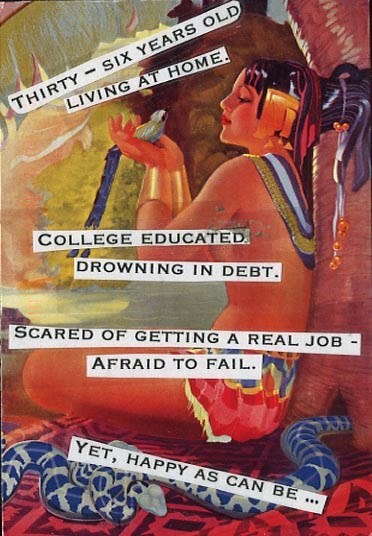
Is that true? Am I, a Millennial, poor because I choose to be poor? Perhaps. I’m not so irresponsible that I won’t own up to my life decisions, which have brought me to this place. But I think there’s this perception in the minds of our parents and grandparents that Millennials are generally like the person who wrote this postsecret above. Drowning in debt, living at home, so afraid to fail that we’ve utterly failed to launch, and yet blissfully oblivious to all of it. Perhaps that’s true for some of us, but not for those who will reinvent the world after our parents are gone.

To be clear, I love my mother and father. I don’t hold any of this against them personally, or anyone else of my parents’ generation (except the politicians who sold our Constitutional birthright, but that’s another rant altogether). Unfortunately, hard truths do not become softer because we choose to ignore them. And hard truth is this:

Hard men make good times.

Good times make soft men.

Soft men make bad times.

Bad times make hard men.
I graduated college in 2010. Through a combination of scholarship money, campus jobs, and (yes) generous parents, I was fortunate enough to graduate without any student debt. At the same time, it was the height of the Great Recession, and jobs were nearly impossible to come by. I can’t tell you how many of my writing friends put their dreams on hold, or abandoned them altogether. Almost all of them.

As a side note, I agree with Mike Rowe that “follow your passion” is bullshit advice. It ranks right up there with “be yourself,” and “you can be anything if you put your mind to it.” Don’t follow your passion. Follow opportunity, and take your passion with you.

But in 2010, I had an opportunity. Without any debt, and without any dependents or other obligations, I decided to pursue a writing career. And unbeknownst to me at the time, the industry was undergoing a revolution that would open the doors to make that possible.

I indie published my first short story, Memoirs of a Snowflake, in March 2011 and never looked back. Since then, I’ve published dozens of novels, novellas, short stories, and other works. It’s been an exhilarating journey. At the same time, it’s been the most difficult struggle of my life. And that is why I must now confront one of my most crippling fears.

Unlike the girl in the postsecret, I am not crippled by the fear of failure. If I were, I would never have published that first story, let alone all the others that followed. Instead, I have a fear of admitting failure, both publicly and to myself. It feels too much like an admission of defeat.

It’s an important distinction to make, though. The Romans admitted failure often and early—it’s how they learned from their defeats, ultimately going on to build one of the most powerful militaries in the ancient world. But they never admitted defeat. Even after Cannae, when Hannibal threatened the republic with utter extinction, the Romans refused to be defeated. And so, while Carthage fell into decline and decadence, the Romans endured until Scipio finally gave them victory at Zama, paving the way for the rise of Western Civilization.

I haven’t had a personal Cannae moment yet, but I do feel like I’ve been fighting a war of attrition. In 2014, the market shifted with the launch of Kindle Unlimited, and I failed to adapt. At that point, I was just on the cusp of going full-time with my writing, though looking back I can see that I didn’t yet have the foundation for a lasting career. Still, to have that dream snatched away when I was just on the verge of catching it, you can understand why I kept plugging along, believing that I was just a month or two from turning things around.

That’s basically what I’ve been doing for the last four years: writing full-time even though the writing doesn’t pay full-time wages. Maybe my mother is right. Maybe I have chosen to be poor.

And yet, while I now believe that I do have the foundation for a lasting career, I need to confront the fact that it may be ten years or more before I achieve it. Should I continue, like so many of my peers, to delay major life decisions until my career reaches that point? Is it worth it to put off marriage, family, and home ownership until my forties or fifties, if that’s what it takes? Or is it time to admit failure so that I can leave this dead end and find another way?

Back in 2010, I had no plan B. It was the Great Recession. I didn’t have a day job because I couldn’t find one—hardly anyone could. And from 2013 to 2014, writing paid well enough that I didn’t need one. Things were looking up, and I was just a couple months away from a sustainable long-term career.

Well, it’s time to admit that that line of thinking has turned out to be a trap. I’m approaching my mid-thirties and I’m still single and poor. I need some kind of long-term backup, because I can’t count on the writing career to take off like I need it to, at least not anytime soon.

So I’ve moved my writing onto a part-time footing. I’m limiting the number of words I write each day, leaving time for other pursuits. And I’m looking for a day job, preferably one that teaches me something useful and pays well enough to make ends meet.

I haven’t been defeated yet, though. Failure is not final until you decide to give up. I have not given up, and will continue to write, even if only on a part-time basis. And when I am making enough to go full-time, I have the foundations in place to do so.

In the meantime, though, I’m not going to put my life on hold for a dream.

3am thoughts, or why everyone says to be an accountant (Blast from the Past: October 2013)

A lot of my blog posts this week had to do with money, wealth, and politics, so when I was searching for an old post to bring back, this one made me stop and reflect for a while.

My opinions and perspective have changed a bit since I wrote it, but the fundamental message is still one that I agree with. I’ve trimmed out some of the parts where I think I was wrong, and left the stuff that still resonates. Hopefully it resonates with you as well. Either way, feel free to let me know.


I’ve been reading in bed on my smart phone recently, which is probably a bad idea because it makes it harder to go asleep. At the same time, it tends to get my mind rolling, and at 3am my thoughts tend to go some really interesting places. Sharing those thoughts is probably going to get me into trouble, but hey, you might find them interesting, so why not?

When I was eight years old, I knew I was going to be a writer.  There was never any question about that. I spent all my free time making up stories.  However, I knew I never wanted writing to be my job, because 1) everyone hates their jobs, and 2) everyone knows that writers can’t make a decent living. Even at eight years old, I had bought into some of society’s most pervasive myths about jobs, careers, and how to make money.

Americans are generally horrible with money. We struggle to keep budgets and put all sorts of things on credit, and pay more than twice what our houses are worth by signing mortgages we barely even read. Because we’re so horrible with money, we tend to see it as a magical force, something that can solve all our problems and make us happy. Rich people are like wizards or sorcerers, so far above the rest of us that we can hardly fathom their ways.

Nowhere is this stupidity more apparent than in the fact that most of us spend our lives working for some sort of hourly or salaried wage. Wages and salaries are basically the same, in that they convert time into money. That’s why we all measure income in terms of dollars per hour, or salary per year.  But for anyone who understands how money works, that is stupid, stupid, stupid, stupid. Money comes and goes, but time? Time is one of the most finite and precious resources known to man.

All of us are going to die someday. Most people are scared shitless by that fact, so we try to ignore it or put off thinking about it until we have to. But not all of us get the opportunity to put our affairs in order before we die. And even if we do all live to be centenarians, our time on this Earth is still finite. It’s non-renewable, too—you can’t go back and relive that day or that hour or that minute once it’s passed.

Converting time into money is basically trading gold for lead, or wine for water. Yet that’s exactly what we do, because money is this strange, magical force that so few of us understand.

Questions like “where do you work?” “what is your job?” and “what do you make?” are much more common than “what do you do for a living?” That’s because most of us have bought into this idea that money comes from working for someone else. While we’re on the clock, the company owns us and anything we produce. That’s the pact we make in exchange for this magical substance we call money.

It wasn’t until college that I started to become disabused of my childhood notions about writing for a living. First, I came to realize that lots of people love their work—that just because you do something as a job doesn’t mean that you’ll come to hate it. But it wasn’t until I graduated unemployed in the middle of a recession that I was disabused of the notion that writers can’t make a living.

People say that about every career—that is, every career except accounting. That’s because accountants are the ones who count the magical money. They’re the ones who know where it comes from. Their jobs are the ones that the people with the magical money will always need.

But there are other ways to make money—thousands of ways. Millions, even. It’s not about time it’s about producing something that people want and need. But when you’re working for yourself, that’s hard. You have to own up to your work—the failures as well as the successes.

When you work for a corporation, it’s easy to shift the blame. It’s a rare case where one person is solely responsible for bringing down the whole collective enterprise. But when you work for yourself, you can’t blame anyone else when things go wrong. You’ve got to take the risk.

That’s why everyone says that you can’t make a living as a writer. They say the same thing about any career where you strike out on your own.

In the end, though, it’s all just silly. Money isn’t a vague magical force—it comes from the value you create. It comes from producing something that people are willing to pay you for. And you don’t need to sell your time at $11 an hour or $44,000 a year to do that. You just need hard work, a great idea, and the ability to learn from your mistakes.

So can you make a living pursuing your dreams? The answer to that question depends entirely on you.

Update on 2014 Resolutions

So since it’s February now, I figure it’s worth checking back on my January resolutions to see how horribly I’ve failed how well I’m doing. Here goes!

1. Publish something every 6 weeks.

I’m actually still on track with this one. The next 6 week deadline is February 15, and if all goes well I should be able to publish Star Wanderers: Tales of the Far Outworlds (Omnibus V-VIII) by then. Derek Murphy is working on the cover, and all I have to write for it is the author’s note which shouldn’t take more than a day or two. After that, it’s just a matter of compiling and formatting the thing–shouldn’t take more than two or three hours–then upload it to all the retailers.

So yeah, still on track with this one!

2. Write at least two short stories per month and submit them to traditional markets.

For this one, I’m not doing so well. I did write one story, “The Open Source Time Machine,” and sent it out to Writers of the Future, but that’s about it. I am working on a second story, but I haven’t finished it yet, which is annoying because the whole thing is in my head but not yet on the page. Better get on that. Also, there’s another story that got rejected in January that I still need to send out to the next market.

Well, one out of two isn’t so bad. If I take off the weekends to work on these stories, I can probably get back on track before the end of the month.

3. Read a book every week.

Yeah, about that … I was doing so well the first two weeks, but then things got disorganized and this goal kind of fell through the cracks. It probably didn’t help that I spent upwards of 50 hours on Steam in the last two weeks of January. What can I say–XCOM is an amazing game!

I’ve got a huge TBR pile and the book I’m reading now is really awesome, but I just haven’t been good about making the time to read. That’s gotta change. Evenings are the perfect time to read, when I’m too tired to do much writing but too awake to go to bed. Instead, I usually end up browsing the internet or playing on Steam, neither of which are as fulfilling as reading a book.

So yeah, this is one I’m going to have to work on. Fortunately, it shouldn’t be hard to adjust my habits.

4. Keep a detailed weekly personal journal.

This is one resolution that I have been keeping extremely well. I’ve completely redone the format for my personal journal keeping, and now it’s one of my main Sunday activities. The last month wasn’t very eventful for me, so it wasn’t too hard to keep up, but I’ve solidly gotten back into the habit of journal writing and I’m still quite motivated to keep doing it.

If I only keep one resolution this year, it’s going to be this one. Fortunately, I’m still on top of it 100%. Now that’s satisfying!

5. Get to the point where I can run a mile every day.

AHAHAHAHA!!!! Oh dear. The last time I went running was probably three weeks ago. For a while, I was going on some long daily walks, but then the Google Fiber job landed in my lap and all of that kind of got put to the side.

Fortunately, the job is starting to fall into something of a routine. It’s an on-call thing, which means that if I go running I need to keep my phone on me and a change of clothes in the car, but I can still probably do it. The track at BYU’s Smith Field House is open until 10pm, and the parking lots open up around 6pm or 7pm. I prefer to run in the mornings, but the evenings can work too.

So yeah, this one is definitely a fail, at least for January. But with a bit of work, I can get back on track again soon.

6. Finish hiking the seven peaks.

Because it’s winter, hiking any of the higher mountains around these parts is pretty much impossible (at least without professional equipment). But there’s still a lot I can do to prepare for the spring.

For one thing, I need to get new shoes. My hiking shoes from last year are pretty torn up and definitely not in shape for a big climb. With the Google Fiber job, I now have enough of a discretionary income to spend on things like that. And since I’m going to need new shoes for my next overseas adventure anyway, I don’t feel so bad about taking out from the money I’d be saving for that.

I need to get in shape for hiking, though. That’s probably the biggest thing. Not much I can do with snow on all the peaks, but I can hike the Y, and maybe Squaw Peak as well. One thing I’d like to do this season is go snowshoeing, maybe for a date or something. Definitely need to look into that.

Other than that, all I guess I can really do is make plans and wait for the snow to thaw. When it does, you can bet I’ll be doing some serious hiking!

Conclusion

So out of six resolutions, I’m doing really well at two, doing marginally well at two others, and failing at the last two. Not too bad. It isn’t perfect, but it’s not like it’s fallen apart yet either.

Most of the time, it seems that people drop their resolutions around February/March after failing to keep them perfectly. That’s just silly, though. If you break a resolution one month, why not pick it up again the next? So what if you don’t keep it the whole year? If it takes you until July or August or even October to master it, that’s still a lot more months that you’d be keeping it than if you dropped it in March.

So this year, I’m going to try to revisit my resolutions at the beginning of each month and start over with them as if each month were January. That’s kind of what you’ve got to do when you lead a freelancer’s life–plans always change, routines always fall apart, but if your goals are clearly defined and you keep your eyes on them, you can get back up just as quickly as you get knocked down.


3am thoughts, or why everyone says to be an accountant

I’ve been reading in bed on my smart phone recently, which is probably a bad idea because it makes it harder to go asleep.  At the same time, though, it tends to get my mind rolling, and when 3am comes around my thoughts tend to go some really interesting places.  Sharing those thoughts is probably going to get me into trouble, but hey, you might find them interesting, so why not?

When I was eight years old, I knew I was going to be a writer.  There was never any question about that.  I spent all my free time making up stories, and my favorite stories were the ones I found in books.  However, I knew I never wanted writing to be my job, because 1) everyone hates their jobs, and I didn’t want writing to ever become something I hated, and 2) everyone knows that writers can’t make a decent living.  Even at the young age of eight, I had bought into some of society’s most pervasive myths about jobs, careers, and how to make money.

Americans are generally horrible with money–we struggle to keep budgets and put all sorts of things on credit, and pay more than twice what our houses are worth by signing mortgage contracts we barely even read.  Because we’re so horrible with money, we tend to see it as a sort of magical force, something that can solve all our problems and make us happy.  Rich people are like powerful wizards or sorcerers, so far above the rest of us that we can hardly fathom their ways.

Nowhere is our stupidity about money more apparent in the fact that most of us spend our lives acquiring it by working for some sort of hourly or salaried wage.  Wages and salaries are basically the same, in that they convert time into money.  That’s why we all measure income in terms of dollars per hour, or salary per year.  But for anyone who understands how money works, that is stupid, stupid, stupid, stupid.  Money comes and goes, but time?  Time is one of the most finite and precious resources known to man.

All of us are going to die someday.  Most people are scared shitless by that fact, so we try to ignore it or put off thinking about it until some unspecified time in the future, like when we’re retired.  But not all of us get the opportunity to put our affairs in order after retiring comfortably from the workforce.  In fact, any of us could die tomorrow, or the next day, or at any other time.  And even if we do all live to be centenarians, our time on this Earth is still finite.  It’s non-renewable, too–you can’t go back and relive that day or that hour or that minute once it’s passed, no matter how much you regret it.

Converting time into money is basically trading gold for lead, or wine for water.  Yet that’s exactly what we do, because money is this strange, magical force that so few of us understand.  And the machines that do all the converting for us are businesses and corporations.

Questions like “where do you work?” “what is your job?” and “what do you make?” are much more common than “what do you do for a living?” That’s because most of us have bought into this idea that money comes from working for someone else, exchanging your time directly for a salary or paycheck. Sure, we do stuff with that time, but we don’t actually own it–the company does. While we’re on the clock, the company owns us and anything we produce. That’s the pact we make in exchange for this magical substance we call money.

It wasn’t until college that I started to become disabused of the childhood notion that I shouldn’t pursue writing as a career path. For one thing, I came to realize that plenty of people love their work–that just because you do something as a job doesn’t necessarily mean that you’ll come to hate it. But it wasn’t until I graduated unemployed in the middle of a recession that I realized how much of a myth it is that writers can’t make a living.

You see, people say that about every career choice–every career, that is, except accounting. That’s because accountants are the ones who work for the businesses and corporations, counting the magical money. Since we all get our money from businesses and corporations, exchanging our time for money, the only career with complete security is the one that the businesses and corporations will always need. After all, they’re not going to go belly up, are they? Not the big ones, anyway. They can’t–they’re the magical machines where all the money comes from.

Of course, anyone who knows anything about money knows that the only real way to make a lot of it is to produce something of value that can scale. It’s not about time at all–it’s about producing something that people want, and producing it in such a way that the more you sell, the more you make. At no point in that equation does time become a variable. It’s certainly a variable in the production equation, but even there, it’s not necessarily the most important one.

The most important thing, though, is that you have to really own what you produce–and that means owning all the failures as well as the successes. When you work for a corporation, it’s easy to shift the blame. It’s a rare case where one person is solely responsible for bringing down the whole collective enterprise. But when you work for yourself, you can’t blame anyone else when things go wrong. You’ve got to be ready to take the risk, and the bigger the payoff then chances are the bigger the risk.

That’s why everyone says that you can’t make a living as a writer. They say the same thing about making a living as a sports caller, or a musician, or a political activist. I’ve even had people tell me that there’s no money in math or in Arabic. They say that because they think that money is supposed to come from corporations, and corporations only really need people who can count their money. Every other part of the business they can either figure out how to do it with robots or outsource the work to India. They might not outsource all of the jobs, but there’s always a risk that they’ll outsource yours (unless you’re an accountant, of course, because corporations always have money).

In the end, though, it’s all just silly. Money isn’t some sort of vague magical force, and it doesn’t come out of the void from businesses or corporations–it comes from making something that people are willing to pay you for. It comes from producing something of value, or at least convincing people that you have something of value. And you don’t need to sell your time at $7.25 an hour or $24,000 per year to do that. You just need hard work, a great idea, and the opportunity to succeed as well as fail.

So can you make a living as a writer/artist/blogger/activist/global nomad/whatever your dream happens to be? Of course! It won’t be easy–you’ll probably fail a lot, perhaps even spectacularly–but it is possible. So why not give it a try? At the very least, you shouldn’t buy into the myth that accounting is the only career path guaranteed to make you any money.

Busy, busy, busy

No, I haven’t dropped off the face of the planet–I’ve just been crazy crazy busy this past week.

On Sunday, after one BSOD too many, I finally switched from Windows to Ubuntu.  I’ve wanted to give Linux a try ever since high school, but I’m not a computer programmer or anything so a lot of it is way over my head.  So far, though, it hasn’t been too bad.  The most complicated thing I had to do was change the firmware on my mp3 player (an iRiver T10 … yeah, laugh, whatever).

This is just an initial impression, but it seems that the difference between Linux, Windows, and Apple is a lot like the difference between cooking your own food, popping a frozen meal into the microwave, and paying someone to cook for you.  With Linux, you have to at least dabble in the actual code in order to get anything to work, but it works WAAAAY better than anything else (just like real food is healthier than fake food).  With Windows, yeah, you can kind of hack stuff, but you’re still at the mercy of Microsoft.  And with Apple, you’re basically paying through the nose for someone to hold your hand every time you use your device.

So anyways, that’s been quite an adjustment, with a steep learning curve that I’m still trying to climb.  Hopefully, I’ll get it all figured out before I publish my next book, because otherwise there will be much wailing and gnashing of teeth.  Actually, scratch that–the wailing and gnashing of teeth will happen anyway (heck, it’s happening now!), but if I don’t have it figured out, there will be wailing and gnashing of teeth AND a delay getting the next book out.  But that’s not going to happen.

The other thing that’s kept me busy (and really, the main thing sucking up all my time) has been a construction job that the temp agency suckered me into taking.  They said it was supposed to end on Monday … but no, it lasted all week.  I did learn a lot of interesting things, though.  For example, I learned how to take out and re-install a toilet.  I also learned that painters are among the most disgusting creatures on Earth, so if I ever want to paint the interior of my house, I’d be better off buying the supplies and doing it myself.

There were a couple of other things that kept me busy, but I’m not sure how much I can talk about them yet.  The most exciting thing has to do with the next issue of Mormon Artist magazine, which should be coming out in about a month.  Also, I’ve been working with some other sci-fi indie writers to put together a group promo–more on that later.

So that’s what I’ve been doing instead of blogging.  I’ve also made some progress in Sons of the Starfarers, though not as much as I’d like.  Ideally, I’d like to finish the rough draft in about two weeks, which is pushing it but definitely possible.  I figure that writing is more important than blogging, so if you don’t see another post here for a while, that’s what I’m up to.

So much for that.  I’ll leave you with this:

Okay, chances are you’ve probably seen it already. Maybe it made you sad, maybe it made you cry, or maybe it made you laugh in a guilty, self-conscious sort of way. However, I am not ashamed to say that I found this clip absolutely hilarious. Sure, maybe it left that poor little girl a bit traumatized, but I’d rather her learn about death from an eagle and a rabbit than from someone in her family passing away.

Rabbits are pests. Eagles are beautiful, majestic creatures who have every right to live as rabbits do. What the eagle did was not malicious, or hateful, or evil–it was natural. Eagles have to eat too, and by golly they sure work for their food a lot more than rabbits do. So here’s to the eagles, the hawks, and all the other majestic birds of prey for being awesome.

I could make a joke here about the rabbit being a PC and the eagle being a Linux user, but it’s getting late and I’d better go write. Later!

What I’ve been up to recently

It’s been a while since I posted anything except Trope Tuesday posts, so I figure I should do a quick one here explaining what I’ve been up to recently.

As far as writing goes, I finished the first draft for Star Wanderers: Reproach (Part VII) about two weeks ago.  Since then, I’ve been bouncing around between Lifewalker and other projects, writing only about a thousand words a day (which is kind of low for me), but it looks like I’m going to go full steam ahead on Star Wanderers: Deliverance (Part VIII).  That’s the story that really excites me right now, and it’s practically writing itself.  I should (God-willing) finish the first draft sometime next week.

As for Star Wanderers: Benefactor (Part VI), I’ve gotten feedback from first readers and sent off the first chapter to Kindal Debenham’s writing group, where they workshopped the first chapter.  It’s going to require a bit of work, but I should be able to publish it before the end of July.  My goal right now is to publish something every two months, and Benefactor is at the top of the queue.

Life-wise, I’ve had a whole lot of weird expenses pop up recently, including a wisdom tooth that needs removing (??? I’m like 28!).  But between my new job and a marked increase in book royalties, I should be able to cover it without any problems.  The job I have right now is really nice–it pays twice minimum wage at only 20 hours per week, with a schedule that leaves the whole day open.  It’s perfect for writing (well, as perfect as any day job can be), and it’s quite physical so I should be in pretty good shape by the time I’m done.  I’ll probably keep it for a couple months, up until the end of the summer, and hopefully save up enough to move elsewhere in the country, or perhaps go back overseas.  Who knows?

About book royalties: my sales on Amazon have really gone up recently, which kind of astounds me.  I’m selling about 10-11 ebooks per day, which doesn’t sound like a lot, but it really adds up.  Throw in Amazon UK, Smashwords, and all the other retailers, and I’m perilously close to actually making a living at this thing.  I have no idea if the current trends will continue or if sales will suddenly fall off, but it looks like people are reading and enjoying my books, so I’ll definitely keep putting them out there.

Speaking of sales, I inadvertently tossed a rhetorical hand grenade over at KBoards by suggesting that perhaps the community over there focuses a little too much on sales as the primary measure of success.  Well, they didn’t quite run me out with pitchforks and torches, but the debate did stretch to eighteen pages, so one way or another I think I touched on a sore spot.  In the end, though, it turned out to be a fairly constructive discussion, and I think the KBoards community is a better place because of it.

Other than that, I’ve been spending far too much time on minecraft than I probably should.  I’m on a server now with my brother-in-law and some other friends, and I’m building a city in the sky, kind of like Zeal or Shevat.  It’s actually turning out really well, but I don’t want to post any pictures yet because it isn’t finished.  Later, though–definitely later.

That’s just about it.  I want to put in at least two thousand words today, and it’s already noon, so I’d better run.  See you later!

Thoughts on making a living as a writer

As many of you know, my biggest life goal (besides obtaining a signed first-edition copy of David Gemmell’s Legend) is to make a living telling stories that I love.  Accomplishing that goal is no small task.  For the last five years, I’ve been focused on that goal like a hellfire missile, and as of right now it continues to elude me.

I’m getting closer, though.  I’ve got 14 ebooks out, hopefully 18 by the end of the summer, and they’re actually selling.  I won’t go too much into specifics, but my gross income is about 30% to 40% of what I’d need to cover all my expenses without another job.

Granted, I’m a young single guy with good health and no dependents, living on a shoestring budget in the cheapest housing in one of the cheapest states in the US, but that’s not an insignificant accomplishment.

Right now, I’m reinvesting all of that into the business, in order to boost sales and to avoid self-employment tax.  But if I have a difficult month and need something to fall back on, my books are generating a fair amount of passive income, and that income is growing.  If I keep doing what I’m doing, and things stay on more or less the same trajectory, I expect that I’ll be making enough to support myself in one or two years.

That’s actually a little better than the timetable I set a year ago, where I determined to go full-time by 2016.  Then again, I also set a goal to be married by then, and I have no idea how that will change things.  I suppose my spouse’s income would be able to supplement my own, but then there’s insurance and taxes and all sorts of other expenses that I can expect to go way up.

(At the same time, I have this wild dream of running off with my wife to some remote part of the world and spending a couple of years on some crazy-insane adventure, like trekking across Mongolia, or joining a Bedouin tribe, or couchsurfing across Europe.  The world is a very different place outside of the US, and the cost of living in much of the world is significantly lower.  Especially in the developing world, people know how to make do and be happy with much, much less.)

Even if I suffer a major setback, like an irreversible drop in sales or a technological shift that made my current business model obsolete, making a living is no longer a pie-in-the-sky sort of dream.  It’s within reach, and I think I have a pretty good idea how I’ll get there.

First of all, it’s probably not going to be a sudden, earth-shaking event.  It’s much more likely that I’ll ease into it gradually, first as a fallback for months when work is slow, and then as a way to pay off my bills while I keep a part-time job for spending money.  One day, I’ll wake up and realize that it’s been five or six weeks since I’ve done anything but write, and then I’ll open up my budget and realize that I’ve arrived.

As I get married and start a family, my expenses will no doubt rise, and I or my wife may have to take another job for a while to make ends meet.  Then again, if book sales continue to snowball with each new release, then we might be able to time it so that the kids start arriving just as the writing income really starts to take off.  Even then, book sales fluctuate so much from month to month that until we have a significant amount of money in savings, we’re always going to feel like we’re a couple of weeks away from having to find another job.

And then, with the writing bringing in a comfortable six-figure income, we might finally be able to afford a house.  It’s almost impossible to get a mortgage as a self-employed freelancer, so I fully expect to pay for most of the house up front.  Good thing I don’t want to live in a city.

Of course, it’s also possible that the writing will never bring in a six-figure income.  Science fiction is a relatively small genre, and the only stories I really care to tell are the ones that take place on other worlds.  But that’s okay–as long as I’m able to support myself and my family, I’ll be happy.  Anything above that, and it’s not about the money.  In fact, it’s really not about the money right now.

The point of all this is that I don’t expect there to be a moment where I’ve suddenly “arrived.” If anything, it’s just going to be a continuation of what I’m doing right now, scaled up to meet life’s changing demands.

And you know what?  I’m okay with that.

My resume might look a bit checkered, and job interviewers may raise their eyebrows when they see that I’m a college graduate, but these odd jobs give me a lot more flexibility than a stable “day job” with insurance and all that.  I like being able to take a week or two off to do nothing but write, even if the off-time is unintentional on my part.  I know how to be flexible, and I’m quite comfortable living a lifestyle where I don’t know where I’ll be getting my next paycheck.

And to friends and family who are concerned because I’m almost thirty and don’t have a full-time job … don’t be.  I’m following my dream, and my dream is within reach.  Everything else is just a stepping stone.  I have a career, I’ve taken full responsibility for it, and I’ve turned it into something profitable.  If making a living as a writer is a bit like making grizzly bear soup, I’ve already killed the bear.

In related news, I learned this week that I’ve been pirated in Japan.  I’m not sure whether to be flattered or alarmed, but since my books are 1) available from multiple retailers 2) relatively inexpensive, and 3) DRM-free (on all the sites that allow it, anyway), I’m not too concerned about it cutting into my income.  I am worried about people downloading my books from an unsafe site that might give them a virus or something, but people will be people and there’s not much I can do about that.

If anything, it’s just another sign that I’ve arrived–or rather, that I’m exactly where I’ve wanted to be all along, and it’s just a matter of making things work.

And now for a little Minecraft…

2013-03-13_01.52.19

2013-03-13_01.50.40

2013-03-13_01.55.42

2013-03-13_01.51.07

2013-03-13_01.51.45

2013-03-13_01.50.29

2013-03-13_01.50.03

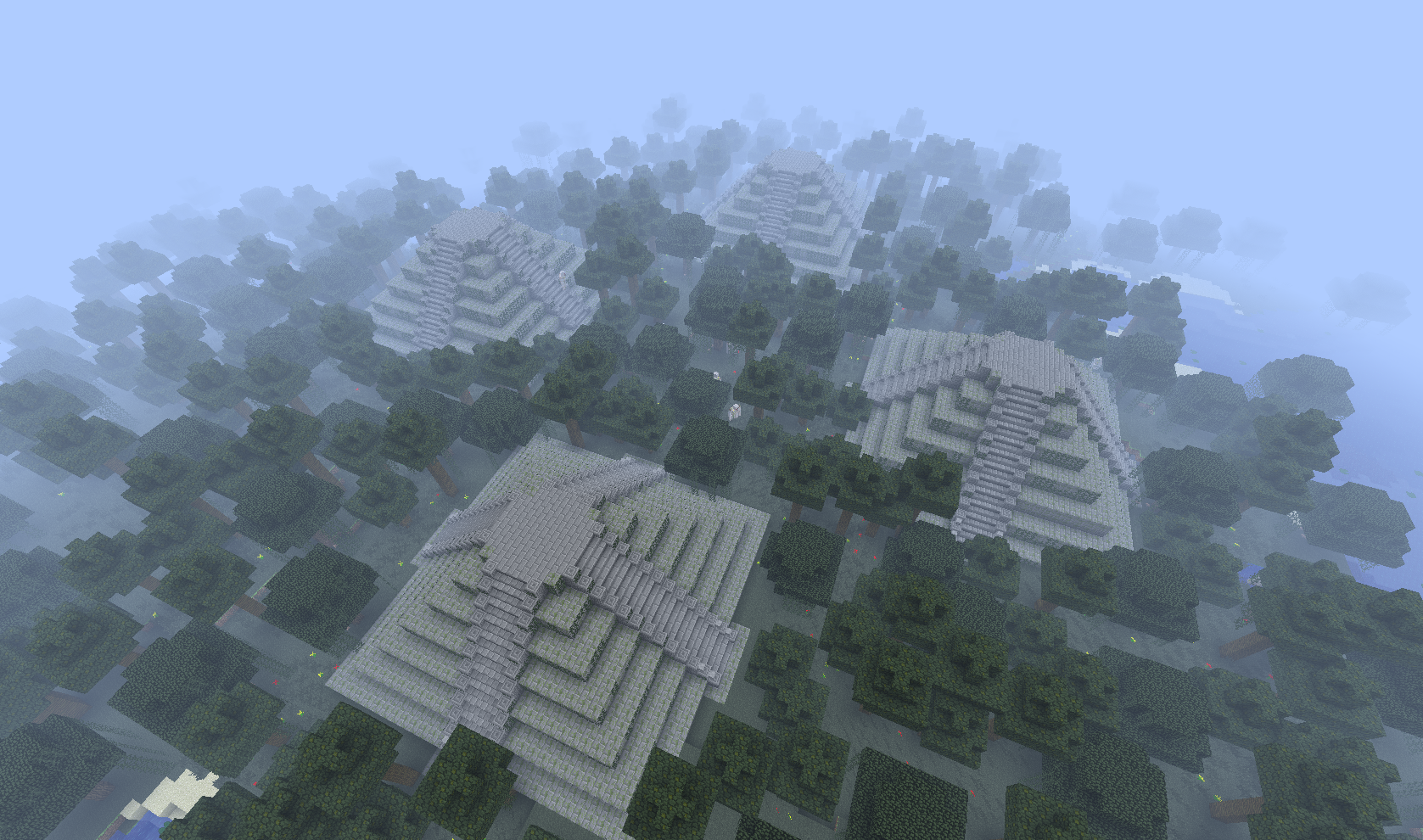
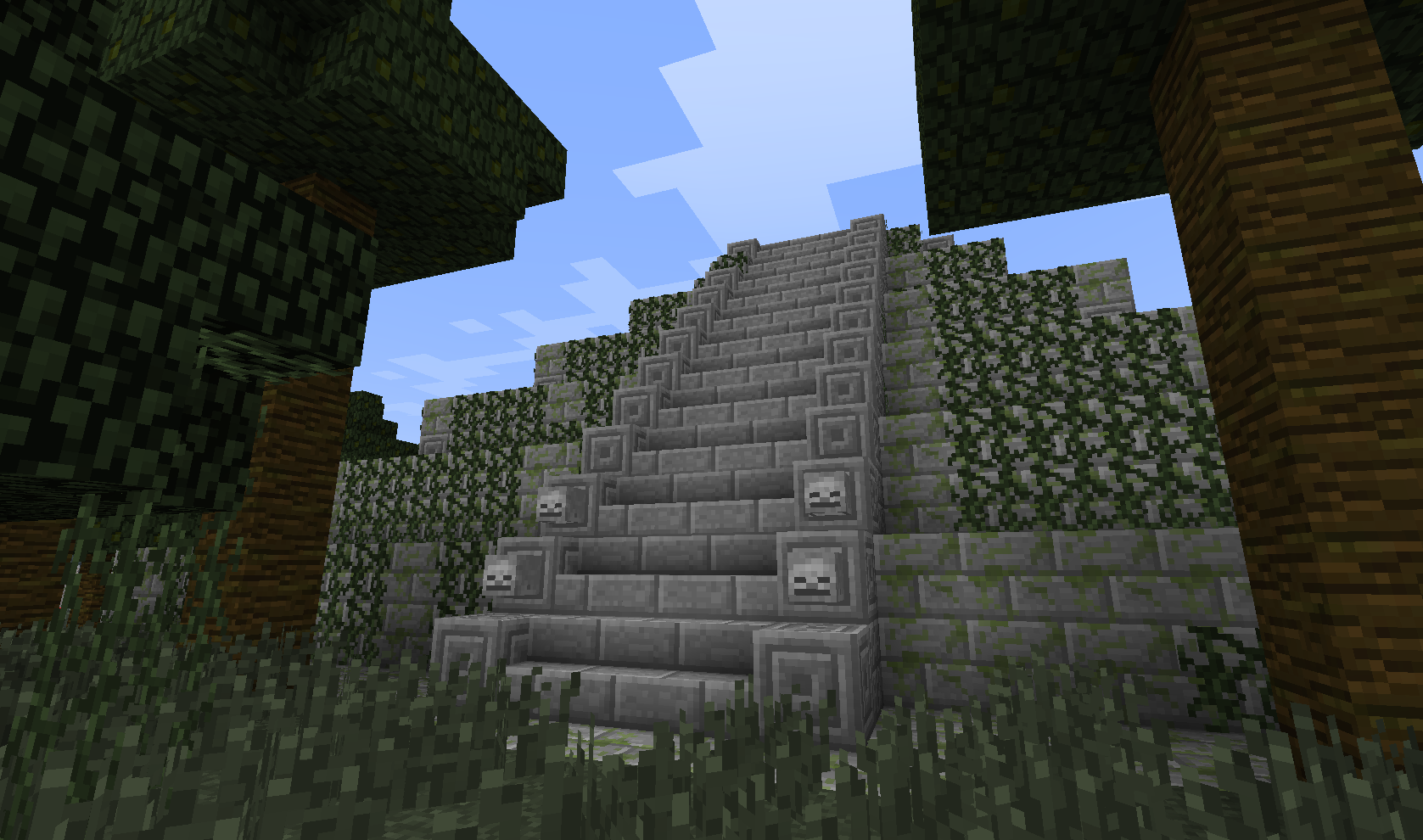
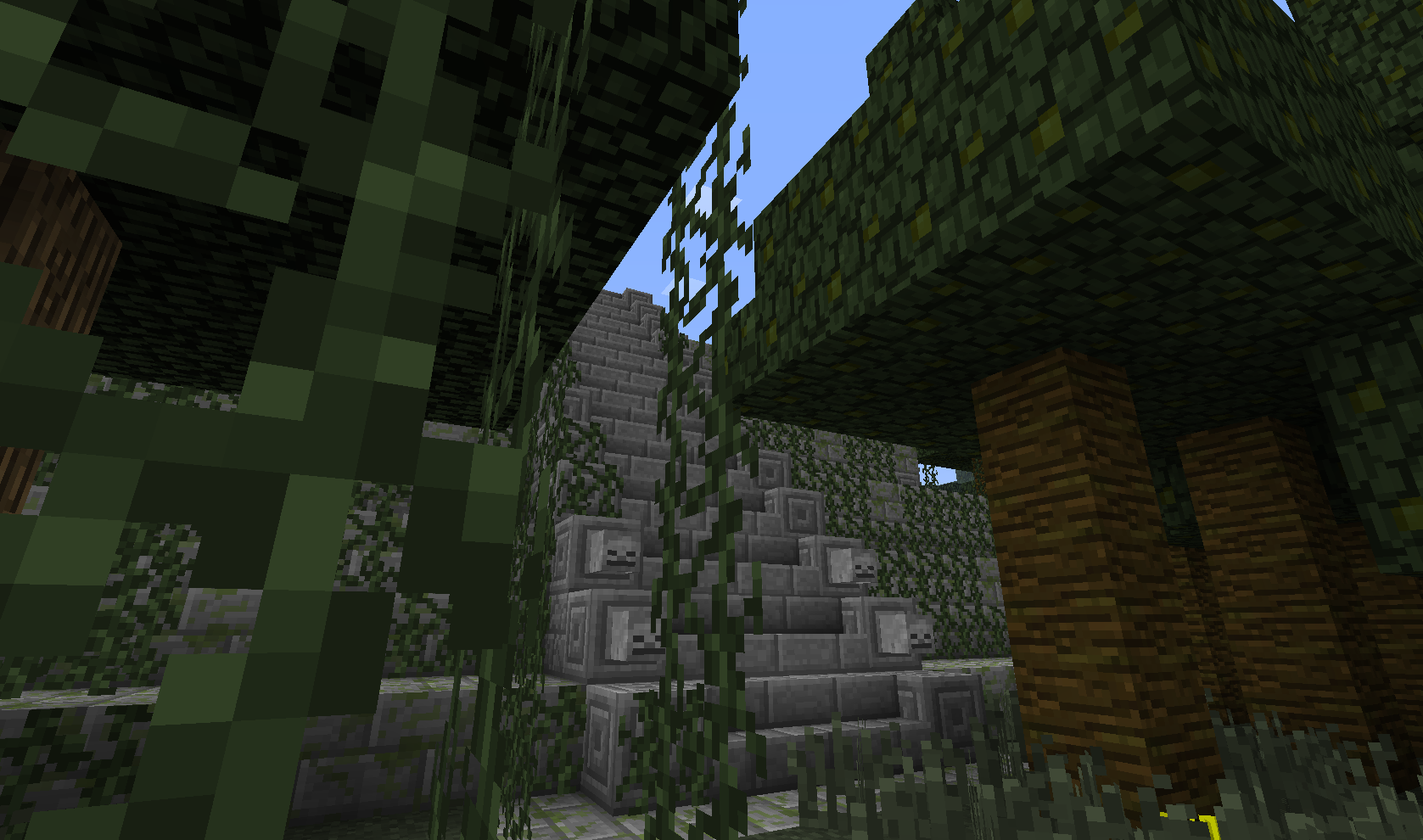
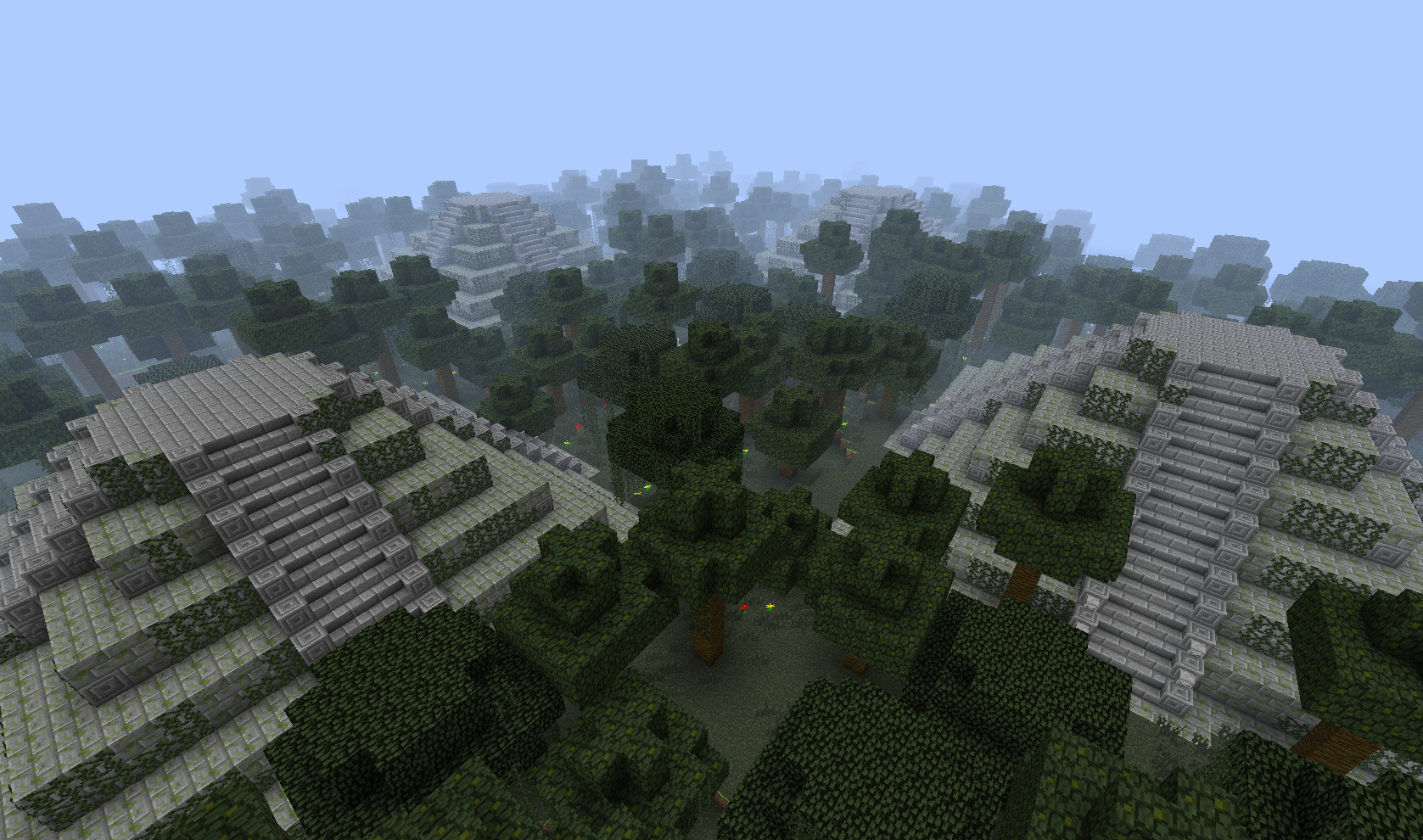
I call it Teotihuacan.

The temples each have a base of 31×31 blocks and a height of 13 blocks, with the topmost level a 7×7 square.  They are spaced kitty corner five blocks diagonally, in a sort of equilateral quadrangle.  The biome is actually a swamp; I added the jungle trees later for effect.

The idea came to me a couple of weeks ago, when I was playing with my toddler nephew.  I built a Mayan step pyramid out of Duplos with him, then figured why not do the same thing in Minecraft?  The first attempt was in survival mode, which took FOREVER, so for this one I decided to go creative.

Overall, I’m rather pleased.  This was my first time playing around in creative mode, and I must say it’s a lot more … creative.  Go figure.

Don’t worry, I’m still writing.  This was just a little diversion to keep me busy between job applications and temp jobs.  The staffing agency has kept me pretty busy until now, so I’m looking for something a little more steady.  Had an interview at J-Dogs today that went pretty well–hopefully, I’ll hear back from them next week.

In the meantime, I’d better get some sleep.  G’night!

Last day of school

So today was the last day of school in Georgia, with all of the craziness that that entails.  It was kind of sad to say goodbye, even though I’ll probably be coming back to the same school in September.  In the meantime, I’m going to miss being a rockstar to all the 7-12 year olds and giving them high fives after class and in the hallways.

I haven’t posted much about my teaching experience, but it’s generally been positive, though not without its ups and downs.  I’ve met a lot of great people, taught a lot of great kids, and lived in a culture very different from my own.  I’m not sure how I’ve grown yet, or what I’ve learned from the experience, but it isn’t over–I’ll be back after the summer, for a least one more semester.

I asked to be placed in the same school again, though I’ll be changing homestay families.  If they can’t find another family in this district, I asked to be placed in a village near Kutaisi.  It’s impossible at this point to say what will happen, though, and things in this country tend to change without notice.

When I came to Georgia, my goals were to find out if I could balance teaching English with my writing career, to get some useful teaching experience, and to gain some cultural exposure that would enhance my writing.  On all three counts, I think I’ve had success.

My writing productivity has gone down  slightly since coming out here, but I think that has more to do with the homestay and finding a good, quiet place to write.  I’m still writing every day, just 1.5k words instead of 2.5k.  Teaching English isn’t the problem–in fact, it’s probably one of the best careers for aspiring writers, just so long as you know your creative process and have a modicum of self-discipline.  I’ll probably do another post on that later.

As far as teaching experience, I don’t know how much my time here in Georgia is going to help my resume, but it has helped me to have a bit more confidence when it comes to teaching.  I still feel like there’s a lot of room for professional improvement, though, and it’s going to be difficult to get that here.  I like Georgia, though, so I’ll be happy to come back.  If anything, I figure one year looks better on a resume than six months.

And as for cultural exposure, coming out here was definitely a good move.  Living in a developing country changes your perspective in a lot of interesting ways, and Georgia is so different from America that I’m sure I’ll be talking about it for years to come.  How all of this will affect my writing, I don’t exactly know, but I’m sure it will only enhance it.

So yeah, that’s been my experience so far.  The last day of school was kind of bittersweet, but I’m definitely looking forward to coming back!

Getting settled in the land of the Kartulis

About three weeks have passed since I came to Georgia, and I’m starting to feel comfortably settled in this new place.  I like it a lot out here: my host family is great, I get along really well with everyone at the school where I work, the kids are so crazy eager to learn it’s awesome…really, I couldn’t ask for more.

Of all the places in Georgia where TLG volunteers are placed, Kutaisi seems like one of the best.  It’s the second largest city in the country, so it has access to several amenities such as markets, hospitals, restaurants, parks, and basically anything else you’d  expect in an urban center.  However, it’s about 200 km from Tbilisi and has very little exposure to the West, so culturally it’s very authentically Georgian.  It’s also much less crowded, and (in my opinion) much more beautiful.

My host family is great; I get along with them real well and already feel like a member of the family.   My youngest host brother, Kako, is 9 years old; I showed him Star Control II over the weekend, and he’s been addicted to it ever since.  We also play chess, and I’ve kind of taken him under my wing to teach him the basics of good strategy.  He’s getting steadily better!

Gura and Kati are the two teenage kids; they also speak English, so we’ve had some fun discussions.  Besides Facebook and her cell phone, Kati is really into books; I showed her my Kindle, and she wants me to help her persuade her father to get her one!  Gura is into Call of Duty and spends a lot of time hanging out with his friends; he lacks confidence when it comes to English, but he knows it better than he thinks he does.

The parents don’t speak much English, but they are really good people.  It’s a working class family; the dad works as a welder, and the mom is a nurse part-time and a home-maker full time.  They spend an amazing amount of time and energy on their kids, which is pretty typical for this part of the world.  They’re both non-smokers, and they’re very respectful of the fact that I don’t drink coffee, tea, or alcohol.  Some of the extended family keeps trying to push wine on me, but in the land known as the cradle of wine, that’s to be expected.

We basically spend all of our time in the family room when we aren’t sleeping; it’s where the heater is, so despite the relatively cramped space it’s the most comfortable room in the apartment.  Furniture consists of a couch, a computer desk and office chair, a bucket seat from an old van, a folding table, several small wooden chairs and a stool.  The TV isn’t quite a member of the family, but when the power isn’t out, it’s usually on.

The neighborhood is this bizarre mix of urban and rural elements.  The roads are super muddy and free-range chickens wander everywhere at will, but everyone lives in 9-story apartments that were built back in the Soviet days, when Kutaisi was a major center for the auto industry.  The school was built 50 years ago this year and has barely been renovated since, but it’s just starting to get some much-needed attention, with a computer center and a resource room for special needs students.  When the weather clears up, I’ll bring my camera to school and take some pictures so you can see what the classes are like.

I’ll have to do a post later on Georgian culture; there are some really bizarre and paradoxical juxtapositions, such as the way they mix religion and alcohol, or their strong belief in the nuclear family with their easy-going acceptance of bride-napping as a “Georgian tradition.” I have yet to really get a handle on all this stuff.  However, as a culture, they have a great respect for literature; when people ask my profession and I tell them I’m a writer, their eyes light up, and they show me a degree of deference that I never would have gotten back in the States.

Partly to have something to talk with them about, I’m reading War and Peace by Leo Tolstoy right now.  I just finished Book III, where Napoleon smashes the Russians and Austrians in the Battle of Three Emperors.  Everyone says that it’s the best novel ever written, and now that I’m in the thick of it, I’m starting to agree with them.  There’s a lot of really good storytelling here, as well as passion and depth.  I have the feeling that I’m going to be on a Russian literature trip for a while, though I should probably pick up some Rustaveli and Kurban Said as well.

As far as writing goes, I’ve had some difficulty settling down into a solid routine, not because of lack of time so much as trouble with my current WIPs.  Star Wanderers has more or less stalled; I ran into another wall midway through part III, and I’m still not quite sure how to get past it.  I’ve decided to take a break for a while, but I think my experiences here with the Georgian language are going to give me what I need to really make this novel come together.

In the meantime, I’m working on the 2.0 draft of Stars of Blood and Glory.  I’ve decided to try something new: revising not by chapter, but by viewpoint character.  Isolating each of the five viewpoints is helping me to see which ones work, and which ones are missing something.  I’ve also been using Dan Well’s 7-point outlining method, which is helping out a ton.

It feels like I could be writing more, but I’m not pushing myself too hard at this point.  I’m still adjusting to life in this totally new culture, and I’m also spending a lot of energy getting my TEFL career off on the right foot.  It’s paying off; I’m having a great time teaching, more than I thought I would.  Pretty soon, though, I’m going to start putting more energy into my writing.  I just hope that I’ll have enough mental space left over to really immerse myself and make it work.