Trope Tuesday: I Choose To Stay

The hero’s journey can be divided into three basic phases: departure, intiation, and return.  In the departure phase, the hero receives the call to adventure and eventually leaves the familiar world.  In the initiation phase, the hero passes through a series of tests and trials eventually leading up to the climax and final confrontation with the Big Bad (if there is one).  But after the hero wins and receives the ultimate boon (aka MacGuffin), there’s nothing left except to go back home and share that boon with the rest of mankind.

Except…after having such an awesome adventure, he just doesn’t wanna.

Joseph Campbell called this stage the Refusal of the Return.  It’s a lot like the Refusal of the Call in the departure phase, except in reverse: instead of being reluctant to cross the threshold of adventure into the unfamilar world, the hero doesn’t want to cross the threshold in the opposite direction going back home.  Campbell put it this way:

When the hero-quest has been accomplished…the adventurer still must return with his life-transmuting trophy. The full round, the norm of the monomyth, requires that the hero shall now begin the labor of bringing the runes of wisdom, the Golden Fleece, or his sleeping princess, back into the kingdom of humanity, where the boon may redound to the renewing of the community, the nation, the planet or the ten thousand worlds.

But the responsibility has been frequently refused. Even Gautama Buddha, after his triumph, doubted whether the message of realization could be communicated, and saints are reported to have died while in the supernal ecstasy. Numerous indeed are the heroes fabled to have taken up residence forever in the blessed isle of the unaging Goddess of Immortal Being.

Anyone who’s ever been two years old should know the feeling.  You’re at the playground, having fun, when out of the blue your mom says that it’s time to go.  So what do you do?  Throw a hissy fit, of course!  Grab onto the cold hard steel of the swingset, and don’t let go until she drags you kicking and screaming all the way to the car.

The hero may have fallen with the new world the moment he left his home behind, but he might also have hated it initially.  In stories where the hero actually does stay, this allows the author to give him a character arc: at first, he hated the new world, but gradually he warmed up to it, until by the end he was changed so much by the adventure that he decided to settle down there.

In milieu stories (see Orson Scott Card’s MICE quotient), this often manifests as Going Native, while in stories that are more plot or character driven, it’s more likely to manifest as Can’t Stay Normal.  When the hero eventually comes around and goes home anyway, it frequently morphs into Stranger in a Familiar Land.  The polar opposite is But Now I Must Go, though that trope tends to apply more to side characters than the main protagonist.

Ultimately, however, adventures are like stories: they all have a beginning, a middle, and an end.  The hero may want it to keep on going forever, but that is not this trope.  Even if the hero does stay in the lands of adventure, those lands eventually become his new home.  It just can’t be avoided.

For that reason, there’s an important element of bittersweetness to this stage of the hero’s journey–one which, if done well, can add a crowning moment of heartwarming or turn the story into a real tear jerker.  Or both, actually.  It all depends on how invested the reader is in the story by the end.  If the reader feels like she’s been right there with the hero all this time, then you can expect the tears to flow no matter which way he ultimately goes.

I pretty much played this trope straight in Genesis Earth.  Most of my other books feature a Refusal of the Return moment of one kind or another, but the hero usually ends up going home anyway.  If there even is a home to return to, of course.  I don’t know why, but a lot of my stories are about characters who are searching for home.  Maybe that’s because at heart, I’m still a wanderer.  It will be interesting to see how that changes over the coming years.

The song at the top, by the way, is from Disney’s Tarzan, a movie which plays this trope straighter than most.  In fact, this trope is practically Disney’s bread and butter.
Trope Tuesday: MacGuffin

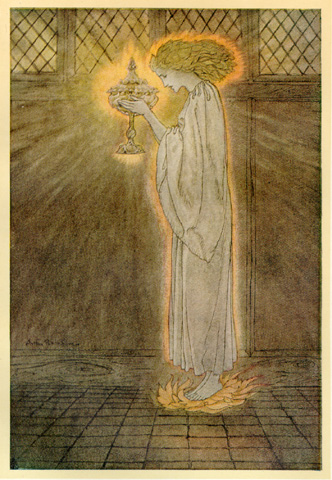
The Holy Grail of MacGuffins. Literally.

So the hero has crossed the threshold of adventure, thwarted the trickster, evaded the vamp, and met with the goddess.  He may have lost his mentor and descended into the deepest dungeon, but by calling on the supernatural aid he received at the beginning of the quest, he has passed the final test, found atonement with his father, and come back stronger than he ever was before.

So now that that’s all done, what’s left?  Just one thing, really–he has to receive the ultimate boon, or in other words, get the MacGuffin that he came out questing for in the first place.

A MacGuffin is an object whose main (sometimes only) purpose in a story is to motivate the plot.  It is usually something that everyone is chasing after, whether it be a ticking time bomb, a briefcase full of money, a priceless artifact, or some sort of superweapon.  Basically, it can be almost anything–that’s kind of the point.  If you can replace an object with something completely different that serves the exact same plot purpose–for example, a priceless stolen Picasso with a priceless stolen Dead Sea scroll–then it’s a MacGuffin.

Like it or not, MacGuffins are everywhere in fiction.  It’s such a prevalent trope, it even has its own Wikipedia page.  One of the most famous examples, at least in the Western literary tradition, is the Holy Grail.  Another example is the One Ring from Lord of the Rings–it could just as easily be a bracelet, or earring, or any other wearable artifact (though admittedly, if it were a necklace and Gollum had to bite off Frodo’s head, that would change the story quite a bit).  The MacGuffin page on tvtropes lists nearly 30 subtropes, from Egg MacGuffin to I’m Dying, Please Take My MacGuffin.

So what does this have to do with the hero’s journey?  The last phase of the initiation cycle (basically, all the stuff between the departure and return) is known as the Ultimate Boon.  It not only represents the achievement of the hero’s quest, it represents receiving something to bring to the people back home.  As Joseph Campbell pointed out:

The gods and goddesses then are to be understood as embodiments and custodians of the elixir of Imperishable Being, but not themselves the Ultimate in its primary state. What the hero seeks through his intercourse with them is therefore not finally themselves, but their grace, i.e., the power of their sustaining substance…This is the miraculous energy of the thunderbolts of Zeus, Yahweh, and the Supreme Buddha, the fertility of the rain of Viracocha, the virtue announced by the bell rung in the Mass at the consecration, and the light of the ultimate illumination of the saint and sage. Its guardians dare release it only to the duly proven.

According to Vogler, the hero has to return home with something to benefit himself or the community–otherwise, the whole journey has been a waste of time.  Before entering the return phase, then, the hero has to receive the object of his quest.

At this point, it’s worth pointing out that tropes are neither good nor bad.  Just because a story revolves around a MacGuffin doesn’t automatically make it cheap or formulaic.  Tropes themselves are value neutral–what matters is how you, as the author, use them.  Some of the greatest and most inspiring stories of all time make heavy use of MacGuffins.

Because the MacGuffin is a plot-centric trope, when you really understand how it works, you can do some interesting writerly things with it.  Michael Moorcock, for example, used this trope to formulate a method for writing a novel in just three days.  Would you like to be able to write a novel in three days?  Gosh, I’d like to.  And before you write that off as formulaic crap, remember, it wasn’t just anyone who came up with this method–it was Michael Moorcock.

In my own work, the best example of this trope would have to be Stella from Bringing Stella Home.  As you might have gathered from the title, Stella serves as a MacGuffin for her brother James (specifically, in The President’s Daughter flavor).  She does have her own character arc, of course, but as far as James’s storyline is concerned, she could just as well be his mother, or cousin, or <insert kidnapped loved one here>.  I did a similar thing in Stars of Blood and Glory, an as-yet-unpublished sequel to Bringing Stella Home, but it should be coming out in January or February of next year so you’ll have a chance to read it then.

Trope Tuesday: Came Back Strong

This trope, also kown as apotheosis, is by far my favorite part of the hero’s journey.

Up to this point, the hero has faced a lot of tests and trials.  Some of them he’s passed, some of them he hasn’t, but the setbacks haven’t yet been enough to stop him.  Sure, the costs have been high–he may have lost a friend or mentor, for example–but at least he’s still in the game.  Then, just as he experiences the power of love (meeting with the goddess) and reconciles with the ultimate power in his life (atonement with the father), what happens?

He dies.

This may be literal or metaphorical, physical or spiritual–but whatever form it takes, the hero has to lose something significant, up to and including…well, everything.  After all, there are so many things worse than death.  While all the other failures up to this point left him more or less intact, this one completely shatters him–and in the process, transforms him.

Like a phoenix rising from the ashes, the hero comes back from the dead, often with a level in badass.  By dying, he gains that last piece of knowledge, experience, or resolve that he needs to defeat the big bad and gain the ultimate boon of his quest.  Whoever or whatever he was before, that person wasn’t strong enough to pass the test–but now, he is.

When done well, this is a stand-and-cheer moment of the best possible kind.  It’s the culmination of everything the hero has gone through, not just in terms of plot, but character as well.  Years from now, you might forget everything else in the story–even the parts that you loved–but you’ll remember how you felt when you got to this part.

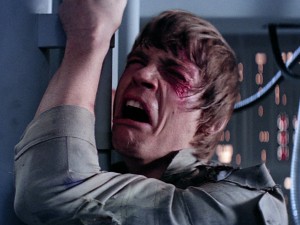
One of my favorite examples of this trope is in the clip I posted from the Matrix.  Seriously, when Neo realizes that he is The One, that is one of the best moments in all of cinema.  The Empire Strikes Back also has a moment like this, though since the movie is essentially a tragedy, there’s a lot more emphasis on Luke’s death (falling through the gas mine shaft after confronting Darth Vader) than his resurrection (getting a new hand and reuniting with his friends).  The oldest examples, of course, come from mythology–Odin gained the ability to use magic by sacrificing himself on Yggdrasil, and before returning to Ithaca, Odysseus first had to journey to Hades to pay his old friend Agamemnon a visit.

So as writers, how are we supposed to get this trope right?  I’m by no means an expert, but my gut instinct tells me that the way to nail it is to be as excited about this moment in the story as we want our readers to be when we get to that point.  Even though storytelling is ostensibly just making stuff up, it’s not something you can fake–if you aren’t excited about your own story, how do you expect your readers to even care?

Fortunately, this is often the part of the story that drives us to write everything else.  There have definitely been times when I could hardly wait to get through the other stuff and finally write the chapter where this happens.  Bringing Stella Home was a big one–and that’s all I can say, at the risk of giving spoilers.  Star Wanderers is another one, though it wasn’t until I was midway through Fidelity that it really came to me.  Desert Stars was more of a Heroic Second Wind, which is basically Came Back Stronger without the death.  However, there was definitely a transformation, both for Mira and Jalil.

So yeah, I really, really, REALLY love this trope.  When done well, it’s one of those things that can turn a run-of-the-mill adventure story into something both soul-searching and powerful.  You can definitely expect to see me play with it a lot in the future.

Trope Tuesday: Well Done Son Guy

What happens when this trope goes horribly, horribly wrong.

So the hero gets the call to adventure, initially turns it down, meets a mentor figure who gives him some sort of supernatural aid, crosses the threshold of adventure, faces a series of tests and trials, loses his mentor, experiences the power of love…and then what?  Well, if we’re playing the hero’s journey straight, the next step is atonement with the father, also known as well done son guy.

Before passing the ultimate test, the hero must first confront the force that holds the ultimate power in his life.  This is often some sort of father figure, though it can also be a close friend or a rival.  Often, the main reason the hero set out on the journey in the first place was because he felt a need to prove himself and gain the respect of this figure.  For that reason, the climax often involves some sort of reconciliation or closure between these two characters.

In discussing this trope, Joseph Campbell said the following:

Atonement consists in no more than the abandonment of that self-generated double monster—the dragon thought to be God (superego) and the dragon thought to be Sin (repressed id). But this requires an abandonment of the attachment to ego itself, and that is what is difficult. One must have a faith that the father is merciful, and then a reliance on that mercy…

The problem of the hero going to meet the father is to open his soul beyond terror to such a degree that he will be ripe to understand how the sickening and insane tragedies of this vast and ruthless cosmos are completely validated in the majesty of Being. The hero transcends life with its peculiar blind spot and for a moment rises to a glimpse of the source. He beholds the face of the father, understands—and the two are atoned.

While this may, on the surface, seem just like a simple “I’m proud of you” moment, the full significance goes much deeper.  This is the moment where the hero finally receives validation for all his struggles, where he realizes that everything he’s been through has been worth it.  It’s a tremendous moment, and an important element of any story that follows the hero’s journey paradigm.

The reason why the hero’s journey resonates so strongly throughout our culture is because it powerfully and effectively fulfills one of the major purposes of all story–to help us better understand ourselves, the world we live in, and what it means to be human.  For that reason, this trope is one of the things that can either make or break a story.  When done well, it can turn the work into a classic.  When done poorly, it can make us wish we had our money back.

I’d talk about this trope in my own work, but I don’t want to give any spoilers.  In Bringing Stella Home, there’s something of a gender inversion, as the title would imply.  In fact, there’s a gender inversion in Star Wanderers as well, though you’ll have to wait until part IV to read it.  In Desert Stars, it’s more of a personal moment, but the whole novel is a lot more intimate and personal than a save the world type of adventure.

Trope Tuesday: Supernatural Aid

Getting back to our discussion of the Hero’s Journey, I think it’s important to briefly touch on one of the earlier stages: supernatural aid.  At some point between refusal of the call and crossing the threshold of adventure, the hero typically encounters a mentor figure from the unfamiliar world who gives him something supernatural or otherworldly to help him on his quest.  While the mentor often dies (as we saw last week), the supernatural aid that the mentor gives later proves to be a key to defeating the big bad and passing the ultimate test.

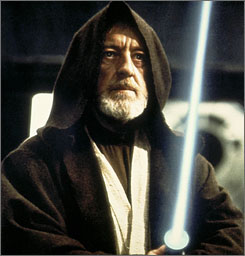
Often, this is an actual object.  In Lord of the Rings, for example, Galadriel gives each member of the fellowship a specific object.  She gives Sam a magical vial, which he uses later to defeat Shelob and save Frodo and the ring.  In The Lion, The Witch, and the Warderobe, Aslan gives each of the kids a weapon item specially suited to their characters (except Edmund, who was a prisoner of the queen at the time).  In Star Wars IV: A New Hope, Obi Wan gives Luke his father’s lightsaber–though for the purposes of this trope, we can also count his special training with the force, since Luke doesn’t use the lightsaber until episode V.

In discussing this trope, Joseph Campbell said the following:

Having responded to his own call, and continuing to follow courageously as the consequences unfold, the hero finds all the forces of the unconscious at his side. Mother Nature herself supports the mighty task. And in so far as the hero’s act coincides with that for which his society is ready, he seems to ride on the great rhythm of the historical process.

So if the mentor is supposed to die (or get put on a bus) in order for the hero to stand on his own feet, why does the hero need some kind of supernatural aid?  Isn’t that just cheating?

Not exactly.  Often, the aid is itself part of the ultimate test, and the hero doesn’t figure out how to use it properly until after he’s already experienced everything from the adventure that he needs.  The silver slippers from The Wizard of Oz are a good example of this.  So is AURYN from The Neverending Story.  The hero doesn’t fall back on the supernatural aid until after he’s completed his growth arc.

That’s not the only reason, though.  In order for the adventure to have meaning and impact, the stakes have to be really high.  Having some sort of mysterious character from the outside world grant the hero something supernatural is a great way to do this, especially at the beginning.  If the hero is part of something bigger than himself–saving the world, for example–then it makes sense that he would get some kind of help from the people depending on him, especially if those people have something supernaturally powerful to give.

The Force from Star Wars is one of my favorite examples of supernatural aid.  I hear that when episode IV debuted in the theaters, the crowds jumped up and screamed when Obi Wan said “use the force, Luke!” in the clip at the top of the post.  Just because it’s so awesome, here’s the full scene (more or less):

“Remember–the force will be with you. Always.”

Trope Tuesday: Mentor Occupational Hazard

Being a mentor to the hero can be a pretty tough job.  Don’t believe me?  Check out the tvtropes page:

If you don’t have to convince The Chosen One who just wants to be normal to grow a spine and accept the Call to Adventure, you have to convince your blindly excited and dangerously eager young pupil that You Are Not Ready to learn the Dangerous Forbidden Technique. When you try to protect The Hero from the Awful Truth, you end up facing their Rage Against the Mentor. You have to maintain an ongoing conspiracy to keep The Hero Locked Out of the LoopIf they’re an orphan, you have to find them a set of Muggle Foster Parents while keeping social services in the dark. You have to endure accusations of insanity when you’re trying to teach your charge that Your Eyes Can Deceive You, give them advice on how to tell a love interest “It’s Not You, It’s My Enemies,” and keep a close eye on them 24/7.

And what is your reward for all this patience and effort?

You die.

And that right there is the heart of the matter: mentors tend to die.  And stay dead.  Even if they do figure later in the story, they tend to be spirit advisors from the other side with little or no chance of coming back from the grave–even if everyone else does.

So why does this happen?

The most obvious reason is that if the mentor and the hero are both working toward the same goal, the mentor cannot overshadow the hero–otherwise, why not forget the hero and send the mentor off to save the world?  The hero may start off weak, which is why he needs the mentor in the first place, but at some point in the growth arc, he’s  going to have to stand on his own two feet.  Oftentimes, the most poignant (and convenient) way to mark that transition is to knock the mentor off.

That doesn’t explain everything, though.  If the only reason for killing the mentor is to give the hero a growth arc, you can accomplish that just as well by putting him on a bus.  So why does he have to die?

Lots of reasons!  Character growth, increasing tension, making the story more meaningful–the list goes on and on.  For an in-depth discussion on killing off characters, I’d recommend checking out this last week’s episode of Writing Excuses.  My own personal take is that everyone dies eventually–even the immortal characters have to pass through some sort of transition from this world to the next–so the best thing I can do for a character isn’t to keep them alive, but to make their lives and their deaths actually mean something.

It’s also worth pointing out that in most stories, the mentor isn’t actually fighting against the big bad, but the dragon–the big bad’s lancer.  Again, the main reason for this is to keep him from overshadowing the hero.  But the dragon is a character in his own right, with his own agenda that may run counter to his boss–think Darth Vader from Star Wars.  And in a lot of stories, the dragon actually tries to tempt the hero to come around and join him.

Perhaps that’s another reason why mentors often die–if they didn’t, then the bad guys wouldn’t ever be able to dissuade the hero through temptation.  The hero would be so protected that he’d never have the opportunity to switch sides, or at least he’d never have to face any moral ambiguity because of the guardian mentor constantly guiding him.

So those are some of the reasons why mentors tend to have a short life expectancy.  Can you think of any good ones?

Trope Tuesday: Wicked Cultured

What Captain Nemo does in his spare time, when he isn’t terrorizing the world of maritime shipping.

This week’s Trope Tuesday series post is by request from a reader.

Evil villains aren’t always grotesque, brutish, foaming-at-the-mouth barbarians.  Quite often, they are wealthy and aristocratic, with exquisitely refined tastes and an extraordinary degree of eloquence.  It isn’t just that evil is cool (though it may overlap with this), or that the barbarians have finally developed a fashion sense–it’s that the more refined and cultured a character is, the more evil they are as well.

This happens a lot more often than you might think.  Magneto (X-men), Lucius Malfoy (Harry Potter), Hannibal Lector (Silence of the Lambs), Ganondorf (Zelda), Captain Nemo (20,000 Leagues Under the Sea), the Godfather (the Godfather), Kane (Command & Conquer), President Shinra (Final Fantasy VII), the Merovingian (The Matrix Reloaded), Grand Admiral Thrawn (Star Wars: Heir to the Empire and The Thrawn Trilogy), Khan (Star Trek II: The Wrath of Khan), Vetinari (Discworld), Captain Hook (Peter Pan), the Phantom (Phantom of the Opera) and every James Bond villain ever all fall squarely into this trope.

So why does this happen?  I can think of a few reasons, though I’m sure there are others.

First, it hearkens back to the age-old romanticism vs. enlightenment debate.  This is especially true of the fantasy genre, which tends to hearken back to a medieval golden age before the modern, industrial world, when life was simpler and people tended to live in picturesque rural villages instead of dense urban cities.  If your hero is a farmboy in a world of knights and wizards, or a barbarian hero who strikes first and asks questions never, chances are that anyone with a sense of refinement or culture is going to find themselves on the wrong side of the story.

Second, it hearkens back to the mad scientist and the cautionary tale of science gone horribly wrong.  As you might expect, this is much more common in science fiction, especially the classic dystopian stuff. The more scientific and enlightened a character, the more cultured they tend to be as well.  In stories where science is bad, then, it should come as no surprise that these characters are also evil.

Another good reason to use this trope is to indicate that the villains are members of the Empire.  Culture tends to happen when people of diverse talents and backgrounds are brought together, and the best way to bring them together is through conquest.  Just look at the Romans.  Almost every empire throughout history, no matter how brutal, has always produced an increase in some degree of culture.  Even the Mongols gave way to Kublai Khan and the Silk Road.  So in stories where the Evil Empire comes into play, having your villains be cultured can be a good way to show that.

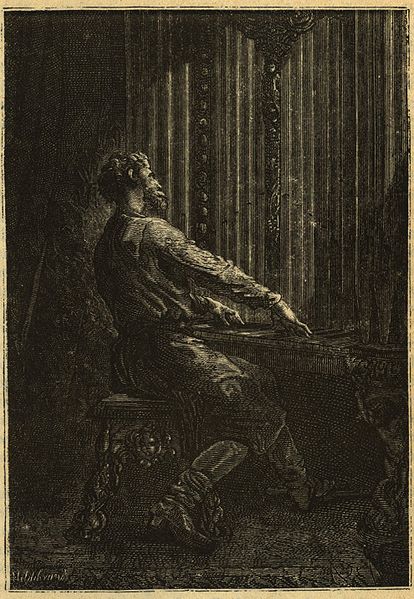
The biggest reason for this trope, though, is that it makes the villains more complex and interesting.  If being evil always meant living in a cave and eating raw meat, then every story would read like a badly written RPG, where the heroes keep grinding until all their stats are at 9999 or higher.  And honestly, you have to admit that there’s something a little bit eerie about that guy who gets totally absorbed when playing the organ.

I haven’t played with this trope in a major way yet, but it does come into play a bit in Desert Stars, though only in a minor way.  In Bringing Stella Home and Heart of the Nebula (forthcoming), Lars is pretty much the opposite of this (the Gentleman and a Scholar trope, though he did drop out of college).  Probably the best example would be Heloise from Star Wanderers: Fidelity (Part II).  She’s wealthy, fashionable, and decorates her apartment with wallscreen monitors that cycle through artistic photographs of deep space nebulae.  She’s also one of the more dangerous female characters I think I’ve written.  Who knows–maybe she’ll show up in another story before too long.

Trope Tuesday: Hero’s Muse

One thing about the hero’s journey is that it tends to be very male-centric.  It’s possible to pull off a gender-swap, or to follow the structure loosely while allowing for substantial variation, but the basic form follows the assumption that the hero is male, and that most of the women he meets fall into one of two basic archetypes: sedductress (as we saw last week) or goddess.

The goddess (or “hero’s muse,” as tvtropes labels this trope) is an idealized woman who often serves to motivate the hero on his quest.  She stands in stark contrast to the sedductress, who works toward the hero’s downfall, and the meeting with her is an important part of the journey.  Speaking of the meeting with the goddess, Joseph Campbell said:

The ultimate adventure, when all the barriers and ogres have been overcome, is commonly represented as a mystical marriage of the triumphant hero-soul with the Queen Goddess of the World. This is the crisis at the nadir, the zenith, or at the uttermost edge of the earth, at the central point of the cosmos, in the tabernacle of the temple, or within the darkness of the deepest chamber of the heart. The meeting with the goddess (who is incarnate in every woman) is the final test of the talent of the hero to win the boon of love (charity: amor fati), which is life itself enjoyed as the encasement of eternity.

In some stories, the goddess figure represents a love interest for the hero.  This is especially the case with stories from the medieval and renaissance periods, such as the protoypical knight errant and his lady, or tales of courtly love.  In most cases, the girl is either faithfully married or a chaste virgin.  In more modern stories, she often takes the form of the manic pixie dream girl.

The goddess doesn’t have to be the love interest, though.  She can also be a motherly figure, such as the Oracle in the Matrix, or she can be an innocent, childlike girl, such as the Childlike Empress from The Neverending Story.  The important thing is that she helps the hero to experience the power of love, whether that love is romantic or platonic.

I’d write more, but my internet time is kind of limited, so this is as much as I can say on this trope for now.  If you have anything to add, feel free to do so in the comments.  I’m traveling to a rather remote part of the Caucasus, but I’ll be back in a few days to chime in.

Trope Tuesday: The Vamp

Also known as the temptress or the seductress, the vamp is one of the more dangerous characters the hero meets on his journey.  A devastating beauty who is as evil as she is sexy, she uses her feminine wiles to exploit men’s flaws to her own advantage.  If the hero falls for her, he will be destroyed.

Unlike the femme fatale, her more neutral counterpart, she is completely evil and cannot be redeemed.  This is because her role in the story demands it.  She generally makes her first appearance in the initiation phase of the hero’s journey, after the hero sets out on the adventure but before he masters the unfamiliar world.  In many cases, she represents a leave your quest test or a secret test of character.

Joseph Campbell thought this character was so important that he dedicated an entire phase of the monomyth to her:

When it suddenly dawns on us…that everything we think or do is necessarily tainted with the odor of the flesh, then, not uncommonly, there is experienced a moment of revulsion: life, the acts of life, the organs of life, woman in particular as the great symbol of life, become intolerable to the pure, the pure, pure soul. The seeker of the life beyond life must press beyond (the woman), surpass the temptations of her call, and soar to the immaculate ether beyond.

As such, the vamp represents the more carnal elements of the hero’s nature, which he must reject or overcome in order to be transformed.  Confronting her is an important part of the story because it gives him an opportunity to recognize his flaws and master them.  It isn’t easy, though–the vamp is an extremely deceptive character, and often plays tricks like the wounded gazelle gambit to confuse the hero and gain his sympathy.

While often a female character, there are a few male examples of this character.  Mr. Wickham from Pride and Prejudice is one of the more obvious ones.  Basically, the vamp can be of any gender, so long as s/he is someone the main character finds sexually enticing.  Because of the traditionally male-centric nature of the hero’s journey, however, she’s almost always female.

Also, I think it’s important to add that it’s not just the vamp’s sexiness that makes her evil, it’s the way that she uses it to manipulate and undermine the hero.  If she starts out evil but has a heel-face turn later in the story, she doesn’t fulfill this trope.  Likewise, if falling for her wouldn’t make the hero fail, then she doesn’t fulfill the trope either.

I’ve played with this trope a little bit in my own work, but not in a big way yet.  Heloise from Star Wanderers: Fidelity (Part II) probably fits this trope the best, though her appearance is fairly brief.  Tamu from Bringing Stella Home might appear superficially to be one, but she’s actually more of a fair weather mentor for Stella (and has good reasons for choosing the life of a Hameji consort).  And of course, Mira from Desert Stars doesn’t fit this trope at all, seeing how much she changes by the end.

Trope Tuesday: The Trickster

After the hero crosses the threshold of adventure and finally sets out on his journey, he passes through a long phase that Campbell called “the road of trials.” This is often where the meat of the story happens, but it doesn’t fit squarely into any one trope because of all the possible directions where the story can go.  For that reason, I think it’s more useful to think in terms of who the hero meets, not what the hero does.

The Trickster is often (though not always) one of the first characters the hero encounters upon entering the lands of adventure.  He is almost always male, though sometimes he can change shapes and even sexes (for example, Loki, who turned into a mare and conceived Odin’s horse).  His role in the story, though, can range from mentor (Merlin, Yoda, Mary Poppins) to bad guy (the Joker, the Homonculi, Grand Admiral Thrawn) to the hero himself (Prometheus, Bugs Bunny, Bilbo Baggins).

Obviously, the Trickster is a very slippery character.  You can tell who he is, though, by whether he meets these two basic criteria:

  • completely unpredictable
  • not beholden to any authority

In this way, the Trickster often stands in stark contrast to the people of the ordinary world that the hero left behind.  Which makes sense–having just crossed the threshold of adventure, the hero needs to leave his old mentality behind and be exposed to new experiences and ideas.  For that reason, the Trickster’s antics often serve to teach the hero an Aesop, helping him to learn and grow.

That doesn’t mean that the Trickser is harmless.  Quite the contrary–he’s a dirty, lying cheat, capable of taking any disguise and throwing the victims of his pranks into any moral quandary just for laughs.  He’s not necessarily a jerkass–he may even be more of an ally than an enemy–but he definitely is not to be trusted.

Like most things associated with the hero’s journey, the amazing thing is just how prevalent this trope is.  It’s even cropped up in some of my own work.  For example, in Bringing Stella Home, Ilya Ayvazyan is a trickster of the playful hacker variety.  In Star Wanderers, Samson is a blithe spirit who doesn’t necessarily have Jeremiah’s best interests at heart…though his girlfriend (the one at Alpha Oriana) is a lot more sinister.  I’m not sure if anyone fits this trope in Desert Stars, but you could probably make a case for Lena or Amina–or better yet, Ibrahim.

Of all the major character archetypes, though, the Trickster is the one I feel like I know the least about.  If you have anything else to add, I would like to hear it!