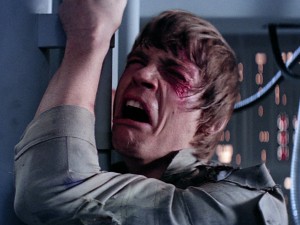
Trope Tuesday: Well Done Son Guy

What happens when this trope goes horribly, horribly wrong.

So the hero gets the call to adventure, initially turns it down, meets a mentor figure who gives him some sort of supernatural aid, crosses the threshold of adventure, faces a series of tests and trials, loses his mentor, experiences the power of love…and then what?  Well, if we’re playing the hero’s journey straight, the next step is atonement with the father, also known as well done son guy.

Before passing the ultimate test, the hero must first confront the force that holds the ultimate power in his life.  This is often some sort of father figure, though it can also be a close friend or a rival.  Often, the main reason the hero set out on the journey in the first place was because he felt a need to prove himself and gain the respect of this figure.  For that reason, the climax often involves some sort of reconciliation or closure between these two characters.

In discussing this trope, Joseph Campbell said the following:

Atonement consists in no more than the abandonment of that self-generated double monster—the dragon thought to be God (superego) and the dragon thought to be Sin (repressed id). But this requires an abandonment of the attachment to ego itself, and that is what is difficult. One must have a faith that the father is merciful, and then a reliance on that mercy…

The problem of the hero going to meet the father is to open his soul beyond terror to such a degree that he will be ripe to understand how the sickening and insane tragedies of this vast and ruthless cosmos are completely validated in the majesty of Being. The hero transcends life with its peculiar blind spot and for a moment rises to a glimpse of the source. He beholds the face of the father, understands—and the two are atoned.

While this may, on the surface, seem just like a simple “I’m proud of you” moment, the full significance goes much deeper.  This is the moment where the hero finally receives validation for all his struggles, where he realizes that everything he’s been through has been worth it.  It’s a tremendous moment, and an important element of any story that follows the hero’s journey paradigm.

The reason why the hero’s journey resonates so strongly throughout our culture is because it powerfully and effectively fulfills one of the major purposes of all story–to help us better understand ourselves, the world we live in, and what it means to be human.  For that reason, this trope is one of the things that can either make or break a story.  When done well, it can turn the work into a classic.  When done poorly, it can make us wish we had our money back.

I’d talk about this trope in my own work, but I don’t want to give any spoilers.  In Bringing Stella Home, there’s something of a gender inversion, as the title would imply.  In fact, there’s a gender inversion in Star Wanderers as well, though you’ll have to wait until part IV to read it.  In Desert Stars, it’s more of a personal moment, but the whole novel is a lot more intimate and personal than a save the world type of adventure.

Trope Tuesday: Supernatural Aid

Getting back to our discussion of the Hero’s Journey, I think it’s important to briefly touch on one of the earlier stages: supernatural aid.  At some point between refusal of the call and crossing the threshold of adventure, the hero typically encounters a mentor figure from the unfamiliar world who gives him something supernatural or otherworldly to help him on his quest.  While the mentor often dies (as we saw last week), the supernatural aid that the mentor gives later proves to be a key to defeating the big bad and passing the ultimate test.

Often, this is an actual object.  In Lord of the Rings, for example, Galadriel gives each member of the fellowship a specific object.  She gives Sam a magical vial, which he uses later to defeat Shelob and save Frodo and the ring.  In The Lion, The Witch, and the Warderobe, Aslan gives each of the kids a weapon item specially suited to their characters (except Edmund, who was a prisoner of the queen at the time).  In Star Wars IV: A New Hope, Obi Wan gives Luke his father’s lightsaber–though for the purposes of this trope, we can also count his special training with the force, since Luke doesn’t use the lightsaber until episode V.

In discussing this trope, Joseph Campbell said the following:

Having responded to his own call, and continuing to follow courageously as the consequences unfold, the hero finds all the forces of the unconscious at his side. Mother Nature herself supports the mighty task. And in so far as the hero’s act coincides with that for which his society is ready, he seems to ride on the great rhythm of the historical process.

So if the mentor is supposed to die (or get put on a bus) in order for the hero to stand on his own feet, why does the hero need some kind of supernatural aid?  Isn’t that just cheating?

Not exactly.  Often, the aid is itself part of the ultimate test, and the hero doesn’t figure out how to use it properly until after he’s already experienced everything from the adventure that he needs.  The silver slippers from The Wizard of Oz are a good example of this.  So is AURYN from The Neverending Story.  The hero doesn’t fall back on the supernatural aid until after he’s completed his growth arc.

That’s not the only reason, though.  In order for the adventure to have meaning and impact, the stakes have to be really high.  Having some sort of mysterious character from the outside world grant the hero something supernatural is a great way to do this, especially at the beginning.  If the hero is part of something bigger than himself–saving the world, for example–then it makes sense that he would get some kind of help from the people depending on him, especially if those people have something supernaturally powerful to give.

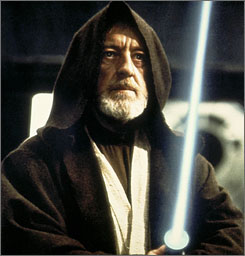
The Force from Star Wars is one of my favorite examples of supernatural aid.  I hear that when episode IV debuted in the theaters, the crowds jumped up and screamed when Obi Wan said “use the force, Luke!” in the clip at the top of the post.  Just because it’s so awesome, here’s the full scene (more or less):

“Remember–the force will be with you. Always.”

Trope Tuesday: Mentor Occupational Hazard

Being a mentor to the hero can be a pretty tough job.  Don’t believe me?  Check out the tvtropes page:

If you don’t have to convince The Chosen One who just wants to be normal to grow a spine and accept the Call to Adventure, you have to convince your blindly excited and dangerously eager young pupil that You Are Not Ready to learn the Dangerous Forbidden Technique. When you try to protect The Hero from the Awful Truth, you end up facing their Rage Against the Mentor. You have to maintain an ongoing conspiracy to keep The Hero Locked Out of the LoopIf they’re an orphan, you have to find them a set of Muggle Foster Parents while keeping social services in the dark. You have to endure accusations of insanity when you’re trying to teach your charge that Your Eyes Can Deceive You, give them advice on how to tell a love interest “It’s Not You, It’s My Enemies,” and keep a close eye on them 24/7.

And what is your reward for all this patience and effort?

You die.

And that right there is the heart of the matter: mentors tend to die.  And stay dead.  Even if they do figure later in the story, they tend to be spirit advisors from the other side with little or no chance of coming back from the grave–even if everyone else does.

So why does this happen?

The most obvious reason is that if the mentor and the hero are both working toward the same goal, the mentor cannot overshadow the hero–otherwise, why not forget the hero and send the mentor off to save the world?  The hero may start off weak, which is why he needs the mentor in the first place, but at some point in the growth arc, he’s  going to have to stand on his own two feet.  Oftentimes, the most poignant (and convenient) way to mark that transition is to knock the mentor off.

That doesn’t explain everything, though.  If the only reason for killing the mentor is to give the hero a growth arc, you can accomplish that just as well by putting him on a bus.  So why does he have to die?

Lots of reasons!  Character growth, increasing tension, making the story more meaningful–the list goes on and on.  For an in-depth discussion on killing off characters, I’d recommend checking out this last week’s episode of Writing Excuses.  My own personal take is that everyone dies eventually–even the immortal characters have to pass through some sort of transition from this world to the next–so the best thing I can do for a character isn’t to keep them alive, but to make their lives and their deaths actually mean something.

It’s also worth pointing out that in most stories, the mentor isn’t actually fighting against the big bad, but the dragon–the big bad’s lancer.  Again, the main reason for this is to keep him from overshadowing the hero.  But the dragon is a character in his own right, with his own agenda that may run counter to his boss–think Darth Vader from Star Wars.  And in a lot of stories, the dragon actually tries to tempt the hero to come around and join him.

Perhaps that’s another reason why mentors often die–if they didn’t, then the bad guys wouldn’t ever be able to dissuade the hero through temptation.  The hero would be so protected that he’d never have the opportunity to switch sides, or at least he’d never have to face any moral ambiguity because of the guardian mentor constantly guiding him.

So those are some of the reasons why mentors tend to have a short life expectancy.  Can you think of any good ones?

Trope Tuesday: Wicked Cultured

What Captain Nemo does in his spare time, when he isn’t terrorizing the world of maritime shipping.

This week’s Trope Tuesday series post is by request from a reader.

Evil villains aren’t always grotesque, brutish, foaming-at-the-mouth barbarians.  Quite often, they are wealthy and aristocratic, with exquisitely refined tastes and an extraordinary degree of eloquence.  It isn’t just that evil is cool (though it may overlap with this), or that the barbarians have finally developed a fashion sense–it’s that the more refined and cultured a character is, the more evil they are as well.

This happens a lot more often than you might think.  Magneto (X-men), Lucius Malfoy (Harry Potter), Hannibal Lector (Silence of the Lambs), Ganondorf (Zelda), Captain Nemo (20,000 Leagues Under the Sea), the Godfather (the Godfather), Kane (Command & Conquer), President Shinra (Final Fantasy VII), the Merovingian (The Matrix Reloaded), Grand Admiral Thrawn (Star Wars: Heir to the Empire and The Thrawn Trilogy), Khan (Star Trek II: The Wrath of Khan), Vetinari (Discworld), Captain Hook (Peter Pan), the Phantom (Phantom of the Opera) and every James Bond villain ever all fall squarely into this trope.

So why does this happen?  I can think of a few reasons, though I’m sure there are others.

First, it hearkens back to the age-old romanticism vs. enlightenment debate.  This is especially true of the fantasy genre, which tends to hearken back to a medieval golden age before the modern, industrial world, when life was simpler and people tended to live in picturesque rural villages instead of dense urban cities.  If your hero is a farmboy in a world of knights and wizards, or a barbarian hero who strikes first and asks questions never, chances are that anyone with a sense of refinement or culture is going to find themselves on the wrong side of the story.

Second, it hearkens back to the mad scientist and the cautionary tale of science gone horribly wrong.  As you might expect, this is much more common in science fiction, especially the classic dystopian stuff. The more scientific and enlightened a character, the more cultured they tend to be as well.  In stories where science is bad, then, it should come as no surprise that these characters are also evil.

Another good reason to use this trope is to indicate that the villains are members of the Empire.  Culture tends to happen when people of diverse talents and backgrounds are brought together, and the best way to bring them together is through conquest.  Just look at the Romans.  Almost every empire throughout history, no matter how brutal, has always produced an increase in some degree of culture.  Even the Mongols gave way to Kublai Khan and the Silk Road.  So in stories where the Evil Empire comes into play, having your villains be cultured can be a good way to show that.

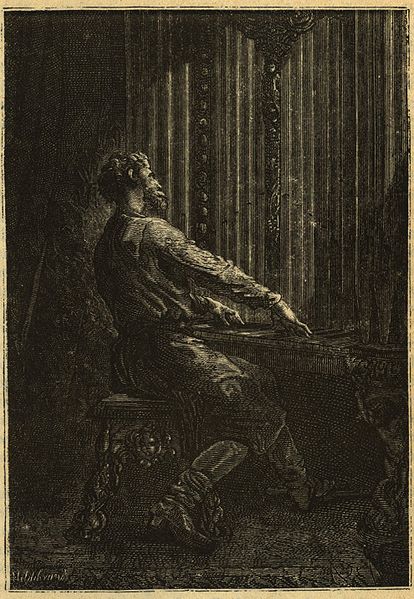
The biggest reason for this trope, though, is that it makes the villains more complex and interesting.  If being evil always meant living in a cave and eating raw meat, then every story would read like a badly written RPG, where the heroes keep grinding until all their stats are at 9999 or higher.  And honestly, you have to admit that there’s something a little bit eerie about that guy who gets totally absorbed when playing the organ.

I haven’t played with this trope in a major way yet, but it does come into play a bit in Desert Stars, though only in a minor way.  In Bringing Stella Home and Heart of the Nebula (forthcoming), Lars is pretty much the opposite of this (the Gentleman and a Scholar trope, though he did drop out of college).  Probably the best example would be Heloise from Star Wanderers: Fidelity (Part II).  She’s wealthy, fashionable, and decorates her apartment with wallscreen monitors that cycle through artistic photographs of deep space nebulae.  She’s also one of the more dangerous female characters I think I’ve written.  Who knows–maybe she’ll show up in another story before too long.

Trope Tuesday: Hero’s Muse

One thing about the hero’s journey is that it tends to be very male-centric.  It’s possible to pull off a gender-swap, or to follow the structure loosely while allowing for substantial variation, but the basic form follows the assumption that the hero is male, and that most of the women he meets fall into one of two basic archetypes: sedductress (as we saw last week) or goddess.

The goddess (or “hero’s muse,” as tvtropes labels this trope) is an idealized woman who often serves to motivate the hero on his quest.  She stands in stark contrast to the sedductress, who works toward the hero’s downfall, and the meeting with her is an important part of the journey.  Speaking of the meeting with the goddess, Joseph Campbell said:

The ultimate adventure, when all the barriers and ogres have been overcome, is commonly represented as a mystical marriage of the triumphant hero-soul with the Queen Goddess of the World. This is the crisis at the nadir, the zenith, or at the uttermost edge of the earth, at the central point of the cosmos, in the tabernacle of the temple, or within the darkness of the deepest chamber of the heart. The meeting with the goddess (who is incarnate in every woman) is the final test of the talent of the hero to win the boon of love (charity: amor fati), which is life itself enjoyed as the encasement of eternity.

In some stories, the goddess figure represents a love interest for the hero.  This is especially the case with stories from the medieval and renaissance periods, such as the protoypical knight errant and his lady, or tales of courtly love.  In most cases, the girl is either faithfully married or a chaste virgin.  In more modern stories, she often takes the form of the manic pixie dream girl.

The goddess doesn’t have to be the love interest, though.  She can also be a motherly figure, such as the Oracle in the Matrix, or she can be an innocent, childlike girl, such as the Childlike Empress from The Neverending Story.  The important thing is that she helps the hero to experience the power of love, whether that love is romantic or platonic.

I’d write more, but my internet time is kind of limited, so this is as much as I can say on this trope for now.  If you have anything to add, feel free to do so in the comments.  I’m traveling to a rather remote part of the Caucasus, but I’ll be back in a few days to chime in.

Trope Tuesday: The Vamp

Also known as the temptress or the seductress, the vamp is one of the more dangerous characters the hero meets on his journey.  A devastating beauty who is as evil as she is sexy, she uses her feminine wiles to exploit men’s flaws to her own advantage.  If the hero falls for her, he will be destroyed.

Unlike the femme fatale, her more neutral counterpart, she is completely evil and cannot be redeemed.  This is because her role in the story demands it.  She generally makes her first appearance in the initiation phase of the hero’s journey, after the hero sets out on the adventure but before he masters the unfamiliar world.  In many cases, she represents a leave your quest test or a secret test of character.

Joseph Campbell thought this character was so important that he dedicated an entire phase of the monomyth to her:

When it suddenly dawns on us…that everything we think or do is necessarily tainted with the odor of the flesh, then, not uncommonly, there is experienced a moment of revulsion: life, the acts of life, the organs of life, woman in particular as the great symbol of life, become intolerable to the pure, the pure, pure soul. The seeker of the life beyond life must press beyond (the woman), surpass the temptations of her call, and soar to the immaculate ether beyond.

As such, the vamp represents the more carnal elements of the hero’s nature, which he must reject or overcome in order to be transformed.  Confronting her is an important part of the story because it gives him an opportunity to recognize his flaws and master them.  It isn’t easy, though–the vamp is an extremely deceptive character, and often plays tricks like the wounded gazelle gambit to confuse the hero and gain his sympathy.

While often a female character, there are a few male examples of this character.  Mr. Wickham from Pride and Prejudice is one of the more obvious ones.  Basically, the vamp can be of any gender, so long as s/he is someone the main character finds sexually enticing.  Because of the traditionally male-centric nature of the hero’s journey, however, she’s almost always female.

Also, I think it’s important to add that it’s not just the vamp’s sexiness that makes her evil, it’s the way that she uses it to manipulate and undermine the hero.  If she starts out evil but has a heel-face turn later in the story, she doesn’t fulfill this trope.  Likewise, if falling for her wouldn’t make the hero fail, then she doesn’t fulfill the trope either.

I’ve played with this trope a little bit in my own work, but not in a big way yet.  Heloise from Star Wanderers: Fidelity (Part II) probably fits this trope the best, though her appearance is fairly brief.  Tamu from Bringing Stella Home might appear superficially to be one, but she’s actually more of a fair weather mentor for Stella (and has good reasons for choosing the life of a Hameji consort).  And of course, Mira from Desert Stars doesn’t fit this trope at all, seeing how much she changes by the end.

Trope Tuesday: The Trickster

After the hero crosses the threshold of adventure and finally sets out on his journey, he passes through a long phase that Campbell called “the road of trials.” This is often where the meat of the story happens, but it doesn’t fit squarely into any one trope because of all the possible directions where the story can go.  For that reason, I think it’s more useful to think in terms of who the hero meets, not what the hero does.

The Trickster is often (though not always) one of the first characters the hero encounters upon entering the lands of adventure.  He is almost always male, though sometimes he can change shapes and even sexes (for example, Loki, who turned into a mare and conceived Odin’s horse).  His role in the story, though, can range from mentor (Merlin, Yoda, Mary Poppins) to bad guy (the Joker, the Homonculi, Grand Admiral Thrawn) to the hero himself (Prometheus, Bugs Bunny, Bilbo Baggins).

Obviously, the Trickster is a very slippery character.  You can tell who he is, though, by whether he meets these two basic criteria:

  • completely unpredictable
  • not beholden to any authority

In this way, the Trickster often stands in stark contrast to the people of the ordinary world that the hero left behind.  Which makes sense–having just crossed the threshold of adventure, the hero needs to leave his old mentality behind and be exposed to new experiences and ideas.  For that reason, the Trickster’s antics often serve to teach the hero an Aesop, helping him to learn and grow.

That doesn’t mean that the Trickser is harmless.  Quite the contrary–he’s a dirty, lying cheat, capable of taking any disguise and throwing the victims of his pranks into any moral quandary just for laughs.  He’s not necessarily a jerkass–he may even be more of an ally than an enemy–but he definitely is not to be trusted.

Like most things associated with the hero’s journey, the amazing thing is just how prevalent this trope is.  It’s even cropped up in some of my own work.  For example, in Bringing Stella Home, Ilya Ayvazyan is a trickster of the playful hacker variety.  In Star Wanderers, Samson is a blithe spirit who doesn’t necessarily have Jeremiah’s best interests at heart…though his girlfriend (the one at Alpha Oriana) is a lot more sinister.  I’m not sure if anyone fits this trope in Desert Stars, but you could probably make a case for Lena or Amina–or better yet, Ibrahim.

Of all the major character archetypes, though, the Trickster is the one I feel like I know the least about.  If you have anything else to add, I would like to hear it!

Trope Tuesday: A Man is Not a Virgin

I’m back from vacation, but I’m going to take a break from the Hero’s Journey trope posts to talk about something that I really feel passionate about.  I hope you’ll forgive me if this turns into a rant, but I think this is an important issue that has some very dangerous implications that need to be explored.

In modern fiction, there’s a very prominent trope that a man is not a virgin.  The basic idea is this: if the protagonist is an adult male and he hasn’t yet had sex with a woman, there’s something fundamentally wrong with him.  Of course, because of his adventurous lifestyle, he can’t be tied down in a committed relationship–that would spoil the story.  But he can’t be holding himself back, either, lest his manhood come into question.  And most of the time, he doesn’t really want to, anyway.

This trope has a whole host of unfortunate implications, though, all of which serve to reinforce constrictive gender roles, disempower both men and women, drive a gulf of misunderstanding between the sexes, and emasculate true manhood and its role in our society.

To demonstrate this, let’s take this trope to the logical conclusions that our society seems to have come to.

If a man is not a virgin, then sex is a rite of passage, and it isn’t rape if it’s female on male.

In fiction, the sex as rite of passage trope is often seen in stories about angsty teenagers trying desperately to get laid. These are not typically stories about love–they are stories about peer pressure, objectification, and power.  By equating sex as a rite of passage in this way, it actually divorces sex from any concept of love or commitment, and turns any form of physical intimacy into a caricature of itself.

It doesn’t stop there, though.  If sex is a rite of passage, then it’s only reasonable that the young novice should have an older mentor to help him through the initiation process.  Thus we get the professional sex-ed trope, where the boy’s mentors or guardians help guide him through his first sexual encounter.  The implications for pedophilia and underage sex are more than a little disturbing.

We can see this trope in action in the way we treat female sex offenders.  If a 30-something male teacher has sex with one of his female students, he gets a lengthy prison sentence and spends the rest of his life stigmatized as a predator.  If a 30-something female teacher has sex with one of her male students, she gets a slap on the wrist and TV spot.  She’s not a sexual predator–she’s just having a personal crisis.

Needless to say, this double standard is extremely destructive for the victims of such abuse.

If a man is not a virginthen men cannot help themselves.  Therefore, all men are perverts.

If a true man is not a virgin, then a true man doesn’t say no to sex.  Even if he can say no, he won’t because that’s just not what men do.  Therefore, being a man is functionally synonymous with being a pervert.

The danger here is that it reduces men to their basic animal urges.  If being a man means finding a warm, inviting place for your penis each night, then you might as well go out to the pasture and eat grass.  Whatever happened to self control and delayed gratification?  Do you think anything meaningful would ever have come out of our civilization if we couldn’t keep our pants on?

And yet, both men and women seem perfectly willing to believe that it’s not only unmanly for a man to control his animal urges, it’s impossible.  On the Kindle Boards forum about a month ago, there was a thread on erotica and marriage and one of the members posted this:

I used to work as a forums admin on a large women’s forum (over 100,000 members) and the relationships forum had a lot of heated discussions on this topic. I won’t of course refer to any specific threads, but the discussions went a lot like this:

One woman concerned that her husband was spending too much time watching porn
A massive amount of women telling her that it’s ok, that ‘all men watch porn’
A small amount of women saying either they don’t agree with it or that their men don’t view it
A percentage of women saying their men are addicted to porn and would rather watch it than go to bed with a willing wife
A percentage of women saying it’s not the porn itself that concerns them, but the type of porn their husbands watch
Another group of women saying they either watch it themselves, or watch it with their husbands
Yet another small group of women who either were or are prostitutes/strippers/involved in amateur porn (who are either for or against based on their experiences)
A very vocal percentage of women saying that if your man says he doesn’t watch it, he’s a liar
A heated discussion ensuing….

How does it possibly empower men to tell them that they cannot control their own sexual impulses?  It’s a self-fulfilling prophecy, which harms not only men but women as well.  If all men are perverts, then women can’t afford to wait for a decent man and should settle instead for a deadbeat porn addict.

But that’s not even the worst of it:

…and if all men are perverts and all women are prudes, then men and women are two entirely different species that are completely incapable of understanding one another.

This one really gets to me.  I hear it everywhere, even from people who don’t consciously buy into the logic behind it.  I used to buy into it myself.  It’s the idea that women are so complicated that they are impossible to understand, whereas men are as simple as an on/off switch.

In my experience, men and woman are both human.  Both of them are equally complex and equally emotional.  Yes, they are different, but in such a way that it’s equally difficult (or equally easy) for the one to understand the other.  Generally, women tend to externalize their complexity, whereas men tend to internalize it.  At least,  that’s what I’ve found.

Our society takes this to the next level, however, and teaches men that they should just swallow their emotions.  If they don’t, they risk being seen as weak or effeminate (never mind that equating weakness with femininity is a whole other can of worms in itself).  And after a lifetime of living this way, it can be hard not to believe that that’s just the way men are.

But this is perhaps the most insidious danger of all.  It’s the falsehood that real men don’t cry, or show emotion, or have any capacity for compassion or tenderness.  It’s the fallacy of equating strength with violence.  It’s the destructive belief that men will never rise above the lowest common denominator of their hormones, and should never even try.  And because men are so obviously different from women in this regard, any attempt to understand them would be futile.

But how can you have a committed relationship with someone you can’t understand?  How can you possibly hope to make the necessary sacrifices for each other to make the thing work out?  And if you can’t reach the understanding necessary for a committed, loving relationship, how can you ever hope to raise a family together?
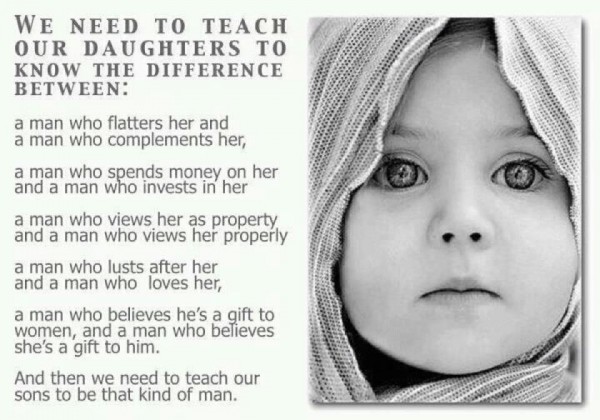
So yeah, sorry for the rant, but this trope REALLY gets under my skin.  It doesn’t help that one of my favorite authors, David Gemmell, is a big fan of it.  I tried to get into his Rigante series, but this trope was so strong that I couldn’t finish the first book.

I should also clarify that the thing that irks me isn’t just the trope, but how much our society has bought into it.  By themselves, tropes are neither good nor bad, but when something like this becomes so prevalent that it defines the entire operating system on which our society is based, that’s when someone needs to speak out.

And for the record, I am a 28 year old single male who is not ashamed to say that he is still saving himself for marriage.  Am I gay?  No.  Has it been difficult?  Yes.  Am I anything less than a man because of it?  Hell, no.  In fact, I would argue that the wait has made me more of a man than I otherwise would have been, and I’m sure that my future wife will agree.

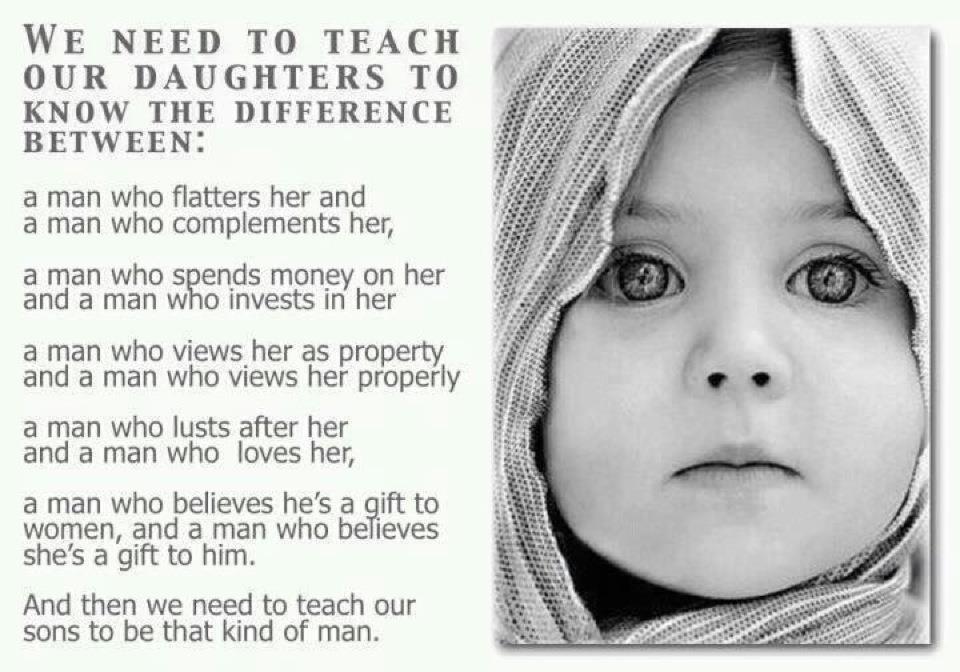
Real men aren’t defined by their hormones or their sexual history.  They’re defined by the way they treat the people around them, especially the ones who are most important in their lives.
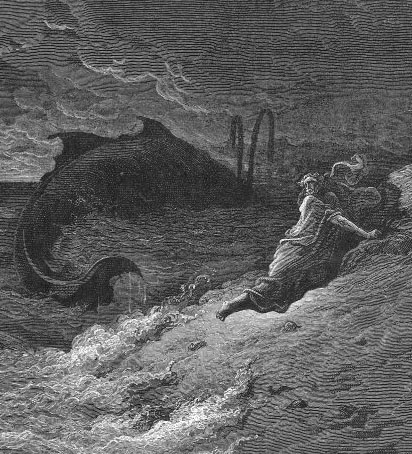
Trope Tuesday: Belly of the Whale

The last stage in the departure phase of the hero’s journey is called the Belly of the Whale, after the Biblical story of Jonah.  After receiving the call and passing the threshold to the land of adventure, the hero faces what may quite possibly be the darkest hour of his life and dies in some way to the home he has just left behind.

I know what you’re thinking: “Huh? Why does the hero die at the beginning of the story?  Isn’t that supposed to happen later?” Well…yes, it does, but the symbolic death at this point is important, too.  At its core, the hero’s journey is a story of transformation and growth.  When the hero comes back from the lands of adventure, he isn’t the same person he was when he first left–he’s been changed in some way.  And in order for that change to take place, the hero needs to let go of who he was and move forward.

Joseph Campbell describes it like this:

The idea that the passage of the magical threshold is a transit into a sphere of rebirth is symbolized in the worldwide womb image of the belly of the whale. The hero, instead of conquering or conciliating the power of the threshold, is swallowed into the unknown and would appear to have died. This popular motif gives emphasis to the lesson that the passage of the threshold is a form of self-annihilation. Instead of passing outward, beyond the confines of the visible world, the hero goes inward, to be born again.

Of course, the death and rebirth doesn’t have to be literal (though it can be, as it was with Dionysus).  The point is to show that the hero has fully crossed the threshold, cutting all his ties with home and burning his ships on the shores of the land of adventure.  Once the hero passes through the belly of the whale, there’s no going back–it’s all or nothing now.

So how common is this trope really?  Actually, it occurs more often than you might think.  In Harry Potter and the Sorcerer’s Stone, it happens when Harry boards the Hogwarts Express and realizes he’s leaving his old world completely behind.  It happens in The Lion, the Witch, and the Wardrobe when Peter and the others decide to go after Mr. Tumnas instead of returning to their own world through the wardrobe.  It happens in Star Wars IV when the Millennium Falcon gets sucked into the Death Star, and in Final Fantasy IV when Cecil washes up in Mysidia.

The main theme running through all these examples is that adventures are hard.  If they were easy, anyone could go on them–and no one would be changed by them.  They may be fun, and they’re definitely worth it, but to set out on one, you always have to give up something close to you–and that’s hard.

Trope Tuesday: Threshold Guardians

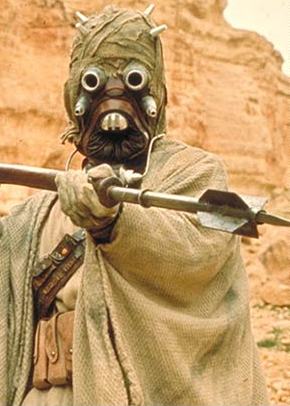
In an indirect way, this guy pretty much saved the galaxy.

So the hero gets the call, refuses it at first (or jumps at it, as the case may be), but one way or another he eventually sets out on the adventure.  As he soon discovers, though, one does not simply walk into Mordor.  Adventures are not the sort of thing that anyone can do, and in order to prove his mettle, he first has to pass a few tests and confront some sort of challenge.  Only then can the adventure really begin.

At the edge of the familiar world lies a threshold, the boundary separating the peaceful, boring land of the hero’s home from the dangerous and exciting lands of adventure.  The threshold might be literal, such as the wall in Stardust and Sabriel, or it might be more symbolic, such as the field in Lord of the Rings that marks the furthest that Samwise has ever gone.  Either way, the threshold is often the site of the hero’s first significant challenge–and the one who offers that challenge is the threshold guardian.

According to Joseph Campbell:

The ‘threshold guardian’…[stands] for the limits of the hero’s present sphere, or life horizon. Beyond them is darkness, the unknown and danger…The adventure is always and everywhere a passage beyond the veil of the known into the unknown; the powers that watch at the boundary are dangerous; to deal with them is risky; yet for anyone with competence and courage the danger fades.

In terms of story, the purpose of the threshold guardian is not to present some impossible test or to pose some sort of world-altering threat.  Rather, they exist to mark the boundary between the familiar world and the unfamiliar, and to show how the hero is different from all the other people who chose to stay at home instead.  In other words, their main purpose is to kick-start the adventure.

For example, in Star Wars Episode IV: A New Hope, the threshold guardians are the Tusken Raiders who roam the Jundland Wastes surrounding Luke Skywalker’s home.  Venturing out into the wastes is dangerous–yet Luke does it, to bring back R2D2 after the droid runs away.

When R2D2 warns Luke that the Tuskens are approaching, Luke doesn’t run away from them–he crawls to the top of the ridge to get a better look.  This leads to his first real encounter with danger, and almost gets him killed.  Fortunately, Obi Wan Kenobi rescues him and takes him home, telling him about the ways of the force and presenting him with his father’s lightsaber.  The adventure is off to a good start.

If Luke had never ventured out into the Jundland Wastes, or if he had run from the Tuskens at the first sign of danger, he never would have been rescued by Obi Wan, never would have learned about his father, never would have left his home and probably would have died when the Imperials attacked his uncle’s homestead.  If the Tuskens had never attacked him, he would have loaded R2D2 into the speeder and gone back home, never meeting Obi Wan as well.  Without the Tusken Raiders, the whole story never would have happened.

In Harry Potter and the Sorceror’s Stone, Draco Malfoy plays a similar role.  If Harry Potter had joined House Slytherin, Voldemort would probably have taken over before the end of the first book.  Instead, the early animosity between Draco and Harry’s newfound friends pushed him to take sides, setting the stage for everything else that was to come.

The threshold guardians don’t always have to take an adversarial role.  In a lot of stories, defeating the guardian means winning an ally, even sometimes a best friend.  That’s what happens when Robin Hood spars with Little John–in fact, the trope is subverted because Little John actually wins.  Or perhaps the whole thing was a secret test of character, because it’s Robin Hood’s good-natured reaction to losing that wins Little John over.

Not every instance of the hero’s journey has a threshold guardian, but many of them do.  It’s a clear and compelling way to mark the threshold between home and adventure, which is present in every hero’s journey, simply by definition.  When done well, it’s a great way to show what makes the hero different from all the other would-be adventurers who chose to stay home.