In my various and sundry travels over this desolate wilderness we call the internet, I’ve recently heard a lot of people talk about this thing they’re calling the “AI bubble.” The basic theory is that all of this AI development is being artificially propped up, that it isn’t nearly as profitable or as transformative as the AI proponents claim. When the music stops and the curtain gets pulled back, all of these AI companies will collapse, and all of this AI that nobody asked for will get scaled back to something normal. Or something like that.
But here’s the thing… the fact that so many people are talking about the “AI bubble,” to the point that it’s now a talking point, is pretty strong evidence that it’s not actually a bubble. When a true economic bubble happens, nobody calls it a “bubble” because everyone is so euphoric about it. Indeed, it’s that very euphoria that fuels the bubble. Housing prices only go up, donchaknow. AOL and Pets.com is totally the way of the future. So shut up and mortgage your house so you can buy the latest tulip.
With AI, though, it seems that all of the most vocal people are anti-AI and want it all to go away. Indeed, the main driver of all this “AI bubble” talk seems to be fear that AI will drive large numbers of people out of work. So what’s actually happening?
I do think there is a bubble in our economy, but I don’t think it’s being driven by AI. Rather, I think what we have is a debt bubble, which is very close to unwinding in a catastrophic way. The only way to stop that from happening is to grow the economy faster than the debt bubble is inflating, but at this point, the only way to do that is through some hugely transformative new technology, such as generative AI.
So all of the forces that want to keep propping up this debt bubble have turned to AI as the salvation of our economy, pumping billions and billions of dollars into it in the hopes that it will yield the sort of economic growth that will allow them to keep growing the debt. But for ordinary people, it’s a lose-lose scenario, since if AI succeeds, lots of us will be out of work… but if AI fails, the economy collapses and lots of us will also be out of work. Hence why so many ordinary people see AI itself as the problem.
Here’s what I think is ultimately going to happen: AI will prove to be super transformative in the long run, just like the internet, but it won’t save us from the debt bubble the way that our business and political elites so desperately hope that it will. The debt bubble is going to pop, and we are going to have to face up to the consequences of decades of very bad fiscal and monetary policy, with or without AI. But after the dust settles, AI will play a major role in the rebuilding of the economy, for good or for ill.
So with inflation being what it is, one of the questions on my mind these last few months has been whether I should raise my book prices to keep up with the increased cost of living. We’re definitely feeling it every time we go to the gas station or the grocery store, and I’m sure that all of you are feeling it too—and those of you overseas are probably feeling it much worse than we are.
Short answer: No, I do not plan to raise my prices in the immediate future. In fact, I’ve actually lowered some of my prices. When I do raise prices, it will be because Amazon and the other retailers have changed their printing costs and/or royalty structure.
Long answer: My books are currently priced according to the following schedule (all prices in USD):
Free or 99¢: Short-term sales and permafree books.
$2.99: Ebooks only, typically novellas.
$4.99: Ebooks only, typically novels and collections.
$8.99: Audiobooks only, where the ebook is $2.99.
$9.99: Ebook bundles and some paperbacks.
$14.99: Paperbacks.
$16.99: Audiobooks only, where the ebook is $4.99.
Every year, I conduct a reader survey around October-November. A couple of weeks ago, I got the results back from this year’s survey, and the answers to the pricing questions are largely unchanged. If anything, it seems like readers are more price conscious than they were last year.
And that makes sense, when you consider that books—especially genre fiction books—are a luxury item for most people. When the budget is being squeezed by the increasing price of food and gas, it makes sense that readers would cut back on their book buying habits. After all, paperbacks have very little nutritional value—ebooks and audiobooks even less so—and burning them is a very expensive way to keep warm.
All joking aside, though, I don’t think that now is the time to raise my prices. From a business perspective, the data just doesn’t support it, but also from a human perspective it just seems like a bad thing to do. I like my readers. I don’t want to put the screws to their wallets just because everyone else is, too.
(In fact, the data indicates that I’ve been making a mistake by pricing all the first books in my trilogies at $4.99. One of the questions on my survey was “from which of my series have you read at least one book?” and none of my series received more than a 45% response. This tells me that there isn’t enough series crossover happening, and that I need to treat the first book in every series as a potential entry point into my catalog. So I’ve decided to drop my ebook prices to $2.99 for every first book in a trilogy, even where I haven’t finished the trilogy yet.)
The other side of that, of course, is that my own wallet is getting screwed. Jeff Bezos famously said that “your margin is my opportunity,” and as much as we indies may love Amazon, Amazon is definitely not our friend. But so far, the screwing has not been much of a problem, at least as far as inflation is concerned.
When Amazon essentially created the indie ebook market, they did it on an agency model, where publishers set the prices and receive a percentage from the sale in royalties. For the last decade, that royalty structure has not changed: ebooks priced between $2.99 and $9.99 get a 70% royalty rate, and everything else gets 35%.
Things are a little different on the print side of things, which follows a wholesale model and delivers a physical product. Printing costs are definitely creeping up, though so far it’s only been by a few cents. At $14.99, I’ve got a fair amount of wiggle room, but if per-unit print costs go up by a couple of dollars, I will have to raise my prices.
Same thing with the digital products. If inflation continues to accelerate, or even if it continues at its current pace for a sustained period of time, there is a very good chance that Amazon will change their royalty structure for ebooks, and all of the other platforms will likely follow suit. If/when that happens, it really will put the screws on us indie authors, and you’ll probably see most of us raise our prices as a result.
I don’t know how I’ll respond when that happens, but I’ve decided that until it happens, it will be better to keep my prices where they are. So until the increasing print costs or changes to the ebook royalty structure force me to increase my book prices, I plan to keep them where they are.
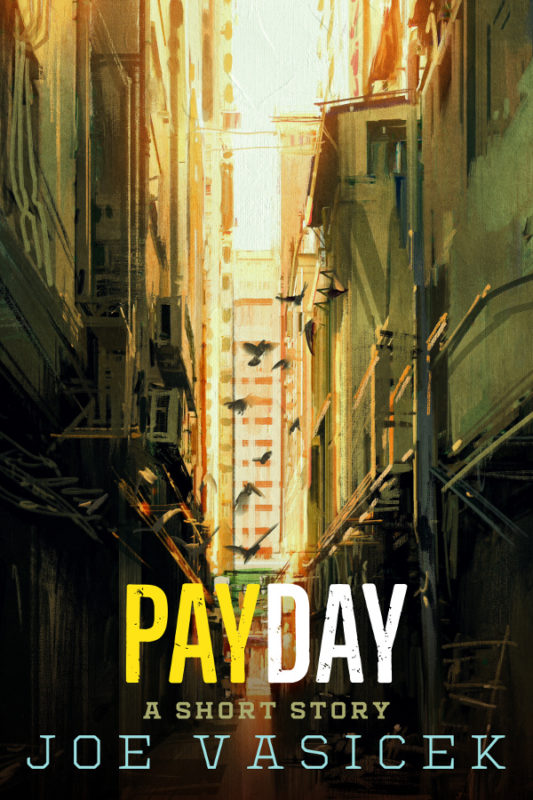
In the next few days, I’m going to unpublish my short story “Payday.” It will still be available in the collection In Times Such As These, but I think it’s about time that its run as a free short story single should come to a close.
(For those of you who may not be familiar with how I do things around here, I typically publish my short stories first as free singles, then bring them down when I have enough to bundle into a collection. I’m actually going to take down a bunch of my short story singles over the next couple of weeks as I get ready to publish the second batch of stories that will appear in my fourth collection, Beyond World’s End, sometime this spring.)
I originally wrote “Payday” back in 2017, in response to an anthology call sponsored by the Economic Security Project, an NGO whose stated goal is to bring about a universal basic income. My story (which obviously did not win the contest) showcases all of the dangers of a UBI, such as inflation, supply chain shortages, and the breakdown of local businesses and communities.
I self-published the story in March of 2020, just as the pandemic was getting started. At the time, I had no idea that my warnings and predictions would soon become so prescient. The stimulus checks and unemployment benefits weren’t exactly a UBI, but they were regarded by many as a stepping stone to enacting that policy, and what did they lead to? Inflation, supply chain shortages, and the breakdown of local businesses and communities.
In January 2021, I unpublished “Payday” so as to include it in the collection In Times Such As These the following month, but then the other shoe of the pandemic began to drop. The threat of rampant inflation, which the authorities claimed would be “transitory,” convinced me that this story was too timely to take down, so I put it back up as a free short story single, where it remains until today.
At this point, however, the story is less of a prescient look at a troubling possible future than an obvious, and perhaps too “on the nose” (I tend to get that criticism a lot) extrapolation of our present situation. For that reason, I don’t think it’s worthwhile to keep it up any longer. It had a very good run, garnering more than 5,000 downloads, which isn’t enough to have a significant impact on the national discussion, but is still greater than the circulation of most science fiction magazines and podcasts (including, most likely, the original anthology call).
“Payday” will still be available in my collection In Times Such As These, and I do still plan to keep it on submission to the traditional magazines as a reprint, but the free short story single will come down in the next couple of days. If you haven’t already picked up a copy, now is the time to do it.
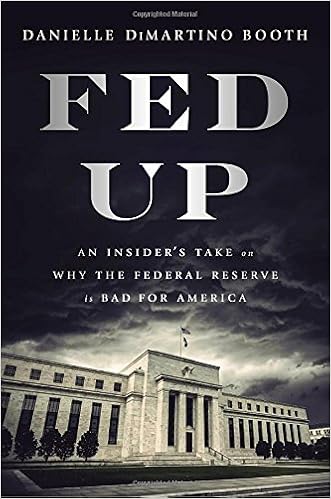
When the economy crashed in 2008, few people were in a better position than Danielle DiMartino Booth to witness the crisis as it unfolded. At the Dallas Fed, she’d been sidelined for years for warning that housing was in a bubble. That changed very quickly when Lehman Brothers collapsed, and from 2009 to 2015, she became the eyes and ears for Richard Fisher, on of the most important dissenting voices within the Fed.
As Bernanke and Yellen flooded the market with helicopter money, massacred savers and pension funds with a decade of zero percent interest rates, exploded the Fed’s balance sheet to the tune of trillions, and dragged the US economy through one of the worst “recovery” periods in history, Danielle was there, right in the thick of it. And now, she’s written a book to explain what the hell happened—and what happens next.
This was the first in-depth financial book I’ve read. It did not disappoint. Danielle’s writing has a sarcastic and witty edge that is both insightful and incisive. She has the enviable ability to take dry technical analysis and make it entertaining.
At the same time, this is not a lightweight book. To someone who is unfamiliar with the financial world and is still confused by things like the subprime mortgage crisis or the housing collapse, this is not a good entry point (for that, I’d suggest The Big Short).
However, for someone with some passing familiarity on the subject, who understands the basics of finance and the Federal Reserve, and has a growing sense that something, somewhere, is very very wrong in our economy, this book is fantastic.
I’m not in total agreement with Mrs. Booth. The most pertinent point of disagreement was probably this:
Though [Ron] Paul made some good points [with his book End the Fed], America is not a banana republic. It needs a strong and independent central bank.
A country that grants a quasi-government entity a monopoly on the right to counterfeit money is much closer to a banana republic than the likes of the Roman Empire, which endured for one and a half millennia because their monetary system was anchored to gold. But if I only read books or listened to sources that I always agreed with, I would be locking myself in an intellectual prison of my own making.
Towards that end, Danielle DiMartino Booth offers a fascinating and unique perspective that I’ve found to be invaluable. If, like me, you feel that something is deeply wrong in our economy and want to know what it is, or if you believe that we’re on the verge of another economic collapse and want to educate yourself on the things that are driving it, I highly recommend this book.
Also, she posts a regular column on her site! Check it out!
Financialization is what happens when the people-in-charge “create” colossal sums of “money” out of nothing — by issuing loans, a.k.a. debt — and then cream off stupendous profits from the asset bubbles, interest rate arbitrages, and other opportunities for swindling that the artificial wealth presents. It was a kind of magic trick that produced monuments of concentrated personal wealth for a few and left the rest of the population drowning in obligations from a stolen future. The future is now upon us.
…
Quite a bit of that wealth was extracted from asset-stripping the rest of America where financialization was absent, kind of a national distress sale of the fly-over places and the people in them. That dynamic, of course, produced the phenomenon of President Donald Trump, the distilled essence of all the economic distress “out there” and the rage it entailed. The people of Ohio, Indiana, and Wisconsin were left holding a big bag of nothing and they certainly noticed what had been done to them, though they had no idea what to do about it, except maybe try to escape the moment-by-moment pain of their ruined lives with powerful drugs.
And then, a champion presented himself, and promised to bring back the dimly remembered wonder years of post-war well-being — even though the world had changed utterly — and the poor suckers fell for it. Not to mention the fact that his opponent — the avaricious Hillary, with her hundreds of millions in ill-gotten wealth — was a very avatar of the financialization that had turned their lives to shit. And then the woman called them “a basket of deplorables” for noticing what had happened to them.
…
The accumulated monstrous debts of persons, corporations, and sovereign societies, will be suddenly, shockingly, absolutely, and self-evidently unpayable, and the securities represented by them will be sucked into the kind of vortices of time/space depicted in movies about mummies and astronauts. And all of a sudden the avatars of that wealth will see their lives turn to shit just like moiling, Budweiser-gulping, oxycontin-addled deplorables in the flat, boring, parking lot wastelands of our ruined drive-in Utopia saw their lives rendered into a brown-and-yellow slurry draining clockwise down the toilet of history.
I especially got a kick out of that last part.
Seriously, though, this guy hits the nail squarely on the head. We’re headed toward a massive economic reset, which is going to transform the world as we know it. I was in high school when the 9/11 terrorist attacks happened, and the Great Recession had a much bigger impact on my life. When the Greater Recession hits, it’s going to be a lot worse.
That said, I disagree that the only thing we can do is to sit back and watch the world burn. Every problem is also an opportunity. The bigger the disaster, the more opportunities that open up after it.
Without a doubt, though, now is the time to prepare.
I had a really fascinating experience last year that has turned into something of a journey of discovery. It’s still ongoing, and I’m sure it will affect my writing in years to come.
It started with family history. Long time readers of this blog will know that I’ve been interested in family history for some time. My sister is a professional genealogist who specializes in Czech records (she keeps a blog here), and I got started by helping her.
In the United States, the census records are only useful to about 1850. Before that, you have to get into land records, probates and wills, and local courthouse type stuff to really go anywhere. But in the Czech lands, the Catholic Church has kept meticulous parish records going back to the 15th and 16th centuries. They’re handwritten in old German and totally unindexed, but the books are all digitized and available online.
As I worked on this research with my sister, I started to wonder: how far back can we push these lines? What are the limits?
The Czech lands were part of the Holy Roman Empire, under the Austrian Habsbugs. In the 15th century, the Hussite Wars shook things up quite a bit, and that’s about as far back as the Catholic parish records go. But the noble genealogies were very well kept, and go back quite a bit further. If one of your lines connects to the nobility (which is very possible, given how many bastard children were running around), you can push back really far.
But past the 8th century, things start to get sketchy. Most of the nobility in Europe are descended from the barbarian tribes who invaded the Roman Empire: the Goths, the Franks, the Vandals, etc. Same thing with the Slavs and the Byzantine Empire, though the Byzantines held out much better than the Western Roman Empire (it was the Turks, not the barbarians, who eventually did them in).
The trouble is that when these barbarians took over, they tried to establish their legitimacy by fabricating genealogies. Plenty of royal European lines go back all the way to Adam and Eve, but how reliable is that really? As rulers of Christian lands, of course they would try to connect themselves to famous characters from the Bible.
The Dark Ages might not be as dark as we think they are, but in terms of records and record-keeping, they certainly are. The largest and most civilized empire in the world had just collapsed, with barbarians running amok in the countryside and the Persians threatening the last vestiges of the empire in the east. Very few historians have documented this era, and it was a huge dark spot in my own understanding of the world.
So I set out to study it. I scoured Wikipedia, subscribed to the Western Civ podcast, and listened to the entire History of Rome by Mike Duncan (excellent podcast, by the way). The Roman Empire had dominated Europe right up to the early middle ages, and I wanted to learn why it had fallen.
That led to a journey of discovery all in itself. Roman history is a fascinating subject in its own right, and the four or five centuries from the Punic Wars through the reign of Marcus Aurelius are very well documented. Rome faced a lot of challenges, and even a few existential threats, but for more than a thousand years they dominated the known world.
So why did they fall?
The more I studied about the Romans, the heavier this question weighed on me. I learned about Diocletian and the Tetrarchy, the crisis of the third century, and Constantine the Great—a period of Roman history that was much less familiar to me. And then things started to click.
My Czech ancestors were serfs. They emmigrated to Texas shortly after the last vestiges of serfdom were abolished in 1848. Under serfdom, they were little better than slaves. The land they lived and worked on was owned by the Hukvaldy Estate, and they were bound to it by feudal law.
When Diocletian became Augustus, the Roman Empire was reeling from half a dozen existential crises, including an economic collapse. The money was so worthless, most of the empire had resorted to a barter economy. Diocletian established a system of exchange where people could pay their taxes with trade goods rather than money. However, the only way for that system to work was 1) for everyone to take the profession of their parents, and 2) for no one to move without Imperial permission. Otherwise, you might have too many pig farmers in one province and not enough blacksmiths in another.
In other words, the system of feudal serfdom that my ancestors labored under had its roots in the reforms of Diocletian. But it went much deeper than just one man. Diocletian reforms were necessary because the Roman economy had collapsed, and the economy had collapsed because for more than a hundred years, the Empire had been in massive debt, and had serviced its debts by devaluing its currency.
Sound familiar?
The Roman Empire fell because of deficit spending, government debt, and currency devaluation over the course of several generations. In 1913, the United States established the Federal Reserve, beginning our own process of currency devaluation. Our national debt has doubled every eight years since 2000, when the stock market peaked as measured in gold. Right now, our debt-to-GDP is 104%. One hundred four percent.
And that’s just our sovereign debt. Our household debt is north of $12 trillion, or another 73% of our GDP. The largest portion of that is student loans, which cannot be resolved through bankruptcy.
Fully one-third of America is in debt collections, meaning that they have an unpaid debt more than 180 days past due.
Is it any wonder that the middle class is shrinking? We’re following the same path that Rome followed, except where they merely walked, we’re running headlong. With our modern communications, the pace of life is so fast that I suspect we’re completing the cycle in a fraction of the time.
And then you realize that what passes for money these days isn’t “money” at all, but government paper backed by government debt. What happens when we default? What happens when the credit markets freeze up and contagion spreads across the global economy? What happens when you wake up one morning, only to find that all the ATMs are down, the banks are all closed, and everyone’s accounts are all frozen?
So what started as an interest in family history took me down a rabbit hole where I learned all about how Rome fell, and how we’re following in the footsteps of Rome. It led to a keen interest in monetary policy and our global monetary system. It also gave me a new hobby: coin hunting.
The Romans devalued their currency by melting down the old gold and silver coins, and minting new ones mixed with copper. Over time, the melt value of the coins went down, and that’s exactly what’s happening to our US currency now.
Before 1965, dimes and quarters were made from 90% silver. After, they were made from copper with a thin nickel coating. Nickels have always been made from a 75/25 copper-nickel alloy, however, and pennies were all 95% copper until 1982. Right now, the melt value of a US penny is actually 1.8¢. At the height of the “jobless recovery” it was closer to 4¢.
Now, it’s illegal to melt down pennies because they are currently legal tender. However, as the currency continues to inflate, the penny will become even more worthless, eventually reaching the point where it doesn’t make sense to make anymore. Right now, the material cost alone of each zinc penny is 70% of the face value. Canada has already discontinued minting pennies, and we aren’t far behind.
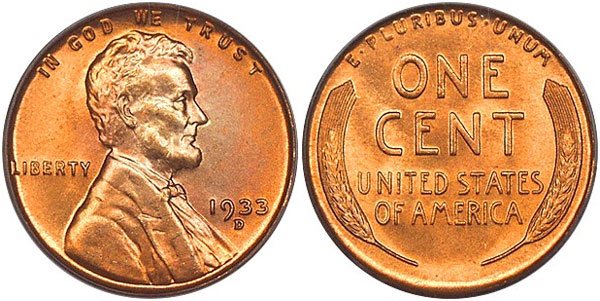
I started dabbling in copper hoarding. But as I went through lots of pennies, I started coming across some really old ones. Which got me to wondering if maybe the numismatic value of some of these coins eventually might be more than their melt value. After all, when everyone’s melted down their copper pennies, a complete collection of Lincoln cents is going to be something special.
So I started building a collection of Lincoln cents. Then I got into state quarters, first as a cool Christmas gift for one of my nephews, then for myself. Then I got into Jefferson nickels, and started finding silver.
Right now, I have a complete set of Lincoln Memorial cents. They’re all from circulation, and some of them are pretty beat up, but there are a few really nice ones in there too. My wheat cents collection is much less complete, but the coolest piece is a 1909 VDB in very fine condition, with all the wheat berries still showing. That’s a $10-$15 penny that I found in a normal coin roll.
It’s a fun hobby, and it comes around full circle to what got me started down this rabbit hole in the first place. Each one of these coins is a small piece of history. That 1909 VDB is more than a hundred years old. I’ve got coins that my parents and grandparents would have used, and a penny for every year of my father’s and mother’s lives. With a bit of luck and a lot of patience, I’ll be able to find a penny for every year of my grandparents’ lives as well.
So yeah, it’s been a fascinating journey of discovery, and it’s still ongoing too. I just got started with Roosevelt dimes, and I’m catching up on Mike Duncan’s Revolutions podcast, which is just as interesting as his History of Rome. Turns out that the French Revolution also happened because of deficit spending and a runaway government debt. Surprise, surprise.
Life is a giant rabbit hole when you’re curious about everything!
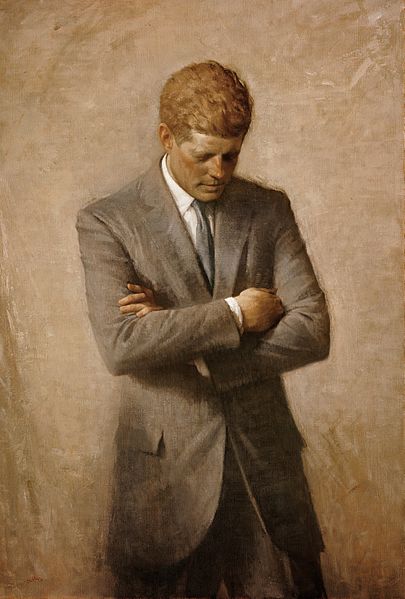
I just watched a fascinating interview with a 1960s White House intern who claimed to have an eighteen month affair with President John F. Kennedy. But the most interesting thing wasn’t the affair itself, but the way the President’s staff, the “fourth branch” of government (AKA the media), and the entire general public of 1960s America seemed more intent on keeping the secret than on facing the truth about JFK’s many affairs.
It seems that my parents’ generation had so much trust in their government that nobody would even raise the question–that to raise doubts about the integrity of the man who held the highest office in this country would itself be unconscionable. Rather than face the facts, the American public seemed unwilling to do anything that would shatter the gilded image of the man who led the free world. And that, quite frankly, is a mindset that I simply cannot understand.
In contrast, my own generation has very little trust in our government. We’ve been raised in an age of ambiguity, where the enemy doesn’t wear a uniform or pledge allegiance to a flag, but live quietly among us, until they strap a bomb to their bodies or turn a commercial airplane into a weapon of terror. Or at least, that’s the excuse our government gives us for an increasingly invasive security regime that infringes on our basic liberties, enables the military to hold us in detention indefinitely, and sends our soldiers overseas to fight increasingly senseless wars to “liberate” the people of oil-rich nations who don’t even want us there. As if that weren’t enough, the economic crash has taught us that all that stuff our parents taught us about equality and opportunity is really just a pack of lies–that the rich get bailouts while the rest of us foot the bill, and all that stuff about changing the world and being whatever you want to be…yeah. Lies, all of it.
My Dad had an interesting rebuttal to all this, though. He said that it wasn’t his generation that put the president on a pedestal–it was his generation that tore the pedestal down. During the 60s and 70s, the Vietnam era and the rise of the hippy movement, his generation fought back and made it acceptable for us to question the president, or to criticize the government, or to do all the things that we take for granted today. In fact, he said that we’re the ones who are backsliding into complacency, with our deafening echo chambers, our social media inanities, our reactive attachment to corporate brands and advertising, and our almost religious sense of entitlement.
I’m not totally convinced he’s right, but I do think there’s a fundamental gulf between these three generations. Our grandparents’ was the silent generation, where people were expected to keep to their own business and not rock the boat. Our parents’ generation was one of top-down media, where ABC, NBC, and CBS ruled the airwaves and told us all what to think, buy, and believe.
Ours is a much more peer-to-peer generation, but I worry that we’re turning into a collection of mindless herds who are turning the culture wars into a messy riot where we abandon civil dialog and rational thinking for a much more destructive mob mentality that isn’t really building anything, but tearing it all down.
Sometimes, it gets so frustrating that it makes me yearn for the days of the frontier, when anyone could leave it all behind and reinvent themselves somewhere out in the west. That’s probably why I’m so drawn to science fiction, where space is the final frontier. There really are times when I wish I could go to the stars and escape to it all, and I think that shows in my writing.
Maybe that’s why I feel so compelled to write Star Wanderers. It’s basically 80% wish fulfillment, about a guy who goes from planet to planet on the kind of spaceship I wish I had. It’s not all rosy, of course–space can be a cold, dark, and lonely place–but so can this world, when you’re lost and you don’t really know what you’re doing with your life.
Anyhow, those are just some of my random late-night thoughts about the situation in this country and how much things have changed over the decades. If I had a time machine and got a chance to go back to the 60s (after seeing The Empire Strikes Back on opening night, of course), I don’t know I’d be able to recognize this as my own country. But really, I don’t think I recognize anything as my own country anymore. Like Van Gogh, all I can say is the sight of the stars makes me dream.
All right, I just updated my resume to account for the last year or so, and I’m ready to start looking aggressively for work. Given the state of the economy, I’m not optimistic that it will lead anywhere, but hey might as well give it a shot.
The ideal job would be something part time that allows me to write on the side while teaching me useful skills like book selling or copywriting. Oh, and it wouldn’t hurt to have interesting coworkers (especially female coworkers) and a fun work environment, too.
I’ve got to be honest, though; there aren’t very many jobs here in Utah Valley that are awesome enough to keep me here. In September, I finally got my TEFL certification, which means that I could probably land a decent job teaching English abroad if I were to look for one. In fact, if I showed up in Cairo or Amman with $500 USD in my pocket, I’ll bet I could establish myself.
So while there are a few jobs here in Utah that would make me decide to stay, if I can’t find anything satisfactory in the next few weeks, I’m probably going to go with teaching English abroad. My friends who have done it say that it gives you tons of free time to write, though generally more if you have a private apartment than if you’re living in a homestay. Even so, I think I’ll try out the Teach and Learn with Georgia program first for a few months, just to test the waters and see if this is something I actually want to do for a career.
That’s the tentative plan anyways. Things that could derail it include: