I’m in the middle of my first revision pass through Heart of the Nebula, direct sequel to Bringing Stella Home, and…I don’t know exactly how to put this, but the story seems to be simultaneously smoother and more shallow. Plot-wise, everything works great; character-wise, there just doesn’t seem to be as much depth as my other work.
I remember finishing the first draft in May, and being surprised at how well structured it was. Each of the three major plot points happened after exactly five chapters, and each of the chapters was almost perfectly balanced–a far cry from my previous work. I had a few stops and starts in the first part, but everything after the first hundred pages was smooth as gravy. What’s more, I’m finding in this revision that not a whole lot needs to change; it works pretty well as-is.
And yet…I can help but feel as if something is missing. The characters just aren’t coming alive the way they did in my previous works. The story isn’t quite as engaging, the climaxes quite as gut-wrenching as I would like. It feels like a good story, but not a great story.
Here’s the thing: my previous stories were all broken in this phase. Desert Stars was so broken I had to write another novel to figure out how to finish it–and even then, the second half of the book went entirely in the wrong direction and had to be thrown out. Bringing Stella Home had a solid storyline, but Stella’s character was completely broken and had to be rebuilt from the bottom up. And Genesis Earth had half a dozen false starts, and at least as many chapters that had to be thrown out because they did nothing to advance the plot.
But Heart of the Nebula isn’t exactly broken, it’s just…not at the level I would like. And I worry that because it isn’t broken, I won’t feel as compelled to make it better. I worked hard on the others, and learned a lot of lessons which helped me to write this book, but even if I’ve hit my stride and this is the result, it feels too much like settling. I can do better.
None of this probably makes any sense if you haven’t read the manuscript, but I hope it doesn’t sound too much like whining. Even if these are problems, these are good problems and I’m happy to have them. When I share this with my first readers, they will probably have all sorts of insights that will make me smack my forehead and make everything awesome again.
I guess my point is that I don’t want to settle, even though this draft will probably not be as good as I’d like it to be. I’ll fix all the known problems, then send it out to my first readers and trust them to help me find the unknown problems.
In the meantime, I should probably start something new. I have a ton of great ideas for the fantasy novel, and bouncing them off of friends has really helped me to figure out what else the story needs. After I finish reading American Gods, I’ll stock up on some fantasy to get into the right mindset, starting with David Gemmell (incidently, at dinner group tonight, I literally squeed while talking about David Gemmell. It was simultaneously embarrassing and really awesome).
Enough of this. Time for sleep.
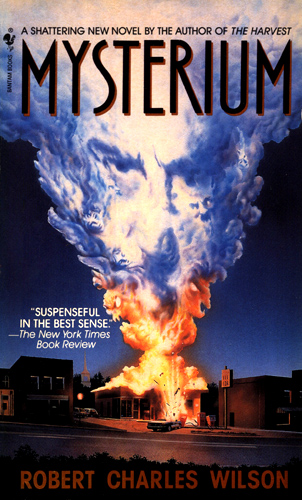 Nobody knows why the government chose the small town of Two Rivers, Michigan, as the site for a top secret military project. Even most of the people involved in the project don’t know what it’s really about. That’s alright, because most of the denizens of this backwoods community are used to minding their own business. But after a mysterious explosion bathes the entire city in light, that becomes impossible.