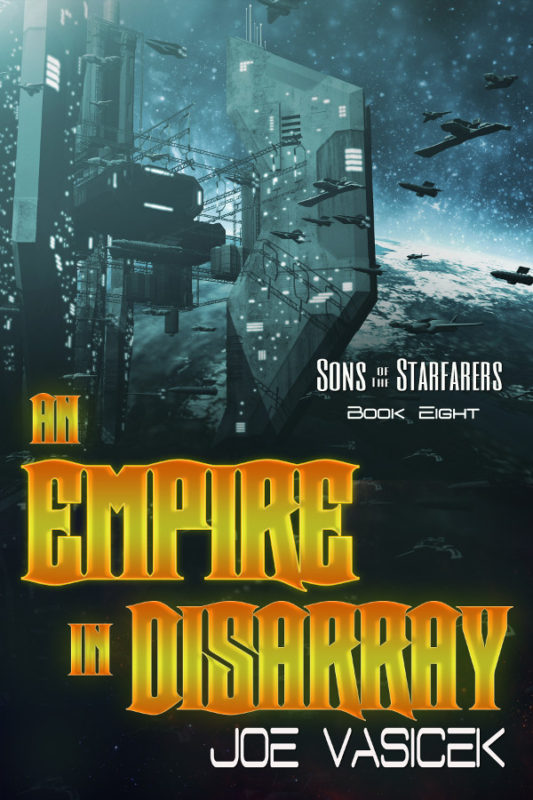
Loyalty Under Pressure in An Empire in Disarray

In times of peace, loyalty seems simple. You serve your people, follow the chain of command, and trust that the system holding everything together will endure. But when an empire begins to fracture, loyalty becomes far more complicated—forcing people to decide what they truly stand for when the institutions they trusted start to crack.

An Empire in Disarray, the eighth book in the Sons of the Starfarers space opera series, explores that question: What does loyalty mean when the nation you serve is falling apart?

Where the Idea Came From

The inspiration for this theme came from thinking about moments in history when powerful nations suddenly found themselves divided from within. Empires rarely collapse overnight; instead, they begin to fracture as rival factions claim legitimacy and ordinary people must decide which voices to trust. I wanted to explore what that experience might look like in a far-future interstellar civilization.

What would it feel like to be a starship captain or soldier who swore an oath to defend the Confederacy—only to discover that different leaders are now demanding loyalty in its name?

How Loyalty Under Pressure Shapes the Story

Throughout An Empire in Disarray, characters face a recurring dilemma: follow orders, or follow their conscience. When the political center begins to fracture, every decision carries consequences. A choice that looks like loyalty to one faction might appear to be treason to another.

This tension runs through the heart of the story. Captains must decide who they trust when messages conflict and alliances shift. Soldiers and civilians alike are forced to weigh their duty to the Confederacy against their loyalty to friends, family, and the ideals they believed they were defending.

Because this is the eighth installment of the Sons of the Starfarers series, those decisions carry even greater weight. Relationships built across many books are suddenly tested by the pressure of war, uncertainty, and competing visions of the future. Loyalty becomes more than obedience—it becomes a question of identity.

What Loyalty Under Pressure Says About Us

Stories about loyalty resonate because they mirror real human struggles. In our own lives, we are often pulled between different responsibilities: loyalty to family, loyalty to institutions, loyalty to personal convictions.

When those loyalties align, life feels stable. But when they collide, we discover who we really are. An Empire in Disarray asks readers to consider what loyalty means when the world grows uncertain—and whether true loyalty ultimately belongs to authority, to people, or to the principles we believe are worth defending.

Why This Theme Matters to Me

When I was writing the later books in the Sons of the Starfarers series, I found myself thinking a lot about the meaning of commitment. The characters in this story have been through years of conflict together, and by this point in the series their relationships matter just as much as the fate of fleets or empires.

What moved me most while writing this book was watching those characters face difficult choices and still try to protect the people they care about. Loyalty, in the end, isn’t just about allegiance to a cause—it’s about standing by one another when everything else starts to fall apart.

Where to Get the Book

Related Posts and Pages

Explore the series index for Sons of the Starfarers.

Return to the book page for An Empire in Disarray.

The Search for Belonging in Strangers in Flight

What does it mean to belong when everything familiar has been stripped away? Strangers in Flight is a character-driven science fiction and space opera novel about people who survive catastrophe, only to discover that survival alone isn’t enough. Set amid war, displacement, and life on the interstellar frontier, and against the backdrop of an ongoing interstellar conflict in the Sons of the Starfarers series, the novel asks a simple but painful question: how do you build a sense of home when you wake up alone in a universe that no longer knows who you are?

Where the Idea Came From

The idea for this theme grew out of thinking about what it would be like to lose not just your home, but your entire cultural and social world overnight. In the author’s note, I talk about wanting to explore loneliness at an extreme scale: being the sole survivor of a people, waking into a future where everyone who shaped your identity is gone. Science fiction gave me the space to externalize that loneliness—to turn it into a literal universe of strangers. I was especially interested in what happens after the escape—when the danger passes, but the isolation remains—and how belonging has to be rebuilt from nothing.

How The Search for Belonging Shapes the Story

Belonging is the emotional engine that drives Strangers in Flight. Reva’s struggle is not just physical survival or escape from enemies, but the deeper shock of cultural and personal dislocation. She wakes into a galaxy that doesn’t share her language, her customs, or her assumptions about the body, privacy, and trust. Her choices throughout the story are shaped by the question of whether belonging is even possible—or whether survival requires emotional withdrawal. That tension—between isolation and connection—echoes throughout the wider conflict of the series, where entire peoples are being displaced by war.

Isaac’s journey mirrors this from the opposite direction. Though he has a ship, a profession, and a place in the wider conflict of the Sons of the Starfarers series, he is also profoundly isolated—adrift on the frontier, defined more by what he avoids than what he commits to. When these two characters come together, the story treats belonging not as instant comfort, but as something forged through mutual risk, responsibility, and choice. These decisions ripple outward, shaping the story’s conflicts and setting the tone for the relationships that continue across the series.

What The Search for Belonging Says About Us

At a time when many people feel disconnected even while surrounded by others, Strangers in Flight frames belonging as a fundamental human need rather than a luxury. The novel suggests that loneliness is not just emotional pain, but a condition that makes us vulnerable—to despair, exploitation, and moral compromise. If you’ve ever felt out of place, unseen, or unmoored after loss or change, this story treats that experience with seriousness and empathy. At the same time, it offers a quiet hope: belonging doesn’t require shared origins or perfect understanding. It begins when people choose to care for one another, even when doing so is inconvenient, risky, or costly.

Why This Theme Matters to Me

This theme matters to me because I’ve always been drawn to stories about people on the margins—exiles, refugees, wanderers, and survivors—who have to decide whether connection is still worth the risk after loss. I wanted to write a story that takes loneliness seriously without becoming cynical, and that treats belonging not as something we passively receive, but something we actively build. That question—how people find one another in the aftermath of upheaval—runs throughout the Sons of the Starfarers series. For me, Strangers in Flight is ultimately about the hope that even in a vast and lonely universe, belonging can still be found—sometimes in the most unexpected places.

Where to Get the Book

Related Posts and Pages

Explore the series index for Sons of the Starfarers.

Return to the book page for Strangers in Flight.

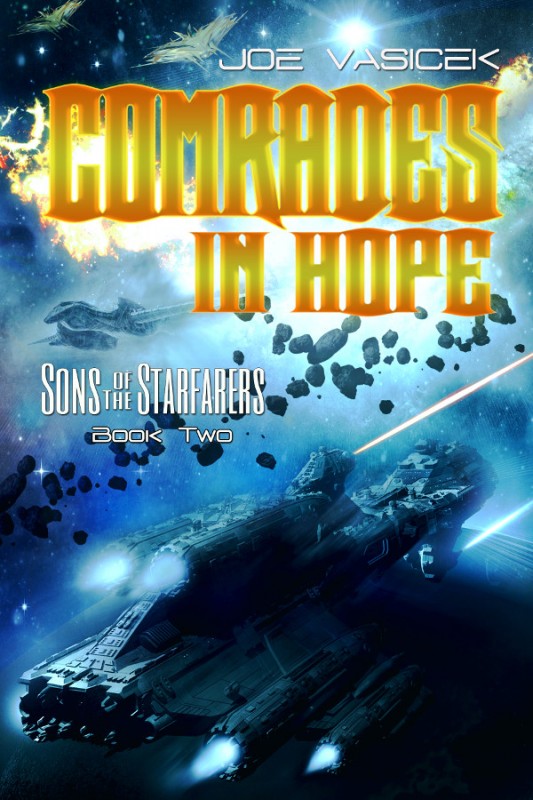
The Hope That Survives Trauma in Comrades in Hope

War has a way of shrinking the future until all you can see is the next breath, the next corridor, the next impossible choice. Comrades in Hope is a character-driven military science fiction novel that asks a simple question with a hard edge: what does hope look like when you’ve already seen the worst—and you don’t get to look away? In this book, hope isn’t optimism or denial. It’s what you do after the damage, when survival alone isn’t enough.

Where the Idea Came From

Part of the spark for this theme came from pairing two kinds of characters I wanted in the same story: a young man who still believes the universe can bend toward good, and a survivor who has learned—through loss—that the universe doesn’t care what you believe. Aaron arrives in the Outworld Flotilla carrying naïve expectations and a private vow, while Mara has already been forged by catastrophe, grief, and the long-term psychological trauma of war. Their shared culture and language create a lifeline between them, but it also forces the question into the open: can hope survive trauma without becoming a lie?

How Hope and Trauma Shape the Story

From the beginning, Aaron is out of place—linguistically, culturally, militarily—and that displacement matters, because Comrades in Hope is not a story about winning battles, but about surviving war with your humanity intact. It comes from not understanding the world you’ve been thrown into, from feeling helpless at the exact moments when competence would save lives. Aaron leans on translation tools and improvisation, while Mara carries the grim competence of someone who’s already paid the price of being unprepared. Their relationship becomes a pressure chamber where hope and trauma argue with each other in real time: Aaron keeps reaching for the possibility of a better outcome, while Mara keeps pointing to the body count and the way war turns people into numbers. Yet even her pessimism has a wound behind it—she doesn’t reject hope because it’s childish; she rejects it because she’s afraid of what it costs to believe again.

As the conflict escalates, the book keeps putting hope in the least comfortable place: inside terror, exhaustion, and grief. There are moments where survival narrows to shared oxygen, sealed compartments, and the blunt math of “who made it and who didn’t.” In those scenes, hope stops being a feeling and becomes a decision—sometimes as small as refusing to abandon someone, sometimes as stubborn as continuing the search when every rational signal says it’s over. One of the most revealing turns comes when Aaron challenges Mara’s refusal to hope for herself, and she answers that she can still hope for someone else. That’s the heart of the book: trauma isolates, but hope reconnects—often first as hope for another person, when you can’t yet hold hope for yourself.

What This Theme Says About Us

Most of us won’t fight aboard captured battleships or live under the constant threat of empire, but we do know what it’s like to be changed by pain—and to wonder whether what we lost can ever be rebuilt. Comrades in Hope leans into a truth that shows up again and again in real life: trauma doesn’t only injure the body or the memory; it injures the imagination. It makes the future feel unsafe to picture. And yet, again and again, people choose hope anyway—not because they’re sure things will work out, but because they refuse to let suffering have the final word on who they are. This is why stories like Comrades in Hope resonate with readers who care about resilience, found family, and the quiet moral choices people make under pressure—especially in times of war and displacement.

Why This Theme Matters to Me

I wrote Comrades in Hope fast, almost breathless, and in a very “discovery writer” way—following the characters into the war and letting their struggles shape what the book became. What I love about this story is that it doesn’t treat hope as a motivational poster, especially in the context of war and trauma. It treats it as something you earn, something you protect, and sometimes something you borrow from the people beside you when you’ve got nothing left. And on a personal level, I keep coming back to how much this whole career—and every book I get to write—depends on readers choosing to care, choosing to share, choosing to keep stories alive. That’s its own kind of hope, and I don’t take it for granted.

Where to Get the Book

Related Posts and Pages

Explore the series index for Sons of the Starfarers.

Return to the book page for Comrades in Hope.