Revelation Space by Alastair Reynolds

Hundreds of thousands of years ago, an ancient race of sentient aliens known as the Amarantin went extinct just as their civilization experienced a golden age.  No one knows why, but archeologist Dan Sylveste is determined to find out.  Unlike the other colonists on the remote planet of Resurgam, he believes that the answer may be important.

He has no idea how right he is.

Just as he’s on the verge of a major breakthrough, a team of rebels takes over the administration of the colony.  Sylveste becomes a prisoner of war, and his research comes to a frustrating halt.

Meanwhile, on Yellowstone (the nearest human-inhabited planet to Resurgam), a mysterious entity known as The Mademoiselle hires assassin Ana Khouri for a special mission: kill Dan Sylveste.

The only ship headed in that direction, however, is an ancient warship commanded by a rouge crew of Ultras, genetically modified transhumans.  They seek Sylveste in order to heal their captain, who suffers from a plague that melds human biology with advanced technology.  The de facto leader, Illia Volyova,  hires Khouri to replace the ship’s gunner, who went mad and mysteriously died.

But neither Khouri nor Volyova realize that the thing that drove the gunner mad still resides deep in the ship’s systems.  It is neither human nor AI–and it knows what killed off the Amarantin nine hundred thousand years ago.

Revelation Space is a space opera unlike any other that I’ve read, with the possible exception of Dune. The far-future universe Alastair Reynolds created for this book is incredibly complex and expansive, almost completely unrecognizable from our own, with technology bordering on godlike, posthuman and transhuman races that are all but commonplace, and nothing but a blurry, indistinct line dividing the human and the machine.  On every page, I felt as if I had left the real world behind for something completely (and often disturbingly) alien.

Setting, by far, is the strongest point of this book.  In fact, as an aspiring writer, I found it  somewhat intimidating.  Reynold’s Revelation Space universe was completely alien, but in ways that made perfect sense for the far future in which it was set.  From this, I’ve learned that to make a far future setting believable, you have to make it…well, as alien and complex as Reynolds makes it.  It shouldn’t be an exact copy of Reynold’s mold, of course, but if it’s 500 years in the future and everyday life still feels exactly like our own–well, there had better be a reason for that.

As for character and plot, I did not feel that those were particular strong points of this book.  It’s not that they were done poorly,  it’s just that they weren’t done well enough, in my opinion.

The characters in Revelation Space did not particular engage me at first; I found that I had to force myself to keep reading, rather than read because I had to find out what happened to them.  Later on, as the story progressed, they grew on me, but I never felt that I intimately knew them.

As for plot, I felt that every fifty or one hundred pages, Reynolds would pause the story and throw something in from left field, simply because he had to foreshadow something coming up.  In this way, the book seemed a little choppy–like a debut novel (and, in Reynold’s defense, this is his debut novel).

Even with these issues, however, this was an incredible book, and it’s stuck with me even months after finishing it.  Reynolds pulled off an amazing ending–very satisfying, with a twist that I had not foreseen but that made good sense.  The final scene, and the last two sentences of the final scene in particular, were just awesome.  They made me want to clap my hands and say “bravo.”

If I could describe Revelation Space in terms of other works, I would say that it’s a cross between Neuromancer and Stargate the movie. While it’s solid space opera, it has a dark and gritty feel that borders on Cyberpunk / post-Cyberpunk.  It’s not exactly the kind of stuff I want to write, it comes pretty darn close.
Outlining for a discovery writer

I’m almost finished with the rough draft of Bringing Stella Home, but I can’t shake the feeling that this draft really sucks and is full of holes.  

Part of that is probably that I wrote the whole thing  out of the top of my head.  The only part that I really took the time to outline was the back histories of the mercenaries–and that gave me material to make the story a LOT stronger.  This probably means that I need to do more outlining in the future.

I think I know now what to do and not to do.  Here’s my list of do’s and don’ts for someone like me who is more of a “discovery writer”:

Do’s:

  1. Keep a list of brief explanations for setting elements (history, cultures, traditions, technologies, magics, etc).  These do not need to be full length articles, but they should have enough information to trigger your knowledge and/or record the things that you are likely to forget.
  2. Keep profiles of all the major/viewpoint characters.  These should:
    –Briefly explain their backstory, including parents/family/origin, childhood, education/training, major formative events, etc.  This part should be fairly extensive, and will help you discover even more things about your character as you write your story;
    –Explain, in some detail, their motivations–not just their desires, but the basis behind their desires.  These usually grow out of the backstory;
    –List some basic stats: age, height, distinctive physical characteristics–basically, the stuff someone is going to get on a first impression;
    –List their important strengths.  This part can be sparse, but you should at least be aware of the things in which they are competent;
    –List their important flaws/handicaps.  This part can also be sparse, but it should be extensive enough to at least make you aware of and/or get you to think about the potential conflicts that will arise;
    –Explain why this character is sympathetic–why the reader is going to like this character.  You MUST make a conscious effort to think this out.  As the writer, you will love your characters simply because you created them, but the reader will not share in this euphoria.  Write this section like a pitch, as if you’re addressing the reader (I haven’t tried that yet, but it sounds like a good idea and I’m going to try it on my next project).
  3. Keep an ongoing list of all the major plot conflicts, with a checklist for each one of things that must/should happen in order to make the conflict as juicy and story-rich as possible.  These lists should be sparse: one sentence to explain the conflict (character vs. character), and each point of the checklist should also be one line.  You will flesh out each of these points as you go along, and you may even add new conflicts and get rid of old ones as your story takes shape.

Tip: None of these sections needs to be extensive.  Sometimes, it will work better if you simply cut and past excerpts from your novel in the appropriate places in your outline.  This may be especially helpful for setting elements and minor characters.

Tip: Not all of your outlining has to be done before you start writing.  The outline should be an organic document that expands and changes with your draft, and your best ideas will come as you write the story, not as you write the outline. The outline exists to serve the story, not the other way around. 

Don’ts:

  1. Don’t feel that you have to write encyclopedia-style articles on all of your setting/worldbuilding elements.  You are the only one who will see these, so you don’t have to extensively edit or proofread these sections.
  2. Don’t try to explain every detail of your characters’ personalities.  When you have a clear backstory, these will come out naturally.  To write believable characters, figure out the basics and then GET OUT OF THE WAY and let them take over.
  3. Don’t outline the plot; outline the major plot conficts with their necessary events, but expect these to change as you write.  This should be the most flexible part of your outline.
  4. NEVER feel that you have to fit your story to the outline.  The outline exists to serve the draft, not the other way around.  Use it as a reference and a set of guidelines, not a set of rules.  You will discover your story as you write and daydream about it, not as you write your outline.
  5. Don’t worry if your outline is spotty and full of holes.  You’re not writing this to an uninformed audience; you’re writing this to your future self, who can fill in the holes quite well.  In fact, your outline only exists to fill in the holes in your future self’s head and point him in a clear direction.
  6. Don’t worry if your story gets ahead of your outline on the rough draft.  For discover writers, outlines are more of an after-the-fact thing anyway, and your outline will continue to grow and expand in the rewrite.  In fact, you may find it more productive to write the rough draft in a burst of frenzied creative energy, leaving 90% of your outlining for the rewrite.

These are a few of the things that work for me, as a discovery writer.  I haven’t tried out everything on the do’s list, but looking back, I can see that they would have helped tremendously if I’d done them while writing Bringing Stella Home.  

Just because you’re a discovery writer, that doesn’t mean that you shouldn’t keep an outline.  It just means that you need to keep a different kind of outline, one that will enhance your discovery writing process rather than constrain it.

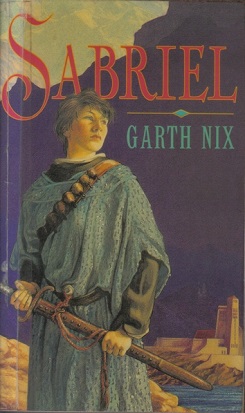
Sabriel by Garth Nix

Sabriel doesn’t know it, but her father is more than just a powerful necromancer; he is a key in the political intrigue of the Old Kingdom–the land beyond the wall. When he interrupts her class at Wyverly college by sending a hand–an enslaved spirit–from beyond the fourth gate of Death to drop off his sword and magic bells, Sabriel knows that something is wrong.

Something is holding her father hostage in Death, and Sabriel is determined to find him and rescue him. When she crosses over the wall, however, into the world of magic, both free and charter, she discovers just how little she knows about the history of the world, and the conflict in which her father was intimately involved. On this side of the wall, the world nearly ended two hundred years ago, and something that should have passed beyond the ninth gate of Death has come back to finish what it started and claim the world as its own…

I read this book for English 318 this year; we discussed it in class a couple of weeks ago. I ended up reading the book in about 48 hours, and as far as required reading goes, it wasn’t bad. Not bad at all. In fact, I really enjoyed it.

Garth Nix creates a fascinating world in this book, with magic that feels wondrous and otherworldly and places that feel fantastic. His conception of Death as a river with nine gates–nine waterfalls–is extremely fascinating, and the use of the bells to cast spells is really well done. The first hundred pages of this book felt a little bit like the beginning of The Dark Is Rising: it felt really dark and spooky, like being lost in the woods and knowing that something ancient and dangerous was out there with you.

The characters were also interesting and likeable. Sabriel is a necromancer who, in some ways, is afraid of facing death–the fact that everyone has to go at sometime. This is a YA book, so she was basically a young adult thrown in way over her head, tossed back and forth from crisis to crisis. At the same time, she takes charge often enough that she is definitely not just a weak character, driven passively from place to place. When the love interest enters the story, she’s basically the “prince” that rescues him from the “dragon,” repeatedly.

The biggest issue I had with this book was its predictability. It seemed that I could see every plot development and big reveal at least fifty pages before it happened. That said, the main thing driving me through the book wasn’t the plot–it was the setting and the characters. Sabriel has to learn some difficult lessons in order to succeed, and the magic she uses is just really freaking cool. Charter symbols, free magic, the five great seals of the charter, the nine gates of Death and the voices of the bells–cool stuff. That was enough to keep me interested, despite the relatively straightforward and unsurprising plot.

Overall, this was definitely a good fantasy. Garth Nix does a great job creating a sense of wonder, and his characters were interesting too. If you like fantasy and haven’t yet heard of this one, I’d definitely recommend it.