2019-12-19 Newsletter Author’s Note

This author’s note originally appeared in the December 19th edition of my author newsletter. To subscribe to my newsletter, click here.

I’ve been thinking a lot about self-reliance recently. I just finished reading One Second After by William R. Forstchen, and while it’s a good book—perhaps even an important book—I have to say that is not the sort of thing that is fun to read when you’re newly married and expecting your first child. It really makes you think about the things you take for granted, and just how fragile our world really is.

If you know the basic premise of the book, you’re probably nodding along sagely right now. If not, then you probably haven’t read much prepper fiction yet. One Second After is actually a pretty good book to start with, if you’re interested in the genre. In the next couple of weeks, I’ll write a proper review.

I don’t consider myself a “prepper” in the common sense of the word. I don’t have a stockpile of guns or ammo, I don’t really go for all the “tacti-cool” stuff that’s popular in prepper circles, and I don’t obsess over SHTF scenarios. That said, I’m not ignorant of the many ways our society could (or is) falling apart, and I do have contingency plans if/when that happens.

Probably the best prepper blog/resource that I’ve found is Listening To Katrina, which was written by a guy who lived through Hurricane Katrina and the aftermath. Lots of really fascinating stuff there, and he does a fantastic job of boiling his experience down into lessons for the rest of us. I discovered this blog just as I was starting to get more interested in self-reliance and emergency preparedness, and it did a lot to develop my thoughts on the subject.

Another big influence on me were the Forgotten Skills books by Caleb Warnock. A lot of really fascinating stuff there. He hits on things from the self-reliance angle more than the prepper angle, which is how I like to come at it too. It’s not about having two years of freeze-dried food in your basement that you never eat or use, it’s about living in such a way that you can provide for your own needs whether or not a disaster strikes, and produce more than you consume.

About a year ago, I took what I’d learned from these and other resources and mapped out something that I call my Path to Self-Sufficiency:

  1. Learn how to store and use oats, beans, and wheat.
  2. Learn how to make bread and maintain a sourdough culture.
  3. Start an herb garden and learn how to garden.
  4. Develop a storage system for canned and dry goods.
  5. Learn how to make kraut and fermented vegetables.
  6. Learn how to make yogurt and cheese.
  7. Keep a garden for greens, tomatoes, peas, and peppers.
  8. Learn how to can and pickle.
  9. Finalize the garden plan (including compost).
  10. Build a rainwater reclamation system.
  11. Develop a source of off-grid power.
  12. Build a wood-fired oven and learn how to make bread with it.
  13. Learn how to hunt and process game meat.
  14. Develop a plan for livestock.
  15. Secure a source for eggs and milk.
  16. Learn how to make clothing and work with textiles.
  17. Build a shop and learn how to work with wood and metals.
  18. Build a foundry and learn how to cast metals.
  19. Build a greywater reclamation system.
  20. Secure a source for homespun textiles.
  21. Acquire productive land and improve it.
  22. Build an off-grid cabin.

The items are listed in rough order, though I’ve jumped around a little bit since making the list. For example, Mrs. Vasicek and I have solar panels on our house (11), and we’re looking seriously into keeping bees (14). But it’s a pretty good reference point for answering the question “okay, what’s next?” Currently, I’m working on step 6, and when spring comes around I’ll dive into steps 7, 8, and 9.

A lot of this hearkens back to a blog series that I started several years ago, called “the self-sufficient writer.” At the time, I was exploring ways that I could incorporate what I was learning into my writing career and lifestyle. The goal, I suppose, was to show how it’s possible not only to make a living as a writer, but to achieve a healthy degree of self-reliance at the same time.

Would you be interested in reading that blog series if I brought it back? I’ve learned a few things since then, and would have to start it over from the beginning, but it’s an interesting subject that I enjoy exploring. And now that I’ve finally got some land to work with, there’s so much more to do.

The Path to Self-Sufficiency is very much a work in progress, and I doubt I’ll get to everything on it. A lot depends on Mrs. Vasicek and what she wants to do. With a child on the way, other projects will no doubt take priority, but with everything going on in the world, this is not a ball I think we can afford to drop. If you have any suggestions or stories of your own, I’d love to hear from you.
A Path to Self-Sufficiency

It’s been a while since I’ve done a Self-Sufficient Writer post, but I think I’d like to bring that series back, with the goal of turning it into a book eventually. There’s a lot of interesting stuff I’ve learned that would make good content for that blog series, and I still have a lot to learn.

In an effort to map out my own path to self-sufficiency, I drew up a list of all the major things I think I need to learn and/or do to achieve the level of self-sufficiency that I desire. Some of it is mostly aspirational, especially toward the end, but I do think I can achieve most of this stuff, if not all of it.

The list is roughly ordered from easiest to hardest, or else in such a way that one thing builds off of another. It’s still a work in progress, though, so if you have any suggestions or anything to add, I would appreciate it.

  1. Learn how to store and use oats, beans, and wheat.
  2. Learn how to make bread and maintain a sourdough culture.
  3. Start an herb garden and learn the basics of gardening.
  4. Develop a storage system for canned and dry goods.
  5. Learn how to make kraut and fermented vegetables.
  6. Learn how to make yogurt and cheese (this is where I am currently).
  7. Keep a garden for greens, tomatoes, peas, and peppers.
  8. Learn how to can and pickle.
  9. Finalize the garden plan (including compost).
  10. Build a rainwater reclamation system.
  11. Develop a source of off-grid power.
  12. Build a wood-fired oven and learn how to make bread with it.
  13. Learn how to hunt and process game meat.
  14. Develop a plan for livestock.
  15. Secure a source for eggs and milk.
  16. Learn how to make clothing and work with textiles.
  17. Build a shop and learn how to work with wood and metals.
  18. Build a foundry and learn how to cast metals.
  19. Build a greywater reclamation system.
  20. Secure a source for homespun textiles.
  21. Acquire productive land and improve it.
  22. Build an off-grid cabin.

And of course:

0. Plant a tree.

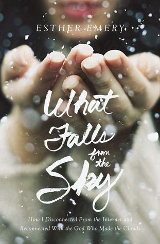
What Falls from the Sky by Esther Emery

This kind of book isn’t my usual fare, but I discovered this author through some YouTube videos on homesteading, and when I read in the description about how she went for a year without the internet, I thought I’d give it a try. I was not disappointed.

Esther Emery has had an interesting life. With one foot in the California theater scene, another foot in the evangelical Christian scene, and… a third, foot, I guess? …in Idaho and the intermountain west, she’s got a very interesting perspective. Her experiences give her a lot of interesting insights, too. When she decided to go for a year without the internet, her life and marriage were falling apart. Going offline turned that all around.

It really surprised me how much she opens up. The writing did feel a bit pretentious at first, but that’s more a function of style than of sincerity. This books is very honest, sometimes brutally. In a world where so many people keep carefully crafted social media accounts, signal their own virtue to their peers, or choose to spend most of their time in echo chambers that serve to reinforce their views, a book like this one really stands out.

Because quitting the internet wasn’t just a stunt for Esther, thought it might have started out that way. It was a genuinely transformative event. As someone who could not function without the internet (mostly just because that’s how I make my living), I found her story to be both fascinating and refreshing. The insights that Esther shares from her experience are quite powerful.

So yeah. Good book. Not science fiction at all, but I enjoyed it. Maybe you will, too.

The thousand year view

How will your life impact the world in a thousand years?

It’s an easy question to dismiss. After all, how can one person possibly shape the course of history? Even if we accept the impact of certain great men, how can we have the hubris to think that we might one day join them?

But the truth is that our lives have more impact than we realize. Each one of us is literally a product of our ancestors. Their decisions, for good or for evil, have put us where we are today. We also have a hand in shaping the people we come into contact with. That impact can be felt through multiple degrees of separation—and how many degrees does it take to encompass the world?

In the year 1017, Europe was rising out of the ashes of the Viking age. Kievan Rus was ascendant in the east, vying with the Romans who dominated the religion and commerce of Europe (we know them today as the Byzantines). However, tensions were rising between Constantinople and the bishopric of Rome, where one of the last vestiges of the Roman state in the West would soon break communion and form the Catholic Church. Meanwhile, an apocalyptic Muslim death cult known as the Fatimids had swept from North Africa all the way to Baghdad, the cultural and scientific capital of the world. From the harsh steppe wilderness of central asia, the Seljuk Turks were building an empire that would save Baghdad from destruction, while in China, the Song dynasty had invented the first paper currency.

In short, it was a completely different world. How different will things look a thousand years from now?

By the year 3017, we will probably have established an independent colony on Mars. Other parts of the solar system will probably also be colonized, and we may have even begun our expansion to the stars. After all, faster than light starship drives are about as fantastic to us as cars, airplanes, and space stations would be for medieval serfs.

It is highly unlikely that the United States—or any other country, for that matter—will exist with its current borders. In fact, it’s highly unlikely that the majority of countries extant today will even exist at all. China is probably an exception, but let’s not forget that China is a civilization pretending to be a country.

Pessimists will say that there’s a good chance humanity won’t exist at all. They point to things like climate change, pandemics, and global war as challenges we may not overcome. But in the last millennium, we faced all those challenges and rose above them (little ice age, Mongol hordes, black plague). Same with the millennium before (extreme weather and crop failures of 535-536, Muslim conquests, plague of Justinian).

So how will your life impact the world a thousand years from now? What sort of impact do you want your life to have? How have the things you’ve done today brought you closer to leaving that legacy?

I’ve thought about this a lot over the past few weeks. I want to impact the world through my books, but it’s unlikely that most of my books will still exist. My family and descendants will, though. I want to leave them with the best foundation I can. Here’s how I plan to do it:

Step One: Master the Basics of Provident Living

Provident living is more than just learning how to do your laundry and keep up with the maintenance of your car. It’s learning how to live sustainably, with a degree of self-reliance that can see you and the ones you love through hard times. It’s all the stuff I’ve been writing about in the Self-Sufficient Writer blog series.

I’ve made a lot of progress in this area, but there’s still a lot of progress left to make. Here are the next few steps I want to take in this area:

  1. Establish a rotating 90-day food storage for dry goods.
  2. Establish a herb garden.
  3. Expand food storage to canned goods.
  4. Buy a chest freezer and expand to meats and dairy.
  5. Plant a garden and expand to fresh fruits and vegetables.
  6. Learn how to can.
  7. Learn how to hunt.
  8. Begin keeping livestock (chickens, goats, etc).

A lot of these steps are going to have to wait until I have my own land, which brings us to:

Step Two: Live Debt-Free and Own the Place Where You Live

When you live on someone else’s land and owe them a portion of your labor, that’s a form of serfdom. In both historic and modern times, this has been the norm for the vast majority of people.

It shouldn’t be.

When my ancestors came from Europe to the United States, one of the first things they did was buy land. There was a reason for this. In the old country, they were serfs. They paid the corvée. They were not free.

They knew that unless they lived on land that they owned, in a home that was theirs, their children would not be free either.

We’ve enjoyed a century of prosperity in the United States. It’s led us to believe that home loans and mortgage payments are normal. They aren’t. When your home is the collateral for a loan you’ve taken from the bank, and you spend most of your adult life paying it back to the tune of 250%, that is a modern form of serfdom.

Until you own it outright, your house is a liability, not an asset. And in some places, true ownership is impossible. After all, if the government has the power to seize your house for non-payment of taxes, did you really ever “own” it to begin with?

It’s a similar thing with debt. All debt is a form of bondage. “Leverage” is when someone else has control over you or something that belongs to you. Unless you can get out from under it, you will never truly be free.

If most of your life is spent in serfdom and bondage, the thousand-year impact of your life will be muted.

The Habsburg dynasty started with a small castle on the top of a hill. From that starting point, the family went on to shape the development of Europe into the modern world. The castle was so important in that effort that the family took their name from it.

I know how to live debt-free. I’ve been doing it for several years. But I do not currently live in a place that I own. That is my overriding goal: to own the place where I live within ten years.

The government isn’t making it easy. Neither are the central banks. A decade of 0% interest rates has ravaged the middle class. As a direct consequence, home ownership rates are dropping to historic lows. 70% of Millennials have less than $1,000 saved for a down payment on a house, while at the same time, the helicopter money from the Fed has inflated a new housing bubble larger than the one that burst in ’08. In California, Google employees with six-figure incomes are living out of RVs because they can’t afford to buy a house.

It’s brutal. These are the same economic pressures that led to the rise of medieval serfdom in Europe. But there are also opportunities, for those who know how to take advantage of them. Which leads to:

Step Three: Build Multi-Generational Wealth

Poor people buy luxuries. Middle class people buy necessities. Rich people buy investments. If I want to leave something behind for my children and descendants, I need to master the skills of investing and managing wealth.

This goes back to the thousand-year view. The biggest impact I’m probably going to make on the world is going to be through my children and descendants. Raising them will be the most important investment I can ever make. I want to give them a life of opportunity, so that they, like me, can make a thousand-year impact on the world.

This is what my ancestors did for me. My Mormon ancestors crossed the plains in the Willie handcart company so that their descendants could grow up in Zion. My first-generation immigrant Czech ancestors invested in Texas farmland that still pays a small dividend to their descendants (greatly increased now because of oil royalties). There are many other countless others who made great sacrifices so that I could enjoy a life of privilege and opportunity. I’m sure that’s not unique to me.

We seem to have forgotten, here in the United States, how important it is to make sure that our children enjoy better lives than we have. To some generations much is given, while of others much is required. I fear that we are transitioning from the former to the latter. Nations are born stoic and die epicurean, surrounded by mountains of debt.

This is why it is so important to build wealth: not for your own personal consumption, but for the security of your children and descendants.

The most important investment you can make is in your education. If I’m going to develop these skills, that’s what I need to do: invest in my own financial education.

I also need to learn by experience, so I’m taking $100 of my book earnings each month and investing them. I’ll probably experience a couple of big losses, but that’s called paying tuition. The knowledge I gain from doing this will hopefully help to accomplish this goal: to build wealth that will bless the lives of my children and descendants for generations to come.

A lot of things fall into perspective when you take the thousand-year view. When you focus on the challenges of the present, it’s easy to become pessimistic, but when you take a clear-eyed look at the future—not just the immediate future, but the long-term future as well—you cannot help but take an optimistic view.

How will your life impact the world in a thousand years?

Unthinkable truths

If you told the average person that you believed with near 100% certainty that intelligent alien life exists in the universe, they would consider you crazy. Yet the truth is that our universe is so incredibly vast, so full of Earthlike planets, that the odds that intelligent life only emerged here are low enough to be indistinguishable from zero.

Yet the near-certainty of intelligent life is, to most people, an unthinkable truth. It’s something that many people, perhaps even our entire society, just cannot accept.

Our world is full of unthinkable truths. Indeed, our society is built upon them. We can find examples of them in our taboos and social mores, or in the unspoken things that everyone “just knows.” In order for civilization to function properly, there are certain things we must all agree on, such as the idea that all men are created equal, or that we all have certain rights. It’s easier and more efficient to just program people not to accept some ideas than it is to encourage them to examine everything, and hope that truth prevails.

For Americans, one of our most unthinkable truths is the idea that our constitutional rights and freedoms are fragile, and can all be taken away. Those of us who were born in this country don’t realize that the United States is, in many ways, an aberration. We take it for granted that the world around us will continue the way it always has, and that our nation will endure. Anything else is unthinkable.

But how many nations have endured? How many republics have survived the crucible of history? Rome barely lasted a thousand years, and the republic was dead long before the empire reached its greatest glory. The Middle East is full of the bones of dead empires, from the Hittites and Babylonians to the British and the French. Even the most powerful dynasties ultimately fall into ruin, and the periods of relative freedom are the exception in history, rather than the rule.

I got into an argument on Facebook (yes, I’m back on Facebook, though I haven’t decided whether to stay back permanently) where the other person said, quite unironically:

We live in an Era in which our rights are secured by the free dissemination of information; not through the ability to send rounds down range… the fact that you can type those words is proof enough that [you don’t need an AR-15].

As a student of history, this argument strikes me as obscenely absurd. There are numerous countries in the world today that have access to “the free dissemination of information” via the internet just as we do, but are horribly repressive even by historical standards. In China, for example, political prisoners are held in concentration camps and harvested for organs. In Syria and Iraq, ISIS burns people in cages and carries off young non-Muslim girls as sex slaves. In Canada and Europe, you can be imprisoned or fined for merely saying things on social media that the government deems “right-wing.”

The mere existence of Liberty does not guarantee its preservation. The only way that any people have ever remained free is by cultivating a culture of self-sufficiency. Without the right to bear arms, self-sufficiency is impossible, because it forces people to depend on the government for their own self-defense and preservation of their Liberty.

I’ve blogged before about why I need a gun. This post is largely a continuation of those thoughts. It’s unthinkable to us here in the United States that our country may one day fall, but if history is our teacher then that fall is inevitable. It may not come for another thousand years, but it may also come within the next ten.

Truth prevails—even the unthinkable truth.

The Self-Sufficient Writer: Varieties of Collapse

What does a collapse look like?

The first thing most people think of is the zombie apocalypse. Which makes sense, considering how popular zombie stories are. The signs of collapse are clear and present, with no room for ambiguity. The world has come to an end, and the only thing left is to pick up an improvised weapon and fight.

In the real world, though, collapses are almost never so black and white.

When the housing market collapsed in 2008 and brought down the global economy with it, I was in college. With panicked capital looking desperately for a place to go, gas prices spiked to over $4 a gallon during the height of the summer. Then, as credit markets completely fell apart, retailers were forced to sell at rock-bottom prices just to keep their cash flow problems from driving them into bankruptcy.

So what did that look like? For me, an extremely expensive road trip back out to Utah, followed by a spending spree. I bought a really nice corduroy sports jacket for $15, and thought “hey, I could live with this recession.” Two years later, I was singing a very different tune.

In any collapse, people’s experience of the collapse varies wildly. Take the Euro crisis, for example. A couple of years ago, the Germans I chatted with online dismissed any claim that the EU was on the verge of falling apart. Now, the UK is holding a referendum on exiting the union, and no one really knows which way it’s going to go. Germany has not (yet) experienced the kind of depression-level unemployment that many of the southern countries have. To the middle-class government worker in Athens who lost all their savings in the recession and hasn’t been getting a paycheck for years, the German narrative of Greek laziness as the root cause of the crisis does not conform to reality.

When Ernest Hemmingway was asked how he went bankrupt, his answer was “gradually, then suddenly.” The same can be said of most collapses.

But there are different kinds of collapses. There are total collapses, such as the USSR where the entire national system just completely fell apart. Then there are more segmented collapses, where different parts of the country (Detroit) or sectors of the economy (banking, housing, construction) fall apart, leaving the rest weakened but still standing. Then you have all the stuff that happens on the level of individuals and families, such as bankruptcy.

Each level feeds into the next. If enough regions or sectors go down, it can bring down the whole system with it. Likewise, if the disintegration of families becomes too widespread, every other aspect of society falls apart. We see this right now in a lot of Black communities right now. Police brutality is certainly a problem, but it is a symptom and not a cause.

Very rarely does a super-virus come out of nowhere and turn everyone into zombies. The collapse happens gradually, then suddenly. People who know what they’re looking for can see it coming a long ways away. Everyone else clings to their false and misleading narratives (“the housing market can only go up!” “the rich should pay their fair share!” “Black lives matter!”) because the message is comfortable and doesn’t require them to change.

That is why self-sufficiency is so important, especially for us writers. We cannot afford to be comfortable. We cannot afford not to change. Perhaps there was a time, way before indie publishing, when writers could just sit back and write pretty words all day, but I doubt it. The industry today is changing so quickly that it’s easy to be left behind.

Every career writer will experience a crisis where they will be forced to reinvent themselves or face the utter collapse of their career. That’s according to Dean Wesley Smith and Kristine Katherine Rush, who have been around long enough that I believe them on this point. If you know that your career is going to collapse at some point, shouldn’t you do all that you can to prepare for it? And if you’re already preparing for a personal collapse, why not take the extra step and prepare for something larger?

Personally, I think that the collapse is already upon us. I’m not yet sure what kind it is, or how total it will be, but I do think that when we look back, we will see the Great Recession as a prelude to the main event. Right now, it is easy to ignore or dismiss because no one’s experience of the collapse is the same. We are all like the seven blind mice arguing about the elephant, whether it is a fan, or a pillar, or a rope, or a spear. That’s what makes this period so dangerous: the fact that there’s no shared experience yet. It creates the kind of environment where false and enticing narratives can thrive.

Will we reverse course and take the steps necessary to reverse the collapse? I’m not optimistic. Ever since the Great Recession, our policies have focused on putting off the pain as long as possible rather than fixing the root causes of our social and economic problems. At this point, I doubt that this nation has the political will to endure the pain necessary to fix our problems. In other words, we’re caught in a vicious cycle, and it would take an extraordinary event (like a war) to break us out of it. That, or hitting rock bottom.

But even if something extraordinary did happen, and we avoided the collapse to enter a new era of peace and prosperity, I would still strive to develop the skills and habits of self-sufficiency. Why? Because not all collapses look like the zombie apocalypse. Sometimes, the collapse is so small that no one experiences it except for you.

No matter the variety of collapse, the best way to be prepared is to be self-sufficient. Independence is the ability to take care of yourself when everything else you depend on fails. For that reason, a true indie writer is also a self-sufficient writer.

The Self-Sufficient Writer (Index)

My next impossible dream

If I keep doing what I’m doing, writing and publishing my books, and building a steadily growing readership, eventually I’m going to come into some money. My readership will reach a critical mass, one of my books will hit the market in just the right way, and I’ll find myself riding the rocket to career heights that were previously unthinkable. Writing is very much a feast or famine thing, and the feast years will come if I keep at it long enough.

When the money comes, I will invest it in something more stable, like a rental property. Provo is a college town with a high demand for student housing, so it shouldn’t be too hard to find a couple properties and improve them myself. The DIY aspect is crucial, because everything that comes next will build on it.

Once I’ve got a couple rental properties that are producing a steady income stream, I’ll use that money to buy some cheap land. This land will be deep in the mountains a couple of hours southeast of here, far enough to be in the middle of nowhere, but close enough to grow in value as the cities along the Wasatch Front expand. The land will be pretty much useless for anything except future development, which will actually make it fairly valuable in fifty or so years, so long as things go well.

If things don’t go well—if the economy collapses and the country falls apart, our runaway national debt catches up to us, a fascist tyrant comes to power, a war devastates us, cyber-terrorists take down the electical grid, or a massive pandemic breaks out—if any of these things happen, this property will be an ideal place for a bug out location. That’s important. When crap hits the fan, I want to be like the father in Farnham’s Freehold, with a cool-headed plan. I want to be able to rebuild civilization with my family if I have to.

Of course, in the event that things don’t get that bad, it will still be really great to have a vacation home way up in the mountains. This home will also double as a cabin for writing retreats and weekend getaways. When I die, my kids can either keep it in the family or sell it for a tidy profit, after all the improvements I intend to make.

The first year, I plan to build a small hangar shed and dig a well. I’ll install a thousand gallon tank, which I’ll use for storing water until I can build a proper cystern (at which point I’ll probably convert the tank into a septic tank). I’ll plant several fruit and nut trees, since the best time to plant a tree is twenty years ago (but the second best time is today). I’ll build a modular watering system and plant at least ten trees each year thereafter.

In either the first or second year, I’ll buy some heavy earthmoving equipment and keep it in the shed. I’ll use that equipment to start improving the property, laying the foundation for things to come.

The first thing will be a tiny house, maybe 200 or 300 square feet, with solar power, a composting toilet, a small water tower hooked up to the well, and another tower for cellular internet. This house will have a loft for mom and dad, roll-out cots for the kids, a living/kitchen/everything room, and shelves built into the walls for food storage. In a lot of ways, it will basically be the dream house I wrote about here.

There will be several garden plots, though they will probably lay fallow unless crap hits the fan and we have to move in permanently. If I can afford it, though, it would be really cool to set up some self-regulating aquaponics systems, with computer monitoring that can alert me remotely if anything goes wrong. The property will be close enough for a weekend visit, so it won’t be hard to make a trip up if I have to. However, the idea is to design it in such a way that it can be mothballed until needed.

When the tiny house is complete, my dream will be mostly realized. However, I don’t plan to stop there. With the skills I’ve learned from improving the rental properties, and with help from some of my contractor plans, I’ll use the heavy equipment to build a proper house. This house will be off-grid just like the tiny house, with solar powers, well-water and rainwater collection, a root cellar, a greenhouse, a couple of freezers full of game meat, etc. etc. It will be the ideal mountain cabin, serving not only as a bug out location, but as a place for weekend getaways, writing retreats, long family vacations, and perhaps even a retirement home.

I plan to be as self-sufficient as possible on this property. Everything will be designed with self-reliance in mind. Rainwater collection, greywater reclamation systems, solar power, a wood-fired oven and furnace—it will be rustic and self-sufficient, satisfying all of my family’s needs.

I don’t know how bad it’s going to be when crap hits the fan. There are some scenarios (Yellowstone caldera) that kill everyone pretty much instantly. Others are so long and drawn out that the sheltered elites may deny that it’s even happening (sounds like the Great Recession, eh?). Regardless, it will be good to have a castle that I can retreat to, along with my family.

That’s the dream right now: to make it big enough to get the ball rolling on this project. It’s going to take decades to reach full maturity, but even after just a few years, it will start to bear fruit.

And who knows what will happen in future? If you’d told me fifteen years ago that I’d be where I am today, writing for a living and selling books all over the world, I’d get all bug-eyed just thinking about it. A lot can happen in ten to fifteen years.

Whatever else happens, I’ll still be writing.

The Self-Sufficient Writer: Makers vs. Takers

There are two kinds of people in the world. No, not those who can count and those who can’t. No, not those with loaded guns and those who dig. Stay with me for a minute, because this is important. In fact, it may be the most important realization I’ve ever had.

We have a tendency to see the world in terms of haves and have-nots. This is because it’s so easy for us to see the difference. The haves tend to live in nice houses, drive nice cars, and have (hence the term “haves”) lots of nice stuff. The have-nots, on the other hand, tend to scrape the bottom of the barrel just to get by.

This distinction between haves and have-nots, while real and present, isn’t actually that useful. Why? Because it doesn’t get to the crux of the issue: it doesn’t explain why some people have and some people have-not.

Sometimes, a have-not is just a have going through a downturn or temporary setback. Sometimes, a have is just a have-not who won the jackpot and is spending himself back to poverty as fast as he can.

This doesn’t just apply to socioeconomics, by the way. A writer who “lacks talent” may just be the next Kevin J. Anderson writing his way through his first million words. A bestselling author may just be a one-hit wonder who hit the current zeitgeist in just the right way. This also applies to personal virtues and character traits: there are haves and have-nots of honesty, compassion, generosity, charisma, etc etc.

Ultimately, it doesn’t matter at any given moment who has and who has-not. What matters is what you—what anyone—chooses to do about it. And that’s where we get to the heart of the matter.

There are two kinds of people in this world: the makers and the takers. A maker, when presented with a narrow slice of the pie, immediately thinks “I should go make more pie,” while a taker grabs the knife and tries to re-slice everyone’s piece.

Makers recognize that there isn’t a fixed amount of wealth, or success, or happiness in the world. They don’t feel threatened by another person’s success because they know that it doesn’t take away from their own. They are confident in their ability to go out and create, knowing that their only limitation is their ability to innovate and solve problems.

Takers, on the other hand, are obsessed with fairness and equality. They view wealth as a finite resource that need to be redistributed in order for everyone to get their “fair share.” They are threatened by other people’s success and feel that it diminishes their own. This often leads them to sabotage their relationships, leading to things like gaslighting, manipulation, and abuse.

Makers believe in freedom; takers believe in control. Makers judge people by what they do; takers judge people by what they are. Makers pursue opportunity; takers try to shut other people out. Makers are pioneers and entrepreneurs; takers are parasites and thieves.

I’m deliberately oversimplifying this in order to show the two extremes. Of course, no one is 100% to one side or the other. There are areas in our lives where we are makers, and other areas where we are takers. Humans are complex variables that don’t fit neatly into any equation.

What isn’t gray is that making is a virtue and taking is a vice.

So what does this have to do with writing and self-sufficiency? In the age of indie publishing, just about everything.

The publishing industry today is full of both extremes. In the contract clauses of traditional publishing, we have some of the most eggregious rights grabs that have ever been penned. Non-competes, rights reversions, right of first refusal—it’s a minefield out there, littered with the bloody, dismembered limbs of broken dreams.

On the other end of the spectrum in indie publishing, there is a perfect confluence of opportunity for makers to do what they do best: make. In the indie world, you have no one but yourself to blame for your failures, but your successes are all your own. Yes, there are a lot of failures—but there are also a hell of a lot of successes.

In other words, publishing is the wild, wild west right now. And just as the west was notorious for robbers and bandits, it also saw some of the greatest pioneering the world has ever seen.

Do you want to be self-sufficient as a writer? Do you want to be able to live off of your writing through the good times and the bad?

Be a maker, not a taker.

When you see an author outselling you with a crappy-looking cover and a blurb/sample rife with grammar and spelling errors, don’t fall prey to jealousy. Don’t be petty about it. That book is not preventing people from reading yours. That author’s success does not diminish your own. Don’t try to take his success away from him; go and make success of your own.

When you’re talking shop with other writers and things get into an argument, don’t throw down the gauntlet by demanding that everyone share their sales numbers. Don’t turn it into a dick measuring contest. The only circumstance in which sales numbers prove one side right is a controlled A/B test, where everything else is constant except for the thing that you’re trying to test.

Again, it’s not about the haves and the have-nots. Just because another writer doesn’t currently have as much success as you doesn’t make them wrong. Be a maker: strive to learn from everyone.

Avoid your toxic writer “friends” who seek to diminish your success because you haven’t hit such and such bestseller list, or won such and such award. Don’t attach your emotional well-being as a writer to the opinions of other people. Hell, don’t attach your emotional well-being to anything that isn’t in your control. Be independent, not codependent. Cultivate self-sufficiency by making your own success.

Don’t obsess about book piracy. If your books are fairly priced, DRM free, and widely available, a pirated book is almost never a lost sale. Instead of playing whack-a-mole with takedown notices, focus that energy on finding new readers who are willing to pay for your books.

Don’t obsess over book reviews. Don’t try to control every little thing that people say about your books. Let readers freely and honestly express what they liked and didn’t like about your books, without any interference from you. And if it turns out you wrote a stinker, learn what you can from it and write a better one next time.

Be a maker, not a taker.

Only makers are truly self-sufficient. When the takers run out of haves to take from, they inevitably tear each other apart. If you’re in a writing group or online community where that is currently happening, don’t let yourself get caught up in that. Leave.

A maker is someone who can leave everything behind and start over with nothing. It’s never easy, but when it has to be done, you will always be better off for it. The self-sufficient writer recognizes this, and strives to live and writes in such a way that they can start over if they have to.

Being a maker is a choice. It is something that you can always control. Even as an indie writer, there are a lot of things you can’t control. You can’t control how well your books will sell. You can’t directly control how much success you experience, or how soon you will experience it.

You can’t always choose to be a have or a have-not. But you can always choose to be a maker instead of a taker.

Be a maker, not a taker.

The Self-Sufficient Writer (Index)

Lights Out by Ted Koppel

About a year ago, while doing research for prepper-type stuff, I came across this interview of Ted Koppel, discussing his book Lights Out.

It piqued my interest, especially since Ted Koppel is not the kind of person I’d peg as much of a prepper/survivalist. The part about the Mormons sounded interesting too, so I reserved the book from my local library and checked it out.

I was not disappointed.

Lights Out is a fascinating examination of the possibility and ramifications of an attack on the US power grid, written by a veteran journalist with dozens of high-level connections across both the government and the private sector. It starts with a tour of the system’s vulnerabilities, quickly moves on to the government’s contingency plan (or lack thereof), then assesses the general preparedness of the rest of the country and what we could expect to happen if the power grid went down. Ted Koppel makes a compelling case that:

The infrastructure of the power grid is highly dependent on the internet.

This dependence has created a series of vulnerabilities that could destroy large portions of this infrastructure.

The private sector has failed to reliably safeguard against these vulnerabilities, mainly because the companies at the failure points have little incentive to develop the safeguards.

State and Federal agencies cannot impose sufficient safeguards because of lobbying efforts and privacy concerns.

Because most of the infrastructure is generations old and not standardized, it would take months or even years to replace key components in the event of a successful attack.

The Russians and the Chinese already have the capability to bring down our power grid, and with the proper expertise it is fully within the capability of rogue states like Iran or North Korea, or non-state actors like ISIS, to do so as well.

The Federal government fully expects an attack on our power grid in the mid to near future, but the various agencies do not have a clear plan for how to deal with such a contingency.

The general US populace is woefully unprepared for such an attack, except for certain communities such as the Mormons. They would not be able to provide for everyone, however, and would probably use force to defend themselves in the event of a collapse.

The only way our society could survive an attack is if everyone who can afford it would store three to six months of food, water, and emergency supplies. Otherwise, if the power grid went down, a collapse would be swift and catastrophic.

Freaky stuff. What was really freaky was the way that people who should have been taking more responsibility, such as the CEOs of major power companies or the directors of Federal agencies such as the DOD or DHS, all seemed content to pass the buck and give Ted Koppel the run-around. He described in detail some of his interviews, and the way in which various officials passed him off to one another like a hot potato.

And then he got to the Mormons.

I have to say, the chapters about the Mormons were some of the more fascinating parts of the book. Ted Koppel only expected to get a phone interview, but instead, Elder Henry B. Eyring flew him out to Utah and gave him a personal tour, including the welfare farms, the distribution centers, the canneries and home storage centers—they even found a local Utah family to cook him a food storage dinner! The gold-ticket treatment definitely impressed him, and that shines through in the book.

Of all the books about Mormons written by non-Mormons, I have to say that Lights Out gives one of the fairest treatments I’ve ever seen. Ted Koppel touches only lightly on church history and doctrine, but he makes it clear how these things tie into our emphasis on self-sufficiency and preparedness. While his impressions are quite favorable, he doesn’t shy away from asking the difficult questions, such as whether we would take up arms to defend our supplies if roving hordes threatened to take them from us by force. As he points out, there’s a great deal of constructive ambiguity from our leaders on that point.

If you’re as interested in potential doomsday scenarios as I am, or in emergency preparedness and self-sufficiency, this is a great book. It raises some frightening concerns without being too alarmist or devolving into sensationalism. For those who are concerned about this sort of thing but don’t have much experience with preppers or prepper culture, the book offers a fascinating look at this growing subculture and the motivations that drive it. Definitely worth a read!

The Self-Sufficient Writer: Preparedness vs. Self-Sufficiency

No, I haven’t abandoned the Self-Sufficient Writer series. The path to self-sufficiency is an ongoing journey for me, and I wanted to take some time to learn a few things before I shared them here. My attempts at gardening this year ended rather badly, but I learned a lot from it and I’m carrying those lessons to other projects like an indoor herb garden, which seems to be doing well. Expect some interesting posts in the next month or two.

I started this blog series in order to explore topics like homesteading, emergency preparedness (also known as “prepping”), and the self-sufficient lifestyle from the perspective of a career writer, or really anyone who freelances in a creative profession that affords them a great deal of flexibility.

When you are a writer, you are your own boss. You set your own hours. You can work from anywhere in the world (or in space, I suppose), so long as you have an internet connection. And while it takes a lot of work to be successful, it’s not like a nine-to-five assembly line job where you’re doing the same thing all the time. Creative work requires periods of down-time where you “refill the well,” so to speak, where you typically switch focus to something more mindless in order to allow your creative batteries to recharge.

In short, writing is a profession that allows a great deal of space for pursuing a self-sufficient lifestyle. And that’s important, because it’s also the sort of profession that requires a degree of self-sufficiency, at least for those who intend to make it a lifelong career. With writing, there is no security. There is no minimum wage, $15 or otherwise. You never know when the market will fall out from under you. You’re constantly vacillating between feast and famine, and when you first start out, it’s usually more famine than feast. If you don’t have all the other aspects of your life in order, it’s going to be a really rough (and potentially deadly) roller-coaster ride.

But there are other reasons to pursue a self-sufficient lifestyle—reasons that apply not only to writers, but to people of all walks of life. With the tragic events in Paris last week, those reasons are becoming more and more apparent to everyone with the courage to recognize them.

We live in a global society that is on the verge of a catastrophic collapse. The economic and geopolitical pillars that held up the old order are buckling, the chaos and bloodshed in the developing world has started to spill over, and our modern consumer lifestyle is completely unsustainable. A detailed discussion of all these factors would require multiple blog posts, but for a writer like me who studies this sort of thing, it’s becoming increasingly apparent that the strain on our culture’s failure points is becoming more severe.

One of the responses to this has been the prepper movement, also known as survivalism. It’s been around for a long time, but has grown significantly in recent years. And there’s a lot of good that’s come out of it. Preppers believe that individuals should take personal responsibility for themselves and their families, in order to be prepared when shit hits the fan (SHTF).

There’s certainly a lot of overlap between preparedness and self-sufficiency, and the more seasoned and experienced preppers tend to fall in the space between the two. But there are also some key distinctions between the typical prepper mentality and true self-sufficiency which can be quite instructive.

The typical prepper spends a lot of time and energy on guns and ammunition, and is more likely to see their neighbors as the enemy in the event of a collapse. In contrast, those who are self-sufficient are more likely to reach out and help their neighbors, understanding that the first step to helping others is to take care of yourself.

The typical prepper is obsessed with doomsday scenarios where the entire society collapses all at once. In contrast, those who are self-sufficient are more focused on personal emergencies, such as accidents, unemployment, medical conditions, etc. They understand that it is far more likely that they will face a personal catastrophe than a widespread general one.

The typical prepper spends a lot of money on stockpiling supplies and equipment that they may never use. In contrast, those who are self-sufficient actually save money by buying the things they know they are going to use and getting it in bulk or when it goes on sale.

The typical prepper stocks up on dehydrated foods and MREs that they probably would not enjoy living off of, since they do not rotate through it. In contrast, those who are self-sufficient understand the principle of “eat what you store and store what you eat.” For them, food storage is a lifestyle as much as a contingency plan.

The typical prepper has a lot of camping gear and a massive “bug-out bag” that probably has more stuff than they can carry. In contrast, those who are self-sufficient are much more prepared to “bug-in,” with a garden that yields fresh food, livestock such as chickens or bees, and other aspects of a home economy that enable them to withstand disruptions without having to abandon their homes.

The typical prepper tries to do everything himself, so that he can face the post-apocalyptic world on his own. In contrast, those who are self-sufficient understand the importance of community and are more likely to band together and barter with others for the needs that are more difficult to fulfill on their own.

In his book More Forgotten Skills of Self-Sufficiency, Caleb Warnock devotes an entire chapter to the differences between the prepper mentality and the self-sufficient lifestyle, with the controversial chapter title “STOP BEING PREPARED.” While I think there’s a lot of good to be said about emergency preparedness, it’s important to understand that the intersection between preparedness and self-sufficiency is the optimal place to be.

Preppers who do not develop the skills of self-sufficiency tend to let their preparedness lapse, and people who pursue a self-sufficient lifestyle without understanding the need to be prepared end up missing some of the most important reasons for pursuing self-sufficiency in the first place.

In the Mormon scriptures, there is a verse that reads: “if ye are prepared ye shall not fear.” That is one of the most important points of both preparedness and self-sufficiency: it gives you security and peace of mind, both to face the major disasters and the personal ones as well. For those pursuing a creative career that has little to offer in the way of security, that peace of mind is key. It allows you to be more creative, because you don’t have to worry as much about your basic needs. It gives you confidence and helps you to think positively, even in the face of hardship. And while this series is more about self-sufficiency than it is about preparedness, the two go hand-in-hand. Because without a mentality of personal preparedness, the self-sufficient lifestyle is ultimately incomplete.

The Self-Sufficient Writer