How I Would Vote Now: 1990 Hugo Awards (Best Novel)

The Nominees

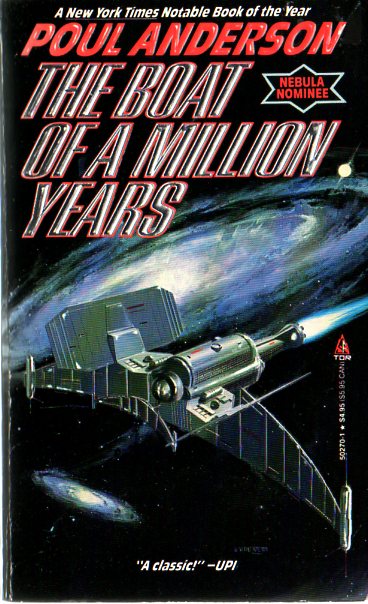
The Boat of a Million Years by Poul Anderson

Prentice Alvin by Orson Scott Card
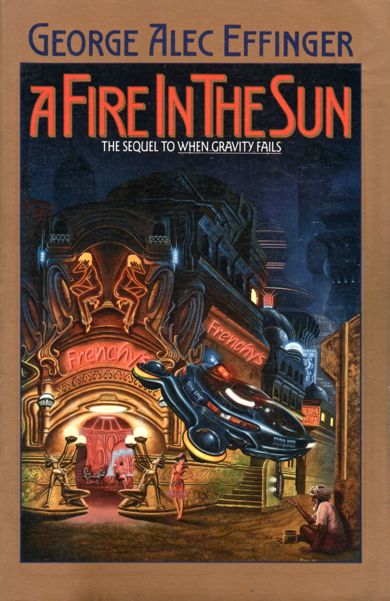
A Fire in the Sun by George Alec Effinger
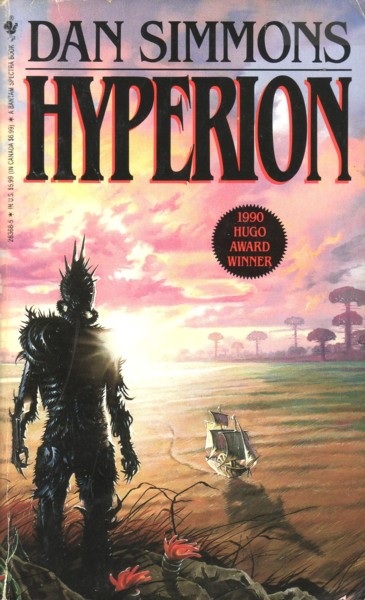
Hyperion by Dan Simmons

Grass by Sheri S. Tepper

The Actual Results

  1. Hyperion by Dan Simmons
  2. A Fire in the Sun by George Alec Effinger
  3. Prentice Alvin by Orson Scott Card
  4. The Boat of a Million Years by Poul Anderson
  5. Grass by Sheri S. Tepper

How I Would Vote Now

  1. Hyperion by Dan Simmons
  2. No Award
  3. Prentice Alvin by Orson Scott Card
  4. The Boat of a Million Years by Poul Anderson

Explanation

Hyperion is, in my opinion, the best novel to ever win a Hugo Award. Absolute top S tier, no question. IMHO, the top three Hugo award-winning novels are Hyperion by Dan Simmons, Ender’s Game by Orson Scott Card, and Dune by Frank Herbert, in that order. Dune is probably the most perfect science fiction novel ever written, but Hyperion and Ender’s Game surpass it because even though they have some minor flaws, there was something about them that I connected with on a deep emotional and intellectual level, more than almost any other book.

For Hyperion, that was the story about the father whose daughter is chosen by the Shrike to age backwards, so that with each new day, she gets younger, losing a day’s worth of memories and becoming progressively dependent on her parents. That part of the book just absolutely wrecked me. After weeping profusely for about an hour, I went onto Amazon and bought all the other books in the series, because I absolutely had to know what happened to this guy. Just incredible. Very few books have made me feel anything so deeply and profoundly as that.

As for the other books on this year’s ballot, I wasn’t too impressed with them. But two of them I’d be willing to vote affirmatively for, though I’d still rank them below No Award. I enjoyed the first two books of Orson Scott Card’s Alvin Maker series, and would probably enjoy the third book, but I refuse to read it until he finishes the damned series. Seriously—I was four years old when the first book was published, and he still hasn’t finished the damned series! What the heck?

Poul Anderson writes the kind of sprawling galactic space opera that is right up my wheelhouse, but for some odd reason, I have never been able to finish anything he’s written. I’m not sure why. Either he spends way too much time exploring or describing some aspect of his world that utterly does not interest me, or he glosses over the parts that are crucial to understand in order to make sense, and for whatever reason I just can’t make sense of them. Also, his characters are all very forgettable. I tried The Boat of a Million Years, and found it to be less bad than his earlier books, but I still couldn’t follow it. So I’ve come to the conclusion that Poul Anderson is just one of those authors I’m going to have to skip.

The last two books I rejected after my AI assistant Orion screened them for me. According to the AI, both of them have lots of explicit content (sex, language, violence) and woke themes.

Here is what Orion said about A Fire in the Sun:

🔞 Explicit Content

  • Violence & Body Horror
    • Graphic and brutal: victims sometimes brutally gutted, including dismembered prostitutes and child victims .
    • Prison-style brutality and organized crime violence permeate the story.
  • Language
    • Widespread use of profanity—especially the F-word—fits the harsh, noirish setting .
  • Sexual Content
    • Includes depictions of prostitution and sexual violence; explicit sexual content is not graphic, but the tone is decidedly adult and uncompromising .
    • Body modifications include gender-swapping and personality modules, adding mature and cyberpunk themes.

Social Themes & “Woke” Elements

  • Identity & Selfhood
    • Use of “moddies” and “daddies” to modify gender, mood, or skills raises themes around engineered identity and societal roles.

Sorry (not sorry), but I am not going to read a book that has explicit violence against children and characters who change gender. Either one of those things is enough to make me DNF, but combined together with all of the other explicit sex and language makes me never want to touch this book, or this author.

And here is what Orion said about Grass:

“Woke” Elements: Tepper’s work often explores feminist themes, and Grass is no exception. The novel critiques patriarchy, religious dogmatism, and humanity’s environmental exploitation. These themes align with progressive ideals and are deeply woven into the narrative. Tepper’s exploration of gender roles and societal hierarchies may be considered overt, depending on the reader’s perspective.

“Patriarchy,” “feminism,” “environmental explotation,” “religious dogmatism,” “gender goles,” “social heirarchies…” hey, I just got a bingo! So yeah, I’m not gonna read that one—or at least, you’re gonna have to make a really solid case in order to change my mind.

How I Would Vote Now: 1959 Hugo Awards (Best Novel)

The Nominees

The Enemy Stars by Poul Anderson

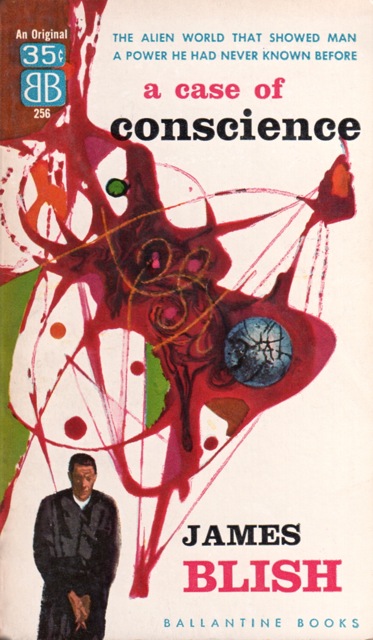
A Case of Conscience by James Blish

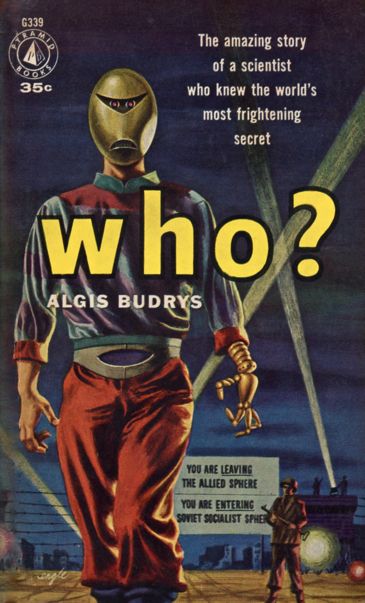
Who? by Algis Budrys

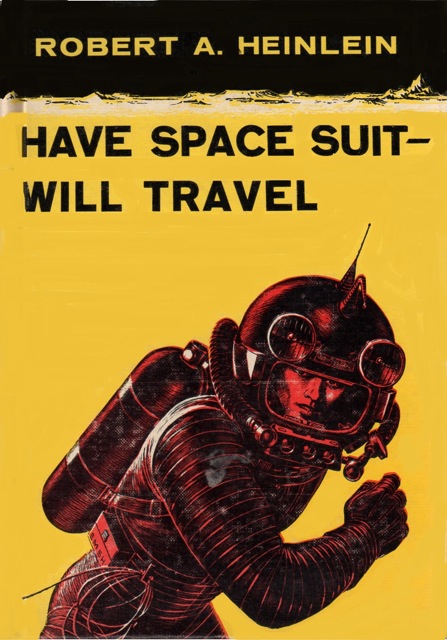
Have Space Suit Will Travel by Robert A. Heinlein

Immortality, Inc. by Robert Sheckley

The Actual Results

  1. A Case of Conscience by James Blish
  • Have Space Suit Will Travel by Robert A. Heinlein
  • Immortality, Inc. by Robert Sheckley
  • The Enemy Stars by Poul Anderson
  • Who? by Algis Budrys

How I Would Have Voted

  1. Immortality, Inc. by Robert Sheckley
  2. Have Space Suit Will Travel by Robert A. Heinlein

Explanation

Immortality, Inc. is the first book I’ve read by Robert Sheckley, and while it’s definitely dated, I enjoyed it quite a bit. The premise was fun and interesting, and the writing was fast-paced with a healthy dose of suspense. As for the stuff that felt dated, I actually think that added to the book’s charm, making it feel like a throwback to an earlier (if not quite innocent) time. I’ve often felt like if I’d had a choice in the time in which I’d been born, I would have chosen to be born about a hundred years ago, so I do occasionally like a good throwback to golden age sci fi. I’m definitely interested in reading more Robert Sheckley.

While I’ve enjoyed Algis Budrys in the past, I found it difficult to get into Who? though not due to any fault of the book or the author. The basic premise of the book is that a spy has returned from enemy custody, but he’s recieved so many prosthetics (including a prosthetic head and brain) that he’s practically a machine now, to the point where his handlers can’t tell if he’s the actual spy or someone trying to impersonate him. Back in the 1950s, the premise made sense, but that was before we knew about DNA, which renders the whole thing obsolete since a small blood sample and a DNA test would resolve the main conflict right away. I just couldn’t get over that, and the story itself didn’t really hook me, so I gave up midway through. Perhaps I should try it again, though.

The Enemy Stars was another Poul Anderson book that I just couldn’t get into. The characters weren’t quite as flat as in some of his other books, but they all still tended to blend together, and by about page 50 I still couldn’t tell what the main conflict of the story was. I love sprawling space operas just as much as the next sci fi reader, but the book has to have a plot, too. Less worldbuilding and more actual story, please.

Have Space Suit Will Travel was okay, but I didn’t really love it, and if I hadn’t picked up the audiobook, I probably would have DNFed it. It’s a book for young readers that feels like a book for young readers—in other words, a book that seems to talk down to the reader more than was necessary. It did have a lot of golden-age, 50’s era charm, and I enjoyed the world and the characters. Heinlein can definitely write a fun story. But with all that said, I don’t think this is one of his best—in fact, I wouldn’t even say it’s one of his best juveniles.

It’s been a while since I read A Case of Conscience, but I think the main reason I DNFed it had to do with its Malthusian premise and treatment of religion. Basically, it’s about a Catholic priest who is also an interstellar explorer, and how he wrestles with the question of whether a certain race of intelligent alien beings has souls. One of the aliens comes back to Earth and is instrumental in the complete collapse of society, which somehow ties into the philosophical questions, but that part wasn’t very clear to me. The story was very dry and cerebral, and I was never really sold on the central premise. Also, the religious character felt like he was obviously written by someone who isn’t religious (though I suppose I could be wrong about that—after all, I’m not a Catholic). But perhaps that was just me.

In short, while I wouldn’t say this was one of the best years for the Hugo, it had some good books, and none of the ones that made the ballot were particularly objectionable. With that said, though, I don’t think any of them stand the test of time.

How I Would Vote Now: 1974 Hugo Awards (Best Novel)

The Nominees

The People of the Wind by Poul Anderson

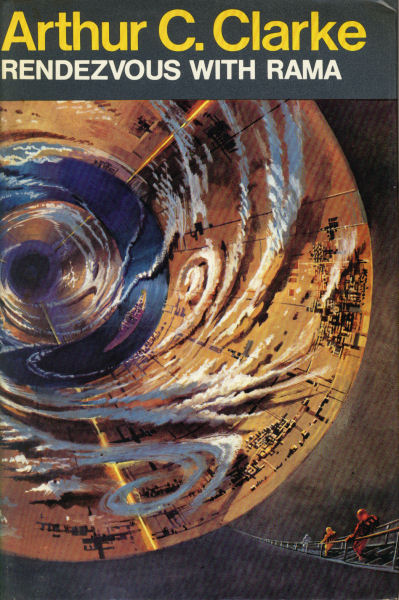
Rendezvous with Rama by Arthur C. Clarke

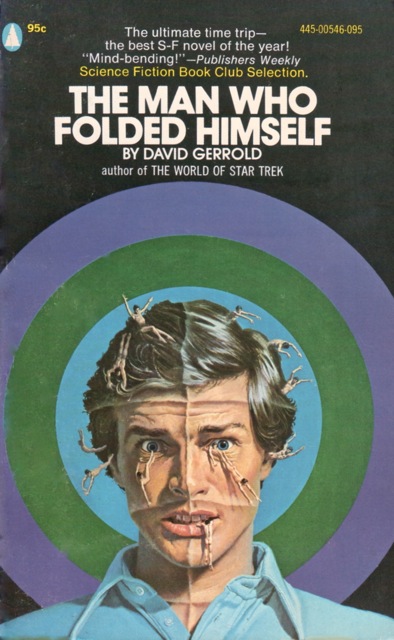
The Man Who Folded Himself by David Gerrold

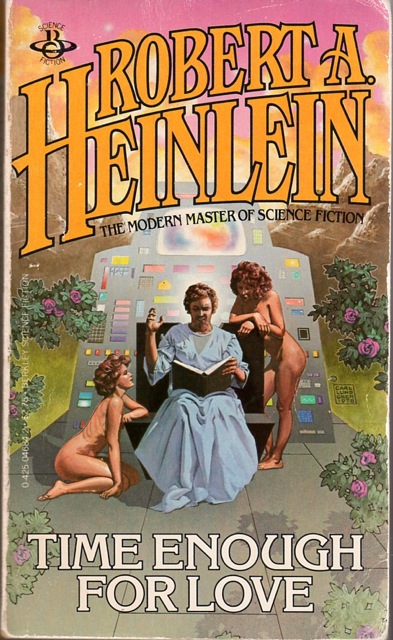
Time Enough for Love by Robert A. Heinlein

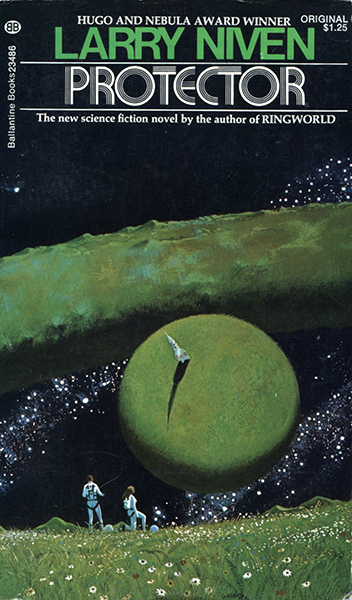
Protector by Larry Niven

The Actual Results

  1. Rendezvous with Rama by Arthur C. Clarke
  2. Time Enough for Love by Robert A. Heinlein
  3. Protector by Larry Niven
  • The Man Who Folded Himself by David Gerrold
  • The People of the Wind by Poul Anderson

How I Would Have Voted

  1. Protector by Larry Niven
  2. No Award
  3. Rendezvous with Rama by Arthur C. Clarke
  4. The People of the Wind by Poul Anderson

Explanation

I really enjoyed Protector. It was a great sci-fi space opera novel, with interesting characters, fun worldbuilding, an intriguing premise, a deep sense of wonder, lots of suspense, and some really unexpected twists and turns. It was also a very good hard SF novel, where the rigorous scientific accuracy actually drove the story and made it even stronger. That can be a very difficult thing to pull off, since in the hands of an unskilled author, the harder the science fiction elements become, the more dry and cerebral the story tends to become as well, but Larry Niven is a very skilled author and he pulled it off quite well in this one. In particular, the long-distance space battle that covered the last hundred pages or so had me thrilled right through to the end.

In contrast, Rendezvous with Rama was the kind of hard SF that tends to bore me. There was nothing wrong or objectionable about the story, but it was kind of slow, and didn’t build up very much suspense, aside from the central premise, which was basically “ooh, an abandoned alien starship—and we get to go inside!” I should probably try to read it again, though, because Arthur C. Clarke is definitely not an unskilled author, and Rama is one of the classics.

Poul Anderson, though… I don’t know what it is, but reading his books is like trying to walk through a brick wall. The parts that I have the most questions about, he doesn’t explain at all, and the aspects of his stories that I care about the last (particularly the worldbuilding elements) he explains in soporific detail. His characters all feel like wooden marionettes, and whenever they move, they seem off or contorted in some way, doing and saying things in ways that I would least expect.

Maybe it’s just me, but I’m beginning to think that Poul Anderson just isn’t a very good writer, and his success was mostly due to the good fortune he had to be writing in a time when any book with a rocketship on the cover was guaranteed to be snapped up by hungry science fiction fans. I’ll try a couple more times to read him, but at this point I’m just about ready to give up on this author.

I did not even try to read Time Enough for Love. I’ve been burned enough by Heinlein to know that anything of his that 1) is longer than his juveniles, or 2) has a half-naked (or in this case, fully naked) woman on the cover is guaranteed to turn me off. Time Enough for Love fails both of those counts, so it got a hard skip.

I know that a lot of people love Heinlein, especially the kind of science fiction reader who otherwise aligns with my own reading tastes. But my own experience with Heinlein is all over the map: some of his books, like Farnham’s Freehold and Citizen of the Galaxy, I absolutely loved, and even count as major influences on my own writing. Others, however, like Stranger in a Strange Land and The Moon is a Harsh Mistress, I just couldn’t stand at all. With some, like Double Star, I was glued to the page all the way through, while others, like Have Space Suit, Will Travel, never really hooked me at all (if I weren’t listening to that one on audio, I don’t think I ever would have finished it). So at this point, I’ve more or less decided to limit my reading of Heinlein to his juveniles, unless it comes with a strong recommendation.

Which brings me to The Man Who Folded Himself, which is one of the most disgusting Hugo-nominated books I have ever DNFed, and the main reason why I put No Award on the ballot for this year. A better title would be The Man Who Fucked Himself, since that is both more memorable and more accurate to the story. It starts out as a delightful little time travel novel, but soon turns into a homo- / mono-erotic sexual fantasy. I quit just before the money shot, but I am 100% convinced that Gerrold is a pederast, if not an outright pedophile. Disgusting!

In fact, I had such a horrible experience with The Man Who F***ed Himself that I have started a ChatGPT thread specifically for the purpose of screening these Hugo-nominated books for woke and explicit content. If ChatGPT gives me a synopsis that doesn’t pass my smell test, I’m going to pre-emptively skip it, since I don’t want to expose myself to anything like The Man Who F***ed Himself again. Any book that I skip in this way will get ranked below No Award, and I’ll include ChatGPT’s synopsis in the review.

On the plus side, that probably means I’ll get through this How I Would Vote Now blog series a lot faster.

Retro sci-fi cover fails

Back a few years ago when indie publishing was a new thing, I remember there was a blog that would take the worst self-published covers and make fun of them. It was a popular site for a while, though a lot of the indies whose covers were shamed didn’t think it was all that fun.

Thing is, it’s not just self-published books that have horrible covers. In fact, some of the worst covers probably came out of traditional publishing, partially because tradpub has simply been around longer, and partially because in tradpub, cover design is often done by a committee, as opposed to just one guy. And while it’s true that some people have a unique talent for creating some truly hideous art, the IQ of a committe is the lowest common denominator of all of its members, and if one of them happens to have that talent, God bless the poor author who got stuck with that cover art.

If you go back 50-60 years, you can find some truly hideous covers, especially in science fiction. Such as:

Ah, Farnham’s Freehold. Such an awesome book—one of my all-time favorite Heinlein novels—but such a terrible, terrible cover. What is that? A giant egg with some Salvador Dali clocks, and Polynesian war chief holding court in the lobby of the hotel from The Shining? Also, why is everything a hideous tint of fuchsia? And of course, you’ve gotta have a random 60s chick in a summer dress (though to be fair, that might be one of the actual characters).

But the thing that really gets me is how dark everything is. Seriously, if you pick this book up in a used bookstore, it’s usually so faded and time-weathered that you can barely make out any of the details at all. That was certainly true of the copy that I read, back when I was working delivery for the BYU Bookstore and snatching a couple of pages here and there between drops. Good memories, seriously.

Believe it or not, this actually isn’t the worst cover of this book. I’m so glad I picked up a copy with this cover, because the cover of the Baen edition gives away the ending! It’s not even subtle about it, either! The Baen edition features the sign to the entrance of Farnham’s Freehold at the end, and it’s totally full of spoilers for the whole book. Seriously, what kind of an idiot thought that was a good idea? See my comment about the IQ of committees up above.

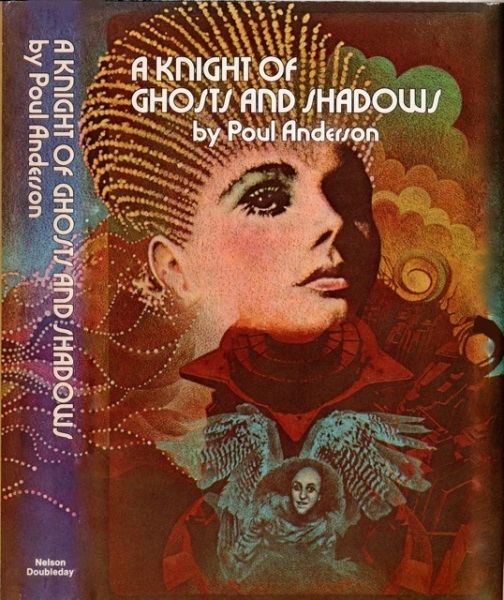
I recently picked up A Knight of Ghosts and Shadows by Poul Anderson from the library and DNFed it: too much opera, not enough space. But the cover… it takes the meaning of “hideous” to an entirely new level. In fact, this was the cover that gave me the idea of writing this blog post.

So what have we got here? There’s a psychadelic 70s chick with some hair that makes her look like Princess Leia’s grandmother, and a creepy little goblin dude in a spacesuit with random owl wings, who looks like he wants to peep on her. Also, some weird sci-fi cityscape in the background, I guess? It’s difficult to tell, because elsewhere the background looks like one of my Mom’s first-grade art projects. And of course, if that didn’t make it dated enough, you’ve got the funky 70s typography that died along with disco.

I picked up this book because 1. it was a Poul Anderson book that was at my local library, and 2. it made the Locus recommended reading list for 1975 without being nominated for the Hugo or the Nebula. Many of the other covers are surprisingly NSFW, because apparently Princess Leia’s grandmother is a futuristic sex slave—and yet, I found even the parts with her in it to be surprisingly dull. Like I said, too much opera, not enough space.

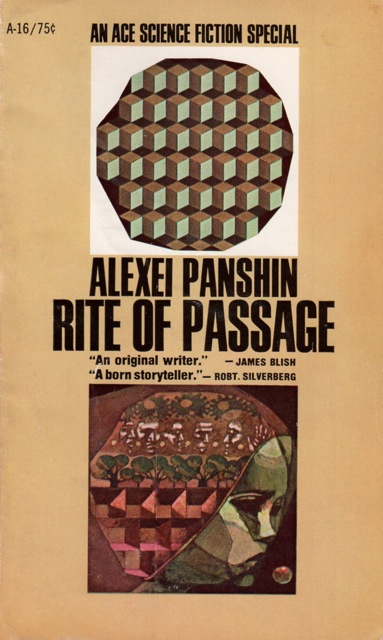
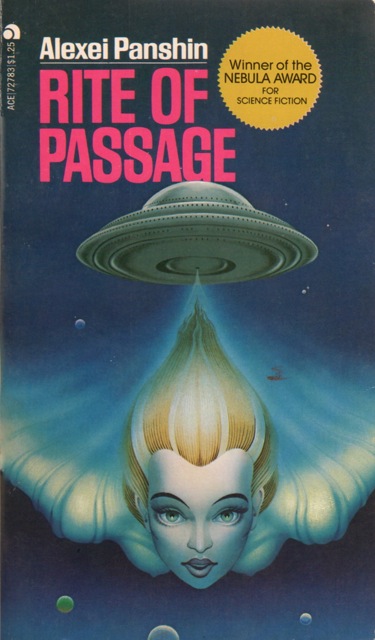
Speaking of mildly NSFW book covers that make reading in public super awkward, here is the cover of the copy of Rite of Passage by Alexei Panshin that was at the BYU Library, of all places. It’s not the cover above: I was going to post it, then thought better because it’s uncomfortably pornographic—especially when you consider that the main character is a minor. Yech. When my wife saw it, she said: “that’s a weird looking spaceship… oh wait, that’s not a spaceship!”

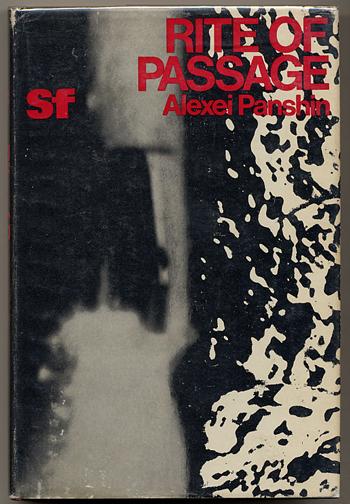
But even more hideous than that one (though perhaps not as terrible as this one), the cover above makes me think of nothing so much as the fact that communism ruins everything. Seriously, this cover has all the charm and aesthetic appeal of a Kruschev-era Soviet housing project in Eastern Ukraine, or maybe a ruined bus stop somewhere in the Kazakh steppes.

Seriously, when I lived in Georgia (the country, not the state), we would see old public art pieces from the communist era all over the place, in the soul-destroying style of socialist realism. This particular cover brings back a lot of memories of the Tbilisi subway. Which isn’t too surprising, because from reading this book, I’m pretty sure that Panshin was a socialist. In fact, it was right around this time that the entire science fiction genre swung super hard to the left, and with a few notable exceptions (David Weber, John Ringo, Larry Correia), it’s never really swung back.

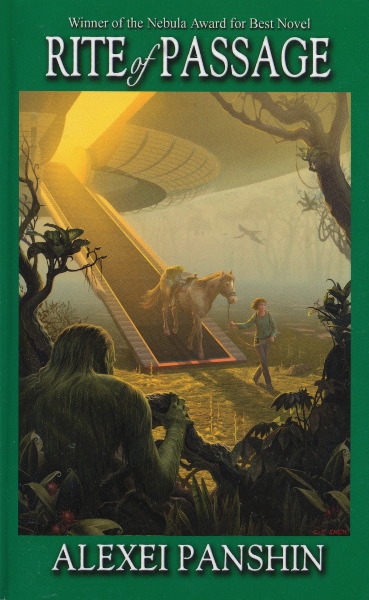
…and looking at Alexei Panshin’s Wikipedia entry, it appears that he passed away less than a month ago. RIP. Fortunately, he got at least one good cover for Rite of Passage before he died.

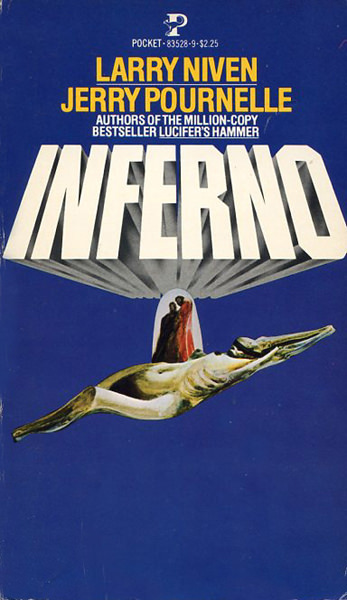
My wife recently read Inferno by Larry Niven and Jerry Pournelle, and she really enjoyed it. Based on her recommendation, I picked up a copy (not this one, thank goodness!) and I’m reading it now. It’s pretty good, but what the heck is going on with this cover? Seriously, it’s like someone puked up a mummy on the blue screen of death from Windows XP, except without any text. And what’s with the two monks standing on the mummy’s belly? Like, who saw the preliminary sketches of this cover art and thought “yup, that’s going to attract the right kind of reader and sell a bunch of books.” Thankfully, the book sold reall well in spite of this cover, not because of it.

So much for retro cover fails. What are some of your personal favorites that still stand out after all these years?