If there’s one thing that the events of the weekend have proven, it’s that time machines aren’t going to be invented for at least another few hundred years. Because if time travelers from our immediate future were in our midst, I have no doubt that either Hillary or Trump (or both, Godwilling!) would have been assassinated by now.
Of course, it could just be that things are going to collapse so hard that it wouldn’t make a difference which one of them became president, but whatever. No sense in being overly optimistic.
Last week was a total wash after the motorcycle accident, but I’m slowly getting back into the saddle. I’ve got the comments back from my first readers for Gunslinger to the Stars, so that’s the WIP I’m picking up next. Deadline for draft 2.0 is October 29, but I may be able to get it done sooner than that. Hell, I may even get it done this week.
Publishing it is another question. Finances are tight, and it’s been a bad year for sales, so I’m not sure when I’ll be able to produce a quality book. Right now, I’m shooting for an April release date. That may actually be a good thing, though as it gives me time to write and release a few tie-in short stories. But regardless, it’s going to come out early next year.
Between now and then, I’ll probably release a couple of short stories and story collections. The shorts are selling better than I expected, and they make great giveaways for InstaFreebie and my mailing list. I’ve still got a bunch of stories on submission, but some of them are coming off soon, and others (like the tie-ins I want to write) would probably do better as direct to publish anyways.
As far as other WIPs go, my next big project is The Sword Keeper2.0. I want to do a solid clean-up pass before I hand it off to my first readers, which shouldn’t take more than a couple of weeks. It is my first epic fantasy novel, though, so it’s probably going to need a lot of work before I can publish it.
Next one up after that is Edenfall. There’s been a lot of interest in that one from readers of Genesis Earth, so I think it’s time (after so many years) to finish the trilogy.
I have plans for Sons of the Starfarers, but those will have to go on hold for a while as I work on these other projects. I’ll probably write the last four books in a big sprint and publish them all within a month of each other. No idea when, but hopefully before the end of next year.
That pretty much does it. I’ll leave you with some words of Hungarian optimism that showed up in my YouTube feed today:
If you told the average person that you believed with near 100% certainty that intelligent alien life exists in the universe, they would consider you crazy. Yet the truth is that our universe is so incredibly vast, so full of Earthlike planets, that the odds that intelligent life only emerged here are low enough to be indistinguishable from zero.
Yet the near-certainty of intelligent life is, to most people, an unthinkable truth. It’s something that many people, perhaps even our entire society, just cannot accept.
Our world is full of unthinkable truths. Indeed, our society is built upon them. We can find examples of them in our taboos and social mores, or in the unspoken things that everyone “just knows.” In order for civilization to function properly, there are certain things we must all agree on, such as the idea that all men are created equal, or that we all have certain rights. It’s easier and more efficient to just program people not to accept some ideas than it is to encourage them to examine everything, and hope that truth prevails.
For Americans, one of our most unthinkable truths is the idea that our constitutional rights and freedoms are fragile, and can all be taken away. Those of us who were born in this country don’t realize that the United States is, in many ways, an aberration. We take it for granted that the world around us will continue the way it always has, and that our nation will endure. Anything else is unthinkable.
But how many nations have endured? How many republics have survived the crucible of history? Rome barely lasted a thousand years, and the republic was dead long before the empire reached its greatest glory. The Middle East is full of the bones of dead empires, from the Hittites and Babylonians to the British and the French. Even the most powerful dynasties ultimately fall into ruin, and the periods of relative freedom are the exception in history, rather than the rule.
I got into an argument on Facebook (yes, I’m back on Facebook, though I haven’t decided whether to stay back permanently) where the other person said, quite unironically:
We live in an Era in which our rights are secured by the free dissemination of information; not through the ability to send rounds down range… the fact that you can type those words is proof enough that [you don’t need an AR-15].
As a student of history, this argument strikes me as obscenely absurd. There are numerous countries in the world today that have access to “the free dissemination of information” via the internet just as we do, but are horribly repressive even by historical standards. In China, for example, political prisoners are held in concentration camps and harvested for organs. In Syria and Iraq, ISIS burns people in cages and carries off young non-Muslim girls as sex slaves. In Canada and Europe, you can be imprisoned or fined for merely saying things on social media that the government deems “right-wing.”
The mere existence of Liberty does not guarantee its preservation. The only way that any people have ever remained free is by cultivating a culture of self-sufficiency. Without the right to bear arms, self-sufficiency is impossible, because it forces people to depend on the government for their own self-defense and preservation of their Liberty.
I’ve blogged before about why I need a gun. This post is largely a continuation of those thoughts. It’s unthinkable to us here in the United States that our country may one day fall, but if history is our teacher then that fall is inevitable. It may not come for another thousand years, but it may also come within the next ten.
When the colonies began their war for independence in 1775, they had no formal army, but depended on civilian irregulars or “minutemen.” In a similar way, the American Insurgency was made up of ordinary citizens, self-taught and self-trained, who had prepared themselves for the coming conflict and were ready to take up arms at a minute’s notice.
To truly understand the roots of the insurgency, one must first understand the cultural differences between the coastal regions and the interior. In the early 21st century, the West Coast and the Northeast Corridor were so different from the South, Midwest, and Intermountain West as to almost be separate countries. Profound differences existed not only in politics, but in religiosity, cuisine, hospitality, family ties, the education system, economic organization, and popular culture.
The interior regions tended to be much more religious than the coasts. They tended to place more importance on traditional family structures. While the interior regions possessed many large and important cities, they tended to be more rural and thus more old-fashioned. People tended to vote more conservative than liberal, even in many of the larger cities. People also tended to be more self-reliant, and were much more likely to own guns.
Prior to the military purges of 2025, most of the United States military came from the South. This region had seceded from the union in 1861 during the first civil war, and a deep sense of Confederate pride and heritage continued to exist even 150 years later. Among these, the most independently minded state was Texas, where many people considered themselves Texans as much as Americans.
The Intermountain West, originally colonized by Mormon pioneers, still possessed a strong pioneer heritage and culture. The Mormons had spread throughout the entire country by this time, but the greatest concentrations were found in Utah, Wyoming, and Idaho. With its strong beliefs in self-reliance, emergency preparedness, and the divinely inspired nature of the American Constitution, the Mormon religious community would play a key role in the coming insurgency.
The Little Collapse of 2008 (or Great Recession as it was called at the time) led to a surge in popular interest for emergency preparedness. This “prepper” subculture especially thrived in the interior regions of the country, which were not as hard-hit as the coasts but were much more independently minded. As a part of this subculture, many people bought firearms and trained in their use, so as to protect themselves and their families.
The Obama years saw a great deal of social upheaval, which the preppers believed to be the beginnings of a general social collapse. This did a lot to fuel the movement. However, it was not the gradual collapse of American society that prompted the greatest alarm, but Obama’s policies.
In 2012, a mentally ill young man named Adam Lanza killed his mother and assaulted a local elementary school with an AR-15 style rifle. This tragedy, known as the Sandy Hook shooting after the name of the school, sparked a national uproar.
The gun control movement at this time was deeply entrenched in both the West Coast and the Northeast Corridor. They immediately exploited the shooting for political purposes, setting a pattern that would be followed in numerous mass shootings to follow. In spite of the fact that Sandy Hook was likely targeted because it was a gun-free zone, calls for “common sense gun legislation,” or in other words a government confiscation of all civilian firearms, began to be openly heard.
Few things polarized the country in the Obama years more than the gun control movement post-Sandy Hook. Fearing a mandatory gun buyback program (which would later be implemented in 2026), Americans bought guns in record numbers. Meanwhile, the gun control movement openly called for a national gun ban, further fueling the counter movement.
“Molon Labe” was the response traditionally issued by the Greeks when the Persians demanded that they surrender their weapons at Thermopylae. Roughly translated at “Come and take them!” this now became the watchword for the pro-gun counter movement. For the first time in modern memory, the prospect of an armed insurrection against Washington was openly discussed.
The first clashes with the federal government occurred in Nevada and Oregon, over a dispute between the Bureau of Land Management and the Bundy family. While most Americans did not support the Bundys, and the standoffs were resolved with relatively little violence, the incidents demonstrated that armed citizens could stand up to federal authorities and force them to compromise or capitulate.
By the time Hillary Clinton was elected president in 2016, a strong pro-gun movement had taken hold in the interior regions of the United States, with an understanding that it might become necessary to defend their rights by force. However, the movement was not formally organized and had no leaders. It was more of a response to the political climate, rather than a movement that actively worked to shape it.
Clinton largely continued most of Obama’s policies, which led to more mass shootings, more homegrown terrorist attacks, more race riots, and more polarization within the gun debate. During this time, leaders began to emerge who would later play a pivotal role in the organization of the American Insurgency.
Among these was a Provo, Utah resident named Scott Bascom. A self-employed contractor and science fiction writer, Scott was one of the first people to foresee the coming civil war. He was remarkably charismatic, even before the war, though by most traditional measures of wealth or status he was completely ordinary.
As the Republican Party disintegrated in the run-up to the 2020 elections, it became increasingly obvious that Clinton would face no serious challenge in her bid for re-election. Her presidency was characterized by the worst corruption since the Gilded Age, with foreign governments openly buying favors. The US Military, sworn to protect the Constitution, began to take steps for a coup.
This ultimately proved unnecessary, as Clinton was impeached shortly after her re-election in 2021. President Kaine was a milquetoast leader who made some concessions to Libertarians and Constitutionalists. However, at the Democratic National Convention of 2024, a dark horse candidate named James Ward seized the nomination in a contested convention and immediately began to consolidate his power.
He uncovered the coup plot and used it as a pretext to sack the military leadership, installing party loyalists in positions of command. He also began to aggressively enforce federal laws that conflicted with state laws, often pitting federal authorities against state authorities. In the memorable Dewey case, he deployed the National Guard to break up a homeschooling ring in Alabama. This led to an armed confrontation, in which the federal troops prevailed.
Perhaps more than any other incident since Sandy Hook, this incited the pro-gun movement to take action and make preparations for war. But there would be very little time to prepare, as in the following year, the Steward vs. California Supreme Court case paved the way for the gun control movement’s endgame. President Ward implemented a mandatory federal gun buyback program at once, hoping to stem the conflict by forcing immediate action.
But the roots of the American Insurgency ran deeper than he’d realized.
The sequence of events that made the American Insurgency inevitable had its roots in a political shift that had occured more than a century earlier. It began with the Progressive Era, barely a generation after the first civil war, dovetailed into the New Deal, and culminated with the near complete subversion of the United States.
It is worth taking a moment to review the founding documents and constitutional principles of the United States, to show how far the country had strayed from them in the decades leading up to the American Insurgency.
In 1776, the Declaration of Independence established the philosophical foundation of the US Constitution; namely, the principle of natural rights and the social contract:
That to secure these rights, Governments are instituted among Men, deriving their just powers from the consent of the governed, That whenever any Form of Government becomes destructive of these ends, it is the Right of the People to alter or to abolish it, and to institute new Government, laying its foundation on such principles and organizing its powers in such form, as to them shall seem most likely to effect their Safety and Happiness.
This established the principle that rights are not bestowed by the State, but are held in reserve by the people. The purpose of the State is not to bestow favors or priviledges, but to preserve those rights and liberties which the people naturally possess.
The most important of these were enumerated in 1789 by the Bill of Rights, which were:
The right to free speech and freedom of religion.
The right to bear arms.
The right from quartering soldiers.
The right from unreasonable search and seizure.
The right to due process.
The right to a speedy and public trial.
The right to a trial by jury.
The right from cruel and unusual punishment.
The right to retain all other rights not explictly enumerated.
The right to retain all powers not explicitly granted to the federal government.
Together with the Constitution of 1788, these documents established a limited government, charged not with providing for the “common good” but protecting the individual rights and liberties of the people.
A century later, during the Progressive Era, this began to shift dramatically. Unlike the Founding Fathers, the 19th century Progressives saw government as a vehicle for achieving social reform. The concept of social engineering, so anathema to the constitutional principles of limited government, was gradually introduced until it became commonplace. Congress passed numerous laws that overreached their Constitutional mandate, and a Supreme Court dominated by Progressives upheld them. This incremental gutting of the Constitution laid the groundwork for the massive expansion of federal power under President Franklin Delano Roosevelt.
Today, FDR is largely regarded as one of the worst presidents in the history of the United States. In the years leading up to the American Insurgency, however, he was regarded as one of the best. The entitlement programs of FDR and his immediate successors had not yet failed, though the writing was on the wall, and the national debt, while skyrocketing to dangerous heights, had not yet driven the nation to bankruptcy.
It is difficult for us, looking back with the benefit of hindsight, to conceive how the people living at this time could not see the writing on the wall. While some of the more forward looking ones certainly did, the vast majority simply assumed that the broken system would continue to plod along as it always had.
However, it was not only a broken system that brought the country to its knees, but the secret combinations of power that sought to exploit it.
It is impossible to accurately document all of the players who were actively working to subvert the United States in the late 20th and early 21st centuries. We may never know whether it was a monolithic effort by a single global organization, or a loose ideological confederation of various political factions. However, we do know that there was a subversion effort of some kind, because the effects of it are measurable and well documented.
The subversion process, as described by Soviet defector Yuri Bezmenov, has four stages:
During the Cold War, the KGB actively funded or provided support to several left-leaning political groups in order to push the United States through these processes. The Soviet Union collapsed before the subversion was complete, but the process continued well into the 21st century until the crisis which caused the American Insurgency.
The purpose of demoralization is to effect a generational shift in basic moral values, laying the foundation for the disintegration of society. This was achieved through the social upheaval known at the time as the “culture wars.”
In the 1950s, divorce was rare, abortion was unheard of, most children were raised by their biological mother and a father, and religious practice was a major aspect of public life. By the 2010s, none of these were true. A lot of this was due to changes in government, which made divorce and abortion common and easy, incentivized single mothers on welfare to have more children, incentivized young couples to cohabit instead of getting married, and forced religious institutions to either adopt practices that ran contrary to their moral teachings or to retreat from the public sphere. In other areas, such as education, employment, law enforcement, and the media, similar trends can be documented that underscore a massive shift in social values.
The demoralization of the United States was more or less complete by the early 2000s. The destabilization process was already underway, but it accelerated dramatically under President Obama during the 2010s. During this stage, the society being subverted is pushed into violent confrontation with itself in order to foment a crisis. The race riots in Ferguson, Missouri marked a dramatic shift in race relations, ultimately leading to violence against the police. As law and order broke down, crime increased dramatically, especially in minority communities. Violence also became normal at political rallies and university events.
Historians disagree as to whether Hillary Clinton was supposed to merely further the destabilization of the country or bring it though crisis to the final stage of normalization. However, they almost universally agree that she was a major player in the subversion of the United States. Donald Trump, her Republican opponent in the 2016 election (the last year in which the Repulican Party would be a force in national politics), was probably also propelled to power by the secret combinations working to subvert the country, though most historians believe he was merely exploited by them, and not an active conspirator.
It is a testament to the resilience of the American system of government that the country did not collapse under Hillary Clinton’s presidency. However, her far-left policies pushed the United States past the point of no return. Before she was impeached and thrown from office in 2021, the Constitution was largely a figurehead document, exerting little force on the underlying political philosophy of the federal government.
The first and fifth amendments were largely dismantled in the aftermath of the college protest movement in the mid 2010s. The fourth amendment was rendered toothless by mass surveillance by the NSA, upheld by Clinton’s Supreme Court. The ninth and tenth amendments had been ignored for decades, and were effectively buried by Clinton’s sweeping economic policies following the Great Collapse in 2017.
The second amendment was the last thread by which the Constitution hung, and when President Ward attempted to annul it in 2026, the result was war.
The American Insurgency officially broke out in 2026, as a direct result of Steward vs. The State of California which effectively nullified the 2nd amendment. However, the conflict was rooted in the politics of the previous decade, and the economic realities of the Great Collapse.
Following the election of 2016, the Republican Party split into various regional factions and ceased to be a force in American politics. None of the third parties then extant were able to pick up enough Republican dissenters to challenge the Democrats on the national stage. As a result, the 2018 elections handed the Democrats control of the House and Senate, as well as the White House.
The Great Collapse began in late 2016 / early 2017, when Germany and France fell into recession. The migrant crisis in Europe had reached the high water mark, which along with the ongoing Eurozone crisis propelled several right-wing, Euroskeptic parties into power. Referendums in Poland, Hungary, the Netherlands, Greece, and the Czech Republic all resulted in decisions to exit the EU, leading effectively to the dissolution of the union.
Following Vladimir Putin’s mysterious disappearance in April 2018, the Russian Federation collapsed and Russia ceased to exist as a single contiguous country. NATO attempted to safeguard Russia’s nuclear weapons arsenal and oversee a transitional government, but failed as the Russian oblasts either refused to recognize the authority of the Kremlin or were annexed by neighboring states. Poland and the V4 countries formed a competing alliance system for eastern Europe, and the various western European countries gradually withdrew support from NATO as they rebuilt their own national militaries.
As a result of these events, the entire Eurasian continent fell into economic collapse. Insurrections in the Chinese mainland forced the PRC to withdraw from global affairs as the country gradually imploded. Foreign investors lost a tremendous amount of capital. Stock markets across the globe plummeted, the Euro was disbanded, and regional wars broke out in the Balkans, the Caucasus, the Levant, and the South China Sea.
The immediate effect of all this was to drive foreign capital to the United States, which was not nearly as leveraged as the Eurasian countries and therefore in a much better economic position. However, the debt to GDP ratio of the United States was already over 100%, and US dollar’s days as the reserve currency of the world were numbered.
But in the short-term, the United States experienced a brief period of economic relief as the rest of the world collapsed. This boosted President Clinton’s popularity and enabled the Democrats to sweep the 2018 elections.
As soon as the Democrats had control of congress and the white house, they pushed a deeply partisan agenda. Abortion laws across the states were nullified by federal law. The federal minimum wage was raised first to $15, then to $20 as the dollar began to plummet. The welfare rolls expanded massively. Hate speech laws were passed that banned any discussion of abstinence in public schools, and mandatory consent classes began as early as grade 5. Christian churches were forced to perform gay marriages, and the movement to decriminalize pedophilia gained significant legal traction.
President Clinton was impeached and thrown out of office in 2021, but the damage had already been done. The Supreme Court was stacked with left-leaning activist judges, who overturned previous limits on federal powers and reinterpreted the US Constitution in ways that effectively nullified it. The rule of law had already broken down with the FBI’s failure to prosecute Clinton in 2016, but new court decisions effectively paved the way for the President to exercise dictatorial powers.
When the Supreme Court ruled in 2026 that the 2nd amendment was not to be construed as an individual right to bear arms, Washington immediately instituted a national mandatory gun buy-back program. Conservatives and libertarians decided they had had enough.
If you had lived in Germany before the Nazis came to power and a time traveler had told you how history would play out, what would you have done about it?
The nation was reeling from a massive economic depression after a decade of war exhaustion. In this troubled time, a charismatic democratic socialist ran on a platform promising to share the wealth of the top 1% (the Jews) with the rest of the nation. Violent protesters routinely disrupted his opponents’ political rallies. People in general were fed up with the political system and were eager for a change.
Obviously, there isn’t a 1:1 parallel between 1930s Germany and 2010s United States. But let’s take a quick look at some of the policies that the Nazis successfully championed:
Nationalized healthcare
Centralized education
Taxpayer subsidized abortion
Government mass surveillance
Arbitrary limits on free speech
And finally:
Abolition of private gun ownership
Can you see the chilling parallels between what the Nazis did and the agenda that the Left has been pushing for the last eight years?
Right now, the United States is reeling from the deadliest mass shooting in our nation’s history. The perpetrator was a domestic terrorist who pledged allegiance to ISIS, just like the last mass shooting which happened in San Bernardino. But instead of focusing on the radical Islamic ideology that motivated these shootings, the national discourse is focused on gun control.
This is patently ridiculous.
When a teenager commits suicide because of online bullying, is the solution to censor the internet?
When people spread lies and false rumors on social media, is the solution to place general restrictions on the use of social media?
When a battered wife is stabbed to death with a kitchen knife, do we call for regulations on the length and sharpness of all kitchen knives?
When large numbers of people die in car accidents, do we enforce a ban on “high-capacity” cars that can drive faster than 45 mph?
Better yet, do we allow car owners to sue the manufacturer if they ever get into an accident? Correct me if I’m wrong, but that wasn’t in the terms of the last government bail out.
We’ve had this debate over gun control many times before. Whenever we have a mass shooting in this country, the bodies of the victims are not yet cold before all of the old arguments on both sides are trotted out. So let’s go to the moment when the emotions were hottest, in 2012 after the tragic shooting at Sandy Hook Elementary:
In an interview with Dave Rubin, Ben Shapiro later said that Piers Morgan had actually brought one of the kids from Sandy Hook onto the set to come on in the second segment of the show. The kid was in a wheelchair, and Piers was going to use him as political prop to make a cheap appeal to emotion. Of course, after Ben called him out for standing on the graves of children, Piers’s whole debate strategy fell apart.
This is my response, which is currently the top comment on YouTube:
“Do you genuinely believe that your own government is going to turn on you in a way that you require an AR-15 to challenge them?”
Holy flying fuck, Piers Morgan. Do you have no self-awareness at all? You are talking to a Jew, Piers. A JEW. As in, one of those people who were systematically exterminated by a tyrannical regime called the Democratic Soc—sorry, the NATIONAL Socialist German Worker’s Party. Also known as the Nazis, Piers. The Nazis.
You are familiar with the Nazis, are you not, Piers? You know: the smartly dressed German guys with the swastika flags who bombed your homeland relentlessly for 3+ months back in 1940. If I remember my history correctly, you fought something of a war with them, did you not? Or are you as bad at history as you are at US constitutional law?
People like you are the reason I need an AR-15, Piers. Crybullies like you in the mainstream media who stand on the graves of children as they browbeat the rest of us into giving up our rights and liberty, all in the name of leftist ideology.
And you know what, Piers? When I do get an AR-15, I’m going to name it in your honor. I’m dead serious, Piers. I’m going to etch your name right on the barrel. I’ll keep it right next to François, my Mossberg shotgun (which I named in honor of another anti-gun wanker).
And you know what sound it’s gonna make when I fire it, Piers? That “ratatatat” when I pull the trigger?
That’s the sound of Liberty.
Here is why you need a gun:
When the founding fathers drafted the Constitution, they envisioned a political system unlike any other in existence at the time—one where the government exists only by the consent of the governed. This, they rightly believed, was the way to ensure Liberty.
In order for the system to work, however, the people had to be able to live without fear of the State. In other words, the government had to fear the people instead of the other way around.
The Declaration of Independence had already set the precedent that it was the right of the people to overthrow their government if it ever became tyrannical. The only way for that to happen was for the people to have the right to bear arms.
This is why the second amendment is the second amendment, not the ninth or the sixteenth or the twenty-eighth. It’s also why the second amendment never specified what kinds of arms should be allowed. The idea that founders’ original intent was to restrict gun ownership to muskets is patently ridiculous:
In my experience, people who favor stricter gun control laws generally fall into one of two camps: those who are simply afraid of guns, and those who want to vastly expand the powers of the State.
The first camp of people are generally well-meaning, if a little bit sheltered. Most of them have probably never owned or fired a gun of any kind. Their arguments for stricter gun control tend to be rooted in emotion. When a mass shooting happens, they feel like they need to do something to prevent this kind of massacre from ever happening again.
Unfortunately, these people have been spoon-fed lies from the second camp, which wants to disarm the general public NOT to reduce gun violence, but to vastly expand the powers of the state.
These people are fundamentally opposed to the idea of a government that exists only by the consent of the governed. They want to tear down the Constitution because it prevents them from using the power of the State to advance their political agenda. The principle of Liberty is a roadblock to them, and they want to abolish at every turn, not only with the second amendment, but the first, the fourth, the ninth, etc.
One of their main arguments is that there is no place in this country for private ownership of “assault rifles.” The argument is that these are “weapons of war,” and that therefore they have no place in civilian life.
To someone who has never owned or fired a gun, this is a pretty convincing argument. The term “assault rifle” is never clearly defined, but it effectively conjures up all the fears of guns and gun violence that many of these people have. To push the envelope even further, gun control advocates always associate “assault rifle” with AR-15, the most popular rifle in the United States.
The AR-15 is a de-clawed version of the M-16, which (unlike the AR-15) is fully automatic. That means that with an AR-15, you only get one bullet for every time you pull the trigger. AR-15s are most often chambered in .223/556, a round that is smaller in diameter than the most common handgun rounds. The reason it’s a popular weapons system is because it’s the Mr. Potato-head of guns: you can swap out basically all of the moving parts, or build one from scratch. No matter your needs (hunting, home defense, recreation, competition), you can adjust an AR-15 to meet them.
It’s actually not a scary gun at all, if you know how to use it properly. And judging from how many of them are circulating in the market, responsible gun ownership is the rule, not the exception.
Is the AR-15 a “weapon of war,” though? It can be if you want it to be. That’s kind of the point. Remember, one of the reasons for the second amendment was to enable the people to stand up against a tyrannical government. Without the right to bear arms—broadly defined—you cannot have Liberty.
This is where we get back to the Nazis. There is a reason why totalitarian governments always ban private gun ownership before they commit their worst atrocities. In the words of Mao Zedong, “political power grows out of the barrel of a gun.” When the guns are in the hands of the people, the people have political power and influence over their government. When they lose their guns, they lose that power.
But Joe, do you really fear an American holocaust? Do you genuinely fear that your government is going to turn on you in a way that you require an AR-15 to challenge them?
Yes, I do.
We tend to have this idea that the Holocaust was a historical aberration, a nasty horrible thing that never happened before and has never happened since. That simply is not true. Systematic interment and murder by tyrannical governments is actually the norm throughout history. The only thing that made the Holocaust any different was German efficiency.
Look at the sack of Carthage by the Romans. Look at the destruction of Baghdad by the Mongols. Look at all five times that Jerusalem was destroyed. In our modern era, look at the excesses of the French Revolution, the genocide of the Armenians, the British concentration camps in South Africa—indeed, look at the concentration camps IN THE UNITED STATES that were set up by FDR. Even before that, we had our own horrors like the Indian Removal Act and the Cherokee Trail of Tears.
And lest you think the world learned its lesson after Auschwitz and Dachau, read up on the Soviet Gulag and Chinese organ harvesting of political prisoners. There is a reason why the wait time for a kidney transplant in China is so ridiculously low.
The flipside of the coin of liberty is responsibility. In order for a people to be free, they need to take the responsibility of governing themselves. Part of that responsibility is learning how to defend yourself, not only from criminals, but from an overreaching, tyrannical government.
That is why you need a gun: because there is no Liberty without the means to defend it. That is also why I bought my first gun this past week (François) and why I’m building an AR-15 (Piers). Whenever there is a systematic effort to take away your fundamental rights, it becomes your duty to exercise those rights before they get taken away.
It has been more than a week since I’ve posted here, which is a bit surprising. Then again, I did decide to take a short break from writing, which pushed blogging a little further down the priority tree. The much higher priority has been finishing my friend’s basement before his wife has a baby next week (they’re inducing labor on the 14th). Twelve-hour workday sure are brutal.
In any event, I’ve been reflecting a lot on the craziness of politics these days, and the role of social media in that craziness. Without getting too deep into Trump vs. Clinton vs. Bernie, it seems sometimes that the supporters for each candidate are living in entirely different worlds.
Perhaps that’s because they are.
According to Pew Research, three out of five Americans get their news from social networking sites, with one out of five getting their news from social media often. For Reddit, Facebook, and Twitter, the majority of users get their news from the site.
Do Twitter and Facebook have a right to be politically partisan? Yes. They are private businesses, and as such should be allowed to participate in politics just like any other business (of course there are issues when they lie about being politically agnostic, but that’s a different issue).
The problem is that people have come to rely on social media so much that it completely warps the reality that they live in.
Every online community is, to a greater or lesser extent, an echo chamber that amplifies the viewpoints that the members tend to agree on and suppresses the viewpoints where most of the members disagree. This is why we have Godwin’s Law: because intellectual laziness is easy when everyone thinks you’re right. As online communities grow, the culture becomes even more self-sorting, developing complex narratives to reaffirm and reinforce the rightness of the group.
Essentially, humans are tribal, and the trend is for online communities to be more tribal, not less. Social media accelerates this trend by enabling users to fine-tune their tribes, blocking out any uncomfortable or dissenting viewpoints and creating a “safe space” where the user’s core beliefs are continually reinforced.
When people spend more time with their carefully curated online tribes than they do with people in the real world, the online reality becomes their reality. Instead of facing uncomfortable truths about the way the world actually works, they craft their own worlds where they don’t have to be responsible for their own actions, and their beliefs are always correct, even when they’re based on a failed ideology.
(As a side note, this is why gaslighting is such a big thing nowadays: it’s the art of crafting someone else’s online reality, without them realizing what’s happening. It’s a tactic that we see very often in today’s online politic debates.)
So what happens when one of these social media junkies comes out of their online echo chambers?
Whatever your position on LGBTQ issues, you have to admit that Steven Crowder absolutely destroyed Zack Ford in that debate. It wasn’t even close. The Twitter warrior was woefully unprepared to answer even the most basic criticisms of his underlying assumptions, and seemed frankly shocked that those assumptions were under debate.
This is what happens when you live in a virtual world. When you can simply block or unfollow any viewpoint that’s inconvenient to your preferred narrative, then the narrative becomes your only truth, no matter how false it actually is.
In its extreme form, it’s just as scary as the worst propaganda of the 20th century. In fact, it’s even more scary, because we’re doing it to ourselves.
I feel like I’ve got a unique perspective on this issue because, for most of the last year, I’ve been living without social media. I deleted my Facebook back in 2014, and disengaged from Twitter back in March.
(Since then, I have gone back to Facebook in a limited way, only because there’s a particular church group where the only way to keep up with events is to be part of the Facebook group. But I’ve only friended family and close friends and liked only a couple of political pages, and even then, I’ve felt the pull. When I’m no longer a part of this church group, I will delete my Facebook again and leave the site for good.)
Life is a lot different without social media. It’s a lot less stressful, a lot more satisfying. I get out more. I have deeper and more meaningful conversations with my friends. I no longer feel like I’m perpetually caught up in imbecilic arguments with twats and idiots. I feel a lot more free to pursue constructive things, like my writing.
At the same time, it really does feel sometimes that I went to sleep ten years ago and woke up in a different world. It’s like everyone else is crazy, and I’m the only sane one (until I discovered Ben Shapiro). I’m not sure how much of that has to do with leaving social media, since I only did that recently. Perhaps it was only by leaving social media that I realized how much everything outside of that echo chamber had changed.
I’m actually a lot happier without social media than I was with it. At the same time, I feel a lot less connected with what’s going on in my country right now. But is that only an illusion? Is it kind of like how you always feel like your writing sucks just as it starts to get better?
Whatever the case, I do know that if I were more active on social media, I would definitely be the guy that offends everyone with my political views, including a lot of potential readers. I suppose I could roll with it like Larry Correia, but I’m not quite passionate enough about politics to make that my shtick.
Though with the way things are shaping up politically, I may do a fisking or two on my blog. On that note, I’ll leave you with Ben Shapiro bringing some sanity to the news cycle:
The first thing most people think of is the zombie apocalypse. Which makes sense, considering how popular zombie stories are. The signs of collapse are clear and present, with no room for ambiguity. The world has come to an end, and the only thing left is to pick up an improvised weapon and fight.
In the real world, though, collapses are almost never so black and white.
When the housing market collapsed in 2008 and brought down the global economy with it, I was in college. With panicked capital looking desperately for a place to go, gas prices spiked to over $4 a gallon during the height of the summer. Then, as credit markets completely fell apart, retailers were forced to sell at rock-bottom prices just to keep their cash flow problems from driving them into bankruptcy.
So what did that look like? For me, an extremely expensive road trip back out to Utah, followed by a spending spree. I bought a really nice corduroy sports jacket for $15, and thought “hey, I could live with this recession.” Two years later, I was singing a very different tune.
In any collapse, people’s experience of the collapse varies wildly. Take the Euro crisis, for example. A couple of years ago, the Germans I chatted with online dismissed any claim that the EU was on the verge of falling apart. Now, the UK is holding a referendum on exiting the union, and no one really knows which way it’s going to go. Germany has not (yet) experienced the kind of depression-level unemployment that many of the southern countries have. To the middle-class government worker in Athens who lost all their savings in the recession and hasn’t been getting a paycheck for years, the German narrative of Greek laziness as the root cause of the crisis does not conform to reality.
When Ernest Hemmingway was asked how he went bankrupt, his answer was “gradually, then suddenly.” The same can be said of most collapses.
But there are different kinds of collapses. There are total collapses, such as the USSR where the entire national system just completely fell apart. Then there are more segmented collapses, where different parts of the country (Detroit) or sectors of the economy (banking, housing, construction) fall apart, leaving the rest weakened but still standing. Then you have all the stuff that happens on the level of individuals and families, such as bankruptcy.
Each level feeds into the next. If enough regions or sectors go down, it can bring down the whole system with it. Likewise, if the disintegration of families becomes too widespread, every other aspect of society falls apart. We see this right now in a lot of Black communities right now. Police brutality is certainly a problem, but it is a symptom and not a cause.
Very rarely does a super-virus come out of nowhere and turn everyone into zombies. The collapse happens gradually, then suddenly. People who know what they’re looking for can see it coming a long ways away. Everyone else clings to their false and misleading narratives (“the housing market can only go up!” “the rich should pay their fair share!” “Black lives matter!”) because the message is comfortable and doesn’t require them to change.
That is why self-sufficiency is so important, especially for us writers. We cannot afford to be comfortable. We cannot afford not to change. Perhaps there was a time, way before indie publishing, when writers could just sit back and write pretty words all day, but I doubt it. The industry today is changing so quickly that it’s easy to be left behind.
Every career writer will experience a crisis where they will be forced to reinvent themselves or face the utter collapse of their career. That’s according to Dean Wesley Smith and Kristine Katherine Rush, who have been around long enough that I believe them on this point. If you know that your career is going to collapse at some point, shouldn’t you do all that you can to prepare for it? And if you’re already preparing for a personal collapse, why not take the extra step and prepare for something larger?
Personally, I think that the collapse is already upon us. I’m not yet sure what kind it is, or how total it will be, but I do think that when we look back, we will see the Great Recession as a prelude to the main event. Right now, it is easy to ignore or dismiss because no one’s experience of the collapse is the same. We are all like the seven blind mice arguing about the elephant, whether it is a fan, or a pillar, or a rope, or a spear. That’s what makes this period so dangerous: the fact that there’s no shared experience yet. It creates the kind of environment where false and enticing narratives can thrive.
Will we reverse course and take the steps necessary to reverse the collapse? I’m not optimistic. Ever since the Great Recession, our policies have focused on putting off the pain as long as possible rather than fixing the root causes of our social and economic problems. At this point, I doubt that this nation has the political will to endure the pain necessary to fix our problems. In other words, we’re caught in a vicious cycle, and it would take an extraordinary event (like a war) to break us out of it. That, or hitting rock bottom.
But even if something extraordinary did happen, and we avoided the collapse to enter a new era of peace and prosperity, I would still strive to develop the skills and habits of self-sufficiency. Why? Because not all collapses look like the zombie apocalypse. Sometimes, the collapse is so small that no one experiences it except for you.
No matter the variety of collapse, the best way to be prepared is to be self-sufficient. Independence is the ability to take care of yourself when everything else you depend on fails. For that reason, a true indie writer is also a self-sufficient writer.
There is no meaningful difference between Clinton and Trump.
Both are narcissists.
Both are habitual liars.
Both are corrupt.
Both have a tendency to blame others for their failures instead of taking responsibility for their own actions.
Both treat the people underneath them poorly or with outright contempt.
Both think they are above the law, and seek to use the law to put down those who stand in their way.
Both are masters of saying what their audience wants to hear without saying anything of actual substance.
Both have flip-flopped 180 degrees on major national issues.
Both want to accelerate the same fiscal irresponsibility that got us into the Great Recession and prolonged it for so long.
Both are perfectly willing to order the military to do things that violate their sacred oath to defend the Constitution.
Both believe in an authoritarian government that violates constitutional principles and the basic rule of law.
I cannot, in good conscience, vote for either of them.
My greatest political fear is that our Republic is about to be overthrown and transformed into an Empire. We have a system of checks and balances to prevent that from taking place, but that system has been steadily eroded ever since the New Deal (or arguably the Civil War).
Eight years of economic stagnation have created a tremendous amount of restlessness. Looking at global trends, it seems that things are going to get worse before they get better. Historically, this type of chronic restlessness tends to lead to war, as leaders seek to either deflect it toward an outside enemy or channel it for their ruthless ambitions.
And both Clinton and Trump are nothing if not ruthless.
Everything old is new again. The authoritarian ideologies of the 20th century have resurrected and taken on new forms. Every day, I hear echoes of the deadly drumbeats on social media and the news.
Fascism is back. Communism is back. The 21st century equivalent of bookburning is taking place on campuses across the nation. The class warfare that started with the Occupy movement has taken on some decidedly racial undertones. If we’re following history’s playbook, a strong leader will soon emerge, promising security and prosperity at the cost of liberty.
Both Clinton and Trump promise to be that strong leader.
There’s a long tradition of doomsday predictions among political commentators in this country. At the risk of sounding paranoid, I’d like to chime in with some of my own. After all, just because you’re paranoid doesn’t mean that everyone isn’t out to get you.
First, the gobal economy is about to suffer a massive downturn. China, Russia, the Eurozone crisis—it’s all headed toward collapse. The US will come out on top, but only because we won’t fall as hard as everyone else. We’re still going to take a fall.
Healthcare in this country will continue to be broken and unaffordable for the next four years. Best case scenario, Obamacare collapses and the gridlock in Washington prevents us from replacing it with anything else. Worst case scenario, socialized medicine stiffles innovation, costs and inefficiences skyrocket, and committees are formed to decide who lives and who dies, just like every other nationalized healthcare system.
The originalists on the Supreme Court will be replaced with activist judges who will dismantle the checks and balances of the Constitution, causing it to hang by a thread. Frankly, this is the thing that scares me the most. It’s already starting to happen with the controversy surrounding Scalia’s replacement, and he won’t be the only Supreme Court justice who passes in the next four years. This will be the ultimate legacy of whoever wins the presidency in 2016.
The world is about to get a lot less safe for Americans abroad. It’s already a lot more unsafe after eight years of Obama, but it’s about to get worse. The chaos in the Middle East will spread. Terrorist attacks will accelerate, both abroad and at home. The wars and rumors of wars will increase.
There are a number of unlikely but plausible scenarios I’ve been mulling over. The most frightening of these involves a second American civil war, in the form of an insurgency, and the true nightmare begins when the UN sends a peacekeeping mission into this country much like Lebanon or the Balkans. Like I said, I don’t consider it likely. But it’s just plausible enough that it would make an excellent novel—the kind that later generations laud as being written before its time.
In short, I predict another four years of economic stagnation, fiscal irresponsibility in Washington, cronyism, corruption, and collapse. If America becomes “great” again, it will only be the Empire at the expense of the Republic.
So what am I doing about it?
Stocking up on food storage. Growing a garden. Learning how to be a responsible gun owner. Striving to be as independent and self-sufficient as possible.
And you can bet that all of this is influencing my writing. There’s a war of ideas that’s raging right now, one that may influence the ultimate outcome of our era more than any elected official. As a writer, I see it as my responsibility to play a role in that battle, not through message fiction per say but through stories that reflect truth. I have no idea if any of my stories will be as influential as 1984 or Les Miserables, but I intend to write them as if they could be.
It appears we’ve been cursed to live in interesting times. Let us rise to the occasion and write timeless and interesting stories.
So my last blog post about the Sad Puppies has turned into a kerfluffle of its own, which has been very interesting to watch as it unfolds. Mike Glyer of File 770 linked to it, Lou Antonelli’s File 666 picked it up, and Steve Davidson of Amazing Stories wrote a lengthy response to it, which I think is deserving of a response on my part.
Mr. Davidson’s post is interesting, and worth reading. We obviously don’t see eye to eye on a number of things, but it would be rather petty to go through our disagreements line by line. Instead, the part that I want to respond to is his call to action at the end:
Want to reconcile? Here’s what puppies must do.
1: Stop scamming the system. If you want to recommend works that you think are worthy of the award, go ahead and do so. But drop the political agenda (you’re dragons are imaginary) and eliminate the hateful, snarky commentary
If you’re looking for “hateful, snarky commentary,” I’m sure that you’ll be able to find it. On the fringes of both sides, there are a lot of people with blogs and strong opinions. I’d count myself as one of them—while I align with the Sad Puppies, I’m not a leader or organizer by any stretch, just another guy with opinions and a blog. Don’t be so quick to look for ammunition, because there’s a lot of it lying around.
Kate Paulk, one of the Sad Puppy organizers, has pointed out that Sad Puppies 4 is open to nomination suggestions from anyone, which appears to be what you’re calling for. And honestly, I think a lot of us don’t want to see conservative writers edge out everyone else so much as to see them go head to head with more liberal writers on a more equal playing field. It’s not about slaying imaginary dragons so much as breaking down walls.
So on this first point, Mr. Davidson and I tend to be in agreement. This seems like a reasonable step for reconciliation, and it’s one that the Sad Puppies 4 already appear to be taking.
2: Stop attacking the very people who are offering you a bridge
If a bridge is being offered, I’m willing to take it. If people are just trying to get the last word in edgewise, which was the vibe I personally got from Mr. Martin’s original post, then it will probably just lead to more kerfluffles. Then again, if everyone’s fighting to get in the last word, the squabbling will never end, and while that may make for good sport, it makes for poor reconciliation. So again, fair point.
3: Please learn a little bit about the history of Worldcon and the Hugo Awards
I’m not entirely convinced that the Hugo Awards will continue to hold the same influential place in fandom in the next few years. Even with last year’s massive turnout, there were less than 6,000 ballots cast. With those low numbers, it wouldn’t take much for a rival convention to organize their own awards and eclipse the Hugos in short order—especially if a large contingent of fandom becomes disaffected.
This is why I think it’s important to distinguish between the Sad Puppies and the Rabid Puppies. A useful analogy can be drawn from Star Control II: The Ur-Quan Masters:
These are the Ur-Quan Kzer-Za. They want to make the galaxy safe by enslaving all intelligent life, either by encasing their home worlds in impenetrable slave shields, or by enlisting them as Heirarchy battle thralls to conquer and enslave other species.
These are the Ur-Quan Kohr-Ah. They want to make the galaxy safe by “cleansing,” or exterminating, all intelligent life. They are totally without mercy and cannot be pacified.
The Kzer-Za and Kohr-Ah are locked in a civil war over control of the Sa-Matra, an ancient precursor weapon that will enable the victor to conquer the galaxy. If you don’t find a way to stop them in time, then the Kohr-Ah will win the civil war and use the Sa-Matra to exterminate everyone.
The Sad Puppies are like the Kzer-Za, the Rabid Puppies are like the Kohr-Ah, and the Hugo Awards are like the Sa-Matra. The Rabid Puppies want to use the Hugo Awards to burn down the fan community, whereas the Sad Puppies want to reform the Hugo Awards to make Science Fiction less about political correctness and more about telling good stories.
Now, I am not a Sad Puppy spokesperson, so this may not be the most accurate or flattering analogy. Fellow puppies, please correct me if I’m wrong. But it’s worth pointing out that in the Star Control series, the Ur-Quan ultimately become pacified and join the New Alliance of Free Stars. This only happens after the Kohr-Ah have been defeated.
I think that’s what most of the Sad Puppies ultimately want: to have a place with the rest of fandom, where even if we sometimes have heated disagreements (has there ever been a time when all of fandom was in agreement about anything?), we aren’t cast out as “racists,” “Nazis,” or “misogynists,” as happened with Puppygate 2015.
The Rabid Puppies, on the other hand, just want to watch the world burn. And the more vociferous the rhetoric becomes, the more that it plays into their hands. Speaking as a Sad Puppy sympathizer who watched the 2015 Hugos from the sidelines, after all the abuse that I saw my friends receive, it kind of made me want to burn down the Hugos too.
You want to defeat the Rabids? Then reach out to the Sad Puppies, find commonalities with us, and make an alliance. If we can show the world that Science Fiction and Fantasy brings us all together in spite of our ideological differences, then all of fandom will win.
And so regarding Mr. Davidson’s third point, I don’t think it’s about respecting the prestige of the awards so much as listening to and understanding the other side of fandom. And I’ll admit, I can do a better job listening to the side of fandom that sees the puppies (sad or rabid) as the enemy. If they can return the favor, I think that will go a long way.
4: If you want to be counted as Fans, then be Fans. Fans who care attend Worldcon, nominate their conscience and attend the business meeting to effect change they think is needed. They work WITH and within fandom – they do not set themselves up as a cabal that engages in fear and hate.
If that’s a challenge to be more involved in the Hugo Awards, then it’s one that I can accept. In 2015, I largely watched from the sidelines, and if I do the same this year then my opinion is pretty empty. I do count myself as a part of fandom, and I can respect the call to put my money where my mouth is.
I’m not entirely convinced that “no one controls [the Hugos].” Overtly, of course not, but there are indirect ways to accomplish the same thing, through whisper campaigns and the manipulation of cliques. But as Mr. Davidson points out, it’s hypocritical to criticize that without also trying to get involved. And if that’s the invitation he’s extending, I am willing to accept—no hate required.
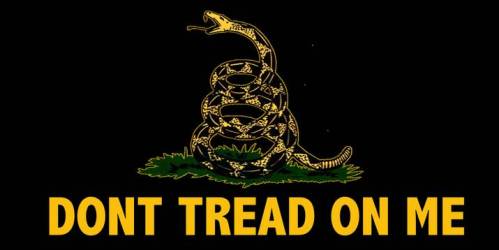 When the colonies began their war for independence in 1775, they had no formal army, but depended on civilian irregulars or “minutemen.” In a similar way, the American Insurgency was made up of ordinary citizens, self-taught and self-trained, who had prepared themselves for the coming conflict and were ready to take up arms at a minute’s notice.