How I would vote now: 2016 Hugo Award (Best Novel)

The Nominees

The Aeronaut’s Windlass by Jim Butcher

The Fifth Season by N.K. Jemisin

Ancillary Mercy by Ann Leckie

Uprooted by Naomi Novik

Seveneves by Neal Stephenson

The Actual Results

  1. The Fifth Season by N.K. Jemisin
  2. Uprooted by Naomi Novik
  3. Ancillary Mercy by Ann Leckie
  4. Seveneves by Neal Stephenson
  5. The Aeronaut’s Windlass by Jim Butcher

How I Would Have Voted

  1. The Aeronaut’s Windlass by Jim Butcher
  2. No Award
  3. Uprooted by Naomi Novik
  4. Seveneves by Neal Stephenson

Explanation

I enjoyed The Aeronaut’s Windlass. It was a fun steampunk adventure, sort of like a mashup between Horatio Hornblower and the Bioshock games. It’s also very unlike most books to be nominated for the Hugo, probably because it was nominated by the Sad Puppies. After this year, the people who run the Hugo Awards rewrote the rules to allow them to disallow “slate voting,” which was how they disqualified the majority of ballots in the 2023 Hugo Awards, including almost all of the ballots cast by Chinese fans. But guys, it’s the Puppies who were totally the racists.

All of the other books were pretty terrible, in my opinion. I’ve already written about The Fifth Season at length, so I won’t go into that rant here. I’ve also written at length about Ann Leckie’s obsession with fake transgender pronouns, and since Ancillary Mercy is basically just another book about pronouns, I won’t waste any more time on that subject.

I wanted to like Uprooted, since I loved Spinning Silver so much, but both times I tried to read it, I ended up DNFing it midway through. Partly that’s because the fantasy retelling of Beauty and the Beast was not as interesting to me, but there was also a scene where the main character and her mentor randomly started making out after casting a spell together, with a graphic description of digital penetration. The whole thing came so totally out of the blue that it threw me out of the book, and I had no desire to finish it after that.

I’m also really conflicted about Seveneves. I’m not a huge fan of Neal Stephenson generally, especially after the neon orgy scene at the end of Diamond Age, and Seveneves is loooong… like, over 800 pages long. Which would be fie, if Stephenson had the economy of words of a true master like Louis L’Amour, but Stephenson really doesn’t. Around 100 pages or so, I skipped to the last chapter and read a spoiler-filled synopsis just to see if it was worth pressing on, and I decided that it really wasn’t, because 1) it’s apparently never explained why or how the moon exploded, and 2) the Hillary Clinton analog becomes absolutely insufferable, and I really didn’t want to slog through four hundred pages of that. Seveneves has an interesting premise, but if you cut out half the words it would be a better book.
How I would vote now: 2019 Hugo Award (Best Novel)

The Nominees

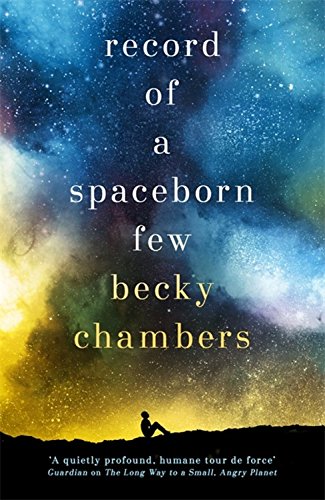
Record of a Spaceborn Few by Becky Chambers

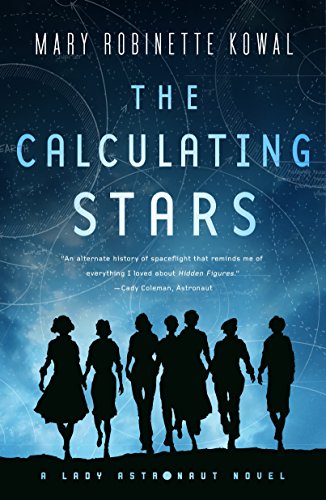
The Calculating Stars by Mary Robinette Kowal

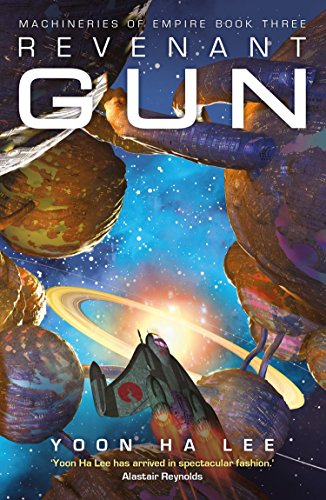
Revenant Gun by Yoon Ha Lee

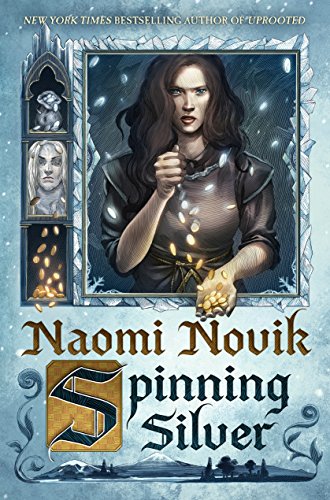
Spinning Silver by Naomi Novik

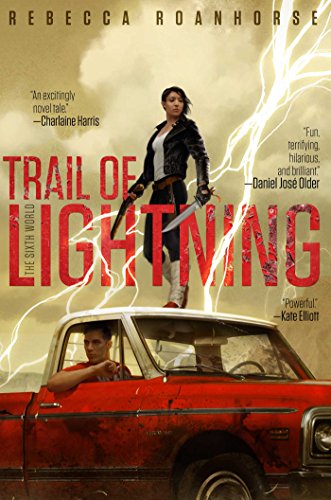
Trail of Lightning by Rebecca Roanhorse

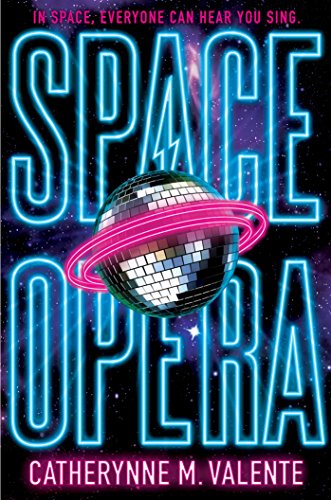
Space Opera by Catherynne M. Valente

The Actual Results

  1. The Calculating Stars by Mary Robinette Kowal
  2. Spinning Silver by Naomi Novik
  3. Record of a Spaceborn Few by Becky Chambers
  4. Trail of Lightning by Rebecca Roanhorse
  5. Revenant Gun by Yoon Ha Lee
  6. Space Opera by Catherynne M. Valente

How I Would Have Voted

  1. Spinning Silver by Naomi Novik
  2. No Award
  3. Space Opera by Catherynne M. Valente

Explanation

The Calculating Stars actually started out pretty good. Mary Robinette Kowal is a very skilled writer, and her main character in this book was both likeable and interesting—something that seems to be increasing rare in Hugo-nominated books. It also didn’t hurt that in the very first chapter, a giant meteor wiped out Washington DC and most of the eastern seaboard. But then it gradually turned into a story about the little woman who roared and her band of misfit minorities who team up to fight Captain Patriarchy, and the super-woke feminism just ruined it for me.

I didn’t read Revenant Gun or Record of a Spaceborn Few because I DNFed both series with the first book. With Yoon Ha Lee’s Machineries of Empire series, I don’t remember much, except that the first book made absolutely no sense to me, with so much meaningless violence that it bordered on the absurd. With Becky Chambers’s Wayfarers series, it started off as an interesting space opera, but the ship quickly turned into a lesbian love boat, with lots of queer and transgender aliens to boot. Wokery ensues.

As for Trail of Lightning, I honestly don’t remember much about that one, other than that it started to give me woke vibes and I didn’t really like any of the characters. I think it also played the Death is Chic and Life is Not Worth Saving trope, which I personally cannot stand. If the main character had struck me as a good and decent person, I probably would have kept reading, but so many books that suffer from wokeness also suffer from having protagonists who are just terrible human beings in general. I don’t think the two are unrelated.

The first chapter of Space Opera was laugh out loud hilarious, and I actually enjoyed it quite a lot. Valente’s gonzo humor is a lot of fun! Then… I don’t know quite how to put this, but the story just started to feel depressing, and I’m not sure why. Also, the gonzo writing style started to grate on me after a while, kind of like Chuck Wendig’s writing does for anything longer than a blog article. It wasn’t a terrible book, but I didn’t end up finishing it.

But I really loved Spinning Silver, much more than I was expecting to. I’m not generally into fairy tell retellings, but this one stirred something primal in my Slavic roots and scratched an itch I didn’t even know that I had. Besides all that, it’s just a damn good story. The villains were genuinely villainous, the peril was genuinely perilous, the good guys all had satisfying growth arcs, and the ending was a crowning moment of awesome that brought everything full circle in the best possible way. Really great book.

Reading Resolution Update: May

My 2022 reading resolution: Read or DNF every novel that has won a Hugo or a Nebula award, and acquire all the good ones.

When I first got the idea for this new year’s resolution six months ago, I was reading maybe 30-60 pages every other day, with no real goal or direction. My wife and I had already decided to change our routine so we could read in bed for an hour before going to sleep, but we weren’t very good at keeping to that routine.

I set this goal because I knew that I needed to read more books—specifically, books in my genre. So I decided: why not set my sights high and aim for the best of the best? Not that I still believe that the Hugos and Nebulas represent the best of SF&F, but at one point I did genuinely believe that, or acted as if I did, which amounts to the same thing. So why not aim to read them all?

I thought it would take a lot longer to get this far, but here it is, June already, and I’ve almost read them all. When I started, I’d read only 36 out of 110 books. I did find a few new-to-me books that were really fantastic, but most of them were books I didn’t like. However, in a weird sort of way that actually helped me to read more, because it helped me to better understand my own tastes. So when I hit a small reading slump in March-April, I was able to branch out and read some books that I did enjoy, which helped to keep the momentum strong.

Several things have helped me to read a lot more over the course of this challenge:

First, having a reading list really helped. It provided me with a long-term, measurable goal that I could use to keep track of my progress. For me, that was highly motivational.

Second, DNFing early and often, and skipping to the last chapter before marking it as DNF. Often, I would find confirmation in the last chapter that I had indeed made the right choice not to read the rest of it. This taught me to trust my own judgment and to better understand my own tastes, which reaped dividends later.

Third, learning how to read in a way that worked with my own ADHD, not against it. This helped me to turn a great weakness, which had foiled my previous resolutions to read more books, into an advantage. But it required developing a better accountability system, which brings us to…

Fourth, using a reading log to track my progress. I got this idea from my wife, who is very good with spreadsheets. I know it doesn’t work for everyone to track everything down to how many pages per day you need to read of each book you’re currently reading, but for me, it really worked. Finally…

Fifth, starting a reading journal to track my own progress and record my own thoughts and impressions about what I’m reading. This is a topic that deserves its own blog post, but I’ve been doing it for a couple of months now, and I find that it really helps me to get a lot more out of what I read, as well as motivating me to read more. Among other things, I keep track of which books I read and DNF each month, my impressions of each book after reading or DNFing it, and any quotes from what I’m reading that stand out as being particularly memorable.

At the rate that I’m going, I will probably achieve this resolution (or at least the reading part of it) before the end of June. It might take a little more time to finish the Uplift Trilogy if I don’t DNF it, but I’ll certainly have finished before the end of the year. Consequently, I’m already drawing up other reading lists for awards like the Dragons and Goodread’s Choice, but I’m still trying to figure out exactly how I want to proceed. Most likely, I will expand those lists to include nominees, but also pick and choose which ones to read.

In any case, here are all of the Hugo and Nebula award-winning books I read or DNFed in May:

Books that I read and plan to or have already aquired

  • The Speed of Dark by Elizabeth Moon (2004 Nebula)
  • Powers by Ursula K. Le Guin (2009 Nebula)
  • All Clear by Connie Willis (2011 Hugo and Nebula)
  • Blackout by Connie Willis (2011 Hugo and Nebula) (Technically I read this one in April and listed it under “Books that I read and don’t plan to acquire,” but after giving the sequel a chance I’ve decided to move it up here. Really, they should all be one book.)

Books that I read and don’t plan to acquire

  • The Terminal Experiment by Robert J. Sawyer (1996 Nebula)

Books that I did not finish

  • Timescape by Gregory Benford (1981 Nebula)
  • No Enemy but Time by Michael Bishop (1983 Nebula)
  • The Falling Woman by Pat Murphy (1988 Nebula)
  • Slow River by Nicola Griffith (1997 Nebula)
  • The Quantum Rose by Catherine Asaro (2002 Nebula)
  • Hominids by Robert J. Sawyer (2003 Hugo)
  • Paladin of Souls by Lois McMaster Bujold (2004 Hugo and 2005 Nebula)
  • Seeker by Jack McDevitt (2007 Nebula)
  • The Graveyard Book by Neil Gaiman (2009 Hugo)
  • Among Others by Jo Walton (2012 Hugo and Nebula)
  • Uprooted by Naomi Novik (2016 Nebula)

Total books remaining: 11 out of 111 (currently reading 5 and listening to 1).