The Nominees

Midnight Robber by Nalo Hopkinson

The Sky Road by Ken Macleod

A Storm of Swords by George R.R. Martin
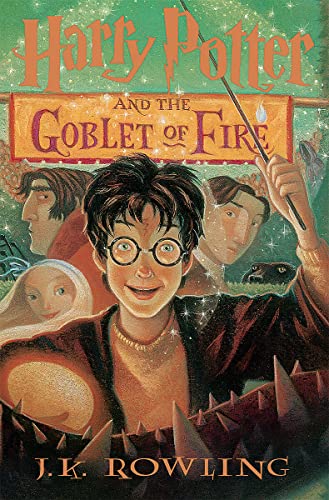
Harry Potter and the Goblet of Fire by J.K. Rowling
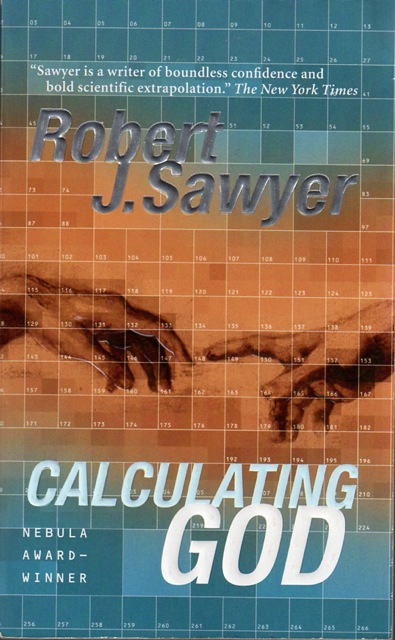
Calculating God by Robert J. Sawyer
The Actual Results
- Harry Potter and the Goblet of Fire by J.K. Rowling
- A Storm of Swords by George R.R. Martin
- Calculating God by Robert J. Sawyer
- The Sky Road by Ken Macleod
- Midnight Robber by Nalo Hopkinson
How I Would Have Voted
- Harry Potter and the Goblet of Fire by J.K. Rowling
- No Award
- Calculating God by Robert J. Sawyer
Explanation
I remember when everyone used to rave about George R.R. Martin. Many people said he was the American Tolkien, and not just because of the “R.R.” initials in his name. They said he was revolutionizing epic fantasy—that he was doing tremendous things for the genre, subverting expectations in a way that was pure genius. All of us who were writing fantasy at the time fell somewhere under his shadow.
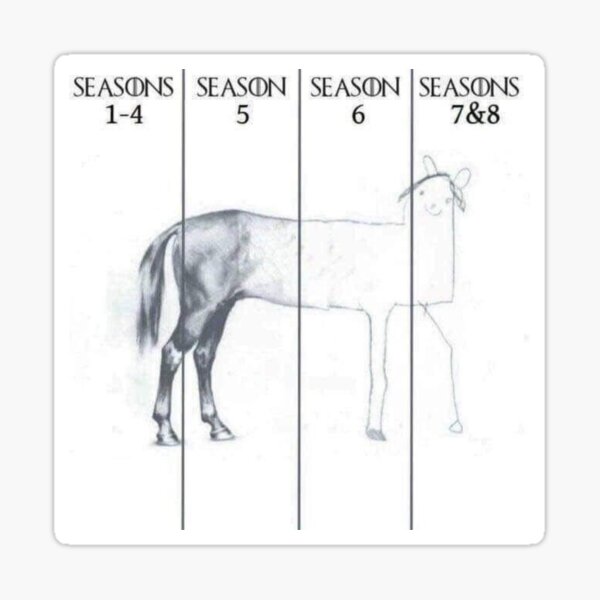
Today, I believe that few people have done more to destroy epic fantasy than George R.R. Martin. His Game of Thrones TV series, which was probably faithful to his outline for the books, ended so badly that no one talks about the show today, except to share this meme:
Larry Correia also makes an excellent point that by failing to finish his series, Martin has placed an impossible burden on up-and-coming epic fantasy authors by burning out readers on the genre. Because of Martin (and also Patrick Rothfuss), readers became unwilling to try out a new author until they had already finished their epic fantasy series. But because epic fantasies are so massive they take a long time to write, making this almost impossible for both indie and tradpub authors if the first book isn’t a commercial success.
The one upside to this vicious cycle is that it gave us my favorite fantasy meme of all time:

(So what does it say that Sanderson now sports a beard? Are we living in the shadow universe??)
But I think that Martin ruined epic fantasy much earlier than all that. In fact, I think that the worst damage he did to the genre was back when books 2 and 3 came out, because of how it normalized pornography, graphic violence, and nihilism. Because of this, I think it’s more accurate to call Martin the anti-Tolkien, because Tolkien’s secret sauce was the deep spiritual undercurrent in all of his works. And it’s because of Tolkien’s reverence for things spiritual that Lord of the Rings will probably still be read two hundred years from now, when no one remembers George R.R. Martin’s name.
Martin set out to subvert reader expectations, including the expectation that his books would exalt the good, the true, and the beautiful. At the time, epic fantasy readers were burned out on all the Tolkien clones, and were hungry for something new. Martin’s dark and gritty tone was a breath of fresh air—or so they thought. And the TV series brought in a host of new fans, most of whom came for the bare boobs and the brutal bloodsport.
But Martin’s books were fundamentally broken, and he knew it. In his eagerness to subvert expectations, he put himself in a position where he could not write a satisfying ending without denying the fundamental premise on which the whole series attempts to stand. Sargon of Akkad says it best in this video:
So in the end, it turned out that the greatest expectation Martin subverted was the expectation that he would finish the damned books. All of which is why I believe that A Storm of Swords rightfully belongs below No Award on this ballot.
A Storm of Swords wasn’t the only dark and gritty book on the ballot for this year. I screened Midnight Robber with AI, and ultimately decided to skip it. Here is what ChatGPT said:
Sexual Violence: A central plot element involves Tan-Tan being subjected to sexual abuse by a family member. This experience shapes much of her growth and her eventual rebellion against the oppressive environment. While these events are not gratuitously described, they are explicit enough to be disturbing and are critical to the narrative.
Hopkinson’s work delves into themes of colonialism, identity, and resilience. By incorporating Caribbean dialect and folklore, the novel celebrates cultural heritage and critiques systemic oppression. Tan-Tan’s transformation into the Robber Queen symbolizes empowerment and resistance against patriarchal and colonial structures.
I also decided to skip The Sky Road, partly for content issues, but mostly to avoid the leftist message fiction. Here is what ChatGPT said:
The Sky Road is probably not a good fit for you because politics is central to the story rather than merely part of the background. It spends substantial time on communist and socialist ideas, revolutionary history, ideological factions, nuclear politics, and debates about how society should be organized… On top of that, the book begins with a casual extramarital sex scene and treats the relationship without much moral concern.
I cannot stand message fiction. Not from the left, and not from the right. I recently tried to read Camp of the Saints, which lots of people on the right are now extolling because of the ongoing refugee crisis in Europe, but I DNFed it ten pages in because it’s just pure message fiction.
I really wanted to like Calculating God, because 1) Robert J. Sawyer is a genuinely good writer, and 2) the premise (that an alien scientist shows up at Earth and is surprised to find that many of us don’t believe in God, because all of the aliens certainly believe) was genuinely intriguing. But after getting about halfway through the book, it started to devolve into a cartoonish plot pitting the good guys against Creationist saboteurs. Skipping to the end, I realized that the book is devoid of all nuance: Sawyer’s answer to the creationism vs. evolutionism debate isn’t to point out that it’s a false binary, but to posit a transhumanist deism as the actual one true path. Really?
This is my issue with Sawyer: he isn’t at all comfortable with ontological ambiguity. If the Bible says that God created the world in seven days, then it must mean seven literal days, not seven temporal periods, or seven poetic divisions for literary effect, or seven stages in the temple liturgy meant to symbolically represent God’s role in the creation to the pre-literate, pre-scientific society of the ancient Hebrews, or any of the other non-literal readings of Genesis. That frankly makes him more of a creationist than me, a deeply religious and devoted believer in Christ.
This aversion to nuance and ambiguity seriously hobbles his books. I remember reading the last paragraph of The Terminal Experiment and laughing out loud when he described how the soul particle (which was the premise of the book) of the main character flew up and merged once again with God, who is really just the source of all soul particles in the universe. He obviously thought he was being profound, but he made it so literal that I felt he was trying to bash a round peg into a square hole with a sledgehammer. Frankly, the book would have been better if that last paragraph had been cut.
Calculating God wasn’t terrible, though, or an annoying woke (or anti-woke) message book, so I’d still vote for it after No Award. I just think he flubbed it.
As for Harry Potter and the Goblet of Fire, I think it’s a great fantasy book, and totally deserving of the award, as are all of the Harry Potter books. After 2001, though, I think the Hugo organizers changed the rules to exclude juvenile fiction, because they didn’t want Rowling to run away with the award every year. Which seems totally snobbish and asininene to me, but whatever. I don’t pretend to know how these things work.