How I Would Vote Now: 2014 Hugo Awards (Best Novel)

The Nominees

Warbound by Larry Correia
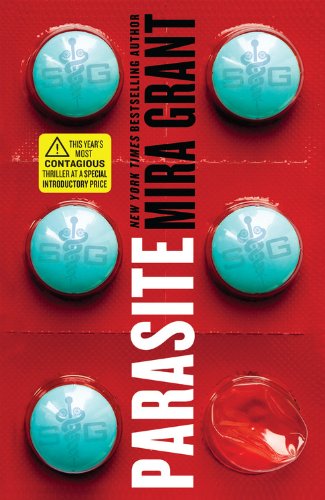
Parasite by Mira Grant

Ancillary Justice by Ann Leckie

Neptune’s Brood by Charles Stross

The Actual Results

  1. Ancillary Justice by Ann Leckie
  2. Neptune’s Brood by Charles Stross
  3. Parasite by Mira Grant
  4. Warbound by Larry Correia

How I Would Vote Now

  1. Warbound by Larry Correia
  2. No Award

Explanation

Technically, the entire Wheel of Time series was also on the ballot this year, but there is no other year in which a complete series (as opposed to the latest book in the series) was ever on the ballot. It seems really weird that they would do that just for Wheel of Time, so I’m going to act as if it never happened. Otherwise, The Wheel of Time would probably get my #2 slot, just above No Award.

I haven’t read Warbound, but I have read enough of Hard Magic, the first book in Larry Correia’s Grimnoir Chronicles, to know that I’m going to read the rest. The magic system is a lot more explicitly rules-based than much of his other stuff, but the characters are great, the story is great, the world is fascinating… it’s definitely up there with the rest of his work. Good stuff. Great writer.

Ann Leckie holds the record for the author I’ve DNFed the fastest. Ancillary Justice is the book that put her on the map. The main character is a sentient spaceship, which sounds like a pretty cool starting concept… until you realize that the most exciting thing about this spaceship is that it’s transgender, and views every other human as a “she.” Derp. The whole book is obsessed with leftist gender politics, which is why I believe that No Award is more deserving than this garbage. I predict it will not age well.

I forget why I DNFed Neptune’s Brood. I think it had to do with sex, violence, and drug use that was just too explicit for me. When I was in my 20s, I was willing to do dark and gritty, but these days I have little patience for it. I think this may have been the book that made me decide to skip Charles Stross as an author, so there must have been a lot of it.

As for Parasite, I think the main thing for that one was that I just felt no interest or connection with any of the characters. Glancing over the book, it doesn’t appear that it had any explicitly terrible content, and I vaguely remember getting bored with the story and deciding that it wasn’t worth continuing. But having read and DNFed several other works by this author, I know she has a tendency to veer into crossing my lines (such as building sexual tension between a brother and sister, or throwing in weird occult stuff, or making her main character a transgender child). And running the book through ChatGPT, it appears that the book has an undercurrent of nihilism, which I absolutely cannot stand in any fiction. Perhaps I picked up on that soon enough to DNF it early.

Of the three books from this year that I DNFed, I’d be most willing to give Parasite another try, then maybe Neptune’s Brood. But I wouldn’t be willing to read Ancillary Justice (or anything else by Ann Leckie, for that matter) unless you paid me damn well for it. And even then…

How I would vote now: 2011 Hugo Award (Best Novel)

The Nominees

Cryoburn by Lois McMaster Bujold

Feed by Mira Grant

The Hundred Thousand Kingdoms by N.K. Jemisin

The Dervish House by Ian McDonald

Blackout and All Clear by Connie Willis

The Actual Results

  1. Blackout and All Clear by Connie Willis
  2. Feed by Mira Grant
  3. Cryoburn by Lois McMaster Bujold
  4. The Hundred Thousand Kingdoms by N.K. Jemisin
  5. The Dervish House by Ian McDonald

How I Would Have Voted

  1. Blackout and All Clear by Connie Willis
  2. No Award
  3. Cryoburn by Lois McMaster Bujold
  4. The Dervish House by Ian McDonald

Explanation

2011 was the only year in which I actually attended Worldcon and voted in the Hugos. This was, of course, before the Sad Puppies and before I became totally disillusioned with the awards. I have to confess that I didn’t actually read any of the novels, though I did get the free ebooks in the voter packet and tried to read a couple of them. Mostly, I voted based on whether I recognized the author’s name, and whether or not the book descriptions appealed to me. I remember that I voted for Blackout and All Clear in the top slot, but I don’t remember how the rest of the ballot shook out.

If I had to do it again, I would still put Blackout and All Clear at the top of the ballot (which are two separate books, though they form a duology and were published in the same year, which is why they appear together). However, I ended up DNFing all of the other books, and because Feed and The Hundred Thousand Kingdoms struck me as being horrible enough to warrant a No Award vote, I couldn’t merely abstain from voting positively for any of the others.

But first, Blackout and All Clear is a delightful time travel story from Connie Willis’s Oxford University Time Travelers series. Unlike The Doomsday Book, the story is quite a lot of fun with an upbeat and hopeful ending, and unlike To Say Nothing of the Dog, the time travelers find themselves in some very real peril when their time machine breaks down. The first book was okay, but the second book was fantastic, and wrapped things up very nicely. A fun and uplifting read.

I DNFed Feed for a number of reasons, but the main reason was that I couldn’t stand the sexual innuendo between the brother and sister. Yes, I know that technically they’re supposed to be step-brother and step-sister, and yes, I know that meaningless and gratuitous sex is supposed to be a trope of zombie fiction, but still. Yuck. I could be wrong about this, but the vibe I got was that the author is addicted to pornography, and that’s just not a mind I want to spend any time with. Also, the world makes no sense: the zombie apocalypse has brought our country to a state of collapse, but 1) basic infrastructure like electricity and internet still operates without any problems, and 2) bloggers need to get a permit from the federal government in order to blog? Sorry, but I just can’t buy any of it.

I don’t remember much from The Hundred Thousand Kingdoms, since it’s been several years since I first tried to read it, but I think the main reason I DNFed this one was because all of the characters struck me as being terrible people, and I frankly didn’t care what happened to any of them. For the same reason, I didn’t read A Song of Ice and Fire past book one (though there were other reasons I DNFed that series, most of them content related). And I think there were some content-related issues in this one too, which is also why I would place it under No Award, as opposed to merely abstaining.

I really wanted to like Cryoburn, since I enjoyed many of the other Vorkosigan Saga books, especially Young Miles and Barrayar. But this one takes place when Miles is middle-aged, and powerful enough that he’s not really threatened at all. Instead, we follow the story of a misfit street urchin who’s trying to earn his freedom, or something like that, and I frankly didn’t find his story or his character all that interesting or compelling. About four or five hours into the audiobook, I just got bored of it, which I wasn’t expecting at all.

The Vorkosigan Saga is different from most other series, in that all of the books are basically standalones linked only by the recurring characters, and the fact that Bujold has written it completely out of order, basically dropping books randomly into the chronology however it suits her fancy. The latest book, Gentleman Jole and the Red Queen, was such a disappointment to my wife that the way she described it to me made me feel totally disillusioned. I haven’t gotten around to reading it yet, so I can’t say for sure that it’s terrible, but it definitely took the series in a direction I wish it had never gone. I suppose that the lesson from all this is that it’s possible to draw out a series way too far, especially a non-linear one. The early Vorkosigan books are great… the later ones, not so much (and by “earlier,” I mean the ones that Bujold wrote earlier, not necessarily the earlier ones in the chronology).

As for The Dervish House, it was fine. Very pretty and well written, I guess. It just wasn’t for me. I got bored about a hundred pages in and dropped it. I suppose I could be convinced to give it another shot, but from what I can tell, it’s not really my kind of book.

How I would vote now: 2012 Hugo Award (Best Novel)

The Nominees

Leviathan Wakes by James S.A. Corey

Deadline by Mira Grant

A Dance with Dragons by George R.R. Martin

Embassytown by China Mieville

Among Others by Jo Walton

The Actual Results

  1. Among Others by Jo Walton
  2. Embassytown by China Mieville
  3. Leviathan Wakes by James S.A. Corey
  4. Deadline by Mira Grant
  5. A Dance with Dragons by George R.R. Martin

How I Would Have Voted

  1. Leviathan Wakes by James S.A. Corey
  2. No Award
  3. Among Others by Jo Walton
  4. Embassytown by China Mieville

Explanation

Leviathan Wakes was a fantastic book. Really awesome space opera. I’ve only read the first three Expanse books so far, but they’re all really great, and I do plan to work my way through all of them. My favorite aspect of the series is probably how the Latter-day Saints build the most freaking awesome generation ship ever… because of course, that is totally something we would do. Mormon pioneer trek to the stars!

In all seriousness, though, I’ve actually been quite impressed with how the writing duo behind James S.A. Corey handles religion and philosophy throughout the series. Lots of sci-fi writers tend to take an overtly materialistic or atheist point of view, even if they don’t come out and admit it, and for a religious reader like myself it gets super annoying after a while. But the second (or third?) book really impressed me with its depth, even though the religious authority figure in that book is also a lesbian. As a conservative, believing member of the Church of Jesus Christ of Latter-day Saints, I tend to get really wary when things start to get queer, but it actually worked for her character, and I thought the writers handled it very well—not in a woke or a heavy-handed way at all.

Among Others is a lengthy essay about the history of science fiction and fantasy dressed up as a rather forgettable story of a misfit girl going off to a boarding school, and maybe running into some fairies or something. Like I said, the frame story is forgettable. But Jo Walton’s take on the SF&F classics is very interesting, though personally I preferred reading it straight with her essay collection What Makes This Book So Great, which apparently consists of a bunch of blog posts from her column over at Tor.com. I don’t always agree with her tastes, of course, and the fact that she’s a boomer makes her very short-sighted when it comes to some aspects of the culture, but I do really enjoy getting her perspective on the genre, since she is so incredibly well-read. If not for some other books that I felt deserved to be placed below No Award, I probably just would have left Among Others off of the ballot.

Same with Embassytown, which I didn’t finish. There wasn’t anything particularly terrible about it, other than the fact that I was pretty dang confused from the first page. Mieville tends to be very hit or miss for me, perhaps because I’m just not a fan of literary fiction in general. I prefer a good, pulpy adventure story, which is probably why I’ve never read a Louis L’Amour book or a Robert E. Howard story I didn’t like. I suppose I could be persuaded to give Embassytown another try.

The last two books are the reason why I voted No Award. I’ve written at length about George R.R. Martin, but the short version is that I really don’t like the direction that Game of Thrones and A Song of Ice and Fire has taken the fantasy genre, and the fact that he hasn’t finished the damned series yet has done far more harm to the rising generation of fantasy authors than anything else he’s accomplished with these books. In particular, I find Martin’s obsession with the victimizer/victim dynamic to be both pathological and toxic, and I really don’t care for his particular brand of nihilism either. Perhaps it’s a good thing that no one talks about this series after the shitshow that was season 8.

As for Deadline, I didn’t read that one because I DNFed the series with the first book, Feed. The main thing that turned me off to that one was the sexual innuendo between the brother and sister. Yes, I know they’re technically supposed to be adopted or whatever, but it still felt very icky, and made me wonder if Seanan McGuire doesn’t have a weird porn addiction, because that was the vibe I got from that book. Also, the premise was totally unbelievable. The SHTF has already gone down, but the government is still handing out “blogging licenses,” something that they can’t even regulate right now during the good times? Also, how the heck is all that infrastructure still functioning in the midst of the zombie apocalypse? Those fiber optic cables don’t repair themselves.

…and now I’m going to have to take a break from this series for a while, because I haven’t read enough of the books in the other years to know how I would have voted. I’ve read (or DNFed) all of the winners, and for several years, I’ve read all but one of the books, but it’s still going to take me a while to do another retrospective. I’m currently prioritizing 2024 and the years where I only have one more book to read (1972, 1974, 1989, 1992, 2005, 2011, 2014, 2015, and 2016), though some of them are proving difficult to find. Just because a book was once up for all the big awards doesn’t mean it has any staying power.