Fantasy from A to Z: E is for Epic

What is the ideal length of a fantasy novel? Of a fantasy series?

Fantasy, as a genre, is known for being big. Big stakes, big emotions, big battles—and big books. It isn’t unusual for a single fantasy novel to run well over 200,000 words. Authors like Brandon Sanderson regularly turn in doorstoppers, with Words of Radiance clocking in at over 400,000 words, longer than the entire Lord of the Rings trilogy combined. And of course, there’s J.R.R. Tolkien himself, whose influence looms large over the genre. The Lord of the Rings helped establish the idea that a fantasy story needs room to breathe—and to expand.

Series length is no different. Some of the most beloved and influential fantasy series are also some of the longest. Steven Erikson’s Malazan Book of the Fallen spans ten main volumes and several more side novels. Robert Jordan’s Wheel of Time ran for fourteen massive books (fifteen, if you count the prequel). These stories require commitment, but for many readers, that’s part of the appeal. Once they find a world they love, they want to spend as much time there as possible.

But not all fantasy needs to be long.

Robert E. Howard, one of the foundational voices in the genre, wrote mostly short stories. His Conan tales, often published in pulp magazines like Weird Tales, rarely ran longer than a few thousand words. Yet they endure. David G. Hartwell, in “The Making of the American Fantasy Genre,” points out that Howard and Tolkien were arguably the two most successful fantasy authors of the twentieth century. Before The Lord of the Rings took off in the 1970s, most fantasy readers thought of the short story as the natural format for the genre. That pulp tradition carried strong into the mid-century, where fantasy shared shelf space with science fiction in magazines and anthologies.

That clearly isn’t the case anymore. In today’s market, a 90,000-word fantasy novel is often considered short. Readers are more than happy to put up with a bit of filler or extra padding if it means they get to linger in the world a little longer. And to be fair, there is something immersive about a book that takes its time. When done well, it can feel less like reading a story and more like living inside another world.

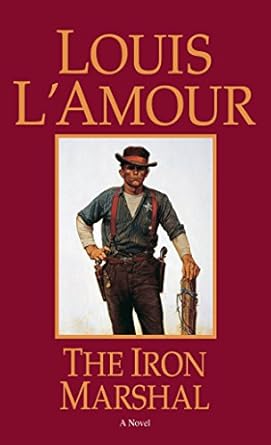
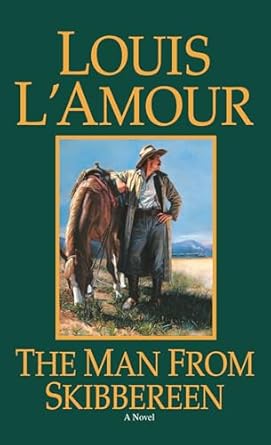
That said, I still believe in the value of economy of words. Economy of words doesn’t mean writing short—it means writing lean. It means using only as many words as the story needs. Louis L’Amour is a great example of this. His prose is tight, clear, and evocative. Most of his novels are quick reads, but they pack a punch. He could sketch a character in half a page and make you care about them. That’s not to say all of his books were short—The Walking Drum is a long and sprawling novel—but even there, his style is efficient. Every scene does something. Every word earns its place.

So why does epic fantasy run so long? Does it always have to be padded with extra filler? Not when it’s done well. One of the defining features of epic fantasy is that the world itself becomes a character. Tolkien mastered this. Middle-earth isn’t just a setting; it has a history, a culture, and an arc. The long travelogues, the deep lore, the songs and genealogies—they help build a sense of depth that makes the final conflict in The Return of the King resonate on a mythic level. You’re not just watching Frodo destroy a ring; you’re watching the curtain fall on an entire age.

And when the world has that kind of weight—when it grows, transforms, and carries the burden of history—it’s no surprise that a single book often isn’t enough. That’s one of the reasons epic fantasy so often stretches into multi-volume series. If the world is a character, it needs space for its own arc to unfold. A hero might only need three acts to complete their journey, but a world? That can take a bit longer.

Still, there’s more than one way to structure a series. Take Louis L’Amour again. He wrote mostly short standalone novels, but many of them followed the same families—like the Sacketts or the Chantrys—so that readers who wanted more could get it. You didn’t have to read them in order. You could pick up whichever one you found first and still get a complete story. That’s a far cry from most modern fantasy series, where the series itself is a single, complete work that must be read in order. After all, try starting The Wheel of Time at book five or A Song of Ice and Fire at book three, and you’ll be utterly lost.

My copy of The Lord of the Rings is a single-volume edition, the way Tolkien originally intended it. The main reason it was split into multiple books was to save on printing costs (Tolkien himself split the book into six parts, but the publisher turned it into a trilogy). Frankly, I think it works better that way. When a series beings to sprawl, the middle books often sag, and readers can definitely feel that. Just look at Crossroads of Twilight (Book 10 of The Wheel of Time) and how much the fans hate that book. I also remember when A Dance with Dragons first came out, with a 2.9-star average on Amazon that held for several years. (That rating has since improved, but I suspect that a large part of it is due to review farming by the publisher.)

Another risk inherent in writing a long, sprawling series is that the author will never finish it. George R.R. Martin is the most infamous example here—fans have been waiting for The Winds of Winter for over a decade, with no firm release date in sight. Patrick Rothfuss has faced similar criticism, with readers growing increasingly frustrated over the long delay between The Wise Man’s Fear and the long-promised third book in the Kingkiller Chronicle. And Orson Scott Card has yet to finish his Alvin Maker series. Seventh Son was published when I was just four years old, and though I enjoyed the first two books in that series, I refuse to read the rest of it until Card finishes the damned series.

I’m not alone. Many readers, burned one too many times, now refuse to even begin a new fantasy series until it’s complete. I can’t blame readers for feeling this way, but it does create a real challenge for new and midlist authors trying to break into the genre. Without the benefit of an established readership, it’s hard to convince readers to invest in book one of a planned trilogy or longer series. And if readers don’t start the first book, the rest may never see publication.

Right now, I’m writing an epic fantasy series based loosely on the life of King David. According to my outline, it’s a seven book series, but I’ve decided instead to split it into two trilogies (each with a complete arc) and a bridge novel (kind of like what Frank Herbert intended for the Dune books, though he died before he could finish the final book of the second trilogy). My plan is to wait until the first trilogy is totally written, publish the first three books within a month of each other, and promote that trilogy while I write the bridge novel and sequel trilogy.

In the meantime, I’ve been having a blast writing short fantasy novels in the Sea Mage Cycle, in-between drafts of my larger books. With The Sea Mage Cycle, I’m following a series structure that’s much closer to what Louis L’Amour did with his Chantry and Sackett books. Each book is a standalone, and the books can be read in any order, but they all tie together with recurring characters/families. As with all epic fantasy, the world itself is something of a character, but each book is more like a single thread in the tapestry of that wider story.

Not every epic needs to be long. Not every story benefits from being part of a massive, sprawling series. But when done well—when every word pulls its weight, when the world itself becomes a living character, when the structure supports the arc instead of smothering it—epic fantasy becomes something truly special.

It becomes epic, in every sense of the word.

Sackett’s Land by Louis L’Amour

I first heard about Louis L’Amour’s Sackett series from a hiking buddy, and I’ve wanted to read them ever since. This is the first one, and it takes place in the late 1600s with the ancestor of the Sackett clan, Barnabas Sackett, as he discovers the untamed wilds of America while on the run from people back in England who want him dead.

Like most of Louis L’Amour’s books, this is a quick, fun read. Lots of action, and never a dull moment. I also really liked the 17th century slang and mannerisms of speech—it felt like L’Amour really hit it on the head.

But the book’s strengths are also the flipside of its weaknesses. There’s a lot of plot and conflict, a decent amount of setting, and a little bit of character… and that’s about it. The story moved a little too fast to create a sense of immersion, and I also found it lacking in emotional resonance. It was a fun read, but I probably won’t remember much of it.

That said, it was a really fun read, and definitely lays the foundation for a very interesting series. The parts that did resonate with me were the ones that reflected my own family history. Several of my ancestors came to Virginia and the Carolinas during the colonial era, and I can imagine that they felt very much like Barnabas Sackett when he saw the blue mountains for the first time and yearned to go beyond them.

Fun stuff, especially you’re into historical fiction and early Americana. I give it 3.5 stars.

Plans for My Personal Home Library

If everyone has a weird or quirky super power, mine is the ability to acquire books. Even when I was living out of a suitcase in a remote Caucasian village, or traipsing across the Middle East, I was constantly acquiring books.

With my marriage to Future Mrs. Vasicek coming up, I’ve decided to put this super power to use. Instead of acquiring books randomly, I’m approaching the task of building a personal library with goals and a plan. Part of that plan is to inventory all of the books that I own, with lists of books / ebooks / audiobooks that I want to acquire. Part of it is to find a place in my home where I can shelve them all, instead of keeping them in boxes or the closet. And another part is categorizing all of the books, with goals for each category.

Requirements

After putting some thought into it, here are my basic requirements:

  • The entire library must fit in a single room / device / server.
  • The only books that I’ll keep are ones that:
    • I want to read again,
    • I want to talk about with others, or
    • I want to share with my family.
  • Ebooks and audiobooks must be DRM-free and device agnostic.

A while ago, I did a blog post on the pros and cons between print books, ebooks, and audiobooks. That seems to be a pretty good set of criteria for determining which formats to collect my books in, or whether to collect a particular book in multiple formats.

Ideally, I want to set up my personal library in a shared space in my home, where I can host guests. Future Mrs. Vasicek and I are going to get a set of scriptures, kind of like the tradition of a family bible, and I want this to be the centerpiece of my personal library. Eventually, I also want to get a dedicated ereader (or set of ereaders) that lives in the library, as well as a portable hard drive for all of the audiobooks. I don’t want any of it to depend on the cloud.

Categories

So far, I’ve got eight categories, though I’m sure this will expand. They are:

  1. Science fiction & fantasy
  2. Other fiction
  3. LDS non-fiction
  4. Self-improvement
  5. Writing & publishing
  6. Arabic language
  7. History & current events
  8. Other non-fiction

I have a lot more fiction books than non-fiction (go figure). For now, I’m using Goodreads as a library inventory system, though I may want to find something better in the future. If you check out my Goodreads profile, you can probably see all of them.

I’m working to come up with goals and plans for each category. Here’s what I have so far:

Science Fiction & Fantasy

My main goal here is to collect the complete works of David Gemmell. He is my favorite fantasy writer of all time, and I’ve read all of the Drenai series and most of the Stones of Power and the Rigante series as well. I’m holding off on the Troy books, mostly because I want to savor them. He’s also got a few standalones and duologies, most of which I’ve read.

Other series that I want to collect in print are:

  • Louis McMaster Bujold’s Vorkosigan series
  • All of Heinlein’s juveniles
  • The Barsoom series by Edgar Rice Burroughs (Princess of Mars, etc)
  • Ursula K. Le Guin’s Hainish cycle
  • All of the books by my writer friends

There are also a bazillion trilogies that I either own or want to collect, but it’s not worth listing them all here. I’m sure this is going to be a very dynamic part of my personal library.

Other Fiction

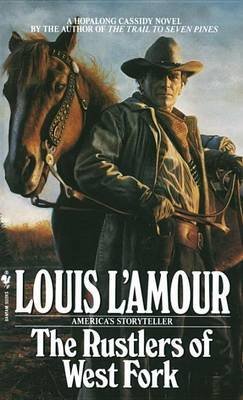
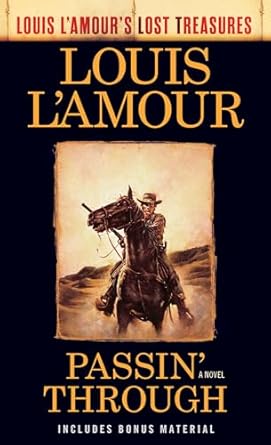
My main goal for this section right now is to collect all of the Sackett books by Louis L’Amour. There are only two left, both of which I’ve requested on Paperback Swap. Now I get to read them all, without any interruption!

I also plan to focus on collecting Jeff Shaara, especially the Civil War books. I currently have The Killer Angels by his father, as well as Gods and Generals and The Last Full Measure. But before that, I need to read Rise to Rebellion and The Glorious Cause, which I also own (those ones cover the Revolutionary War). Depending on how much I enjoy those, I’ll decide whether to collect Shaara’s complete works.

LDS Non-fiction

There are a tone of authors that I want to collect in this section: Nibley, Givens, Gileadi, Groberg, and more. There are also a few key books that I need to acquire and read, mostly biographies and church histories.

One series that I’m really looking forward to is the four book SAINTS series published by the church. The first book was fantastic; I listened to the whole thing on the train, and it was really cool to pick out the people from my own family history and learn how they contributed to the rise of the church. The next book is going to cover the westward migration, and I have a bunch of ancestors who participated in that, including a few in the Willie handcart company. Really looking forward to it!

Here in Utah, it isn’t difficult to collect LDS non-fiction books. You can find most of the older titles in thrift stores, and there are lots of LDS bookstores to choose from. That said, I don’t have any concrete goals for this section yet. The biggest challenge will probably be in refining this section so that I only keep the best books (ha), since it would be very easy to let this section get cluttered with good but mediocre books. That seems to be the general trend.

Self-Improvement

The biggest thing I need to do in this section is reread How to Win Friends and Influence People, preferably once a year. Fantastic book.

I should also probably focus on marriage and relationship books, since y’know, I’m getting married. Personal finance is also huge: I’ve got Rich Dad, Poor Dad, and should probably collect all of Kiyosaki’s books. Stephen Covey is another huge one.

Beyond that, my cowriter Scott Bascom is really into self-improvement, so my plan for now is to build out this section based on his recommendations.

Writing & Publishing

There are a few classics that I need to re-acquire, such as Character and Viewpoint and On Writing. One classic that I will probably skip is Strunk & White’s Elements of Style (can’t stand that pretentious book). Other than that, the biggest thing is to stay current and focus on indie publishing. For that reason, I suspect that I’ll collect mostly ebooks in this section.

Arabic Language

My main goal here is to read The Book of Mormon (كتاب مورمون) in Arabic. I also have plans to study the Qur’an, though that’s not a priority at the moment.

Most of these books are ones that I acquired while studying Arabic in Jordan. I don’t think I’ll acquire many more anytime soon, though if an opportunity arises, I probably won’t turn it down. The big question in my mind is whether to expand this section to Arabic language & culture, since I do have a bunch of English books on the Middle East.

History & Current Events

My biggest goal for this section is to build a collection of monetary & financial books that together make a complete history of the United States. This subject is my current pet interest, much to Future Mrs. Vasicek’s chagrin. I also have plans for a coin collection / history that I’m currently writing, though that’s on the back burner for now.

Other than that, I plan to focus on book recommendations by Ben Shapiro and Glenn Beck.

Other non-fiction

No real goals yet for this section. At some point, I will probably spin off family histories as a separate category, since there are a lot of them in my family.

General Goals

The biggest thing I need to do is read every book that I own. I may be really good at acquiring books, but I’m not as good at actually reading them. Currently, I’ve read only about 20% of them.

When will I have them all read by? Ideally, the end of the year, but I doubt that’s going to happen. Then again, if I can keep my goal to read for an hour or two each night, a year might just be enough.

Since the library is constantly growing, though, I suspect this will be more of an aspirational goal, or a moving target. Even when I manage to hit it, it probably won’t take long before I acquire more books and have more reading to do again.

The next big goal is to find a place for all these books, which probably won’t happen until after Future Mrs. Vasicek and I are married. At which point, all of these plans may change, since she has a bunch of books too—but probably not too much. We’ve talked about it, and it shouldn’t be too hard to merge our books into one family library, if that is what we decide to do.

Aside from that, I’d like to get as many books signed and personalized as I can. Shouldn’t be too hard: just look up the guest list of any convention I’m attending, and bring the books along.


That’s basically the plan as it stands right now. With my quirky super power for acquiring books, it shouldn’t take long to build an epic personal/family library.