J is for the Joys of Self-Publishing

Brandon Sanderson teaches an English class at Brigham Young University, and I was one of his students back in 2008 and 2009. At LTUE this year, he asked me to come in and speak to his class about what it’s like to be an indie writer, so I prepared a short ten minute presentation on the things that I love the most about self-publishing. They are:

1. I have complete creative freedom.

As an indie, I don’t have to worry about agents, editors, marketing departments, interns, or anyone else who could kill my project before it has a chance to get out into the world. If I can write it, I can publish it. If I want to write something crazy like a story about Amish vampires in space, or steampunk Mormon airships, or orcs falling in love on the battlefield, I can do it without having to worry whether it will ever find a home outside my hard drive.

Of course, if I write stuff that’s more niche, chances are that it’s only going to find a niche audience. But that’s okay, because:

2. I don’t have to be a bestseller to find success.

With the way that the royalty numbers for indies work out, I don’t have to be a mega blockbuster bestseller to have a viable career. In fact, all I really need is to sell a thousand or so books per month–which seems like a lot until you realize that there are 1.4 billion English speakers in the world (over 300 million of whom are native). Plus, if I have thirty or forty books out, I can make a comfortable living selling no more than double digits on each one.

It’s the thousand true fans principle at work, and for indie writers, it really does work. I only started self-publishing three years ago, and I’m already making enough to keep my head above water. And to everyone except my small handful of fans (who don’t even come close to a thousand), I’m just another nobody.

3. I have the flexibility to reinvent myself and try new things.

As an indie, I’m not locked down by any contracts that I can’t get out of. That gives me a great deal of flexibility in how I can run my career. If I wanted to unpublish everything and start over under a different name, I could do that. If I wanted to try out a new genre, or dabble in something experimental like serials, I could do that. At any time, I can completely remake myself however I want.

That flexibility is crucial because of how quickly the market is changing. Publishers are consolidating and going bankrupt, bookstore chains are struggling, and new technologies and business models are opening the doors to all sorts of new opportunities. As an indie, I’m in a great position to take advantage of them.

4. I can connect directly with my readers and fans.

Not just in the sense of connecting through social media, but connecting through my books as well. If my fans are clamoring for a sequel, I can write it and get it out to them while it’s still fresh in their minds. If they have trouble finding my books somewhere, I can clear the problem up myself without getting tied up in the bureaucracy of a large publisher.

The two most important people in the book world are writers and readers. As an indie, I can make sure that no one comes between my readers and me.

5. I’ve learned to treat my career like a small business.

A lot of writers view this as a downside, or at least a hassle they’d rather not deal with. They decide not to self-publish because all they really want to do is write. After all, isn’t it better to get someone else–an agent, for example–to handle the business side of things? Isn’t it better not to have to worry about all that stuff?

For me personally, the answer is a clear and resounding NO. The business stuff isn’t a hassle–it’s actually kind of fun! Plus, the fact that I know exactly where all the money is, how much I’m getting paid, and how much I owe gives me much more peace of mind than trusting all that stuff to an agent ever would. Far from taking away from my writing time, it’s actually given me more time since the only real person I have to deal with is myself.

Besides, freelancing is just AWESOME. I love being self-employed! True, my boss is a jerk and all of my coworkers are boring, but that’s okay because

6. I have no one to blame for my failures, but my successes are all my own.

This, more than anything else, is what I love the most about self-publishing. If my books flop, it’s on me. If they hit the top 100 lists for their subcategories and garner dozens of positive reviews, that’s on me too. I’ve had books that have done both–in fact, I’ve got a book right now that’s currently #263 Free in the Kindle Store.

Yes, there are a lot of ways that I can screw up as a self-published writer. But there are a lot of ways that I can succeed, too. Like everyone, I have to deal with the fear of failure, but I don’t have to worry about not getting the credit–or the reward–for my success. As an indie, it’s all on me, and that’s exactly the way I want it to be.

I is for Indie

I first started self-publishing in 2011, when “self-published” was still a dirty word. Back then, we called ourselves indies in order to escape the stigma–or mitigate it, at least. And that led to a war between us and the publishing establishment over the meaning of the term “indie.”

If it sounds dumb, that’s because it was. “Indie” is short for “independent,” as in an artist who is unaffiliated with a corporation or large commercial organization. Trouble was, the establishment was already using the term “indie” to describe bookstores that weren’t affiliated with the larger chains (Border, Barnes & Noble, etc), or the small presses that hadn’t been gobbled up by the Big 6.

Also, I think the technological disruption of ebooks caught the industry with their pants down. Authors, publishing their books themselves in this newfangled digital form? Diving into the wilds of the marketplace without the nurturing patronage of a publisher? As if ebooks will ever become a thing! Don’t they know that self-publishing is the kiss of death?

And it was, in the old days when publishers held a monopoly over all the important distribution channels. For the greater part of the 20th century, signing with a traditional publisher was the only viable way to have a career. There were a couple of self-publishing success stories, but they were the exceptions that proved the rule. For almost a century, there was no real way to be a writer and go indie.

Because of that, those of us who have chosen this path are largely making it up as we go along. Unlike the film industry, where “indie” has a connotation of artistic purity, or the music industry, where “indie” has a connotation of hip, local, and unique, indie books and indie writers have had to build their own reputations largely from scratch. It has definitely been an uphill battle.

Back when I first started self-publishing, I was very particular about calling myself an “indie writer” and not a “self-published writer.” Now, though, I’m comfortable with either term. The self-publishing stigma is pretty much dead, and “self-published” describes what I’m doing just as well as “indie” does.

That said, I think it was a good thing that we claimed the indie label when we did. Our mode of self-publishing is very different from the modes of self-publishing that came before, and distancing ourselves from the vanity presses and self-publishing scams helped a lot of us to let go of our inhibitions and jump into the new world of publishing with both feet. That certainly was the case with me.

In the future, I hope that indie books gain the same reputation for artistic integrity and creative freedom that indie films and indie music now enjoy. I think we’re definitely on the way. Sure, there are lots of crappy self-published books out there, but there are also a lot of really excellent ones, and those are the ones that readers are going to remember. Hopefully, some of my own books will be among them.


H is for Hybrid Author

Is it worth seeking traditional publication if you’re an indie writer? Are there advantages to going with a legacy publisher after you’ve published yourself?

A lot of writer throw around the word “hybrid” as if that’s their ultimate goal–the thing that’s going to make their career. A hybrid author is an author with their feet in both sides of the publishing world: the legacy world, with corporate publishers or small but reputable houses, and the indie world with their self-published books.

This might be a bit controversial, but I’m going to throw down the gauntlet and argue that most of the praise of the hybrid path is either hype or wishful thinking. From what I’ve seen, most hybrid authors fall into one of three camps:

  • Veteran authors who are disillusioned with the legacy industry and are doing everything they can to self-publish everything. They still have contracts that they can’t get out of, though, so technically they are considered ‘hybrid,’ even though many would rather not be.
  • Indie authors who haven’t been disillusioned about traditional publishing yet and believe that a legacy publisher would carry some of the burden for things like marketing and promotion. In other words, indies who believe that the grass is greener on the other side of the fence.
  • Unpublished writers who have been submitting to traditional publishers for years, and have deer-in-the-headlights syndrome with all the new publishing options available to writers. They’ll dabble with self-publishing, but their heart is still set in the old world.

So would I ever consider signing with a traditional publisher? I’ve thought about it quite a bit over the last few years, and I’ve come up with four conditions that have to be met before I’d do so. Please keep in mind, though, that I am not a contract lawyer, and that the following is my opinion and not legal advice.

Three of them are deal breakers on my side. They are:

1. Non-compete clauses

This is absolutely non-negotiable. In fact, if I see any sort of non-compete clause in a contract sent to me, I’ll pull out of negotiations altogether since it shows to me that the publisher is negotiating in bad faith.

A non-compete clause is a contract clause that says something like “the author shall not publish or cause to be published anything that may compete with the work.” Basically, it’s a publisher’s way of clamping down on you and saying you can’t publish anything without their approval. There is no f****** way I would ever tie myself up like that–not only would it kill the self-publishing side of my career, but it would also be unfair to my readers who have come to expect regular releases from me.

Let’s flip this on its head and say that I put in a non-compete clause for my publisher. For example, suppose I signed a contract with Tor Books that said “the publisher (Tor Books) shall not publish or cause to be published anything that may compete with the author’s work.” Can you see how ridiculous that is? How insanely one-sided it makes the contract out to be?

A publisher would never sign one, and neither will I.

2. Rights reversion clauses

If I’m going to sign a contract with a traditional publisher, I want to know when that contract is going to end. Life of copyright is life of the author plus 70 years, and that is far too long for me. But a lot of traditional publishing contracts contain loopholes that keep the rights from ever reverting back.

There are reasons why a publisher would want to hold onto your rights without actually publishing your book. Copyright is an intellectual property, and shows up on a corporate publisher’s ledger as an asset. Just by sitting on your rights, they’re able to show an accounting gain. So if they can hold onto your rights, they probably will.

I won’t sign a contract unless it includes an explicit date when the rights will revert to me. The length of the term and the options for renewal are open to negotiation, but having an explicit date is not.

3. Any payment terms based on net

Right now, the industry standard for ebooks is 25% of net. What does that mean? It means “we’ll pay you 25% of the revenue from your ebooks, after costs.” What costs, you may ask? There’s the rub–they aren’t specified.

“Net” is how Hollywood screws people over. It’s how a rockstar can go on a multi-million dollar tour and end up owing the record label money. It’s a dirty trick of creative accounting that the large corporate publishers are now starting to employ. In the old days, they used to base royalty payments off of the list price of the book. Now, though, New York is becoming more like Hollywood and less and less author friendly.

The fourth condition is a deal breaker for most publishers, on which I don’t see myself giving any ground. It is:

4. Ebook rights

Ebooks are where the money is. Legacy publishers understand this, and they’re doubling down on them. Hugh Howie, who signed a print-only deal with Simon & Schuster, has since said that the publishers are not open to considering that sort of deal now–not even for a massive bestseller like him.

The thing is, what value does a legacy publisher bring to epublishing? In less than an hour, I can craft an ebook that’s formatted better than most of the ebooks coming out of New York. As an indie, I have access to all the same online bookstores and distribution channels as the big publishers. And by self-publishing, I have control over the critically important metadata–a ball that legacy publishers often drop by relegating it to the lowest employees on the corporate ladder.

When it comes to ebooks, I do not see a single item of value that legacy publishers can bring to the table. Rather, I see a host of liabilities, and for what? With self-publishing, I can earn up to 70%-80% for every ebook I sell. With a publisher, I’d be lucky to get 15%–and that’s if they’re being generous.

For novels and other book-length works, it simply does not make sense to me to sign with a traditional publisher. Not in today’s industry, at least. And with the way legacy publishers are clamping down and making rights grabs, I don’t see it ever making sense in the foreseeable future either.

HOWEVER …

For short stories, the situation for authors is much more favorable. The magazines have no inclination to tie you up with non-compete clauses, the rights to the story revert back to you soon after publication, the payment is usually based on word count and specified in the contract, and the ebook rights stay with you (the magazine might purchase non-exclusive digital rights, but that won’t prevent you from republishing it as an ebook on your own).

I can see myself going hybrid by publishing short stories through the traditional markets. In fact, that’s exactly what I’m trying to do. Besides the chance to refine my craft by working on my short game, I figure that getting picked up by the major magazines will help to draw new readers to my other books. I have no idea how much it will help, but I figure it’s worth trying out. Besides, science fiction is a genre where reputation can make a big difference to your career, and you can build a reputation a lot more effectively through traditional short story markets than through self-publishing.

At the same time, though, that’s more of a side project than anything. My bread and butter is self-publishing, and that’s where my feet are firmly planted. I don’t see that changing anytime soon.

G is for Genre

Are there certain genres that indie writers should write in if they want to be successful? Are there other genres that they should avoid?

This is one of those pieces of common wisdom that really irks me, and not just because I write in a genre (science fiction) that isn’t as mainstream or popular as others. I think it’s a myth that you have to write in a “hot” genre in order to have success, especially if you’re an indie author. Here’s why:

1. You don’t have to be a bestseller to be an indie success.

This is something that Hugh Howie repeats all the time: that the true success stories in self-publishing aren’t the mega bestsellers like him or Bella Andre or H.M. Ward or Amanda Hocking, but the thousands and thousands of little guys who are carving out a comfortable space for themselves in this new world of publishing. You don’t have to be a huge bestseller to make a living as an indie writer–you can do quite well for yourself with a small but dedicated fan base.

I’m sure there are some people whose personal definition of success includes the kind of fame and recognition that comes along with being a bestseller. That’s fine–everyone has to define what ‘success’ means for themselves, based on their own personal goals and dreams. But being a bestseller is definitely not the baseline, at least for an indie writer.

2. Ebooks and epublishing have opened exciting new opportunities for niche genres.

Before epublishing, you needed a fairly extensive infrastructure to bring a book to market. Besides designing the book, you had to pay for printing, pay for shipping, pay for distribution and marketing to bookstores, pay for returns and remainders … the list goes on and on. Consequently, it was harder for niche genres to really get a foothold.

With ebooks, the economics of publishing have been flipped on their head. The marginal cost of producing another ebook is zero–digital content can be copied endlessly at virtually no cost. Shipping costs are also zero, and global distribution is as easy as uploading the book to Amazon’s servers–again, at zero cost.

Because of this, there’s room now for niche genres with much smaller readerships to actually turn a profit. And that’s what we’re seeing–an explosion of all sorts of niche, specialty, and experimental new genres. Books no longer have to be just like the Latest Big Thing (only different) in order to earn back their costs. There’s room for everyone in the new world of publishing.

3. It’s better to write what you love than to write what you think will sell.

The two aren’t always mutually exclusive, of course. Maybe you love a variety of genres, so that you’d be equally satisfied writing romance as you would writing something more niche like Amish vampire steampunk. But if all you’re doing is chasing the money, chances are that your heart won’t be in it nearly as much as it would if you were writing what you love. And if your heart isn’t in it, you won’t be able to bring that creative passion to the project that readers really love.

When I wrote Star Wanderers, I was following my passion. It was a science fiction story unlike any I’d either written or read, but I followed it where it took me without worrying whether it would sell. The genre description that best fits that series would probably be romantic frontier space opera–definitely a niche. But because I was passionate about it, the books were able to find readers who share that passion and touch them in ways that other books hadn’t. And guess what? Those are my best selling books.

There is a business side to publishing, but there is also an artistic side. You’ve got to be true to both. If your inner artist thrives on the challenge of chasing the market, great–go for it. But if doing that feels like you’re being unfaithful to your creative vision, you’ll probably write a better book if you strive to be authentic. And ultimately, I think that authenticity has a lot more to do with a book’s success than the genre it’s written in.

Readers are far, far more diverse than we give them credit. So long as you can write well and tell a good story, you can find success no matter which genre you write in.

F is for Fear

I was going to do a post on something more mundane like ebook formatting, but the comments in one of last week’s posts convinced me to step back a bit and deal with this subject: fear.

Fear is huge, especially for writers. It lies at the heart of what we call writer’s block, and is probably the number one thing holding writers back from taking the leap and publishing their work. It doesn’t matter how many options are open to you if you’re frozen so much with fear that you can’t take a single step.

I don’t know how to deal with the crippling fear, because I’ve never really struggled with it. I do have a lot of other fears, though–just not the kind that stopped me from doing anything. Here are some of the fears I’ve dealt with at various points in my writing career:

Before I wrote my first novel:

  • That I would get to the end of the story only to realize that the whole thing was crap.
  • That my writing was hackneyed and clichéd.
  • That I would never learn how to express in words everything that I wanted to get across in a story.
  • That I was wasting my time and all of my work would come to nothing.

After I’d written a couple of novels and decided that this was what I wanted to do for my career:

  • That I would never make enough to make a living at it.
  • That I wouldn’t be able to find a day job, or that my emphasis on my writing career would consign me to dead-end jobs all my life.
  • That I no girl would ever want me because I couldn’t offer enough stability to raise a family.
  • That I was wasting time with any particular work-in-progress because agents and editors would obviously reject it.
  • That my career was doomed because agents and editors wanted vampires and werewolves, not the kind of science fiction I was writing.

When I first decided to self-publish:

  • That I would burn all my bridges the moment I clicked “publish.”
  • That all of my writing friends would shun me.
  • That my books would fall into obscurity and never climb out of it.
  • That someone would steal my books and publish them under their own name.
  • That something would happen to sabotage my career before it got started.

And finally, some fears that I struggle with now:

  • That my books will suddenly and inexplicably stop selling.
  • That everything that’s worked up to this point will stop working.
  • That my next big release, Sons of the Starfarers, will flop.
  • That my career has hit a ceiling, or will at some future point, making it almost impossible to grow.
  • That health insurance, self-employment taxes, and other regulations from the federal government will place such a burden on me that I won’t be able to keep my head above water.
  • Online bullying and internet lynch mobs.
  • Drive-by one-star reviews from people who’ve never read my books but have decided for some reason to target me.
  • Above all else, that I’m not working hard enough.

Looking back on them now, most of these fears seem ridiculous. Even the ones that I struggle with now seem largely unfounded.

But fear is fundamentally irrational–it comes from the animal part of our brain and often can’t be reasoned with. I can tell myself all day long that these fears don’t make sense, and still find them creeping back to haunt me. So how do I deal with it?

I can think of three major ways:

Fun

When you’re having fun, fear goes from this awful, horrible thing that’s holding you back to a thrill-inducing sensation that gives you a rush. Fun things are often scary, but they’re scary in a good way. Without the fear–without the risk–you’d never experience the rush that makes it fun.

Case in point, wingsuit gliding:

Self-publishing isn’t nearly as scary as wingsuit gliding, but it is fun–lots of fun! Every time I hit publish, I get a little rush, to the point where it’s now like I’m addicted. I just want to publish all of the time, because it’s so much fun to put stuff out there! I can’t possibly write enough to keep up with that desire. And every time I sell another book, or get another review, or find out that I’ve been mentioned in someone’s blog, that same rush comes right back to hit me. It’s awesome!

Friends

Not all fear is of the positive kind, though. When my fears threaten to overwhelm me, it can be helpful to have friends. They don’t have to be writing friends, though it certainly helps if they are–they just have to be interested enough in me and what I’m doing to genuinely listen. Knowing that someone is there for you can really make a difference.

I know that a lot of writers are more introverted than I am, but just because you’re introverted doesn’t mean that you’re averse to having friends. A true friend is someone who can relate to you in your own peculiar way, even if that way is a bit off-putting to others. A lot of times, it’s not anything the friend does that helps, it’s simply knowing that there’s someone.

Writing can be a very lonely art, so I think it’s important to consciously surround yourself with a support network of people who care. Most of the ‘networking’ I do as a writer is just that–making new friends and keeping old friendships alive. It isn’t about getting ahead so much as making sure that there are others there with you.

Faith

The opposite of fear is faith–faith in your books, faith in yourself, and faith in God or a higher power. At the risk of flirting with a topic that many consider taboo, I will say that my faith and spirituality have helped me to deal with some of the hardest fears. When you have faith that God approves of the course your life is taking, and that He is lifting and supporting you, it does so much to boost your confidence that no fear can overwhelm you.

Aside from any spiritual aspect, you must have faith in yourself–that you are capable of accomplishing great things, perhaps even the impossible. So much of fear is self-defeating that you have to stand up for yourself, because if you won’t stand up for yourself, who will? This is why writers are often such neurotic bundles of egotism and self-depreciation. The egotism is partially a defense mechanism against all that self-defeating fear.

But faith is more than egotism–it’s a confidence that runs so deep that it’s not incompatible with humility and meekness. If you always have to be right and can’t accept any criticism, your writing career–indeed, your entire life–is going to be a massive struggle. It’s better to cultivate faith than it is to feed arrogance.

Lastly, you need to have faith in your books: that the story you’re working on now is a story worth telling. For me, this is the hardest kind of faith of all. There comes a point in writing every book where I feel that the story is crap and wonder whether I should just toss it out or rewrite it from scratch.

When that happens, I’ll either force myself to push forward or lay the project aside until I can look at it with fresh eyes. It can be hard to know which way is more appropriate, but usually I’ll start with the first, and if that doesn’t work, then move on to the other. In both cases, though, I do all I can to build my faith in that particular project and lay aside any doubts or fears. And in almost every case, when I finally get through and write ‘the end,’ I find that those fears were unfounded.

So those are some of the ways I’ve learned to deal with my fear. How about you? What are the writing fears you struggle with, and how do you deal with them?

E is for Editing

Does every book need to be professionally edited? Will it be the end of the world if you publish something without running it past an editor?

Short answer: Yes.

Long answer: Yes, but there are different kinds of edits, and different ways to do each one. You don’t have to pay through the nose to create an acceptable product, though in my experience, “you get what you pay for” is more true for editing than it is for cover design.

A well-crafted book that is reasonably free of typos, spelling and grammatical errors, poorly worded phrases, story inconsistencies, and gaping plot holes is a sign of respect to your readers. Every time a reader comes across one of these mistakes, it kicks them out of the story, robbing them of some of the enjoyment that they otherwise would have had. Stories only come to life when someone reads them, so we should do all that we can to remove any obstacles that might get between our readers and the story. That means editing.

There are different levels of editing, though. The broadest kind deals with story level problems–plot holes, character inconsistencies, that sort of thing. Below that, you have stuff like line and copy editing, which deals with inconsistencies in the details of the story–a character who uses an M16 on one page and an AK-47 on the next, for example. Below that, you have proofreading, which deals with the basic rules of spelling and grammar.

For the broadest story-level stuff, I never hire an editor. Instead, I have a group of trusted first readers, some of them writers, some of them avid readers, some of them experts in a particular field, and before I publish something I run it by them. When I first started out, I asked for a line-by-line critique, but nowadays there are only three questions I ask:

  1. Did you like the story?
  2. If you didn’t finish it, where did you stop?
  3. If you did finish it, would you like to read the next one?

I’ve noticed that people approach a story much differently if they’re reading to critique it, rather than if they’re reading it for fun. By taking the pressure off, I know that any other feedback they give me is something that a reader is going to notice too. I make it clear that I’m open to whatever feedback they care to give, but I don’t try to force it out of them–that would interfere with the reading experience.

Also, how a reader reads a story often says more than their actual feedback. If they stop in the middle, I know that something before that point is broken. If it takes them a long time to finish it once they’ve started, then either something is broken or the story just isn’t for them. If they finish it in a couple of days, before I can follow up if they’ve even started, then I know that the story is pretty solid.

After making any story-level changes and cycling it back through different rounds of first readers to green-light it (I never ask a first reader to read a story twice), I move on to the copy editing and proofreading phase. What I do here depends mostly on the length of a story. If it’s a novel-length work, I always hire a copy editor. Always. I don’t trust myself to self-edit those things–I just don’t have the stamina. Better to pay the money and get someone to do it properly.

For novellas and short stories, it depends on the project. I usually try to find another set of eyes to run it past, but if money’s tight I’ll usually barter services or find a college student who’s looking to build their portfolio. And sometimes, yes, I’ll self-edit. BUT (and this is a big but) if I self-edit, I don’t do it halfway. I read the story forwards and backwards, out loud. It’s horribly tedious and I hate doing it, but sometimes you’ve got to do what you’ve got to do.

Then again, my writing tends to be fairly clean, and I did work for a year in a writing lab, and a semester as a TA for a freshman level writing course. I wouldn’t recommend self-editing unless you’re solidly grounded in an English background, and even then, I’d recommend hiring someone if at all possible.

Because here’s the thing: editors and writers are different kinds of people. Writers would rather be so immersed in the story that they lose sight of the words, whereas editors are so turned on by words and the fine points of their usage that they actually enjoy busting out the Chicago Manual of Style. Yes, there are strange hybrid people who somehow do both, but the editing hat is very different from the writing hat, and use very different parts of the brain. Frankly, I don’t know how they do it.

On the subject of style manuals: if you’re going to hire an editor, it will save you both time and hassle if you give them a style guide that’s fitted to your particular way of doing things. This is particularly true if you write speculative fiction and have a whole bunch of made-up words. Just to give you an example of what one looks like, here’s mine: Vasicek style guide.odt

So yeah, your books  are definitely going to need some kind of editing. How you accomplish that depends on the project, your budget, and you. As with everything in the indie author world, you have options.

D is for Discoverability

If there’s one thing that indie writers like to talk about when they talk shop, it’s “discoverability”–how to make their books stand out so that readers can discover them. You don’t have to spend much time on author blogs or writing forums to find some pretty intense discussions about this topic. For those of us trying to make a living at this gig, it’s something we constantly obsess about.

So what’s the best way to boost your discoverability? What works, and what doesn’t? If I had the answers to those questions, I could probably make a lot more money writing “how-to” books! However, here are a couple of books I’ve found that do an excellent job answering this question.

The Secrets to Ebook Publishing Success is an excellent resource for ebook marketing ideas that won’t cost you an arm and a leg. The book won’t cost you, either–it’s available on Smashwords for free. The author, Mark Coker, is the founder and CEO of Smashwords, and he wrote this book to help Smashwords authors succeed. Definitely worth giving a read.

Let’s Get Visible is the other book on discoverability that I’d recommend. For this book, David Gaughran collaborated with a number of other indie writers from KBoards to figure out the best ways to work with Amazon’s algorithms. It’s an excellent book that explains some of the best practices for free giveaways, price pulsing, and choosing keywords and categories.

Those are the two books I’d recommend. There are other good ones I’m sure, but there are also a lot of scammy marketing books that are just out there to take your money. These ones aren’t scam books at all. Without getting any benefit from the authors of these books for saying it, I can vouch from experience that their advice is pretty solid.

So what’s worked for me personally? I can point to a few things:

  • Writing in a series. If your books are grouped together by series, then readers who enjoy one of those books are more likely to try out another. They’re less likely to read one book and forget about it because all of the books are connected. In this way, each of your books helps readers to discover the others.
  • Give some books away. Readers love free books. They’re a lot more likely to try out a book by an unknown writer if it’s free than if it costs any money at all–even as little as $.99. I know a lot of writers don’t like giving away their books for free, but if you’ve got ten other books that readers go on to buy after reading the first one, it’s worth a lot more than having eleven full-price books that no one ever buys.
  • Make the first book in a series permanently free. That’s what I did for Star Wanderers, and the strategy has worked extremely well. Before that, I had a couple of short stories and non-series books that were perma-free, but none of them gave my other books much traction. But with Star Wanderers, it’s easy to see that the first book leads to the second book, the second book leads to the third book, etc.
  • Don’t let your price become an obstacle to new readers. The principle behind perma-free + series that makes it work is the sales funnel, where you try to spread some of your books as widely as you can in order to funnel people to your other books. But if your first book is free and all the other books are priced so high that price becomes an obstacle, readers are bound to get irked and drop out. I’ll say more about this in P is for Pricing, but one thing I’ve learned is that it really helps if you’ve got a lot of low-priced books that readers can move on to after picking up your free stuff and before moving on to the higher priced stuff.
  • Write and publish lots of books. It wasn’t until I had maybe fifteen books out that I started to notice that my entire catalog was working together. When my Star Wanderers books sold well, I saw more sales of my other books too. When you have enough books out, they work together to sell each other. I wouldn’t be surprised to find that on average, one person with fifteen books out sells more than fifteen people with one book each.
  • Book blurb, cover, metadata. That’s the trifecta–if you don’t hit all three of those, nothing else you do may ultimately matter.

And of course, there’s the most important thing of all: write a damn good book. If your book sucks, all the discoverability in the world isn’t going to save it.

When you’re an indie writer, it often feels as if publishing a book is like tossing a message in a bottle out into a churning sea. You have no idea where your book is going to end up, and the marketplace is as wide and as menacing as a stormy ocean. Lots of books sink to the bottom of that ocean, where no one ever finds them. But plenty of other books stay afloat, selling a copy here or a copy there–just enough to stay up at the surface. And eventually, the winds of the marketplace cast it up on a distant shore, where it’s discovered by a fan.

But here, the analogy breaks down. Because unlike a beachcomber who finds a message in a bottle, a fan doesn’t have to wait for your next book to come to them–they can go out and find them directly. So the more books you have out there, the greater the likelihood that they’ll eventually be discovered. And if they’re out in the marketplace for long enough–out where the potential fans can discover them–then eventually they will grow into their natural audience.

That’s been my experience, at least. There are a lot of other things that I’m experimenting with now, but these are the things that I know work for sure–at least for me.

C is for Cover Art

They say not to judge a book by its cover, but the truth is we all do. In fact, the cover probably sells a book more than the book blurb does. Whether in print or in digital format, it’s the first part of the book that readers see, and often makes the difference between “meh” and “hmm, what is this? I want to find out more!”

So how do you do cover art when you’re an indie? Is it better to make your own, or hire a designer? If you do hire a designer, how much can you expect to pay?

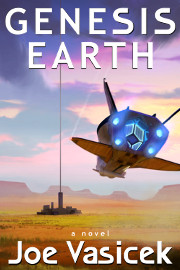
Honestly, when I started out, I think I invested a little too much into my covers. The first novel I published was Genesis Earth:

thumb (Genesis Earth)The cover art is gorgeous, and from an artistic view I’m very, very happy with it, but it took a long time for the book to earn that money back–far longer than the expense really justified. I would love it if all of my books could have awesome covers like this, but when you’re first starting, not every project justifies that sort of expense.

The thing to keep in mind when you do covers as an indie is that you can always change them. When you first start out and you don’t know how well a book is going to do, there’s nothing wrong with doing it on a shoestring budget and reinvesting those earnings later. There is a bit of a feedback loop, where a bad cover will hold a book back, but it’s not that hard to make a cover that’s not great, but acceptable.

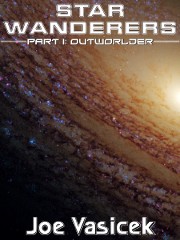
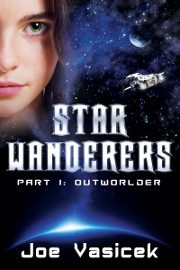
Case in point, check out the first cover I did for Star Wanderers: Outworlder (Part I):

Star Wanderers I (thumb)The cost for this art was $0. I made it myself, using freeware fonts and public domain space art from NASA. It’s not nearly as gorgeous as the cover for Genesis Earth, but it says “space!” in a sci-fi sort of way, and that’s what I was going for. And even with a mediocre cover, this was the book that really started to take off.

Of course, as soon as those books were earning enough, I made plans to reinvest that money in proper cover art. Here is the new cover for Outworlder:

SW-I alt (thumb)I’m working with a cover designer right now to redo all the other ones in the series along a similar vein. In the next couple of weeks, expect to see some cover reveals!

In general, I’ve found that there are three approaches to cover art: doing it completely yourself, hiring a cover designer to make an cover from stock art, and hiring an illustrator to paint an original illustration. The last is probably the most expensive, though it does depend on the illustrator–you can find good illustrators on sites like Deviantart whose rates are quite reasonable. But the quality varies a lot.

Besides the art itself, a key part of the cover is the typography. One thing I’ve learned from working with cover designers is that they can do amazing things just with the fonts and font effects for your title. That’s probably the biggest benefit of going with a cover designer as opposed to an illustrator.

In fact, if you can afford to commission an original illustration, you can probably find a cover designer who will give you a deal on the typography. It is something you can learn yourself, but the difference between you and a cover designer is often the difference between acceptable and awesome.

Like anything with self-publishing, cover design is something you can learn–perhaps something you can excel at–but you probably can’t excel at that and everything else at the same time. What I’ve found is that I’m okay at doing my own cover art, but not awesome. From here on out, I expect I’ll be hiring cover designers.

At the same time, my books are earning enough that I can justify that expense. If I were first starting out, I’d probably DIY it or barter with other writers who do their own covers. A cover isn’t static–you can always change it later.

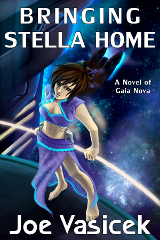
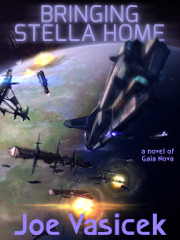
Case in point, check out the covers for Bringing Stella Home:

thumb (Bringing Stella Home)thumb 2 (Bringing Stella Home)

I got a good deal on the illustration for the first cover, but frankly, it’s not that great. The second cover was more expensive, but I’m much happier with it. What I’m probably going to do next is find a cover designer who can redo the title/author typography, since I did that myself and it kind of shows.

So that’s been my experience with cover art. It’s important to get it right, but you do have to work to find the best solution that works for your budget. Fortunately, when you’re an indie, your cover is something you can always upgrade.

B is for Book Blurb

Perhaps the most important part of your book’s sales page, on Amazon or any other retailer, is the book description. More than anything else (except perhaps the cover), this is what sells your book. If done right, it will interest the reader enough to download a sample or buy the book outright. If not, they probably won’t even finish reading it before they click to the next page.

So how do you write a knockout book blurb? Honestly, I wish I knew. I don’t think mine are bad, but I’m sure there’s room for improvement, and if they seem really awesome to me now it’s probably because my blurb writing skills haven’t risen to the next level. I tend to tinker with my blurbs until I get sick of them, then I do all I can to avoid looking at them until it’s time for a revamp.

That said, it’s not like you’re writing a novel. Just the opposite, in fact. If you try to cram your whole book in the blurb, chances are that you’re doing it wrong. You’re not trying to summarize the story or convey information, you’re trying to spark enough interest to convince the reader to try out your book. The hardest part is figuring out what to mention and what to keep out. Once you know that, the rest is fairly easy–fun, even.

There’s a video I watch whenever I have a blurb to write, because it helps me to channel the kind of voice I’m looking for. It features the top five voice-over artists in the United States riding a limo together, and it’s both hilarious and awesome. Watch!

For some reason, that video always kicks the blurb-writing part of my brain into high gear. But that makes sense–a good book blurb is a lot like a good movie trailer. Both of them spark a compelling interest in the reader/viewer, and neither of them gets bogged down in too many details (or worse, spoilers) about the book/movie.

At LTUE 2013, Howard Tayler gave a presentation in which he listed four key elements of a book blurb. They are:

  1. Inciting Incident
  2. Character Action
  3. Conflict
  4. Hook

Whenever I write a book blurb, I try to keep those four things in mind. As an example, here’s the blurb to Star Wanderers: Outworlder (Part I):

HE WANDERS THE STARS IN SEARCH OF A HOME. INSTEAD, HE GOT A GIRL WITHOUT ONE.

When Jeremiah arrived at Megiddo Station, all he wanted was to make some trades and resupply his starship.  He never thought he’d come away with a wife.

Before he knows it, he’s back on his ship, alone with his accidental bride. Since neither of them speak the same language, he has no way to tell her that there’s been a terrible mistake. And because of the deadly famine ravaging her home, there’s no going back.  She’s entirely at his mercy, and that terrifies him more than anything.

Jeremiah isn’t ready to take responsibility for anyone. He’s a star wanderer, roaming the Outworld frontier in search of his fortune. Someday he’ll settle down, but for now, he just wants to drop the girl off at the next port and move on.

As he soon finds out though, she has other plans.

The inciting incident is the accidental marriage which unexpectedly brings the girl into Jeremiah’s life. That introduces the conflict–that there’s a girl on Jeremiah’s space ship, and he doesn’t know what to do about her. The character action is the second to last paragraph, which describes him as a star wanderer out to seek his fortune and not to settle down. And the last part–the zinger at the end about the girl having other plans–is the hook.

It’s not a formula though, and you can’t approach it as such. There’s an art to it that doesn’t always break down so easily. The good news, though, is that it’s a skill that can be learned–a writing skill. If you have the chops to write a novel, then with focused practice you can learn how to write a knockout book blurb, just like you can learn how to write a blog post, or a tweet, or any other piece of writing.

In my opinion, writing a book blurb is a critical skill for any indie writer. No one is going to be more excited about your book than you are, and since that’s such a critical part of writing a good blurb (it’s hard to get people excited about something that you yourself aren’t excited about), it isn’t something you can easily contract out. But since you’re already a writer, it’s definitely something that you can do.