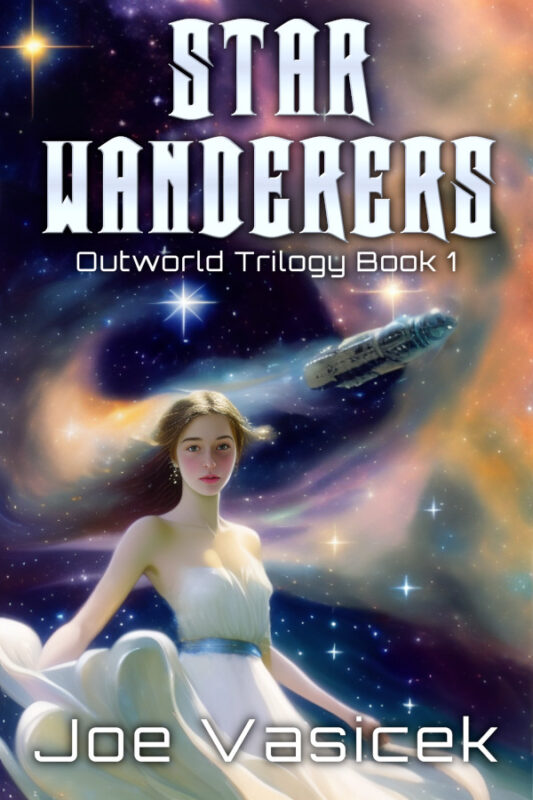
New Star Wanderers cover reveal!

Behold!

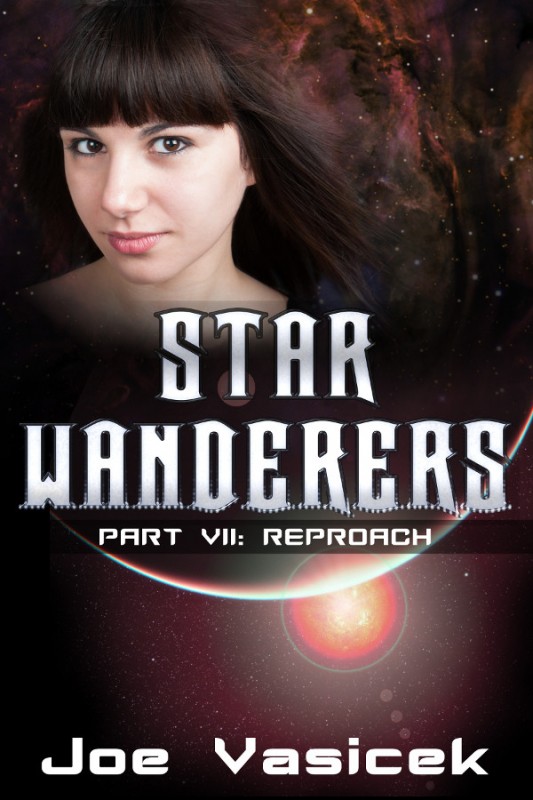
This is officially the new ebook cover for Star Wanderers. I’ve uploaded it to all platforms, though I haven’t updated the epub files yet. I’ll also update the paperbacks as soon as I have a chance, though that may take a while, especially with the new baby.

This image was AI generated using Stable Diffusion. It went through a lot of iterations, and can probably use some improvement, but this is the best I can do with the skills I currently have. Maybe a couple of years from now, after I’ve mastered the technology, I’ll make a new cover for this title. But I think this one is good enough to keep for a while.

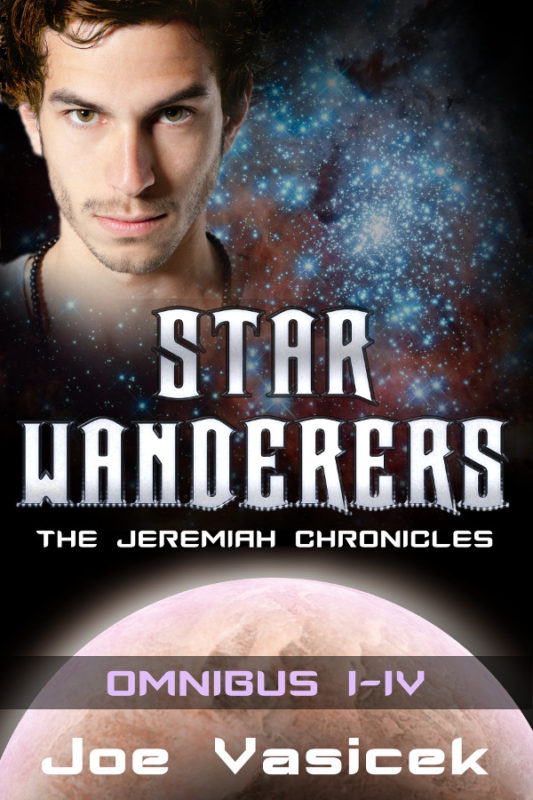
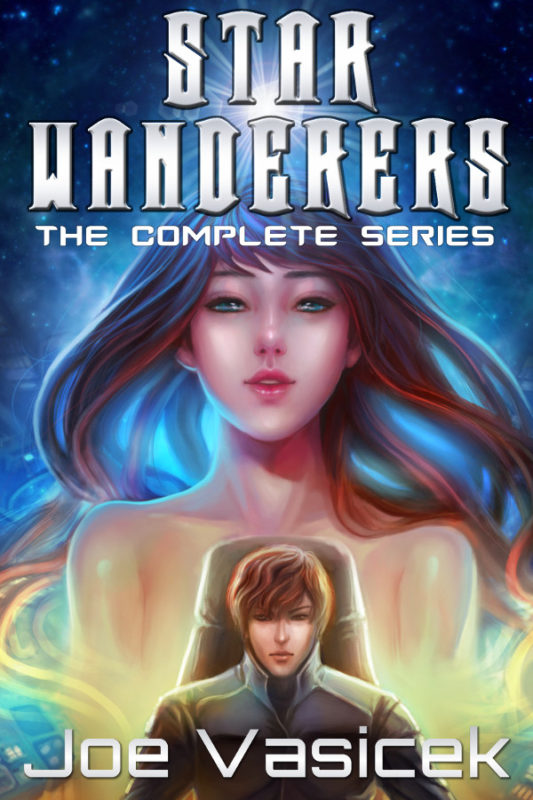
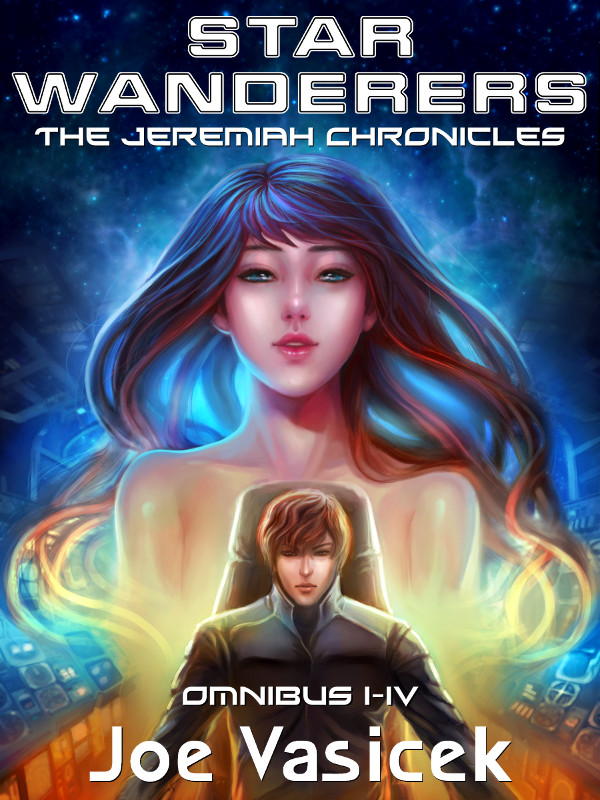
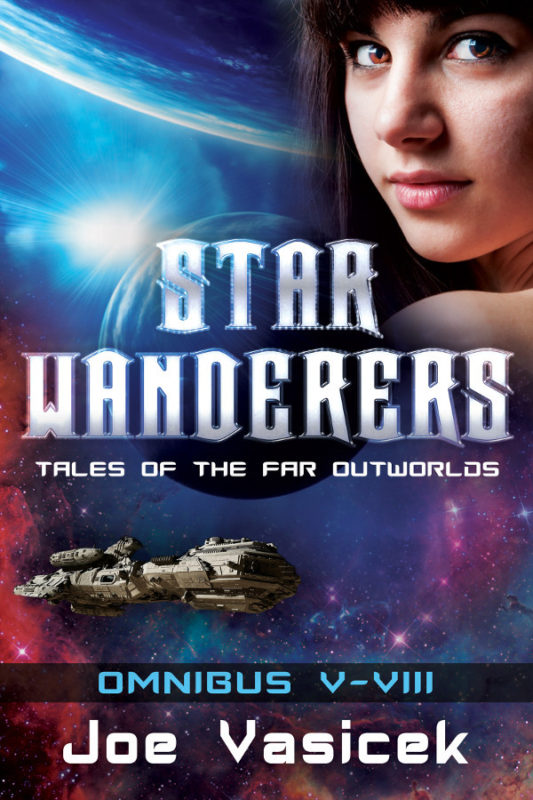
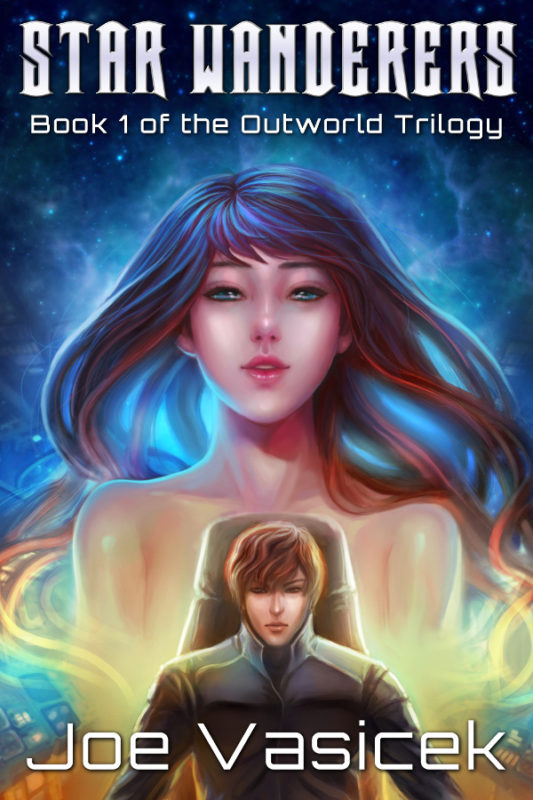
Just for fun, here are some of the old covers:

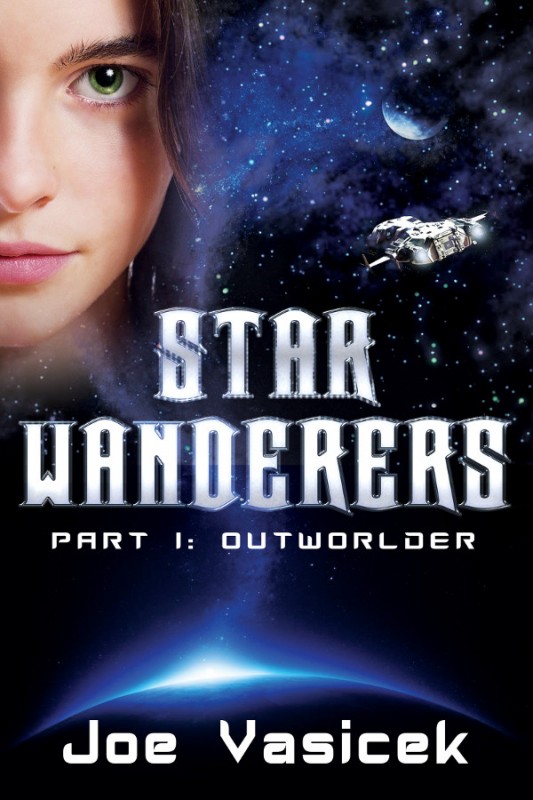
The original novel cover, which this latest one has replaced.

The second omnibus cover, from the novella series. The cover itself is by Libbie Grant, though the planet itself is a screenshot I took from Celestia.

The art from the complete series omnibus, which replaced the first two omnibuses and was the immediate precursor to the novelization itself.

The original cover for the first omnibus. The art is by Ina Wong, who also did the current cover art for The Sword Keeper.

This is the original art for the second omnibus, by Derek Murphy.

This is my personal favorite from the art by Libbie Grant. She did all eight novellas and both ominbus editions in this style.

This is the second cover for the original novelette. Derek saw my crappy self-made cover and offered to make me this one for free, so that he could showcase both of them in a before-and-after post on his blog. It worked out really well!

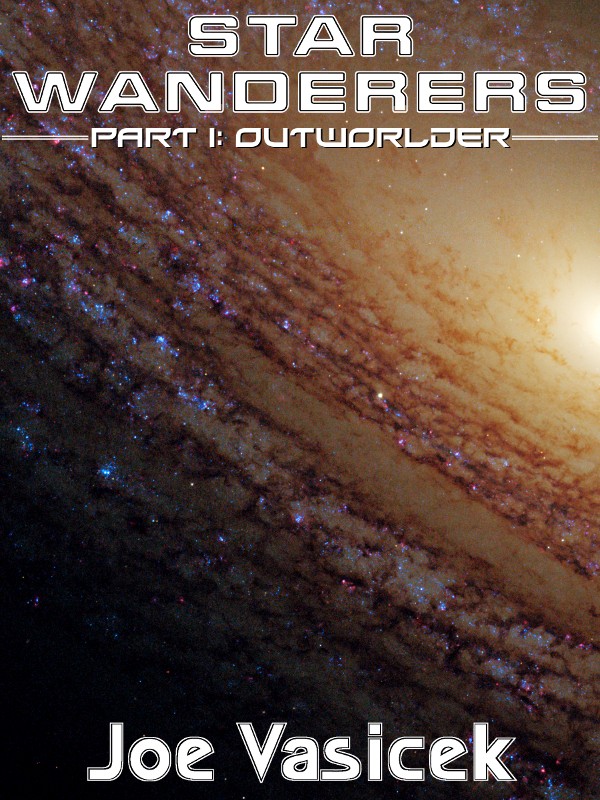
And this is the original ebook cover art for the first novelette that started it all. I had just launched Desert Stars, after draining my bank account to publish it since the kickstarter had failed (This was back in 2011, and I had no idea how to run a kickstarter—or how to profitably publish a book, for that matter). Since I didn’t want to spend another $900 to publish a full-length novel to the sound of crickets, I decided to turn my current WIP into a novella series, put them all out on a shoestring budget, and reinvest whatever money they earned into better editing and cover art.

The image is taken from NASA and is totally in the public domain, and I think the font is too, or at least it’s freeware of some kind. I put it together over the summer, when I was home from teaching English overseas in the Republic of Georgia. For this one, I think I used my desktop, but most of the other ones in this style were done on my tiny ASUS netbook with a screen the size of a postcard, in an old farmhouse in a tiny Georgian village at the foot of the Caucasus Mountains, which had no heating aside from the woodburning stove downstairs. The power would also frequently go out for hours at a time.

I wrote a bunch of the original novellas out there, in that tiny little Georgian village. And now, they’re all combined into one novel, which I’m turning into a trilogy right now! Just need to finish revising the second book, hopefully before that new baby comes. I should probably stop procrastinating.

Inflation and book pricing

So with inflation being what it is, one of the questions on my mind these last few months has been whether I should raise my book prices to keep up with the increased cost of living. We’re definitely feeling it every time we go to the gas station or the grocery store, and I’m sure that all of you are feeling it too—and those of you overseas are probably feeling it much worse than we are.

Short answer: No, I do not plan to raise my prices in the immediate future. In fact, I’ve actually lowered some of my prices. When I do raise prices, it will be because Amazon and the other retailers have changed their printing costs and/or royalty structure.

Long answer: My books are currently priced according to the following schedule (all prices in USD):

  • Free or 99¢: Short-term sales and permafree books.
  • $2.99: Ebooks only, typically novellas.
  • $4.99: Ebooks only, typically novels and collections.
  • $8.99: Audiobooks only, where the ebook is $2.99.
  • $9.99: Ebook bundles and some paperbacks.
  • $14.99: Paperbacks.
  • $16.99: Audiobooks only, where the ebook is $4.99.

Every year, I conduct a reader survey around October-November. A couple of weeks ago, I got the results back from this year’s survey, and the answers to the pricing questions are largely unchanged. If anything, it seems like readers are more price conscious than they were last year.

And that makes sense, when you consider that books—especially genre fiction books—are a luxury item for most people. When the budget is being squeezed by the increasing price of food and gas, it makes sense that readers would cut back on their book buying habits. After all, paperbacks have very little nutritional value—ebooks and audiobooks even less so—and burning them is a very expensive way to keep warm.

All joking aside, though, I don’t think that now is the time to raise my prices. From a business perspective, the data just doesn’t support it, but also from a human perspective it just seems like a bad thing to do. I like my readers. I don’t want to put the screws to their wallets just because everyone else is, too.

(In fact, the data indicates that I’ve been making a mistake by pricing all the first books in my trilogies at $4.99. One of the questions on my survey was “from which of my series have you read at least one book?” and none of my series received more than a 45% response. This tells me that there isn’t enough series crossover happening, and that I need to treat the first book in every series as a potential entry point into my catalog. So I’ve decided to drop my ebook prices to $2.99 for every first book in a trilogy, even where I haven’t finished the trilogy yet.)

The other side of that, of course, is that my own wallet is getting screwed. Jeff Bezos famously said that “your margin is my opportunity,” and as much as we indies may love Amazon, Amazon is definitely not our friend. But so far, the screwing has not been much of a problem, at least as far as inflation is concerned.

When Amazon essentially created the indie ebook market, they did it on an agency model, where publishers set the prices and receive a percentage from the sale in royalties. For the last decade, that royalty structure has not changed: ebooks priced between $2.99 and $9.99 get a 70% royalty rate, and everything else gets 35%.

Things are a little different on the print side of things, which follows a wholesale model and delivers a physical product. Printing costs are definitely creeping up, though so far it’s only been by a few cents. At $14.99, I’ve got a fair amount of wiggle room, but if per-unit print costs go up by a couple of dollars, I will have to raise my prices.

Same thing with the digital products. If inflation continues to accelerate, or even if it continues at its current pace for a sustained period of time, there is a very good chance that Amazon will change their royalty structure for ebooks, and all of the other platforms will likely follow suit. If/when that happens, it really will put the screws on us indie authors, and you’ll probably see most of us raise our prices as a result.

I don’t know how I’ll respond when that happens, but I’ve decided that until it happens, it will be better to keep my prices where they are. So until the increasing print costs or changes to the ebook royalty structure force me to increase my book prices, I plan to keep them where they are.

Print vs. Ebook vs. Audiobook: Pros and Cons

Print

Pros:

  • A printed book is a hard, physical copy that cannot be altered, edited, deleted, revoked, remotely accessed, or otherwise tampered with by a third party who does not have physical access to the book.
  • The reading experience is totally private. Governments, corporations, and other third parties cannot easily know about what you read or how you read it.
  • Marginalia is easier with a print copy. All you need is a pencil and maybe some tabs or sticky notes.
  • It is easier to flip through a print book than any other book format. Much better for reference.
  • Print books are fantastic for sharing and borrowing. You don’t need any devices, permissions, or anything. Just take it off the shelf and put it into the borrower’s hands.
  • Does not require any sort of power source or electricity to read. Works perfectly fine when the power is down.
  • Print books can be quite collectible, and some are worth quite a lot, depending on first editions, cover art, etc.
  • You can get your copy signed by the author(s), which is always fun. It also makes the book more collectible.
  • When you finish reading the book, you have a totem or artifact to commemorate the reading experience.
  • The books that you choose to put on a public shelf can be a way of expressing yourself: your tastes, opinions, and any fandoms or communities to which you belong.
  • Used copies are typically very cheap, even for bestsellers and signed copies, and with enough patience and resourcefulness they are not too difficult to find.

Cons:

  • Because they exist in the physical world, print books take up space, and can be quite heavy and bulky.
  • Print books are prone to damage from things like water, mold, food, drink, fire, blood, parasites, etc.
  • Even though you don’t need electricity to read a printed book, you do need some kind of light source.
  • Print books are easy to lose, especially if you loan them out. A portion of the people who borrow your books will invariably lose them or forget to return them.
  • Because of their bulkiness, it is difficult to transport books, especially in large quantities. Even a single book has limited portability, especially if it is a hardback.
  • If you want to borror a printed book from the library, you have to go to the library to get it.
  • Print books are not text-searchable.
  • Print book$ can be quite expen$ive to buy new, e$pecially the hardback edition$.

Ebook

Pros:

  • Ebooks are the most portable format, by far.
  • The file size is tiny, typically just a few megabytes.
  • You can read an ebook on almost any digital device.
  • You can read ebooks in the dark, especially with an ereader that has a backlight. This makes it possible to read in bed when your spouse/partner is asleep.
  • Fonts are adjustable, so if you need large print to read, you can do that with any ebook.
  • It is very easy to borrow an ebook from the library. All you need is a library account and an internet connection.
  • Footnotes can be hyperlinked, so they don’t take up space on the bottom of the page (or worse, interrupt the narration).
  • You can easily save comments, highlights, notes, etc, and share them all with your friends.
  • Marginalia is not permanent with ebooks, nor does it mar or deface the book.
  • It’s easy to look up unfamiliar words using the ereader device’s (or app’s) dictionary.
  • If you’re reading something potentially embarassing, people in your immediate vicinity can’t tell.
  • Ebooks are length agnostic, meaning that the reading experience is the same for a short story as it is for a novel. No having to lug around a bulky chihuahua-killing doorstop of a tome. You can read a massive million-plus word box set just as easily as a pamphlet.
  • Indie books are typically very cheap, and you can fill up your ereader with free books quite easily.
  • With enough patience and a keen eye for good deals, you can even buy traditionally published ebooks at a good price.
  • Ebooks are text-searchable.

Cons:

  • Ebooks require a power source. While most ereader batteries hold a charge for quite a while, you do eventually need to recharge them.
  • While you don’t need an internet connection to read an ebook, you do require internet to download it to your device.
  • Legally speaking, when you purchase an ebook, you’re actually just licensing it and don’t technically own it.
  • Ebooks can be changed remotely by third parties, or even deleted and removed from your device.
  • Privacy is a potential issue with ebooks, as third parties can see what you’re reading, and corporate entities can—and often do—gather data on your reading behavior.
  • PDFs and images are clunky and difficult to read, at least on some devices.
  • Bad formatting is much more of an issue ebooks, and can actually make the book unreadable.
  • It is a lot more difficult to flip through an ebook.
  • Traditionally publi$hed ebook$ are ridiculou$ly expen$ive.
  • Sifting through all of the crappy self-published ebooks to find the few good ones can be quite a challenge.

Audiobook

Pros:

  • Unlike print books and ebooks, which require your eyeballs to read, you can listen to an audiobook while your attention is focused elsewhere.
  • Because listening is a more passive activity than reading, you don’t need to concentrate as much to listen to an audiobook as you do to read a print book or ebook.
  • It’s easier to get through (most) longer or more difficult books in audio than it is in print or ebook format.
  • Borrowing audiobooks from the library is easy: all you need is an account and reliable internet.
  • Audiobooks are as portable as your smartphone, tablet, or other device that you use to listen to them.
  • Audiobooks can fit reading into the interstitial spaces of your day, such as when you are commuting or doing chores. Time that would otherwise be spent in mindless activity can now be used to fit in your reading time, making it possible to read a lot more books.

Cons:

  • Audiobook file sizes are enormous. It’s difficult to fit a sizeable library of audiobooks on a single device.
  • It is almost impossible to browse or “flip through” an audiobook, so they aren’t great for reference and good luck if you ever lose your place.
  • Marginalia is difficult with audiobooks. Most apps allow you to take little audio clips, but it’s still quite clunky.
  • Just like ebooks, audiobooks can be altered or deleted by remote third parties.
  • Just like ebooks, privacy is a potential issue, with third parties gathering and selling data on your reading behavior.
  • Just like ebooks, you don’t technically own your audiobook. What you’ve purchased is the license, not the copy itself.
  • Audiobooks are much more temporally constrained. You can listen on 2x speed and higher, but that isn’t the same as skimming or speed-reading.
  • Because the reading experience is more passive, audiobooks tend to be more forgetable than print/ebooks.
  • A bad narrator or performance can kill an audiobook, much more than a bad presentation kills a print/ebook.
  • Because it requires less mental concentration, the reading experience is not as deep with an audiobook as with an ebook, and you may have difficulty recalling details.
  • Mo$$t audiobook$$ are ridiculou$$ly expen$$ive, even more $$o than traditionally publi$$hed ebook$$.

Did I miss any?

Refining my short story strategy

I’ve blogged several times about my short story strategy. To restate it briefly, I’ve found that it works best to self-publish all of my short story singles for free, and to take them down when I have enough of them (+40k words, usually about 10 stories) to bundle into a collection. I earn more this way than I do from selling the singles at 99¢, since all of the free stories help me to sell the collections. Also, I get better engagement from my fans and better discoverability with new readers, since when time is the only cost for reading a story, readers tend to prefer something short.

I’ve also found that with just a little bit of a marketing push, consisting mostly of my newsletter, reddit, free promotion sites, and group promotions such as Book Funnel and Story Origin, I can get my stories out to as many readers as most of the professional and semi-prozines. This was surprising to me, but when I compare my download numbers to the magazine circulation numbers published annually in Locus Magazine, there’s actually not much of a disparity. With a more aggressive marketing push, I can probably exceed those numbers.

Partly because of this, and partly because of how batshit crazy insane woke most of the traditional and award-winning SF&F short story markets have become, I no longer prioritize selling my short stories to the traditional markets, and am just fine self-publishing them first, even if that means forfeiting the couple hundred bucks they might have earned by selling them to a traditional market first. Many of my stories have languished on my hard drive for years while I was pursuing that path, and since time is money, I find it more worthwhile to publish them now. However, I do like to take at least a few months to submit them to the markets that aren’t insanely woke, and occasionally make a sale.

But still, I’ve been struggling lately with some of the finer details of this plan. How often should I publish my short story singles? How long should I keep them on submission before self-publishing them? Should I self-publish all of the stories that will eventually go in the next collection, or should I hold a few back so as to give my readers a reason to buy it? How long should each story be available as a free short story single?

From September 2021 through March 2022, I self-published at least two new titles every month. The purpose of the experiment was to see how this would impact overall sales. My sales did go up quite a bit by the end of this period, but that may have also been because of a few lucky BookBub Featured Deals that I got.

(It was a lot harder to get BBFDs back in 2021, largely because traditional publishing dumped all of the books that were in the production process when covid hit, so there was a lot more competition for spots. But now, it appears that there’s a bit of a drought of trad-published books, since all of the stuff coming out now was acquired during the time when they were still adjusting to all of the pandemic lockdown measures, and weren’t nearly as productive.)

However, the experiment was useful in demonstrating just how difficult it is to maintain such a rigorous self-publishing schedule for a lengthy period of time. I think that at least part of the reason I’m going through something of a creative slump right now is because of how much energy and mental space it took to publish 14 new titles in 7 consecutive months. Perhaps when I was still single, I could have kept up that pace indefinitely, but not with a wife and a baby daughter who deserve my attention. I can still occasionally publish more than one title per month, but not for multiple consecutive months without suffering some detrimental consequences.

At the same time, I do think there’s something to be said for consistency. For a long time in my early career, I would publish only intermittently, sometimes with several months going by before I put out another title. If instead, I’d spent the last ten years putting out a new free short story once a month, in the first week of the month, I’d probably not only have more fans right now, but more loyal fans.

So the plan from now on is to publish a new free short story each month, on the first Saturday of the month, and to publish it under my Joe Vasicek name (stories published under any of my pen names don’t count, even if they’re under an open pen name).

But at the same time, I don’t want to have more than six free short stories out at a time. Six, because 1. that’s how many stories appear at a time on the series carousel on Amazon, at least with a wide screen monitor, and 2. I don’t want to have more than half of the stories I plan to bundle together out at the same time. Since I’m never going to put less than ten stories in a collection, and one of the six free singles is always going to be “Paradox of Choice” (it’s published under a CC BY 4.0 license, so there’s no sense in ever unpublishing it), six is the magic number.

As for whether or not to hold some stories back, so long as no more than half of the stories in the next collection are available as free singles at the same time, I think it’s okay to put them all out there. My loyal fans will have already downloaded all of the stories when they were free, but they’re also my loyal fans, and that seems like a good way to reward their loyalty. Besides, some of them will probably go ahead and buy the collection anyway, both to support me and to get the author’s note.

What about putting stories on submission? How much of a buffer should I keep to ensure that each story gets sent out to all of the markets that I’m willing to sell it to?

I think a buffer of six months is enough. It might require doing some simultaneous submissions, but a lot more markets allow simultaneous submissions nowadays. And with a six month buffer, if I sell a couple of them, I won’t be scrambling to write new stories to fill up the next publishing slot—not unless all six of them sell within a few days of each other.

If a story sells to a traditional market, I’ll probably just put it straight in the next collection when the exclusivity period expires, rather than putting it on the schedule to publish as a free short story single. But it depends on what’s going on at the time, and whether it’s more important to get that collection out or to refill the buffer. I won’t put out the next collection until I have at least six other short stories to fill out the free singles.

So that’s the plan. Maybe it makes sense to you, maybe it’s clear as mud, but the important things are 1. I’m going to put out a new free short story each month on the first Saturday of the month, come hell or high water, and 2. I’m only going to have six free short stories available at a time. And all of the stories in my collections will appear first either as a free short story, or in one of the magazines/anthologies. Sometimes both.

Camp NaNoWriMo: Day Thirty One

  • Words written today: 2,521
  • Total stories written: 5
  • Total SF-AZ chapters written: 1
  • Total words written: 30,461

It’s done! I finished Camp NaNoWriMo strong, achieving my goal of 30,000 words. Didn’t finish the last story, but it’s going quite strong, and probably past the halfway point. I’ll probably finish the rough draft next month and send it to my writing group.

Good stuff! I’ve definitely broken out of whatever creative block was holding me back before, and hopefully can use this momentum to press forward and finish The Stars of Redemption next month. When I’m not doing that, I’ll be revising and polishing these stories, and probably sending them out on submission. No idea if any of the traditional markets will pick them up, but either way, I’ll be putting them out myself before too long. After all, that was my secondary goal: to produce enough short stories to be able to self-publish something new every month for the forseeable future.

Thanks for reading!

Navigating Woke SF, Part 3: Toward a New Short Story Strategy

So I really love how China Mike Glyer cherry-picked the excerpts that he quoted from my last blog post, leaving out how I said that it’s important to give people the benefit of the doubt, or how you can’t take diversity statements at face value because of all the elitist signalling language. But the thing that I especially love is the way he characterized all of what I said as an “opportunity to learn from a professional why he’s self-rejecting from these short fiction markets.”

No, That’s Not Self-Rejection

There are so many things wrong with the phrase “self-rejection.” On its face, it sounds empowering, but the underlying assumption is that submitting your short stories to the traditional markets is your best/only option, and therefore you’d be a fool not to follow that path. Is that really an empowering message? Or is it actually more empowering—not to mention, straightforward—to say that it’s not you rejecting yourself, but you rejecting them?

For a long time, though, I really did believe that choosing not to submit a story to a high-paying market was tantamount to rejecting my own story. Even as an indie author, I still believed that for a short story to be successful, it had to be traditionally published first.

That was the thinking that informed my old short story strategy. Submit to the traditional markets first, and don’t self-publish until all of the high-paying professional markets have been exhausted, or (hopefully) until the exclusivity period of your contract wears off. You might spend years sending your story out to the markets, only to find that self-publishing is the only way to get it out into the world, but at least you have the moral victory of knowing you didn’t “self-reject.” Except, in a world where it’s possible to be your own publisher, you did reject your own story all those years, simply by choosing to keep it on submission instead of publishing it yourself!

To be fair, when it comes to short stories, self-publishing and traditional publishing are not mutually exclusive. And years of experience with self-publishing short stories has taught me that it’s very difficult to earn significant money with them. As I put it a couple of months ago:

…short stories can be useful to do just about every other thing except make money selling them directly. If you price the singles at $2.99, you might sell as many as one or two per year, making less than $5. If you price them at 99¢, you may sell as many as a dozen per year, if you’re lucky—again, making less than $5. I didn’t have much luck getting bundles of 3-5 to sell, but larger collections of 10 to 12 stories do occasionally sell, and at a decent enough rate that I’m earning more on those stories than I would if I’d sold them individually as singles. But short story collections don’t sell anywhere near as well as novels.

So if you can expect to sell a short story to a high-paying market in a reasonable period of time, it certainly makes sense to put it out on submission instead of self-publishing it first. But as I’ve established in the last two posts, when most of the high-paying markets have gone totally woke, that changes the equation—especially if you are a straight white male who refuses to bend the knee.

To review, here are the potential benefits of submitting to the traditional short story markets first:

  • The pay.
  • Marketing.
  • Prestige and reputation.
  • Networking.
  • Awards and SFWA membership, if you care about that. I don’t.

And here are the potential drawbacks:

  • Lost time.
  • Lost time in exclusivity.
  • Lost time in submission.
  • Lost time not submitting simultaneously.
  • Lost time running out of open markets.

In short, the biggest potential drawback is all of that lost time where you could have self-published that story, but didn’t. Tell me again how that isn’t self-rejection?

Costs and Benefits of Self-Publishing (and How Wokeness Changes the Equation)

So if you can’t really expect to make any money self-publishing short stories, what good are they anyway?

In my previous post, I compared short stories to pawns in the game of chess. The pawn is the weakest piece in the game, but many chess masters still consider it the “soul of the game,” not because of what each piece individually can do, but what they can accomplish when taken together. A strong pawn structure is key to both openings and midgame strategy, and in the endgame, pawns become critically important as they threaten to advance to the final rank, where they can be queened.

Short stories are similar to pawns in this way. Taken individually, they’re not particularly significant, and if you’ve only written or published one or two of them, they’re probably not going to have a huge impact on your career. But when you have a bunch of them and get them to work together, they can build your career (not to mention, help you develop your craft) quite effectively. And there’s always the chance that you can get one optioned for film, just like advancing a pawn to the back rank.

About a year ago, I did something very unconventional and made all of my short story singles free. Here was my thinking behind that decision:

As a short story reader, I’m already used to paying for anthologies—and I’m more likely than other readers to buy them, since I’m the kind of reader who seeks out short stories. So if I pick up a handful of free short stories from an author and come to really enjoy her work, I’m already primed to buy her collections when I finish each story—and that makes the backmatter of each free single the best place for her to advertise her collections.

It’s a bit like first-in-series free, except instead of the one free book pointing to the rest of the series, there’s a bunch of free short stories all pointing to the same one (or two or three) collections. The typical reader is probably going to need to read a few of an author’s short stories anyways to really become a fan, so making all of the stories free could really be the way to go.

Of course, the big downside to this as an author is that you probably can’t sell reprint rights to the stories that are available as free singles. Why would an editor buy your story for their publication if it’s already available for free? So you would have to make the singles free for a limited time, if selling the stories to the reprint markets is part of your strategy.

But if you’re going to eventually bundle those stories into a collection, that’s not really a problem. Publish them as free singles as soon as the rights revert back to you, and then take down the singles when you have enough of them to put into a collection.

In the past several months since embarking on this experiment, I’m happy to report that it’s been a success! Not only have these free short story singles brought in new readers by giving them a wider sample of my work, but they’ve also been quite effective at building engagement among my newsletter subscribers and driving sales of my other works.

So here are the benefits I’ve seen by publishing free short story singles:

  • Marketing. The free short story singles are great marketing tools because the cost to try them out is minimal, not only in terms of price but in terms of time.
  • Discoverability. Nothing is quite as good at getting your name out there as a free story.
  • Name recognition. They say the average person has to see your brand at least seven times before it starts to stick. By putting a bunch of short stories out there that readers can pick up for free, it helps my name to stick with them.
  • Engagement. My short story singles are some of my most—and best—reviewed ebooks. This is something I genuinely didn’t expect, but it’s helped to boost the effectiveness of everything else.
  • Converting casual readers into fans. This has also been a pleasant surprise. Every time I send out a newsletter plugging one of my free short story singles—even one that’s been out for a while—I see an uptick in sales of my other books, as well as an uptick in fanmail from readers who credit the short stories for really turning them onto my work.
  • Regularly putting out new work. This is potentially huge. At the end of the day, nothing else is as good at selling your books as publishing the next book. Ideally, all those books would be novels, but since I’m not the kind of writer who can put out a new novel every month, short stories can pick up the slack—especially if they’re free.

There are still a lot of things that I still want to tweak, both to drive organic newsletter subscribers and to drive sales of my short story collections, but in terms of overall strategy I think I’ve got the self-publishing end down pretty good. So what are the drawbacks?

Because most of the high-paying short story markets only purchase first publication rights, the cost is that you give up what you could have gotten by going with the traditional markets first. But if all of those markets have gone too far woke, that changes the equation considerably:

  • The Pay. If all but a handful of the higher paying markets have gone woke and are therefore off the table, it doesn’t make sense to hold out for the money—nor does it make sense to make pay rates the deciding factor in whether or not to submit. If you have the time on your publishing schedule to send it out, great! Go for it! But don’t let the hope of a couple hundred bucks keep you from putting it out yourself.
  • Marketing. If a market has gone woke, then it’s reasonable to assume that its readers and supporters have also gone woke. Since that’s not my target audience, it doesn’t make sense to hold out for getting published, no matter how large their readership or subscriber base. In fact, publication with a woke market may actually hurt me by turning off the very non-woke readers that I’m hoping to reach.
  • Prestige and reputation. Same as above. If a market has gone woke, their reputation precedes them for both good and ill. Better to know my target audience and stay true to them than to seek honors from those who insist I bend the knee.
  • Networking. If my predictions are correct and the culture is starting to shift decisively against everything woke, then the writers and editors I ought to be networking with are largely working on passion projects and semi-pro startups, not the established markets.

Revised Short Story Strategy

With all of that in mind, here is my new short story strategy:

Stage Zero: Put the Story on the Self-Publishing Schedule

The goal here is to publish something new consistently every month. Every time I write a short story, I immediately put it on the publishing schedule for a month where I don’t have a novel or a bundle already scheduled.

At a minimum, I should have enough stories to fill out the publishing schedule for at least the next six months. That way, if one of them sells to a traditional market, I can bump all the other ones forward, or have time to write something new. And ideally, I should fill out the schedule for the next 12 to 18 months, in order to have more time to put new stories on submission.

But unlike before, I’m not going to wait until a story exhausts all the potential markets before I self-publish it. If the story hasn’t sold yet to a traditional market and it’s slotted to be self-published next month, self-publishing takes precedence.

Stage One: Submit to the Traditional Markets

Before, my plan was to submit to all of the available markets that paid at least 5¢ per word, starting at the highest paying ones and working my way down until all of them were exhausted. But since most of those markets have gone incurably woke and it no longer makes sense to hold out for the pay, I’m now willing to submit to any market that pays at least 1¢ per word.

Since time is the key factor here—and the most relevant cost—instead of starting with the highest paying markets and working my way down, I’ll prioritize markets that allow simultaneous submissions and hit them all up at about the same time. Of course, if the story sells, I’ll promptly inform all of the other markets and withdraw my story. The same holds true if the story is still out for submission when I self-publish it.

For markets that allow simultaneous submissions, I’ll submit to any market that has an average wait time of 90 days or less, but for markets that do not allow simultaneous submissions, I’ll only send my story to them if their average wait time is 45 days or less. Again, time is the key factor here, and the most relevant cost. If a market can’t turn around my submission in less than six weeks, and still demands that I give them the exclusive right to consider my story, free of charge, I’m probably better off submitting elsewhere.

Stage Two: Self-Publish as a Free Short Story Single

This part of the plan remains exactly the same as before. But since ideally I’m turning around stories faster, that means I can put out short story collections faster as well. I’m not sure when I should decide to keep the short story single up while it’s also bundled in a collection, but that’s a publishing decision that has little to do with navigating the woke SF markets, so I’ll mull it over for now.

Stage Three: Bundle in Collections and Submit to the Reprint Markets

Again, this part of the plan is largely unchanged, with the caveat that I won’t be submitting my stories to any market that’s gone totally woke. Because of this, there may be times when my previously published stories aren’t on submission at all, but since that’s already the case, I’m not too worried about it. Besides, submitting to the reprint markets isn’t a high priority.

Conclusions

Thank goodness we live in a time when independent publishing is a viable option! If not, there’s a very good chance that none of my stories would have an avenue for getting out into the world, simply because I’m a straight white male who refuses to bend the knee to the woke establishment’s lies. In spite of all the insanity—and in spite of the fact that most of the major SF&F short story markets have gone completely woke—this is still the best time in history to be a writer and a reader.
Are short stories worth publishing?

Every couple of years, I get the short story bug and write maybe half a dozen short stories in the span of just a few months. Then, I get really excited about putting them up on submission, and for the next couple of years I systematically send them out to all the professional markets… and then the semi-professional markets… and then, when only a couple of them actually sell, I self-publish them. My enthusiasm gradually dies down, until I catch the short story bug again, and the cycle repeats.

When I caught the short story bug last year, though, it was immediately after NaNoWriMo, where I wrote 50k words of short stories instead of 50k words of a novel. That was so much fun that I think I’m going to do it every year. In fact, I may try out Camp NaNoWriMo too, just for the fun of it.

But this post isn’t about whether short stories are worth writing. That’s an artistic question, and the answer for most writers is probably some version of “yes, but…” The big question on my mind, however, is whether short stories are worth publishing—that is, are short stories worth it from a career/business perspective?

Several years ago (during one of those times when I’d caught the short story bug again), I wrote a blog post about whether it’s possible to make a living as a short story writer. I speculated that if you spent a year writing two short stories a week, that would give you a hundred stories by the end of the year. Keep it up, and after a few years you would have so many stories that by sheer numbers alone, you could do it.

Dean Wesley Smith came to a similar conclusion back in 2016, and again in 2018. The basic idea is to write like a madman out of hell, keep each one on submission for a couple of years, and self-publish them on a shoestring budget so that even if each one only brings in a few extra dollars, by sheer numbers alone, you make a decent living.

There’s just one problem.

There’s a site called The Submission Grinder that crowdsources writers’ rejection letters and acceptances to produce a lot of useful data on all of the various short story markets. After crunching this data, I discovered there are between 30-50 science fiction and fantasy markets that pay better than 5¢ per word. Most of them are temporarily closed at any given time, and very few of them accept multiple or simultaneous submissions. Furthermore, they all average about 25-30 days to respond to submissions.

What this means is that if you write faster than one short story a month, after only about a dozen stories or so, you will start to run out of available markets. Unless you write under multiple pen names or across multiple genres, you will very quickly develop a backlog of stories that won’t get submitted, simply because there aren’t enough places to submit to. So instead of taking one or two years for each story to work their way through the markets, it will take several more years or perhaps even decades, during which time those stories aren’t making any money for you at all.

As for self-publishing, I am currently experimenting with a lot of different ways to publish short stories, but what I’ve generally found is that short stories can be useful to do just about every other thing except make money selling them directly. If you price the singles at $2.99, you might sell as many as one or two per year, making less than $5. If you price them at 99¢, you may sell as many as a dozen per year, if you’re lucky—again, making less than $5. I didn’t have much luck getting bundles of 3-5 to sell, but larger collections of 10 to 12 stories do occasionally sell, and at a decent enough rate that I’m earning more on those stories than I would if I’d sold them individually as singles. But short story collections don’t sell anywhere near as well as novels.

So if you’re going to publish short stories, the best way to maximize earnings is to submit them to all the professional markets first, and to work your way through those markets as quickly and efficiently as possible. But that requires throttling your output, otherwise you’ll soon end up with a massive backlog of stories waiting for a place to send them. And self-publishing them all isn’t a panacea, because it’s very difficult to make money selling short stories directly. They can be useful for other things, like building your email list, converting readers to fans, and marketing your author brand, but all of this requires making those stories free—at least the singles, if not the collections.

But when you think about it, that makes sense, because most short stories are published for free anyways. When you sell a story to a professional or semi-pro market, it usually ends up on a podcast feed or a website somewhere, available for free in some form. These days, an avid short story reader doesn’t need to spend a dime to find high quality stories produced very well. If they do spend money, it’s usually because they’ve made a conscious choice to support an author, or a magazine, or an anthology that they love.

So is it worth publishing short stories? If you can break into the professional markets, probably yes, otherwise I’m not so sure. And while the best career writing advice is “be prolific,” I do think there’s a point at which the marginal cost vs. marginal benefit of writing another short story really doesn’t make any sense. I suspect that threshold lies somewhere around the point where the submissions backlog starts to build.

I’ll still keep writing short stories, because I do want to crack into those professional markets, and I do think the ancillary benefits of self-publishing short stories makes it worthwhile. But at best, it’s going to be a sideshow compared to everything else I do. Most likely I’ll reserve short stories to NaNoWriMo or Camp NaNoWriMo, and not even bother writing them for the rest of the year.

White Science Fiction and Fantasy Doesn’t Matter

If you are white, and you write science fiction or fantasy, it is only a matter of time before you are cancelled.

This is the logical end of intersectional identity politics, which is really just the resurrected, zombified corpse of Marxism. White people are the oppressors. People of color are the oppressed. All white people are racist, and the only way to fight racism is with more racism. Black lives matter. White lives don’t.

The United States of America is currently engaged in a violent struggle that will determine whether this hyper-racist intersectional ideology will defeat the populist uprising that has its champion in Trump, or whether the country will reject this new form of Marxism and come back from the brink of insanity. But in science fiction and fantasy, the war is already over, and the intersectionalists have won. It is now only a matter of time before they purge the field of everything—and everyone—that is white.

The last chance for the SF&F community to come back from the brink was probably in 2015. The intersectionalists were ascendant, but they hadn’t yet taken over the field. (That happened in 2016, when N.K. Jemisin, an avowed social justice warrior and outspoken champion for anti-white identity politics, won the Hugo Award for best new novel for the next three consecutive years.) A populist uprising within fandom known as the Puppies attempted to push back, and were smeared as racists, sexists, misogynists, homophobes, and Nazis. Whatever your opinion of the Puppies (and there were some bad eggs among them, to be sure), they did not deserve to be silenced, ridiculed, shouted down, and threatened with all manner of violence and death threats for their grievances. After the Puppies were purged, the intersectionalists took over and began to reshape the field in their image.

The John W. Campbell Award for Best New Writer wasn’t renamed the Astounding Award because Campbell was a racist (even though he was). His name was stripped from the award because the people who renamed it are racists—not in the bullshit way the intersectionalists have redefined it, but in the true sense of the word: discrimination based based on race.

Before I get smeared as a white supremacist for writing this post, I want to make it absolutely clear that I welcome racial diversity in science fiction and fantasy. I’ve been very pleased to read some excellent stories from people of color in Lightspeed Magazine recently, including “Miss Beulah’s Braiding and Life Change Salon,” and there have been several excellent stories from Chinese authors in Clarkesworld recently as well. I just don’t think it’s necessary to tear down white authors in order to make space for non-white ones. That’s the racism of intersectionality, and I reject it.

It is much easier for these intersectional racists to cancel you after you’re dead, but they’ll come after you while you’re still alive if they can. That’s what’s happening to George R.R. Martin right now. Frankly, I would have a lot more sympathy for him if he hadn’t made his bed with these people back during the Puppygate debacle. Behold your “true fans,” Mr. Martin. The fact that you’re the biggest name in epic fantasy right now isn’t going to save you.

But if the intersectionalists are all anti-white racists, why are so many of them white? Because for decades, crunchy liberal white folks have been taught that everything bad in the world is their fault, and the world would be better off without them. Climate change. Racism. Colonialism. It’s the white man’s burden 2.0. I know, because I was raised in this milieu. I was forced to read Howard Zinn’s People’s History of the United States in high school, and I know just how false and dangerous it really is. Besides, the revolution always eats its own. If you think you’re going to get a pass because you’ve read How to Be an Anti-Racist, you’ve posted a black square to your social media, and you’ve donated money to any of these social justice causes, you’re deluding yourself.

If you’re white, they’re coming for you. It’s not just your “whiteness” that they want to purge—that’s just a motte-and-bailey tactic to make their racism less overt and more palatable. The only thing they need to know about you is the color of your skin. If they know that, they think they know everything else about you, because they are the true racists—and in the world they’re trying to create, everything white must be purged.

The good news is that the cultural tides are turning, and the racist ideology that drives these folks is at or near its zenith. Marxism always fails, and cancel culture cancels itself in the end. If you play your cards right, getting cancelled can actually boost your career, rather than destroy it.

But the next ten years are going to be very tricky to navigate. Even if the intersectionalists lose on the national level, as I hope and pray that they do, they have already taken over the SF&F field so thoroughly and completely that the only way forward is to abandon all the old institutions and rebuild them from scratch. The indie publishing revolution has made this much more possible, but Amazon still dominates the indie publishing world, and they’ve already donated tens of millions of dollars to these Marxist causes. How much longer do we have before the intersectional ideologues within Amazon rewrite the algorithms according to their ideology? It’s only a matter of time.

Fortunately, if you are resilient enough, time is on your side.

A New Short Story Plan

So I’ve been thinking a lot recently about how best to leverage my short stories, not just from the traditional publishing angle, but from the indie publishing side as well. The problem is that self-published short stories really don’t sell much, so after you’ve sold them to a traditional market, what are you supposed to do?

I’ve tried all of the following things, with varying levels of success:

  • Publish single short stories and charge only 99¢.
  • Publish single short stories and charge $2.99.
  • Bundle 3-5 stories together and charge $2.99 to $4.99.
  • Bundle 10-12 stories into a collection and charge $4.99.
  • Give the singles away for free.
  • Turn the singles into newsletter magnets to gain new subscribers.

Taken individually, there are problems with all of these strategies. Short story singles don’t earn very much at any price, and while they garner a lot of downloads if you make them free, they don’t really lead to sales of other books unless they’re part of a larger series. Even then, not so much.

The bundles and collections don’t do much better. Dean Wesley Smith says you can bundle 3-5 short stories together just fine, (or at least, he used to say that) but I tend to think that readers prefer collections with at least 10-12 short stories in them. At this point, I don’t self-publish a collection unless it has at least 40,000 words.

Short stories can be useful as newsletter magnets, but I’ve found that first-in-series books get a higher CTR than standalone shorts. Besides, it’s much more useful to send a follow up email to a first-in-series book (“Have you read ____ yet? Here’s what comes next.”)

So what’s the best way to self-publish short stories?

Let’s take a look at this from a reader’s perspective for a moment. These days, most short stories from the magazines are available for free. They’re either available on a podcast feed, like Uncanny or Escape Pod, or they’re published on a website for a limited time (sometimes for an unlimited time.) There are a handful of magazines like Asimov’s and F&SF that put their content behind a paywall, (usually a subscription of some kind) but there are also magazines like Clarkesworld that put their content up for free on the podcast AND offer an optional subscription. In fact, I believe it was Clarkesworld that discovered that revenue actually went up when they put everything out for free.

So as a short story reader, there’s really no need for me to purchase single short stories, since so many of them are available from the magazines for free. In fact, I would probably prefer to get my stories from a magazine, since I know they’ve been vetted by an editor. If I like a particular author, I may pick up some of their short stories, but I’m more likely to wait until they’ve bundled them into a collection of some kind, just to maximize the value.

Anthologies are a different story (sorry for the pun.) I have yet to see a short story anthology that isn’t priced like a regular book—no free or 99¢ ebooks. That’s probably because, as a short story reader, I know I’m getting a bunch of stories for that price. It’s kind of like buying an album, back in the days before Spotify: I know I’m going to get a couple of stinkers, but I also know that I’ll get some really great ones too. But if there are only 3-5 stories in that bundle, I’m going to think twice before buying it unless it’s at a super deep discount price. After all, I can always get my short story fix for free.

So if there are enough high-quality short stories availabe from the magazines for free, and self-published singles don’t really earn much at all, what’s the best way to go indie? Here’s my thought: sell anthology-sized collections at full price and make all the singles free, with the backmatter in the free stories pointing to the collections.

As a short story reader, I’m already used to paying for anthologies—and I’m more likely than other readers to buy them, since I’m the kind of reader who seeks out short stories. So if I pick up a handful of free short stories from an author and come to really enjoy her work, I’m already primed to buy her collections when I finish each story—and that makes the backmatter of each free single the best place for her to advertise her collections.

It’s a bit like first-in-series free, except instead of the one free book pointing to the rest of the series, there’s a bunch of free short stories all pointing to the same one (or two or three) collections. The typical reader is probably going to need to read a few of an author’s short stories anyways to really become a fan, so making all of the stories free could really be the way to go.

Of course, the big downside to this as an author is that you probably can’t sell reprint rights to the stories that are available as free singles. Why would an editor buy your story for their publication if it’s already available for free? So you would have to make the singles free for a limited time, if selling the stories to the reprint markets is part of your strategy.

But if you’re going to eventually bundle those stories into a collection, that’s not really a problem. Publish them as free singles as soon as the rights revert back to you, and then take down the singles when you have enough of them to put into a collection.

So under this hybrid publishing system, the typical lifecycle of a short story would look something like this:

Stage One: Submitting to the Traditional Markets

The goal of the first stage is to sell first publication rights to a professional or a semi-pro market (typically a magazine or an anthology.) So before self-publishing, you would submit to all of the traditional markets, and keep the story on submission until it has sold. But you would have to limit yourself to the markets with a pay rate that you’re willing to accept, otherwise you might as well just self-publish.

If my goal is to be a 6-figure author, I should value my time at $50/hour at least (since $50/hour X 40 hours/week X 50 weeks/year = $100,000/year.) That means I can use my writing speed to calculate my minimum pay rate. If I can write 2,000 words in an hour, then that’s $50/2,000 words, or 2.5¢ per word. Round that up to 3¢ per word, and that’s the minimum pay rate that I should be willing to accept.

Once the story has sold, the contract will dictate when I can self-publish. Most contracts have an exclusivity period of a few months to a year. Every contract is different, so how long the story remains in this phase depends on each contract.

Stage Two: Self-Publishing as Free Singles

This is where you start to implement the strategy that I discussed above. As soon as the rights revert back to you, you self-publish them as short story singles—but rather than trying to make money with them, you give them away for free in order to point readers toward your collections.

In other words, after a short story has been traditonally published, it goes through a temporary period where it’s used as a free loss leader. This period ends as soon as the author has enough shorts to bundle into a novel-sized collection—but since there are always at least a few free singles floating around, it serves as an effective way to attract new readers and win over new fans.

Stage Three: Collections and the Reprint Markets

This is the final stage, where you take down the free singles and bundle them into collections instead. Once that’s done, you update the backmatter in all of the other free singles to include links to buy the new collection, and the story starts to earn money for you again.

Because the story is no longer a free self-published ebook, it makes sense to start submitting to the traditional markets that buy reprint rights, since why not? At this point, it’s free money. I generally don’t accept anything less than 1¢ per word, since I’ve found that the token-paying markets don’t make an appreciable dent in any of my stories’ lifetime earnings, but that’s just me.

I think this three-stage lifecycle may be the best way to extract the maximum value from my short stories. Like pawns in the game of chess, it’s not what each story individually is doing, but how they’re working together. A self-published single that sells only a dozen copies (if that) per year isn’t doing much for me, and while I can use them to gain new subscribers, there are more effective tools for that than standalone short-stories.

In any case, I’m going to give it a try. It will be interesting in a few months to see how it turned out!

2020-02-20 Newsletter Author’s Note: Thoughts on the History and Future of Science Fiction (Part 1)

This author’s note originally appeared in the February 20th edition of my newsletter. To sign up for my author newsletter, click here.

One of the projects I hope to get to someday is to make a podcast on the history of science fiction. I’m a huge fan of podcasts, and subscribe to almost 100 of them, and some of my favorites are history podcasts like Hardcore History, History of Rome, Revolutions, The Cold War: What We Saw, etc. At this point in my life, I don’t think it’s the right time to get into podcasting, but at some point in the next few years I’d really like to try my hand at it.

I have thought a lot about what this History of Science Fiction podcast would look like, though, and it’s led to some interesting thoughts about the future direction of the genre. Let me explain.

Modern science fiction began with Mary Shelley’s Frankenstein, which laid the groundwork for just about everything else. Authors like Jules Verne and H.G. Wells picked up the torch, launching “scientific romance” as its own literary genre. Many of the conventions and tropes of science fiction were set during this era, which lasted from the 1820s through the early 1900s.

The next major era of science fiction was the era of the pulps, which experienced its heyday in the 1920s and 30s. The publishing innovations that had made the penny dreadfuls possible only a generation earlier now led to a proliferation of novels and short story magazines, opening up all sorts of opportunities for new writers.

This was the era of bug-eyed aliens and scantily-clothed damsels in distress, as frequently displayed in the cover art. Science fiction, mystery, western, adventure, and true crime stories were all mashed up together. Major names from this era include Edgar Rice Burroughs and Hugo Gernsback, who coined the term “scientifiction” to distinguish the stories that would later be called under the name “science fiction.”

The pulps laid the groundwork for the golden age, which lasted through the 40s and 50s. It was greatly influenced by John Campbell’s tenure as editor of Astounding Science Fiction, and the authors that he mentored. This was when science fiction really came into its own. Major authors from this era include Isaac Asimov, Robert A. Heinlein, Arthur C. Clarke, George Orwell, and Ray Bradbury.

The next major era was the New Wave, when authors like Ursula K. Le Guin, Michael Moorcock, Frank Herbert, and Phillip K. Dick broke out of the conventions established by Campbell and other golden age figures, experimenting with new styles and creating new tropes. This was when we began to distinguish between “hard” science fiction that revolved around the hard sciences like physics and math, and “soft” science fiction that revolved instead around things like political science and social studies. The political radicalism of the 60s and 70s also influenced the science fiction of this era.

At this point, most histories of science fiction point to an era called “cyberpunk” or “the digital age,” which emerged in the 80s and defines the period that we’re currently living through. However, I don’t think this is correct. Instead, I think that literary science fiction went through a dark age from the mid-80s to the late 00s, and only recently began to emerge from it. Let me explain.

In film, TV, and video games, the 80s and 90s were a golden age. For books, however, it was exactly the opposite. The rise of the big box stores like Borders and Barnes & Noble drove independent booksellers out of business, which caused many local distribution companies to collapse. This, in turn, led to a period of mergers and consolidation within the publishing industry, giving rise to the “big six”: Hachette, HarperCollins, Macmillan, Penguin, Random House, and Simon & Schuster.

At the same time, the rise of the internet led to a massive and precipitous decline across newspapers and periodicals, including traditional short story magazines such as Analog and Asimov’s. Most of the science fiction magazines folded, unable to adapt their business models to the changing world. This would later change as podcasting and crowdfunding, but before those innovations would later revolutionize the industry, many considered short stories to be dead.

The effect of all of this was that literary science fiction entered a period of managed (and sometimes catastrophic) decline. As the publishing houses merged and consolidated, their offices all moved to New York City in order to pool talent and resources into one geographic center. However, this also led to problems like groupthink as publishing fell in an echo chamber.

Science fiction began to balkanize. The proliferation of cyberpunk, steampunk, deiselpunk, biopunk, and all the other _____punk subgenres is emblematic of this. Furthermore, as all of the major editors became caught up in the echo chambers of progressive, blue-state politics, they increasingly overlooked red state authors from “flyover country.” Baen, whose offices are in North Carolina, has never suffered from this, but Tor and the other New York publishers really have.

I think Orson Scott Card really bookends this period. In the 80s, he was the first author to win the Hugo and the Nebula in the same year. In the 00s, he was all but excommunicated from the canon for his allegedly homophobic views. Science fiction had transformed from the big tent genre of the 50s, 60s, and 70s to something so balkanized, elitist, and radical that “wrongthink” had unironically become a crime in the very genre that had invented the term.

And then indie publishing happened.

This author’s note is getting long, and there are other things (including writing) that I have to do today, so I’ll have to end on that note. I’ll follow up in my next newsletter with my thoughts on current trends in the science fiction genre, and where we’re heading from here. I think the 20s will see some massive creative destruction, but ultimately I’m hopeful that the best is yet to come. The dark age is over, and there’s never been a better time to be a reader—or a writer!