Guest Post by Timothy C. Ward

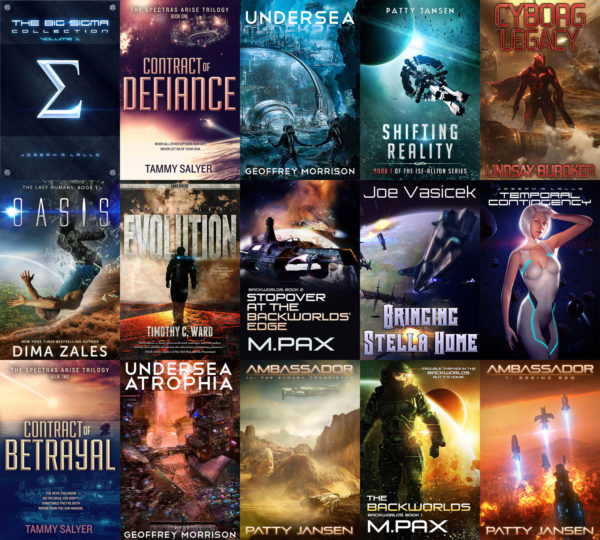
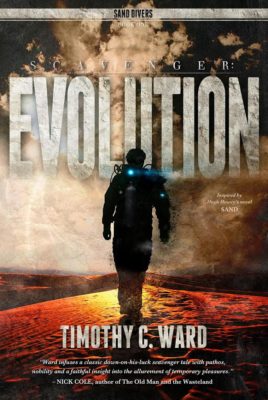
Hi guys! This is the penultimate week that the Sci-Fi StoryBundle is available, and I have a guest post today from Tim Ward, one of my fellow authors. His book Scavenger: Evolution is one of the bonus books, and it takes place in the universe of Hugh Howey’s Sand. To talk a little bit about that, here’s Tim:


My debut novel, Scavenger: Evolution was inspired by a time in publishing where “fan fiction” evolved into shared world fiction, and the weakening of a stigma that it would be lesser quality than the original source material. Kindle Worlds gained popularity through shared world stories set in famous works, with Hugh Howey’s Wool as one example.

I met Hugh through some podcast interviews I did for my first podcast, AudioTim. I loved his story of long term, overnight success, but more so, I loved his stories. Sand told the tale of a family adrift in a world covered in sand, where sand divers hunt for buried treasure and the lost city of Danvar.

In one scene, after a catastrophe, an unnamed sand diver is noted for scavenging in the rubble of a newly buried location. Knowing that Hugh allowed people to write in his Wool universe, I asked him if I could write a story in his Sand world even though it wasn’t yet open in Kindle Worlds. He gave me permission, and I took off with the idea of who this sand diver was and whom he was searching for.

The characters of Scavenger: Evolution became a former dive master, Rushing Stenson, and his wife Star, who lost their infant to a sand spill two years earlier. Their relationship never recovered, and the story starts with Rush as a custodian at a saloon, struggling with giving up on life and giving in to the temptations that surround him. He is offered a job that could give him the financial freedom to leave, and in the midst of his adventure, he will be forced to examine what life he could have with his wife if he decided to fight instead of giving up.

The story works as a stand alone, with really only the world and the starting point of the sand diving technology as the hooks that keep it in Hugh’s universe. I wrote a sequel, Scavenger: A.I. where I expand on my idea of what caused that portion of a future America to be covered in sand. Our heroes uncover the technological cause of the apocalypse, and then struggle to keep it contained before it makes them pawns in its resurrection.

Joe mentioned earlier posts on his blog that discuss TV tropes that inspired stories. In mine, I’d have to credit Stargate: SG-1 as a main influence in its story threads surrounding the replicators. The tone of my story is more along the lines of Alien, and its trope of terror in entering a lost civilization to discover ancient technology. Anyone who enjoys discovery, pulse pounding action, and a foundation of emotional turmoil between loved ones, should find a solid read in my Scavenger duology.

Scavenger: Evolution is the first book in the series, and is available as a bonus book in the Sci-fi Adventure Bundle.


Trope Tuesday: Space pirates with Kindal Debenham

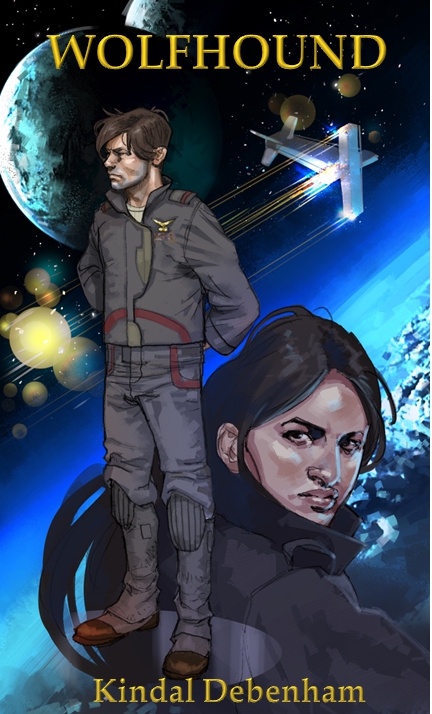
For today’s Trope Tuesday post, I thought it would be fun to bring on my friend Kindal Debenham to speak about one of the tropes in his new book, Wolfhound.

Kindal and I were in the same writing group in college, and attended Brandon Sanderson’s English 318 class together.  I just picked up a copy of his book, and it’s pretty good–definitely the kind of science fiction that I love.  You can currently find Wolfhound on Amazon, as well as Kindal’s self-publishing site.

So anyhow, here’s Kindal’s discussion of space pirates in Wolfhound.

==============================

Space pirates are kind of a staple in science fiction. We’ve seen them in all sorts of different forms since the genre came into being. As the trope states, though, there are basically two main classes. The first class is basically a bunch of violent criminals on a spaceship, kind of mirroring the behavior of modern day pirates in Somalia or Southeast Asia. The second are a corny recycled in space variant of the eighteenth century Caribbean pirate with robotic peg legs and a space parrot. Obviously one is a bit more realistic than the other. 🙂

The version I went for leans a lot more heavily on the first class of space pirates rather than the second. I wanted a smaller scale conflict in order to introduce my main character, and pirates seemed to be a good opponent to use for that purpose. Since the ship that Jacob Hull is on was partially based on the USS Constitution, I decided that I could use some of the pirates that ship fought during its history: the Barbary pirates.

These pirates weren’t your clichéd corsairs with parrots and a desire for plunder. The Barbary pirates were a collection of raiders that operated out of northern Africa. Their motivation was to support their nations by taking ships and capturing crews, which they then added to their fleet and put to work as slaves. In addition to raiding ships, the Barbary pirates also went on slave raids throughout southern Europe. They would accept tribute to ignore the ships of certain countries (think ‘protection money’ for a mob equivalent). The US had to pay about a fifth of the early national budget in tribute to these pirates until the politicians decided that guns were cheaper to buy—which led directly to the creation of the USS Constitution.

Building off of those ideas, I created the Telosian pirates. Vicious, more interested in valuable ransom for prisoners and well armed ships than simple cargo, and willing to do just about anything to satisfy their greed. With an utter ruthlessness only matched by their subtle plots, they made quite a good enemy for Jacob Hull and the rest of Wolfhound’s crew, and they were a much more interesting enemy to fight than a stereotypical Pirate-with-an-Eyepatch would have been. In my opinion at least, though I’m a little biased.

So those are the bad guys of Wolfhound—at least, they’re the majority of the bad guys—and believe me, they live up to their reputation as nasty pieces of work. Hope you guys enojoyed the background, and I hope I didn’t get too history nerd on you guys. See you around!

Interview with Slava Heretz

I met Slava Heretz online shortly after I started publishing my books.  He’s another indie writer who specializes in science fiction and space opera.  I’m reading his short story / novelette series Outer Pendulum right now, and it’s pretty good.  If you like a good space adventure, I think you’ll like his stuff.

Anyhow, we decided it would be fun to interview each other on our blogs, so here he is.

Tell us a little bit about your books.

The Outer Pendulum is a space opera which I am releasing in monthly 10,000 word installments. The story is set in a galaxy where humans are the unwanted newcomers, escaping an oppressive life back in the Milky Way, only to find themselves facing another kind of tyranny: the seemingly endless stream of piracy and corruption in their new land. Our hero is Captain Eli Saffinger, a former New Alliance Navy captain turned mercenary fleet commander. His mission, which he accepts reluctantly, is to escort a freighter carrying extremely valuable mining equipment to the only allies of the weakening colonial state. So his journey begins in Corsair (Outer Pendulum, Book 1), where he must immediately confront the most ruthless and dangerous privateer in the galactic region.

How long have you been a writer, and what got you started?

I started serious work on a near-future technothriller back in late 2007. I think that’s really when I began to consider myself a writer. As opposed to earlier dabbles with fiction back in my youth, I actually spent a very large portion of my days dedicated to this project — and to be perfectly honest, I’m still not exactly sure why. I just suddenly had a story to tell. It came to me one day in the shower and I said to myself, “Hey, Slava, let’s write a novel.” So when the idea for The Outer Pendulum popped into my head this past spring, I had the wisdom and experience from my many many mistakes to give this story more life, energy and passion.

What draws you to space opera and science fiction?

As an only child I had a lot of time to just sit there by myself and dream up wildly imaginative tales of space travel and cool technology. Some of these ideas were good, some not so much. But I always marveled (and still do) at the things which I have no hope of ever accomplishing. Theoretically I could be a rock star. I have no talent for it, but at least the occupation exists. But no matter how hard I work at, there is no way in my lifetime, save a true miracle, that I will ever travel to another solar system. And because of that, the possibilities of the imagination are endless. I love that.

Who are some of your favorite authors?

Dan Simmons for his wonderful characters and settings. Iain M. Banks for that touch of witty humor we all love and need. And M. John Harrison for anytime I want a truly warped, weird, yet poetic reading experience — he’s kind of the Stanley Kubrick of sci-fi noir.

Why did you decide to self publish?

I had submitted several pieces of fiction to traditional publishers in the past. Many of them flat out ignored me. Others, however, sent very positive rejection letters. That’s when a light bulb appeared over my head. I asked myself: why am I waiting for months to have one person tell me I write well, when I could let the world of hungry readers decide for themselves? It wasn’t long before I discovered Amazon Kindle Direct Publishing and Smashwords. I soon realized what a revolutionary idea it was to allow authors to simply create and let the market speak for itself.

What have you learned from your indie publishing experience thus far?

I’ve actually learned quite a bit about readers of indie literature as a whole. I’ve heard the complete spectrum of praise and criticism about my series. Some have absolutely loved the story. Some have vehemently hated it. But if I were to pick out some things that they all had in common they would be a) a seemingly insatiable appetite for reading within the genre b) that MOST of them actually do read samples and/or product descriptions before buying and c) that this growing community of open-minded folks is truly willing to ignore the stigma of indie publishing and seek out works by self-published authors. I can’t say that for them it’s an easy job. But they try, and I thank each and every one that contacts me — because it seems in the end, the reward of finding a few self-published diamonds far outweighs the possible tedium of sifting through the ever-growing rough.

What are your goals and plans for the future?

First and foremost, I have to finish The Outer Pendulum. I envision eight or ten installments culminating into a complete saga by summer of 2012. There is also an audiobook/podcast in the works. There will even be a multiplayer online card game based on the universe within the story. I mean, I have a ton of other ideas kicking around in the ol’ noggin — such as books in other genres. But this will certainly keep me busy for the next several months. It’s really been a lot of fun writing the series.

If all of us have at least one impossible dream, what is yours?

I would love to meet a sentient alien. I can’t say with 100% certainty that they exist, but I really hope so. If I may quote one of my favorite TV shows — “I want to believe”

Slava lives in Brookline, MA with his beautiful wife Alyssa, his neurotic dog Duke and his passive aggressive cat Chester.

Publishing in 2016 by David Gaughran

If you’re a writer with any interest in indie publishing at all, David Gaughran is someone you should be following right now.  He’s an up-and-coming Irish writer with a better handle on the changes in publishing than most.  I’m about halfway through his book Let’s Get Digital, and it’s quite good.

For today’s post, I asked him if he could map out some of the major competing predictions for how the ebook revolution will play out.  At this point, no one really knows, so any person’s speculation by itself isn’t all that useful.  He responded with an excellent analysis which I think you will find quite fascinating.

So without further ado, here he is!

==================================

Publishing in 2016

Predicting the future is always a mug’s game, as the historical advocates for paper clothes, jetpacks, time-travel, and hoverboards will tell you, if you can find them.

But Joe has been kind to me here. He’s not asking specifically for my predictions of what publishing will look like in five years. Rather, he wants diverging views of how things will play out, and the logic behind them.

I‘ve tried to be fair here, and made what I think are quite strong arguments for things I don’t think will happen, but the whole exercise is probably colored by my own views. Feel free to disagree in the comments. I’ll probably join the chorus of boos.

There are hundreds of potential scenarios, but here are two competing visions of publishing in 2016.

SCENARIO #1 – The Empire Strikes Back

Publishers were slow to embrace the digital future, but they learned. They stopped chaining the release of the e-book to print versions, instead releasing digital when ready (sometimes a year ahead of print), vastly reducing publishing time, and allowing them to build up an audience of fans, some of whom would also go on and buy expensive limited edition hardcovers, which proved very lucrative.

They also greatly increased the revenue split with authors which had two effects. First, they stopped losing writers to self-publishing. Second, writers became more motivated to go out and directly promote the book to readers – as the returns they got from each copy sold increased.

Finally, as most agents stopped accepting submissions for anything other than their publishing arms, instead scouring the Kindle Store for prospective clients, the gargantuan slush pile moved online. The ensuing decrease in quality of the average self-published book made readers actively avoid indies and cry out for some form of quality seal.

The publishers, keen to exploit their position as trusted tastemakers, banded together with furloughed newspaper reviewers to create “curation” sites, where readers could safely browse only “quality” works.

The online retailers, fearful of losing customers to the new, popular curation sites, started granting concessions and building storefronts for all the publishers, vastly reducing the visibility of self-published work.

The only indie authors that thrived were the expert self-promoters. As soon as they struggled out of the morass, they were co-opted by the large publishers, while the rest only sold a handful of copies to family and friends.

When enhanced e-books took off, most self-publishers couldn’t afford the initial investment to create all the extra audio, video, and gaming components that readers demanded. Ironically, the first indies to monopolize the e-book market – writers of thrillers, fantasy, and science fiction – suffered most.

Publishers, after merging with gaming companies, returned to their former position at the top of the pyramid, the retailers now cowed and forced to operate on the publishers’ terms, as they controlled all the top quality content.

WHY THIS WILL HAPPEN:

Once the format battles are settled and once the e-reader device war is over, the next fight will be over content. The large publishers still own most of the content, and are getting new content submitted to them every day, mostly by authors who would license it on pretty much any terms.

Publishers are locking down not just current rights, but lots of future potential rights, and e-books will never go out of print like books used to, meaning that authors without some kind of “sunset” clause will never get their rights back.

Some publishers are in trouble, but some are doing quite well out of the digital revolution. Some will learn the lessons, some will compete at lower prices, some will bring digital versions out first. And we shouldn’t forget that most of the major publishers are owned by large conglomerates with very deep pockets.

WHY THIS WON’T:

Any battles between agents, publishers, and authors are only a side-show. The real battle for control of publishing is between the tech giants: Google, Apple, Amazon. Apple are sitting on a cash pile of $78bn. Google have the resources to compete with anyone, in any area, once they make it a priority. Amazon have a lock on the market now and are investing most of their considerable revenue in aggressive expansion.

The notion that readers want “curated” selection is outdated. That has been chipped away at for years by the millions of books available on Amazon. The prize usually goes to the bookstore with the largest selection. Nobody can compete with Amazon here now, and it’s hard to see who can (outside of Google and Apple) in the future.

Readers are voting with their feet. Amazon are on the way to controlling over 50% of the overall US book market by 2012. Readers clearly want an uncurated selection.

This idea of a flood of terrible slush drowning out all the good work is built on a fundamental misunderstanding of how people actually buy books online. Most readers (around 80%) go to an online store with a purchase in mind (usually a recommendation, or another work by an author they have previously enjoyed).

They may add more before they pay, but these are things that caught their eye along the way (as recommended by a powerful algorithm based on their buying and viewing history). That won’t change. In fact, those recommendations will get smarter.

And I’m not convinced that enhanced e-books are the way of the future. Readers want to read a story. I think they will find those extras intrusive. Books may become like DVDs – with extras that can add to the enjoyment of a book after you are done reading, but not something that would normally make or break a purchase. Children’s books may be different, and when that generation grows up they may well have a different idea of what a book is or should be, but that’s far past 2016.

Finally, owning content is one thing, but you need somewhere to sell it. And the publishers have proved singularly unable or unwilling to develop a retail arm to compete with the giants. JK Rowling may be able to do it, but few other content owners could, and anyway, many analysts feel that she could make more by distributing to all the major retailers.

SCENARIO #2 – A Golden Age For Authors

Authors were slow to embrace the digital future, but they learned. They stopped submitting to agents that weren’t reading their work anyway, and started publishing online. Armed with sales records and a proven platform, they found publishing deals much easier to come by. Some used self-publishing as a springboard to a lucrative deal, others preferred to keep going it alone and keep reaping 70% royalties.

Publishers had to downsize rapidly to remain in business. Those who didn’t went under, with the loss of many jobs. But all those editors, designers, and publicists quickly found lucrative work as consultants, advisors, and service providers to the growing band of self-publishers who made investment in professional quality publications a priority.

The publishers themselves saw the flight of the mid-listers. Those authors saw their advances and royalties dwindle as further bookstores closed, and the surviving ones morphed into general merchandize operations which happened to have a selection of books at the back. Those stores only stocked bestsellers – many of whom remained with the publishers.

Initially, forward-thinking publishers saw great success with converting indie stars to trade deals. With a stellar sales record, and an untapped audience in print, these prolific self-publishers were as close as you could get to a sure thing in publishing, and they made a lot of money for themselves and their publishers, as their readership exploded in print.

Agents had mixed fortunes. Some made money spinning off successful self-publishers to publishing houses but, increasingly, the publishers found they could do this job themselves. Others attempted to move into publishing either as service providers to self-publishers or by launching full-blown publishing companies. Some succeeded, but most did not. By 2016, “literary agent” was an archaic term.

Authors, however, thrived. After e-books began to outsell all print in Christmas 2012, their rosy future was sealed. No longer did they have to submit to the query process or struggle to get their self-published work into bookstores. Everyone was buying e-books, and those who weren’t were buying print copies online.

By 2016, e-book growth had plateaued in the US, with print only holding on to 20% of the market. However, as new markets opened up in Brazil, Indonesia, Mexico, India, and China, authors poured in, leading to a boom in translation and local language marketing services.

This was quickly co-opted by the tech companies who hired armies of translators to clean up the text that the translation software spat out. Authors uploading to Amazon, Apple, and Google began to moan about the week it would take before their books appeared in Hindi, Mandarin, and Brazilian Portuguese.

WHY THIS WILL HAPPEN

The genie is out of the bottle. More and more authors are switching to self-publishing every day. Once they get a taste of 70% royalties, complete creative control, prices they set (and their fans love), and the ability to publish whatever they like, whenever they like, they won’t go back.

Some will get tempted by a publishing deal. However, with each bookstore closure and with each group of readers that switches to e-books or starts shopping for print online, the main reason to sign with a publishing company (print distribution) becomes less and less valuable.

Savvy self-publishers may sign a one-off trade deal to expand their readership into print. And once their new publisher does all the heavy lifting, they can switch back to the more lucrative royalties of going it alone, while keeping their higher profile and new readers.

Publishers don’t seem to be learning from their mistakes. They continue to fight the digital revolution, which is like trying to hold back the tide. Instead of offering writers better terms, they are inserting rights-grabs into publishing contracts. This will come back to bite them.

E-reader ownership has doubled in the last six months. It will explode in the run up to Christmas as all those new models come out from all the major manufacturers. Readers will continue to be lured to e-books by lower prices and greater selection, and the defection of their favorite authors to self-publishing.

WHY IT WON’T

Most self-publishers saw a drop in income when Amazon ran a sale of 600 bestsellers from large publishers in June. All of John Locke’s books were knocked out of the Top 100. Amanda Hocking saw a severe drop in rankings. Joe Konrath’s sales fell by 15%. Other self-publishers reported drops of up to 50%.

Amazon covered the cost of that sale, but it was so successful that they ran another in July, with even more publishers onboard – this time sharing the cost burden. These experiments could show publishers once-and-for-all that Amazon were right, that they would make lots more money with lower priced e-books.

Publishers could drop prices across the board, removing one of the prime advantages that self-publishers have: lower prices.

And, if one of the tech companies gets a permanent lock on the retail market, and sees off all competitors, the first thing they could do is demand exclusivity and cut the royalties, leaving writers back at square one.

***
David Gaughran is an Irish short story writer and novelist. His latest book Let’s Get Digital: How To Self-Publish, And Why You Should is available from Amazon and Smashwords for $2.99. The PDF version is available as a free download from his blog, so you can try before you buy.

Copyright (c) 2011 by David Gaughran.
Guest post: Developing Characters in a Fantasy Setting

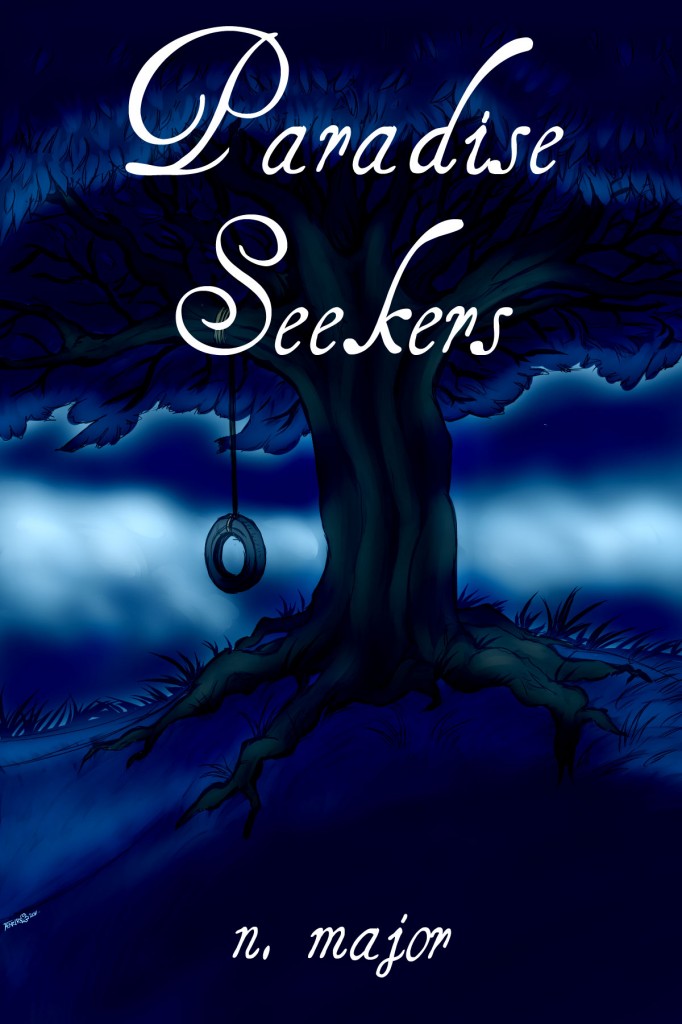
Nathan Major is a friend and fellow writing who, like me, has taken the epublishing route for his first novel, Paradise Seekers. I met him through our mutual friend Charlie at Brandon Sanderson’s English 318 class.  His book is pretty good; I’m only partway through it right now, but he’s playing with some interesting fantasy concepts and I’m definitely looking forward to seeing how he pulls it off.

I recently appeared on his blog with a guest post on how I develop my characters; for his appearance here, I decided to throw the question back at him.  Like a true fantasy author, he answered it with a multi-part epic that is probably only the first installment of a trilogy.  He makes some good points, though, and it’s definitely worth reading (and not just for the snarkiness, heh).

On a tangentially related note, I also appeared recently on Charlie’s blog with a post on ebook formatting and book DIY.  When you’re finished here, be sure to check it out!

And now, I give you Nathan Major…

================================================

When you think of fantasy, what is the first thing that comes to your mind? Mystical worlds populated with elves, dwarfs, and other magical races? Kingdoms and castles, dark lords and noble heroes? Perhaps you entertain a world that is more supernatural and more interesting than our own, one that would allow you to escape to its enchanted forests and sweeping vistas.

The fantasy genre differs from other forms of fiction (except perhaps science fiction) in that the worlds they take place in tend to be the stars of the stories. Middle-earth and Prydain. Oz and Earthsea. And within these worlds, a classic clash of good vs evil is expected. The characters and story can often take a backseat, with many authors spending years of their lives crafting the perfect magic system, most precise system of fantastical government, and the means to make their elves the best damn elves you’ve ever seen.

This drives me crazy.

I’ve been reading fantasy my entire life, but it wasn’t until a few years ago that I got fed up with the whole thing. I loved The Hobbit and The Lord of the Rings, but as I dug deeper and picked up more modern fantasy, it all seemed to start blending together. Here is our noble hero, beating the odds to fight against a nameless, oft-hidden dark lord. Here is his spunky princess sidekick slash love interest, his old mentor who dies in act two, and the hardened warrior with a dark secret. While not all books contained these tropes, the main issue still persisted: I wasn’t seeing any new characters.

That was actually what drove me to writing. After reading through a particularly popular fantasy book that was also atrociously generic, I remember tossing the book on the couch and thinking, “I could do better than this!” So I set out to try my damnedest to write a fantasy novel that, yes, was in a fantastic worlds that we wish we could live in, but was populated by people just as interesting and well-developed as the world.

Since I’m severely ADHD, I’m going to break this up into a few key ideas that (hopefully) will get my point across. These aren’t just applicable to fantasy, but it’ll be my main focus.

1) Plan your characters first, before you plan the world.

Simple enough, right? When speaking with most other fantasy authors on the subject of brainstorming, the first things they say are, “Oh, I got the coolest idea for a magic system!” or “This world is going to be amazing…it’s made entirely out of White Chedder Cheese-its!” To which I say, “Ok, but what’s the story? And who are the people influenced by the story?” This is usually met with a, “I don’t know, I’ll figure it out later!” Then I defriend them on Facebook and pretend they never existed.

Ok, so the last part was an exaggeration. But the point still stands: you may have the greatest world ever devised, but so do map-makers, and theirs looks better. What is actually in the book is the plot and the characters, and the world is just what it takes place in. You might have the greatest appendix ever at the end explaining how the Haku-Bula Wolf Tribe’s language is actually a combination of grunts and Swedish, but that doesn’t matter to the average reader. Figure that stuff out after you’ve got a story, because it’s less important.

2) Don’t fall into cliches.

This is a hard one, as discovered by me when writing my third book, Where Gods and Mortals Dance. If you’ll excuse a moment of self-indulgence, when writing this book I had a female princess as the main character. She was a strong character, but due to circumstances beyond her control she was thrust into a situation that was almost impossible for her to fix. I remember trying to design her as strong but still fragile, as parts of her past haunted her and made her ability to rule difficult.

Then I took her to writing group, where the group was divided. Half said she was the, “generic, strong, masculine princess who takes charge,” and the other half felt she was the “weak, needy, spoiled princess” who has everything done for her.

It frustrated me, but also proved a point.

I was relying on two cliches and stereotypes to design my character. I drew from both in an attempt to be original, but that didn’t work. This happens all the time in fantasy. We have the old warrior, somehow inferior to our spunky young farmhand who picked up a weapon for the first time yesterday. We have a dark lord who never actually does any fighting or has any coherent plans, he just sort of sits on his throne of skulls and knives (which is probably black and on fire) and waits for farmhands to come and kill him.

Even in the most original novels, these cliches can become evident. They might not be as blatant as the ones said above, but keep them in mind when writing. Your book doesn’t have to star a teenager. It could star a forty-year-old man who wants to save the world. There doesn’t have to be a Dark Lord at all; the enemy could be something completely different. Stay the hell away from elves, dwarfs, or anything that Tolkien used. And taking Orcs, changing them slightly, and calling them “Orks” doesn’t count as being original, it counts as being a cop-out. Fight the cliché. Make your characters deep and unique.

3) Remember: Everyone is a hero in their own story

Sympathetic villains are a rarity in fantasy. Most of the time we have a group that is distinctly bad, and a group that is distinctly good. You can usually tell by how they live. If they live in trees, clouds, or anything that communes with nature: good. If they live in filth, a swamp, or basically anywhere that looks like it’s under the constant duress of a smoke-machine: evil. Usually bad-guy motives are just “they are bad and hate the good guys,” which is a freaking awful excuse. Oh, and don’t get me started on the “he’s insane, that’s why he wants to destroy the world!” villains. That’s the biggest cop-out of them all and if you use it I want to punch you in the face right now. You are cheapening your characters and your story to make things easier for you. Here’s a revelation: good books aren’t easy. It took Tolkien how long to craft the novel that essentially invented modern fantasy? I’m not saying you should take two decades to make your book, but you should at least have to take more than one sentence to describe your villain’s motives.

The best part about the above expression (which is probably my motto when it comes to developing characters) is that it changes the way you look at your book. Life isn’t black and white: it’s a whole lot of gray. You might see something in black and white, but if you were given a chance to enter someone else’s head, perhaps your view would switch entirely. Nothing is scarier than a completely sane, totally competent villain whose goals just so happen to be the exact opposite of our hero’s. In fact, it makes the reader uncomfortable, because many of them will no longer know who to root for. If you are doing it right, your villain’s motives and values should be just as convincing as the hero’s, which means the reader should be second-guessing their loyalties throughout the book. It makes for a hell of an engaging read, let me tell you.

But this little ditty isn’t just for main characters. Side characters also need to be their own heroes. Sam didn’t just tag along with Frodo because it was a fun thing to do. He knew what had to be done (probably even better than Frodo) and fulfilled that personal quest. Your side characters need to have their own motives and motivations, depth and personality. Don’t’ drag them to Mt. Doom with the only reason being “because the hero was heading that direction anyway.” They should be just as deep (or at least close to the level of depth) as your hero. Make them interesting, and your reader will love them even more.

4) For your characters to be successful, you must know them better than they know themselves

Wow, that’s a long one, and it is sort of off the theme of “broad, overgeneralizing statements” that these bullet points have been so far. At any rate, I’ll try and be brief with this one because it seems self-explanatory.

I have a friend author who, upon designing a character, takes an online “100 questions personality test.” While I’m not saying this is the “go-to” answer for everybody, it can be an extremely helpful tool in understanding a character better. What do they like to eat? What is their taste in women (or men)? If they magically appeared in our world and wanted to hang out, what would you do? These are questions that’ll maybe never be addressed in the story, but you should know these answers. If a character has a name and is in the book for more than a single chapter, you should know everything about them.

This can be hard work, especially if you like having a billion characters. But even if you just have one or two, you really need to be in their heads. Know them. Be them. Imagine them in other situations besides in your novel. And once you really understand what makes your spunky farmhand tick, then you’ll be able to write him in both a convincing and believable way.

5) Write characters you’d like to read about

Figured I’d end this on a simple one. It’s very easy when writing to get the rose-tinted glasses put on, and all of a sudden everything in your book seems perfect. Your characters are a little cliched, but whose aren’t? Your dark lord doesn’t really have a idiom, but he does have a badass axe carved from the ashen bones of the long-lost race of dragons. Who wouldn’t like this book?

Take a step back and think. And if you can’t think of yourself, think of me. A cynical, jaded red-head who writes fantasy only because most of the fantasy currently out there pisses him off. I am your audience. I am biased, blatant, and unbelievably good looking. What would I say?

If you know your characters (see #4!), and you know them well enough then this step shouldn’t be an issue. You’ll like them regardless, because any author gets attached to a character they know every aspect of. In my current novel, Effulgent Corruption, one of the viewpoint characters is complete scum. My initial development of him was a murderous, rampaging madman whose only reason for existence was to kill and destroy. However, as I dug deeper and began to understand the character, he became sympathetic. I realized the man’s goals, what emotional pains he’s been through, and what hurts him now. I knew who he relied on, and what parts of himself he hated.

He quickly became my favorite character.

This should happen with you. You should love your villains, and hope that, should this whole “world-saving hero” thing blow over, their goals will be accomplished. Your side characters should be entertaining and fun, people you’d want to hang out with, just like your hero does. You should know everybody and at least have a shred of sympathy for them. Then, you’ll have great characters.

This, of course, isn’t a complete guide to developing good fantasy characters. Hell, it isn’t really even a very specific one. But I’m almost 100% sure that, should you take these ideas to heart, you can beat the odds and write a fantasy novel that is as interesting in its ideas about elven politics as it is with its elaborate, three-dimensional characters. Fantasy as a genre deserves better, and you (yes, you!) can be the one to do it. So go forth, young author, and write the epic that will shake the Barnes and Nobles across the land!

Plus, it’ll increase your chances that I’ll actually read it, which is a perk in and of itself.

Copyright (c) 2011 by Nathan Major