“Who would have thought…”

I would like to address this post to my fellow Mormon readers.

A couple of days ago, I got a discouraging message from some old mission friends of mine.  It said, more or less: “who would have thought that the missionary that taught us the gospel would write such a lurid book?” They were referring to my latest release, Sholpan.

To be honest, it’s been very difficult for me to publish it, because I knew that this sort of thing would happen.  I worry that my friends and family will think that I’ve done something inappropriate, or violated some moral standard, or made myself unworthy in some way.  It’s very difficult to put your writing out there under normal circumstances, much less with complications like these.

However, I would like you to know that I have prayed about this, and that the answer I’ve received is that this is a story worth telling.

Sholpan is about a girl who lives essentially LDS moral standards and falls into what may be the worst situation any of us could imagine for such a girl: slavery in the harem of a powerful warlord who has the power not only to rape her, but to kill her.  By refusing to compromise her values–and risking death to do so–she makes friends in unexpected places and gains a whole lot more power than she ever would have if she’d taken the easy path and compromised.

In other words, it’s a little bit like the story of Esther.  Yes, there are sexual themes, but they aren’t there to be gratuitous or titillating; they’re there to show that even in the face of such horrible immorality, you don’t have to compromise your values.

I know this kind of story isn’t for everyone, which is why I’ve put up warnings in the book descriptions and made it abundantly clear that this book has adult content.  And if you decide you don’t want to read it, I won’t be offended at all.  But please, don’t assume that I’ve gone off the deep end or betrayed my faith, because that’s not the case at all.

It’s a difficult position to be in; I’m sure that Stephanie Meyer’s and Orson Scott Card’s bishops get a lot of mail from fellow Latter-day Saints who feel that they ought to be excommunicated.  But these are the kinds of stories that I feel driven to write: stories that address difficult moral issues and don’t shy away from portraying evil for what it really is.

I appreciate your concern on my behalf, but my faith and spirituality are still quite strong.  You may or may not believe that after reading my books, but please don’t feel like you have to save me.  The best thing you can do is continue to be a positive influence, and let me be a positive influence for you.
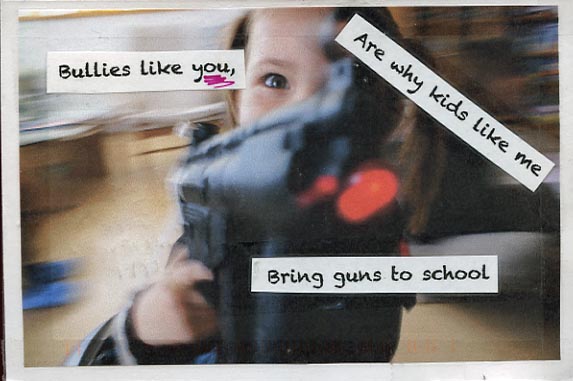
A Fascinating Moral Dilemma

For FHE* tonight, we had an interesting discussion about ethical dilemmas and moral absolutes.  It started with the following question:

If you were a prisoner of war, would you consent to have sex with the prison warden if it would set you free?

The overwhelming answer, predictably enough (at least from a bunch of Mormons), was “heck no!” So then, the teacher upped the ante by asking: what if it would free one hundred other prisoners who were scheduled to die the next day?

I was a little surprised (but not really) when I was the only one who admitted that I probably would.  After all, there’s precedent for something similar in the Book of Mormon, and a very real question of whether or not the blood of the dead prisoners would be on your hands if you didn’t.  Also, I would still consider it rape, since I draw a distinction between the act of sex and the act of saving lives–IOW, the sex itself isn’t strictly consensual; it’s the cost of saving the other prisoners.

Laying aside completely the question of whether or not you can take the warden at his word, it’s a very interesting dilemma, and one that gets at the heart of what people really believe.  The fact that so many of my Mormon peers wouldn’t sleep with the guy tells you a lot about Mormon culture.  My follow up question would be: if it meant freeing yourself and the other prisoners, would you kill the warden?  Because I’m pretty sure most of them would say “heck, yes!” even though murder is typically considered to be a more heinous sin than fornication.

But anyway, the point here is that all of this makes excellent story material.  For your characters, what are the moral lines that they absolutely will not cross?  The ones where they’re a little more fuzzy?  What, for example, would a character be like whose method for choosing between two undesirable courses of action was to flip a coin–no matter the stakes?  And what about the characters like Ender Wiggins who flip the dilemma on its head by stabbing the giant in the eye?

This is the kind of stuff I love to read, and the stuff I love to write as well.  I’m hoping to pull off a really good one in Into the Nebulous Deep, but not for a couple of chapters.  Gotta set things up, get the story moving, and give the romance a little momentum.  But once the characters are all fleshed out and the stakes are insanely high, that’s when the fun begins.  Bwahahahaha!!

Man, I would make an awesome prison warden. ;P

Image courtesy postsecret.

*FHE (Family Home Evening) is, for young single Mormons, roughly the equivalent of a college-aged church youth group meeting.

White Wolf by David Gemmell

Skilgannon the Damned is one of the mightiest warriors in the world, yet every day the memory of the innocents he has killed haunt him.  He seeks solace in becoming a monk, but as alliances break down and wars sweep the land, mob violence comes to the monastery and Skilgannon once again takes up the swords of Night and Day.  The swords, however, are cursed with an enchantment that corrupts the soul of the one who wields them, and the old witch who gave Skilgannon the swords–and who cursed them–is behind the political machinations that threaten to drive Skilgannon into the hands of his greatest enemy: his old lover, the queen of Naashan.

I’d heard about the Heroic Fantasy subgenre from English 318 last year, and thought I’d try it out.  I’d heard a lot of good things about David Gemmell, both from Brandon Sanderson and Orson Scott Card, so I kept an eye out for his books at the used bookstore and found this one.

White Wolf was an enjoyable read.  I particularly enjoyed the moral and ethical questions that Gemmell raised, both during the fight scenes and between the fight scenes in the dialogue between the characters.  Gemmell will often come right out and have his characters directly address issues like bravery and cowardice, death and sacrifice.  Far from sounding strained or pedantic, these were my favorite parts of the novel, mostly because the characters were struggling with these issues themselves.  Druss and Skilgannon, of course, have a little more experience and know the answers to these things, but the boy Rabalyn, a recently orphaned boy who has nowhere to go but follow the warriors and become one of them, goes through a very interesting growth cycle.

Gemmell also did a very good job creating an evil villain and raising the stakes.  As Skilgannon’s adventure winds in and out, he finds himself on a mission to save a girl who has been tortured to the point where she may lose her very humanity.  However, the villains are not all black and white.  Technically, Skilgannon himself is a villain, or maybe a post-villain, and the queen of Naashan is a similarly complicated character.  Gemmell’s world is populated with uber-heroes and uber-villains, but there are plent of people who fall in the middle as well.

The biggest issue I had with this novel was the plot.  It seemed to follow a loose quest structure, but it had a weak beginning and middle.  Skilgannon is supposedly onthis quest to resurrect this girl he once loved, but prior to this he’s been living the monastic lifestyle, trying to escape the world.  There is no clear moment where he says “I’m going to resurrect this girl,” yet supposedly this is supposed to drive him to travel hundreds of miles to get somewhere and do something.

The middle is littered with flashbacks–they are everywhere.  While the flashbacks are interesting and engaging, they interrupt the action in the present of the narrative, which often gave me the sense that nothing notable was really happening.  I started to lose motivation to read the book somewhere in the middle, just because I had lost that sense of plot progress.  If it weren’t for the characters and the conflict, I probably would have given up on it altogether.

However, I really enjoyed this book.  The last third was really good, and the epilogue was fantastic!  Probably the best epilogue I’ve ever read.  I wish I could say more, but it would give out major spoilers.  It was just a very well written, very well done epilogue.

I’d definitely be interested in reading some more Gemmell, though he’s not on the top of my list right now.  When I do pick him up again, I’d like to start with Legend, the novel that launched him into the big time.  I hear that’s a good one.

Yet another story idea

Ok, here is a cool one that came to me the other day.

One of the time traveling cliches is that of someone going back in time to kill off some infamous world leader in his/her infancy, thus changing the course of history and averting a major disaster (or causing an even bigger one). It’s a common what if scenario: what if someone went back in time and killed Hitler? (Red Alert) What if someone went back in time and supplied the Confederacy with AK-47s? (The Guns of the South)

Well, here’s my take on it: what if time traveling agents have ALWAYS been going back in time, trying to fix up problems like this? What if history is one long story of the screw ups of a bunch of secret agents trying to alter things, trying to get it right, trying to get to some kind of utopia?

Of course, by altering history, they alter their own futures, making it impossible to go back to the future from which they came. Which means that they would have to go forward, see how it worked out, then go back again to make another change, take out another horrible world leader, then go forward again, etc etc.

If that’s the case, perhaps our universe is actually one of the “rough drafts” that this agency has been working on. Perhaps our universe is so screwed up because the agency hasn’t yet made all of the changes they want to make…not in this timeline, anyway.

In order for this to work, the people of this agency would have to all travel together, since leaving someone behind before going back to make alterations would mean leaving that person behind in a timeline that could never be reached again. From this, two things follow: 1) the time travelers would have to have some kind of a really cool ship, on which they all live and travel, and 2) they would be completely autonomous from any kind of government or other institution limited to one particular timeline.

This raises a number of ethical questions. Is it wrong to go back and alter the course of history in this way? Do the people in the original timeline cease to exist, or do they continue to exist in a parallel universe? If you take the latter view, how does that alter the ethics of changing things? You’re not really screwing people over–they still exist, just in an invisible parallel universe. And you’re trying to make the world a better place, too. But, then again…you’re basically playing god with history, and that sounds pretty unethical.

My idea for incorporating this into a story is this: a regular guy from our time bumps into these time travelers and gets sucked into their little plot to build a utopia. He has to struggle with getting taken out of his world, never to return (or never to return to it quite the way it was). There could possibly be a love story of some kind, especially if these are steampunk time travelers (perhaps that would explain why the 20th century was more spectacularly screwed up than any other–the time travelers started in the 1800s and are more concerned about their era than after their era. But then, there are also divisions and disagreements among the time travelers, with some getting fed up and discouraged with the whole thing, others (possibly the leader) with megalomania, and others who are beginning to have doubts about the morality of their undertaking.

Pretty cool, neh? Now, back to doing homework… 😛