Trope Tuesday: Space Cossacks

I’m going to take a break from the hero’s journey trope posts for a while, until I have the time to do them justice.  In the meantime, let’s have a little fun.

Some of my favorite science fiction stories are the ones about a culture of nomadic starfaring people wandering the universe in search of a new homeworld.  Earth is usually a half-forgotten legend, and their starships have probably seen better days.  On tvtropes, the page for these stories is Space Cossacks, named after a real world culture in historic Russia that basically experienced the same thing, albeit on a terrestrial scale.

The description of this trope on the tvtropes page is so good, I’m just going to repost it here.  Seriously, every one of those cross links is worthy of your click.

There is no hope and You Can’t Go Home AgainThe Empire is spreading out. Even The Federation has too many Obstructive Bureaucrats. There is no way for free men to get out of the reaches of The Government and even mounting La Résistance will be of no avail.

So what do you do? You become Space Cossacks.

You flee to the border and live in a tough area where you all have to be sharp. You set up as Space Pirates or as Hired Guns or as Intrepid Merchants. Or all of these at once.

With you are various dissidents like people who feared being Made a Slave. There might be a Noble Fugitive or two, perhaps even a Defector from Decadence. You and your brave band of Fire-Forged Friends will struggle on to survive and maintain your freedom and heed no laws but your own.

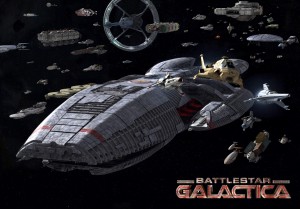
One of the things that I think should qualify a story for this trope is that the society of space cossacks is just that: a community of people who share at least a few cultural bonds.  Battlestar Galactica definitely qualifies, but I’m a little on the fence as to Firefly, since that story is more or less about a ragtag band of failed revolutionaries.  Are the Browncoats all from the same culture, like the Kurds or the Circassians or the Ossetians, or are they just a pologlot group of frontiersmen from all over the settled worlds?  Does it even matter?

In the end, I suppose it doesn’t.  The spirit of this trope is a lot like that of Fighting for a Homeland: a bunch of displaced underdogs on the fringes of civilization trying to make their way in the universe.  The nature of the conflict is such that by the end, they can’t help but form their own distinct subculture.

I don’t know why I love this trope so much.  Maybe it has to do with the way it blends elements from the Western genre in a classic Science Fictional setting.  Maybe it’s because I was born in the wrong century and naturally dream of settling the frontier.  Maybe it’s because this is one of the best ways to get awesome space battles.

Whatever the reason, I can’t get enough of it, as you can probably guess from reading my books.  In Bringing Stella Home, Danica and her band of Tajji mercenaries fit this trope to a T.  Stars of Blood and Glory delves quite a bit deeper into their background, with Roman as a major viewpoint character.  In Heart of the Nebula, the people of the Colony basically become Space Cossacks over the course of the novel.  Both of those novels are currently unpublished, but I hope to put them up in the next year.

On the subject of roving bands of displaced Eastern Europeans, I listened to this Circassian folk song maybe a dozen times while writing this post:

Awesome stuff–I’m totally putting it in the soundtrack for my next Gaia Nova novel.  Also, I’ll have to name a moon or a planet in the Tajjur system after Mount Elrus or something.  Space Cossacks indeed!
I cannot tell you…

…how much I’m looking forward to being back in Georgia.

My flight leaves from JFK on Saturday and arrives in Istanbul at about 6 am on Sunday.  The flight to Tbilisi doesn’t leave for another seven hours, so I plan to take the tram downtown and see some of the sights.  I’ll arrive in Tbilisi late that afternoon, spend the night at a hostel…

…and then take off the next morning for Kars, Turkey.  I plan to meet up with a friend there and go tour the ruins of Ani, ancient capital of Armenia.  I have no idea yet how I’m going to get there, but there should be some buses in Tbilisi or Akhaltsikhe, and from Kars you can charter a taxi.

So after all that, I’ll head out to Baghdati to meet my new host family!  For the fall semester, I’ve been assigned to the school in the village of Rokhi:


View Larger Map

It’s about an hour south of Kutaisi, right up against the Lesser Caucasus mountains, and it looks like an awesome place!  A couple of other TLGers have been there before me, and they tell me it’s really great.  It’s definitely going to be a change of pace, going from city to village, but it’s one I’m looking forward to.  There are only 300 students in the school (grades 1-12), so maybe I’ll learn all my students’ names this time.

The family I’ve been assigned to sounds a bit older, with a thirty year old son who works at the school.  It sounds a bit rustic, with Turkish toilets and no internet at home, but I’m looking forward to that, especially the no internet part.  Don’t worry, I plan to get out and blog regularly–I’m sure there are local internet cafes, plus Kutaisi isn’t that far and I know where to get internet there.

Getting out to church is going to be a bit tricky: I’ll probably go into Kutaisi on Saturday, take the noon train into Tbilisi (5 GEL) and spend the night at a hostel (15 GEL), or take the sleeper train (10 GEL) and show up in the morning.  Getting back shouldn’t be too difficult: the Baghdati marshrutka leaves from Didube at 16:00 (or so I hear), and from there it’s only about 6 or 7 kilometers.

I have no idea how long I’ll be in Georgia this time: my contract runs until the end of December but I may extend again, depending on what other options open up.  I’ve really fallen in love with Georgia since coming there, and may just choose to stay on another year.  The Caucasus is a really amazing place, full of hidden treasures and remote places.

Which reminds me: I’m bringing a tent and sleeping bag this time, to do some backpacking in Borjomi and Tusheti.  Packing them was tough: the airline restriction is 20 kg total of weight (44.1 lbs), and after a whole lot of work, I finally got it down to 42.5 lbs.  The disassembled backpack frame is going to have to go as a separate piece of luggage, since it was too big to fit in any bag, but it shouldn’t be too hard to reassemble it out in Georgia.

That’s about it.  I’ll leave you with this awesome Georgian song I found on youtube.  The dance troop is Erisioni, and they put on an amazing show that’s kind of like Riverdance, except for Georgia.  Let me tell you: when it comes to dance (folk or ballroom), I don’t think anyone in the world is as amazing as the Georgians.

Magaria!

In Kutaisi

This is the city where I'm going to be living for the next 4+ months.

So the training period for TLG is finally over, and I’ve received my assignment: I’m in Kutaisi, the second largest city in Georgia!  It’s about a four hour haul from Tbilisi; I spent it cramped on a bus with my host-mom and brother watching Georgian sketch comedy, with rampant cross-dressing and men getting bride-napped by women.  Hilarious.

I live in an awesome dilapidated Soviet-era apartment with a fairly large family: mother and father, grandmother, and three kids ages 17, 15, and 9.  The father works full-time as a welder and the mother works part-time as a nurse.  There’s another son, age 18, but he’s in Tbilisi for college. Only the kids speak English, but

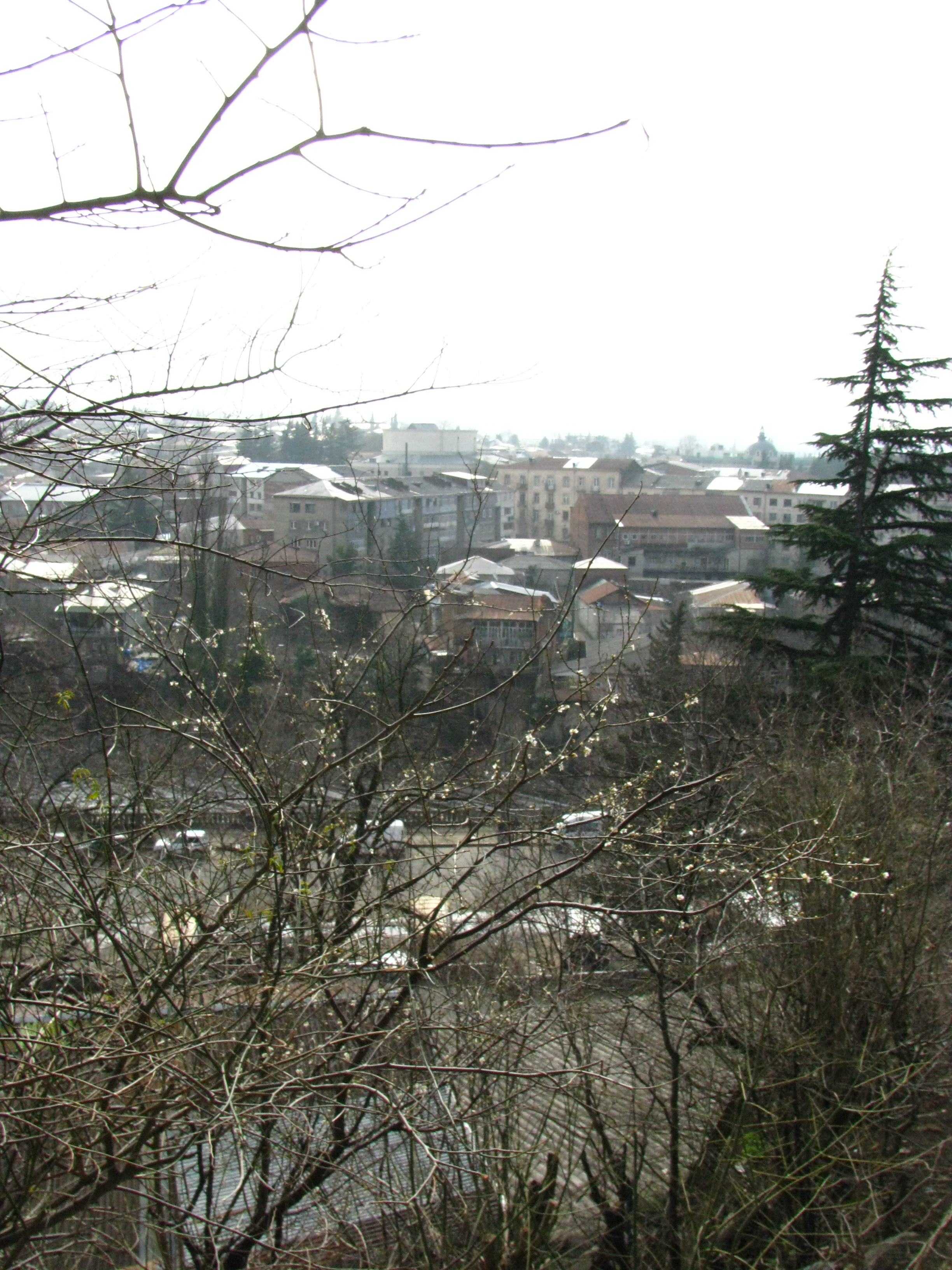
The other host brother showed me around Kutaisi today, and it was pretty interesting.  This probably doesn’t make any sense, but it feels a little bit like something out of an Asterix comic, fast forwarded to the modern era.  In any case, the city is really nice; cleaner and not as crowded as Tbilisi, with cobblestone streets and European-style buildings with a giant park in the middle.

I’ve already figured out how to get from my host-family’s apartment to the city center and back by marshrutka–if this were a video game, that would be an achievement.  Crossing the street would also be an achievement, though it’s much harder in Tbilisi than it is here.

Some more pictures:

The old cathedral that overlooks Kutaisi. Built in 1003, destroyed sometime in the 18th century, it's being rebuilt now.
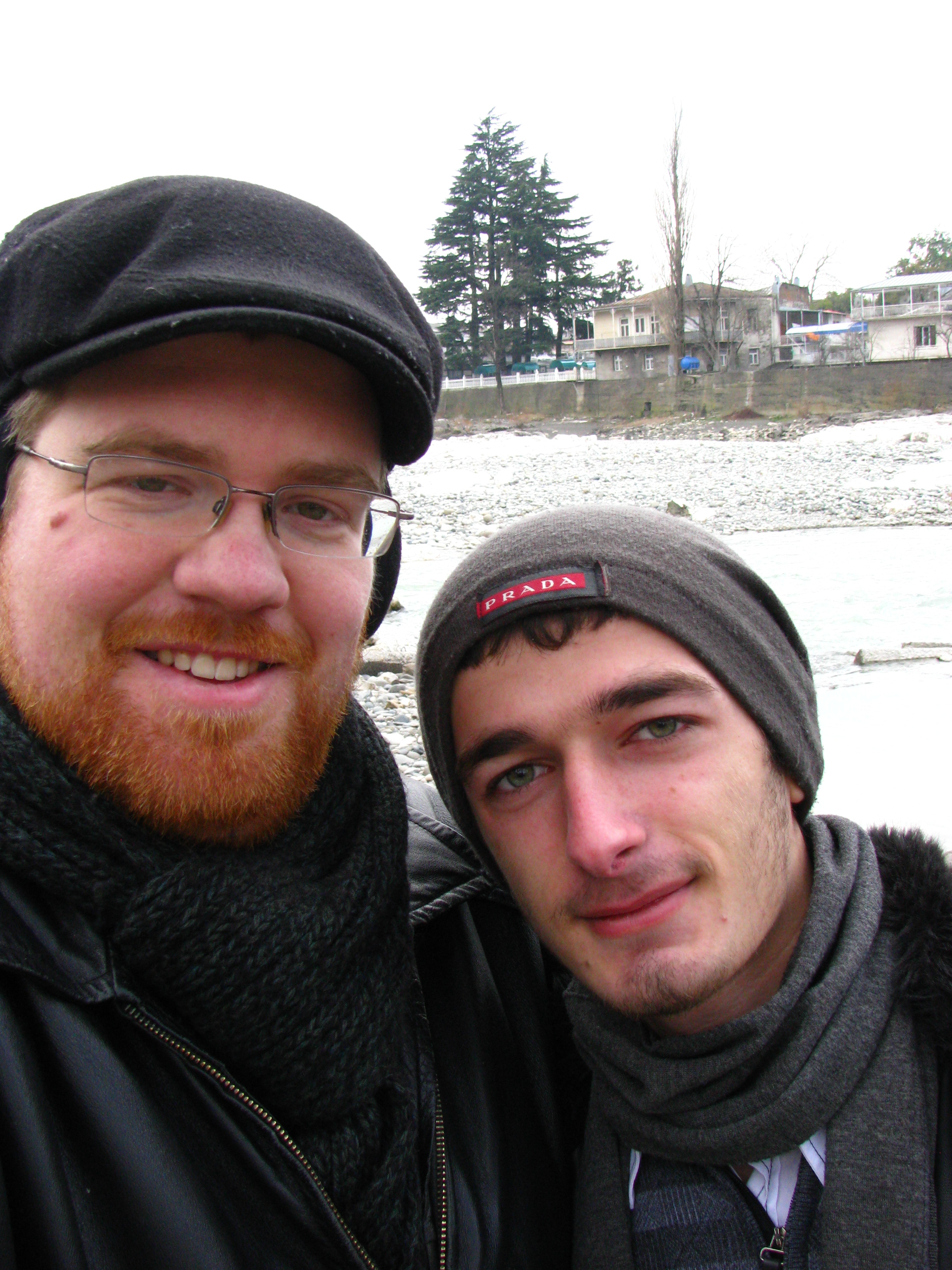
My host brother Gura and me, overlooking the Rioni river.
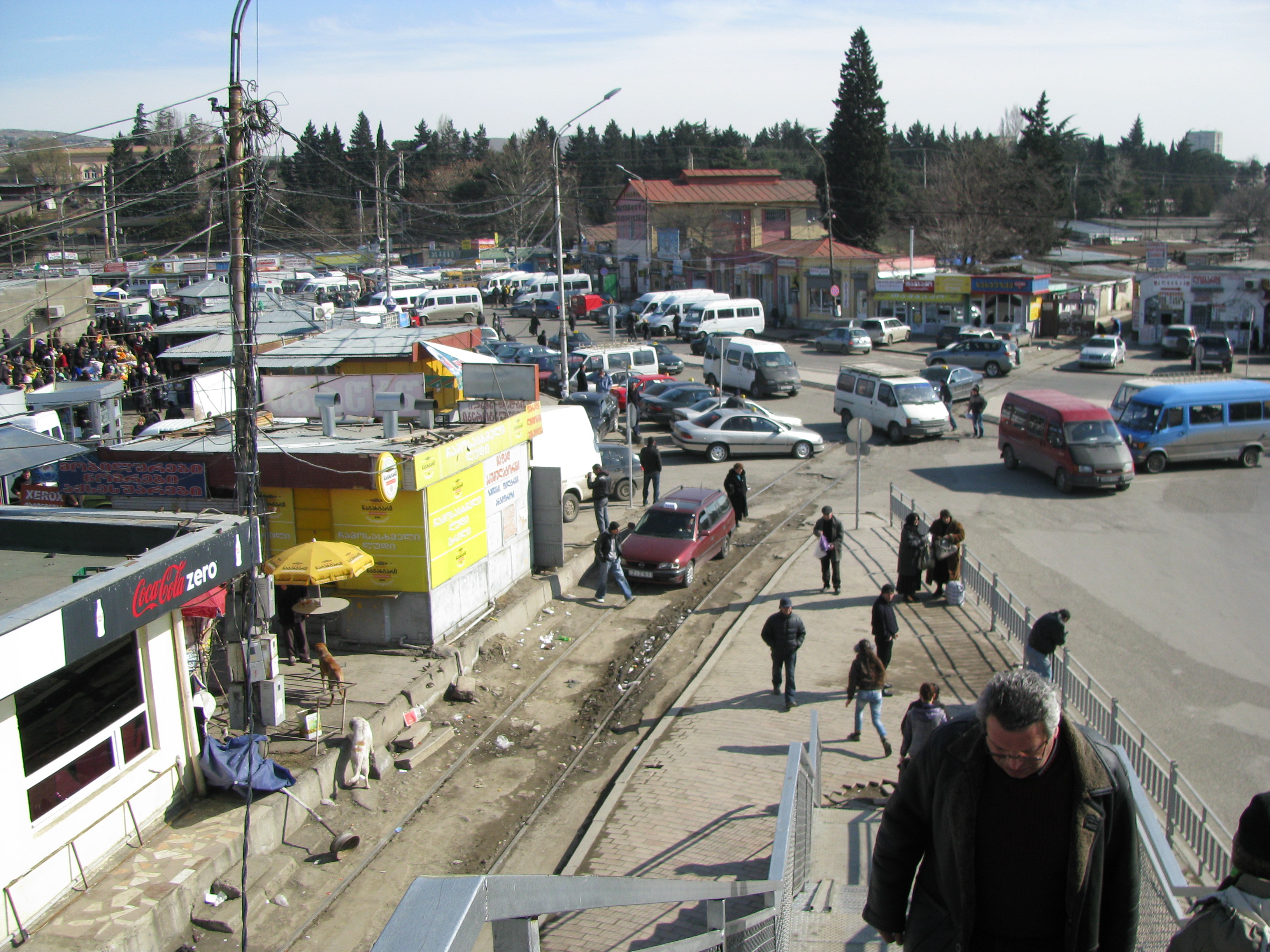
Didube bus station in north Tbilisi.
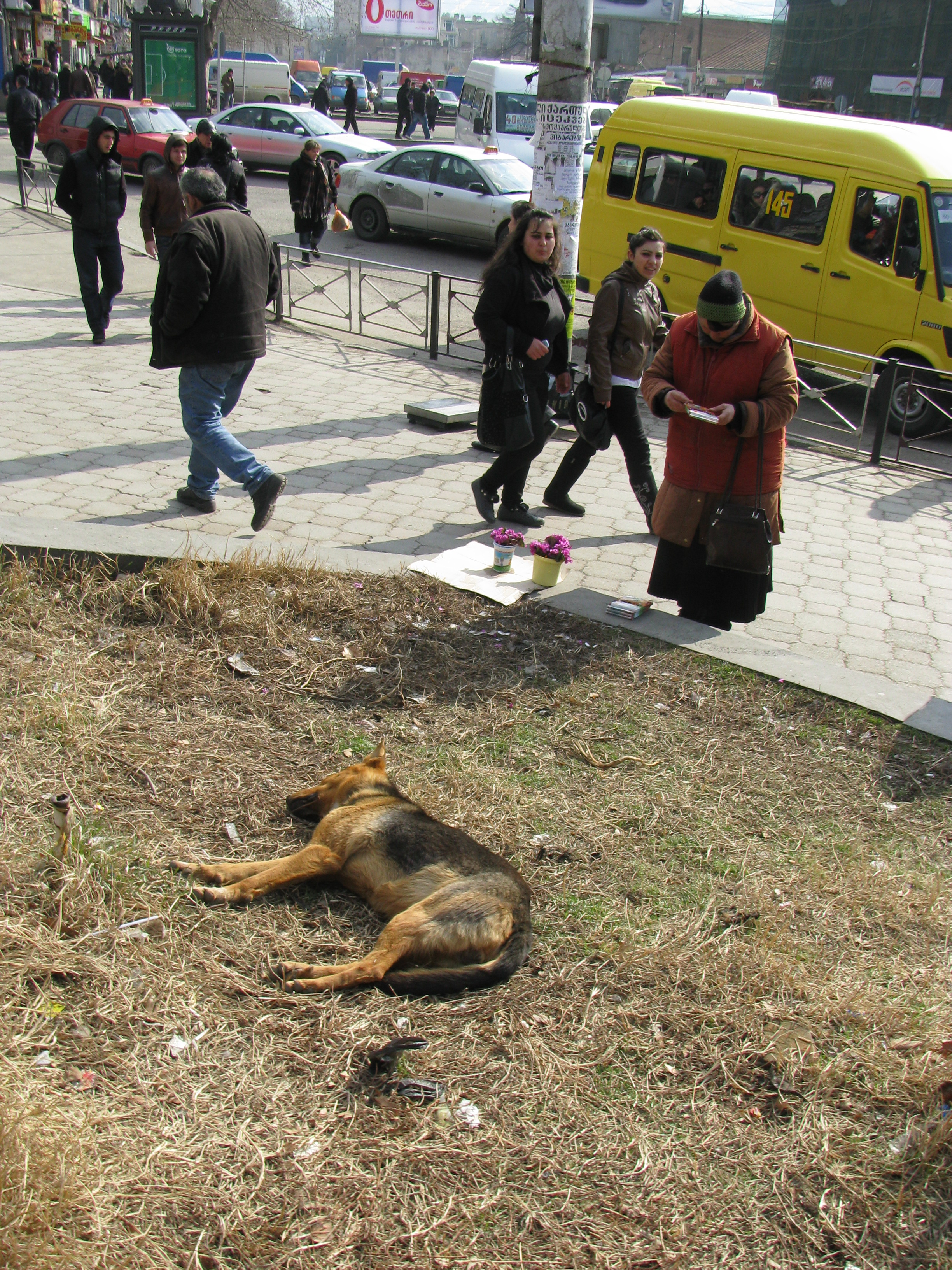
A sleeping dog at the bazaar near the Tbilisi stadium. There are a lot of stray dogs here.
Just one of the many Nutella stands at the Goodwill supermarket in Tbilisi (no relation to the American thrift store). Apparently, Georgians are crazy for chocolaty goodness.
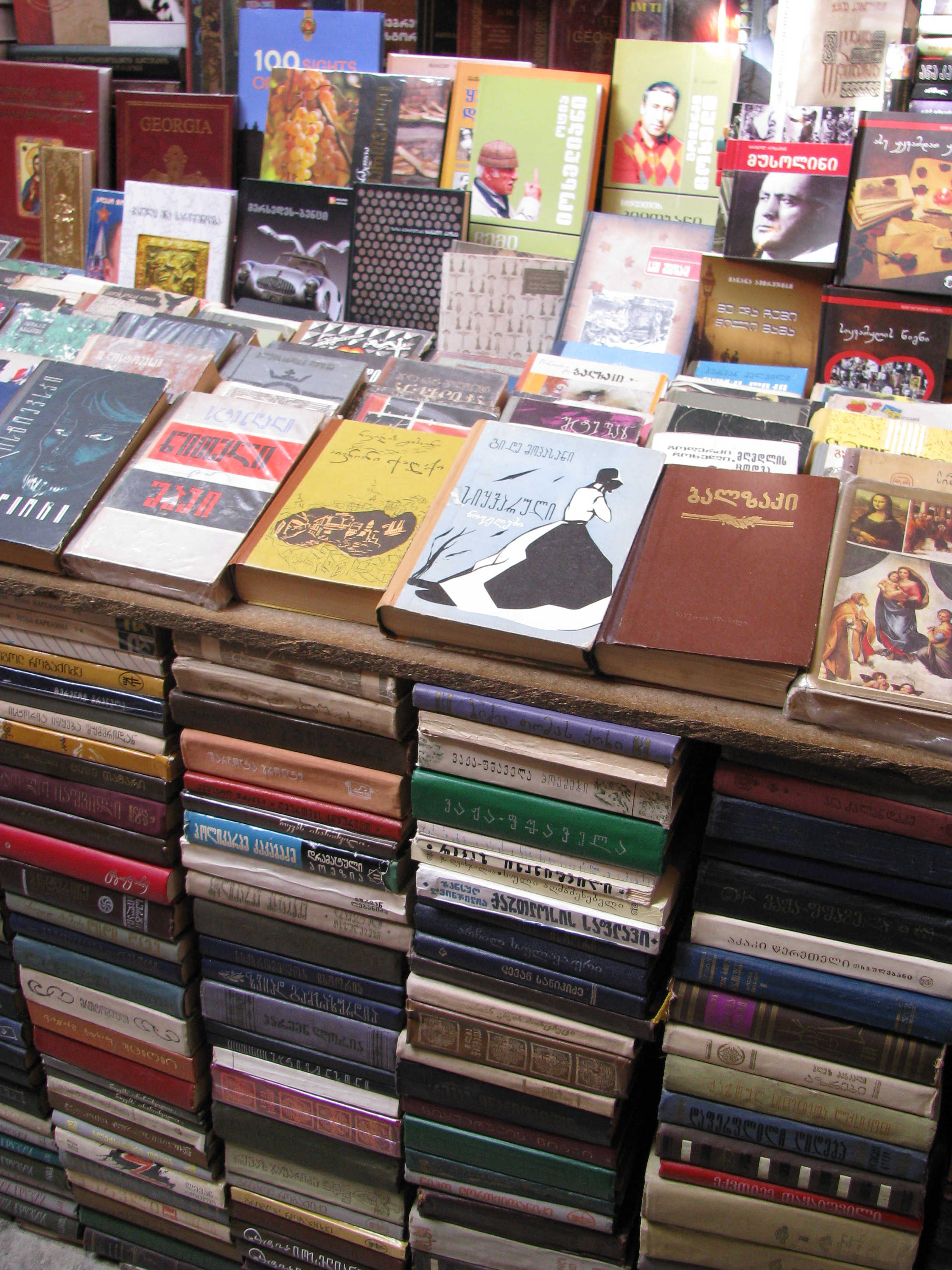
Some books at a booth in the bazaar. Most are in Georgian or Russian.

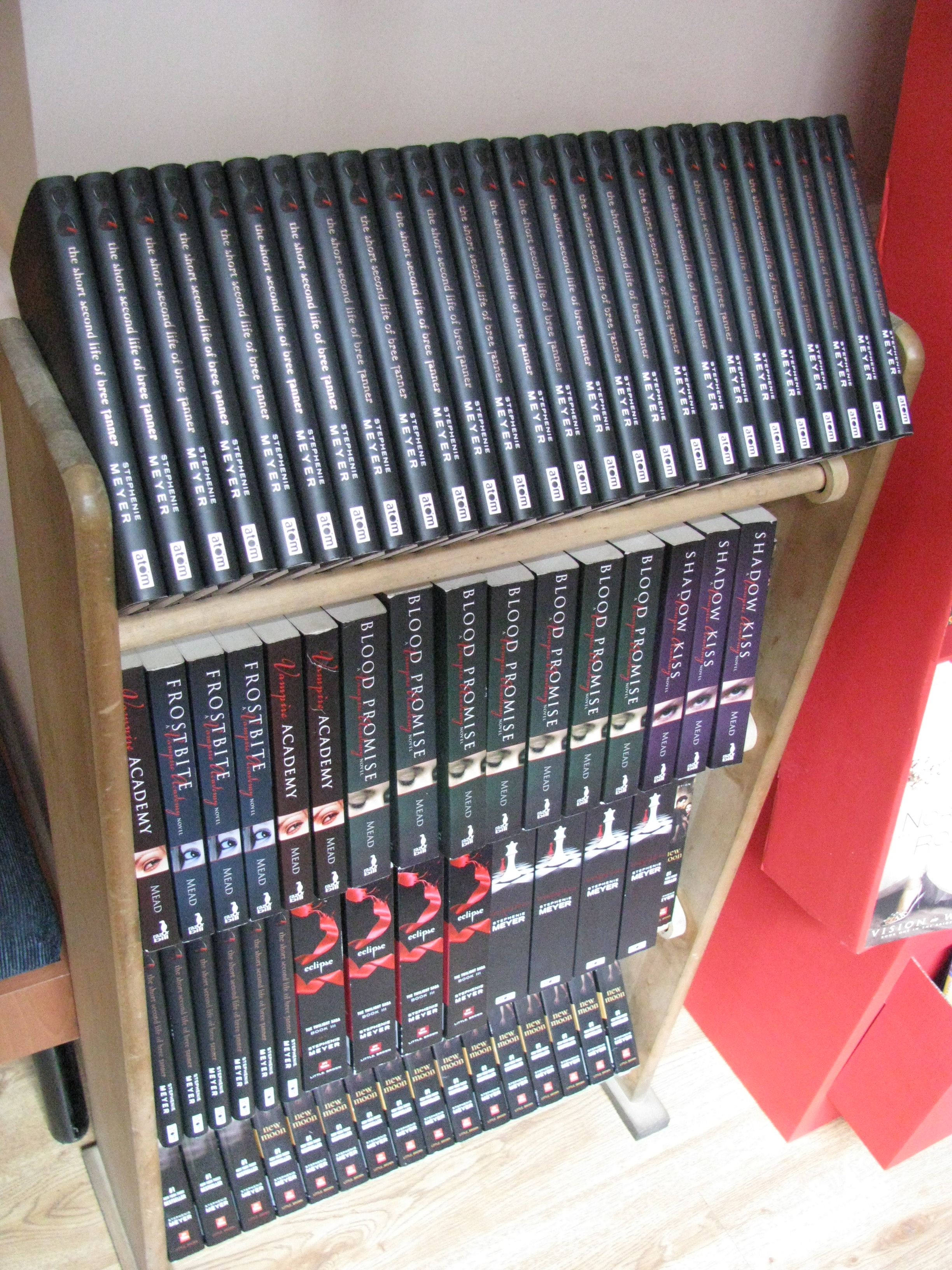
And the last one, just to show how ubiquitous Stephanie Meyer has become:

A shelf full of Stephanie Meyer's books literally on the other side of the world from her...this, my friends, is what success looks like.

So that’s what’s going on here in the land of the Kartulis.  I haven’t been writing a whole lot, obviously, but once things settle into something of a routine, it shouldn’t be too hard to get back into things.  Georgians have a way of managing time that, as a strongly perceiving ENTP, I actually find quite appealing.  But more on that later; I should probably get to bed.

Kargaaad!

What I’ve been up to recently

I thought it would be a good idea to do a quick post explaining what I’ve been up to the past month or so, since a lot of things have changed and I’m sure they will be changing a lot more in the future.  So, here’s what’s up:

As you may or may not know, I decided about four or five months ago to leave the USA to teach English abroad.  For the past few little while, I’ve been applying for a program to teach English to elementary school kids in Georgia.  I had the interview over Skype just yesterday, and I think it went pretty well!  I should hear back in the next couple of days, so fingers crossed on that.

If they decide to hire me, I’ll leave in three weeks and stay until at least mid-June.  At that point, I’ll either sign up for another semester or go somewhere else, either the Middle East or Eastern Europe. The pay isn’t great, but it seems like a good cultural experience, and I’m a lot more interested in the Caucasus than I am in East Asia (no offense to Asians).

Ever since I graduated in 2010, I’ve been looking for a fulfilling career that I can balance with my writing aspirations.  I learned pretty quick that that simply doesn’t exist in Washington DC; either you sacrifice everything for your career, including your family, or you end up trapped in an office pushing papers all day.  In Utah, I bounced around a lot of temporary jobs while struggling to make ends meet, but I never found anything more permanent that seemed to strike a balance.

I hope that teaching English will help me to find that balance, and from what I’ve heard from some of my former expat friends, I’m optimistic that it will.  Perhaps more importantly, it will probably enrich my writing by exposing me to new peoples and cultures.  Desert Stars was certainly enriched by the time I spent in Jordan; without having lived in that culture, I don’t think I would have been able to write it.  Besides, English is something I’m good at, and so is teaching–so why not capitalize on the skills I already have?  It certainly sounds better than wasting my 20s in a warehouse.

So that’s the plan: launch a TEFL career and spend at least the next three to five years abroad.  At least.  I might not get married until my 30s–or who knows, I might find someone out there and go native–but this is something I want to do as a career, not just as temporary filler before I figure out what I want to do with my life.  I’m through with filler.  Whether it takes one year or ten for my writing career to take off, I’m going to get out and do something useful and worthwhile.

That’s the plan, anyway.  And of course, I’ll always keep writing.

Right now, I’m finishing up Stars of Blood and Glory; I’m on chapter 15, with only three more and an epilogue after that, so I should finish that well before I leave.  After that, the next big project is Star Wanderers, which is already about halfway finished.  I’ll probably take some time off and work on polishing part II, then release parts I and II sometime in the spring–unless by some weird fluke it wins Writers of the Future.  I’ll know in February.

And after that?  Well, I’m thinking it’s almost time to pick up Edenfall again, but I can’t say for sure. Probably, though–I definitely want to finish that one before the end of the year, and preferably get it published.  After Stars of Blood and Glory, I’ll probably take a break from the McCoy continuity in the Gaia Nova universe, though I may pick up something from Jeremiah’s timeline in Star Wanderers.  I really want to do a parallel novel from Noemi’s point of view–maybe that’s the one I’ll do in seven days, just to hit that resolution.  Everything has to be ready fist, though, and right now it isn’t.

So much is changing–I have no idea where I’ll be in the next six months, creatively or physically. But right now, I’m just enjoying a relaxing time with my parents and getting ready for the next big transition.  Life is good.

What French Women Know About Love, Sex, and Other Matters of the Heart and Mind by Debra Olliver

I have a confession to make: when I was at my sister Kate’s for Christmas, I saw this book on her shelf and stole borrowed it without permission.  I finished it just yesterday, and at the risk of embarrassing myself, I’m going to review it as my second book of this year.

This book presents a fascinating perspective on French lifestyle, attitudes, and culture.  Even though it’s geared more for women than for men, I enjoyed it in the same way I enjoyed Twilight–as an interesting anthropological experience.

It goes beyond that, though.  The picture Ollivier paints of French culture is fascinating in and of itself, if nothing else for the contrasts she points out between us (Americans) and them.  According to Ollivier, the key difference is that the French have a deep understanding of “the brevity of time and the immediacy of pleasure.” Ollivier follows this philosophy out to its logical conclusions to show that everything in French culture is an outgrowth of this–and it makes sense.

For a non-fiction book, the writing itself is quite entertaining, with constant pop culture references and a playful, humorous style.  It was a delight to read, and fairly easy as well.

However, I did get the feeling that it was a little too enthusiastic and non-critical to present a comprehensive or truly accurate picture of French culture.  Between the lines, Ollivier seems to be saying that if we Anglos would just be a little bit more like our “French sisters,” most of our problems (like our obsession with marriage, our frustrations with perfection, and our general lack of passion) would be solved.

I take issue with this: as much as we have to learn from the French, their culture has a lot of issues as well.  For example, I personally believe that Laïcité is fundamentally incompatible with a multicultural society, and leads to de facto state repression of legitimate religious expression in the public sphere (such as the wearing of the headscarf).

Also, whenever Ollivier described American culture, I always felt as if she was describing something completely alien to my own experience.  There might be a good reason for this, considering how for the past six years I’ve lived in Utah Valley, a bastion of Mormon culture so unlike the rest of the American mainstream.  However, it might also be that Ollivier exaggerates the worst excesses of this continent in order to more sharply contrast the subject matter of her book.

As a writer, though, I found this book inspiring–particularly as a writer of science fiction.  In my novels, I’m constantly inventing new cultures to populate the many worlds in my science fictional multiverse.  This book, with its clear and entertaining analysis of some very real-world cultural differences, gave me an excellent world-building prototype and a whole plethora (oh how I hate that word) bunch of new ideas for ways to enrich my stories.  In fact, this book gave me just what I needed to get through the block that had kept me from writing Star Wanderers, so if nothing else, there’s that.

So yeah, if you’re interested in world cultures or world-building cultures of your own, it’s worth your time to check out this book.  It’s perhaps not the most thorough or comprehensive book, but it is entertaining, and fairly insightful as well.  I mean, hey, if a science fiction geek like me enjoyed it, it’s got to be doing something right.

Decisions suck, writing is awesome

Whew!  I just finished revising through almost 9k words in Desert Stars.  I’ve only got three more chapters and an epilogue to go, and man, I am so excited about this story!  I have no doubt it’s my best work yet.

Of course, I might be biased. 😉

Star Wanderers is also coming along very well.  I’ve only got a few more scenes to write/revise before it’s ready to send off to the next round of first readers.  Part of me wants to send it off to Writers of the Future right now (and according to Dean’s sage advice, that’s probably what I should do), but I want to get some feedback first just to make sure there isn’t something I’ve missed that would make it better.  If all goes well, I’ll probably send it off by the end of the month.

This is the best part of writing process: finishing up a project that you know is good.  This is one reason why I love rewriting so much.  If I could do this all day, every day, and get paid enough for my work to make ends meet, I’d be living the dream.

Until then, however, I’ve got to figure out another way to make ends meet.  One option I’m considering very seriously is selling my contract and driving across the country this Thanksgiving to spend a month or two with my parents before going overseas.  My mom was the one who suggested it, and I have to admit it makes a lot of sense; if I’m going to go abroad to teach English anyways, why not spend some time back home?

If this is something I need to do, I’m going to have to make the decision very soon, possibly before the end of next week–and if you know me, you know that I’m terrible at making decisions.  However, I have been thinking about it enough to make a couple of lists, and this is what I’ve come up with so far:

Reasons to go to abroad:

  • To start a new career.
  • To have adventures.
  • To experience another culture.
  • To gain TEFL experience.
  • To support myself as I write.
  • To have a change.
  • To see the world.
  • To have something to write about.

Reasons to stay in Utah:

  • To get married.
  • To focus on writing.
  • To pursue a graduate degree.
  • To stay in a predominantly Mormon community.

I decided to list only the positive reasons for making either decision, and not to consider any of the creeping doubts or fears (and there are many!).  So let’s break it down:

To start a new career: This seems prudent, especially if it takes a while for my books to really take off.  Specifically, a TEFL career seems like something I could juggle with my writing career, and it would certainly offer a lot more satisfaction than a grunt day job.

To have adventures: Perhaps not the most responsible reason, but hey, you’ve got to remember to have fun.

To experience another culture: One of the perks of traveling, for sure.  It would probably improve my writing considerably as well, though culture shock and distance from family would certainly pose a challenge.

To gain TEFL experience: In other words, to find out if teaching English as a foreign language is something I want to build a career around, or whether I’m just not suited for it.  This is why I’d want to do the TLG program first, before heading off somewhere like Cairo or Amman.  And if it doesn’t work out…well, at least I’d know.  Right now, I don’t.

To support myself as I write: This is huge.  I hear that most TEFL jobs only take up about 20 hours per week, and that if you’re living in a local apartment, it’s not hard to make time to write.  In the past two years, I haven’t had any success balancing writing with full-time work, and working part time probably wouldn’t earn me enough to support myself here in the states.

To have a change: Not quite as tangible a reason, but important nonetheless.  I can’t quite explain it, but if I stay where I am now, in my current life situation…it’s just not going to work out.

To see the world: I could probably lump this under “to have adventures.”

To have something to write about: Also huge.  My experiences in Jordan and the Middle East were a huge inspiration for Desert Stars, and if I’d never gone over there, the novel wouldn’t be nearly as rich.  Who knows what else my imagination would produce if I spent some time traveling the world?

Now, for the other side:

To get married: Honestly, this is more of a negative reason than a positive reason.  I’ve already decided that I’m only going to marry someone who’s a practicing Mormon, and since Utah is predominantly Mormon, I’m worried that if I leave Utah, I won’t be able to find someone.

Trouble is…I’ve been here for almost six years, and still haven’t found anyone.  I could probably put more effort into dating, but the truth is probably that finding a marriage partner is more about your mindset than where you physically live.

Besides, I could always spend a year or two abroad and come back.  I’d be pushing thirty and well beyond “menace to society” status, but at least I wouldn’t be a loser who spent all his twenties in Utah.

To focus on writing: This was why I decided last year not to go teach English in Korea.  The ebook revolution was just getting started, and I felt that I needed to stay in the states to learn how the market was changing and focus on building my indie writing career.

Now, however, I feel like I’m high enough on the learning curve that I can afford to work on other things.  Besides, with the current state of the economy, I don’t think I’m going to find balance if I stay in the states.

To pursue a graduate degree: I’ve largely ruled this one out.  I don’t see how an English degree would help me at this point, and I don’t currently have any career aspirations that would justify pursuing an advanced degree.  The only reason I’d go back to school is to postpone facing the real world, and that’s probably the worst reason I could possibly have.

To stay in a predominantly Mormon community: Kind of the opposite of “see the world” and “experience another culture,” and it gets at the very heart of the matter.  Would it be better to establish myself among people who are more like me and share my values, or should I venture out of the “bubble” and see what else is out there?  I have a much stronger support group here in Utah than I’d probably have as a global nomad, but do I really need it?  Am I independent enough to strike out and bloom wherever I’m planted?

I don’t know.  My thinking is so muddled with doubts and second thoughts that this whole exercise has probably been futile.  If I had to make a decision RIGHT THIS SECOND, however, I’d probably choose to go.

If nothing else, it would give me a good two months of writing time. 🙂

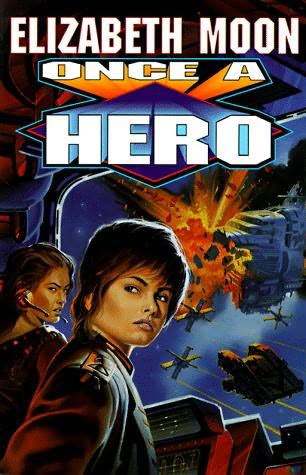
Once a Hero by Elizabeth Moon

Esmay Suiza never asked to be a hero.  All she wanted was to leave her dysfunctional home and join the navy.  But after surviving a mutiny and leading her spaceship to a most unlikely victory, everyone seems to be showering her with unwanted attention–or worse, examining her files for signs of command potential.

No, all she wants is to disappear–and now that her family has offered her a generous inheritance on her home world of Altiplano, she finds herself tempted to leave the stars behind and settle down for a while.

Little does she know, her family has hidden secrets from her–secrets from her past, which have the power to undo and destroy her.  Unfortunately, being a hero has a price–and the trauma of combat has already unearthed things from her subconscious than she cannot keep buried any longer.

This was my first time reading Elizabeth Moon, and I enjoyed it quite a bit.  Moon is extremely good at portraying a complex, believable military culture; she was a Lieutenant in the Marines, and definitely knows how to do military SF right.

My favorite part of the book was the descriptions of Altiplano, and Esmay’s experience returning to her homeworld of Altiplano.  Elizabeth Moon does an excellent job of creating a captivating world and transporting the reader there.  I fell in love with Altiplano almost instantly–not only with the planet itself, but the culture and the people, the whole society.  Excellent job.

Elizabeth Moon also does an excellent job developing her characters and giving them believable internal conflicts.  The way she portrays Esmay’s PTSD is quite striking, and very interesting.  Her struggles feel very real, and important too.  I think this novel helped me to better understand those who suffer from similar traumatic experiences, and that was very meaningful.

Storywise, however, I had a few minor issues, most of them having to do with the plot.  Things dragged a bit in the middle; when Esmay left her homeworld, I lost a sense of progression and felt that she was just wandering around.

When the antagonists came in–basically, a hostile army trying to capture her ship–I felt that Esmay solved her problems too easily, without any real try-fail cycles.  It gave me the sense that Esmay was some kind of superhero girl–not quite a Mary Sue, but toeing the line.

And Esmay’s love interest…I didn’t really get into him at all.  He seemed like a stereotypical damsel in distress, except with the sexes reversed.  I heard once that in good romance stories, the girl readers want to be the female protagonist, and the guy readers want to be the male protagonist.  Yeah…call me a chauvinist, but I never really wanted to be that guy.

I hate to be too critical, though, because Elizabeth Moon’s writing is quite good.  She has an excellent grasp of character, and her ability to transport her readers to another time and place more than makes up for her shortcomings with plot and story structure.  Also, I get the sense that this isn’t her best work.

In any case, if you’re a fan of military SF, you’ll probably enjoy this book.  I enjoyed it, and I will certainly be reading more Elizabeth Moon in the future.

Take me to Arabia

Recently, I’ve found myself nearly overwhelmed by the sudden urge to run away to the Middle East and go totally and irrevocably native.  It may pass, but I still want to go back there–really bad.

So I looked up BYU’s TESOL certification program, and figured I could apply in January, start fall of ’11, and be on my way to an Arabian adventure in ’12.

Or…I could bypass the whole certification thing altogether, but I’d probably get a crappier job.  Besides, the certification could lead to other things, like perhaps an actual stable day job.  Who knows?

Regardless, I should probably find some way to actually use my Arabic degree.  After all, why did I get it in the first place?  Better put it to use!

So why am I tripping out on Middle East stuff?  Interestingly enough, I think it has a lot to do with the current novel I’m writing, Worlds Away from Home. I started it in fall ’08, just after getting back from BYU’s 2008 Jordan study abroad program, and the influence is definitely very visible.

Sometimes it makes me cringe a little, though; the fictional culture is patterned after my understanding of and experiences with Arab culture, but…it’s very pseudo Arab, if that make sense.  Kind of like it looks Arab, but it feels more Western.  I don’t know–I guess what I’m saying is that it’s bad (or maybe I just think that because I’m in the middle of the rough draft, when everything I write is utter and absolute crap.  Blegh).

But the thing is, if I try to make the culture truly foreign, I’m worried it will be more of a barrier to the reader than a gateway.  In other words, it’s the classic science fiction problem of aliens: the more you succeed in making your aliens truly alien, the harder it is for the reader to understand or sympathize with them.

But then again, isn’t that why we read?  To be transported to different times and places, experience other people and cultures, and be exposed to new ideas?  To expand our minds and enrich our understanding?  If that’s the case, there’s got to be something good and healthy about immersing the reader in a totally foreign culture.

Unfortunately, that doesn’t make it any easier.

Oh well.  I’m up for the challenge.  In the meantime, I’ll keep reading T. E. Lawrence’s The Seven Pillars of Wisdom and continuously loop all my Arab pop.  Not familiar with Arabic music?  Here’s a really good one:

Track 5

(ps: I’d tell you who wrote/performs the song, but frankly I have no idea.  Unfortunately, copyright doesn’t really exist in the Middle East.  Oh well.  Enjoy!)

Quick worldbuilding question

For To Search the Starry Sea, I’m writing from the point of view of a far future starfaring culture completely independent of Earth. They’ve preserved our concepts of “hour,” “day,” and “year,” but these units of time do not correlate in any way with the revolutions of the worlds on which they live (basically, a set of tidally locked moons orbiting a gas giant planet several AUs from its sun).

The people of this culture use terms like “morning,” “evening,” “day,” and “night” to describe their waking and sleeping cycles, but having been cut off from Earth for so much time, they don’t associate these times with the position of the sun.  In order to convey that this is different, I’m thinking of spelling “afternoon” like “afternune,” to show that there’s been some cultural drift since the migration from Earth.

Does that work?  Or if  you had to read “afternune” instead of “afternoon,” would it completely throw you out of the story?

Or am I just not making any sense at all?