Easter in Trabzon

Orthodox Easter is April 15th, and in Georgia, most places take off four or five days for vacation.  In typical Georgian fashion, we didn’t know for sure how many days we had off until a couple of weeks before the break came up, but fortunately that was time enough to find out where some of the other TLGers in Kutaisi were going and tag along with them.

Our group consisted mostly of TLGers and embassy staff from Tbilisi, friends of my friends in Kutaisi who came out at the same time last year.  For 300 GEL (about $185 USD), we got a private marshrutka and tour guide for four days, 3- and 4-star hotels each night, breakfast and dinner, and tickets to some of the more interesting sights between Reza and Trabzon.  Multiple entry visas were $20 USD each, and the exchange rate in Turkey was quite favorable.

We met up at the McDonalds on Tchavtchavadze Street at noon and went up to see Motsameta Monastery.  In spite of the fact that it’s so close to Kutaisi, this was my first time going up there, and I must say I was quite impressed!  The monastery is situated on the top of an imposing cliff where the Tsqaltsiteli River makes a sharp bend.  The English translation of the river is “red water,” named for the two Christian martyrs who were executed on the site of the monastery by the Muslims shortly after their conquest of the region.
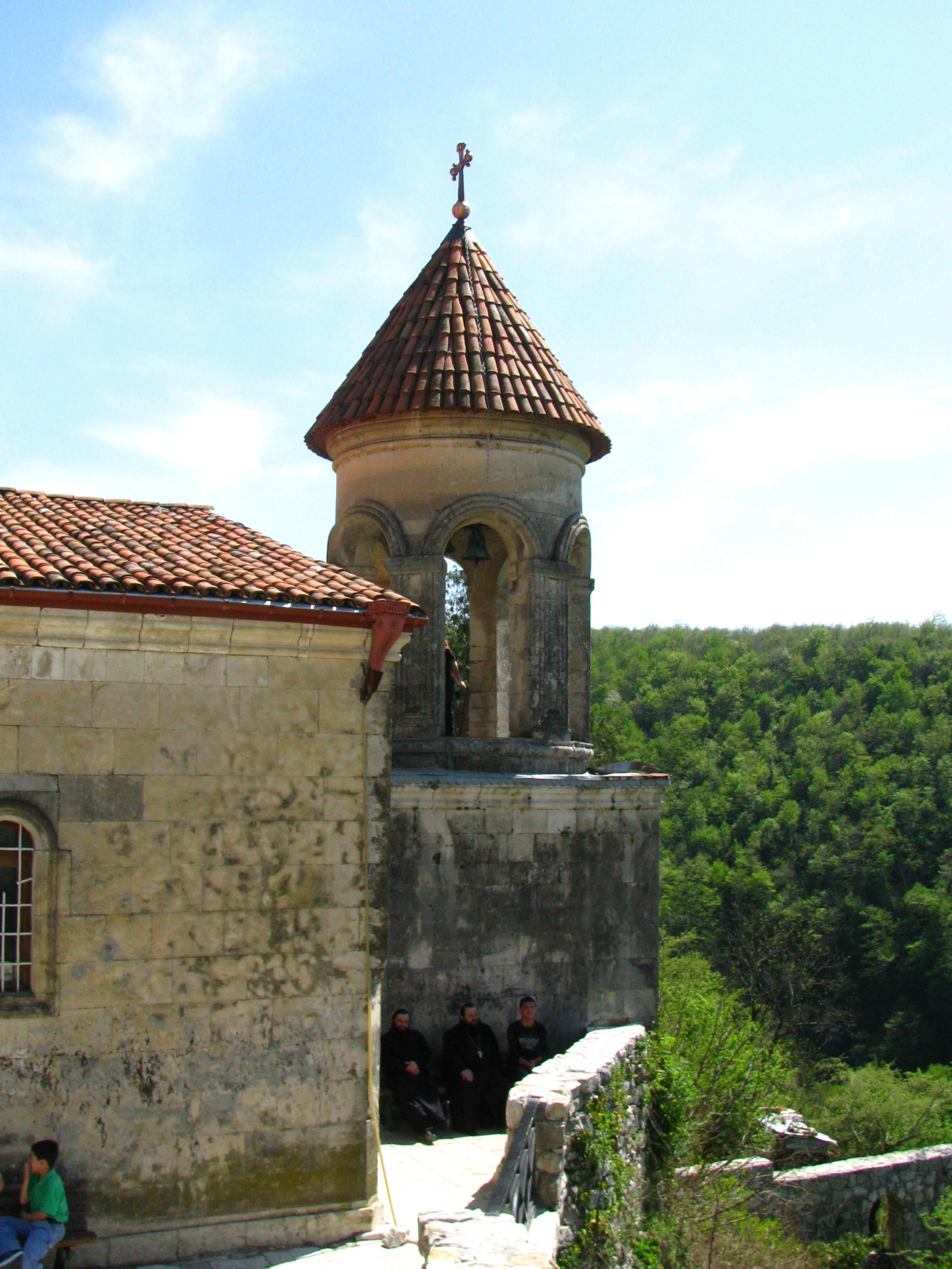
Some priests hanging out by the chapel on Easter Sunday.
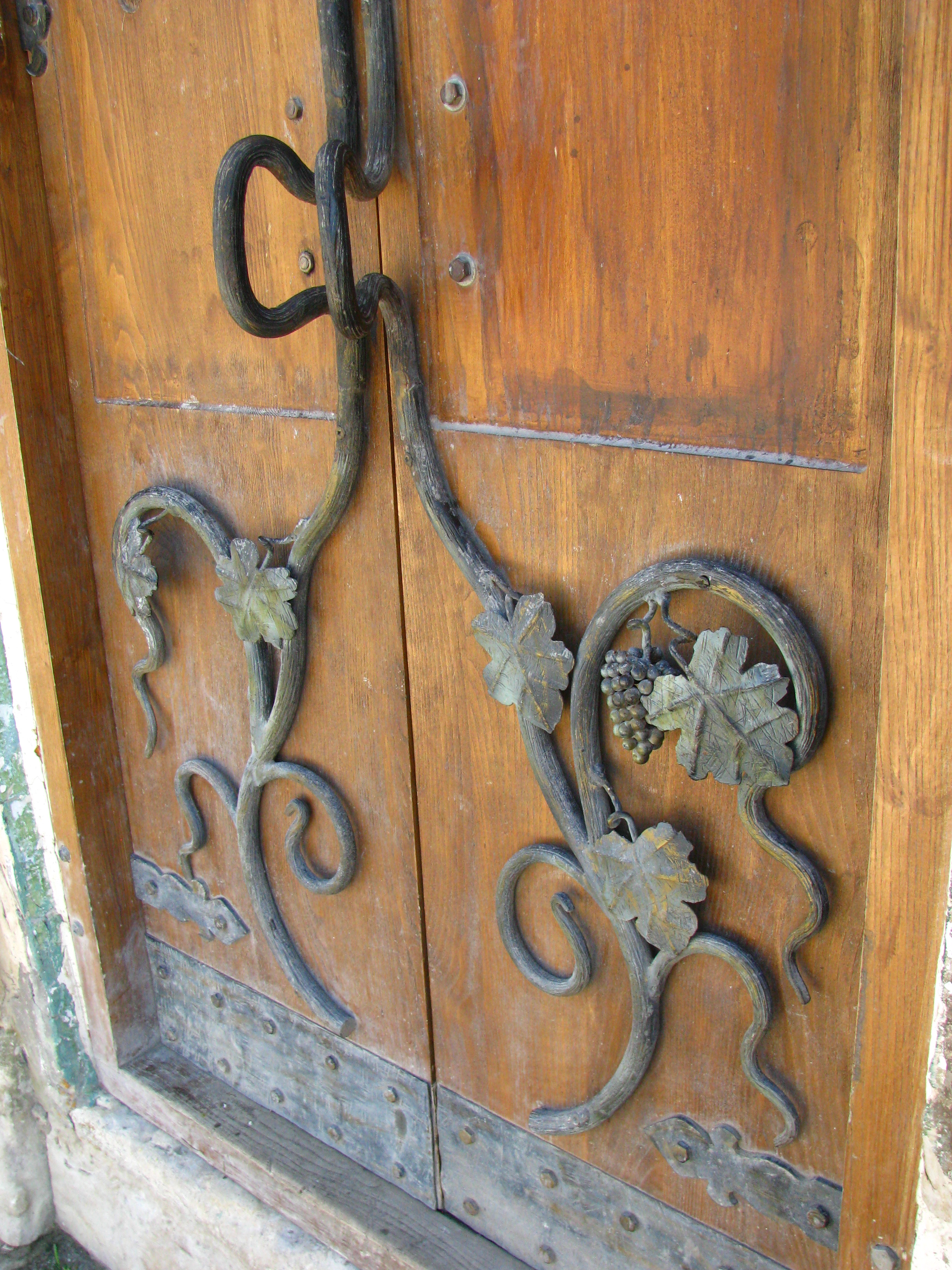
Detail on the door handles to the monastery chapel. Georgians take their grapes quite seriously.

I spent most of the vacation relaxing, so I didn’t take many spectacular photos.  But Motsameta was really fantastic–I’ll have to go back sometime to do it justice.  There’s a forest trail that goes between Motsameta and Gelati Monastery, where David the Builder is buried, and I’d like to hike that before I come back to the states.

Next, we drove down to Batumi on the Black Sea, where we spent some time wandering the Botanical Gardens.  It’s a really nice place, with trees and plants from all over the world right up against the seashore.  Very peaceful.  It’s pretty big, though–I walked for almost an hour along the main road without getting to the end.  And of course, there are many places along the way where you can stop and wander around for a while.
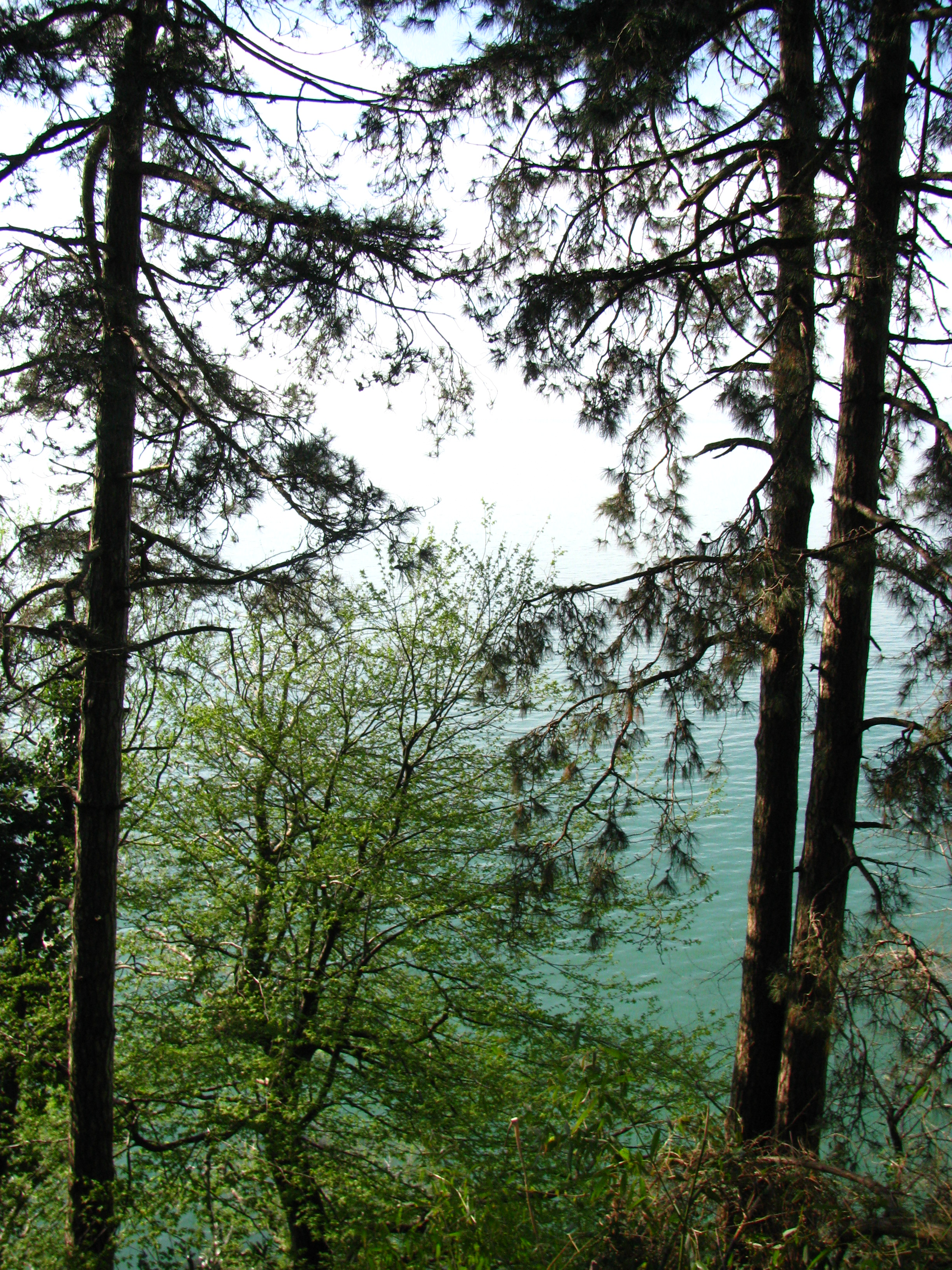

The Black Sea, visible through the trees of the Batumi Botanical Garden.
Some red and white rose bushes. There are tons of flowering plants in the gardens, so spring is a really great time to see the place.
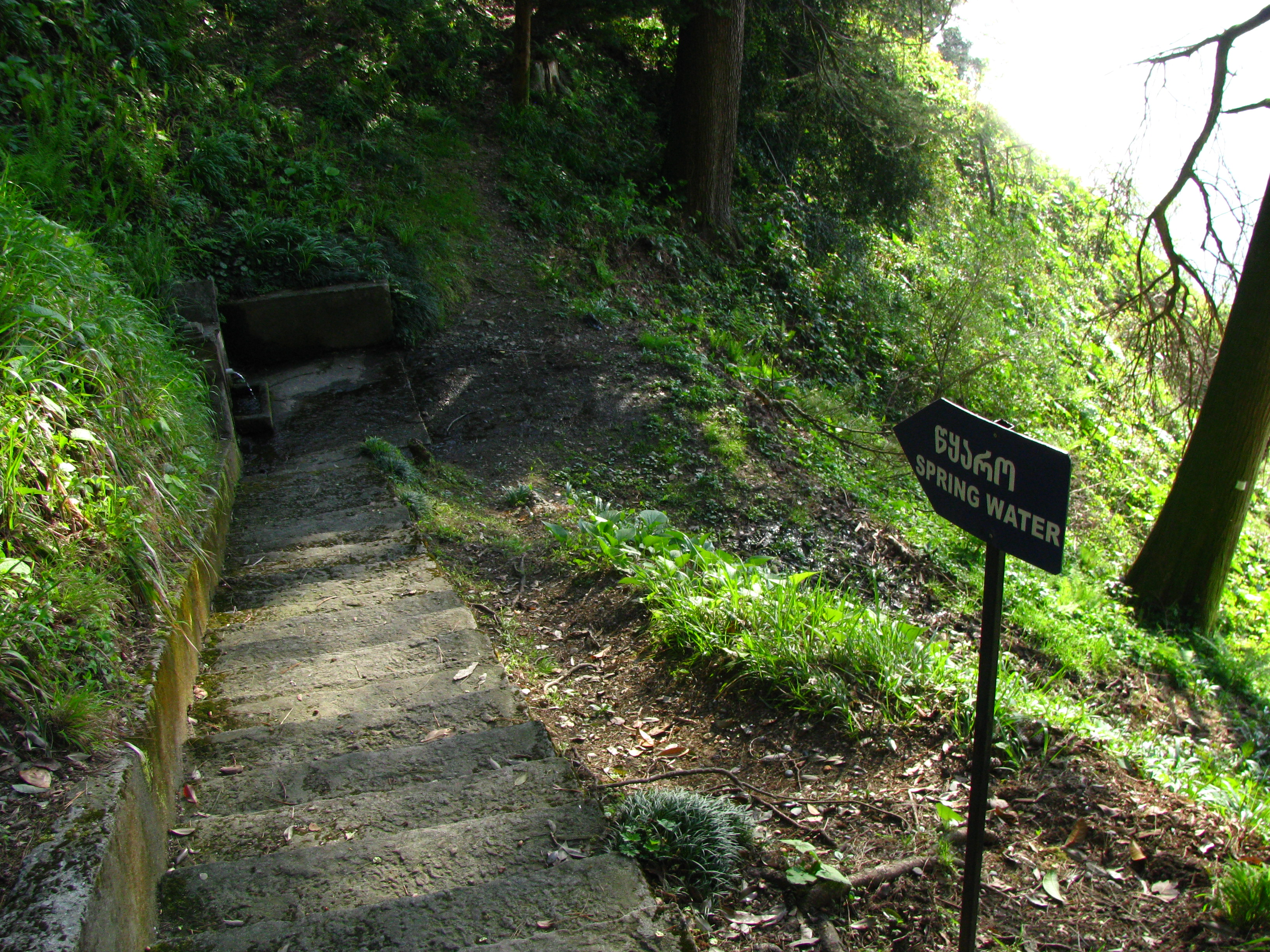
A small spring in the middle of the Batumi Botanical Gardens. There are springs like this scattered across Georgia.

Batumi is an interesting place–not as big a city as Kutaisi, but with more money, hotels, casinos, and resorts.  It’s right on the Black Sea, but the snow-capped mountains of the Lesser Caucasus range are right behind it, so you’ve got a big mix of climates and landscapes all within a short drive.
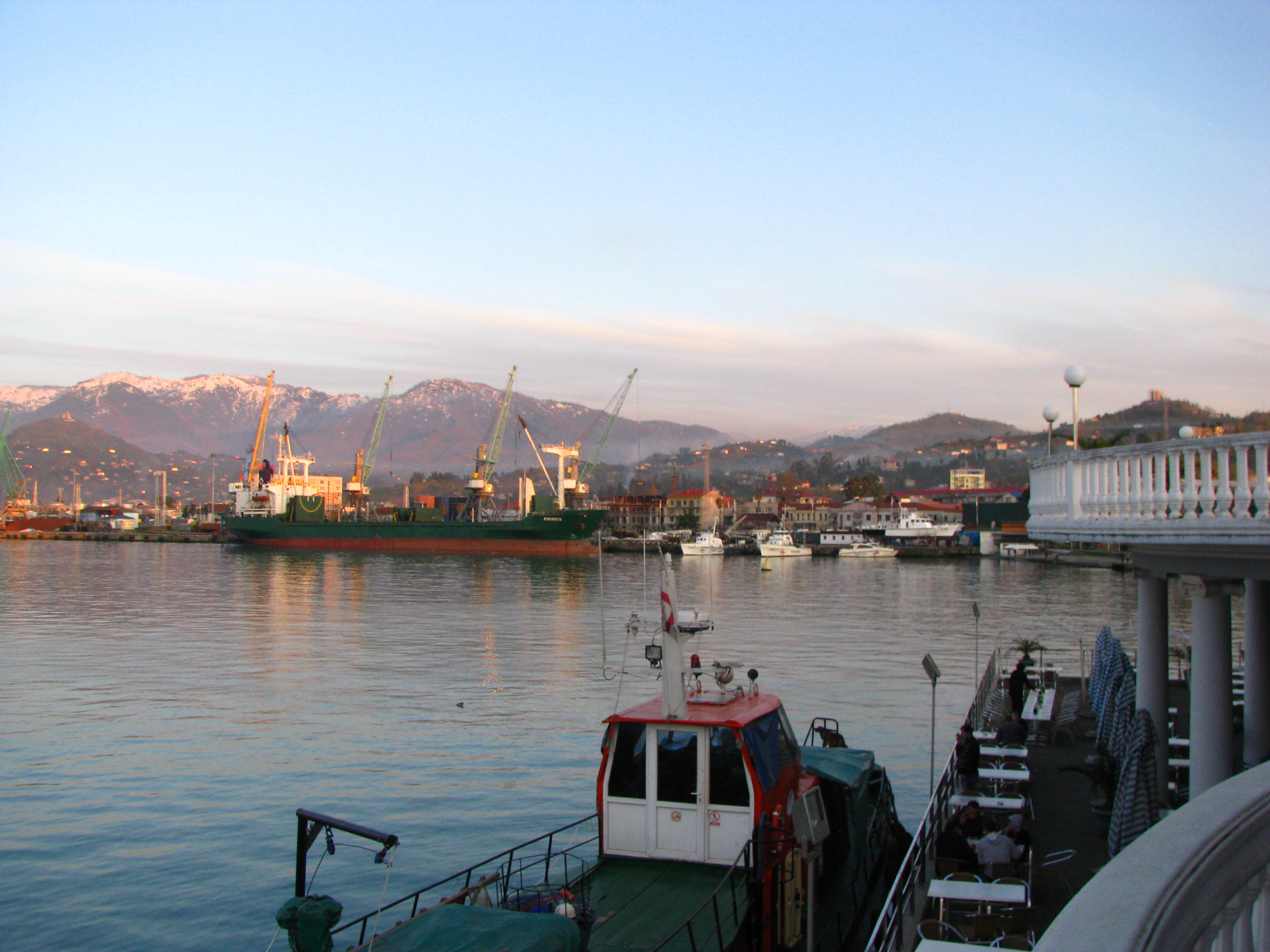
Batumi, Adjara Republic, Georgia.

The other TLGers were impressed to see that the roads are actually paved–apparently, there’s been a lot of construction in the past year or so.  It’s not completely finished, but walking around downtown is quite pleasant.  We hunted for ice cream and eventually settled on a smoke-filled cafe on some random street corner.  Good times.

We spent the next morning crossing the border, a process that was surprisingly disorganized.  The system on the Georgian side was pretty straightforward, but on the Turkish side we had to wait on the curb for a long time, with giant eighteen-wheelers driving past us and the sun beating down.  It wasn’t too bad, though–definitely not worse than the Allenby crossing.

We drove for an hour, stopped in Reza for tea and lunch, then went on along the seashore to Trabzon.  In Reza, I stood at the edge of a garden overlooking the city when the call to prayer started up.  It brought back a lot of fond memories. 🙂 Turkey is definitely a Muslim country, with mosques everywhere, pencil minarets dotting the cityscape like steeples, and women dressed in colorful hijabs.
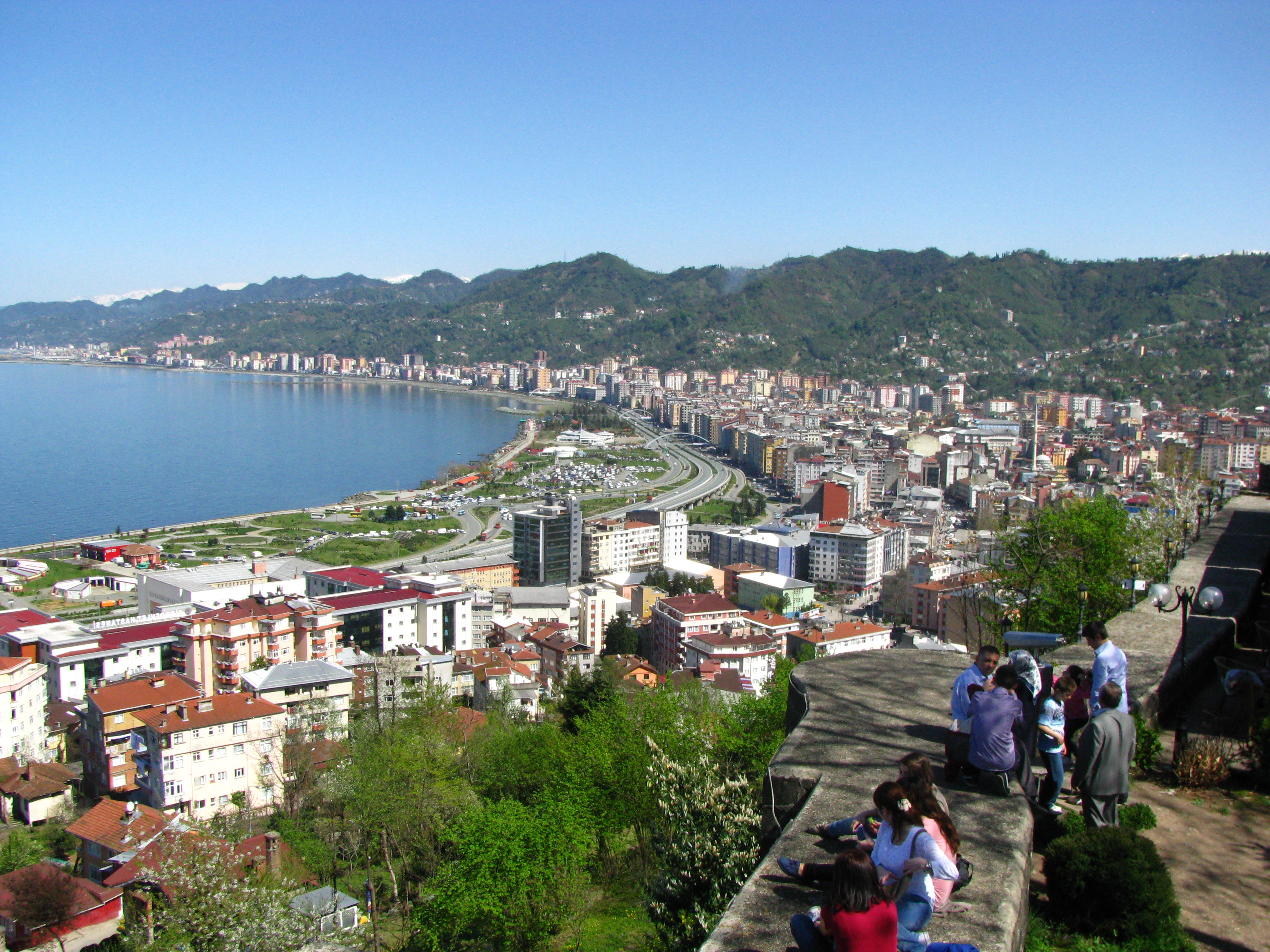
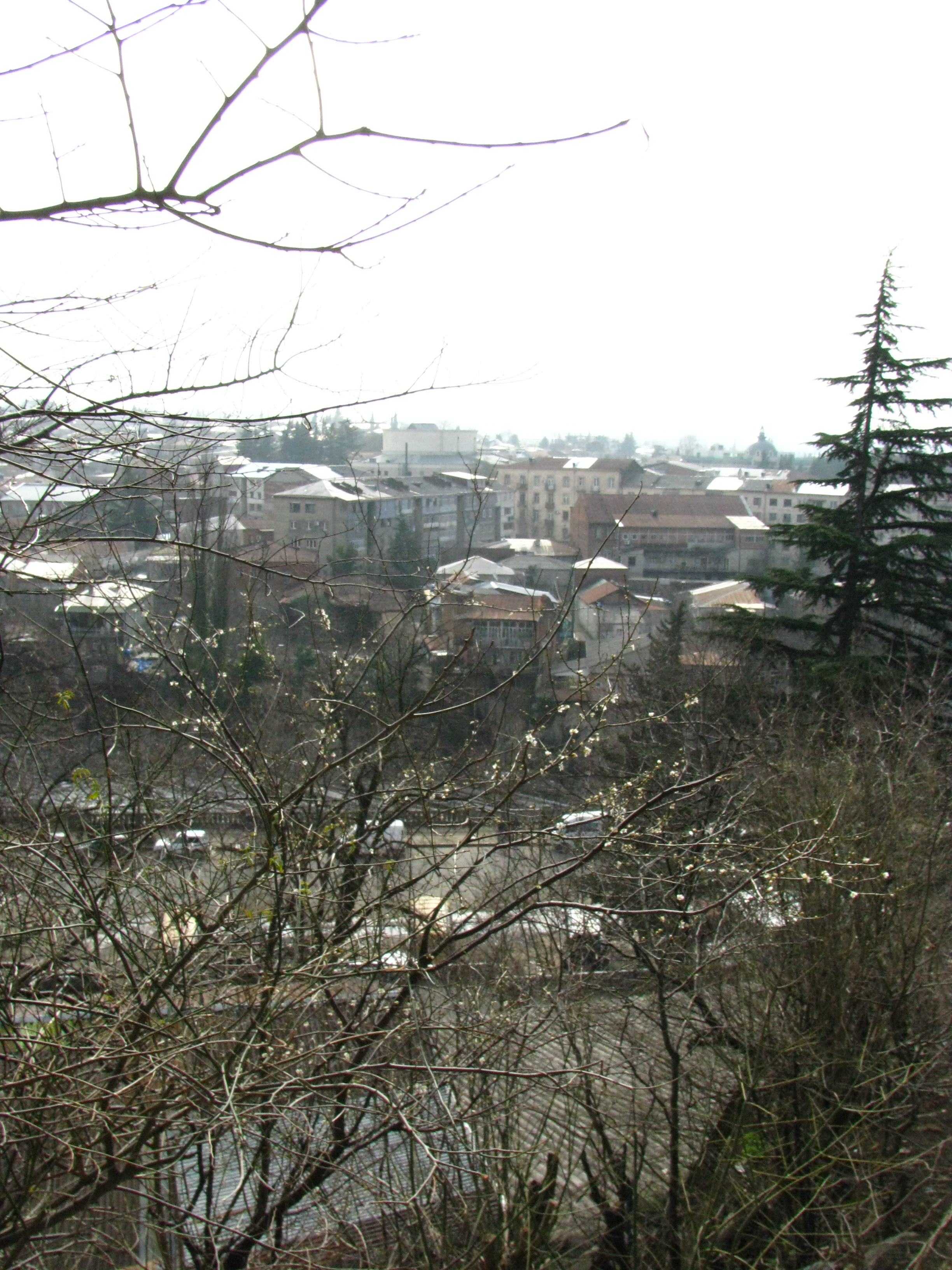
View of Rize from Rize Castle.
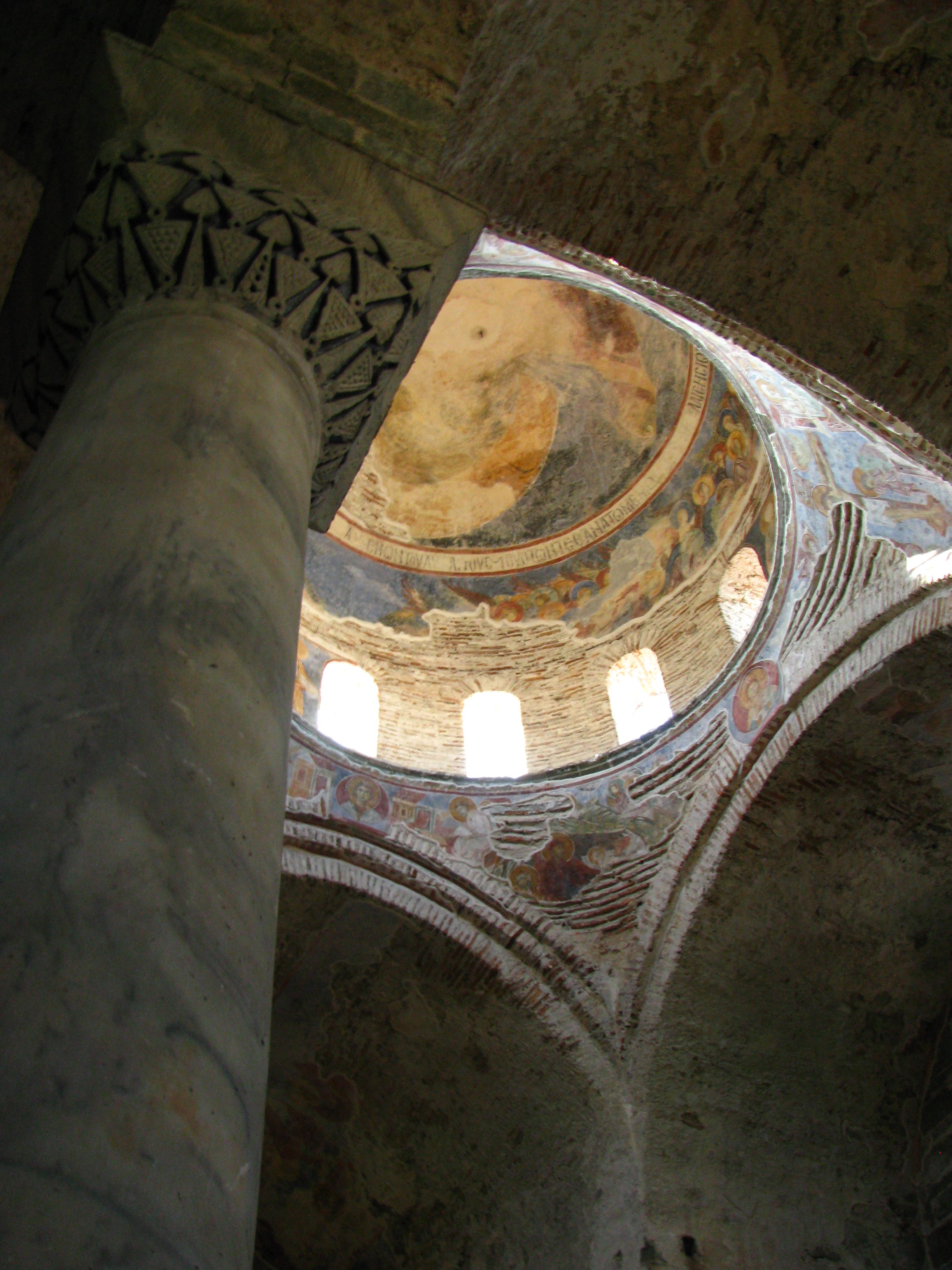
Interior of the Little Haggia Sophia at Trabzon. It’s a pretty modest sized basilica, now a “museum” which basically means it’s not used for religious services. It needs renovation.

Compared to Kutaisi, Trabzon is a large and well-developed city.  The downtown marketplace was packed, but the streets were well-paved, the shops were quite nice, there weren’t any beggars and basic amenities weren’t hard to find.  Almost no-one spoke English, which made communication difficult since I don’t speak any Turkish, but it was surprisingly easy to make friends.  We stopped for lunch at one place, and after a very difficult time trying to explain that we didn’t want any meat in our sandwiches (most of the girls in our group were vegetarian), the restaurant owner actually let us eat for free!

Some of the other volunteers had asked that we go to an American style mall, so we spent a few hours there before going to the hotel.  I must confess, I was bored out of my mind.  Nothing but clothes stores and Turkish fast food restaurants–it was identical to an American mall in almost every way.  I suppose that that’s why the others wanted to go there–after spending a year in Georgia, they probably craved someplace that feels like home.  But I’m not there yet, so that particular excursion was kind of boring.

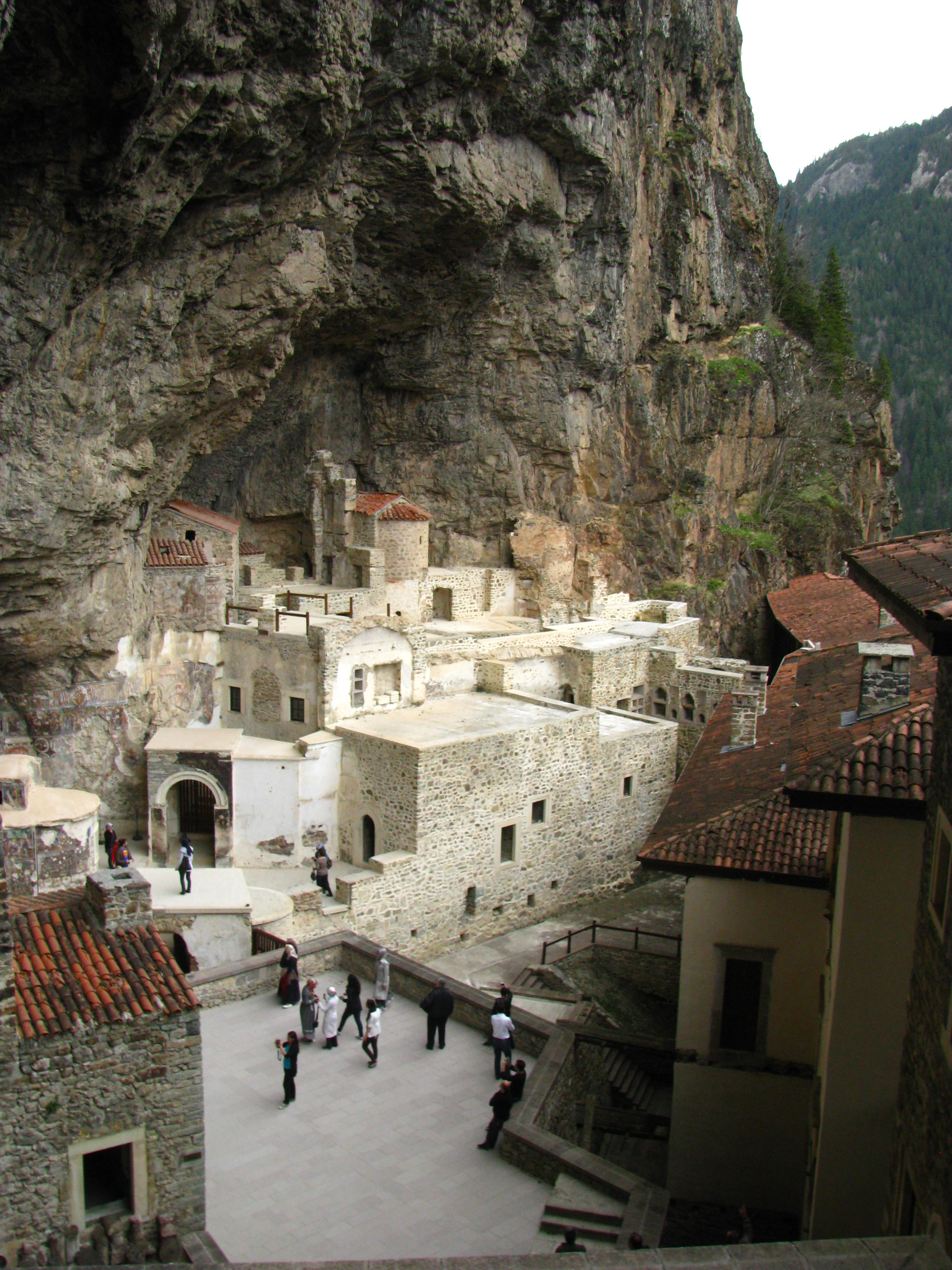
The next day, we went up to Sumela Monastery in the mountains, and from there to Lake Uzungol.  The monastery was quite cool, because it’s perched literally  on the side of a cliff, almost 500 meters above the valley floor.  Unfortunately, the friezes and other artwork was quite damaged,  so I didn’t feel compelled to take many pictures, but it was fun to hike up there and see the view.  A bunch of Turks laughed at the way I ran up the path, and the fountain at the top had some FREEZING cold mountain runoff.  It was a lot of fun.
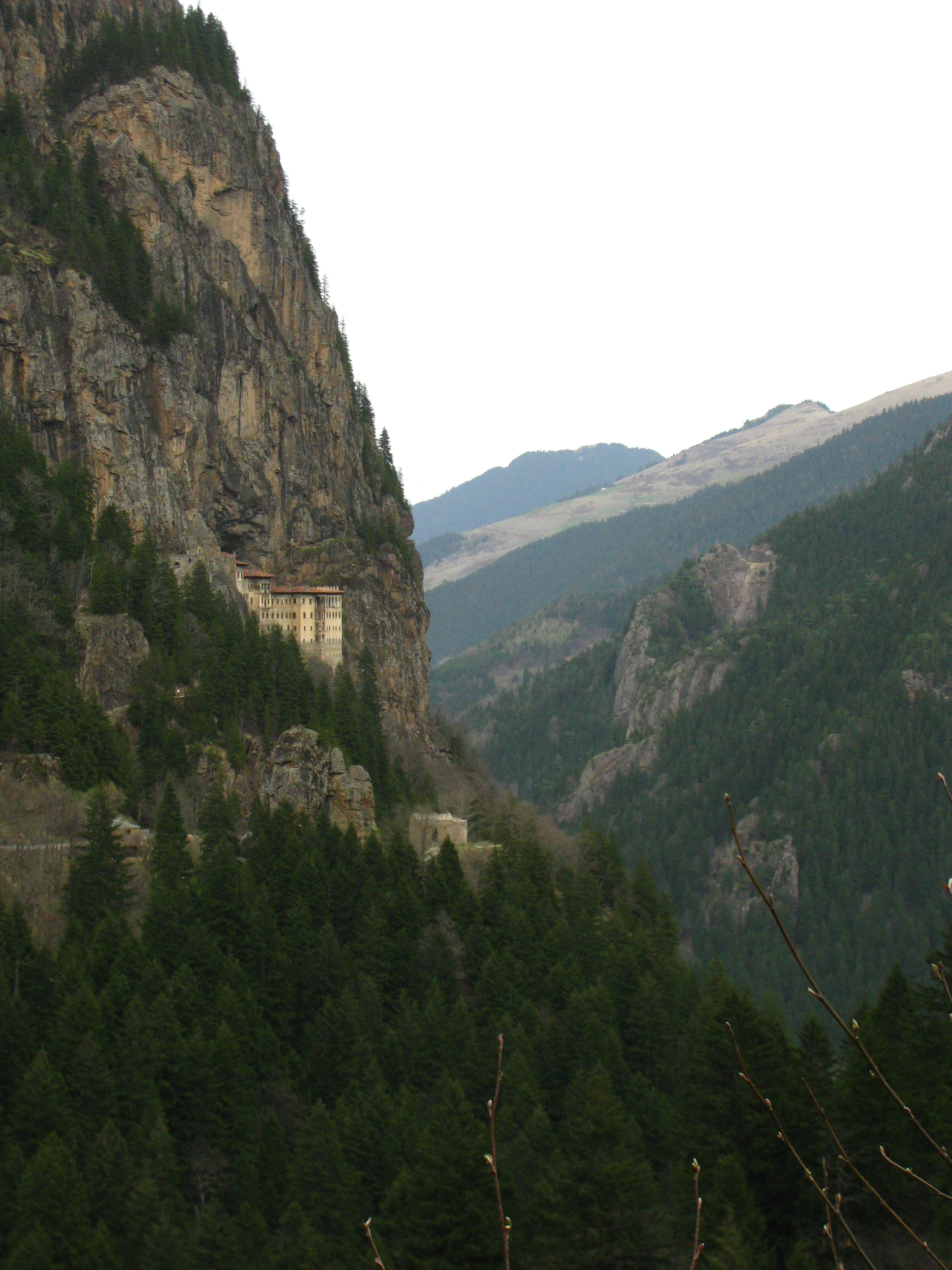
Sumela Monastery from the top of the canyon. The surrounding countryside is absolutely gorgeous.
Inside the monastery complex itself. Many of the buildings are new additions, but there are some original structures.

At the lake, I bought a piece of Turkish silverware for my host mom that ended up being a huge hit.  A lot of the shops were really touristy, but it was fun anyway and the landscape was quite beautiful.  Reminded me a bit of Colorado.  We stayed in a mountain cabin and the bedsheets smelled like cigarettes, but otherwise it was quite comfortable.

Adjaruli khatchapuri. If you eat this every day, you will have a short and happy life.

On the way back, we stopped in Batumi for dinner and had Adjaruli khatchapuri.  Khatchapuri is the main Georgian go-to food–it’s basically cheesy bread with a thick, doughy crust.  In Adjara, though, they take it a couple of steps further.

Immediately after taking the bread out of the oven, they crack an egg in the center, which gets cooked a little by the heat but otherwise remains raw.  They then take a huge slab of butter and plop it right in the center of the yolk, where it melts in and gets everywhere.  To eat it, you stir the egg around and work your way inward from the crust, dipping the bread in the molten gooey center.  Between the cheese, the egg, the butter, and the bread, you get a pretty heavy meal–delicious, but heavy.

After that, we took to the road again, talking about all sorts of stuff and having a generally good time.  Our tour guide was a great guy, and we had a lot of fun racking his brain.  The other lady from the company was quite delightful, and talked with me a lot about Racha, growing up in Kutaisi, her experiences living in the Persian Gulf, etc.  It was a long ride, but it went by pretty fast, and we pulled into Kutaisi around 9pm.

All in all, a fun, relaxing vacation, and a good chance to get out and see a little more in this part of the world.  Turkey was nice, but I have to admit, I felt a bit like I was coming home when we crossed the border back into Georgia.  It’s not as clean or developed, but it’s got a feel to it that isn’t quite like anything else.  I like it.
Still here

Sorry about missing the Trope Tuesday post yesterday.  My internet was sporadic, and I didn’t think it was worth it to keep refreshing every time I wanted to access tvtropes.  I’ll make it up next week with a good one.

The rest of the week is going to be pretty busy.  We have a make-up class on Saturday and I’m going to Tbilisi on Sunday for church, so things might be a little sporadic on this blog.  However, I’m making good progress on Star Wanderers, even if it is a bit slower than I would like.  I should finish up Part III this week and Part IV sometime in early May.

I haven’t heard anything from Writers of the Future yet, but judging from the forums, neither have most of the others who submitted this quarter.  The official results should come out in May, though, and as soon as they do, I’ll publish the first part of Star Wanderers (provided it doesn’t win).

I’m really excited about this one; it’s one of those stories that came when I least expected it, and practically wrote itself.  The first part, which stands completely on its own, is about 17k words, or 60 print pages–basically, a very short novella.  It’s a science fiction romance set within the same universe as my other Gaia Nova novels; in the next few days, I’ll post a blurb and the first couple chapters for you guys to check out.

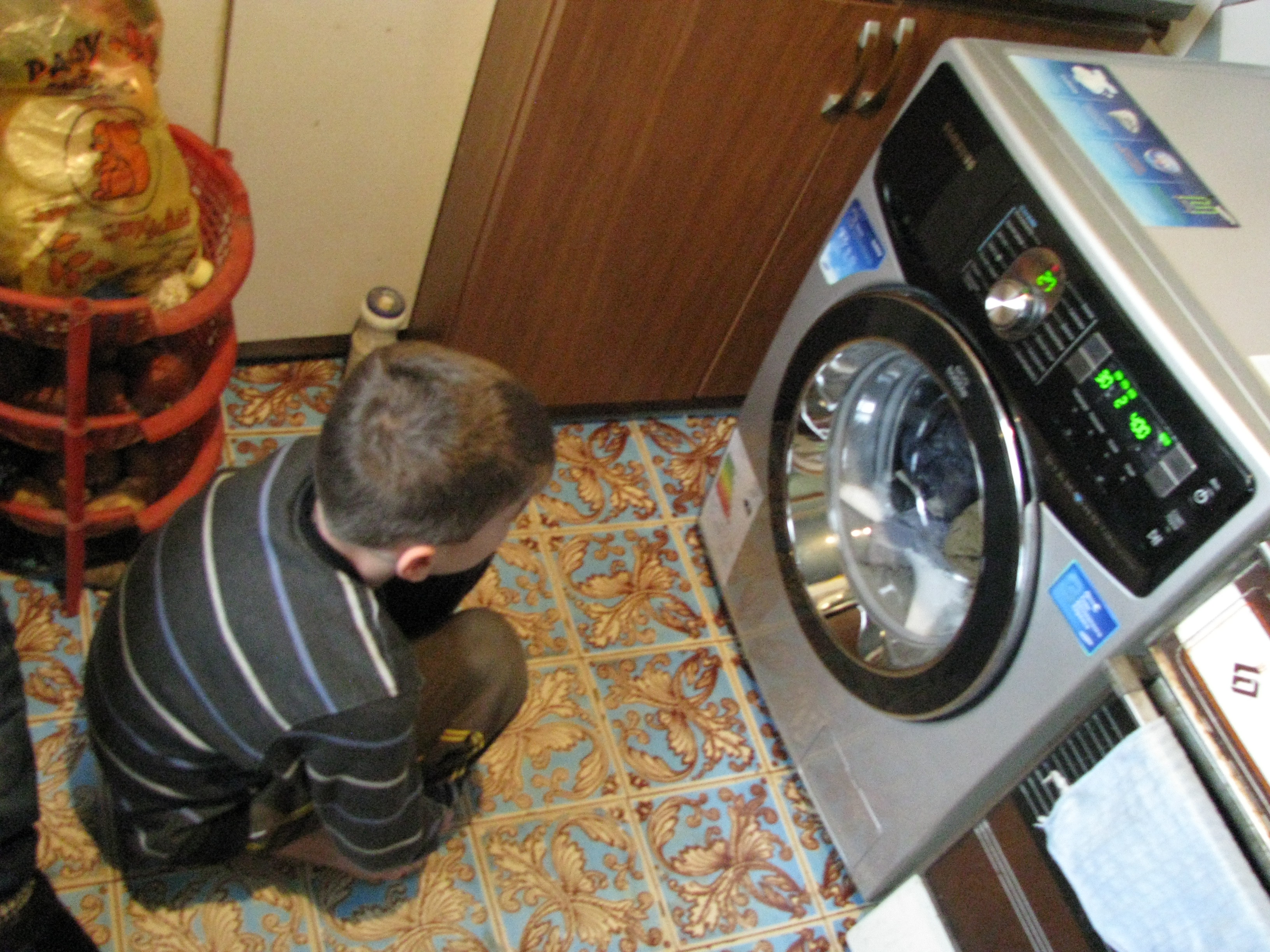
So that’s what’s going on out here.  In other news, my Georgian host family just got a washing machine, and the excitement it generated reminded me of that scene in Fiddler on the Roof when the village gets its first sewing machine.  Here’s the youngest son watching it go round and round:

Between this, internet TV, and the hot water heater they installed a few months ago, they seem to be moving steadily up in the world.  Hopefully I’m not putting too much of a burden on them.  I buy fruit from time to time and got the host mom a piece of silverware from Turkey.  From what I could tell, she was really happy with it.

Anyhow, it’s getting late and I’d better go.  ღამე მშვიდობის!

What’s your backup?

...have you?

So I just got back from Easter vacation in Turkey, at Trabzon and Lake Uzungöl.  It was pretty awesome–I’ll definitely be blogging about it in the next couple of days!  First, though, I wanted to share something interesting that happened on the way back.

While I was hanging out in Batumi with some other TLG volunteers eating Adjarian khatchapuri (an experience in itself), we got to talking about what we’re going to do with our lives after we get back to the States.  Most of them didn’t really want to think about it, which surprised me, so I asked why.

They told me they didn’t want to have to figure out the rest of their lives–that coming out to Georgia to teach English was a way of putting off those major life decisions.  Fair enough.  They then asked me if I’ve figured it out.   I said yes: that I want to be a full-time writer, and that I’m out here to see the world and get some cultural experience as I try to make that dream a reality.

One of the girls then asked what my backup was if that didn’t work out.  To be honest, I had no idea what to say.  My plan at this point is to just keep teaching and traveling until the dream becomes a reality.  Am I confident that it will?  Eventually, yeah–as long as I keep writing, which I certainly will.

I thought about it a bit on the way back, and realized that my mindset has shifted tremendously in the past few years.  When I was back in college, and to some extent for the first year after I graduated, I used to worry a lot about my “backup plan.” It was a way of addressing the fear of failure, of creating an illusion of safety by having a “fallback.”

I’m sure there are careers where that’s a good idea.  Generally, those are careers with definite paths, where if you don’t pass a certain number of checkpoints, you’re basically screwed.  With writing, though, there is no set path that everybody follows–especially now with ebooks and epublishing.  Because of this, it’s impossible to really fail–either you keep on trying until you make it, or for one reason or another you give up.

Ever since I graduated in 2010, I’ve been structuring my life in such a way that I can continue to pursue my writing.  Every job I’ve taken has just been a stepping stone, a bridge to allow me to keep pursuing this dream.  Have I made it yet?  No, but I haven’t given up yet either, so I haven’t had to fall back on my backup–whatever that would mean at this point.

From the outside, it probably looks like I’m being hopelessly responsible–that, or willfully oblivious to a hundred things I should be worried sick about.  However, I’m actually quite confident that I’m on the right path and things will work out–and that surprises me.  It’s like that moment when you realize you’re actually swimming, not just kicking and thrashing about the pool.

Worst case scenario, I fall head over heels in love with an awesome, wonderful girl, and after a few heady months filled with blissful romance, I wake up one morning and realize that I’m married.  If that happens, I might have to put my writing on hold for a while until I get things sorted out so that I can support both myself and my wife–but then again, with her help, I might be able to do twice as much, or even more.  Perhaps that will help my writing career even more than trying to go it alone.

So really, there is no back up plan or worst case scenario–just the future.  And as Georgians are so fond of saying, “no one can know what will happen in future.”

What a relief.

მოტაცება, or how to bag a wife–literally

მოტაცება (pronounced mot’atseba) is the Georgian word for bride kidnapping, as opposed to regular kidnapping, which takes a different word.  It’s an ancient practice in the Caucasus region that doesn’t happen as much as it used to, but still happens, especially in the rural areas.  Today, most Georgians condemn it, but there’s still a whole slew of lingering cultural subtexts that can be very difficult for a Westerner (like me) to understand and navigate.

The video clip at the top is from a Georgian comedy program (named,  aptly enough, “Comedy შაუ”), and does a pretty good job illustrating how mot’atseba works.  Of course, the genders have been reversed–50% of Georgian humor is cross-dressing, and the other 50% is cross-dressing with slapstick–but everything else is pretty accurate.  Like I said in a previous post, it’s like a weird game of capture-the-flag involving sex and arranged marriage, where the flag is the girl.

This is how it works: boy meets girl.  Boy decides to marry girl.  Boy gets his friends together and kidnaps the girl (with or without her consent), holding her captive overnight.  The next morning, boy contacts girl’s parents to ask for girl’s hand in marriage.

Since the girl has been held overnight, the implication is that she’s been raped (which may or may not be true).  Therefore, to avoid a scandal which could tarnish the family’s reputation, the parents will usually marry their daughter off as quickly as possible.  However, if the girl can escape, or the girl’s brothers can rescue her before nightfall, the crisis can be averted.

I first heard about mot’atseba from this post on Georgia On My Mind, back when I was looking into TLG about a year ago.  It disturbed me a little, but not enough to dissuade me from coming to Georgia.  A couple of weeks ago, however, I learned that that was how my host parents got married.

Here’s the thing, though: they both seem to remember it kind of fondly.  In fact, when my host mom saw the clip from Comedy შაუ, she couldn’t stop laughing.  Her mom lives with them now, and from time to time they go out to visit his family in the village, so it looks like everyone’s on pretty good terms.

So what the heck happened?

Here’s the story, as best as I can piece it together.  They were introduced by his sister, who was her coworker at the hospital.  After a month, he got together with some friends and took her without violence to his family’s house out in the village.  She was surprised and upset at first, of course, but her parents gave their consent, and so they were married the next day by a magistrate.  Now, they’ve got four kids–a huge family, by Georgian standards–and seem to be pretty happy together.

As a Westerner, it blows my mind that a strong, healthy family can come out of something as violent as an act of kidnapping.  Indeed, I have yet to be convinced that that’s a normal outcome. However, after asking around and doing some research, I’ve come to realize that mot’atseba isn’t a black and white issue: there are all sorts of cultural subtexts that make the issue much more complicated.

The key to understanding how all this works is the following proverb, which underscores the entire Georgian concept of gender roles and the differences between men and women:

If a woman says no, she means maybe.  If she says maybe, she means yes.  If she says yes, she is not a woman.

From this, two things follow:

1: Women are fickle, therefore men should be assertive.

As a man, I see this all the time.  All three of my co-teachers are women, and all of them constantly defer to me, even though they have far more professional experience than I do.  When I had some pretty serious differences over teaching methodologies with one of them, she suggested that I take over the next lesson and teach it without her interference, so that she could get a better idea that way.  This isn’t the case with the female volunteers–many of them complain about how hard it is to get anyone to take their suggestions seriously.

2: A woman can never say no.

If “no” is constantly interpreted as “maybe,” then it follows that no one (or at least, no man) is going to believe that a woman is even capable of saying “no.” This turns the whole concept of rape into a nebulous gray area, unlike the United States, where women have a lot more power at least in terms of the law.

This is not to say that in Georgian culture, women are doormats or property (even though that’s what some TLGers claim).  Women have a number of support networks, such as family, friends, and other women, and can use these networks to ward off unwanted attention.  When I asked my host sister if she’s worried that a mot’atseba would ever happen to her, she said no, because if it did, her three brothers would kick some serious ass.

On top of all this, Georgians have no real concept of casual dating.  If a girl and a guy are seeing each other, they’re either married or about to be married.  This shows up in the way they use Facebook and other social networks: instead of listing themselves as “in a relationship,” the girl will give her password to the guy she’s dating.  And they don’t just do it because the guy demands it–when my host sister was seeing someone, he asked her if she wanted to give her password to him, as if that was the natural next-step in their relationship.  From the way she told me, she seemed to be worried that she’d made a mistake by telling him no.  Of course, I told her she’d made the right decision!

Combine all of these together, and you should start to get a clearer picture of some of the subtext surrounding mot’atseba.

When I asked my first co-teacher about it, she said it was only an ancient practice and absolutely didn’t happen anymore.  When I brought up rape and asked if that was also a part of it, she was horrified and didn’t want to talk about it.  However, when I asked if it’s possible for a happy marriage to come of it, she kind of smiled a little and said that if the woman likes it, then why not?

My second co-teacher was much more straight with me.  Yes, it happens occasionally, though it was a lot more “fashionable” about twenty or thirty years ago.  No, it’s not romantic.  Yes, a lot of the marriages aren’t very happy, which is why so many of them end in divorce.  She told me that one of her friends from college was married through mot’atseba, and that she knows of at least one case in our school where an 8th grader was kidnapped and married.  However, under President Sakashvili, mot’atseba is now a serious crime, so it’s not as common as it used to be.

My third co-teacher’s answer was a lot sketchier.  The first time I asked about it was in passing, as she walked in on the conversation I was having with my first co-teacher.  When I asked her about rape, she laughed and said “well yes, of course it happens!” as if that wasn’t a big deal.  Later, however, she sat me down and said quite seriously that mot’atseba is a horrible thing, that it’s a criminal act, that it doesn’t happen anymore, etc etc.

However–and this was perhaps the most illuminating thing–she said that sometimes, when a guy and a girl are in love, but she’s being wishy-washy and non-committal, he’ll sweep her off her feet and carry her off.  In fact, that was what happened with her: her boyfriend wanted to marry her, but she kept putting it off, so one day he tricked her into getting in the car and told her “all right, enough is enough–we’re getting married this weekend.” And they did.

When I asked her if that was mot’atseba, she said no, but I think the subtext was similar.  A real man knows how to assert himself and take what he wants.  Since a real woman will never say yes, sometimes you just have to man up and tell her how it’s going to be.  And don’t worry if she says no at first–she only says that because she doesn’t really know what she wants yet.  She’ll come around eventually.

It sounds pretty horrible, but that seems to be how it works.  And really, there are gradations of it. Most Georgians will agree that it’s wrong for a guy to kidnap a girl he doesn’t know so that he can rape her and force her to marry him.  But if the guy and the girl know each other, and are already pretty serious (ie seeing each other at all), and he wants to speed things up–or, alternately, if she knows her parents would never say yes otherwise–that’s when everyone speaks of it with a wink and a nod.

And really, can we say that our culture’s problems are any less abhorrent?  What about teenage pregnancy?  Secret abortions?  Date rape?  At least with mot’atseba, the guy is trying to marry the girl, not just sleep with her and walk away.  If it’s just sex that the guy is after, there are a lot more easier ways to get it than risking a prison sentence.

So is it “wrong”?  I don’t know if it’s possible to say yes or no, except on a case by case basis.  My host sister knows a girl who was kidnapped at age 12 and had a baby the year after.  I’m pretty sure that’s wrong.  But when I told her what would happen to that guy in the states–that he would go on the registered sex offender list and spend the rest of his life ostracized and unable to find work–she thought that that was wrong too.  And as for my host parents, well, it seemed to work out well for them.

I don’t know.  But either way, it’s definitely an interesting anthropological experience.

Trope Tuesday: Abduction is Love

In real life, abduction is an awful, violent thing that we hope would never happen to us or anyone we know.  But in fiction, the Rule of Romantic can make abduction the basis of a wonderful, heartwarming love storyat least for some of us.

This is actually a more common trope than you might think.  It’s the underlying premise for Beauty and the Beast, though Disney rewrote that part out of it.  It’s a major plot element in Watership Down, as well as The Courtship of Princess Leia.  More recently, Twilight featured a few variations on this trope, though considering the source, that probably isn’t surprising.

In G and PG rated versions, this often leads to And Now You Must Marry Me.  In PG-13 and R rated versions, leads to Rape Is Love, with many unfortunate implications.  Due to the violent nature of the story, it often involves a lot of Slap-Slap-Kiss.  Stockholm Syndrome, the psychological phenomenon whereby victims of abduction develop an emotional connection with their captors, is the overarching theme, making any abduction love story a match made in Stockholm.

In the West, this trope tends to be a lot less prominent than it used to be.  However, if you look at the trappings of our marriage customs, you start to notice some disturbing trends that point to a time when abduction-as-romance was much more common.  For example, what was the original function of the best man at a wedding?  Quite possibly, it was to keep the bride from escaping (or being rescued).  And why does the groom whisk the bride away to a remote, isolated place to consummate the marriage?  To evade the bride’s angry family, of course.

Here in Georgia, this trope is alive and well, not just in fiction but in real life–seriously.  It’s called motatseba, and is often discussed with a wink and a nod.  In the family that’s hosting me, the mother married her husband after he abducted her, then bore him four children.  Now, they both seem to remember it rather fondly.

This is such a bizarre tradition that I’m going to dedicate an entire post to it…after I figure out just what the hell is going on.  Seriously, I can barely make sense of the practice–it’s like a twisted game of tag involving sex and arranged marriage.  How it can possibly lead to love…that’s what I’m trying to figure out.

However, I’m sure it involves some interesting variation of this trope.

Getting settled in the land of the Kartulis

About three weeks have passed since I came to Georgia, and I’m starting to feel comfortably settled in this new place.  I like it a lot out here: my host family is great, I get along really well with everyone at the school where I work, the kids are so crazy eager to learn it’s awesome…really, I couldn’t ask for more.

Of all the places in Georgia where TLG volunteers are placed, Kutaisi seems like one of the best.  It’s the second largest city in the country, so it has access to several amenities such as markets, hospitals, restaurants, parks, and basically anything else you’d  expect in an urban center.  However, it’s about 200 km from Tbilisi and has very little exposure to the West, so culturally it’s very authentically Georgian.  It’s also much less crowded, and (in my opinion) much more beautiful.

My host family is great; I get along with them real well and already feel like a member of the family.   My youngest host brother, Kako, is 9 years old; I showed him Star Control II over the weekend, and he’s been addicted to it ever since.  We also play chess, and I’ve kind of taken him under my wing to teach him the basics of good strategy.  He’s getting steadily better!

Gura and Kati are the two teenage kids; they also speak English, so we’ve had some fun discussions.  Besides Facebook and her cell phone, Kati is really into books; I showed her my Kindle, and she wants me to help her persuade her father to get her one!  Gura is into Call of Duty and spends a lot of time hanging out with his friends; he lacks confidence when it comes to English, but he knows it better than he thinks he does.

The parents don’t speak much English, but they are really good people.  It’s a working class family; the dad works as a welder, and the mom is a nurse part-time and a home-maker full time.  They spend an amazing amount of time and energy on their kids, which is pretty typical for this part of the world.  They’re both non-smokers, and they’re very respectful of the fact that I don’t drink coffee, tea, or alcohol.  Some of the extended family keeps trying to push wine on me, but in the land known as the cradle of wine, that’s to be expected.

We basically spend all of our time in the family room when we aren’t sleeping; it’s where the heater is, so despite the relatively cramped space it’s the most comfortable room in the apartment.  Furniture consists of a couch, a computer desk and office chair, a bucket seat from an old van, a folding table, several small wooden chairs and a stool.  The TV isn’t quite a member of the family, but when the power isn’t out, it’s usually on.

The neighborhood is this bizarre mix of urban and rural elements.  The roads are super muddy and free-range chickens wander everywhere at will, but everyone lives in 9-story apartments that were built back in the Soviet days, when Kutaisi was a major center for the auto industry.  The school was built 50 years ago this year and has barely been renovated since, but it’s just starting to get some much-needed attention, with a computer center and a resource room for special needs students.  When the weather clears up, I’ll bring my camera to school and take some pictures so you can see what the classes are like.

I’ll have to do a post later on Georgian culture; there are some really bizarre and paradoxical juxtapositions, such as the way they mix religion and alcohol, or their strong belief in the nuclear family with their easy-going acceptance of bride-napping as a “Georgian tradition.” I have yet to really get a handle on all this stuff.  However, as a culture, they have a great respect for literature; when people ask my profession and I tell them I’m a writer, their eyes light up, and they show me a degree of deference that I never would have gotten back in the States.

Partly to have something to talk with them about, I’m reading War and Peace by Leo Tolstoy right now.  I just finished Book III, where Napoleon smashes the Russians and Austrians in the Battle of Three Emperors.  Everyone says that it’s the best novel ever written, and now that I’m in the thick of it, I’m starting to agree with them.  There’s a lot of really good storytelling here, as well as passion and depth.  I have the feeling that I’m going to be on a Russian literature trip for a while, though I should probably pick up some Rustaveli and Kurban Said as well.

As far as writing goes, I’ve had some difficulty settling down into a solid routine, not because of lack of time so much as trouble with my current WIPs.  Star Wanderers has more or less stalled; I ran into another wall midway through part III, and I’m still not quite sure how to get past it.  I’ve decided to take a break for a while, but I think my experiences here with the Georgian language are going to give me what I need to really make this novel come together.

In the meantime, I’m working on the 2.0 draft of Stars of Blood and Glory.  I’ve decided to try something new: revising not by chapter, but by viewpoint character.  Isolating each of the five viewpoints is helping me to see which ones work, and which ones are missing something.  I’ve also been using Dan Well’s 7-point outlining method, which is helping out a ton.

It feels like I could be writing more, but I’m not pushing myself too hard at this point.  I’m still adjusting to life in this totally new culture, and I’m also spending a lot of energy getting my TEFL career off on the right foot.  It’s paying off; I’m having a great time teaching, more than I thought I would.  Pretty soon, though, I’m going to start putting more energy into my writing.  I just hope that I’ll have enough mental space left over to really immerse myself and make it work.

For the love of traveling

I had a realization as I was visiting Tbilisi this weekend: I love traveling.

I love standing beneath a tattered, windswept tarp surrounded by market stalls and people bartering in a language I barely understand.  I love walking down the dusty pavement of a chaotic bus station in the developing world, and the confidence that comes from knowing how to navigate it.

I love the thrill of knowing that I’m on the other side of the world from most of my friends and family.  I love laughing at the email alerts I get for all the mundane, dead-end jobs like office support or market research that I used to chase after so desperately.  I love being in a place where I can make a real difference in people’s lives.

I love never quite knowing exactly what’s going on, but getting along anyway.  I love taking things one day at a time and letting tomorrow take care of itself.  I love being surrounded by strange and interesting sights, and by people whose hospitality amazes and humbles me.  I love entering an alien culture as an outsider and becoming part of the society before I leave.

Is this all just part of the “honeymoon” phase of culture shock?  Perhaps, but this isn’t the first time I’ve traveled.  In many ways, the experience here in Georgia reminds me of my experience in Jordan, and I think I’ve been able to adapt better because of it.  In spite of all the cultural differences, I feel quite at home here.  Kutaisi is a great place, and I’m looking forward to getting to know the people and the city better.

One of the really interesting things about Georgian culture is the way the people’s eyes light up when I tell them I’m a writer.   They seem to have a lot of respect for that profession, more than in the states.  I haven’t been writing a whole lot other than in my journal, but things are more or less falling into place at the school and I think I’ll have a lot of time for other pursuits.  Hopefully, by this time next week, I’ll be able t start writing regularly again.

In the meantime, all of these cultural experiences are really great, and I think they will enrich my writing considerably.  I’m not thinking much about that now, of course, but I’m sure I’l come away from this place with a wonderful pool of experiences and images to pull from.  But right now, I’m about to pass out and crash, so I’d better call this a blog post and send it up with the others.  Good night!

In Kutaisi

This is the city where I'm going to be living for the next 4+ months.

So the training period for TLG is finally over, and I’ve received my assignment: I’m in Kutaisi, the second largest city in Georgia!  It’s about a four hour haul from Tbilisi; I spent it cramped on a bus with my host-mom and brother watching Georgian sketch comedy, with rampant cross-dressing and men getting bride-napped by women.  Hilarious.

I live in an awesome dilapidated Soviet-era apartment with a fairly large family: mother and father, grandmother, and three kids ages 17, 15, and 9.  The father works full-time as a welder and the mother works part-time as a nurse.  There’s another son, age 18, but he’s in Tbilisi for college. Only the kids speak English, but

The other host brother showed me around Kutaisi today, and it was pretty interesting.  This probably doesn’t make any sense, but it feels a little bit like something out of an Asterix comic, fast forwarded to the modern era.  In any case, the city is really nice; cleaner and not as crowded as Tbilisi, with cobblestone streets and European-style buildings with a giant park in the middle.

I’ve already figured out how to get from my host-family’s apartment to the city center and back by marshrutka–if this were a video game, that would be an achievement.  Crossing the street would also be an achievement, though it’s much harder in Tbilisi than it is here.

Some more pictures:

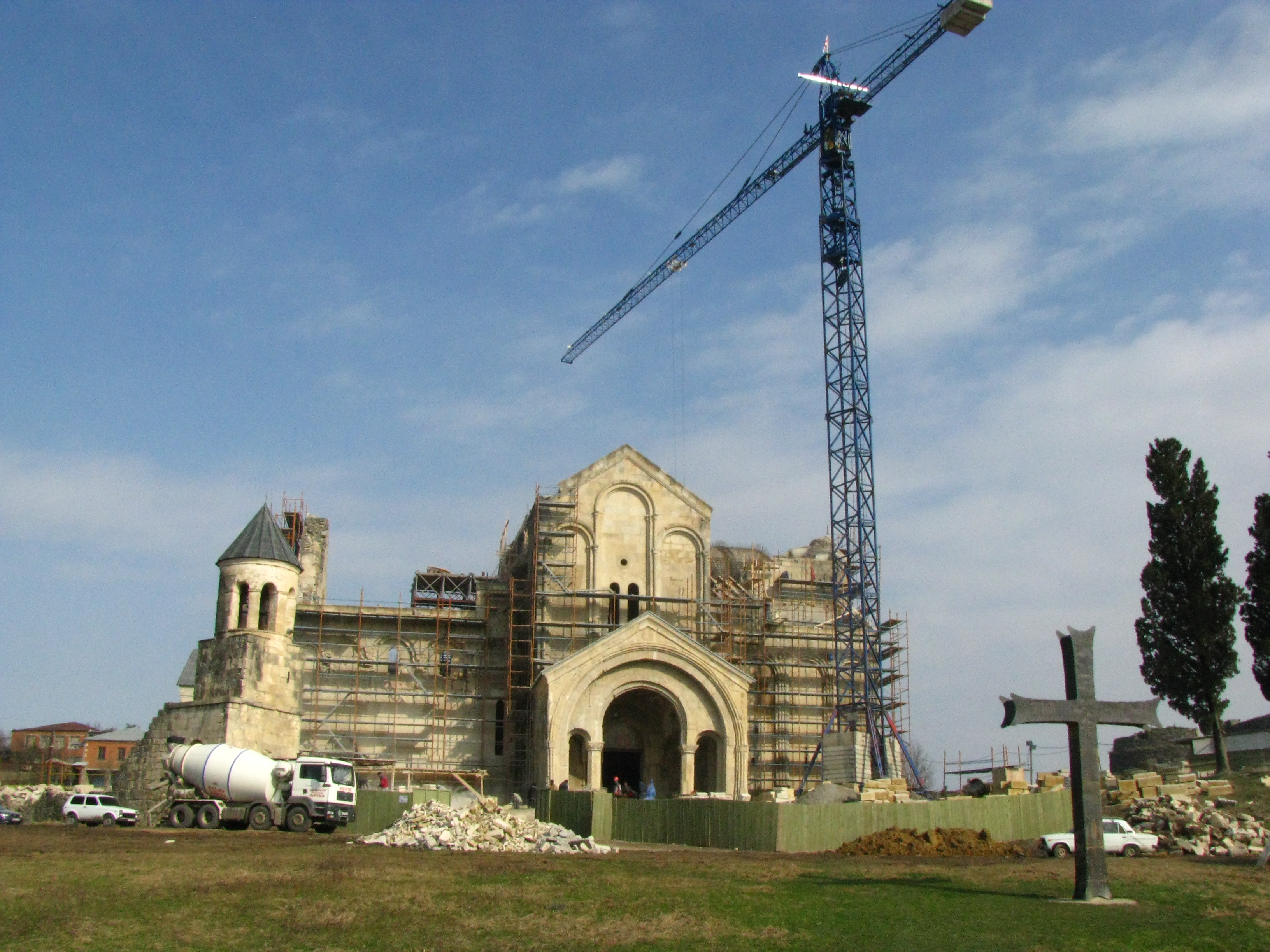
The old cathedral that overlooks Kutaisi. Built in 1003, destroyed sometime in the 18th century, it's being rebuilt now.
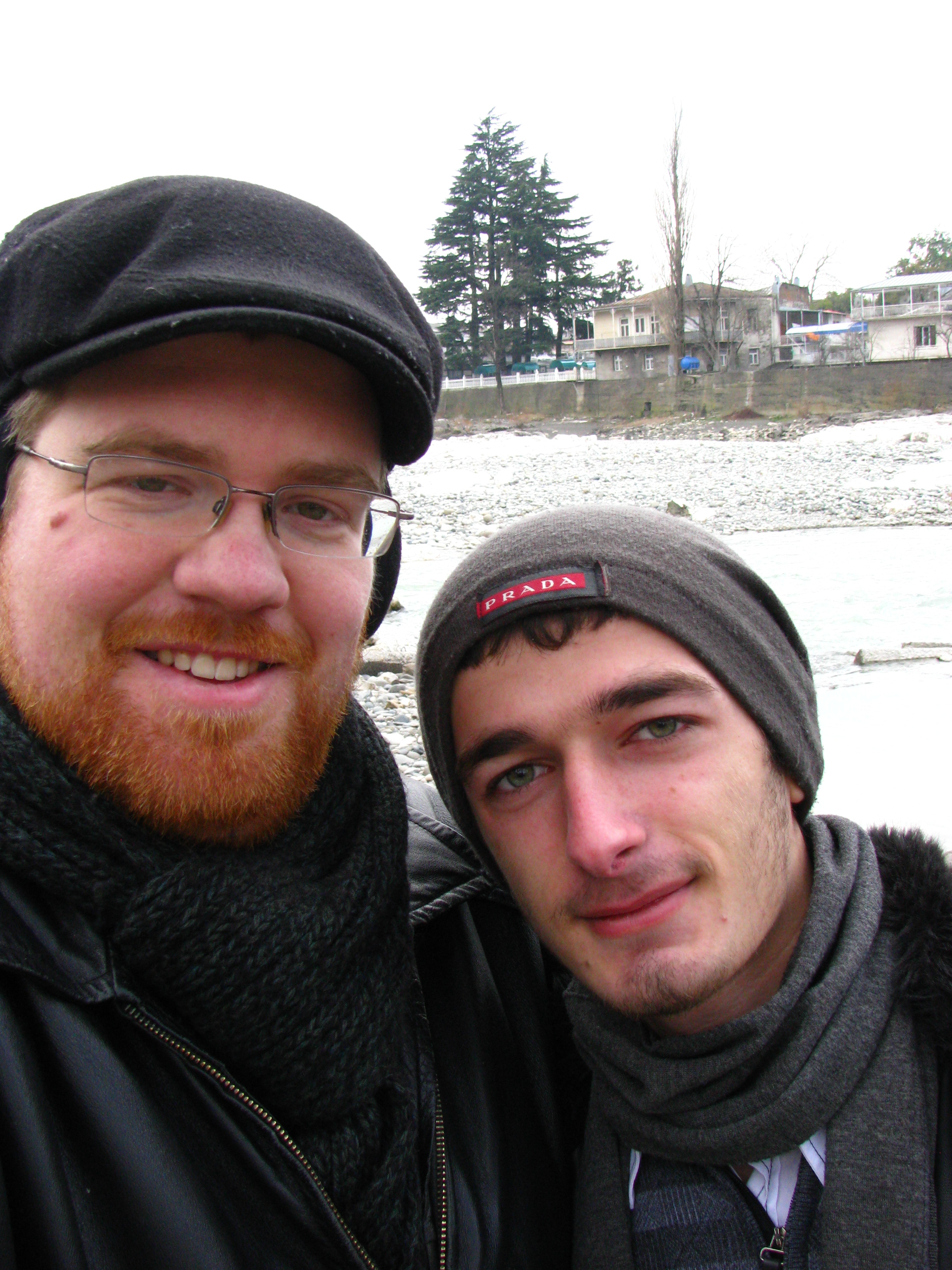
My host brother Gura and me, overlooking the Rioni river.
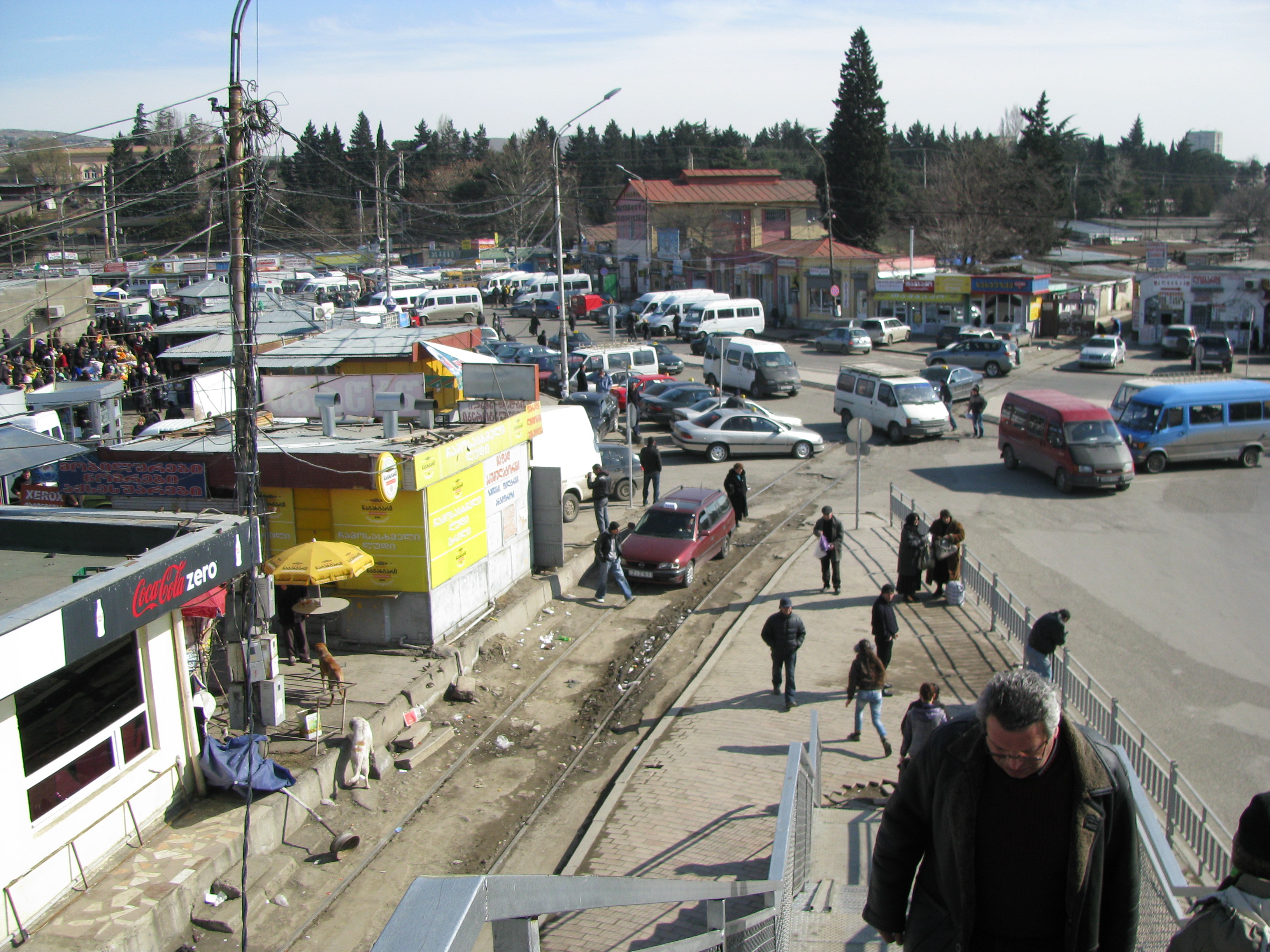
Didube bus station in north Tbilisi.
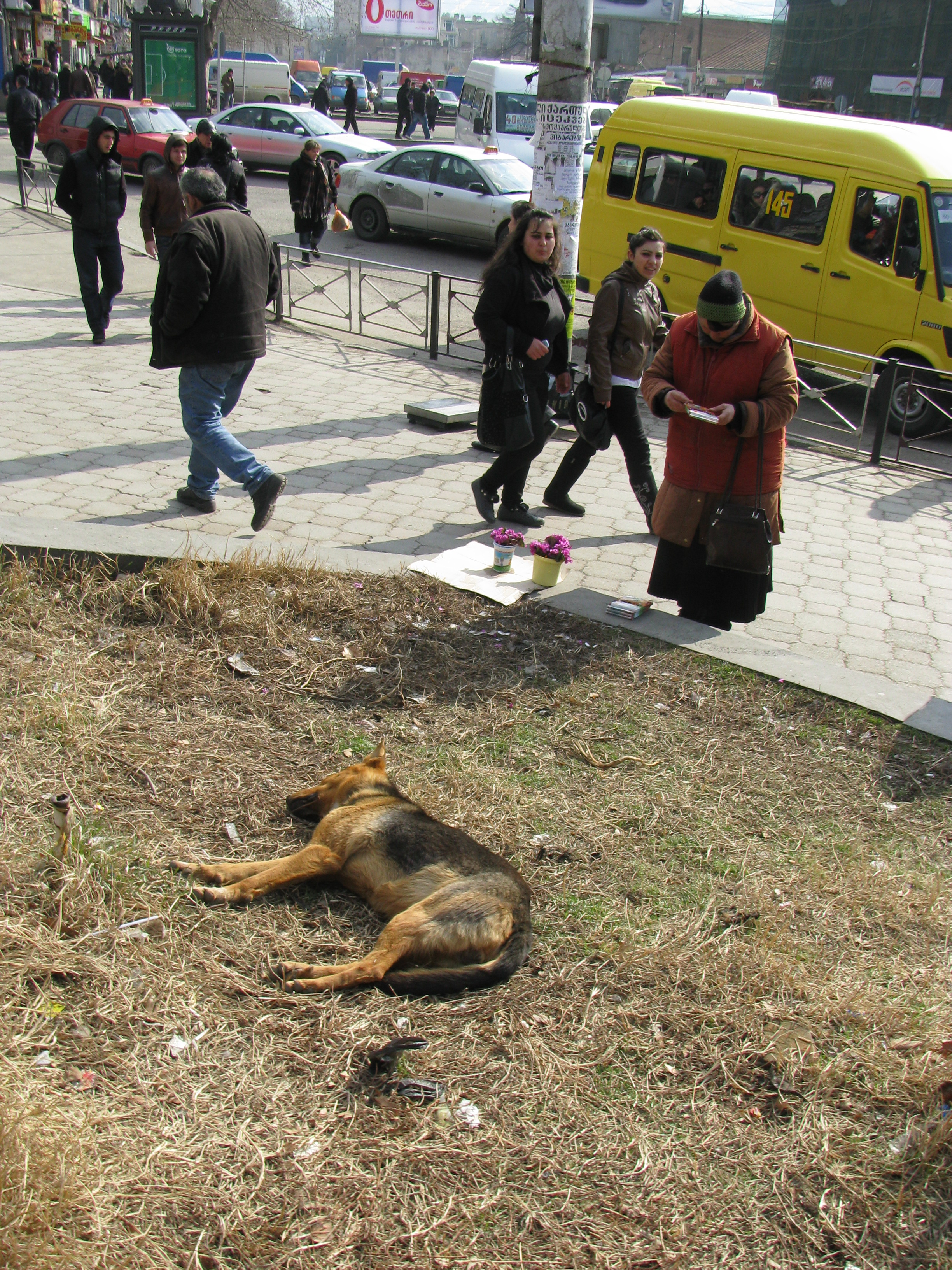
A sleeping dog at the bazaar near the Tbilisi stadium. There are a lot of stray dogs here.
Just one of the many Nutella stands at the Goodwill supermarket in Tbilisi (no relation to the American thrift store). Apparently, Georgians are crazy for chocolaty goodness.
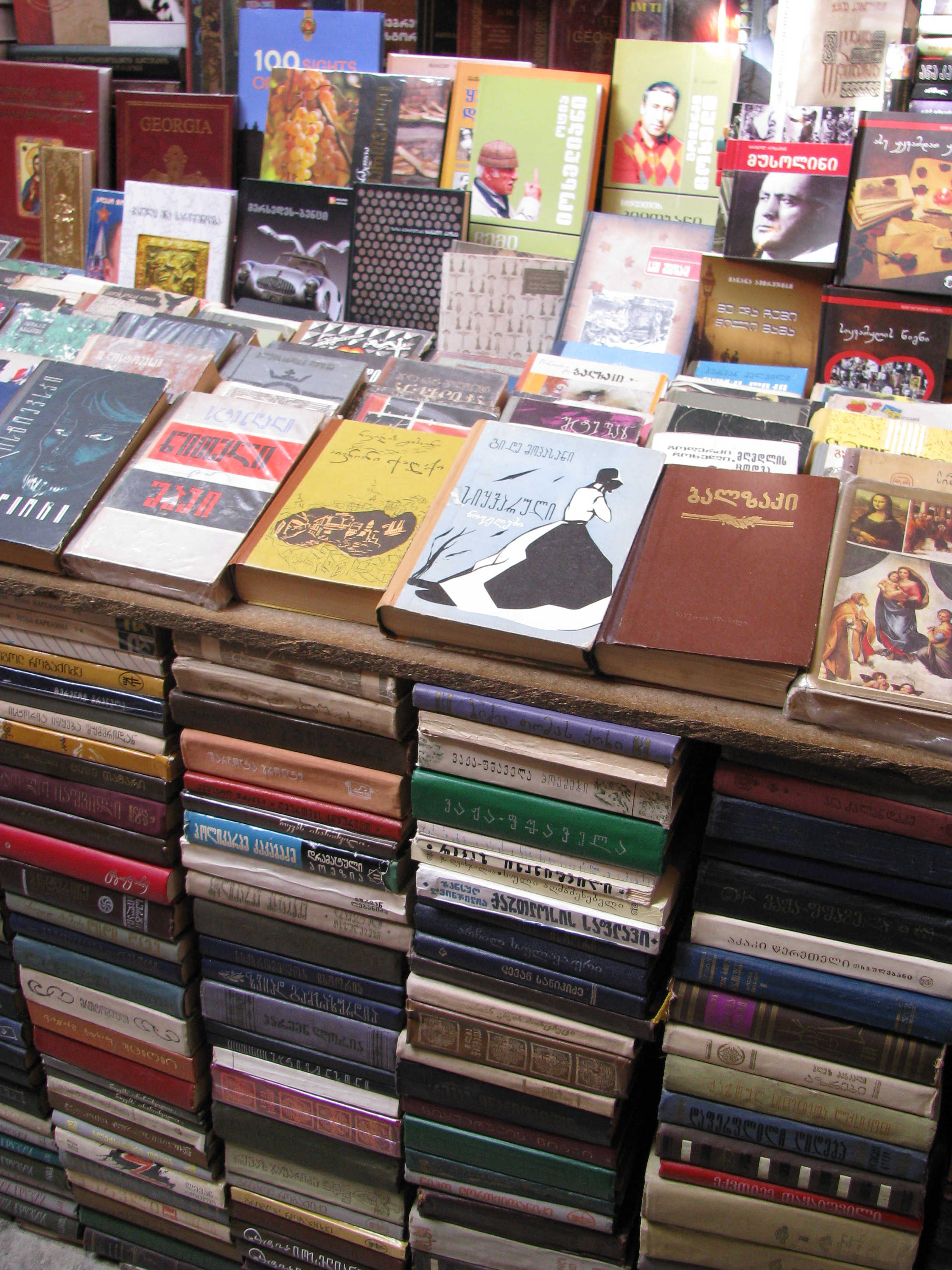
Some books at a booth in the bazaar. Most are in Georgian or Russian.

And the last one, just to show how ubiquitous Stephanie Meyer has become:

A shelf full of Stephanie Meyer's books literally on the other side of the world from her...this, my friends, is what success looks like.

So that’s what’s going on here in the land of the Kartulis.  I haven’t been writing a whole lot, obviously, but once things settle into something of a routine, it shouldn’t be too hard to get back into things.  Georgians have a way of managing time that, as a strongly perceiving ENTP, I actually find quite appealing.  But more on that later; I should probably get to bed.

Kargaaad!

Dila Mshvidobisa Sakartvelos

That’s Georgian for “good morning, Georgia.” It’s 7:20 am in Tbilisi right now, and I figure it’s time for an update before starting another day of TLG orientation.

So Georgia is a pretty interesting place so far.  We haven’t seen too much of it, because we’ve been in the hotel most of the time doing various cultural and language training sessions, but last night we got out and hiked to the top of the fortress in Tbilisi which was very fun (unfortunately, I didn’t bring a camera–next time!).  I’ve just about mastered the alphabet, though I can’t really read it well yet, and I know a few basic phrases that together with gestures and pantomimes will help me to get around.  Very few people speak English; that’s what we’re here as part of the TLG program to change.

There are 33 other teachers in my group, and they’re all pretty awesome.  Most are from the US, though there are a handful from Australia and New Zealand, which is fun.  Most of us are the same age and in the same life position: young, single, fresh out of college, fairly well educated, free of major life responsibilities and looking for an adventure.  For that reason, I think we’ve been able to bond fairly quickly, which is encouraging.  I don’t know how often I’ll see most of these people once I’ve been placed, but I’ve been making friends and getting along fairly well.

So far, the people running the TLG program seem really on the ball.  This is only the program’s second year, but it’s a major initiative from the government and has really started to have an impact.  It’s humbling, actually, to see how much the Georgians are investing in us; the program might not pay as well as JET or EPIK (TEFL programs in Japan and Korea), but for a developing country like Georgia, it’s quite a lot.  The country has been through a lot of tremendous difficulties, but they are pushing forward for a brighter and more prosperous future and I hope that I can make a difference and be a part of that.

In case you’re wondering whether I feel safe, don’t worry; everything in Tbilisi is fine.  Yes, there has been a lot of saber-rattling with Iran, but that hasn’t directly affected Georgia other than the attempted attack on the Israeli diplomats (which could have happened anywhere).  If the Western powers do undertake a major military operation in the area, Russia could become antagonistic, but I think Obama has made it clear that the US is going to stick with sanctions, at least for the foreseeable future.  Personally, I think a military strike is unlikely.  Slightly more disconcerting are the Russian anti-terrorist operations in Chechnya/Dagestan, but that seems to be an internal Russian affair, so don’t worry: I’m safe.

As far as the local culture goes, I think there will be some challenges but I should be able to get along quite well.  It seems that the people have a strong sense of community, emphasize people and relationships over rules and regulations, are honest and outgoing, very passionate, and very friendly toward Americans.

The biggest challenge will probably be the alcohol; Georgians are very proud of their wine, and men are expected to be heavy drinkers (REALLY heavy drinkers–like, even the Australians are nervous about it).  Hopefully, I’ll be able to communicate that I don’t drink because it’s forbidden in my religion, and they’ll respect that.

In general, the orientation has been preparing us for the worst (Turkish toilets, difficulties with co-teachers, host parents trying to marry us off), so a lot of us are nervous, but we’re also very excited. This is definitely an adventure!  And three or four months from now, I think most of us will look back and laugh at how nervous and scared we were.

Honestly, I’m not scared at all.  If not for the study abroad trip to Jordan, I probably would be, but so far the experience has been quite similar (though I’m sure it will be quite different).  I’ll just keep my eyes open, be a gracious guest, work hard, and experience as much as I can of this beautiful and wonderful country.

What I’ve been up to recently

I thought it would be a good idea to do a quick post explaining what I’ve been up to the past month or so, since a lot of things have changed and I’m sure they will be changing a lot more in the future.  So, here’s what’s up:

As you may or may not know, I decided about four or five months ago to leave the USA to teach English abroad.  For the past few little while, I’ve been applying for a program to teach English to elementary school kids in Georgia.  I had the interview over Skype just yesterday, and I think it went pretty well!  I should hear back in the next couple of days, so fingers crossed on that.

If they decide to hire me, I’ll leave in three weeks and stay until at least mid-June.  At that point, I’ll either sign up for another semester or go somewhere else, either the Middle East or Eastern Europe. The pay isn’t great, but it seems like a good cultural experience, and I’m a lot more interested in the Caucasus than I am in East Asia (no offense to Asians).

Ever since I graduated in 2010, I’ve been looking for a fulfilling career that I can balance with my writing aspirations.  I learned pretty quick that that simply doesn’t exist in Washington DC; either you sacrifice everything for your career, including your family, or you end up trapped in an office pushing papers all day.  In Utah, I bounced around a lot of temporary jobs while struggling to make ends meet, but I never found anything more permanent that seemed to strike a balance.

I hope that teaching English will help me to find that balance, and from what I’ve heard from some of my former expat friends, I’m optimistic that it will.  Perhaps more importantly, it will probably enrich my writing by exposing me to new peoples and cultures.  Desert Stars was certainly enriched by the time I spent in Jordan; without having lived in that culture, I don’t think I would have been able to write it.  Besides, English is something I’m good at, and so is teaching–so why not capitalize on the skills I already have?  It certainly sounds better than wasting my 20s in a warehouse.

So that’s the plan: launch a TEFL career and spend at least the next three to five years abroad.  At least.  I might not get married until my 30s–or who knows, I might find someone out there and go native–but this is something I want to do as a career, not just as temporary filler before I figure out what I want to do with my life.  I’m through with filler.  Whether it takes one year or ten for my writing career to take off, I’m going to get out and do something useful and worthwhile.

That’s the plan, anyway.  And of course, I’ll always keep writing.

Right now, I’m finishing up Stars of Blood and Glory; I’m on chapter 15, with only three more and an epilogue after that, so I should finish that well before I leave.  After that, the next big project is Star Wanderers, which is already about halfway finished.  I’ll probably take some time off and work on polishing part II, then release parts I and II sometime in the spring–unless by some weird fluke it wins Writers of the Future.  I’ll know in February.

And after that?  Well, I’m thinking it’s almost time to pick up Edenfall again, but I can’t say for sure. Probably, though–I definitely want to finish that one before the end of the year, and preferably get it published.  After Stars of Blood and Glory, I’ll probably take a break from the McCoy continuity in the Gaia Nova universe, though I may pick up something from Jeremiah’s timeline in Star Wanderers.  I really want to do a parallel novel from Noemi’s point of view–maybe that’s the one I’ll do in seven days, just to hit that resolution.  Everything has to be ready fist, though, and right now it isn’t.

So much is changing–I have no idea where I’ll be in the next six months, creatively or physically. But right now, I’m just enjoying a relaxing time with my parents and getting ready for the next big transition.  Life is good.