How I Would Vote Now: 2005 Hugo Awards (Best Novel)

For some reason, I have a handful of these posts that I thought I’d scheduled months ago, but that never went out.

The Nominees
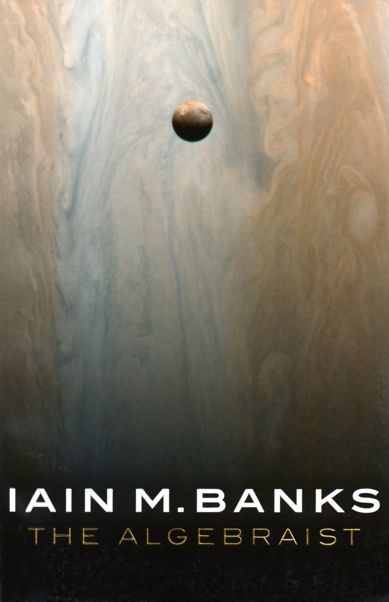
The Algebraist by Ian M. Banks

Jonathan Strange & Mr. Norell by Susanna Clarke
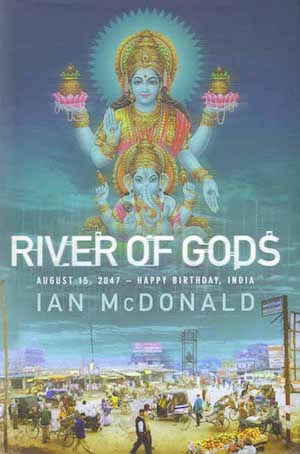
River of Gods by Ian McDonald
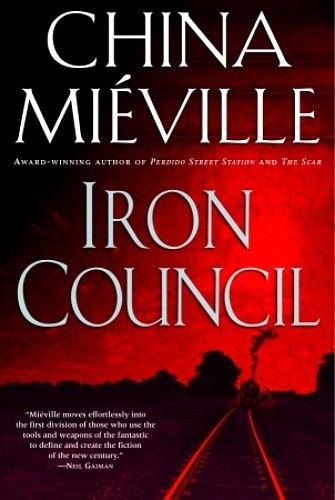
Iron Council by China Mieville
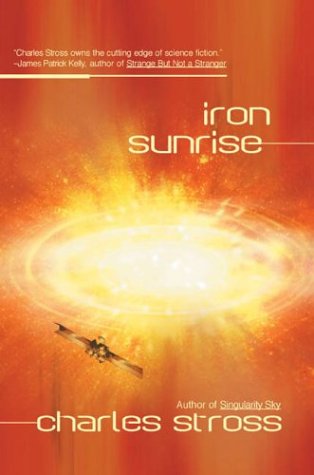
Iron Sunrise by Charles Stross

The Actual Results

  1. Jonathan Strange & Mr. Norell by Susanna Clarke
  2. River of Gods by Ian McDonald
  3. The Algebraist by Ian M. Banks
  4. Iron Sunrise by Charles Stross
  5. Iron Council by China Mieville

How I Would Vote Now

  1. No Award
  2. Jonathan Strange & Mr. Norell by Susanna Clarke

Explanation

To be frankly honest, the only book from this year that I actually picked up was Jonathan Strange & Mr. Norrell. It wasn’t a bad story, but it didn’t hook me enough to want to commit to almost 900 pages of reading. I think I got through about the first 100 pages before I gave up on it. Filling 900 pages is not a difficult thing to do; what’s difficult is filling 900 pages and making all of it compelling reason. Tolstoy, Dumas, and Tolkien all achieved that feat. Susanna Clarke’s debut novel did not achieve it, at least for me.

The reason I didn’t pick up Iron Council by China Mieville is because I DNFed his New Crobuzon series with the first book. I’ve written about this before, but the first book, Perdido Street Station, had a sex scene in one of the first chapters that was explicit enough to make me check out. That might not be an issue for most of you, but it was for me.

I didn’t pick up Iron Sunrise because I’ve read enough of Charles Stross’s other work to know that he doesn’t write the kind of books that I care to read. A lot of that comes down to explicit content as well, though I also detected a heavy strain of nihilism that I just have no interest in bringing into my life. So unless I get a strong recommendation from someone I know and trust, I’m just going to skip all of his books.

I’ve also decided to skip everything Ian Banks has written, after getting about halfway through Consider Phlebus before ultimately deciding to chuck it. In that book, there’s about a hundred page interlude where the story just comes to a stop so that the author can slip in a thinly-veiled lecture about how atheism is the only religious worldview that isn’t a scam. After getting through those hundred pages, I decided I’d read enough: Ayn Rand is just as preachy, and much more compelling.

(Interestingly enough, I don’t think I have ever read a Christian author who is as preachy or dogmatic in their Christianity as the hardcore atheists like Banks and Rand are dogmatic in their atheism. I’m sure they exist, but I have yet to discover them.)

That leaves River of Gods by Ian McDonald, but before picking up that novel, I decided to run that title by Orion, my AI assistant whom I now use to screen all of these novels for woke and explicit content before I try to read them. I trained Orion to screen these books after I had such a horrible experience reading The Man Who F***ed Himself by David Gerrold (you can read more about that here). When I ran River of Gods by Orion, this is what he said:

Synopsis (Spoiler-Free): Set in mid-21st-century India, River of Gods presents a richly woven tapestry of interconnected stories that explore a future shaped by climate change, political tensions, and technological advancements. From an AI researcher grappling with the ethical implications of her work to a comedian turned politician and a genderless individual navigating societal challenges, the novel offers a kaleidoscopic view of a diverse and fragmented world.

Explicit Content: The book includes some explicit sexual content and mature themes. Violence is present but not gratuitously described, serving to underscore the stakes of the characters’ struggles. Strong language and depictions of societal corruption also feature in the narrative.

“Woke” Elements: McDonald addresses issues like climate change, gender identity, social inequality, and the impacts of globalization, reflecting a progressive outlook. The exploration of gender fluidity and societal norms is particularly prominent, as is the novel’s focus on the intersection of tradition and modernity in India.

Overall Assessment: River of Gods is a bold, sprawling work of speculative fiction that blends science fiction concepts with cultural depth and complexity. Its explicit content and overtly progressive themes may not appeal to all readers, but its ambitious scope and richly detailed world-building make it a standout in the genre. Those who appreciate deeply layered narratives with a strong social and cultural lens will find much to admire.

The “exploration of gender fluidity” and “genderless individual navigating societal challenges” is a dead giveaway to me that this is not the kind of book I want to read. Honestly, the plot sounds a bit like Love Actually set in a near future version of India, where the love is replaced by wokeness. I suppose I could be wrong, but I don’t feel like reading 500+ pages to learn that Orion’s assessment was right. So far, he’s been surprisingly good at the other titles I’ve given him.

So much for 2005. It feels like every year since this one has been a tug-of-war between the kind of science fiction that I like, and the kind of science fiction that I absolutely cannot stand. That’s why I keep having to put No Award on the ballot for these How I Would Vote Now retrospectives. When I’m done, it will be interesting to go back and see which years got No Award and which ones didn’t. The 70s was another era where the award-winning science fiction really turned sour, but the good stuff came back in the 80s and 90s, if only briefly. I wonder if it will ever come back from what it is now.
How I Would Vote Now: 2003 Hugo Awards (Best Novel)

The Nominees

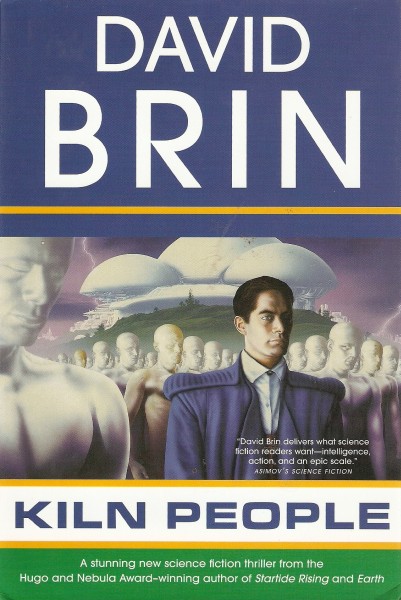
Kiln People by David Brin

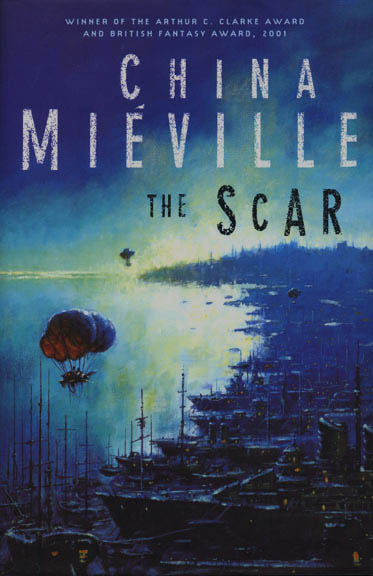
The Scar by China Mieville

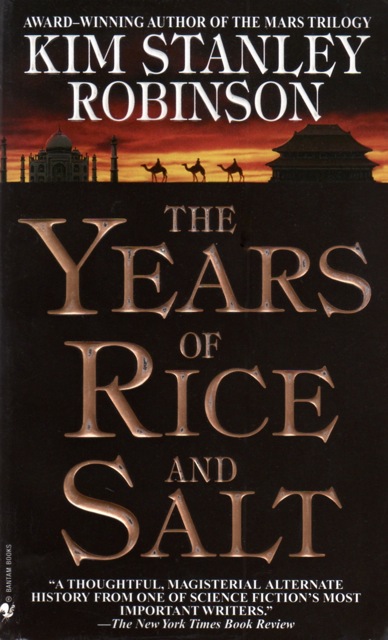
The Years of Rice and Salt by Kim Stanley Robinson

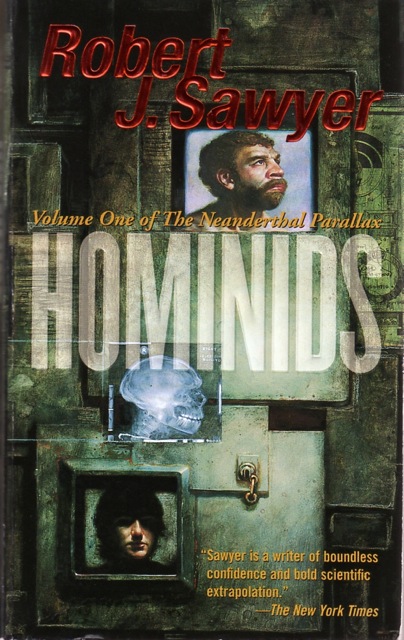
Hominids by Robert J. Sawyer

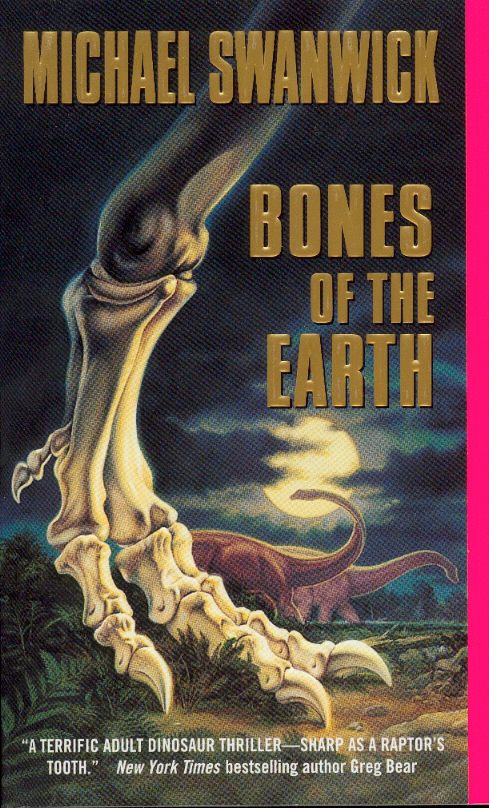
Bones of the Earth by Michael Swanwick

The Actual Results

  1. Hominids by Robert J. Sawyer
  2. Kiln People by David Brin
  3. Bones of the Earth by Michael Swanwick
  4. The Scar by China Mieville
  5. The Years of Rice and Salt by Kim Stanley Robinson

How I Would Have Voted

(Abstain)

Explanation

None of these books were so bad/woke that I felt No Award merited a vote for this year. In fact, if my memory serves me, few of these books were woke at all (or else they were just a lot better at hiding it. Whatever.) But at the same time, I didn’t enjoy any of them enough to feel that I could affirmatively vote for any of them. In fact, I ended up DNFing all of them, for various reasons (that’s right, China Mike—I didn’t feel it was necessary to finish any of these books to know how I would have voted).

Kiln People and The Years of Rice and Salt were both books that I didn’t bother to pick up, because I’ve read enough from each author to know that I don’t care to read anything they write. Way back in high school, I read Red Mars by Kim Stanley Robinson, but I never felt compelled to finish the rest of the series, and DNFed the second book when I picked it up years later, as well as every other Hugo-winning book he’s written. With David Brin, I started his first Uplift Trilogy book but DNFed it about a hundred pages in, and decided to DNF him as an author after throwing The Postman across the room.

For both of these authors, my reason for DNFing them has less to do with their politics (though I’m sure we have irreconcilable differences there) as it does with their dogmatic, almost fanatical adherence to materialism: the view that everything in the universe is reducible to physical, material phenomena, and that if something cannot be measured it might as well not exist. You can see this in the dismissive way that they treat religion in all of their books, especially Christianity—as if faith, in any form, is a delusion that ought to be beneath all clear-thinking and enlightened people. From long experience, I’ve learned that authors with this particular worldview almost never write anything that I feel is worth reading. Hence, I didn’t feel it was necessary to read either of their books.

The Scar is book two of China Mieville’s New Crobuzon series, and since I DNFed the first book, I didn’t read the rest of the series. I’ll explain my reasons more when I write up my post for how I would vote now in the 2002 Hugo Awards, but it basically comes down to the sex scene in the first chapter, which was too graphic for my tastes. Call me a prude, but I prefer to avoid graphic sex scenes. I suppose I could be persuaded to try the series again, though, on a strong enough recommendation.

I forget why I DNFed Hominids. I read it back in 2002, when I made—and kept—my resolution to read (or DNF) all of the Hugo and Nebula award-winning novels. I think it came down to getting bored with the story, or not really liking any of the characters. I could probably be persuaded to try it again, though I doubt the results would be different a second time around.

Lastly, Bones of the Earth was my biggest disappointment from the books on the ballot this year. I had previously DNFed Swanwick’s Station of the Tide, which struck me as the sort of thing an author writes when they don’t really care what readers think of it and they just want to wallow in their own self-indulgent fantasies. Also, there was a lot of weird sex stuff that I found off-putting.

But Bones of the Earth started out really well. It’s basically about a bunch of time traveling paleontologists, and the bureaucracy built around the time travel machinery to keep all the timelines from falling into contradiction and paradox. Think Jurassic Park meets The Adjustment Bureau. The first half of the book was really well done, to the point where I started wondering why I’d never heard of this book before, or why it hadn’t gotten more commercial traction.

Then I found out why.

The inciting incident happens when a creationist terrorist sends a bomb out to a group of paleontoligists somewhen in the Cretaceous period, killing one of them, destroying their time beacon, and stranding them in time. I wasn’t actually bothered at all by the creationists being the bad guys, since 1) several of the paleontologists were various stripes of Christian, and 2) I can totally believe that radical fundamentalist creationists would resort to sabotage, or even terrorism, to derail the whole project. But about midway through the book, after the band of marooned time travelers go through some pretty hefty forming and storming, as they just start to enter the norming phase, they all decide, at the same time and on a total whim, to throw off their clothes and have a group orgy together.

I can believe that there are people in this world who would do that sort of thing. I can even believe that a group of randomly selected people might consist entirely of this sort of person. I just don’t want anything to do with them. I’ve been in a fair amount of group situations, and the worst ones I’ve ever had to endure were the ones where everyone either wanted to all get drunk together, or all get sexy together (thankfully, none of them turned into an actual orgy like the one in this book).

But frankly, the impression I got while reading it was that the author was a little too sex-deprived (if not an outright pervert) and indulged in that scene purely as an act of wish fulfilment. Any editor worth her salt would have told Swanwick to remove or totally rework that scene, so the fact that it’s still in the book probably means that he’s too bull-headed for his own good—which is a shame, because the book probably would have sold better if he’d cut that scene out. The orgy scene added very little and certainly alienated more readers than it brought in.

One of the things I’m trying to be more careful about, as a writer, is writing books for other people, not just myself. I was a lot more self-indulgent in my early career, which is probably a major factor in why many of my older books haven’t gained much traction outside of a small readership. While it’s important not to try to write for everybody, authors who write only for themselves are too often inaccessible to anybody.

How I would vote now: 2012 Hugo Award (Best Novel)

The Nominees

Leviathan Wakes by James S.A. Corey

Deadline by Mira Grant

A Dance with Dragons by George R.R. Martin

Embassytown by China Mieville

Among Others by Jo Walton

The Actual Results

  1. Among Others by Jo Walton
  2. Embassytown by China Mieville
  3. Leviathan Wakes by James S.A. Corey
  4. Deadline by Mira Grant
  5. A Dance with Dragons by George R.R. Martin

How I Would Have Voted

  1. Leviathan Wakes by James S.A. Corey
  2. No Award
  3. Among Others by Jo Walton
  4. Embassytown by China Mieville

Explanation

Leviathan Wakes was a fantastic book. Really awesome space opera. I’ve only read the first three Expanse books so far, but they’re all really great, and I do plan to work my way through all of them. My favorite aspect of the series is probably how the Latter-day Saints build the most freaking awesome generation ship ever… because of course, that is totally something we would do. Mormon pioneer trek to the stars!

In all seriousness, though, I’ve actually been quite impressed with how the writing duo behind James S.A. Corey handles religion and philosophy throughout the series. Lots of sci-fi writers tend to take an overtly materialistic or atheist point of view, even if they don’t come out and admit it, and for a religious reader like myself it gets super annoying after a while. But the second (or third?) book really impressed me with its depth, even though the religious authority figure in that book is also a lesbian. As a conservative, believing member of the Church of Jesus Christ of Latter-day Saints, I tend to get really wary when things start to get queer, but it actually worked for her character, and I thought the writers handled it very well—not in a woke or a heavy-handed way at all.

Among Others is a lengthy essay about the history of science fiction and fantasy dressed up as a rather forgettable story of a misfit girl going off to a boarding school, and maybe running into some fairies or something. Like I said, the frame story is forgettable. But Jo Walton’s take on the SF&F classics is very interesting, though personally I preferred reading it straight with her essay collection What Makes This Book So Great, which apparently consists of a bunch of blog posts from her column over at Tor.com. I don’t always agree with her tastes, of course, and the fact that she’s a boomer makes her very short-sighted when it comes to some aspects of the culture, but I do really enjoy getting her perspective on the genre, since she is so incredibly well-read. If not for some other books that I felt deserved to be placed below No Award, I probably just would have left Among Others off of the ballot.

Same with Embassytown, which I didn’t finish. There wasn’t anything particularly terrible about it, other than the fact that I was pretty dang confused from the first page. Mieville tends to be very hit or miss for me, perhaps because I’m just not a fan of literary fiction in general. I prefer a good, pulpy adventure story, which is probably why I’ve never read a Louis L’Amour book or a Robert E. Howard story I didn’t like. I suppose I could be persuaded to give Embassytown another try.

The last two books are the reason why I voted No Award. I’ve written at length about George R.R. Martin, but the short version is that I really don’t like the direction that Game of Thrones and A Song of Ice and Fire has taken the fantasy genre, and the fact that he hasn’t finished the damned series yet has done far more harm to the rising generation of fantasy authors than anything else he’s accomplished with these books. In particular, I find Martin’s obsession with the victimizer/victim dynamic to be both pathological and toxic, and I really don’t care for his particular brand of nihilism either. Perhaps it’s a good thing that no one talks about this series after the shitshow that was season 8.

As for Deadline, I didn’t read that one because I DNFed the series with the first book, Feed. The main thing that turned me off to that one was the sexual innuendo between the brother and sister. Yes, I know they’re technically supposed to be adopted or whatever, but it still felt very icky, and made me wonder if Seanan McGuire doesn’t have a weird porn addiction, because that was the vibe I got from that book. Also, the premise was totally unbelievable. The SHTF has already gone down, but the government is still handing out “blogging licenses,” something that they can’t even regulate right now during the good times? Also, how the heck is all that infrastructure still functioning in the midst of the zombie apocalypse? Those fiber optic cables don’t repair themselves.

…and now I’m going to have to take a break from this series for a while, because I haven’t read enough of the books in the other years to know how I would have voted. I’ve read (or DNFed) all of the winners, and for several years, I’ve read all but one of the books, but it’s still going to take me a while to do another retrospective. I’m currently prioritizing 2024 and the years where I only have one more book to read (1972, 1974, 1989, 1992, 2005, 2011, 2014, 2015, and 2016), though some of them are proving difficult to find. Just because a book was once up for all the big awards doesn’t mean it has any staying power.

Reading Resolution Update: March

My 2022 reading resolution: Read or DNF every novel that has won a Hugo or a Nebula award, and acquire all the good ones.

So March is usually the time where people get tired of their new year’s resolutions and either give them up entirely or put them on the back burner for a while. But at this point, I’m a little more than halfway through achieving this one, so I will definitely keep pressing on since I don’t think it will take the whole year to accomplish it. In fact, I may actually expand it to include all of the short stories, novellas, and novelettes. I’ve already filled out the spreadsheet (with a huge thanks to the Internet Speculative Fiction Database, which also lists all of the collections and anthologies where each story can be found).

With that said, my enthusiasm for reading all of these books is starting to flag, and I’m not pushing on as vigorously as I did back in January. There have been a lot of DNFs… a lot of DNFs. But now, I’m starting to get to the books that aren’t obvious DNFs, which is frustrating, because when you get more than halfway through a 600 page book before you realize it isn’t worth finishing, that really does take the fun out of reading, at least in the short term.

But it has been very eye-opening to see what kinds of books tend to win Hugos and Nebulas. I’ve noticed some interesting patterns that have given me real insight into the people who vote in these awards, which consists of the old guard in fandom for the Hugos, and members of SFWA (mostly professional authors) for the Nebulas.

One book in particular I found really eye-opening in this regard, and that was They’d Rather Be Right by Mark Clifton and Frank Riley. Mark Clifton was a science fiction short story writer who was fairly prolific, but died tragically about ten years after They’d Rather Be Right came out in 1955. Frank Riley was a newspaper man who dabbled a little bit in mystery short stories but only ever co-wrote this one novel.

They’d Rather Be Right is a notoriously difficult book to get your hands on. An abridged version with the title The Forever Machine is on sale on Amazon somewhere north of $100, and neither version was available at either my local library or the Harold B. Lee Library at BYU, and that’s unusual because the HBLL’s science fiction and fantasy collection is one of the best in the country. I eventually bought a used version of They’d Rather Be Right on Amazon from a third-party seller for $10: it was an old library copy from a small town in Arizona, and I think the seller was the actual library.

In reading about this book, I discovered that it’s been widely panned as the “worst book to win a Hugo.” However, after reading it, I can definitely say it is not the worst book. It’s not the best book either, but it is far from the worst, and I enjoyed it enough to put it on the “books worth keeping” list. So why is it considered the worst Hugo-winning book, and why has it been forgotten so thoroughly?

My working theory is that They’d Rather Be Right isn’t actually bad, it’s just heretical. Science fiction has always skewed toward the political left, and this book thoroughly ridicules some deeply held left-wing beliefs of its day. For example, it goes out of its way to ridicule scientists as a class, and makes it seem ludicrous that they have any business deciding on how the rest of society should be governed. It also pokes fun at some of Sigmund Freud’s ideas, which is notable because so many of the Hugo and Nebula winning novels of the 60s and 70s are so thoroughly Freudian.

So what happened, I believe, is that after the Hugos became a regular feature of Worldcon (They’d Rather Be Right was only the 2nd novel to ever win a Hugo), the influencers and kingmakers within fandom decided that this one won on a fluke, and did everything they could to suppress it. And perhaps it really was a fluke, since the Hugo Awards weren’t yet established, and Worldcon itself was only a little more than a decade old.

Because here’s the thing: the Hugos and the Nebulas have always been radically left-wing. Science fiction in general has always leaned hard to the left, and those of us who consider ourselves right-wingers have always been a despised minority to most of the rest of fandom. That didn’t start in the 50s either: if anything, it started with the Futurians, as Donald Wollheim himself (founder of DAW Books) said that science fiction “should actively work for the realization of the scientific world-state as the only genuine justification for their activities and existence.” The Futurians were the ones who founded both Worldcon and SFWA, as well as several other establishment institutions in the SF&F field.

But I think it started before the Futurians, because it makes a lot of sense that science fiction would attract left-wingers more than it would right-wingers. Left-wingers are the kind of people who think that traditions should be thrown out and new ideas should be implemented, whereas right-wingers are the kind of people who think that new ideas should be treated cautiously, and traditions should be upheld.

There’s a cycle that happens about every 50 to 100 years, and it goes like this: someone comes up with a Beautiful Idea that almost everyone on the left becomes enamored of. They pore over this idea, ponder it, debate it amongst themselves, and spill copious amounts of ink over it, mostly in the form of academic discourses and thesis papers.

Gradually, this idea matures into a General Theory, and the left constructs a whole worldview around it. But at this point, it starts to come into conflict with reality—not in a catastrophic way at first, but definitely in a way that causes some uncomfortable cognitive dissonance. But because the Beautiful Idea was so beautiful, none of the theory’s proponents really want to give it up, so they start to build a bulwark of apologia to explain the theory’s inconsistencies and contradictions.

After a while, though, that isn’t enough, and reality begins to intrude in ways that simply cannot be ignored. At this point, the General Theory morphs into an Ugly Ideology, possessing all of its followers and driving them into incredible pathologies. Groupthink and doublespeak become de rigueur, and hypocrisy infects everyone. Values like diversity, curiosity, open inquiry, freedom of speech, and intellectual honesty are all thrown out, as nothing is more important than promoting the ideology. Right and wrong cease to matter as well: the only thing that matters is power.

Eventually, reality intrudes in such a way that the entire edifice comes crumbling down, completely discrediting the Beautiful Idea and everyone who ever believed in it. But if the Ugly Ideology persists for too long, it culminates in a reign of terror, with guillotines, gas chambers, firing squads, holocausts, and genocides.

Fortunately, there are people who drop out at every stage of this cycle: “That’s a Beautiful Idea, but it’s still flawed.” “I like the General Theory, but I don’t think it explains everything.” “I am a true believer in this Ugly Ideology, but I’m not going to pull the trigger on those people.” And if enough people drop out, the pendulum swings back, the left goes into retreat, and culture and politics swing back to the right again… until someone discovers (or rediscovers) a Beautiful Idea.

In the 60s and 70s, the left was in the early stages of the Ugly Ideology phase of this cycle. Not surprisingly, the science fiction of that time was pretty terrible. Then the Reagan era happened, the Soviet Union collapsed, the Cold War ended, and left was thrown on the back foot for a generation. During this time (the 80s and 90s), the award-winning science fiction was actually pretty good.

But that was also the time when the ideas that underpin critical race theory began to take root—the “Beatiful Ideas” that gave us, among other things, Defund the Police, the George Floyd riots, the epidemic of smash-and-grab robberies, and the ongoing collapse of leftist-run cities like Chicago and San Francisco. In science fiction, this culminated in the sad and rabid puppies, at which point the Hugos and Nebulas became total garbage again, because the left-leaning fandom had become so ideologically possessed.

So anyways, that’s my take on it. I really did enjoy They’d Rather Be Right, and not just for the insights into fandom. In any case, here are all of the other Hugo and Nebula winning books I read or DNFed in March:

Books that I read and plan to or have already acquired:

  • They’d Rather Be Right by Mark Clifton and Frank Riley (1955 Hugo)

Books that I read and don’t plan to acquire:

  • The City & The City by China Mieville (2010 Hugo)

Books that I did not finish:

  • Stranger in a Strange Land by Robert A. Heinlein (1962 Hugo)
  • To Your Scattered Bodies Go by Philip Jose Farmer (1972 Hugo)
  • Where Late the Sweet Birds Sang by Kate Wilhelm (1977 Hugo)
  • The Snow Queen by Joan D. Vinge (1981 Hugo)
  • The Yiddish Policeman’s Union by Michael Chabon (2008 Hugo and Nebula)