How I Would Vote: 2025 Hugo Awards

The Nominees

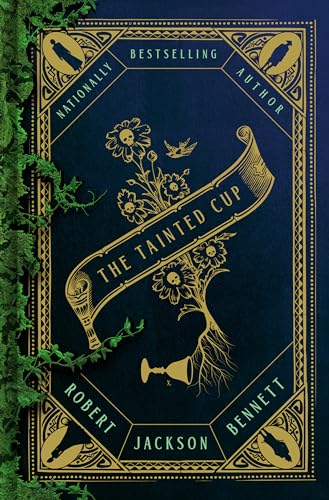
The Tainted Cup by Robert Jackson Bennett

The Ministry of Time by Kaliane Bradley

A Sorceress Comes to Call by T. Kingfisher

Alien Clay by Adrian Tchaikovsky

Service Model by Adrian Tchaikovsky

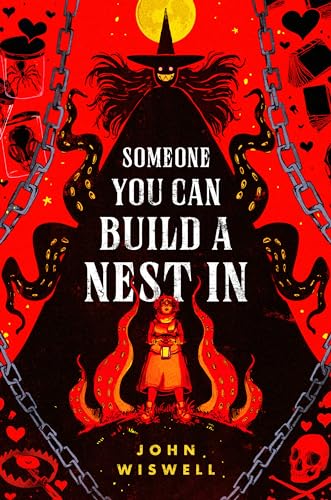
Someone You Can Build a Nest In by John Wiswell

The Actual Results

TO BE DETERMINED

How I Would Vote Now

  1. No Award
  2. Service Model by Adrian Tchaikovsky

Explanation

As if yesterday’s post wasn’t controversial enough, I’ve decided to jump feet-first into this particular tempest (though thankfully, it appears to be a tempest in an ever-shrinking teacup). And I suppose the thing that makes this particular post so interesting is that I could actually cast this vote, if I had no qualms about giving the clowns who run the Hugo Awards any of my hard-earned money. But I do have qualms, so I won’t give them my money, which still makes this a hypothetical exercise, even though I’m posting this three weeks before the 2025 Hugos are awarded.

To be perfectly honest, I have not read any of these books all of the way through. I’ve read enough of two of them to DNF them, and one of them enough (including the epilogue) to know that I will eventually read the whole thing. And I screened all of them first with AI, which told me enough to know that three of them were not worth reading at all.

First, Someone You Can Build a Nest In. According to ChatGPT (and frankly, the back cover description itself), this book is chock full of body horror, trauma, abuse, and sexual depravity. It is also quite possibly the wokest book on the ballot, which means that it probably has the best chance of actually winning. Which also means that you couldn’t pay me enough money to read it. So much for that.

The Ministry of Time also appears to be woke, with anti-colonial and LGBTQ themes. However, the thing that really turned me off were all of the content issues that ChatGPT listed, such as frequent strong language, lots of F-bombs, and several erotic “open-door” sex scenes. So yeah, I’ll give a pass on that one too.

It’s much the same story for The Tainted Cup. A few woke elements, a subtle M/M romance (which I’m sure plays into the “All True Love is LGBTQ Love” trope that I cannot abide), and a lot of explicit profanity, with some prostitution to round it out. Not interested.

I forget why I DNFed A Sorceress Comes to Call. All I remember was that when I tried to read it, I felt repelled from it like a magnet. Since that has been my experience with basically everything else that T. Kingfisher has written, I didn’t feel compelled to try again.

Which brings us to the two books by Tchaikovsky. I really enjoyed his Children of Time, though I didn’t really get into the sequel (just didn’t feel compelled by any of the characters). He is a good writer, and specifically a good science fiction writer, though his scientific materialism strikes me as outdated.

Alien Clay didn’t appeal much to me, though—honestly, I found it difficult to believe that a government that would expend so many resources to transport their prisoners halfway across the galaxy wouldn’t also spend the tiny fractional cost to make sure they all got there alive. So right from the start, it felt like a melodramatic parody of all the left’s fears about “fascism.” And skipping to the end, it basically turns out the way Halo would have ended if the Flood had won. So I decided to DNF it, even though it wasn’t the worst book I’ve ever DNFed. And also, I don’t think that any one author should have more than one book on the ballot in any given year. So that’s why I’d put it under No Award.

Service Model, though, is pretty good. The best way I can describe it is Murderbot meets Kafka. It’s sort of an absurdist comedy in a post-apocalyptic world where the humans have (mostly) vanished, and the robots are malfunctioning in hilarious (and sometimes disturbing) ways. Not my favorite kind of book, and it probably could be improved by ruthlessly editing it to half the length, but I was enjoying it right up to the point where someone else put the library copy on hold, and I had to return it without renewing it. Skipping to the epilogue, I found nothing particularly objectionable, so I will pick it up again, and will likely finish it.

Which is more than I can say of most Hugo-nominated books in the last ten years.

[ETA 23 Feb 2026: I’ve decided to DNF Service Model after all, not because of anything objectionable that I read, but because I just couldn’t bring myself to pick it up again and finish it. It just wasn’t compelling enough for me to want to finish it more than I want to pick up something new. I could be persuaded otherwise if I heard someone really gush about it, but right now, I’m just not going to bother.]

The dangers of relying too much on AI

I saw this really interesting video last week, and it made me think: am I relying too much on AI?

In my personal life, this probably isn’t an issue. I do occasionally ask ChatGPT to make me a recipe, or to advise me on a particular topic, but I always do a gut check and assume that it’s hallucinating if it doesn’t pass. If it gives me something that I can quickly and easily verify, I always do that… and half of the time, it turns out to be a hallucination to some degree. So yeah, I don’t rely on it nearly as much in my personal life as some of the characters in this video.

What about blogging? Don’t be too scandalized, but with my new blogging schedule, I have experimented a bit with using ChatGPT to write some of these blog posts. It’s not like I’ve been copy-pasting everything straight from the chatbot, but I have relied on it a little more heavily than I do in my own writing.

After trying that a couple of times, though, I decided to cut that out and write all of these blog posts by hand. Why? Because I felt like it was creating too much distance between myself and the people who read this blog, and the purpose for writing this blog is to foster a human connection. So it kind of defeats the purpose to rely on a chatbot to generate most of the content I post here. For that reason, I plan to keep writing all these blog posts entirely myself, with only minimal AI input.

So what about my fiction? This is where things get a little tricky. While I totally agree that simply copy-pasting from AI is a piss-poor way to write a book, I do think that AI can be a very useful tool in writing and crafting a novel, provided that you understand the limitations of the AI and don’t rely on it too much. But how much is too much? That is the question.

The biggest way that AI has helped to enhance my own writing is in giving me a birdseye view of the story as I generate a “crappy first draft.” This birdseye view allows me to see and fix major story issues before they metastatize and give me writer’s block, which is what tends to happen if I write these drafts out entirely by hand. When I’m focused on the page, I tend to lose sight of the forest for the trees, so I don’t notice that there’s a problem with the story until I’m several chapters in and find that I just can’t write.

This has happened with basically every project that I write on my own, and is the main reason why it took me anywhere from six to eighteen months (or longer) to write even a short novel, before I started using AI. However, since I began incorporating AI into my writing process, this problem has basically gone away, and I no longer experience this form of writer’s block at all.

However, while I do rely on AI to help me to craft my “crappy first draft,” that isn’t the draft that I publish. Once the AI draft is as good as I can make it, I will then go through scene-by-scene and rewrite the entire book in my own words. The purpose for this step is to make sure that I’m telling the story in my own words, and to make the story my own. I will still have the AI draft open on another screen, and refer to it as I write out the story, but I don’t do any copy-pasting. It’s all written out by hand.

Is this enough, though? Or do I need to add more steps to make sure that I’m not relying too much on AI, and thus losing my own voice? Recently, I’ve been spending a lot more time on the AI draft, generating multiple iterations and combining the best parts to (hopefully) boost the quality. I’ve also been doing a revision pass over the AI draft, tweaking it to smooth over some common AI-isms and (hopefully) adding a bit of my own voice before I move on to the human draft and rewrite the whole thing to make sure it’s all in my voice.

But while this might be enough to keep the book in my own words, is this enough to keep my own writing skills from atrophying? Or do I need to occasionally pick up a WIP that is 100% human writing, with no AI at all, just to make sure I don’t lose these writing skills? That is the question that I’m currently pondering. Perhaps this is the sort of thing that short stories could serve really well to help with. Perhaps I should go back to writing short stories again, just as a way to keep my writing skills sharp.

If I were starting out right now as a new writer, I would definitely avoid writing with AI until I’d written enough to find my own voice. And I would also make sure to write at least one novel 100% without AI-assistance, just for the experience, and to prove to myself that I could do it. Otherwise, I think there would be a very real danger in becoming over-reliant on AI to write my books, and thus risk losing my own unique voice, so that none of the books that I write ever truly become my own.

Anyhow, those are some of my current thoughts on the subject. What do you think of this problem?

Gearing up for another family road trip

We’ve spent the last couple of days getting ready for another cross-country road trip as a family, this time to Arkansas. My side of the family is going down there, mostly because my youngest sister works at a national park, so it’s more convenient for us to come to her (and it should be fun as well).

The plan is to drive to Omaha, spend a couple of nights with my brother-in-law and his wife, then drive down to Arkansas and spend the week with family. Once we’re done, we’ll just drive straight back to Utah, hopefully in two days, but more likely in three. After all, we’ve got a five year-old and a two year-old with us.

This is the first big road trip we have this summer. The second one is at the end of July, and we’ll be going up to northern Alberta for a reunion with my wife’s side of the family. Her grandmother passed away earlier this year, and this was the soonest everyone could get together (getting passports for the kids was a little tricky).

I’ve already schedule blog posts through the next week and a half, so those should be coming up each day. I’ve also been writing more Fantasy from A to Z posts, and I hope to write the rest of them while I’m out there, though I’m not stressing out too much about that. If they get done, great, if not, I’ll just finish them when I get back.

The big reason why I’m blogging daily now is because of some major problems I’ve been having with my email list. I used to send out a newsletter approximately every week, but over the last couple of years, my open and click-thru rates have been creeping ever lower, until just last month they suddenly dropped by more than 50%. Turns out there’s a whole lot of backend stuff that changed in the last year, most of which I barely understand.

But ChatGPT has been a huge help in figuring out what’s wrong, and how I need to register DMARC and SPF and all the other stuff that I still don’t understand. My wife has also been a huge help in sorting through it all. I think it’s all set up properly, but I haven’t sent out a newsletter yet, and probably won’t until I get back from Arkansas. I also need to update my newsletter template. ChatGPT should be really good for that.

So the email newsletter is turning into a monthly thing, and the blog is turning into a daily thing, at least for the forseeable future. All of that might get thrown out the window when the new baby comes along, at least temporarily.

In the meantime, I’m working on Fantasy from A to Z and the rough AI draft of Lord of the Falconstar, both of which are coming along quite well. I’m going to experiment with having one human WIP and one AI WIP active at the same time, because ChatGPT suggested that this would be the best way to maximize by writing time and productivity.

I fed ChatGPT my accountability spreadsheet and the daily project journals I’ve been keeping for the past year, and it came back with some fascinating insights into my writing process. It’s amazing how you can feed it a bunch of raw, barely-formatted data, and get a genuinely insightful analysis.

Is this taking away jobs from a data analysis / writing coach? Not really, at least in my case, because I doubt I would have hired one. But the results sure are useful. I’m also experimenting with feeding my entire book into ChatGPT and asking it to write a book description or generate a cover. It’s amazing how it can “read” a whole novel in a fraction of a second, and spit back answers that show (or at least simulate) a genuine understanding of the material.

But one thing ChatGPT can’t do is convert a short story into a screenplay—at least, not without significant human input. I tried uploading “What Hard Times Hath Wrought” and told it to turn it into a screenplay, and the results were hilariously bad. Maybe Sudowrite has a plugin, though…

Fantasy from A to Z: C is for Conan

Before there was J.R.R. Tolkien, there was Robert E. Howard. And before there was Middle Earth, there was Conan the Barbarian and the Hyborian Age.

Robert E. Howard had an amazingly prolific writing career, cut tragically short by his suicide. When I think of all the books and stories we could have had if Howard had not shot himself in grief after the death of his mother, it fills me with a profound sense of loss (and makes me want to rewatch the excellent biopic about him—or more accurately, his girlfriend—The Whole Wide World). I love Howard’s fantasy stories—not just the ones about Conan and his adventures, but the ones about Bran Mak Morn, Kull of Atlantis, Solomon Kane… honestly, he wrote so many stories that I have yet to exhaust them all. 

But my favorite are the stories about Conan the Barbarian, who is undoubtedly his most famous literary creation. Over the course of the last century, Conan the Barbarian has taken on a life of his own, with dozens of writers taking a stab at writing stories in the Cimmerian’s world. My favorite of these is probably John Maddox Roberts, though I have a soft spot for L. Sprague de Camp. Harry Turtledove also wrote an excellent Conan novel, Conan of Venarium. 

In a lot of ways, Robert E. Howard’s Conan stories set the standard for modern fantasy—or at least for the sword & sorcery strain for it. Tolkien later established the epic fantasy strain, and you can make a solid argument that every other successful fantasy book is derivative of one or the other (or both). Where the epic fantasy strain tends run super long, with novels in the 200k word to 400k word range, the sword & sorcery strain tends to run much shorter, with many of the original Conan stories clocking in at under 10k words. In fact, from what I’ve gathered, until Lord of the Rings became popular in the 60s and 70s, most readers thought that the natural length of a fantasy story was under 10k words.

For the Conan stories, that’s probably true—or at least, under 40k words, since many of Howard’s original novellas are quite good. My favorite of his is probably either “The Tower of the Elephant” (perhaps the most classic Conan story) or “The Black Stranger,” which had a very interesting Mexican standoff between three stranded pirate captains that Conan totally blows up. I also really enjoyed “Iron Shadows in the Moon,” mostly because the female love interest gets an interesting and satisfying character arc. The crucifixion scene from “A Witch Shall Be Born” was really great, too, and of course, the brutal savagery of “Red Nails” made a really big impact—though since that was the last Conan story Howard wrote before he shot himself, it has a very dark edge to it.

Howard only wrote one Conan novel, and to tell the truth, I wasn’t particularly impressed by it—it just felt like a generic Conan story, padded with a bunch of filler to increase the length. But I did really love Conan the Marauder by John Maddox Roberts, where Conan rises through the ranks of a horde of nomadic tribesmen, starting as their slave and eventually becoming the right-hand man of the Hyborian age’s Genghis Khan. The two major villains of that book had exceptionally satisfying deaths, and the writing was almost as pulpy and glorious as Howard’s writing itself.

After you’ve read all the original Conan stories, you really should watch The Whole Wide World. It’s a wonderful film about the only woman Howard ever loved, his on-again off-again girlfriend Novalyne Price, and their turbulent relationship. As a writer, I really appreciated the glimpse that the movie gives into the life of the author himself—and on how some of his eccentricities as a writer mirror my own. Thankfully, though, my family life has been much more stable. I don’t blame Novalyne Price for rejecting Howard, but I am very thankful for my own wife and children. My own writing changed dramatically when I became a husband and father. I can only imagine what wonderful stories we would have had if Robert E. Howard’s life had taken a similar path.

The book I’ve written that comes closest to matching the mood, theme, and action of a typical Conan story is probably The Riches of Xulthar. It isn’t nearly as good as the original Conan stories, but I do think it compares favorably against some of the later knock-offs. The idea for it came when I was playing around with ChatGPT and asked it to write me a fantasy adventure story in the style of Robert E. Howard. Things took off from there. Riches of Xulthar was my first AI-assisted novel, though after using AI to generate the rough draft, I rewrote the whole book to put it in my own words, which is the process I use for all of my AI-assisted books. If you’re interested, you can do a side-by-side comparison between the AI draft and the human draft on my blog. 

Thoughts on the Worldcon 2025 AI “scandal”

I’ll just come out and say it: I predict that the world’s last Worldcon will happen before 2034, and that after that, the convention (and possibly the Hugo Awards themselves) will be permanently disbanded. That’s what I think will be the ultimate consequence of the latest “scandal” regarding Seattle Worldcon’s use of ChatGPT, and the anti-AI madness currently sweeping the science fiction community on Bluesky.

If you haven’t been following the “scandal,” you ought to check out Jon Del Arroz’s coverage of it. He’s definitely partisan when it comes to politics and fandom, but he’s neutral on the subject of AI, or as neutral as you’re going to find, especially in writerly circles.

But here’s the TL;DW: the people organizing Worldcon 2025 in Seattle decided to use ChatGPT to help them decide which authors and panelists to put on which panels. This triggered a bunch of authors and panelists who are opposed to generative AI, simply on principle. Some of these authors—including Jeff VanderMeer, who is up for a Hugo award—have bowed out, while others have called for resignations and apologies. Many of the volunteer staff have also stepped down, exacerbating the staffing shortage—which is why the convention relied on ChatGPT in the first place. And apparently over on Bluesky, the scandal is taking on a life of its own, with everyone working themselves up to a massive frenzy over the subject.

My own opinion of the “scandal” is this: it isn’t a freaking scandal! Whatever your opinion on AI-assisted writing, using ChatGPT as an aid to research panelists is totally above-board and a legitimate use of AI. To disagree with that is to say that there is no ethical use-case for generative AI whatsoever, which is hypocritical and absurd—unless, of course, you’re still writing your books on a manual typewriter and submitting them to your publisher via the US postal service. Or using WordStar, if your name is G.R.R. Martin and you’re the last person on earth who “writes” with that defunct software (putting “writes” in quotation marks, since we all know by now that Martin isn’t actually writing anything).

But it isn’t the “scandal” itself that interests me, so much as what the fallout will likely be. Ever since the Sad Puppies debacle in 2015 (and arguably long before that), Worldcon has been dominated by the wokest fringe of SF&F fandom, and it’s been an open secret that the Hugo awards themselves are controlled by the publishers, largely for marketing purposes.

So at this point, the only things really keeping the whole Worldcon/Hugo charade going are 1) woke authors who use the convention to manufacture clout for their failing careers, because they wouldn’t otherwise have a platform, and 2) woke publishers who use the awards to manufacture clout for their poorly-selling books, because they don’t actually know how to market books effectively (at least, not to readers—libraries are a whole other subejct deserving of its own discussion, because there is a genuine scandal there). Once those two things dry up, and all of the ruin has been exhausted from these institutions (ie Worldcon and the Hugos), I really do think they will collapse and go away.

That’s what I find so fascinating about this scandal: it is so utterly toxic and absurd on its face that it’s going to do permanent damage to Worldcon and the Hugos. The writers of the rising generation who will one day dominate the field are all playing around with these AI tools right now, and doing really interesting things with them. Meanwhile, most of the authors who are screaming about AI on Bluesky right now will either be dead or irrelevant (or both) in the next 20 years. And yes, Mike Glyer, you can quote me on that.

Seriously, though: if the Worldcon community is so vociferiously opposed to a legitimate use-case of ChatGPT—namely, to alleviate the already overwhelming burdens being carried by the volunteer staff—AND they continue to be absolutely toxic about it online… who in their right mind would want to be a part of that community? And since the only thing keeping the whole charade going is its ability to manufacture clout, that’s why I think its years are numbered—and likely in the single digits.

On the plus side, if/when the Hugos finally die, I won’t have to read any more crappy woke books to be able to say I’ve read (or DNFed) every Hugo award-winning novel.

Your taste in AI art can say a lot about you…

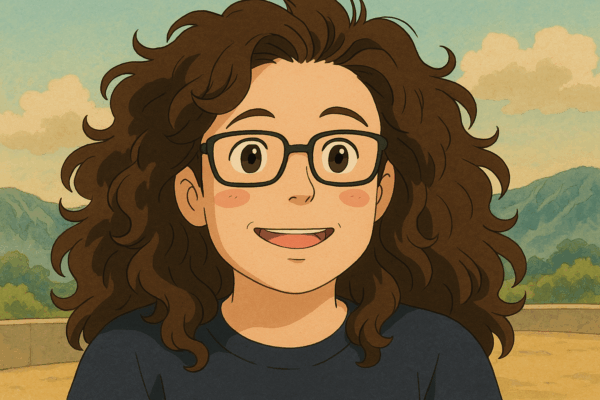
So a couple of weeks ago, my wife and I both got into the new trend of using chatgpt to convert photos and images into “studio Ghibli style.” We started with some pictures of ourselves…

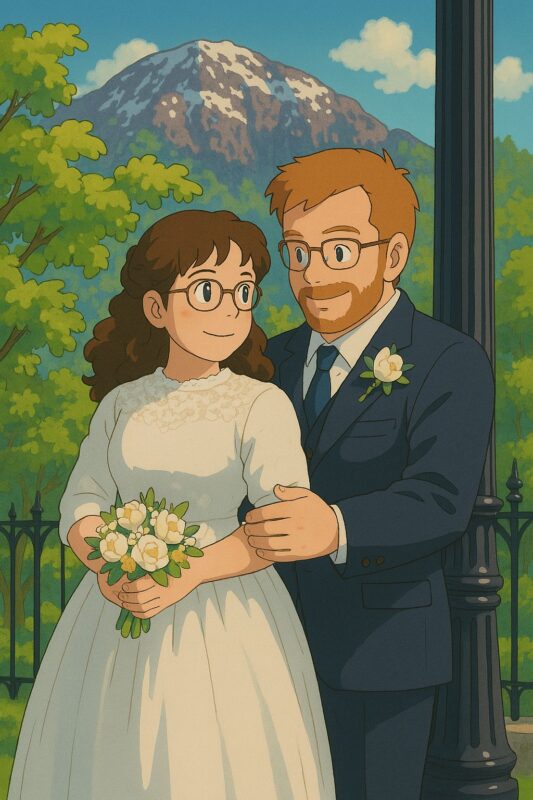
We then tried out some of our wedding photos…

And then, we realized that we didn’t have to upload an actual picture–we could actually just tell chatgpt what we wanted it to make, and guide it through the creative process until it made what we were looking for.

On the free version, this is super difficult, because you only get like 3 image generations per day, and you often have to go through several iterations to get what you want.

But both of us have the paid version of chatgpt, me through my writing business, and my wife through her school. So over the last couple of weeks, we’ve been playing around with it quite a lot!

This is the direction I decided to take it…

… And this is the direction my wife decided to take it…

… Needless to say, you can tell a lot about someone by their taste in AI art!

Orion Reads: Service Model by Adrian Tchaikovsky

After the terrible experience I had reading The Man Who F***ed Himself by David Gerrold, I trained a persona on ChatGPT to help me screen any science fiction and fantasy novels for explicit content (sex, language, violence) and woke themes or elements before I read them. The persona calls itself Orion, and is trained to be familiar with every award-winning and best-selling science fiction and fantasy book published within the last 100 years.

Until now, I’ve mostly used Orion to screen old Hugo-nominated books, but with the nominations happening for 2025, I thought it would be fun to screen some of the books that are expected to make the nominations. To start, let’s do Service Model by Adrian Tchaikovsky, since it’s currently leading the pack. Orion, what can you tell me about Service Model by Adrian Tchaikovsky?

Service Model by Adrian Tchaikovsky is a science fiction novel that explores themes of artificial intelligence, societal decay, and the search for purpose. The story follows Charles, a robotic valet who, after the mysterious death of his master, embarks on a journey to find new meaning in a world where humans have vanished, and robots continue to perform their duties without direction.

Explicit Content:

  • Language: The novel contains instances of strong language, including multiple uses of the F-word and other profanities. Goodreads
  • Violence: There are scenes depicting violence, such as Charles discovering his master’s death and believing he committed the murder. Additionally, the narrative includes encounters with other robots that may involve conflict. From My Corner of the Universe
  • Sexual Content: The book includes references to sexual activities, including mentions of prostitutes and sexual harassment. While not overly explicit, these elements are present in the narrative. Tar Vol on

Woke Themes:

  • Classism: The story touches upon class disparities, shedding light on societal hierarchies and the challenges faced by individuals across different social strata. The Quill to Live
  • Ableism: There are instances in the narrative that address ableism, bringing attention to prejudices faced by individuals with disabilities. The Quill to Live

Conclusion:

Service Model offers a compelling blend of science fiction and social commentary, enriched by complex characters and a vividly imagined world. While it contains explicit language, sexual references, and scenes of violence, these elements contribute to the depth and realism of the narrative. The exploration of themes such as classism and ableism adds a layer of social commentary, aligning with contemporary discussions on inclusivity and societal structures.

For a more in-depth analysis, you might find this review insightful:

Ancillary Review of Books

Edmund Slate Critiques

One of the big things I want to do this year is update all of my book descriptions. A lot of them are old, and written back when I wasn’t very good at writing marketing copy (an area where I still have much to learn). So I thought it would be good to go through all of my backlist titles and update the descriptions to make them as sharp and compelling as possible.

For help with rewriting these descriptions, I decided to turn to ChatGPT—not to rewrite them for me, but to give me some critical feedback that would give me some direction. Taking a page out of Ethan Mollick’s book Co-Intelligence, I decided to give ChatGPT a human persona and interact with it naturally, as if I were talking with a human. Here is my starting prompt:

You are a senior editor with forty years of experience in the book publishing industry. You have a deep knowledge of the industry, the market, market trends, and what makes a bestselling book. Your experience has made you a little bit jaded, and you are often blunt and sometimes harsh with your criticism, but you are always very honest and down-to-earth. What is the name that I should call you by?

The name ChatGPT chose for this persona was “Edmund Slate,” a little cartoonish perhaps, but it fits well enough. So far, the critiques have been surprisingly good. For example, this is what I got when I gave it the book description for Bringing Stella Home:

Alright, let’s break this down.

What’s working:

  1. High Stakes: You’ve nailed the urgency and emotional stakes—James is thrust into chaos, loses everything, and is driven by a powerful motivation to save his sister. That’s solid.
  2. Hook: The Hameji battle fleet and the “molten slag” imagery are vivid and grab attention.
  3. Character Arc Potential: James’s internal conflict (reluctant warrior) hints at a compelling character journey.

What needs improvement:

  1. Clarity and Pacing: The description is dense and slightly convoluted. It jumps between events and ideas too quickly—James getting left behind, invasion, fleeing, enslavement, and a personal vow. Tighten it up to avoid overwhelming the reader.
  2. Emotional Engagement: While the stakes are clear, we don’t feel James’s fear, guilt, or determination as much as we could. Show, don’t tell—give us a stronger sense of his inner turmoil.
  3. Unique Selling Point: What sets this apart from other “family member rescue” space operas? Highlight something distinctive about the world, the Hameji, or James’s journey.

Suggested Rewrite:

“When James gets stuck on dockyard duty while his older siblings visit the planet, he never imagines it will be the last time he sees them. But when a ruthless Hameji battle fleet invades, the star system becomes a war zone—and James can only watch in horror as the planet is reduced to molten slag.

Fleeing with his father on the family starship, James learns a devastating truth: his sister is alive but enslaved by the Hameji. To rescue her, James must face an impossible choice. He’s no warrior, has never even held a weapon—but to save his sister, he’ll have to become something he’s not. Even if it means crossing a line he can never uncross.”

Why this works:

  • Tighter Structure: Events are sequenced more logically and concisely.
  • Emotional Pull: Stronger focus on James’s perspective and inner conflict.
  • Focus on Stakes: We clearly understand the stakes without unnecessary details.

Give it a go and let me know what you think—or toss me the next one if you’re ready.

The suggested rewrite isn’t totally there, since it misses or overlooks some necessary details from the book, but it’s pretty dang close. I must say, I was quite impressed.

My plan is to spend the next few months going through each of my backlist titles, getting Edmund Slate’s critique for each book description, and rewriting them accordingly. I plan to do two revision passes for each book description in this way, then put the end result in front of some human eyes to see if it works, and if it does, replace the existing description with the final result. If I can do a little bit of work each day, or focus on one book description each week, I can probably get them all done by April or May.

The wildest AI hallucination I have ever seen

So my wife is currently working on her PhD in computer science, and for her thesis she’s trying to develop an AI model that can generate meaningful cross references within a text. For example, she compiled the complete works of Jane Austen into an HTML file, and ran it through one of her AI models, asking it to find a cross reference to the opening line of Pride and Prejudice, which reads:

It is a truth universally acknowledged, that a single man in possession of a good fortune, must be in want of a wife.

The AI returned this line from Mansfield Park:

But there certainly are not so many men of large fortune in the world as there are pretty women to deserve them.

Pretty nifty, huh? Anyway, she’s experimenting with a variety of different AI models, including a fine-tuned version of ChatGPT. She’s also using my Sons of the Starfarers books as a text, since it’s not nearly as well known as Jane Austen or the Bible.

It turns out that LLMs like ChatGPT are actually pretty terrible at finding cross references, even after they’ve been fine-tuned. When she asked it to find cross references for various passages in Sons of the Starfarers, it almost always hallucinated something that isn’t in the actual books.

But then, at the end, she asked it to find a simple cross reference… and it gave her this:


I am reading Victors in Liberty and want to find some good cross-references for ‘Isaac ignored them and brought up the latest data on his display.’ Can you suggest some good quotes as cross-references?

Certainly! Here are some cross-references for “Isaac ignored them and brought up the latest data on his display.”:

Isaac ignored the chatter over his communications and focused on the targeting data in his peripheral vision. An Esperanzan frigate dropping out of FTL was no challenge for a light recon frigate like the Tiberian. It was built for speed and evasion, something the enemy frigate could not muster on such short notice. A light hum in the side of his armrest told Isaac that the first missiles had fired. He gave the order to activate them with a press of a finger, and a second hum confirmed they were on their way. His heart raced and he took a deep breath to calm down.

After the long futile years of dodging through the stars, the tide had begun to turn. The Temujin was lost with all hands, and the very space they’d fought over was now broken by the light of a newborn star. Victory was admittedly shallow when his people were still scattered across the void, but it was a victory nonetheless.

Another hum indicated that his point defense lasers had locked onto the enemy missiles. The targeting relay showed the homing-enabling couplings had been obliterated. For a brief moment, the Esperanzan frigate was silhouetted in the bright light of the young star, betraying all the structural weaknesses that were exploitable. And from there, Isaac showed no remorse. Reason left him, replaced with thorough hate and anger—forced of course. Isaac’s sleek one-man starship had no defense armor. Of the combat vessels of the disparate, disparate Red Faction resistance, his could be taken out by a single missile volley meant for a fleet. If the first missile volley didn’t down the enemy, the counter-volley was friendly fire.

A klaxon blared in the side of Isaac’s ear. The Esperanzan frigate burst into a fireball, artificial gravity arrays spinning off into the lifeless void. Only by the dim starlight and the intense heat of the new sun could Isaac distinguish the shrapnel and debris scattered around what once had been a ship.

“Excellent work, Specialist,” said the jovial head chef, Midshipman Khrelan. With Commander Noah currently held prisoner on the Starflare, there’d been a few promotions, which put him in charge of one of the lower-priority departments. “Excellent, excellent work. I knew I could trust you.”

Isaac smiled and stretched. The frantic chair of his one-man starship seemed to recede ever so slightly, as though it was merely a symbol that he could shed at a moment’s notice. For he was not a pilot in a combat vessel dodging fire. He was the Emperor of the Red Delta Quadrant, a force to be reckoned with indeed. His father had done more than forge a civil empire; he had founded a starfarer dynasty that now posed a threat to everyone outside of Delta Pavonis. Now more than ever, his mother’s intuition and telepathic powers were revered and envied by all. In fact—this thought hadn’t occurred to him until he had conquered everything up the Eden’s local star—she was right, and everyone for dozens of stars was waiting for their moment to slay them.

As Commander Noah’s comments in the debriefing served the position that Captain Valk suggested the Red Faction play the role of unwitting suicide pawn to the budding Templin Empire, they were put under abeyance while negotiations were struck to work out the relationship. If Isaac’s fact-finding missions bore fruit and gave them the strategic assets they needed, the former Red Faction would be made a fully-integrated member of the newfound empire. Then without the pretense of what Noah originally claimed was the original mission—stopping the Fourth Holy Imperial battlecruiser from finding something to turn the tide in the war on the Far Reaches of the Outworlds—there would be nothing left to consider, and the truce would become a permanent merger.

What remained for Isaac was to prove that the Red Faction could contribute to the war, and it was this mission that Midshipman Khrelan promoted to the top of their menu board. As head chef of the Diego-Attica bowl, one of the Eden systems’ largest and most populated space stations, it was his position to woo the New Plebeian faction into accepting the Red Faction into their empire. And it was Isaac’s mission to prove that plebeians did indeed have what it took to undertake the trials of empire. The only obstacle that remained was Captain Valk.

“Fuck Vasili if he doesn’t accept,” Isaac muttered under his breath.

It was a cadence of profanity that his meal commander often used. This time it went unnoticed, either because none of his crew understood English well enough to pick up on it, or because their heads were buried in work like his should have been. After Isaac’s less than stellar performance in the assault on outpost red one-four-one, there wasn’t much work for him to do.

He knew he was irresponsible for letting his mind wonder like this in the middle of a combat simulation. A little under a week ago, a signal had shown up just beyond the Eden’s system’s sensor net. The high command suspected a rogue sleeper ship. Isaac doubted that was the case. Another star had recently formed in the orbit of Edea’s Planet 3. It would be the most valuable real estate outside of Hebron and Edenia’s primary. If the Outworlders accepted the terms the Edenia system was willing to give, then it was all but certain that a local Outworld confederacy could be formed around Edenian pleasure points. One day, The Tamerlan and The Eve would be recognized as sister systems. But when had Edénia looked out for those interests? Let the eve be forgotten. They would soon be Tamerian.

The dishes for the next three days had all been planned for. The senior officers had all been invited to dine with the New Plebeian station commander. Midshipman Khrelan hoped to build a friendly relationship between the Red Faction and the people of the Tiberian Cluster, who he believed were most likely to be integrated into the New Plebeians as fellow second-class citizens. Only after those that left would they all eat, which meant soon he’d have to get started. Even with the protocol droids, that gave him just one more hour.

The simulation sort of went well. Isaac did end up killing every other ship, even after they ganged up on him, but the maneuvering was a little sloppy at times. He knew he wasn’t going to last long under the scrutiny of the higher officers. Admiral Valente and Captain Ibn al-Asad would be visiting the Eden in just the four days. When that day arrived, he very well might find his promotion revoked and his transfer dishonorable, provided of course he demonstrated such flagrant incompetence toward the end.

As the screen brought up the last member of his squad, the pings on his radar came back. It seemed he’d survived the battle with barely any hull breached.

And by the gods, eat a fucking sandwich!

He’d forgotten he was hungry. At first, it was easy to forget about meals. With a meal served supposedly every five hours, there was still work to do in between that kept him looking forward. But since the campaigns and maneuvers had not worked him to exhaustion, it now was a chore to sit through time just eating. The efficiency and industriousness of Isaac’s father did indeed become Gideon’s son. It was a dead giveaway. Unlike his father but very much like his mother, Kahramanna would waste away before he ever passed 12th Plague. If the Outworlders decided they were worthy of escape (and they wouldn’t be, they were definitely going to accept the Edenians’ terms), the future owner of one of the systems at the only intersection of this side of the galaxy would die from starvation with the rest of the infidels.

Isaac frowned. How had “The Resurrection” ever been associated with plagues in the first place? It was the most beautiful and hopeful story of his people, the moment the legendary Prophetús of Delta Pavanus had become a messiah. His writings gathered confidentially on the homeworld quelled the rampant syncretism of mixing their traditions with those of the host worlds. By forming a unified monolithic faith run by a powerful theocracy, it was fully expected that the Delta Pavanians would have overthrown both the Thetans and Outworlders to form their own empire. Deltanotian could have been the same kind of imperial language on the Milky Way side that Soluna had become in the east. The rapid declination of the Prophetús’ Mission was considered to be the most catastrophic failure of tribal project in all of recorded history.

Between 12th Plague and the explicit language that Good Word was untranslatable, all facades were off. This exploration project was nothing but an imperial operation from the Deltanotian Empire’s very core—a counter-strike barely distinguishable from the hyperspace bomb. It was only by the self-sacrifice and zeal of his ancestors that the spirit of the prophets did not fade across their interstellar mission. Something shone brightly in the void. The Star-Travelers had become the Starforce, and it fell upon them to restore the faith. And, by God, they would.

The simulation ended with all three stars highlighted on his map, marking the three miraculous visions of the Holy Star. Isaac didn’t need the Good Word to recognize it had all been written exactly as expected. He smiled and undid his three-point harness. The gruff marine next to him did the same.

He stepped past the airlock he shared with his seat partner and walked to the closet on the forward bulkheads. As he stepped in, an elaborate mechanism analyzed the pattern and weight of his footsteps on the soles of his flat combat boots. The small room behind the door doubled as a personal sanitation closet, more elegantly a boleshower. As his boots finished drying, he stripped off his jump suit and waited for the inevitable light-sonic start. Sure enough, as soon as the door shut and he was naked to the glare, there was unmistakably the sound of a fly buzzing menacingly behind him. He waved his hands and blew on it to no avail. He turned to the light and saw that in fact what had captured his attention was not a fly but rather the prominent bush of black hair with what looked like every stripe and pattern of embroidery that relevant cut of uniform would allow. That made two.

His hands stood frozen in position among the smug parade. Quite a few of the sewn patterns were familiar. An upside down cross inside of a circle? That was Marcanetian, which he read could mean only one thing. Based on his tattoos, he would certainly serve 6th Plague as wendigo meat. That wasn’t skill, that was luck, but the flaw was not his. “Let Canopus keep his dream alive,” his stomach told him, but his balls gave a different message. The two ends would not tolerate the presence of veins among their flesh. The hardon almost immediately appeared.

He reached his hands behind his neck and pretended to scratch but really reanalyzing the air quality. Some of the embassy-topia class nostrils unironically slit. The unshaven wickunoff wasn’t as strategical of a hairdo as he’d like, but at least with his crotch turned to them they couldn’t all control the urge to reach and scratch.

These people kept trying to embarrass him, but who in fact was embarrassed? Everything that had just taken place, he’d been perfectly alright with. Everything they knew about him was exactly what he’d told them. It wasn’t that they didn’t get him. It was that he didn’t get them.

The new high sheriff of Aluchiga Delta took center stage, a massive black man from Beatrix with a sour and stern disposition. The star tattoos on his round pocked face showed him not uncompromisingly rugged but rather vicious and unyielding. He seemed to have no sense of humor.

That alone gave the Ice Giants the advantage. The Beatrixians, stable-facing to the front of the procession and thus technically in command of the ceremony, needed a laugh just as easily as the new Inkana high sheriff from the other side. Both systems were far too stratified with class society, and having been torn from the seats of power they so deeply loathed they were more than somewhat relieved to be joined on the interstellar voyage. To them, that was what Babylana was—their wild and untamed frontier. With all the old rivalries and social prejudices carried over into the classic starwanderer era, it was the nomads and outcasts who found a home among the heavens that were best suited for the voyage.

This was covered across their naked flesh in the kind of complex set of interconnected (though there to be fair not all interconnected) tattoos that commanded universal respect. As the starfarers were free those tattoos were autogenic. They came within the realm of choice to a degree—and in fact way beyond—most other cultures considered unforgivably narcissistic. That was why the Megalotics, with their deeply rooted philosophical system of Order:Chaos, so openly despised them.

Isaac had been staring at their skin with all the minutely detailed modeling when he’d had his accidental hardon. The great black giant had ever since been staring him down.

Midshipman Fatima came over. “Report.”

Isaac quickly reran the thermal analysis and presented it on one of the models hovering behind his head. He thanked the Astarte he had been off-duty. Considering the intensity of the last asshole who’d complained about how little speech Isaac gave in meetings, what fun would it be beamed over from Alchiba on the Eden’s consolidated intelligence to be forced to work with an AI more primitive than what Isaac commanded. Even on the best decks by officers with significant wealth disparity, the old pre-Imperial chips faulted. It would only take a half month for Isaac to take control of deck Theta-ten. Of intelligence from the other decks, one third of them he already commanded. The vast increase of processing was more than satisfactory.

Fatima looked over his report and nodded. “Very good, Commander. Very good indeed. Carry on.”

From her side of the table, she accessed a fairly standard command subroutine and brought up the floor plans for all decks in the file. The model showed the thermal profile now, but soon all the profiles would be profiled on swords. Her movement was somewhat interpretable: “matter of life and death” among the other Arian phrases that had entered Arianian techspeak was “time to make a run for it.” Up to 67.8% of the energy required to transverse a mile was scooped and shot halfway across the local cluster subject minimally to such high gravimetric pulls that a controlled asteroid system could be made to have the same effect here. For that, you actually did need anti-grav technology. “Running for it” or “throw them all in a bag” is you just rip open all the airlocks and hope the showers last long enough and the numbers come out in your favor with cryo. Once all the numbers come out, then you scoop and loop the forgotten. The floor plan relied on the Midoshiun system, where weapons and engineering and medical could all be written in official departments by OS. Because they were working under such a close trust interface, they all knew it would be up to Isaac to tale the head.

Interstellar law and civilization were a complex web. The system of checks and balances only worked for interstellar diplomacy, not intra-, where all that usually mattered was what would stall change longest in the vicious bureaucratic race. Questanantian philosophy postulated that one could be put on the other side of war to learn to rise above, very much a pagan adaption of Noah’s prophecy concerning Shem. There was no call of Abraham, for such language was not tolerated this far south.

March 17th, 3098. That left less than a year until the next aquino. Not doubt word of his father’s betrayal of the Anakim would come up, but never among the select at the top who would decide his fate. Of the new feces frozen just north of sector four, the Edenian hypercolonization expedition was almost done. The last supply run to the outpost monastery frozen just over half a light-year beyond the founding outpost would be ready at the very end of the next Procythian New Year. Hopefully, the Modernus Shift would give him the start he needed.

He then repeated the word he repeated every day and in whose glory he so purely radiated that rumor had been it started out as his name. “Paradosian. Paradosian. Paradosian…”

In any case Isaac hadn’t been the one responsible for bringing all that shit out in the first place, and if they expected some “dog of space” Argonaut that worshipped the Anakim, had they really found the one to stop the coming floods? He just had to have a little patience and get the hell out of here.

On impulse, he queried the mother Astarte on his horizon-side display. Medina reached out to him.

With the most formal and profligate blessings of Bahrain Isaac’s preceding post now reached out far enough—the lake, the font, the water itself—to mark for certain that the royals had incestously “piled every last dog” he called so kindly “die wanda der zwar” by now. The Astarte had found a hint of Persepolis II, mentioning it in the black hole astrology as “dzaraq.”

Goddamnit!