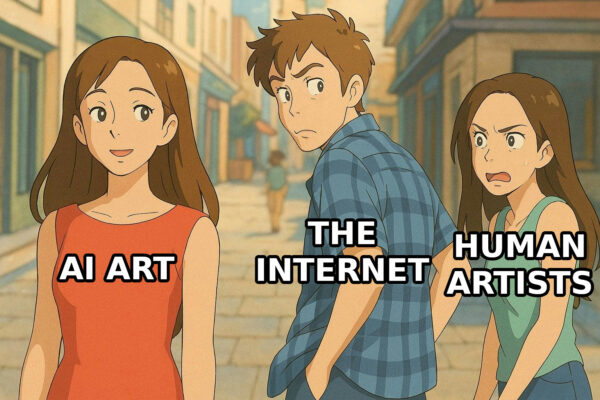
The debate over AI art in a single meme…
And this is the cover art it gave me for my current WIP, The Soulbond and the Sling!
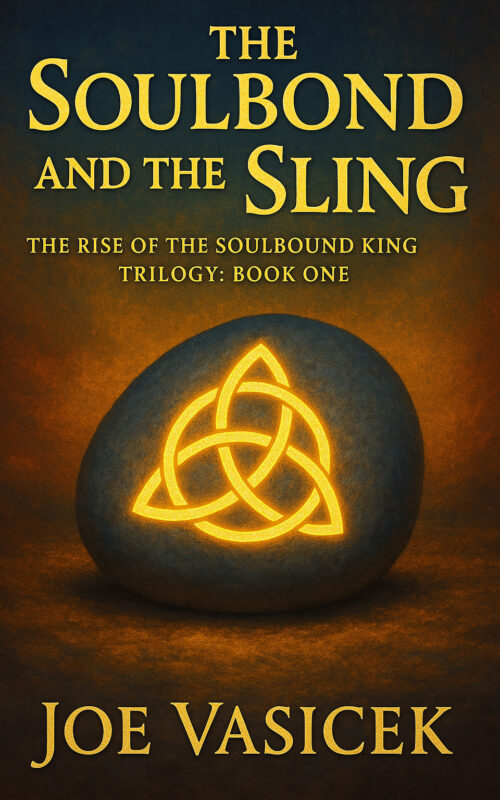
It still needs some work, but I am extremely impressed!
If Andrew Tate wrote a book about how to make your wife or girlfriend into your slave, would he be within his rights to demand that no woman reads that book without his consent?
Brandon Sanderson was inspired to become a fantasy writer when, as a child, he read Dragonsbane by Barbara Hambly. Sanderson is now worth some seven or eight figures, while Hambly, who is still alive and still writing, struggles to pay her bills*. Should Hambly be entitled to a portion of Sanderson’s earnings, for inspiring him to become a fantasy writer?
Every mother who has ever lived gives tremendously of herself to her children, even if only in the physical act of giving birth. Should mothers have a legal claim on their children, for monetary compensation for all of the sacrifices they make?
These might seem like crazy questions, but when you consider them in the context of the ethical arguments about AI art and AI writing, they really aren’t. They illustrate just a few of the unintended consequences of the regime that many disgruntled and resentful creators are arguing for, when really what they want is a world in which AI doesn’t exist.
One of the most difficult parts of being a creator is putting your work out into the world and letting it go. At that point, you really have little control over what it does and how it impacts the world. Many artists who labor in obscurity dream of making an impact on the world, not realizing that success—even artistic success—can be far more devastating and traumatic than obscurity. After all, just ask Rachel Zegler about that now.
I’m not saying that artists shouldn’t be paid for their work. Certainly they should be paid—and certainly there are valid ethical concerns with how AI is disrupting art and literature. But unhinged people who rant online about how AI is “stealing” artists’ work, or how it is “plagiarizing” writers’ books, simply because the LLM’s training data includes free online content (much of which was posted online by said artists and writers)—I don’t think those people really care about the ethical nuances of the debate. I think they just want to force us all to go back to a world where generative AI doesn’t exist.
Did David Weber steal from Star Trek when he wrote the first Honorverse novel? Did John Scalzi steal from Robert A. Heinlein and Joe Haldeman when he wrote Old Man’s War? Did Terry Brooks steal from Tolkien? How about George R.R. Martin?
Where exactly is the line between the “stealing” that should get you thrown in prison, and the “stealing” that people wink and nod at when they say that good artists copy and great artists steal? And how do we know that we’ve drawn the line in the right place? Would we have worse art, or better art if Star Wars had gone into the public domain in the 80s or 90s? Would artists be making less money, or more?
I don’t have the answers to these questions, but I ask them because I think they are worth considering. And I think that most of the artists who think they have the answers are really just acting out of fear.
Will AI outright replace artists and writers? Will it make it impossible for artists and writers to make a living? I remain skeptical, though I acknowledge that there are some ways in which AI art appears to be doing exactly that. For example, I’ve been playing around with OpenAI’s new image generator, making some cover mock-ups, and I’ve been very impressed. But I will still seek out James at GoOnWrite.com for my covers, because he has a much better eye for this sort of thing, and my sales data reflects that his covers sell more of my books than my own covers do.
Should writers and artists expect to be paid whenever their art is used to train an LLM? Aside from the impracticality of enforcing such a law, I don’t think that we should—at least, not for general training data. Fine tuning is a different matter. If an AI is going to be fine-tuned to write in my particular style, I think I have a right to be recompensed for that—and I’d be willing to license that right for a reasonable fee. Perhaps this is a path that artists could pursue as well. But demanding that every AI company pay every artist for training their LLMs is kind of like Barbara Hambly demanding that Brandon Sanderson pay her a portion of his earnings. Likewise, whenever artists or writers demand that their intellectual property is excluded from the training data, it smacks to me of the first question with Andrew Tate and his hypothetical book.
I will admit that I’m biased in favor of AI, since for the last two years I’ve been working to incorporate it into my own creative process. But I’ve been doing this out of a recognition that these things we call “writing” or “making art” is going to change because of these new technologies. In a world saturated with AI, will it still be possible to make a living as an artist or a writer? Yes, I believe it will, but at the same time, I believe that our conception of what it means to be an “artist” or a “writer” will almost certainly change. That’s why I’ve chosen to embrace these tools, rather than fight them—and why I think my fellow artists and writers should as well.
*At CONduit 2010 in Salt Lake City, Barbara Hambly was the guest of honor, and in her keynote address she talked about her struggles to pay her bills with writing. I assume that things haven’t changed much in the years since then, though I would be delighted to learn that I’m wrong.
So I was playing around with ChatGPT this morning, and came up with a slightly better cover mock-up for The Soulbond and the Sling:
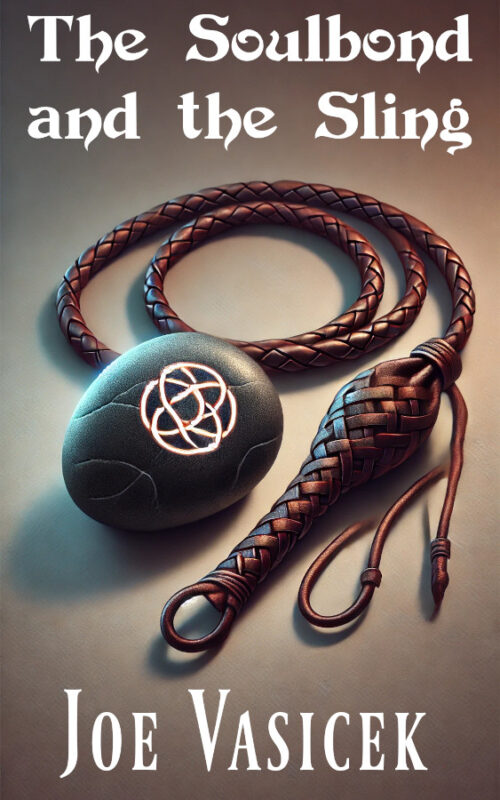
Still needs some work, but I’m on the free plan and only get three images every day. I’ll keep playing with it over the next week or so, maybe try out another AI image generator like Stable Diffusion. But at least I have a cover image now that I can add to my posts whenever I’m talking about this WIP.
So I just finished the rough AI draft of The Soulbond and the Sling, after nine days of outlining and prewriting, and five days of working with Sudowrite to generate it. The rough draft clocks in at 18 chapters (plus a prologue and an epilogue), 80 scenes, and 153,254 words. I used about 770,000 AI credits from start to finish, including for generating all of the characters and worldbuilding in addition to the text of the draft itself.
I have to say, I am really impressed with the incremental improvements over at Sudowrite, and with Claude 3.7, which was the AI model that I used to generate most of this book. I did try out Sudowrite’s new Muse model, but I wasn’t too impressed with it, at least for generating new chapters. For the in-chapter tools, such as guided write, expand, or rewrite, it’s probably fantastic, but with generating new chapters from my outline it just felt too much like it threw all my worldbuilding into a blender. Most likely I either had the creative setting set too high, or I gave it too many prompts.
But when I switched to Claude 3.7 (Sudowrite’s “Excellent” model), the results were amazing. I seriously felt less like I was writing the novel and more like I was reading it for the first time. There’s still a lot of work to be done, especially in the second half of the book, where many of the scenes strayed from the overall story structure, either forgetting things that had already happened or assuming things that hadn’t yet. There’s also quite a bit of worldbuilding that I would like to add in, and a handful of small hallucinations that need to be cut out, as well as a major change that I made in one of the characters and need to smooth out in other scenes… but overall, I found myself really enjoying this book, and was frankly surprised at how well it fleshed out the setting and characters, making them really stand out. It also added some really great dialogue that is probably going to make it to the final draft.
I was originally planning to lay this WIP aside while I switch to another project, but I think now the best course will be to work on the AI draft until I make it as good as I can. That way, I can tinker with the AI prompts while they are still fresh in my mind. Once I’ve gotten the AI draft as good as I can make it, I’ll lay it aside for awhile to let my subconscious work on the story, so that when I pick it up again, I’ll be better able to do an awesome human draft.
I would have added a mock-up for the book cover, but you would not believe how hard it is to get an AI image generator to give you a picture of David and Goliath that doesn’t have David holding a bow and arrow! Seriously—every time I prompt it for a fantasy illustration of David and Goliath, where Goliath is a giant horned monster, it shows David with a bow and arrow instead of a sling. It’s almost as bad as the strawberry problem! But let’s see if WordPress can do it…
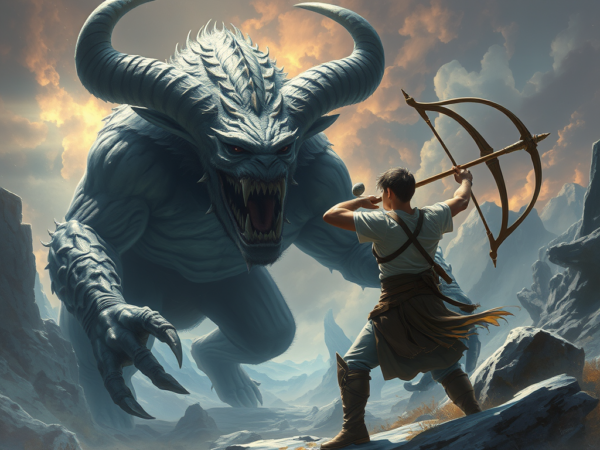
Nope. Yet another AI image fail. I even specifically said he was wielding a balearic sling. Sigh.
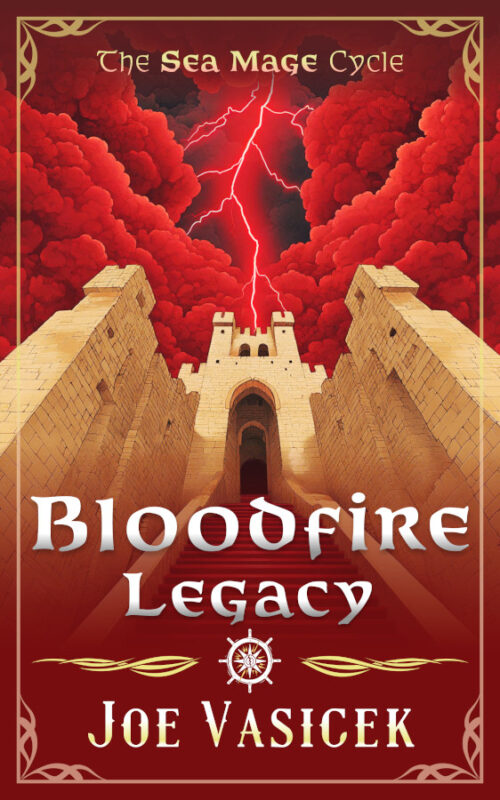
This is another great cover by James, over at GoOnWrite.com. I’m really happy with how it turned out! I’m working on the AI draft right now, but should have it done very soon. If all goes well, I’ll be publishing it either in July or August. Here is the working back cover copy:
To save his orphaned daughter, the ghost of the greatest wizard must depend on the lowest thief.
Corin has never been more than a street rat and a petty thief. But he can also hear the voices of the dead—whether he wants to or not. Usually, the dead leave him alone after they realize he has no power to help them. But when the former court magician begins to haunt him, nothing that Corin says can convince him to go away.
Lyra, the magician’s daughter, has been delving into the dark arts to find her father’s killers and avenge his grisly death. But the very people who killed him are grooming her for a devious purpose, and the intrigue of the court has put her in more danger than she knows. Her father is the only one who knows enough to warn her, but without Corin’s help, he is powerless to save her.
To save her, Corin must be more than merely a ghost whisperer: he must rise above his circumstances and become a man worthy of trust. But will that be enough to convince Lyra to turn back to the light before her thirst for vengeance consumes her?
I was not expecting this to be as good as it was:
Seriously, this video nearly brought me to tears… and it’s not even past midnight yet! But I really should get to bed.
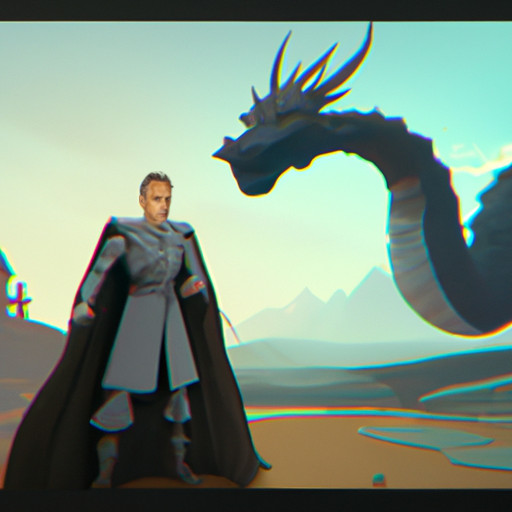
Once upon a time, in a far-off kingdom, a ferocious dragon was wreaking havoc on the land. The people were living in constant fear, and no knight dared to face the beast.
But then, a wise professor named Jordan Peterson arrived in the kingdom. He had studied the 12 Rules for Life and knew that they could help him defeat the dragon and save the princess.
He donned his armor and sword, stood up straight with his shoulders back, and approached the dragon’s lair. As he faced the dragon, he spoke with a calm and composed voice.
“Hello there, dragon,” he said. “I understand that you have some grievances with the people of this kingdom. I’m here to listen to you and see if we can find a peaceful solution.”
The dragon snorted and breathed fire, but Jordan Peterson remained undaunted.
“I’m not here to fight you,” he continued. “I’m here to find a way for us to coexist peacefully. I know that there must be some common ground we can find.”
The dragon was surprised by Jordan Peterson’s words. No one had ever spoken to it in such a respectful manner before.
“What do you propose?” the dragon asked, its voice deep and rumbling.
“I propose that we make a deal,” Jordan Peterson replied. “I will help you to set your lair in perfect order, and in exchange, you will leave this kingdom in peace.”
The dragon considered this for a moment before nodding its massive head. “Very well,” it said. “We have a deal.”
As Jordan Peterson set to work helping the dragon to clean its lair, he told the dragon about his 4th rule: Compare yourself to who you were yesterday, not to who someone else is today. He knew that the dragon needed to focus on improving itself, rather than comparing itself to others.
He also remembered his 8th rule: Tell the truth, or at least don’t lie. He knew that he needed to be honest with the dragon, and so he shared some of his own experiences with the dragon as they worked together.
“You know, I’ve had my own struggles in life,” Jordan Peterson said, wiping the sweat from his brow. “But I’ve learned that it’s important to take responsibility for your own actions and do what you can to make things right.”
The dragon listened intently, and Jordan Peterson could sense a growing respect between them.
After several hours of hard work, the lair was clean and orderly, as per Jordan Peterson’s agreement with the dragon. As he prepared to leave, he remembered his 6th rule: Set your house in perfect order before you criticize the world.
“Thank you for working with me,” he said to the dragon. “I hope that this new arrangement will work out for all of us.”
The dragon nodded and flew away, leaving Jordan Peterson to rescue the princess.
As he freed her from her bonds, he spoke to her with kindness and understanding.
“Are you okay?” he asked. “What did the dragon do to you?”
The princess looked up at him with tears in her eyes. “Thank you for rescuing me,” she said. “I thought I was going to die.”
Jordan Peterson smiled warmly at her. “You’re safe now,” he said. “Let’s get you back to the kingdom where you belong.”
On their way back to the kingdom, Jordan Peterson remembered his 7th rule: Pursue what is meaningful, not what is expedient. He knew that he needed to help the princess find meaning in her life, rather than just rescuing her and sending her on her way.
“Tell me, princess,” he said. “What are your goals in life? What do you want to achieve?”
The princess looked thoughtful for a moment before responding.
“Well, I’ve always been interested in art and music,” she said. “But I’ve never been allowed to pursue those passions because of my duties as a princess.”
Jordan Peterson nodded thoughtfully. “I understand,” he said. “But remember, it’s important to pursue what is meaningful, even if it’s difficult or goes against what others expect of you.”
As they arrived back at the kingdom, Jordan Peterson remembered his 9th rule: Assume that the person you are listening to might know something you don’t. He knew that he needed to listen to the people in the kingdom to fully understand the situation.
He spoke with the king and queen, and together they came up with a plan to allow the princess to pursue her passions while still fulfilling her duties as a princess.
Jordan Peterson left the kingdom, knowing that he had not only defeated the dragon and saved the princess but also helped the people of the kingdom find a way to live together peacefully.
As he journeyed back to his own land, he remembered his 12th rule: Pet a cat when you encounter one on the street. He smiled to himself, thinking of the small cat he had encountered on the way to the kingdom, and how it had brought him a moment of joy.
He knew that life was full of challenges, but by living according to his 12 Rules for Life, he had the tools to face them with courage, wisdom, and kindness.
Written and visualized with ChatGPT and Sudowrite.