As if yesterday’s post wasn’t controversial enough, I’ve decided to jump feet-first into this particular tempest (though thankfully, it appears to be a tempest in an ever-shrinking teacup). And I suppose the thing that makes this particular post so interesting is that I could actually cast this vote, if I had no qualms about giving the clowns who run the Hugo Awards any of my hard-earned money. But I do have qualms, so I won’t give them my money, which still makes this a hypothetical exercise, even though I’m posting this three weeks before the 2025 Hugos are awarded.
To be perfectly honest, I have not read any of these books all of the way through. I’ve read enough of two of them to DNF them, and one of them enough (including the epilogue) to know that I will eventually read the whole thing. And I screened all of them first with AI, which told me enough to know that three of them were not worth reading at all.
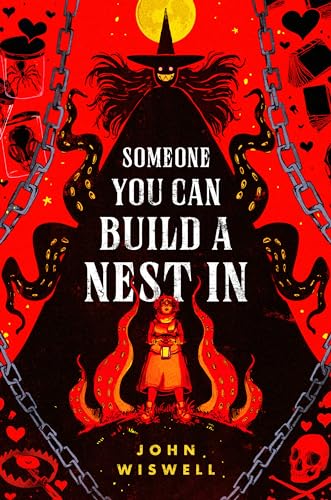
First, Someone You Can Build a Nest In. According to ChatGPT (and frankly, the back cover description itself), this book is chock full of body horror, trauma, abuse, and sexual depravity. It is also quite possibly the wokest book on the ballot, which means that it probably has the best chance of actually winning. Which also means that you couldn’t pay me enough money to read it. So much for that.
The Ministry of Time also appears to be woke, with anti-colonial and LGBTQ themes. However, the thing that really turned me off were all of the content issues that ChatGPT listed, such as frequent strong language, lots of F-bombs, and several erotic “open-door” sex scenes. So yeah, I’ll give a pass on that one too.
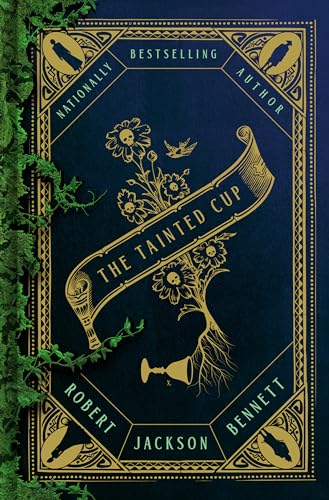
It’s much the same story for The Tainted Cup. A few woke elements, a subtle M/M romance (which I’m sure plays into the “All True Love is LGBTQ Love” trope that I cannot abide), and a lot of explicit profanity, with some prostitution to round it out. Not interested.
I forget why I DNFed A Sorceress Comes to Call. All I remember was that when I tried to read it, I felt repelled from it like a magnet. Since that has been my experience with basically everything else that T. Kingfisher has written, I didn’t feel compelled to try again.
Which brings us to the two books by Tchaikovsky. I really enjoyed his Children of Time, though I didn’t really get into the sequel (just didn’t feel compelled by any of the characters). He is a good writer, and specifically a good science fiction writer, though his scientific materialism strikes me as outdated.
Alien Clay didn’t appeal much to me, though—honestly, I found it difficult to believe that a government that would expend so many resources to transport their prisoners halfway across the galaxy wouldn’t also spend the tiny fractional cost to make sure they all got there alive. So right from the start, it felt like a melodramatic parody of all the left’s fears about “fascism.” And skipping to the end, it basically turns out the way Halo would have ended if the Flood had won. So I decided to DNF it, even though it wasn’t the worst book I’ve ever DNFed. And also, I don’t think that any one author should have more than one book on the ballot in any given year. So that’s why I’d put it under No Award.
Service Model, though, is pretty good. The best way I can describe it is Murderbot meets Kafka. It’s sort of an absurdist comedy in a post-apocalyptic world where the humans have (mostly) vanished, and the robots are malfunctioning in hilarious (and sometimes disturbing) ways. Not my favorite kind of book, and it probably could be improved by ruthlessly editing it to half the length, but I was enjoying it right up to the point where someone else put the library copy on hold, and I had to return it without renewing it. Skipping to the epilogue, I found nothing particularly objectionable, so I will pick it up again, and will likely finish it.
Which is more than I can say of most Hugo-nominated books in the last ten years.
[ETA 23 Feb 2026: I’ve decided to DNF Service Model after all, not because of anything objectionable that I read, but because I just couldn’t bring myself to pick it up again and finish it. It just wasn’t compelling enough for me to want to finish it more than I want to pick up something new. I could be persuaded otherwise if I heard someone really gush about it, but right now, I’m just not going to bother.]
After the terrible experience I had reading The Man Who F***ed Himself by David Gerrold, I trained a persona on ChatGPT to help me screen any science fiction and fantasy novels for explicit content (sex, language, violence) and woke themes or elements before I read them. The persona calls itself Orion, and is trained to be familiar with every award-winning and best-selling science fiction and fantasy book published within the last 100 years.
Until now, I’ve mostly used Orion to screen old Hugo-nominated books, but with the nominations happening for 2025, I thought it would be fun to screen some of the books that are expected to make the nominations. To start, let’s do Service Model by Adrian Tchaikovsky, since it’s currently leading the pack. Orion, what can you tell me about Service Model by Adrian Tchaikovsky?
Service Model by Adrian Tchaikovsky is a science fiction novel that explores themes of artificial intelligence, societal decay, and the search for purpose. The story follows Charles, a robotic valet who, after the mysterious death of his master, embarks on a journey to find new meaning in a world where humans have vanished, and robots continue to perform their duties without direction.
Explicit Content:
Language: The novel contains instances of strong language, including multiple uses of the F-word and other profanities. Goodreads
Violence: There are scenes depicting violence, such as Charles discovering his master’s death and believing he committed the murder. Additionally, the narrative includes encounters with other robots that may involve conflict. From My Corner of the Universe
Sexual Content: The book includes references to sexual activities, including mentions of prostitutes and sexual harassment. While not overly explicit, these elements are present in the narrative. Tar Vol on
Woke Themes:
Classism: The story touches upon class disparities, shedding light on societal hierarchies and the challenges faced by individuals across different social strata. The Quill to Live
Ableism: There are instances in the narrative that address ableism, bringing attention to prejudices faced by individuals with disabilities. The Quill to Live
Conclusion:
Service Model offers a compelling blend of science fiction and social commentary, enriched by complex characters and a vividly imagined world. While it contains explicit language, sexual references, and scenes of violence, these elements contribute to the depth and realism of the narrative. The exploration of themes such as classism and ableism adds a layer of social commentary, aligning with contemporary discussions on inclusivity and societal structures.
For a more in-depth analysis, you might find this review insightful: