Corrupt local officials who take kickbacks from the neverending road construction.
Massive public transit projects that seek to fix a problem that doesn’t really exist.
Incompetant construction contractors who can’t get the job right the first time, and have to redo it five times in as many years.
Parking Nazis who ticket local residents for parking on the street, even when their car has a parking permit.
Incompetant bureaucrats in city hall who fail to renew parking permits.
Insanely bad drivers.
Selective enforcement of the law by local police.
Attempts by the local police to enforce laws that don’t actually exist, especially regarding front lawn gardens.
A hidden tax placed in everyone’s utility bill to pay for Google Fiber, when it turned out the city had lost the blueprints Google needed to install the fiber network, and thus had to pay more than $1 million to map it out.
The Google Fiber deal in general. Very bad deal for the city.
The fact that most of the rental properties are owned by two or three families, who jack up prices in order to rip off students.
Corrupt city officials who grant building permits that violate residential zoning laws in exchange for kickbacks, after ignoring public outcry from local residents.
There are more reasons, I’m sure, but these are the ones I have direct experience with.
Sorry to go dark for so long. I’ve been sick off and on for the last two months, first with a sinus infection, then with a lung infection, and lately with a persistent stomach flu. Thankfully, I’ve been functional through all of it, but not at 100%, which is why I’ve neglected the blog.
I have been writing, though. I’m currently about a third of the way through Victors in Liberty, and should finish it within the next few weeks. I’m also revising it as I go along, so as to have a publishable final draft. We’re still on track for a July release date.
In the last few weeks, I’ve been crunching a lot of book sales numbers and formulating a better business plan. The goal is to make the writing profitable enough to pay myself more than sweatshop wages. I think I’ve figured out a way to get there before the end of this year.
I also recently discovered Jordan Peterson, and have been listening to many of his lectures while doing mindless chop-wood carry-water tasks. He’s an incredible guy. One of the last few sane and reasonable people in the world with a large enough platform to counteract the constant assault of insanity that passes for today’s news cycle.
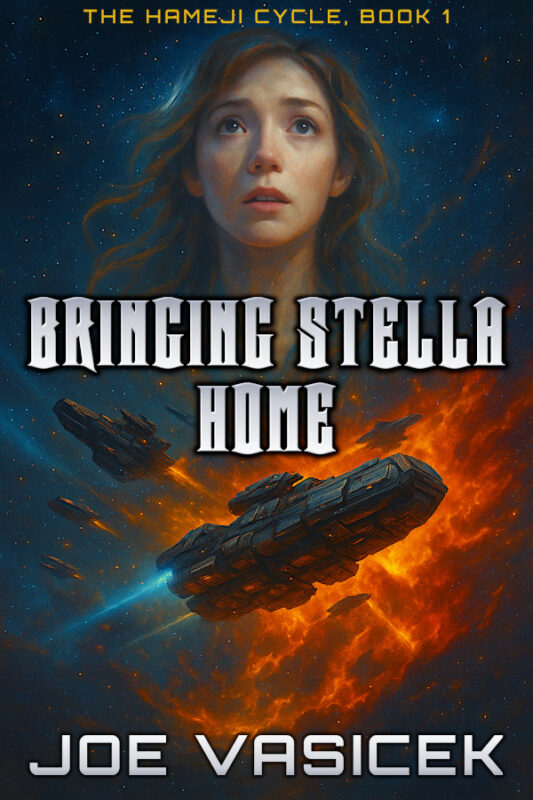
I’ve also published a double novel bundle for Bringing Stella Home and Heart of the Nebula. I originally published it exclusively on Kobo, to get around Amazon’s price matching policy so I could run useful promotions with KWL. But the Kobo promotions use coupon codes now, which means there’s no reason not to make this title available everywhere.
Nothing Found
I’m also experimenting a lot with my email list, trying out a new style for my newsletter and cycling through promotions more regularly. Makes a lot more work, since Amazon won’t make a book free unless you price match it first, but hey it’s not as bad as digging ditches.
Lots of other stuff going on behind the scenes, which I’d rather not get into just yet. When there’s significant movement, I’ll be sure to let you know.
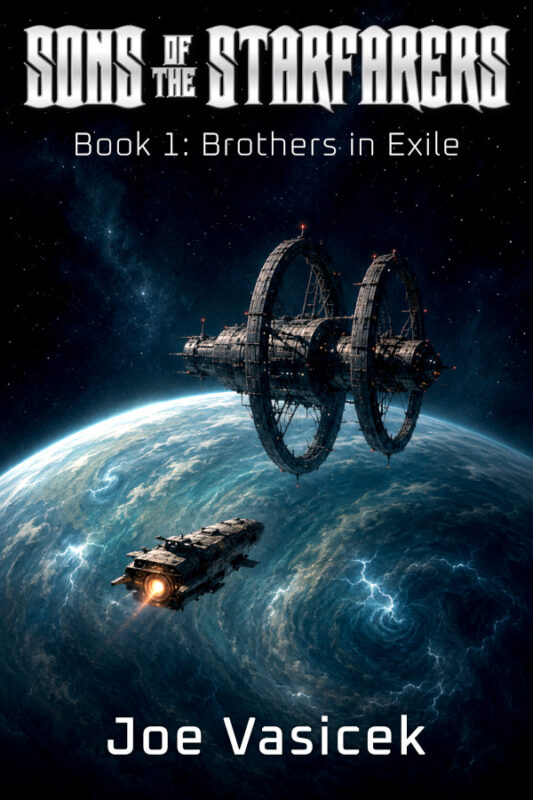
I am so ready to finish the Sons of the Starfarers series. It’s been difficult to write at times, but I’m excited with how the last book is turning out and think it will provide an excellent ending to a story that has turned out better than I expected it to. Really looking forward to get it out there.
That’s just about it for now. Don’t worry about me: life is good and I’m still writing.
When a ruthless Hameji battle fleet kidnaps his sister, James McCoy—a young merchant starfarer untested by war—vows to bring her home. But to save her, he must give up everything he has and become something he never thought he could be.
Isaac and Aaron are nothing if not survivors. Their homeworld lost and their people scattered, all they have left is each other. Then, in the Far Outworlds, they find a dead colony with a beautiful young woman frozen in cryostasis. She is also a survivor—and she needs their help.
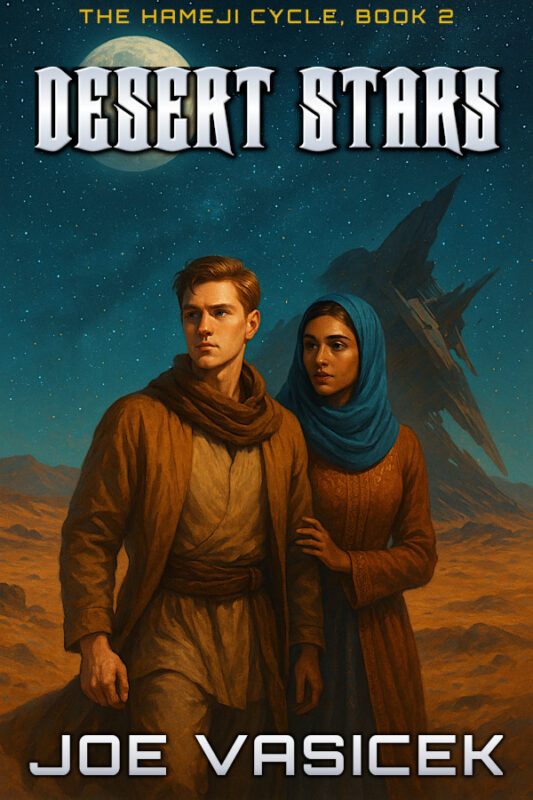
He is sheikh’s sole heir, a young man raised by desert tribesmen after falling from the stars. She is the sheikh’s most beautiful daughter, promised his hand in marriage—but only if she can convince him to stay.
Together, they must travel to a land where glass covers the sky and men traverse the stars as easily as tribesmen cross the desert. At the ancient temple dedicated to the memory of Earth, they hope to find the answers that will lead them home.
But the call of the stars soon threatens to bring their budding romance to an end. And as the moment of decision draws near, the choices they must make will drive them toward a future that neither can foresee.
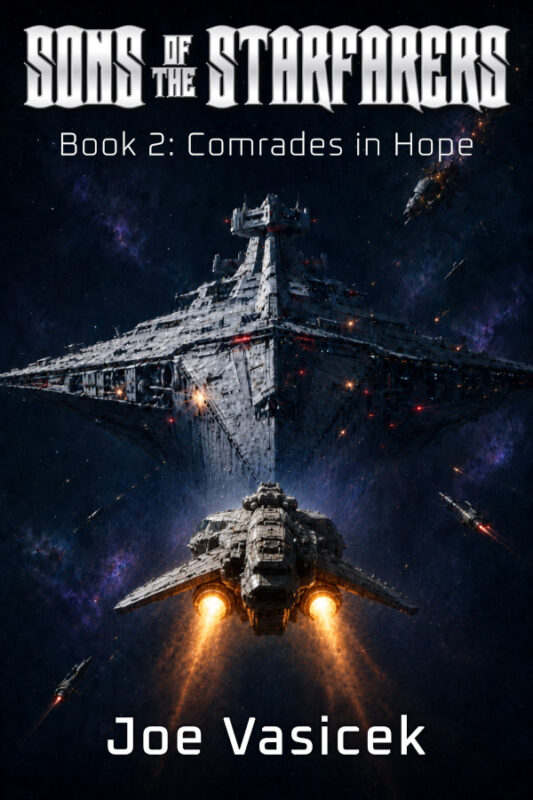
Isaac and Aaron have joined the war effort, and not a moment too soon. The Imperials are poised to strike at the heart of the New Pleiades and obliterate the ragtag flotilla standing in their way. Aaron always wanted to prove himself, but he was never ready to make the ultimate sacrifice—until now.
So Tuesday night, the back of my mouth where the naval cavity meets the throat began to feel itchy. I could tell I was coming down with something.
My roommate diagnosed it as a sinus infection and prescribed, among other things, some super spicy Korean barbecue. If you’ve ever gone to Cup-Bop in Provo and ordered a ten, you know what I’m talking about. That stuff will melt your face off—or, in my case, rapidly evacuate the sinuses, denying that territory to the infection.
The next two days were pretty miserable. I got maybe an hour of sleep the first night, and woke up with a nasty sore throat, as well as a headache and stuffy nose. Had more Korean barbecue the next day, which did help with the sinuses but also ripped out my stomach lining and did a number on my digestive tract. That stuff is insane.
The worst is over, though, and I was back on my feet this morning. Which is remarkable, because this time last year, I had the same virus, and it knocked me out for a month. Literally. I was bedridden for three or four days, and confined to my apartment for another three weeks. Compared to that, two days of a nuked digestive tract combined with moderate flu symptoms isn’t so bad.
The moral of the story is that sometimes, the best way to fight a disease is to wage a scorched earth campaign on your own body. Also, do not underestimate the power of Korean barbecue.
I’ll be back next week. Hopefully my stomach lining will be back too.
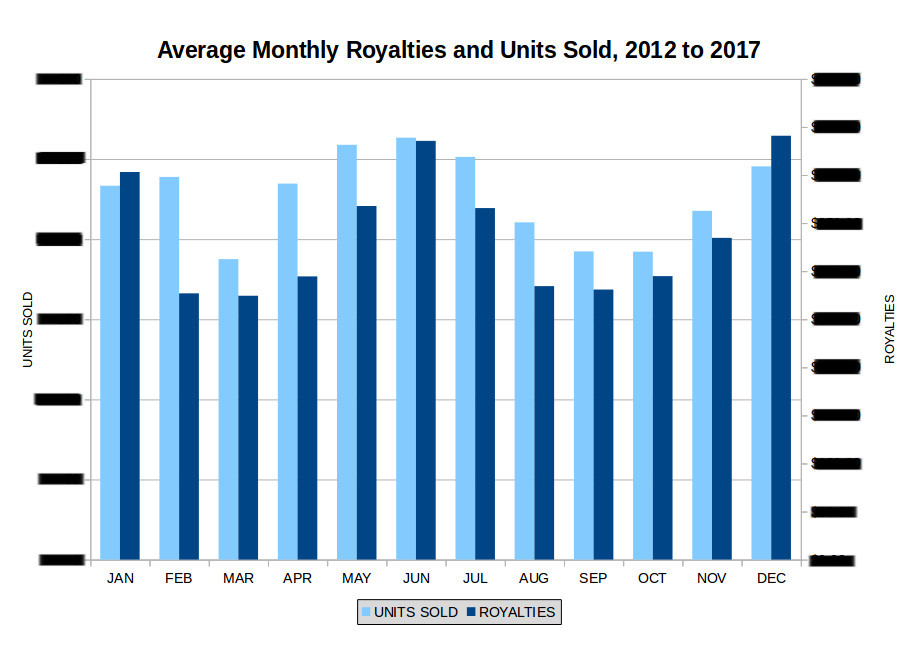
As I mentioned in a previous post, I’ve been crunching the data from my last seven years of indie publishing, and it’s yielded some very interesting information. Here’s another graph that I managed to pull out:
This graph shows all of the monthly averages for royalties earned and units sold, across all my books, from 2012 to 2017 (excluding February 2017, which was an outlier due to having a book in a story bundle). I haven’t adjusted for anything else, such as new releases or total books out, so take it with a grain of salt.
One of the big assumptions and/or questions in the book world regards the existence of a “summer slump,” where books (depending on genre) don’t generally sell as well and people generally aren’t reading. Judging from the data and my own experience, there does appear to be a slump from August to October. However, there also appears to be a “midwinter slump” from February to April.
The interesting thing is that units sold don’t appear to dip all that much, for whatever reason. It’s just the royalties that are affected. And in December and January, readers appear to be willing to buy more expensive books, as the royalties go up by more than units sold.
From this, it appears that the prime time of the year for bookselling are November to January and May to July. Of course, bear in mind that this is only my anecdotal experience, and the plural of anecdote is not data.
If I had to hazard a guess as to what is going on, it would be that readers are tighter with their money in the months following the holidays, and that the summer doldrums do indeed tend to stifle their enthusiasm for books. Interestingly, though, there seems to be a spike in reading with the spring, perhaps as they come out of hibernation.
Of course, it’s also possible that my own enthusiasm for marketing and publishing is greatest in the spring and early summer, and tends to fall off with the winter cold and the summer heat.
Either way, my own data tend to suggest that yes, there is a summer slump.
The Broward County sheriff needs to resign or be fired immediately, and should also stand trial for criminal negligence. There’s something rotten in the state of Florida, and it all points back to this man.
CNN has completely lost all credibility. As far as I’m concerned, they rank slightly above Alex Jones and slightly below the grocery store tabloids for journalistic integrity.
The anti-gun activist shooting victims are political pawns. Nothing more, nothing less. Emotion does not give you credibility, and suffering does not give you authority.
By the same, Donald Trump’s emotional reactions on Twitter have been disappointingly puerile.
The only person who comes out looking good from all this is Dana Loesch.
We obviously have a problem with mass shootings in this country. Instead of focusing on the gun issue to the exclusion of everything else, we should first try to fix all of the other contributing factors, such as mental illness, school security, psychotropic drugs, absent fathers, etc. Let’s focus on the areas where we can agree.
The FBI has demonstrated criminal negligence in their failure to investigate the shooter, and what is even more disturbing, I don’t know that it isn’t politically motivated. If it is, it represents an existential threat to our republic.
I don’t know that our nation has been this politically divided since the years leading up to the Civil War. The United States is deeply ill, and if we cannot come together—if we cannot find our e pluribus unum—I fear that this great nation will fall.
Last October, Dean Wesley Smith wrote an interesting blog post on the subject of pricing. As an indie writer (or really, as a small business owner in general), pricing is one of those things that’s constantly on my mind. Pricing too high can be fatal for any business, but pricing too low can be a terrible mistake as well.
Dean Wesley Smith’s pricing strategy basically went like this:
Novels
$3.99 to $6.99
Price according to genre, not length
Romance on the lower end
Mystery on the higher end
SF&F in the middle
Short Stories
$1.99 to $3.99
Price according to length, not genre
$1.99 for under 3k words
$2.99 for 3k to 10k words
$3.99 for 10k to 20k words
Over 20k words price as a novel
From November until now, I’ve basically followed this strategy, with a few tweaks for short stories. Under 1k words, I’ve priced at $.99, and between 3k and 20k words, I’ve priced at $2.99. It’s only at 30k words that I’ve priced my books as novels.
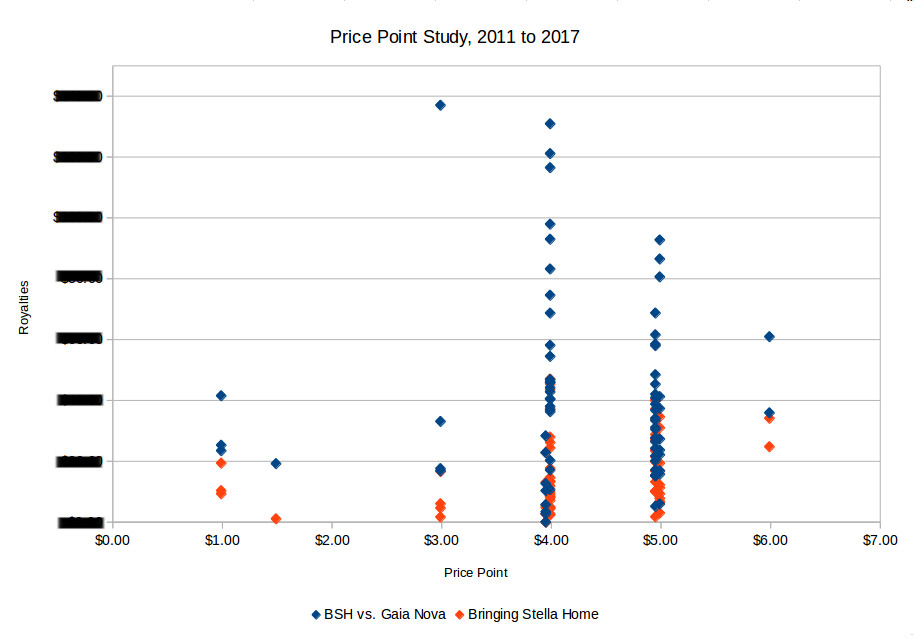
This isn’t my first time experimenting with prices. I’ve been publishing since 2011, and have all of the sales reports and other data in one form or another. So last week, I decided to crunch that data and compare it with the last four months.
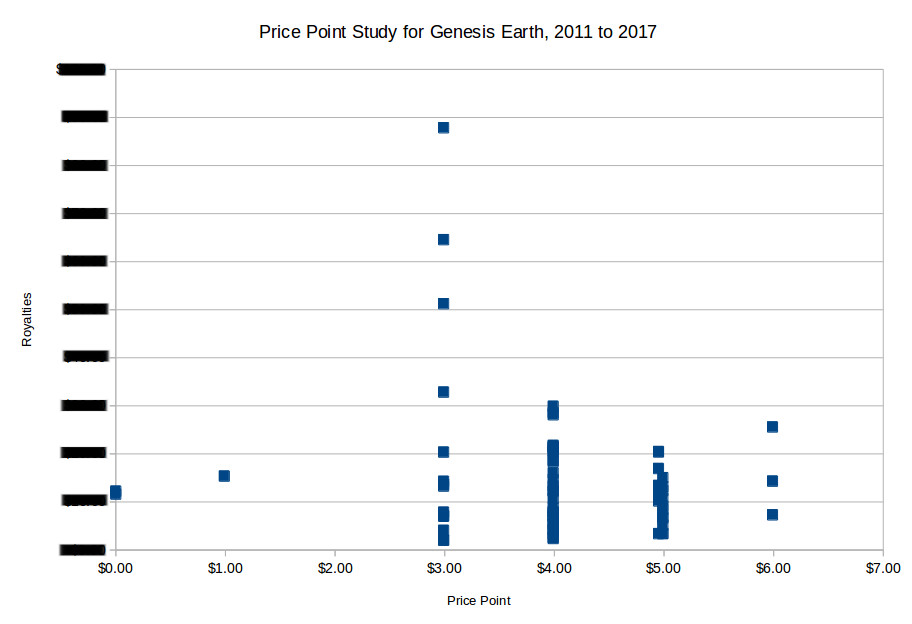
Genesis Earth is my first novel, and the book on which I have the most data. It’s a 70k word YA science fiction novel.
Crunching the data, I found that on average, the book performed best when priced at $3.99, with a few outliers at $2.99. However, most of those outliers are from 2011, before Kindle Unlimited or KDP Select, and before the book had fallen off of the 90 day cliff. Excluding the first two quarters of 2011, those outliers fall away.
Bringing Stella Home is the first book in the Gaia Nova series, and the book for which I have the most data that is also part of a series. It is a 110k word space opera novel.
Interestingly, the book appears to perform differently as a standalone than it does as part of a series. As a standalone, it appears to perform best at $4.99, but the series as a whole performs best when it’s priced at $3.99.
By the way, I tend to price all the Gaia Nova books at the same price point, so except for $.99 and $1.49, it’s fair to assume that all the books share the same price as Bringing Stella Home for any given datapoint.
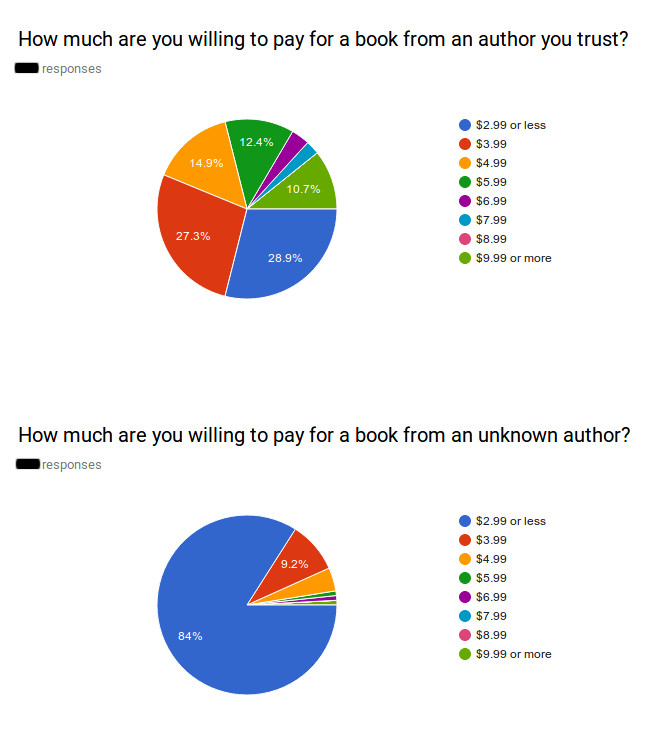
Interestingly, the data tend to confirm the results of an ebook pricing survey I sent out to my email list about a year ago. The results are pictured above. More than half of respondents said that they were only willing to pay $3.99 or less for an ebook from an author they trust, and more than 80% weren’t willing to pay more than $2.99 for an unknown author.
Unfortunately, I don’t have enough pricing data for my novellas and short novels (under 50k words) to draw conclusions for any other price points besides $.99 and $2.99. Obviously, the $2.99 price point performs vastly better than $.99. There’s a little more nuance than that when it comes to series pricing, but I’m keeping that data close to the chest.
I have yet to crunch the data for my short stories. When I do, that will probably be the subject of another blog post.
From these results, it appears that $3.99 is the sweet spot, both for series and for standalone novels. The data from the last three months are not included in the graphs, but from what I’ve managed to gather my books do not perform as well when I use Dean Wesley Smith’s pricing strategy. It was worth trying out as an experiment, but four months during the prime bookselling time of the year is enough to conclude that it doesn’t work, at least for my books and my readership.
Here’s the pricing strategy I’ll be using from now on:
For most of 2012, I lived in Georgia, a former Soviet Republic of the USSR. I came to know the people, the culture, and the politics of that part of the world first-hand. In particular, I was there for the 2012 elections, a watershed moment for modern Georgian politics.
Bidzina Ivanishvili, billionaire, founder of the Georgian Dream party, and prime minister from 2012 to 2013.
A little bit of background. Georgia won its independence in the 90s during the fall of the Soviet Union, and immediately fell itself into a civil war. Three regions broke off: Adjara in the south, South Ossetia in the north, and Abkhazia in the northwest. It was a very difficult time, where the national army was little more than a deputized gang of thugs.
Eduard Shevardnadze, former Soviet Politburo member and President of Georgia until 2005.
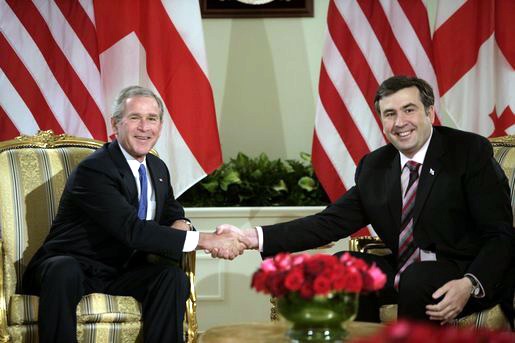
When the chaos settled down, the man in charge was Eduard Shevardnadze, a former high-ranking member of the Soviet Politburo. If you had to compare it to something, it would be like the United States falling apart and George W. Bush taking over Texas. An old establishment politician from a dynastic family returning to his newly independent home country to head it during troubled times.
Mikheil Saakashvili (Right), former president of Georgia. He came to power in the Soros-funded Rose Revolution, pushed for Georgia to join Nato, and fought a disastrous war with Russia in 2008. After he was ousted from power, he became a governor in Ukraine, following the Euromaidan Revolution that brought Ukraine into the Western orbit. American collusion, anyone?
But then, in 2005, something interesting happened: a “color revolution” broke out. George Soros, members and allies of the Bush Administration, and other foreign actors began to stir up protests in Tbilisi against Shevardnadze’s government. The tensions culminated with Mikheil Saakashvili and other agitators storming parliament with roses in their hands, taking over the podium and forcing Shevardnadze to flee with his bodyguards. He later resigned, and Saakashvili ran unopposed in the following election. He won by 96.2%.
The August 2008 war between Russia and Georgia. It began when Saakashvili ordered his forces to shell Tskhinvali in Russian-occupied South Ossetia, and ended with the total defeat of the Georgian armed forces, with Russia reinforcing and formally recognizing the separatist regions of Abkhazia and South Ossetia. Many ethnic Georgians lost their lives or became internally displaced refugees within their own country.
It was political theater of the highest order, accomplished by collusion with a meddling foreign power. Once Saakashvili was in charge, Georgian foreign policy took a hard turn towards the West, causing massive tensions with Russia that culminated in the 2008 Russo-Georgian War.
This was a very bad move. Georgia is basically the Mexico of Russia; the two countries are closely linked both culturally and economically, with a large volume of remittances flowing from expatriots in Russia back to their families in Georgia. By turning so sharply to the West—not to mention, starting an actual war—Saakashvili did his people a great disservice.
Fast forward to 2012. I was teaching English in a village called Rokhi, about half an hour south of Kutaisi. I knew the basic outlines of this history, but very few of the specifics. The people were generally friendly to Americans, but they were very quiet about politics, at least to me.
Then the elections happened, and against all odds the Georgian Dream party completely overthrew Saakashvili’s ruling party in the parliament. Politicians started fleeing across the border into Turkey. Those who didn’t flee were arrested, sometimes on spurious charges, sometimes on legitimate ones. The courts became weaponized in a political struggle between Saakashvili and the Georgian Dream. It wasn’t a transfer of power so much as an ongoing coup.
All of a sudden, people starting speaking up and telling me what they really thought. While Saakashvili was in power, people were always careful around me because they assumed (since I was an American) that I was some sort of spy. But when the Georgian Dream Party took over, people felt it was safe to share their true feelings about how much they hated this guy who had taken over their country and driven it into the ground.
This is what foreign collusion and meddling looks like. America does it all the time. There’s a saying in the former Eastern Bloc that goes something like this:
“Why has there never been a color revolution in the United States?”
“Because there is no US embassy in the United States!”
Except now, I’m not so sure. Because the hyperbolic media response to the latest mass shooting in Florida shares some very disturbing similarities with a color revolution, and it frankly scares the hell out of me.
Take the CNN town hall that happened earlier this week. That wasn’t democracy in action, or even journalism. It was political theater, pure and simple. It was a political witch hunt and full-on push for gun confiscation.
A lot of things about the Florida shooting don’t add up. The alleged gunman managed to slip away with the fleeing students, instead of getting killed by law enforcement on the scene as is the pattern with most mass shootings. The FBI knew about this kid, had a file on him, knew what he was planning, and did nothing—absolutely nothing—to stop him. His classmates just happen to be pro-gun control activists, and they just happen to put together this massive national children’s crusade literally before the funerals for all the victims have been held.
Look, I’m not saying the kids are crisis actors. I’m not saying that what they went through isn’t absolutely horrific, or that they don’t have a right to feel the way that they do. What I’m saying is that the politicization of this shooting is massively suspicious and full of red flags.
Consider the three major mass shootings that happened last year, and the differences in the media’s response to each of them.
The first was the Congressional baseball shooting in June. A Bernie Sanders supporter tried to assassinate most of the Republican caucus by hunting them down at a baseball practice. It was deliberate, it was planned, and it very nearly threw this country into a major political crisis.
Within a week, the major news outlets were no longer covering the story.
The Las Vegas shooting was next, in October. A horrible tragedy and watershed moment for mass shootings in America. And yet, after all these months, there are so many unanswered questions. Where are the Casino tapes? Why haven’t we seen them? What was the involvement of the shooter’s girlfriend? Who is the other person of interest that the FBI hasn’t revealed? Was there a second shooter? What about all of the problems with the timeline?
None of these questions have gotten much airplay outside of alternative media. Also, the fact that the shooter was on mood-altering drugs hasn’t factored into the public debate nearly as much as the guns that he used—or didn’t. We don’t really know.
A month later, in November, we had the Sutherland Springs church shooting. The shooter was stopped by a bystander with a gun. A classic example of how the right to bear arms protects and makes us safer.
Once again, the mainstream media buried the story within a week.
Now we have the Florida shooting, with its own set of details that don’t quite add up. Far from burying the story, the mainstream media has blown it up to eleven, with nonstop political theater, witch hunts, appeals to emotion, and above all else, unyielding demands for a total confiscation and ban on all guns.
Who benefits from the politicization of mass shootings? The people who want to destroy the right to bear arms. Who is that? No one so much as the people who want to sow chaos in this country.
If the feds attempted a total gun confiscation, it would spark a second American civil war. Russia would benefit greatly from this. And if the confiscation were ultimately successful, it would leave us that much more vulnerable to a foreign takeover in the style of a color revolution.
This is the stuff of political thrillers, and it’s happening in realtime before our very eyes.
Who’s behind this? I don’t know. I have my suspicions, but I cannot yet say anything with any degree of certainty. But because certain factions benefit from the politicization of these mass shootings, I believe they will continue, and will probably increase in frequency.
We hear of wars in far countries, and say that there will soon be great wars in far countries, but do we know the hearts of the people in our own land?
Pay no attention to the people trying to make this movie all about race or politics or whatever. They’re all just agenda-driven media whores trying desperately to hijack whatever’s popular at the moment in order to remain culturally relevant. This movie has nothing to do with any of them.
I really enjoyed Black Panther. Good story, good characters, lots of fun action, and a couple of really interesting twists. The music was fantastic: two hours of woodwinds and African drums. It wasn’t as comedic as Thor: Ragnarok, but it didn’t take itself too seriously either. For a Marvel movie, it was also surprisingly family friendly.
I thought it did an excellent job of acknowledging race and politics without allowing itself to be taken over by either. It isn’t race that makes the people of Wakanda different from the rest of the world: it’s the magical meteorite that fell in their country, with thousands of years of isolation that allowed them to follow their own cultural path. As for politics, it’s not so much about the struggle against the colonizers as it is a question of how to open up to the rest of the world: peacefully, or violently.
Honestly, if you don’t care about race or politics, you don’t have to worry because it doesn’t beat those over your head at all.
The story is really solid, which is par for the course for Marvel. The world is also really well done. Very different from what you usually see in these kinds of superhero movies. In fact, it didn’t feel like any of the other Marvel movies, even though it hit all of Marvel’s usual high standards.
The thing I liked most about it was probably the characters. T’Chaka is a genuinely good person trying to set right the mistakes of his father, and the friends who surround him are also good people trying to do right by their own as well. But they don’t always agree on what’s best: whether to keep the magical kingdom of Wakanda secret and isolated, or whether and how to reach out to the rest of the world.
Overall, it was a really fun movie and I’d definitely recommend it. Like I said at the top, pay no attention to the attention whores on mainstream and social media trying to make this all about race and identity politics. Star Wars may have been taken overy by wankers, but Marvel has not.
I thought it would be interesting to do a weekly blog post of all the remarkable things I saw or read on the internet in the past seven days, with my thoughts and/or reactions. If nothing else, it should be entertaining. Let’s try it out for a few weeks.
1) Proof that the internet has all the maturity of a horny teenager
Or at least Twitter:
2) Extra Sci Fi concludes the Martian Chronicles
Extra Sci Fi is turning out to be a really great YouTube series. They started with Frankenstein, then spent some time on William Gibson, and recently went through the Martian Chronicles by Ray Bradbury. They really do a good job of getting to the heart of classic science fiction.
It reminds me of a Trope Tuesday post I did a while ago about settling the (final) frontier. The whole idea of restarting humanity by leaving Earth behind is one of those things that draws me to science fiction the most. The stories in Bradbury’s Martian Chronicles are more artistic and thematic, but still, that idea is very much a part of them.
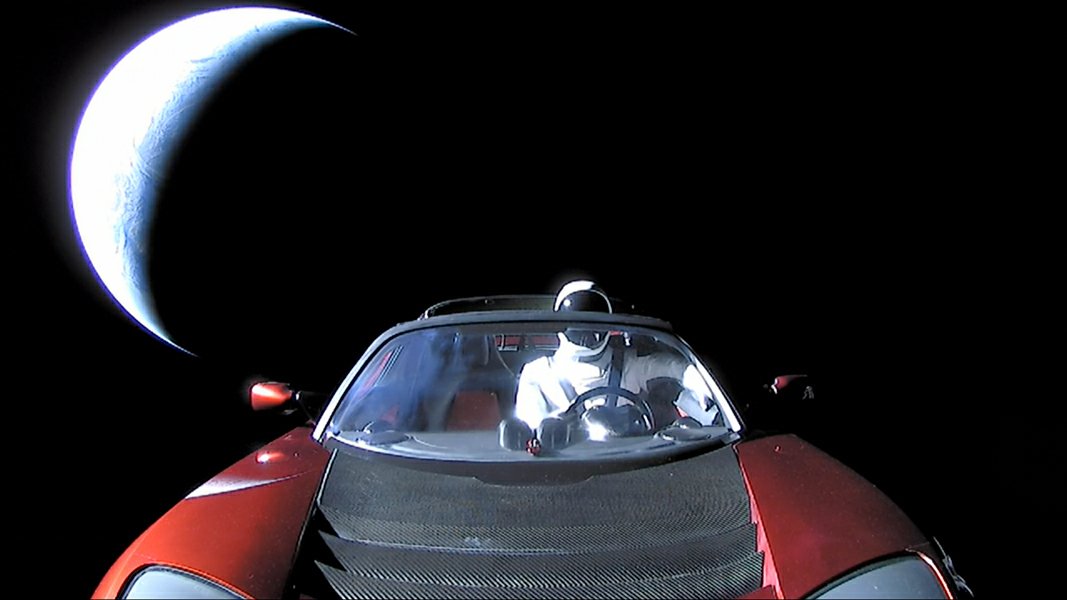
3) Roadster, Starman, Planet Earth
If there was any remaining doubt that Elon Musk is secretly trying to help an extraterrestrial get home, APOD posted this awesome photo last Saturday:
I have got to find a way to fit Elon’s roadster into Gunslinger to the Galaxy.
Felix J. Torres, who often has great nuggets of wisdom, shared his insights in a comment on The Passive Voice:
– Those experienced “leads” is where a company’s corporate memory really resides. The people who’ve been through the wars and seen it all, who know where the scripts and handbooks end and common sense crisis management and experience takes over. They are lobotomizing operations.
– If the difference between “lead” pay and entry level is the only thing between them and bankruptcy… Well, they might as well file right now. $40M in “savings”? That’s less than $80,000 per store. For that they disrupt people’s lives and cripple their operations? Smacks of desperation. Chapter 11 must be closer than even the harshest critics expects.
Looks like choppy waters and a major shakeup for the book industry in the coming months and years.
That does it for this week, but I’m sure I’ll have more in the weeks to come!













 Pay no attention to the people trying to make this movie all about race or politics or whatever. They’re all just agenda-driven media whores trying desperately to hijack whatever’s popular at the moment in order to remain culturally relevant. This movie has nothing to do with any of them.