T minus 5:08:37…

Business cards…check.
Clean clothes…check.
Clean shaven…check.
Soap and toiletries…check.
Batteries…check.
Battery recharger…check.
iRiver 800…check.
Music…check.
Computer…check.
Camera…check.
Tentative convention program…check.
Map and directions…check.
Snacks and lunch…check.

Five hours to liftoff and counting.  This time tomorrow, I’m going to be in California! Yay!  And holy cow, did I mention that I’m nervous?

World Fantasy 2009, here we come!

Convention jitters

World Fantasy starts in less than 72 hours, and I’m getting nervous about it.  Really nervous.  This is the first big-time science fiction convention I’ve ever been to, and I’m worried that it will be too intimidating, or that I’ll make a fool of myself, or that I won’t put myself out there enough, or…

All the same, I’m expecting to have fun.  Lots of fun. 🙂

But between now and 5:00 am Thursday morning (when we take off for California), I have to: 1) grade 20 papers, 2) take a midterm, 3) write two essays, 4) run at least 30 regressions, 5) read 2 poli sci articles, and 6) finish American Babylon and write up a report on the last three chapters.

Yeah.  Not fun (except the regressions–what can I say, I’m a nerd).

In unrelated news, I met an interesting girl at Leading Edge last week.  She’s at least as much of an sf&f fan as I am, and one of the very, very few girls I’ve met who prefers science fiction over fantasy.  Somehow, she convinced me to read The Dispossessed by Ursula K. LeGuin with her (or maybe I convinced her to read it with me?), but I started it tonight, and it’s really good.

Technically, I’ve got a class for Washington Seminar that I should go to tomorrow…but I can skip it and listen to the mp3 while I’m driving to California.  Don’t want to miss Leading Edge this week, for obvious reasons.

Speaking of which, if I don’t go to sleep right now, I’m going to be barely functional for the next two days.  Not good.  G’night.

Mysterium by Robert Charles Wilson

Nobody knows why the government chose the small town of Two Rivers, Michigan, as the site for a top secret military project.  Even most of the people involved in the project don’t know what it’s really about.  That’s alright, because most of the denizens of this backwoods community are used to minding their own business.  But after a mysterious explosion bathes the entire city in light, that becomes impossible.

On the outskirts of town, all the roads and power lines dead end in ancient virgin forest.  It’s as if a perfect circle has been drawn around the town on the map, and everything within the circle has been transported to a parallel world.

A very unfriendly parallel world.

Robert Charles Wilson’s writing is awesome.  I could eat up his prose all day.  It not only flows beautifully, it’s clear and transparent, to the point where I forget that I’m reading and feel as if I’m there.  He always uses the right expression, the right metaphor, and yet his prose never attracts so much attention to itself that it distracts from the story.

I noticed several similarities between Mysterium and Wilson’s other novels that I’ve read.  All of them start in our modern world and move into a mysterious, unfamiliar milieu.  All of them involve strange religions and religious conflicts.  All of them involve male and female characters struggling to face personal relationship problems and eventually coming together.  In these ways, this story felt very much like Spin.

At the same time, I can definitely tell that this is one of Wilson’s earlier works.  The story flows like a thriller, but lags in certain points.  After the town is transported into the parallel dimension, the story seems to meander without any clear direction.  For several chapters, I lost the sense of progress that usually accompanies a good plot.  The resolution receives very little foreshadowing–the “surprising yet inevitable” element was only “inevitable” three or four chapters from the end.  If it weren’t for Wilson’s beautiful writing, I would have put this book down in the middle.

<spoiler alert>

Unlike Spin, I found the milieu of this story somewhat depressing–not necessarily because of the setting itself (though it’s not the kind of alternate present that I’d want to live in), but because the people of Two Rivers never go back.

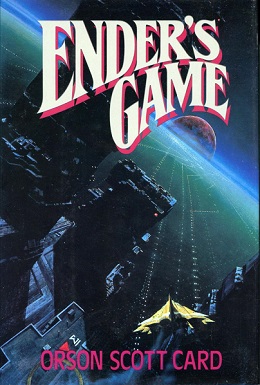
According to Card, there are two basic types of milieu stories: stories where the protagonist returns profoundly changed, or stories where the protagonist “goes native” and becomes assimilated.  But…if the new world isn’t the kind of place you’d want to live in–in other words, if it’s dystopian (and Wilson’s alternate world in Mysterium is fairly dystopian)–then there’s this tension of “will the protagonist make it back?  Will they return?” And if they don’t return, the story is emotionally disappointing.  That was the case for me with Mysterium.

</spoiler alert>

From this review, it probably sounds like I hated this book.  That wasn’t the case–not at all!  This was a good story, and I enjoyed it.  I finished the last hundred pages at a sprint at 1:30 in the morning–it was definitely that kind of a book.  I couldn’t put it down.  And at the same time, it was thoughtful and profound (as you can tell from my previous post, “Why I love Robert Charles Wilson“).

I’ve probably said enough.  If you like thrilling, parallel world adventure stories with a contemplative, thoughtful “what if?” element, read this book.  Even with all the misgivings I’ve mentioned here, it’s good SF.  Very good.

Why I love Robert Charles Wilson

From Mysterium, which I plan to review here soon:

“Do you ever wonder, Howard, about the questions we can’t ask?
“Can’t answer, you mean?
“No. Can’t ask.
“I don’t understand.”
Stern leaned back in his deck chair and folded his hands over his gaunt, ascetic frame. His glasses were opaque in the porch light. The crickets seemed suddenly loud.
“Think about a dog,” he said. “Think about your dog–what’s his name?”
“Albert.”
“Yes. Think about Albert. He’s a healthy dog, is he not?”
“Yes.”
“Intelligent?”
“Sure.”
“He functions in every way normally, then, within the parameters of dogness. He’s an exemplar of his species. And he has the ability to learn, yes? He can do tricks? Learn from his experience? And he’s awarer of his surroundings; he can distinguish between you and your mother, for instance? H’es not unconscious or impaired?”
“Right.”
“But despite all that, there’s a limit on his understanding. Obviously so. If we talk about gravitons or Fourier transforms, he can’t follow the conversation. We’re speaking a language he doesn’t know and cannot know. The concepts can’t be translated; his mental universe simply won’t contain them.”
“Granted,” Howard said. “Am I missing the point?”
“We’re sitting here,” Stern said, “asking spectacular questions, you and I. About the universe and how it began. About everything that exists. And if we can ask a question, probably, sooner or later, we can answer it. So we assume there’s no limit to knowledge. But maybe your dog makes the same mistake! He doesn’t know what lies beyond the neighborhood, but if he found himself in a strange place he would approach it with the tools of comprehension available to him, and soon he would understand it–dog-fashion, by sight and smell and so on. There are no limits to his comprehensions, Howard, except the limits he does not and cannot ever experience.
“So how different are we? We’re mammals within the same broad compass of evolution, after all. Our forebrains are bigger, but the difference amounts to a few ounces. We can ask many, many more questions than your dog. And we can answer them. But if there are real limits on our comprehension, they would be as invisible to us as they are to Albert. So: Is there anything in the universe we simply cannot know? Is there a question we can’t ask? And would we ever encounter some hint of it, some intimation of the mystery? Or is it permanently beyond our grasp?”

This is the kind of science fiction that I love: the kind that brings me right up to the limits of human knowledge and makes me feel naked in the face of the unknown. The kind where the aliens truly feel alien, not like an unusually bizarre race of human beings. I want the aliens to surprise me–I want to feel that there’s something about them that is completely beyond my comprehension. Something sublime, something romantic.

In all of his books that I’ve read, Robert Charles Wilson captures this feeling spectacularly. So does Arthur C. Clarke, C. J. Cherryh, and Orson Scott Card. Larry Niven, Jerry Pournelle, John Scalzi and Alastair Reynolds are excellent writers, and I’ve genuinely enjoyed their books, but their aliens are too…understandable. Too clear cut, too defined. After a while, you don’t feel that there’s anything left to surprise you, anything that is so alien it’s beyond your grasp.

In some ways, I think this boils down to the author’s worldview. Those with a more positivist worldview believe that the world is fundamentally understandable, and that every phenomenon can be modeled and predicted, provided that we have a sophisticated enough understanding of natural law. The interpretivist worldview, on the other hand, posits that while truth may exist, there are limits to our understanding–that some things are inherently unpredictable and impossible to model.

I used to think that I was a positivist. Then I took Poli Sci 310 with Goodliffe, and it turned my world upside down. Genesis Earth is, in some ways, a product of that personal worldview shift. I don’t think I’m anywhere near on par with my aliens as Wilson, Clarke, and Card are with theirs, but I hope I’m on my way.

Bimbos of the Death Sun by Sharyn McCrumb

It’s that time of year! Elves, Klingons, slave women, gamers, computer geeks, aspiring writers, and superfans are converging on Rubicon, the annual science fiction convention. Mild mannered citizens beware!

Newest among the motley crew is Jay Omega, a young, local computer professor and first-time author on a mission: make sure that nobody he knows in real life finds out that he is the author of Bimbos of the Death Sun. Fortunately, his friend and secret lover (but only a secret to him), Marion, is there to promote his book and keep him from getting hopelessly lost.

But then, Appin Dungannon, famous author of the prolific adventure series of Tratyn Runewind, is found dead in his hotel suite.  Who could possibly want him dead?  Turns out, just about everyone: Appin is also famous for hating the series more than any other person on the planet, and for treating his fans like slime.

As the convention threatens to fall apart, Jay takes on the case and tries to answer: who killed Dungannon, and why? In a world where fantasy has more power than fact, however, the answer is stranger than anyone in theiTr right mind would expect.

This book was hilarious. Sharyn McCrumb explores science fiction and fantasy fandom the way a drunk anthropologist would explore an aboriginal jungle tribe. Even though her characters are all shallow caricatures of the real thing, their clumsy interactions turn the story into a wonderful farce that is as entertaining as it is educational.

There were only a couple of parts that bothered me. At one point, McCrumb gets into the head of an overweight, hopelessly ugly fangirl cosplayer and shows her thought process as she pursues a romantic relationship with an equally ugly and socially incompetent fanboy. I didn’t feel that McCrumb authentically portrayed the character’s own thoughts–it sounded more like a person from the outside giving their take on the experience. Then again, McCrumb was going for humor, not true character depth.

Besides that, this book is definitely dated. The computer technology in the novel is ridiculously primitive, on par with the Commodore 64, the Tandy 400, and the trusty old 386. In other ways, too, this book is solidly 80s–any science fiction convention nowadays would probably have less Trekkies and more Anime cosplayers. However, the dated aspects only make the novel more endearing, in my opinion. Who wouldn’t be nostalgic for the good old days of the 386?

This book isn’t high literature, and Sharyn McCrumb would probably be the first to admit it. It was, however, wonderfully entertaining, one of those rare and beautiful books that made me laugh out loud, heartily. For someone like me who is just starting to become involved in science fiction and fantasy fandom, it was a hilarios and helpful primer to this fascinating subculture. As McCrumb states in her foreward:

Science fiction writers build castles in the air; the fans move into them; and the publishers collect the rent. It’s a nice place to visit, but please don’t try to live there.

That said, I find it telling that it was people in fandom who recommended this book to me. Good to know that at least a few of us don’t take ourselves too seriously.

Freaking busy

Sorry for not posting; I’ve been ridiculously busy these past few days.  As in, I don’t think I can remember ever being this busy.  Maybe when I was taking PL SC 310, but then again…that was more stressful than busy.

I’m working two jobs (two awesome TA jobs, by the way), I’m taking 15 credit hours of classes, and I’m applying to 9 or 10 internships in Washington DC for the winter.  All of my classes are upper level, including my capstone class, which is pretty intensive.

I read maybe 7 or 8 academic articles a week and about 150 pages of philosophy and other texts.  I grade dozens of papers, tests, and quizzes, write papers (anywhere from 6 to 12 pages each), and spend virtually all of my waking life on campus.

It’s insane.  On a typical day, I leave my apartment at 7:30 or 8:30 in the morning and only come back  for dinner (and maybe an hour of homework).  Then it’s back to the library until midnight, when it closes.

I feel like a slave.

Still, even though I haven’t been blogging much, I have been writing consistently, even through the worst of it.  Right now, I’m running about 6k to 7k a week, which isn’t as much as I’d like but is surprising, considering everything else.

The only time I really have to write these days is from 10:00 pm to midnight, up at the library.  If I’m lucky, I’ll slip in about half an hour in the morning, but most of the writing happens at night.

The thing that gets to me, though, is that I probably won’t have the 4th draft of Genesis Earth finished before World Fantasy.  With my crazy workload, I just don’t think it’s going to happen.  The first three chapters are finished, but the rest of the ms?  Unfortunately, it needs more time.

Blegh.  I can’t wait until I’m out of school.  Hopefully, things won’t be as insanely busy.

But I’m probably wrong.

WOTF rejection

So a couple days ago, I got a phone call from my Mom.  A piece of mail had come in from the Writers of the Future contest.

Yeah, it was a standard form rejection.

Well, everyone puts in their time.  I guess this counts toward that.  A modified version of this story did well in the Mayhew contest, so I know it’s not utterly bad.  But I can see, in retrospect, how it wouldn’t do well with WOTF.

The main body of the piece was a scene I took from the middle of my novel–really, it was more of a scene than a coherent, unified story.  I threw on a beginning and an end, to try to fix that problem, but it probably didn’t mesh well with the real meat of it.  Which is fine, because it was originally meant as a scene, not a short story.

The thing is, I’m just not much good at short stories.  I don’t usually read them, and I don’t generally write them.  Novel writing is my craft–every time I try to write a short story, I end up writing a novel.  Once and a while, something clicks and a short story pops out (kind of like a Polaroid), but it’s not the usual thing.

So I’m not discouraged by this rejection from submitting to WOTF again, it’s just that it’s going to be kind of sporadic.  I have one more short piece that I could submit to the contest right now, but I don’t expect it to go far.  Still, it’s better than letting it sit in my hard drive.

In the meantime, I should probably submit that WOTF piece elsewhere, see what happens.  That’s probably what I’ll do.

What I really need to do, though, is work on my novel.  World Fantasy is coming up!

Hellish week (and I’m still crossing my fingers)

Holy cow, this week was insane.  INSANE. Two papers (13 pages and 8 pages respectively) in one week, hours and hours wrestling with Sambanis’s Civil War dataset and Excel (I wish I knew STATA–it’s so much more useful for analyzing ginormous datasets), 33 tests to grade (of which I’ve only graded about 11), peer reviewing two research proposals, about half a dozen dense poli sci articles…

I could continue the list, but I think it would bore you.  Suffice it to say that the Homework Alert Level has been on RED since Monday.  Not good–and damnably frustrating, since it eats up all my writing time.  Unsustainable.

However, by 3pm today, all the major hurdles were finished. Thank goodness!  And I not only got some writing in, I finished reading a book.  It was a pretty good one–I’ll review it sometime later.

But, in completely unrelated news, I just want to let you know…

The second round of honorable mentions for the Writers of the Future contest has come out.  I’m not on the list.

I also have not received a rejection letter…yet.

<crosses fingers> <crosses fingers> <crosses fingers>

Jemma 7729 by Phoebe Wray

The following is a book review I wrote for The Leading Edge. It will be coming out in the November issue, along with my short story Decision LZ150207.  The editors gave me permission to post the review here.  Be sure to pick up a copy of the magazine when it comes out!

Jemma is a rebel, fighting against a system that teaches women to be obedient and submissive and “alters” those who refuse to assimilate.  After escaping the giant dome cities of a post-apocalyptic California, Jemma joins with a band of rebels known as the Movers in the free, uncultivated country.  But as her reputation grows and the people in the domes begin to take up arms, the government stops at nothing to hunt Jemma down and silence her for good.

With images reminiscent of Brave New World, 1984, and A Handmaid’s Tale, Jemma7729 is a dystopian, post-apocalyptic novel with a YA feel.  The first half of the book details Jemma’s childhood and her transformation from daughter of two mid-level government workers to a rebel fighting to overthrow the system.  I enjoyed the first part of this novel, with its intimate human drama and its resourceful, sympathetic viewpoint character.  The story was paced well and kept my interest.

The second half of the book, however, was somewhat disappointing.  Once Jemma escapes the domes and begins her campaign as a rebel terrorist, the story loses a lot of tension.  Even though she is barely a twelve year old girl, she still, without any outside assistance, manages to blow up almost a dozen government facilities without getting caught or killed.  The villains’ reasons for creating such an oppressive, anti-feminist regime are never adequately explained, and when Jemma starts to fight back, the government is too weak to put up a believable resistance.  The middle of the novel lags considerably, with very little real action or suspense.

When the pace finally does pick up again, about forty pages from the end, the action is so confusing and happens so quickly that I felt completely lost.  The main character’s voice gets lost in a blow-by-blow account of impossibly rapid events, as if the author was trying to compress two hundred pages of story into less than a quarter of that space.  I fount it disappointing and inconsistent with the tone of the rest of the book.  However, the twist at the end caught me by surprise and gave me some degree of satisfaction as I finished the book, though I would have been more satisfied if the last half of the book had been as good as the first half.

Review of JEMMA7729
Joe Vasicek
Jemma is a rebel, fighting against a system that teaches women to be obedient and submissive and “alters” those who refuse to assimilate.  After escaping the giant dome cities of a post-apocalyptic California, Jemma joins with a band of rebels known as the Movers in the free, uncultivated country.  But as her reputation grows and the people in the domes begin to take up arms, the government stops at nothing to hunt Jemma down and silence her for good.
With images reminiscent of Brave New World, 1984, and A Handmaid’s Tale, Jemma7729 is a dystopian, post-apocalyptic novel with a YA feel.  The first half of the book details Jemma’s childhood and her transformation from daughter of two mid-level government workers to a rebel fighting to overthrow the system.  I enjoyed the first part of this novel, with its intimate human drama and its resourceful, sympathetic viewpoint character.  The story was paced well and kept my interest.
The second half of the book, however, was somewhat disappointing.  Once Jemma escapes the domes and begins her campaign as a rebel terrorist, the story loses a lot of tension.  Even though she is barely a twelve year old girl, she still, without any outside assistance, manages to blow up almost a dozen government facilities without getting caught or killed.  The villains’ reasons for creating such an oppressive, anti-feminist regime are never adequately explained, and when Jemma starts to fight back, the government is too weak to put up a believable resistance.  The middle of the novel lags considerably, with very little real action or suspense.
When the pace finally does pick up again, about forty pages from the end, the action is so confusing and happens so quickly that I felt completely lost.  The main character’s voice gets lost in a blow-by-blow account of impossibly rapid events, as if the author was trying to compress two hundred pages of story into less than a quarter of that space.  I fount it disappointing and inconsistent with the tone of the rest of the book.  However, the twist at the end caught me by surprise and gave me some degree of satisfaction as I finished the book, though I would have been more satisfied if the last half of the book had been as good as the first half.

Polishing is harder than it looks

It is.  This is the final revision of Genesis Earth before I submit this novel everywhere, and it’s tough.  I’m changing a lot more than I thought I would, and it’s going a lot slower than any other process so far.

Plus, on my way to Murray for my mission reunion, the service light for my engine flipped on.  What the heck?  I just had the car serviced a month ago!

At least I know about it now, before I attempt to drive to San Jose for World Fantasy.

Long story short, showed up at 9pm to the reunion just in time to say hi to President and Sister Heywood as they were getting ready to leave.  So worth it, though.  They’re both getting older, and I don’t know when I’ll be seeing them again.  Listened to From Cumorah’s Hill on the way back, and it was awesome.  I mean that in a religious way.

I’ve got a research proposal due tomorrow, and I kid you not, I was working on that thing in my sleep last night.  All night, while I was dreaming, I was thinking “should I use this author in my paper?  How should I tie that in?  What controls do I need to use?  Will this dataset cover the same years as that dataset?” All. Night. Long.

And then I forgot it all when I woke up!

I did get some time to write, though.  Took the netbook up to the laundry room in the FLSR (I still go there–much cheaper than my current apartment) and worked on my novel while waiting for the laundry to finish.  Good times–some of my best writing has come out of that laundry room.  Award winning writing.

In tangentially related news, I still have not heard back from Writers of the Future.  I’m guessing that’s a good thing <crosses fingers>.