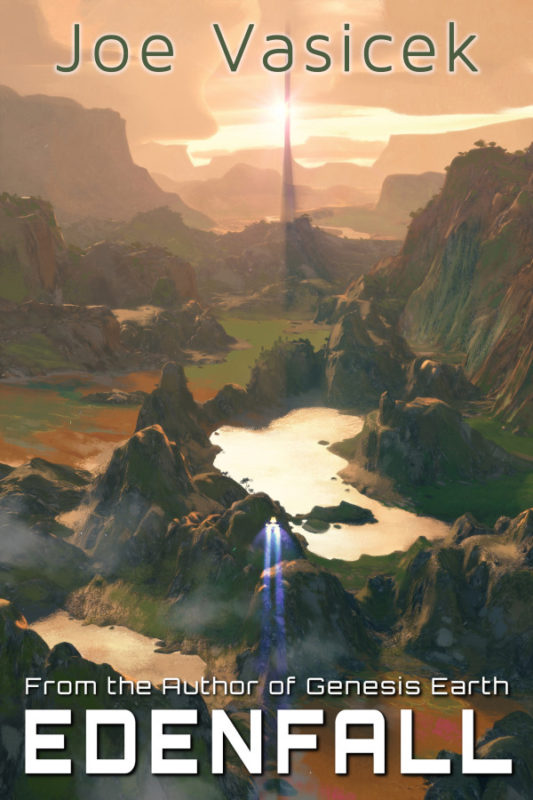
Edenfall continues the Genesis Earth Trilogy through the eyes of sixteen-year-old Estee Anderson, a girl raised in isolation on a mysterious alien world. Character-driven and emotionally grounded, it explores innocence, family bonds, and self-discovery under rising danger. Like the first book, it favors quiet depth over spectacle—only this time, the world is larger, the threats are sharper, and childhood ends faster.
What Kind of Reader Will Love Edenfall?
Edenfall is for readers who want hope-filled science fiction where wonder comes with consequences, and survival depends on courage, loyalty, and family. It is especially for readers who:
- Love character-driven science fiction with emotional stakes and family at its core.
- Enjoy exploration of alien worlds, survival, and first contact that feels personal rather than technobabble-heavy.
- Appreciate worldbuilding that leans on atmosphere and mystery rather than dense scientific exposition.
- Enjoy stories where children are real people—not plot devices: capable, flawed, curious, and heroic.
In other words, Edenfall is for readers who want science fiction that feels personal before it feels cosmic, with characters of quiet courage who rely on their family as they face the world. Like Genesis Earth, it’s a coming of age story of self-discovery, but with stronger family bonds.
What You’ll Find Inside
Edenfall begins when a military expedition arrives to investigate the anomaly that Estee’s parents were sent to explore. When one of the generals decides to take over and make the planet his own personal fiefdom, Estee must learn who she can trust in order to face the rising threat to her family, even as she grapples with trauma and loss of innocence.
In Edenfall, readers will find:
- A young protagonist in isolation (Estee) who must navigate danger with wits, courage, and instinct.
- A slow-burn planetary mystery involving ancient alien megastructures, lost history, and hidden data.
- A human-versus-human first contact with catastrophic misunderstanding.
- Nuanced moral ambiguity—leaders driven by fear, idealism, or ambition; soldiers who follow orders but question them.
- Strong family themes: parental sacrifice, sibling bonds, and the pain of leaving childhood behind.
- A lush, “wild-world” setting filled with dangerous fauna, hidden canyons, ancient ruins, and an ancient megastructure (the space elevator) stretching into the sky.
What Makes Edenfall Different
There is no chosen one, no prophecy, no love triangle, and no convenient mentorship arc. There are no precocious prodigies or destiny-driven heroes—just an unprepared girl trying to survive the collision between her family and the dangers of a world she doesn’t understand. The first contact story is human on human, told from both points of view, with all of the accompanying messiness and misunderstanding. The result is an intimate story that feels mythic, human, and fresh.
What You Won’t Find
This is not a book for readers who want love triangles or steamy romantic elements. There is no explicit sexualization, and the romance is very low-key and slow-build. It also avoids graphic violence and heavy militaristic fetishization. While there is some violence and some of the characters die, the tone ultimately leans toward resilience, curiosity, and hope rather than gritty cynicism. This is hope-forward science fiction, not despair-driven dystopia.
Why I Think You Might Love Edenfall
It took me more than ten years to finish this book. Ultimately, it wasn’t until I had a child of my own that I was finally able to write it. The experience of becoming a father and having my own family made it possible for me to write about family bonds with the sort of emotional depth that Edenfall required.
If you loved the characters, the heart, and the driving sense of wonder in Genesis Earth, I think you will enjoy Edenfall even more!
Where to Get Edenfall










Related Posts and Pages
Explore the series index for the Genesis Earth Trilogy.
Visit the book page for Genesis Earth for more details.

1 comment