State of the Vasicek 2015

I recently read a post over on Brandon Sanderson’s blog where he did an exhaustive recap on his writing and update on all of his WIPs, and called it State of the Sanderson. Since it’s the end of the year and I’m already looking back in order to make some new resolutions for 2016, it seems like a good opportunity to do something similar myself.

In 2015, I managed to publish five books, including two novels, a novelette, and two short stories:

In addition, I wrote a number of short stories that are currently on submission to the major markets, and will probably be published (by myself or in the magazines) sometime in 2016. These include:

  • Killing Mr. Wilson — Time Travel (950 words)
  • My Name Is For My Friends — Sword & Sorcery (2,000 words)
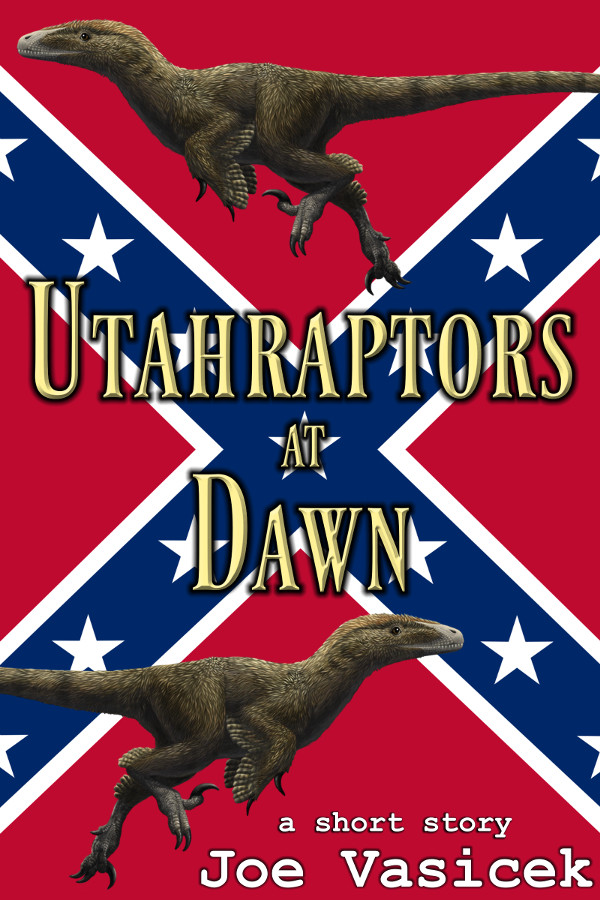
  • Utahraptors at Dawn — Cyberpunk (1,950 words)
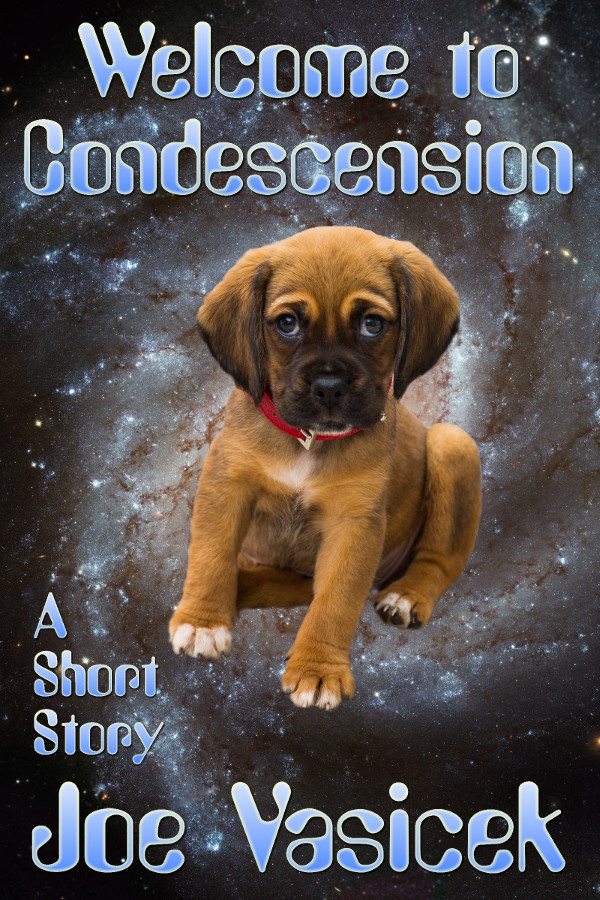
  • Welcome to Condescension — Sci-fi Humor (750 words)
  • A Less Than Perfect Game — Sword & Sorcery (1,250 words)
  • Elusive Eden — LDS Science Fiction (2,200 words)
  • The Janus Anomaly — Space Opera (4,400 words)

All of these stories will get out eventually, though it may take a while. I’m putting them on submission to the short story magazines and anthologies that pay at least semi-professional rates, since none of them buy exclusive rights to the stories. Why rush to self-publish if I can get paid twice?

In a lot of ways, it was a pretty decent year. In other ways, I wish it had been more productive. I didn’t publish anything for the first six months, except for A Hill on Which to Die, which I later unpublished in order to take it out of Kindle Unlimited (the first and probably last time I will ever experiment with exclusivity). I made up for it later, but still.

Next year is going to be a lot more productive, I hope. I started a lot more projects this year than I finished, so in 2016 I plan to refocus on the writing and substantially increase my output.

As for writing projects, here is what I’m working on:

Major Projects

Sons of the Starfarers

There are five more books before this series is complete, and while I know more or less how the series is going to end, I’m still in the process of writing it. However, I’m making good enough progress to publish at least two more books in the series this year, possibly three or four.

Captives in Obscurity (Book V) is already written and ready to send off to the editor. Trouble is, cash is kind of tight right now and I probably won’t be able to send it off until after I’ve filed my taxes, which I hope to do early February (I always try to get a jump on tax season each year). For now, that means I’m looking for a launch in May.

Patriots in Retreat (Book VI) is my current WIP, and I hope to have the first draft finished before the end of January. A lot of stuff happens in this book—it’s kind of like the Empire Strikes Back episode, where crap hits the fan and things get real. Then again, Friends in Command (Book IV) was kind of like that too, and Captives in Obscurity has some really crazy developments… point is, I think you guys are going to like these books.

Haven’t outlined any of the other books in the series yet, but I’m a pantser so that’s normal. I do have a climactic ending that I’m working toward, which will tie in this series with all of my other books in the same universe. It’s going to be great to see it all come together, and I expect it will over the course of the next year!

STATUS: Book VI currently in progress.

Gunslinger to the Stars

I started this book in earnest a few months ago, then hit chapter 2 and realized I had a beginning and an end but no idea what to put in the middle. So I put the project on the back burner, letting the ideas percolate until I’m ready to pick it up again and go full throttle. With luck, that will happen very soon.

This is a really awesome project, and one of the ones I’m most excited about. I’ll post a few excerpts in the next few weeks to give you guys a taste, and I think you’re really going to like it!

STATUS: On the back burner, will resume again soon.

Queen of the Falconstar

A few of the readers who enjoyed my Star Wanderers books have mentioned that they wish Jeremiah, Noemi, and Mariya had ended up in a polygamous relationship. While I don’t think that would have worked for that particular story, in Queen of the Falconstar, it’s a major plot point. In addition, the book is an origin story for the Hameji, which should be a lot of fun for readers of my other books as well.

I’ve been working on this project off and on for the last year or so, and while I have a pretty good handle on the main storyline, I’m still a little iffy about how to proceed. It may have some promise as a hybrid between Space Opera and Sword and Planet (sword and starship? Is that even a thing?). The Princess of Mars books are on my reading list, so I’ll probably revisit this project after reading through some of those.

STATUS: On the back burner.

The Sword Keeper

I really need to finish this book. It’s already more than half written, and has some really fantastic potential. For the last three years, I’ve been working on it off and on, but 2016 will definitely be the year that I finish it (though it might still be a while before it’s published).

STATUS: On the back burner.

Secondary Projects

Starship Lachoneus

In spite of finishing the prologue and publishing it as “Worlds Without Number” under my J.M. Wight pen name, I haven’t yet made a serious attempt to write this book. The main reason is that it’s a passion project that I don’t expect to pay off very well or earn me much prestige. Still, when my career is at a point where I can afford more time for a passion project, I will probably pick it up.

STATUS: On the back burner.

The Genesis Earth Trilogy

Genesis Earth is a standalone book, but I realized soon after finishing it that I could easily turn it into a trilogy. Back in 2011, I even started writing the second book: Edenfall. But one thing led to another, and it got put on hold in favor of Star Wanderers.

The trilogy is still on hold, but if there is enough interest, I could certainly resume work on it. I made Genesis Earth free for the month of December, and it’s had a much stronger free run than I’d anticipated (especially with almost no advertising). Depending on the feedback I get from readers, I’ll finish this project sooner or later.

STATUS: On hold, may resume soon.

Mercenary Savior

This is a prequel to Bringing Stella Home that I’ve had kicking around in my head for the last two years. The interest in Heart of the Nebula has been surprisingly steady, even more than a month after publication. If either of those books starts to break out, then I will definitely pick up this project. Otherwise, I can’t justify making it a priority.

STATUS: On hold.

Empress of the Free Stars

Empress of the Free Stars is a sequel to Stars of Blood and Glory that I started back in 2013 but never got further than the prologue. Again, unless my Gaia Nova books start to break out, I can’t justify prioritizing this over my other WIPs.

STATUS: On hold.

Children of the Starry Sea

This one is a novelized sequel to Star Wanderers, with all of the major characters from that series. I know there’s some interest in this one, but for now I think my time would better be spent launching new series rather than returning to old ones. But in 2016, that may well change.

STATUS: On hold.

Lifewalker

This is a standalone I started back in 2013, and I even got several chapters into it before I put it on the back burner. Haven’t touched it since, so right now it’s really more on hold, but my Dad keeps bugging me to finish it (he read the first chapter and really liked it). So yeah. Someday.

I will say this, though: if the short story that’s derived from this book gets picked up by one of the magazines, I will definitely move it up in the writing queue.

STATUS: On hold.

A Brotherhood of Swords

This book is supposed to be a Sword & Sorcery prequel to The Sword Keeper, but since I already have plans for that book, this one is on hold. I did get a really good short story out of it, though.

STATUS: On hold.

That pretty much does it. This next year is going to be super, super busy, and hopefully productive as well. My goal for 2016 is to get back in the saddle, writing full-time again as soon as I can. There are other resolutions I plan to make as well, but those can wait until Thursday.

First Impressions of Star Wars: The Force Awakens

This post is going to be spoiler-free, but if you haven’t already seen it and you don’t want it spoiled, you had better go on an internet blackout and get thee to a cinema because there is a lot that can be spoiled!

First impressions: I liked it! I really liked it! It felt very true to the originals, much more so than any of the prequels. It had all the same beats and sci-fi elements, the same focus on the characters (as opposed to spectacle), and a lot of the same magic.

At the same time, it wasn’t just a nostalgic rehashing of episodes IV, V, and VI. There was a lot of new stuff mixed in with the old. I know a lot of the true fans are ticked off that Disney nixed the expanded universe, but the new stuff feels like it fits. The new characters have some very big shoes to fill, and it will take more than one movie for them to grow into those shoes, but in this one at least they did pretty well.

Does it fully live up to the originals? I think that’s the wrong question to ask. For those of us who grew up with the original Star Wars, nothing will live up to that experience. The golden age of science fiction is between ages 7 to 14, and in some ways it just isn’t possible to recapture that magic. But for those of us old-timers, I think this new one pays homage to the originals in a way that the prequels never did.

Was it campy? Yep. Was it rife with scientific inaccuracies? Oh heck, yes! Were parts of it over the top? Yeah, probably. But these were all true of the original Star Wars, too. The stuff that really mattered was all there: good writing, solid plot, believable characters, awesome music, and that grand sense of wonder that drew us all into Science Fiction in the first place.

So yeah, I’m satisfied with this new Star Wars movie. And while I’m sure I’ll be spending the next several months nitpicking it to death with other like-minded fans, my first impressions are very positive. I will definitely watch this movie again, and again.

Flashpoints by George Friedman

Some people say that Science Fiction writers are in the business of predicting the future. In fact, that’s only partially true: we don’t predict the future so much as we show people what possibilities the future may hold. But strategic forecasting is a real business, and the foremost personality in that business is George Friedman.

In a world run rampant with hyperbole and sensationalism, Friedman’s analysis consistently stands out for its calm and measured rationality, as well as its ruthless incisiveness. As cordial and softspoken as Friedman can be, he does not mince words or walk on eggshells. He calls it the way he sees it, and he sees some very interesting times coming in the years ahead.

In Flashpoints, Friedman analyzes the current situation in Europe by placing it in the context of history, beginning with the Age of Exploration and culminating in what he calls “the thirty-one years.” From 1914 to 1945, more than 100 million Europeans died of political causes, the most spectacular human catastrophe of the modern era. The question he asks is whether Europe has truly changed, or whether we are on the verge of a return to the savage cruelty that defined the 20th century.

Friedman’s take on the history of the continent is quite fascinating. He points out a number of things that most histories overlook: for example, that European unification was originally an American project, imposed on a recalictrant Europe as a means to counter Soviet expansionism. In any war with the Soviets, West Germany would be the first line of defense, and therefore NATO and the Americans needed a strong West Germany and a united continent. Thus, the European Union started as an essentially American project—something the Europeans often forget.

The thing that really made this book fascinating, though, were the numerous personal insights from Friedman’s own life. As a Hungarian Jew whose mother was a holocaust survivor and whose father was conscripted to fight in Operation Barbarossa, Friedman’s personal story is just as fascinating as the story he tells about Europe. The two weave together in a way that offers a unique and powerful perspective on the challenges currently facing the continent, providing insights that can’t be gleaned in any other way.

Friedman’s writing is remarkably clear. His analysis is eye-opening, and his predictions are compelling. By the end of the book, I not only felt like I had a better understanding of Europe, but a better understanding of humanity as well.

In my opinion, this is Friedman’s best book. The Next Hundred Years was quite excellent, but a project that large in scope couldn’t help but feel a little fantastic. The Next Decade was also good, but it had neither the grand scope of The Next Hundred Years nor the depth of focus of a book dedicated to a single geopolitical question. Flashpoints possesses both that depth of focus and the grand scope of historical context, tracing the rise, fall, and rebirth of what is simultaneously the most savage and civilized continent on this planet. It’s a fantastic book, and I highly recommend it.

Larry Correia on creating “offensive” characters

Larry Correia has a fantastic post up on the pitfalls of political correctness when writing fictional characters. He not only nails it on the head, he takes a nail that’s been twisted in three different directions and rams it into the wood with just a couple of well-placed taps. Seriously, if you’re interested in writing at all, you should check the whole post out.

The main gist of it can be summed up by this quote:

Smart writers are going to focus on entertainment. They’re probably going to offend everybody at some point. But at least they won’t be boring while they do it.

I’ve said this before, and I’ll say it again, the unforgivable sin for writers is being boring. As a writer you can get away with damned near anything as long as you are entertaining a big enough audience.

There is a contingent of readers out there who exist only to nitpick and bitch. There aren’t that many of them, but they make up for it by being loud. Many authors are under the mistaken impression that you can make these readers happy. You can’t. At best you can appease them. Temporarily. But you will cross their invisible line sometime and they will get all sorts of outraged.

The latest person to get outraged was Melissa Harris Perry, who denounced Star Wars because Darth Vader was (and yet at the same time wasn’t) black. Seriously. It’s like she saw this clip and didn’t realize it was satire:

But I digress.

The reason it’s impossible to please politically correct SJW-types is because the way that they signal their virtue to other members of their tribe is by finding something to be outraged about. This is a consequence of their belief that the only way to fix society is through social revolution, a point that Dennis Prager deconstructs quite effectively. It’s all about how loud they can scream.

As Larry points out, trying to placate these perpetually outraged people is a game you can’t win—not unless you’re already a member of their tribe. This ironically makes them far more prejudiced than most of the people they’re so outraged at. When was the last time you heard the word “white” used as an insult? Has the word “cisgender” ever not been used as an epithet? “Privileged” is another one—without knowing anything about you as an individual, they have already passed judgment and despise you.

Again, this is why I support the Sad Puppies: because they have the courage to stand against these perpetually outraged types who would tear down everything in SF&F that they can find offense with. The most imaginative genre in fiction is no place for self-appointed thought police.

There is one important area where I disagree with Larry. He rejects the Bechdel test out of hand, where I think it still has value. As a litmus test, I totally agree with him: I’m against any kind of a litmust test for stories. But from a writing perspective, I think it can still be a very useful tool.

The Bechdel test is something that I usually have in the back of my mind when I write: not out of fear of offending the perpetually outraged, but in order to write more complex and interesting characters who can stand as heroes of their own stories. I don’t think we’re at odds on that point, since Larry himself says the same thing in his discussion of how to write a strong antagonist. To that extent, I personally find the test to be useful.

The point is, if you want to be a successful writer, don’t try to please everyone. As soon as you start to experience success, someone will inevitably take offense with you just to bring you down a notch. Don’t let them get to you. In the words of Brigham Young:

He who takes offense when no offense is intended is a fool, and he who takes offense when offense is intended is a greater fool.

Disagreement is not offensive

Is it just me, or is there an increasing tendency in today’s world to misconstrue anything and everything as “offensive”? This is especially true of the campus protesters, who take offense in everything from Halloween costumes to the name “Lynch.” But the most disturbing trend is when they find someone “offensive” simply because they had the gall to disagree:

When I saw this exchange between a professor at Yale and one of his students, I was frankly shocked at the intellectual laziness and moral dishonesty of the student. “It is not about creating an intellectual space here!” …seriously? You attend one of the most prestigious universities in the Western world and you don’t think it’s supposed to be “an intellectual space”? What did you expect to do here, weave baskets all day?

But notice that the part where she really flies off the hook is when the professor says “I don’t agree with that.” That’s telling. It shows that the student has no interest in engaging with the professor’s point of view, just in shutting him up. It’s as if she knows that her ideas can’t stand on their own, and need to be enforced by bullying.

Well, it appears that the bullying tactics have worked, because the professor’s wife has stepped down from her teaching position at Yale. The thing that started this whole mess was an email she wrote defending students’ rights to wear Halloween costumes that other students found—you guessed it—”offensive.”

Oh, and that racist Halloween party that launched the Yale student protests? It never happened, natch.

I could go into greater detail, but this is just one example of disagreement being conflated for offensiveness. I’m sure that you could cite others. But it’s not the crybully tactics that shock me, or the ideological blindness: it’s the sheer fragility of the intellectual framework on which the “offended” party’s argument is based.

Seriously, almost anytime anyone gets offended because someone else disagrees with them, their position is so flimsy that a high school dropout could poke holes in it. That’s certainly the case with the Yale student shown above. It’s just like the story of the emperor’s new clothes, where everyone can see that the emperor is naked except for the emperor himself.

In fact, that’s a perfect analogy, because all this talk of “safe spaces” and “right to be offended” is nothing less than an attempt to shelter these students from reality—just like the emperor was sheltered from the reality that his new “clothes” were an absolute farce. And seriously, how is it not farcical for a student to shout “it is NOT about creating an intellectual space!” at one of the world’s most prestigious universities?

This is on my mind right now for a couple of reasons: first, because of an online interaction I had recently with one of these overly-sensitive types, and second, because of an interesting post over on Mad Genius Club. This part of the post was particularly relevant:

I’m a very minor pro, and my tips are probably worth precisely what you pay for them. But here is mine: Pro tip for writers. Learn to put yourself in the shoes, thoughts and headspace of people totally unlike you. Learn to write from their perspective. […] If you can’t do this, you may have one or two good books in you – but essentially you’re writing one character, yourself, and those who are very like you. Unless that’s exceptionally appealing… people get a bit sick of it.

Even if you detest those other people who see the world differently, and wish nothing but ill on them, and plan to destroy them… you’ll write it a lot better understanding what they do and feel and why they think or act as they do.

If you take offense whenever people disagree with you, chances are that you’ll never be able to cut it as a writer. In order to write well, you have to be able to see things from inside the heads of people who aren’t like you and probably don’t agree with you.

This is why I support Sad Puppies: because the SJW types in Science Fiction are usually the first to cry offense over anything that doesn’t fit into their narrow worldviews. This naturally makes them as vehemently opposed to intellectual diversity as they (falsely) claim that the Puppies are to racial, sexual, and cultural diversity. When you look at the books and stories that these people uphold as shining examples of the genre, their rigidly ideological worldview is as plain as the emperor’s new clothes.

Disagreement is not “offensive.” In fact, it’s a sign of respect. If your opponent thought that your opinion or argument wasn’t worth engaging with, then they simply would have ignored you. By saying “I don’t agree,” they are acknowledging your position in an intellectually honest way. When you willfully misrepresent your opponent’s views, or bully them into silence, it is a sign of disrespect that warrants taking offense. And who is most guilty of that? I’ll give you two chances, and the first one doesn’t count.

New blog design

So perhaps this wasn’t the best thing to do at 2:00 am this morning, but I downloaded the new Twenty Sixteen WordPress template and tried it out. As you can probably tell, I liked what I saw.

Specifically, I like this one because it’s a lot less busy, which probably translates well to mobile devices and tablets. Also, it makes the landing pages for my books look much cleaner. The sidebar is a lot wider, but the design is less distracting. It really puts the focus on the images, which is good, because that lets my book covers really shine.

This blog has evolved a lot over the years. It started in 2007 as just a space for me to gush as I wrote my first novel. From there, it turned into something of a public journal. When I graduated from college and started publishing, it gradually turned into something for my friends to something for my fans.

Nowadays, it’s as much of a book site as it is a blog. All of my books and stories have their own pages, complete with buy links, and connected by series and genre. The teasers in the backs of my books all link to these pages, as well as the subscription page for my email lists.

All of this has necessitated making some changes in the site’s design. I like this template, but I’ll probably play around with a couple of others before I settle on one for the long-term.

What do you guys think? Twenty Sixteen: yea or nay?

Book banner!

Over the weekend, I put together a banner for my books. The main reason was so I could use it on Twitter, but it’s probably useful for other places as well:

bookbannerIt’s kind of cool to have all my books laid out in one place—and this isn’t even all of them! It does get all the big ones, though, like Star Wanderers, Sons of the Starfarers, and the Gaia Nova series.

I’m also toying with the idea of a more minimalistic website redesign. The starry header and background are kind of cool, but they do make things look a little bit busy, especially on the book pages. Those pages serve as landing sites for the links in the backs of my books, and I want them to be as intuitive and non-busy as possible.

This blog has certainly evolved quite a bit over the years, and I’m sure it will continue to evolve further. In the meantime, I am quite pleased with this book banner.

The death of the Republic

This post is going to be political. Consider yourself warned.

I am not afraid of terrorists. I am not afraid that I, or anyone I love, will be caught up in a Paris-style terrorist attack. For one thing, most of the people love live in Shall Issue states with very few gun restrictions. Time and again, the second amendment has proven to be an effective line of defense against terrorists, mass shooters, and other deranged individuals who consider themselves above the law. Gun laws do not stop these people (surprise!), but a responsible armed populace does.

I am not afraid of a massive economic collapse, though I suspect that another one is imminent. I just looked at my mutual funds and realized that they have flatlined for about the last year—which is exactly what happened just before the collapse of 2008. The Chinese stock market collapse earlier this year is having repercussions across the world, but an economic collapse is something you can personally prepare for, and I believe very firmly in the principle “if ye are prepared, ye shall not fear.”

I am not afraid of a massive societal collapse, of zombies roaming the landscape—either the literal undead zombie or the metaphorical people-as-animals type. I consider a collapse of this kind to be highly unlikely, because if there’s one thing the Great Recession taught me, it’s that there’s a very big difference between the collapse itself and people’s experience of it. In some parts of society, the last collapse was barely felt at all. In other areas of society (such as Detroit), the collapse has never ended. Rarely do all sectors of society collapse at the same time—and even if they do, it’s still something that you can prepare for.

I am not afraid of any of these things. However, I am terrified that the United States, like Rome of old, is about to witness the death of the Republic.

In his groundbreaking book The Next Hundred Years, George Friedman discussed this dilemma at length. He foresaw the 21st century as a fundamentally American century, with the Pax Americana defining the geopolitical landscape. Many of his predictions have been and are currently being vindicated, including the return of an aggressively expansionist Russia, the gradual collapse of Europe, the economic development of Mexico, and the Chinese economic slow-down.

Yet the tension between Republic and Empire was something that he could not resolve, except to say that it is imperative that we find a balance between the two. A Republic places moral constraints on the power of the state, tempering the forces of Empire. When the Republic is destroyed, the Empire ceases to be benevolent and becomes totalitarian.

So why do I bring this up now? Because the recent events in this country have left me profoundly disturbed.

useful idiotsIn October, House majority leader John Boehner (R) stepped down from office. Before he went, however, he and his cronies in the Senate and the House of Representatives rammed through a bill that effectively abolished the US debt limit until March 2017. Immediately after the bill was signed, the US debt jumped by more than $300 billion in a single day, and it has been rising precipitously ever since.

(As a side note, the debt-to-GDP ratio in the United States is now as bad as the PIGS countries in Europe—you know, the ones whose sovereign debt crisis precipitated the economic collapse in Europe, which has been FAR worse than our own collapse. That alone is enough to be frightening, but again, an economic collapse is something that I can prepare for. I’ve lived through one already, after all.)

In early November less than a week later, student protests broke out at the University of Missouri and other prestigious universities across the country, including Yale and Smith College. By now, I’m sure that you’re familiar with these events. The supposedly oppressed students at the heart of this movement are children of millionaires. The alleged acts of racism that worked the students into a frenzy were either completely falsenever verified, or not credible. The students who opposed the protest movement were aggressively bullied both before and after the protests broke out, and the students who joined the movement are now being segregated by race. The demands of the movement amount to nothing less than tyranny, trampling first amendment rights while pushing their Orwellian vision straight to the gates of the White House.

And what was Our Glorious Leader’s response? He praised them, natch.

In fact, he’s doing more than that: he’s BANKROLLING them. That’s right: the same administration that gave the NSA a mandate to spy on the entire US citizenry and established a legal basis for drone strike assassinations of US citizens is now bankrolling a movement of domestic civil unrest.

With no debt limit.

There’s a term for these students, and that term is USEFUL IDIOTS. According to Wikipedia, useful idiots are “propagandists for a cause whose goals they are not fully aware of, and who are used cynically by the leaders of the cause.” In other words, they are pawns for evil and conspiring men who use them to sieze power and control.

This is not a new thing. In the Cold War, the KGB devoted the vast majority of its resources not to espionage, but to subversion. In this manner, they infiltrated, destabilized, and ultimately siezed control of several third-world countries. The primary target of their subversion efforts was always the United States and her allies. Defectors such as Yuri Bezmenov repeatedly warned us of this threat.

We can see the subversion process in action through the development of Left-wing movements like modern feminism. If you can spare an hour and a half, I highly recommend that you watch this video where Youtuber Sargon of Akkad interviews Erin Pizzey, the founder of the women’s shelter movement. What began as a movement to genuinely help victims of domestic abuse was blatantly co-opted by Marxist elements and folded into the modern feminist movement as a front for raising money. Even though men are also victims of domestic abuse, there are almost no shelters for men because this would threaten the taxpayer gravy train that has been siphoned off by the feminists for years. And the scariest part? That the radical feminists ultimately won. Our modern society has been reshaped by them in so many negative ways that it’s hard for us in this generation to see the forest for the trees.

But as scary as third-wave Marxist Feminism can be, it’s not them that I’m afraid of. They are, after all, little more than useful idiots. What frightens me are the evil and conspiring men (and women) behind them.

Are the old Soviet subversion programs still active and in operation? Probably not. The modern FSB is a shadow of its former KGB self, as the numerous Russian intelligence failures in Ukraine have shown. For all its aggressive bluster, Putin’s Russia is weak.

Still, it’s worth pointing out that the Soviet Union was never completely dismantled. When we conquered Nazi Germany, we held the Nuremberg Trials to root out Nazism and exterminate it. We did no such thing in Russia. Many of the former Soviet elites are still in Russian government today, foremost among them Vladimir Putin himself. The institutions of the communist state were reorganized, their personnel shuffled around, but they were never completely abolished.

That said, I don’t think it’s the Russians who are directly pulling the strings. I think it’s far more likely that their socialist allies and sympathizers in the West (men such as Bernie Sanders, though I suspect he’s just another useful idiot) took over the subversion programs once the Soviet Union fell, and have been using them for their own ends ever since.

This is why I am so deeply opposed to “social justice.” It is such a vague and nebulous thing that anyone who calls for it cannot help but become a useful idiot. The one thing that all social justice warriors have in common is the belief that a more powerful government is necessary to fix all problems. Naturally, this plays straight into the hands of those evil and conspiring men.

Social justice has become something of a buzzword in recent years. It defined the 2015 Hugo Awards, which was a localized but still significant battle in the ongoing Culture Wars. That was how I was first introduced to SJWs and their repulsive identity politics.

But again, it’s not the SJWs that frighten me. They are perhaps the most useful of idiots, but they are still just useful idiots like the others. It’s the movers and the shakers behind the scenes that frighten me—the evil and conspiring men who see them as a means to accomplish their own ends.

And the thing that terrifies me most of all is that the target of these evil and conspiring men is the Republic itself, or in other words, the rights and liberties enshrined in the Constitution. When those are swept away, the Republic will be truly dead. And my greatest fear is that the day is fast approaching when the Constitution will hang by a thread, with precious few to uphold it.

I can prepare myself for an economic collapse. I’ve lived through one before. I can build my food storage, learn how to be more self-sufficient, take measures to defend myself, and prepare contingency plans in case of SHTF. I can insulate myself and the people I love from most disasters.

But what can I do if the Republic is overthrown?

Giving Thanks

If there is any national holiday that is routinely overlooked, it is Thanksgiving. In our intensely consumer-driven society, Christmas looms ever greater, bringing with it the pseudo-holidays like Black Friday and Cyber Monday. Each year, the jingles of commercialism threaten to drown out the message of gratitude which Thanksgiving celebrates.

So with that in mind, I intend to keep a proper Thanksgiving this year, and every year. It is a time for food, a time for family, and above all else a time to ponder on all the good things in our lives, and to give thanks for them.

According to tradition, the first Thanksgiving feast was made by the pilgrims in 1621, after their first good harvest in the New World. They had come to America seeking religious freedom, which had been denied them in Europe. Instead, they found a foreboding wilderness whose native inhabitants had been all but wiped out by the plague. There were no hospitals, no grocery stores, no internet—no one except an English-speaking indian named Squanto to help them, and no way to send for help across the wide, dark Atlantic.

It was a struggle just to survive. Many of them died. Those who lived saw the hand of Providence in their survival, and after a bounteous harvest ensured that they would have food for the winter, they dedicated a feast to acknowledging that Providence that had saved them.

In a lot of ways, the pilgrims are to America what the pioneers are to the Mormons. And interestingly enough, I have direct ancestors among the pilgrims as well as the Mormon pioneers. So for me, it’s more than just a nice story: it’s a part of my family history that makes me who I am. And I suspect the same is true for many other readers of this blog.

So in the spirit of that first Thanksgiving feast, here are the things that I am especially thankful for this year:

  • I am thankful for my near and extended family. Tolstoy was wrong when he said that all happy families are alike: every family has their own quirks, even the ones that hold together. I wouldn’t give up my family’s quirks for anything.
  • I am thankful to live in a free country, where my rights to life, liberty, and property are respected and honored. I am also thankful for the brave men and women of our armed forces who sacrifice so much to keep it free.
  • I am thankful for the opportunity to pursue a career as an author, and for the flexibility and control that indie publishing provides. I have no one but myself to blame for my failures, but my successes are all my own. Even after four years, it’s still exhilarating.
  • I am thankful for my readers, who have made and continue to make this publishing journey possible. I am thankful for all that they do that supports me, from buying and reading my books to sharing with friends, posting reviews, sending me fan mail, and connecting in a hundred other little ways that together make this whole thing worthwhile. Seriously, you guys are awesome. The only thing I could ask is to have more of you!