#RIPTwitter

Two weeks ago, I decided that I was done with Twitter. This came after a long series of controversies, starting with gay conservative pundit Milo Yiannopoulos’s de-verification and culminating with Twitter’s Trust and Safety Council. For those of you unfamiliar with all of this Twitter-related internet drama, Sargon of Akkad does an excellent job explaining it:

I was originally going to blog about this a couple of weeks ago, but then Larry Correia came out and said that he had made the exact same decision, for much the same reasons I had. That surprised me, though, because Larry was one of the more active Twitter users I followed, with an impressively large following. To give that all up… wow.

Larry wrote:

You’ve probably heard about how Twitter is falling apart. Their stock price has been tanking.

Recently they created a Trust and Safety Council, to protect people from being triggered with hurtful dissenting ideas. Of course the council is made up of people like Anita Sarkesian, so you know how it is going to swing.

They’ve been unverifying conservatives, and outright banning conservative journalists. Then there were rumors of “shadow banning” where people would post, but their followers wouldn’t see it in their timelines. So it’s like you’re talking to a room that you think has 9,000 people in it, but when the lights come on you’ve been wasting time talking to an empty room.

In the last couple of months before I signed off, I saw this happening myself—not so much the shadow-banning, which is invisible by nature, but the fact that certain hashtags (like #GamerGate) fail to auto-complete. I also saw it in a double-standard applied to conservative Twitter users like Adam Baldwin, who had his account locked for tweeting that anti-GG people are unattractive, while around the same time a certain liberal journalist compared Ted Cruz to Hitler and received no disciplinary action whatsoever. Lots of little stuff like this, which over time builds up.

All of this probably sounds like a tempest in a teapot if you aren’t on Twitter. And yeah, it kind of is. In the last two weeks, I’ve learned that life is generally better without Twitter than it is with it. No more getting sucked into vapid tit-for-tat arguments in 140-character chunks. No more passive-aggressive blocking by people who are allergic to rational, intelligent debate. No more having to worry about being an obvious target for perpetually-offended SJW types who, in their constant efforts to outdo each other with their SJW virtue signaling, can spark an internet lynch mob faster than a California wildfire.

The one big thing that I miss about Twitter is the rapid way that news disseminates through the network. I can’t tell you how many major news stories I heard about through Twitter first—often while they were still unfolding. But if the #RIPTwitter controversy demonstrates anything, it’s that Twitter now has both the means and the motive to suppress major news stories that contradict their preferred political narrative. That puts them somewhere around Pravda as a source for news and information.

Am I going to delete my account the same way that I deleted my Facebook account? Probably not. I deleted my Facebook account because of privacy concerns and Facebook’s data mining. With Twitter, it’s more of an issue with the platform itself. I don’t need to delete my account to sign off and stop using it.

No more Facebook, no more Twitter… does this mean I’m no longer on any social media at all? Practically speaking, yes. For someone who makes their living on the internet, that may not be the smartest decision, but I do still have this blog, where I know I will never be un-verified or shadow-banned.

Blogging may seem like an old-fashioned relic of the late oughts or early teens, but I’ve always enjoyed it and have been doing it consistently (more or less) for the past ten years. That’s more than I can say for any social media site. For those of you who are active on social media, I do intend to keep the share links active on my blog posts and pages. However, the best place to find me online still is and always has been this blog.

Can you make a living writing short fiction?

This question has been on my mind for the last couple of weeks, ever since I made a couple of semi-pro story sales. From all of the classes and conventions I’ve attended, the answer has been no, but I’m starting to wonder if that hasn’t changed in the last few years.

First of all, it’s worth pointing out that short stories are not like longer books. In my experience (and I am not a master of the short form by any stretch), short stories do not sell as well in ebook form as longer books. That’s been corroborated anecdotally by virtually every indie writer I’ve spoken with.

At the same time, they aren’t like longer form books in the traditional sense either. I have three deal breakers when it comes to traditional publishing: no non-compete clauses, no ambiguous rights reversion, and no payments based on net. Short story markets typically only buy first publication rights with a 6-12 month exclusivity period, and pay by the word. That means that there’s no reason (unless you want to self-publish immediately) not to sell your short stories to a traditional market first.

(For the sake of argument, I’m going to assume that you’re not writing erotica. It’s a completely different market with its own idiosyncracies, which I’m going to ignore just because I don’t write it. But numerous indies have already proven that it is definitely possible to make a living writing short-form erotica.)

So let’s do a little back-of-the-envelope to see what a professional short-story writer can make.

According to SFWA, a short story is any piece of writing less than 7,500 words long. For the sake of argument, let’s say you average about 4,000 words per short story.

If you write one short story per month, you’ll have 12 by the end of the year. If you write two per month, you’ll have about 25. That comes to about 300 words per day.

If you buckle down and write one short story a week (only 600 words per day), you’ll have about 50 short stories by the end of the year. Raise that to two short stories per week, and that’s 100 short stories per year.

For the sake of argument, let’s say you’ve written 100 short stories. The next step is to put them on submission, using a database like The Submission Grinder to help you find markets. Here are the basic rules you’ll follow:

  1. Start at the top-paying markets and work your way down.
  2. Don’t submit to a market that pays less than $50 for your story.
  3. Don’t submit to markets that purchase full copyright (in other words, markets that won’t allow you to self-publish it after they buy it).

The professional markets pay upwards of $.06 per word. For a 4,000 word short story, that comes to $250 per sale. If we apply the Pareto principle to short story sales, only about 20% of our 100 stories will sell at this level (which is pathetically low for a professional short story writer, but let’s err on the conservative side). That comes to $5,000.

For the other 80 stories, let’s say you only manage to sell half of them at the minimum $50 rate—pathetic, I know, but we’re trying to be conservative. Forty stories at $50 each comes to $2,000. Together with the professional sales, that comes to a total of $7,000.

For reprint rights, let’s just apply the Pareto principle again to say that reprints account for about 20% of your income from traditional story sales, and original sales account for 80%. $7,000 divided by .8 is $8,750, which we’ll round down to $8,500 just to make the math easier.

So before you do any kind of self-publishing, you’ve got a positive balance of $8,500 just from writing and submitting those 100 stories. It’s not a lot, but it’s not insignificant either.

Now let’s say it takes about three years for you to make that $8,500, since it takes about two or three years to submit a story to all of the pro and semi-pro markets. That’s about $750 per quarter, or two professional sales, two or three semi-pro sales, and two or three reprint sales.

If I were going to self-publish short stories in order to make a living off of them, I would bundle and price them like this:

  • Singles for $.99 (ebook only).
  • Bundles of 3 for $2.99 (ebook only).
  • Collections of 10–12 for $6.99–$7.99, with paperback editions.

For the sake of argument, let’s ignore the $.99 singles. They only bring in 35¢ per sale, and you’re probably not going to release all of your short stories as singles. They can be useful for promotions, especially if you make them free from time to time, but they aren’t going to be moneymakers.

If you put all 100 stories into the $2.99 bundles, that comes to 33 (which we’ll round up to 35, just to make the math easier). The royalty rate on each of those sales is 70%, or $2. If you average only 8 sales each month of the $2.99 bundles, that comes to $560.

Looking at it another way, let’s apply the Pareto principle to say that 20% of those 35 bundles are selling a book a day. That’s 7 bundles making about $60 a month, or $420, and the rest are making $105, bringing the total each month to $525.

So for argument’s sake, let’s round down and say that you’re making $500 a month on your $2.99 bundles.

For the larger collections, let’s say you average only about 5 sales each per month, earning about $5 per sale. That’s $50 per collection, or $500 for 10 collections. Paperback sales may add to that, but let’s be conservative and just roll print sales into that number.

If it seems unusual to sell that much with self-published short stories, remember that each story published in a magazine serves as a de-facto advertisement for your self-published stories. With each new magazine publication, your name is put in front of hundreds or even thousands of short story readers, a portion of whom will search for you online and find your other work. Combine that with periodic free promotions on your singles, and it shouldn’t be too hard to build an audience.

So a typical month at these numbers would look something like this:

  • A pro-sale or a couple of semi-pro / reprints ($250)
  • About 250 sales of the $2.99 bundles ($500)
  • About 100 sales of the print/ebook collections ($500)

This is after only a year’s worth of work, writing 2 short stories per week or about 1.2k words per day. It might take a few years to get to this point, since it takes a few years to submit a short story to all of the markets, but if you can keep up this pace then by the time you’ve got 100 self-published short stories, this is probably what your career is going to look like.

And this is using conservative numbers. If you manage to sell half of those 100 stories to professional markets, the numbers go way up. Same if you have a couple of bundles that sell more than 1 copy per day. Same if you build a respectable email list that can push a couple hundred sales with each new release.

So is it possible to make a living writing short fiction? Well, let’s flip that question around and ask: is it possible to make a living writing short non-fiction? Of course it is—it’s called freelance writing. If anything, writing fiction gives us an advantage, because with fiction, the author is the brand.

These numbers look meager ($1,250 a month isn’t a great living), but remember, it’s only after 100 stories, or a year’s worth of work, writing at 1.2k words per day. If you can keep that up for several years, your income will scale up accordingly—especially on the self-publishing side.

Before the digital disruption of publishing, short fiction was dying a long, slow death. There weren’t a lot of paying markets for it, and self-publishing wasn’t a viable option. Now, there appears to be a renaissance of the short form. New pro and semi-pro markets are popping up all the time, ebooks and print on demand are opening up all sorts of new opportunities, and reader engagement has never been higher. That’s true of short fiction just as it’s true of the longer forms.

Is it easy to make a living writing short fiction? Hell no! It requires a tremendous amount of self-discipline, personal organization, and dedication. Even though 1.2k words/day isn’t a whole lot, headspace does become an issue with multiple stories. Above all else, you need to have an iron-thick skin when it comes to rejection. I’ve accrued over 150 rejections and only 4 semi-pro story sales over the course of my career.

But if you’re a prolific, hard-working writer with an efficient system for submitting, self-publishing, and marketing, then in theory at least it appears to be possible to make a living writing non-erotica short fiction.


I sold two short stories!

Fantastic news! I sold not one but two short stories this week!

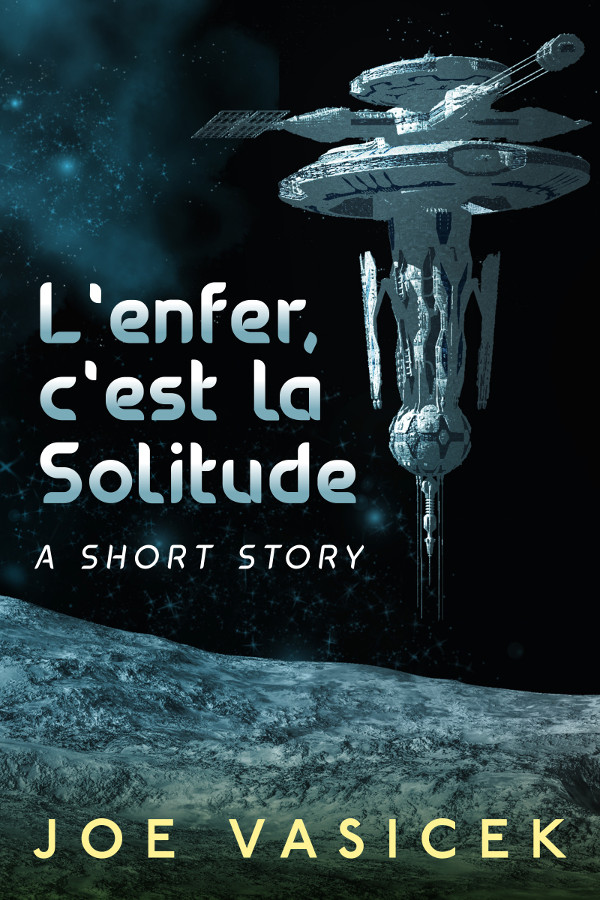
“L’enfer, c’est la solitude” will appear in Perihelion in March or April. And sometime over the summer (probably in June), “The Curse of the Lifewalker” will appear in Sci Phi Journal.

Two semi-pro sales in one week is pretty fantastic, especially after garnering more than 175 rejections over the past two years. I’ve got a bunch more on submission, including several that I haven’t blogged about. I’m averaging about one short story per month, and new markets are popping up all the time, so I don’t expect this to be the last story sale announcement this year. May it be the first of many!

In other news, LTUE 2016 was fantastic. I’m debating whether to write a full blog post about that, because I didn’t take any pictures or tweet anything pithy about it. Still, I came out with a lot of takeaways, especially in terms of writing. The panels I participated on were a lot of fun too, geeking out about stuff like slower-than-light space travel and post-scarcity leisure societies. And it was also really great to see all of my old writing friends here in Utah.

Now I really want to do one of two things: attend another sci-fi convention, and write and submit more short stories!

My LTUE 2016 schedule

LTUEIt’s February, and that means it’s time for Life, the Universe, and Everything! From Thursday to Saturday this week, I’ll be at LTUE in Provo, Utah, my hometown sci-fi convention. If you get a chance to come and attend some panels, here is my schedule:

Thursday

Flashbacks: Yea or Nay?

An in-depth discussion about how to write an effective flashback, and when you should avoid flashbacks entirely.

12:00 pm – 1:00 pm

Know Your Publishing Options

4:00 pm – 5:00 pm

A discussion on how current publishing strategies differ from more conventional strategies, and how to decide which is best for you.

Friday

A Leisure Society

A look at what becomes of people when computers and robots are doing all the work.

4:00 pm – 5:00 pm

Saturday

Slower Than Light Space Travel

The limits of and possibilities for life in space without faster than light travel.

11:00 pm – 12:00 pm


George R.R. Martin may not be your bitch, but I am

Last week, George R.R. Martin surprised no one and disappointed everyone when he announced that The Winds of Winter would not come out before the next season of the Game of Thrones TV series that covers the events in that book. He apologized profusely to his fans, most of whom seemed to take it graciously, at least to his face. However, it spawned some heated discussions in the online communities that I frequent (most notably The Passive Voice) about the implicit contract between writers and reades.

This discussion is not new, even with regard to Mr. Martin. Way back in 2009, Neil Gaiman addressed this issue in a blog post where he stated quite memorably that “George R.R. Martin is not your bitch”:

People are not machines. Writers and artists aren’t machines.

You’re complaining about George doing other things than writing the books you want to read as if your buying the first book in the series was a contract with him: that you would pay over your ten dollars, and George for his part would spend every waking hour until the series was done, writing the rest of the books for you.

No such contract existed. You were paying your ten dollars for the book you were reading, and I assume that you enjoyed it because you want to know what happens next.

So that’s one end of the spectrum: that writing is an art, that it can’t be forced, that trying to force it is wrong, and that writers have no obligation to their readers to force anything. Readers should not stalk their favorite writers or tell them what they should or should not be doing to produce the next book. As Mr. Martin said in his latest post:

Unfortunately, the writing did not go as fast or as well as I would have liked. You can blame my travels or my blog posts or the distractions of other projects and the Cocteau and whatever, but maybe all that had an impact… you can blame my age, and maybe that had an impact too…but if truth be told, sometimes the writing goes well and sometimes it doesn’t, and that was true for me even when I was in my 20s.

On the other end of the spectrum, we have Larry Correia. Two days after Mr. Martin announced that The Winds of Winter would not be finished in time for the TV series, Mr. Correia announced his own plans for the year: which of his books are coming out, which books he plans to write, which project he’s going to collaborate on, and which conventions and events he will (or more notably, will not) be attending.

I don’t know whether he meant this as a dig at Mr. Martin specifically, but he included the following statement:

To all those sensitive artist types who whine about how they can’t rush art, and can’t get any writing done, oh, BS. Quit your crying, put your big girl panties on, and treat it like your job. Because it is a REAL JOB. And like all real jobs, if you don’t work then you shouldn’t GET PAID. So shut up, quit screwing around, and get back to work.

The part that really stood out to me, though, was his announcement that he would not be at DragonCon or GenCon this year:

I’m skipping DragonCon and GenCon this year, which pains me because I love those, but again, I’m trying to up the novel production, and all those cons in a row over the summer kick my butt.

I found it interesting because George R.R. Martin is well-known as a frequent convention attendee, to the point that by his own admission attending these conventions is his “way of life.” Larry Correia knows that his writing productivity takes a hit when he attends too many conventions, but George R.R. Martin either doesn’t know or has chosen to prioritize attending fannish events over his own writing.

This made me curious about Mr. Martin’s writing productivity, so I did a little digging and found the following figures, calculated by his fans:

grrm_wordcount

Those numbers are rather stunning. He averaged only 200 words a day when writing A Dance with Dragons? Just for reference, this blog post is about seven hundred words so far, and I’m writing it while taking a break from my other writing (word count so far today: 1,100 words, and that’s a little low). Even if we allow for five drafts written at the same speed, five drafts still only comes to 1,000 words a day.

Now, I do think Mr. Gaiman makes a good point that it is neither healthy nor helpful to try and micromanage everything that a writer does. We can’t spend every waking hour working on the next book, and even if we did, it probably wouldn’t turn out as well, because refilling the creative well is an important part of the writing process. And I also have to admit that if you ran a similar calculation on my own books (especially the early ones), you would probably find some similarly embarrassing figures.

(Though to be fair to myself, I tend to have multiple irons in the fire at any given time, so a straight start date to publication date calculation doesn’t tell the whole story—and it probably doesn’t tell the whole story with George R.R. Martin as well. But still, even if those figures were twice as high, they would still be absurdly low for a working writer.)

When Mr. Gaiman and Mr. Martin say that the writing “comes when it comes” and there’s nothing they can do about it, I think they’re wrong. Dead wrong. Writing is an art, but it is also a craft. It can’t be forced, but it can be structured. Mr. Correia has evaluated how productively he writes and structured his convention-going plans accordingly. Has Mr. Martin?

I also think they’re dead wrong about the writer having no obligation to the reader. That’s total bunk. Reading is an act of collaboration between the writer and the reader: without readers, stories would never exist. They would just be markings on a page, or electrons on a drive, or at best ideas and daydreams in the writer’s head. If a tree falls in the forest, does it really make a sound? If a book is never opened, does it ever tell a story?

Part of this may be the difference in perspective between indie writers and traditionally published writers. In the traditional system, writers were paid an advance on royalties by their publishers. The contract also allowed for royalties, but those figures were set so low that most books never earned out their advance. Publishers made up for it by raising the advances for the writers they wanted to keep.

In contrast, indie writers live and die by their royalty checks. Had a good month? Congratulations, you can afford to eat. Had a bad month? Tsk, tsk. Better hurry up with that WIP of yours, because the longer it takes to publish it, the longer it takes for you to get paid.

But even for the fantastically successful writers who never have to worry about how they’ll pay their bills, I still believe that they have as much of an obligation to their readers as the rest of us. Without readers, we would not be able to do what we do. Without readers, it would be impossible to pursue writing as a career. We all want to live the dream, and the only way to do that is by treating our readers well.

So George R.R. Martin may not be your bitch, but I most certainly am. Writing is not something that happens only sometimes: it’s my job, and I do it every day. And as for accountability, I absolutely feel that I’m accountable to my readers. They are the whole reason I am able to do this in the first place. If that makes me their bitch, then so be it.

Playing with Tropes: Pragmatic Villainy

So as part of my effort to blog more often, I’ve decided to bring back the trope posts. If you’ve been reading this blog for a while, perhaps you remember the Trope Tuesday series that I used to do. Those were mostly just a rehashing of each trope’s tvtropes page, with a bit of commentary at the end. For this new series, though, I’m going to assume you’ve already read the page and are familiar with the trope, and focus on the commentary. I’m calling this series Playing with Tropes, and I’ll do a new post on the first and third Monday of each month.

To start off this new series, I’d like to take a look at Pragmatic Villainy. There’s something especially chilling about a villain who not only possesses power, but knows how to wield it too. In fact, one of the scariest villains is the guy who rises up the ranks through sheer ruthlessness and ambition, starting as an underling and rising to the top. These villains know how to inspire and manipulate their followers, how to use their limited resources efficiently, how to form secret alliances and backstab their enemies, and how to keep a strategic perspective while making brilliant tactical plays. It doesn’t matter whether they command an empire or whether all they’ve got is a cargo-cult following on some far-off backwater. No matter where you put them, these are the guys who are truly dangerous.

It’s worth pointing out that there are a lot of figures from history who fit this trope. A badass colonel when the French Revolution began, he took advantage of the chaos to rise to power, declaring himself emperor and restoring order to his broken country. He then took his armies and conquered nearly the whole of Europe and the Mediterranean, destroying the Holy Roman Empire, invading as far as Egypt and the Nile, and leading his troops through the gates of Moscow before suffering defeat before the Russian Winter. Ever the pragmatist, he developed the modern canning process in order to supply his troops with food. And even after the European powers crushed his armies and exiled him to the island of Elba, he still found a way to escape and very nearly did it all again.

And Napoleon is by no means the most prominent historical example. Hitler was extremely pragmatic, and probably would have won the war if he’d actually listened to his generals and not interfered with their ability to do their jobs. Stalin was also quite pragmatic, identifying and removing his rivals and ruling with an iron fist. Today, Vladimir Putin and Xi Jinping are some of the best examples of this trope.

Sometimes, it’s difficult to tell whether a pragmatic villain is really a villain at all. This is because pragmatic villains often see evil as a means, not an end. You won’t see a lot of gratuitous puppy-kicking with these guys—in fact, you may even see them pet the puppy for the cameras… before quietly taking it out back to skin it.

That’s not to say that pragmatic villains are more redeemable than your average big bad. Far from it, in fact. As Darth Vader put it, “if only you knew the power of the dark side!” In the clash between good and evil, evil often has the upper hand right until the middle of the third act. Even when evil doesn’t have the upper hand, the old poem often applies:

Might and Right are always fighting
In our youth it seems exciting.
Right is always nearly winning.
Might can hardly keep from grinning.

—Clarence Day, “Might and Right”

To really pull off a pragmatic villain, it’s important to make sure that your villain is truly evil. Grand Admiral Thrawn from the old Star Wars Expanded Universe was a great example of this, as was Admiral Ysanne Isard. Even with limited resources, they pulled off some brilliant moves: Thrawn by placing a cloaked warship beneath a planetary shield, to make it appear that he had shield-busting weapons, and Isard by spreading a lethal pandemic that, while curable, was extremely expensive to treat, thus spreading panic and instability as everyone fought over the cure. Yet in spite of their pragmatism, it was clear that neither of them would stop at nothing in their rise to power.

What’s really awesome is when a pragmatic villain manages to pull off a Xanatos Gambit. In fact, pragmatic villains are the only kinds of villains who can pull that kind of gambit, simply because of all the planning and foresight that must necessarily go into it. For the same reason, there tends to be a lot of overlap between this trope and the Chessmaster.

When a villain falls short, it’s often because they were lacking in this trope. A huge example of this for me was The Hunger Games. When the villains in that book backpedaled after Peta and Katniss threatened to kill each other, I pretty much threw the book at the wall. The kind of people who can be manipulated by angsty lovestruck teenagers are not the kind of people who rise to power in a totalitarian dictatorship. And while there’s certainly a place for B movie villains, the Evil Overlord List exists for a reason.


Resolution: 10k in 2016

Back in 2012, I set a resolution to write 10k words of fiction in a single day. I had read Rachel Aaron’s semi-famous blog post about it, and decided to give it a shot myself. The most I managed, however, was a handful of 5k writing days—impressive, but still far short.

In the years since, my writing pace has slowed down a lot more than I would like—not because of writing-related reasons, but because of things like procrastination, poor time management, and general disorganization. Well, it’s time for a change, and the new year seems like the best time to shake things up.

Rather than set a goal like “write every day” or “write X,XXX words per week,” I think this goal will do a lot more to put me in the right direction. It’s the difference between setting a goal to go to the moon vs. put something new in orbit every few months. When NASA set the moon as their primary goal, it not only provided them with the single-minded focus that they needed to get stuff done, but it led to a tremendous amount of scientific and engineering breakthroughs in the process. I’m hoping that something similar will happen with me.

So here’s the deal:

I can type at a maximum speed of about 100 WPM. Logistically, that means that the absolute minimum time needed to physically hit 10k words is 100 minutes, or 1:40 hours. That’s typing at top speed with no breaks, no mistakes, and no time to slow down and think.

I’ve measured my writing in the past, and found that my typical fiction writing speed is between 800 and 1,000 words per hour. To hit 10k words at that rate, I would have to work for an excruciating 10 to 12 hours a day—and that’s pure writing time. It doesn’t include things like breaks, water cooler chats, dinking around on social media, or any of the numerous other ways that regular employees waste time while on the clock.

Clearly, if I’m ever going to hit 10k words in a single day, I need to increase the speed at which I write. But how?

writingrate_by_starttimeWell, I know from my writing log experiment that the time of day doesn’t really affect my writing speed. That means I can start as early as I need to, and the earlier I can start the better. So that pretty much sets up the first step to achieving this 10k goal:

Step 1: Start off each day by writing as soon as possible.

writingrate_by_durationFrom the writing log, it looks like I tend to write fastest in short sprints that are less than one hour. That makes sense: the longer the writing session, the easier it is to get distracted and fall into the procrastination trap.

I have a hunch that the best way to increase my writing speed is to write in short, focused bursts. I’ve never actually tried to limit my writing time before, but it seems that I could really achieve a lot more focus by doing so. It will take some experimentation to figure out the optimal session length, but judging from the data it will probably be less than one hour.

Step 2: Increase speed by writing in short, focused sessions.

Obviously 10 to 12 hours of pure writing time is unreasonable. Even without a day job or other time obligations, burn-out would be a major issue. A much more reasonable amount of time to plan for would be 4-6 hours of pure writing time per day.

At 6 hours, to reach 10k words I would have to write at about 1.6k words per hour, which is reasonable. At 4 hours, I would have to write 2.5k words per hour, which is a lot tougher but still well below the 6k WPH physical limit, especially if I’m writing in short, focused bursts. From this, it’s not difficult to derive the next couple of steps.

Step 3: Increase average writing speed to 2,000 words per hour.

Step 4: Structure each day to achieve 6+ writing sessions.

The real trick to achieving this, as Rachel Aaron and numerous others have pointed out, is to take care of all the non-writing things that make the writing possible. This involves having an outline of some sort, or at least some idea of what is going to go on the page.

I’m a pantser, so I don’t write detailed outlines. However, I’ve found that it can help a lot to sketch out the next few scenes before I write them, and to browse tvtropes like a menu. In addition, long walks really help me to flesh out the story in my head. Without these pre-writing activities, the blank page can be really oppressive.

In more specific terms, I think it’s reasonable to allot 1-2 hours each day to pre-writing activities. Anything more than that would encroach on my actual writing time. Fortunately, I can usually hit two birds with one stone: for example, using my time on tvtropes to find material for blog posts, or outline the next few scenes in my head while hiking or exercising. But it’s important to make time for these things.

Step 5: Spend time each day in pre-writing activities for the next day.

These five steps seem like a good place to start. I’ll post them on my wall and revisit them in a month or so to see how they’re working out.

Ten thousand words in a single day is going to be tough, but if I can hit it at least once this year, I think it will remove a major block in my head and allow the words to really flow. It’s not just about writing faster, it’s about proving to myself that this is something I can do, and to use that as motivation to accomplish much more.

Best of luck with your own resolutions in 2016!

Response to Steve Davidson on Reconciling with the Puppies

So my last blog post about the Sad Puppies has turned into a kerfluffle of its own, which has been very interesting to watch as it unfolds. Mike Glyer of File 770 linked to it, Lou Antonelli’s File 666 picked it up, and Steve Davidson of Amazing Stories wrote a lengthy response to it, which I think is deserving of a response on my part.

Mr. Davidson’s post is interesting, and worth reading. We obviously don’t see eye to eye on a number of things, but it would be rather petty to go through our disagreements line by line. Instead, the part that I want to respond to is his call to action at the end:

Want to reconcile?  Here’s what puppies must do.

1: Stop scamming the system.  If you want to recommend works that you think are worthy of the award, go ahead and do so.  But drop the political agenda (you’re dragons are imaginary) and eliminate the hateful, snarky commentary

If you’re looking for “hateful, snarky commentary,” I’m sure that you’ll be able to find it. On the fringes of both sides, there are a lot of people with blogs and strong opinions. I’d count myself as one of them—while I align with the Sad Puppies, I’m not a leader or organizer by any stretch, just another guy with opinions and a blog. Don’t be so quick to look for ammunition, because there’s a lot of it lying around.

Kate Paulk, one of the Sad Puppy organizers, has pointed out that Sad Puppies 4 is open to nomination suggestions from anyone, which appears to be what you’re calling for. And honestly, I think a lot of us don’t want to see conservative writers edge out everyone else so much as to see them go head to head with more liberal writers on a more equal playing field. It’s not about slaying imaginary dragons so much as breaking down walls.

So on this first point, Mr. Davidson and I tend to be in agreement. This seems like a reasonable step for reconciliation, and it’s one that the Sad Puppies 4 already appear to be taking.

2: Stop attacking the very people who are offering you a bridge

If a bridge is being offered, I’m willing to take it. If people are just trying to get the last word in edgewise, which was the vibe I personally got from Mr. Martin’s original post, then it will probably just lead to more kerfluffles. Then again, if everyone’s fighting to get in the last word, the squabbling will never end, and while that may make for good sport, it makes for poor reconciliation. So again, fair point.

3: Please learn a little bit about the history of Worldcon and the Hugo Awards

I’m not entirely convinced that the Hugo Awards will continue to hold the same influential place in fandom in the next few years. Even with last year’s massive turnout, there were less than 6,000 ballots cast. With those low numbers, it wouldn’t take much for a rival convention to organize their own awards and eclipse the Hugos in short order—especially if a large contingent of fandom becomes disaffected.

This is why I think it’s important to distinguish between the Sad Puppies and the Rabid Puppies. A useful analogy can be drawn from Star Control II: The Ur-Quan Masters:

These are the Ur-Quan Kzer-Za. They want to make the galaxy safe by enslaving all intelligent life, either by encasing their home worlds in impenetrable slave shields, or by enlisting them as Heirarchy battle thralls to conquer and enslave other species.

These are the Ur-Quan Kohr-Ah. They want to make the galaxy safe by “cleansing,” or exterminating, all intelligent life. They are totally without mercy and cannot be pacified.

The Kzer-Za and Kohr-Ah are locked in a civil war over control of the Sa-Matra, an ancient precursor weapon that will enable the victor to conquer the galaxy. If you don’t find a way to stop them in time, then the Kohr-Ah will win the civil war and use the Sa-Matra to exterminate everyone.

The Sad Puppies are like the Kzer-Za, the Rabid Puppies are like the Kohr-Ah, and the Hugo Awards are like the Sa-Matra. The Rabid Puppies want to use the Hugo Awards to burn down the fan community, whereas the Sad Puppies want to reform the Hugo Awards to make Science Fiction less about political correctness and more about telling good stories.

Now, I am not a Sad Puppy spokesperson, so this may not be the most accurate or flattering analogy. Fellow puppies, please correct me if I’m wrong. But it’s worth pointing out that in the Star Control series, the Ur-Quan ultimately become pacified and join the New Alliance of Free Stars. This only happens after the Kohr-Ah have been defeated.

I think that’s what most of the Sad Puppies ultimately want: to have a place with the rest of fandom, where even if we sometimes have heated disagreements (has there ever been a time when all of fandom was in agreement about anything?), we aren’t cast out as “racists,” “Nazis,” or “misogynists,” as happened with Puppygate 2015.

The Rabid Puppies, on the other hand, just want to watch the world burn. And the more vociferous the rhetoric becomes, the more that it plays into their hands. Speaking as a Sad Puppy sympathizer who watched the 2015 Hugos from the sidelines, after all the abuse that I saw my friends receive, it kind of made me want to burn down the Hugos too.

You want to defeat the Rabids? Then reach out to the Sad Puppies, find commonalities with us, and make an alliance. If we can show the world that Science Fiction and Fantasy brings us all together in spite of our ideological differences, then all of fandom will win.

And so regarding Mr. Davidson’s third point, I don’t think it’s about respecting the prestige of the awards so much as listening to and understanding the other side of fandom. And I’ll admit, I can do a better job listening to the side of fandom that sees the puppies (sad or rabid) as the enemy. If they can return the favor, I think that will go a long way.

4: If you want to be counted as Fans, then be Fans.  Fans who care attend Worldcon, nominate their conscience and attend the business meeting to effect change they think is needed.  They work WITH and within fandom – they do not set themselves up as a cabal that engages in fear and hate.

If that’s a challenge to be more involved in the Hugo Awards, then it’s one that I can accept. In 2015, I largely watched from the sidelines, and if I do the same this year then my opinion is pretty empty. I do count myself as a part of fandom, and I can respect the call to put my money where my mouth is.

I’m not entirely convinced that “no one controls [the Hugos].” Overtly, of course not, but there are indirect ways to accomplish the same thing, through whisper campaigns and the manipulation of cliques. But as Mr. Davidson points out, it’s hypocritical to criticize that without also trying to get involved. And if that’s the invitation he’s extending, I am willing to accept—no hate required.

George R.R. Martin and Christmas Puppies

Sad-Puppies-4So it’s not yet 2016, and the first salvos in the Sad Puppies 4 campaign have already been fired, in the form of a kerfluffle over on George R.R. Martin’s blog.

For those of you who haven’t been following Sad Puppies, I can’t say I blame you. It’s basically an ongoing civil war within Science Fiction & Fantasy fandom, between those who believe that the genre should serve the cause of social justice, and those who believe that there should be room for writers on all sides of the political spectrum—that it should just be about telling good stories. Last year, the Sad Puppies (the ones who believe it should only be about the stories) swept the nominations for the Hugo Awards, the (onetime) most prestigious awards in the SF&F genre. The resulting brouhaha was not pretty.

Last year, George R.R. Martin was very aggressive in attacking the puppies. That’s what makes his latest puppy-related blog post so interesting. In it, he basically calls for an end to “puppygate” and for everyone to just get along. In his own words:

The last thing I want… the last thing anyone who truly loves science fiction, fantasy, and fandom would want… would be to have to go through the whole thing again in 2016. Whatever your view of how the Hugo Awards turned out at Sasquan, I think we can all agree that we would like MidAmericon II’s awards to be more joyful, less rancorous, less controversial.

Now, I don’t disagree with Mr. Martin’s sentiment. I too would like to see reconciliation and de-escalation of the ugliness that we saw from both sides in 2015. And to be fair, Mr. Martin does give a positive characterization of what’s going on right now with Sad Puppies 4. That’s a good first step.

The trouble is, you don’t achieve reconciliation by shouting at the other side to lay down their guns first. You achieve it by hearing and acknowledging their grievances. You might not agree that those grievances need to be rectified, which is fine—that’s what negotiations are for—but you do have to make an effort to listen to the other side. And it’s clear enough that Mr. Martin is not listening.

The core of the Sad Puppies movement is a rejection of elitism. In contrast, Mr. Martin’s position is that there are fans and there are Fans. Fans like him, for whom every aspect of their lives revolves around Science Fiction and Fantasy, should have more control, more respect, more ownership—in fine, they should matter more to the genre than the other kind of fans. When pressed, of course, he denies that any part of fandom is any better than the others, but that’s not what comes through in his other positions. “Separate but equal” is the phrase that comes to mind.

The problem here is that Mr. Martin wants to have his cake and eat it too. He wants the Sad Puppies to lay down their guns, but he doesn’t want to lay down his own. If he were genuine about burying the hatchet, he would acknowledge his own elitism, acknowledge that this is a grievance that the Puppies hold against him, and either recant his position or say “we’re going to have to agree to disagree.”

Personally, my position is the opposite of Mr. Martin’s. I think that SF&F should be a big tent that privileges or denies no one—that everyone who calls themselves a fan of the genre should be on equal grounds. After what happened in 2015, I’m as disgusted with the Hugo Awards as Feynman was disgusted with honors and epaulettes:

Am I willing to agree to disagree on that point? Sure, so long as I’m not cut out of the table—so long as I’m not branded a “racist,” or a “misogynist,” or a “neo-nazi” for aligning with the Sad Puppies. But the puppy-kickers and their SJW allies have deliberately mischaracterized us since the beginning, and I have no doubt that they will continue to do so in 2016.

Mr. Martin, if you’re reading this and if you’re genuine in your desire to avoid another “puppygate,” please don’t try to passive-aggressively handwave us away. I applaud your sentiment and believe that your heart is in the right place, but reconciliation requires genuinely listening to the people you disagree with.