Why Extra Credits is right (and couldn’t be more wrong)

It is rare that I see something that truly makes me outraged. As trendy as it is these days to raise your fist and shout at the world, that’s something I generally try to avoid. But recently, I saw something that I just cannot let fly without addressing it directly.

It’s this:

The Good

Extra Credits gets it right that modern politics (in particular, American politics) is a winner-take-all game for the independent vote. On that point, they’re spot on. Elections are indeed won on the marginal voters, exactly as they state.

Approaching political systems from a game design perspective is actually quite brilliant, and they do a good job of laying out the basic rules. Players start with a limited number of action points, and a (relatively) fixed number of victory points. The key to winning is to use your action points to grab the victory points that are in play—or to prevent your opponent from doing so.

My problem with this video isn’t with the concepts they lay out. It’s with the concepts they miss—and how those concepts completely overturn the examples that they give.

The Bad

First, they completely miss how the game board actually works. There isn’t a single game board on which both sides play. Rather, each side has their own game board, which may or may not accurately represent reality. Information shortfalls cause players to draw up an inaccurate gameboard, and thus waste action points by spending them poorly.

That’s exactly what’s wrong with the example at 7:51. President Trump didn’t win by “growing the previously tiny fear of refugees circle,” he won by recognizing that the Washington establishment was completely ignoring a large cohort of marginal voters. They didn’t even show up on the game boards. Over time, Democrats and Republicans became so far removed from their voting base that their politicking ceased to represent reality.

It all goes back to the Tea Party. Actually, it all goes back to Woodrow Wilson, with significant turning points at FDR, Social Security, Clinton, and NAFTA, but the Tea Party is a good place to start.

As our first black president, Obama was considered sacrosanct. He received a Nobel Peace Prize before he set foot in the White House, which is highly ironic considering how he went on to become the first US president to be at war every day of his presidency. But I digress. The point is, he was held above reproach. Anyone who criticized him was immediately branded as a racist. After all, how could you possibly attack our first black president??

As a side note, this is why the quip at 10:20 is so damned infuriating:

Luckily, elections aren’t the only battlefield in politics. The United States of America isn’t a “sit down and shut up, you lost” kind of democracy.

From 2008 to 2016, that’s EXACTLY the kind of democracy it was! Obama even said as much: “Elections have consequences… I won.

Obama’s response to the Great Recession was a massive increase in government spending, and an explosion of the national debt. When the Tea Party organized to protest this, they were painted by their political enemies as racists. This scored the Democrats a cheap victory, but it also distorted their game board. By deliberately mischaracterizing the opposition, they failed to account for them and began to suffer from information shortfall.

The establishment Republicans thought they could win by playing on a game board that matched the one the Democrats were using. Normally, this is a winning strategy. When the political landscape shifts, you don’t want to be stuck playing on yesterday’s board—you want to keep up with the times.

But the Democrats had deliberately distorted their board so that it no longer represented reality. In other words, they began to believe their own lies. The more the opposition pushed back, the more they doubled down, and the more distorted the boards became.

This is where political capital comes in, and it’s something that Extra Credits completely missed. Players don’t just have action points, they also have a certain amount of political capital that acts as a sort of multiplier for their action points. This capital is basically the good will and trust built up with the other side. It takes a long, long time to gain this capital, and once it’s spent, it’s gone.

Obama spent all his political capital in his first term, mostly on the Affordable Care Act. At that point, our politics became deadlocked. Combined with the fact that his game board no longer represented reality, Obama suddenly found himself in a position where he couldn’t get anything done.

The Republicans saw this, and decided to save their political capital instead of spending it. If only they could win a few more seats—if only they could win both the House and Senate—then they could defeat the Democrats. Until then, they’d just have to play along, building their capital until the time came to spend it.

In Obama’s second term, he doubled down on identity politics, playing the race card at Ferguson. This won him some quick victory points, but it also set race relactions in the United States back almost forty years and further distorted the playing board. He also played fast and loose with foreign policy, pandering to the Iranian Mullahs, the Cuban Communists, the Japanese Imperialists, etc. The reason President Trump was able to back out of the Iran deal so easily was because Obama completely bypassed the Senate, which is the only body with the constitutional power to ratify treaties with foreign governments.

All of this combined to create a perfect storm that President Trump rode to victory in 2016. There was a massive reserve of marginal voters who hadn’t had a voice for years, and were completely unaccounted for on the Washington establishment’s game board. By playing identity politics, the Democrats had completely ignored them, and now they were desperate for a champion. That champion was Donald Trump, who—unlike the establishment Democrats and Republicans—was playing on a game board that actually represented the political reality. Furthermore, he had a massive reserve of political capital to draw on—capital that the Republicans had been hoarding for years. The Democrats had already spent all of theirs, not only with Obama, but with the DNC’s primary rigging and betrayal of Bernie Sanders. Suddenly, a bunch of the “gimmie” points slipped out of their hands.

The Ugly

And here we come to the worst part about the Extra Credits video—the part that really gets under my skin. The view of American politics that they present is so distorted by their own ideological possession that it completely lacks all self-awareness. It’s precisely this ideological dogmatism that pushed Donald Trump to victory in 2016, and will most likely push him to victory again. As someone who voted for Obama in 2008, I’ve already decided to vote for Trump in 2020.

Consider the animation. All of the political symbols are blatantly pushing left-wing causes, from the rainbow flag and the neon pink hair to the guns and the female symbols. Why not throw in a Gadsden Flag, just to round things out a bit? Even the thumbnail shows a “person of color” (I really hate that term) in liberal blue scheming against two conservative reds.

If that was all it was, though, I’d roll my eyes and ignore it. But it goes much deeper. Much, much deeper.

Consider how they define civil rights:

Civil rights is the fight for equal treatment under the law and in daily life. Sometimes it’s a defensive battle to ensure that people keep the rights they have, and sometimes it’s a proactive battle, like fighting for people who do not currently enjoy equal status.

Those are two completely separate things. The first is a negative right, the second is a positive right—or in other words, the first is a right from government overreach, the second is a right to government intervention.

The civil rights movement of the 60s was all about tearing down Jim Crow laws on the state and federal levels. These laws enforced segregation and made black second-class citizens. It was not about forcing Christian bakers to bake cakes for gay weddings. Those are two totally separate and incompatible things.

The American Revolution gave us the Bill of Rights, which is essentially a list of things the government is not allowed to do. In contrast, the French Revolution gave us the Declaration of the Rights of Man, which is a list of things that the government is obligated to do. The American Revolution succeeded, while the French Revolution failed. The American Revolution gave us the most powerful and prosperous nation in the modern era, while the French Revolution gave us the guillotine, the Reign of Terror, and two centuries of catastrophic European wars.

But never mind all that. Let’s just throw out these two separate and incompatible things under the same issue banner, and paint everyone who disagrees as opposing “civil rights” entirely:

But what if you’re a conservative candidate? At first, you might look at this and think: “Yikes, barely any marginal votes and the Liberals have this circle on lock! Not even worth trying.” What if you were to spend a few action points here by, say, taking an opposing stance to a current civil rights movement, whether you do that directly by, say, supporting a bathroom bill or indirectly through dog whistle tactics? You might manage to shock the liberal majority of gimmies in that circle, who will then demand a liberal response.

What about the Overton window? The Left has been using it to gaslight conservatives and libertarians for years. Case in point, this video by Freedom Tunes:

If calling the Left on their bullshit is “dog whistle tactics,” then we aren’t even living in the same country anymore—and that’s what makes this so dangerous.

For a democracy to work, both sides need to be able to talk with each other in constructive way, where both sides genuinely hear each other. When that becomes impossible, we fall back to political tribalism, which grows like a cancer, tearing our society apart with political violence and, ultimately, civil war.

If you are so locked into your own worldview and beliefs—so entrenched in your own echo chamber—that you cannot acknowledge what the other side believes about themselves, then we’re done. The United States is over. Our republic has ceased to function. Democracy dies in darkness—not the darkness of bad journalism, but the darkness of ideological possession, which blinds us from seeing each other as we really are.

And this is why Extra Credits’ conclusion is so deeply, horribly wrong:

We are in this 24/7. Even outside the election cycle, a civil rights activist can always push whoever is in office to take action. Exactly how to go about this will probably require a few more episodes to cover.

No. That is NOT the solution. Doubling down will only make things worse—much worse. The only way out of this cycle is to genuinely listen to what the other side is saying, not to force everyone else to listen to you.

We’ve entered a very dark time in American politics, and not because President Trump is a Nazi. The fact that so many people can legitimately believe something so ridiculous is symptomatic of the underlying problem. If identity politics and political tribalism prevail, then the United States will break apart. Whether by secession, insurgency, or some other form of civil war, the American experiment will end, and we will revert back to the cycle of tyranny and chaos that has defined human history since the invention of the sword.

Guns, gold, and food storage. If ye are prepared, ye shall not fear.
Experimenting with social media again

So, it’s come to my attention that I’m something of an “internet hermit.” (thanks J.R.) Which is actually unintentional. I quit Facebook in 2014 and Twitter back in 2016, and while I’m still active on Goodreads, I mostly just use it to post book reviews and keep track of my TBR pile. After I moved back to Utah, the blog went mostly dark, which combined with everything else means that my online presence has practically gone to nothing.

I quit social media for a variety of reasons, mostly having to do with privacy concerns. In the last couple of years, though, my reasons have changed. There’s a fascinating talk on YouTube by Chamath Palihapatiya, one of the founders of Facebook, where he speaks about the negative long-term effects of social media on individuals and societies. His observations are sobering. If you have the time, it’s worth it to watch his talk in detail, but this video does an excellent job of discussing the relevant points:

So with all that said, why am I experimenting with social media again?

Because it’s come to my attention that the people who are looking for me don’t really have a way to find me, and that’s a problem. There’s this blog, of course, but this isn’t the 00’s anymore, unfortunately; people don’t typically go searching for blogs anymore. They search Facebook, or Twitter, or Instagram, or Одноклассники, or whatever social media they happen to use the most. For better or worse, if you don’t have a presence on these platforms, you’re effectively invisible to a whole lot of people.

When I quit social media, I was more concerned about my personal usage of these platforms than my own visibility. Not a lot of people were looking for me back then. There might not be a lot of people looking for me now, either, but I do want to set things up so that as my readership expands and my writing career grows, people have a way to find me.

So here’s what I plan to do: set up social media accounts, link them to my blog feed, and post content primarily through my blog. If people want to interact with me on social media, I’ll log in and interact with them, but my primary home on the internet is going to be this blog.

We’ll see how it turns out. In case you’re interested, I have a Facebook page here and a Twitter account here. If there’s any other social media you think I should have a presence on, please let me know.

Sophie’s Third Choice

“Your wife, or your child? You must choose between them. If you do not, I shall kill them both.”

“Then take me instead.”

“My good man. Did you not hear what I said? If you do not choose—”

“I do choose. I chose myself. Are you going to respect my choice or not?”

“That isn’t one of your choices.”

“Yes it is. You may have the power to take our lives, but you don’t have the power to force me to make such an awful choice. Kill me, and let them go free.”

“Very well. If that is your choice, then I shall kill them both.”

“You think you have power? Life and death is nothing. Liberty is everything. With all your power, you cannot take that Liberty whereby God has made us free.”

“There is no God.”

“Then put that gun to your own head, because when all is said and done, the only power that matters is the power to face your own death manfully; all else is simply cowardice. But if not, know that the day will come when you and I will stand before the judgment bar of God, and I will be called to testify of what you did this day. Then you will weep and wail, and cry for the mountains to fall upon you and hide your face from the wrath of Almighty God. But they will not, and you will be compelled to stand before God with a perfect knowledge of all your guilt, and a perfect memory of all your crimes. Then we will see who has power. Then we will see who is free.”

“You try my patience, son. Try it any further, and I shall kill all of you.”

“Then shoot, and be damned.”

There is always a third choice. There is always a solution to the Kobayashi Maru. Never believe in no-win scenarios.

“Do you have any Republican friends?”

Will Witt from PragerU recently went to New York and asked a bunch of random people this question. The result was this video, and holy heck. I’m not even a Republican, and I’m infuriated.

We have a word for people who don’t tolerate anyone who disagrees with them. It’s INTOLERANT.

We have a word for people who only make friends with people who think and believe exactly the way that they do. It’s CLOSED-MINDED.

We have a word for people who are so convinced that they’re morally superior to everyone else that they won’t even consider an opposing point of view. It’s BIGOTED.

This is why Trump is your president, you intolerant, closed-minded bigots. After eight years of putting up with your side’s hypocrisy, the rest of us got so sick of it that we voted for the one guy who tells it like he sees it.

Trump may be an asshole, but at least he isn’t a hypocrite about it. You, on the other hand…

To be fair, there’s no way to tell how many of the people Will Witt interviewed were as asinine as the people in the video. All we’ve got are a bunch of anecdotes, and the plural of anecdote is not data.

But still. Holy heck.

Thoughts on #AmazonClosed and disappearing KU reads

There are a lot of scandals happening in the indie publishing world right now. The latest one has to do with Amazon deleting KU reads from March: some authors have seen their page reads retroactively revised down as much as ninety percent.

The speculation is that this is connected with Amazon deactivating several customer accounts, allegedly on the basis of those customers accepting free or gifted items in exchange for reviews. It’s also supposedly connected with Amazon’s recent legal arbitration against book stuffing in KU, which scammers use to inflate their page reads. Until now, Amazon has done precious little to push back against endemic scamming in KU.

The best potential explanation for this that I’ve read comes from TexasGirl and PhoenixS over on KBoards. TexasGirl writes:

I think it goes like this:

— An author hires a bot reader to inflate their page reads.
— The bot account opens the book and page reads through it.
— The bot then spiders the sales page for other books like it, to strengthen the association with other books Amazon has placed either as 1: normal also-bots 2: sponsored products
— The bot opens the also bot or sponsored books and reads them too.

This creates synergy between the paid bot book and collaterally botted book. This means the other bot accounts will do the pathway as well, creating more page reads via bots by the bad accounts. It ALSO muddies the waters as to which books hired the bots and which were just secondary opens.

PhoenixS adds:

A good portion of those “bots” may well be incentivized readers. Once a real reader account has been identified as a recipient of incentives either for leaving reviews or for borrowing or for reading — or skimming through — a book, then all their reviews and borrows/reads become suspect. So anything they might borrow, even for their own, real personal pleasure (often within the same subgenre they’re getting incentivized for) would be dinged.

In other words, KU authors who use AMS ads are inadvertently shooting themselves in the foot, as the bots and click-farms use the sponsored links to find legitimate books to borrow (in order to mask their illicit activity). Also, when Amazon deactivated a bunch of customer accounts, they also removed a bunch of legitimate page reads, putting the screws on some of their KU authors.

I have many thoughts on this subject. Personally, I haven’t been affected at all, as none of my books are in Kindle Unlimited. I do feel for the authors who have been hit, though. It takes about two months for book royalties to show up in your bank account, so when you think you have $$$ coming only to have it arbitrarily disappear, it can create some heartburn-inducing cashflow problems. No one likes to be jerked around like that.

In my view, though, this is all just one car of a much larger train wreck.

The big tech companies that comprise the FAANGs all seem to suffer from the same hubris: that the fundamental laws of nature, economics, and human behavior can all be overcome by a sufficiently advanced algorithm. Combined with this is the equally arrogant hubris that they, by virtue of their power and success, have a responsibility to reshape the world in a progressive way, even if that’s not what their users want.

We can see the second part of this hubris in Zuckerberg’s recent testimony to congress. His admission that Facebook bears responsibility for the content on its platform has got to be giving his lawyers multiple aneurysms right now.

The first part is evident in the way Amazon structured Kindle Unlimited. The whole program is rife with perverse incentives, from the zero-sum payment structure of the KDP global fund to KENPC and the All-Star bonuses. Book stuffing, click-farming, and other KU scams are both predictable and forseeable. Instead of restructuring the program, though, or hiring a team to clean it up, Amazon has either denied that any problem exists, or created algorithms to play whack-a-mole with the scammers, often striking legitimate authors in the process.

The dirty little secret is that KU wasn’t created to benefit authors or readers, however, but to benefit Amazon by preventing a rival ebook subscription service from eating into their market share. Hence the exclusivity requirement for KU authors. By tying up the majority of the indie publishing community with exclusivity, Amazon denies the competition the content it needs to get off the ground. Never mind that KU isn’t that great for readers and is downright horrible for authors.

But why all the drama right now? Because this train wreck is headed for a massive cliff: an antitrust suit against Amazon. Between President Trump’s tweets about Jeff Bezos and the “Amazon Washington Post,” and the mainstream media’s neverending crusade against the president, the political winds are shifting in ways that must appear very foreboding in Seattle.

Amazon is cleaning house, and a lot of dolphins are getting netted as a result. One bad apple spoils the whole barrel, and the scammers have been squatting in Amazon’s house for years. But the real train wreck is just getting started, and when it goes over the cliff with the rest of this mixed metaphor, that’s when the fireworks will begin.

As an indie author, now is a good time to be as flexible as possible.

Why I’m moving out of Provo for good at the soonest opportunity

  • Neverending road construction.
  • Corrupt local officials who take kickbacks from the neverending road construction.
  • Massive public transit projects that seek to fix a problem that doesn’t really exist.
  • Incompetant construction contractors who can’t get the job right the first time, and have to redo it five times in as many years.
  • Parking Nazis who ticket local residents for parking on the street, even when their car has a parking permit.
  • Incompetant bureaucrats in city hall who fail to renew parking permits.
  • Insanely bad drivers.
  • Selective enforcement of the law by local police.
  • Attempts by the local police to enforce laws that don’t actually exist, especially regarding front lawn gardens.
  • A hidden tax placed in everyone’s utility bill to pay for Google Fiber, when it turned out the city had lost the blueprints Google needed to install the fiber network, and thus had to pay more than $1 million to map it out.
  • The Google Fiber deal in general. Very bad deal for the city.
  • The fact that most of the rental properties are owned by two or three families, who jack up prices in order to rip off students.
  • Corrupt city officials who grant building permits that violate residential zoning laws in exchange for kickbacks, after ignoring public outcry from local residents.

There are more reasons, I’m sure, but these are the ones I have direct experience with.

Free and 99¢ books for March 2018

Free

Bringing Stella Home

Bringing Stella Home

$14.99eBook: $2.99

When a ruthless Hameji battle fleet kidnaps his sister, James McCoy—a young merchant starfarer untested by war—vows to bring her home. But to save her, he must give up everything he has and become something he never thought he could be.

More info →
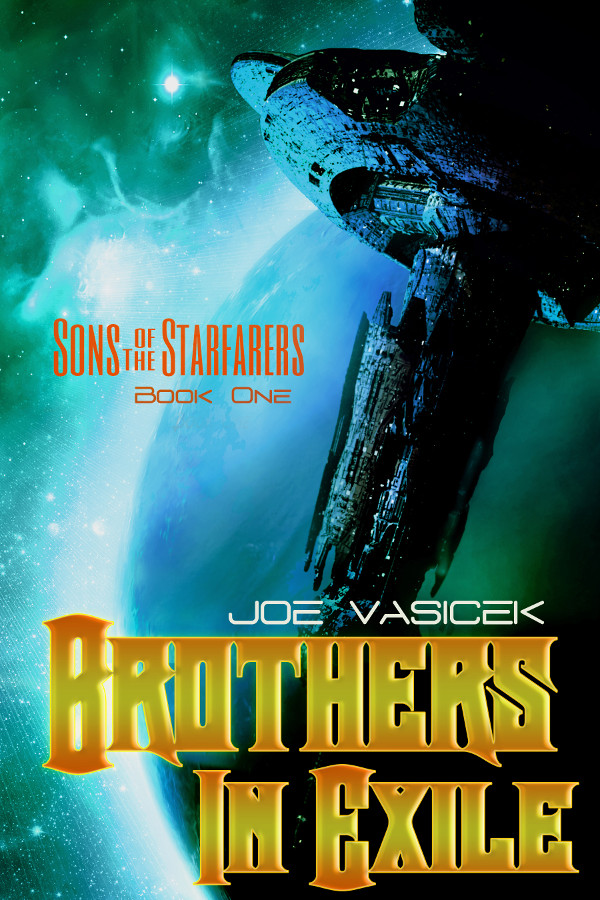
Brothers in Exile

Brothers in Exile

eBook: free!

Isaac and Aaron are nothing if not survivors. Their homeworld lost and their people scattered, all they have left is each other. Then, in the Far Outworlds, they find a dead colony with a beautiful young woman frozen in cryostasis. She is also a survivor—and she needs their help.

More info →

99¢

Desert Stars

Desert Stars

$13.99eBook: $4.99

He is sheikh’s sole heir, a young man raised by desert tribesmen after falling from the stars. She is the sheikh’s most beautiful daughter, promised his hand in marriage—but only if she can convince him to stay.

Together, they must travel to a land where glass covers the sky and men traverse the stars as easily as tribesmen cross the desert. At the ancient temple dedicated to the memory of Earth, they hope to find the answers that will lead them home.

But the call of the stars soon threatens to bring their budding romance to an end. And as the moment of decision draws near, the choices they must make will drive them toward a future that neither can foresee.

More info →
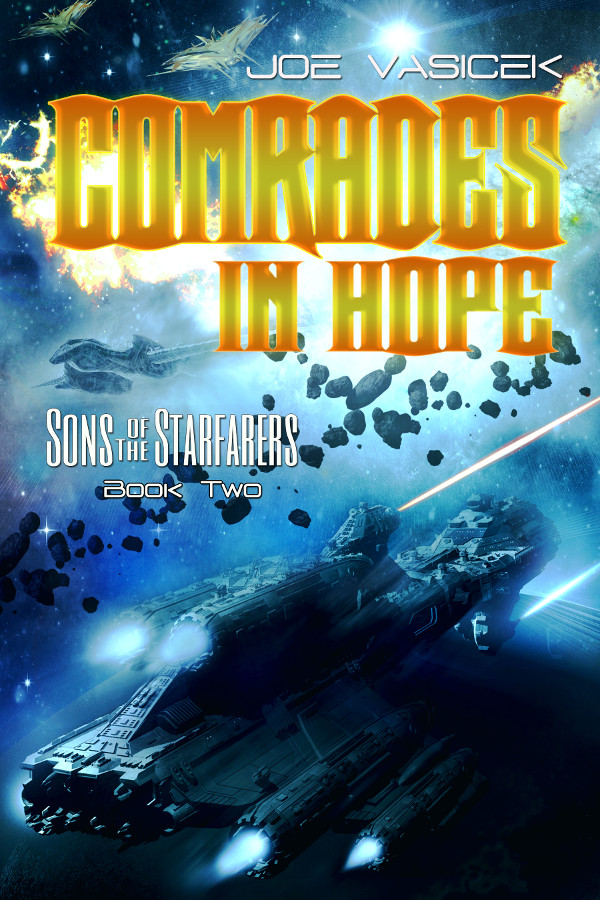
Comrades in Hope

Comrades in Hope

$9.99eBook: $0.99

Isaac and Aaron have joined the war effort, and not a moment too soon. The Imperials are poised to strike at the heart of the New Pleiades and obliterate the ragtag flotilla standing in their way. Aaron always wanted to prove himself, but he was never ready to make the ultimate sacrifice—until now.

More info →