Politically incorrect thoughts on intersectional authorship

I’m subscribed to six or seven short story podcasts, and I’ve noticed a trend on them recently. Before they start the story, they introduce the author by first listing all of the intersectional minority identities that the author qualifies for, like “queer,” “transgender,” “immigrant,” “disabled,” “person of color,” etc.

Whenever story starts off like this, I immediately delete it form my podcast.

I’m a busy guy. I’m subscribed to far too many podcasts to listen to every episode. There’s just not enough time. If I have a reason to skip it, I will.

When the first thing you tell me about the author of a story is where he/she/ze/your majesty falls on the intersectional victimhood stack, that tells me a couple of things. First, it tells me that the editors subscribe to this bullshit idea that victimhood makes you virtuous. It doesn’t.

Second, it tells me that the editors didn’t think that the story could stand on its own. Instead of giving a typical author bio, with a few incidental facts and a cute aside about the author’s wife/kids/pets/plans for world domination, the editors decided to lead with the author’s victimhood status. Because that’s why I should listen to the story. Because victimhood is virtuous, and if you don’t listen to this story after learning just how much of a victim the author is, that makes you a racist sexist transphobic Nazi fascist.

Fuck that.

I’m sure this post will generate outrage among some circles. There was a time when I would try to respond genuinely to such outrage, apologizing for causing offense and vowing to try better to understand, sympathize, and accept the experiences of…

Fuck that.

If it offends you that I automatically delete these sorts of podcasts, go fuck yourself. Seriously. Call yourself an autosexual and see where that put you on the intersectional victimhood stack. I don’t give a shit about your outrage. I couldn’t care less about how triggered you are right now. If that makes me a fascist, so be it. To paraphrase Syndrome from the Incredibles, when everyone’s a fascist, no one’s a fascist. (Which is very convenient for actual fascists.)

By the way, I’m not actually opposed to stories written by immigrants, or lesbians, or transgenders, or people of color. I’ve listened to quite a few good ones. “And Then There Were N – 1” from Escape Pod was really fun. So was “Octo-Heist in Progress” from Clarkesworld a couple of months back. Neither of which were introduced by describing just how many oppressed victimhood classes the author qualified for.

If there’s one thing we’ve learned from the Trump era, it’s that when people call you a racist sexist transphobic Nazi fascist, they really just want to bully you into silence. But all bullies are cowards at heart. If they want to silence you, it’s because they know that they’re wrong.

Can we please return to the time when everyone acknowledged that stories should stand or fall on their own merits, not on the merits of the author? Mur Lafferty did quite a few ISBW epidodes on this, and she’s hardly a right-wing type. By all means, let’s bring all the queers and wierdos along. Science fiction wouldn’t be the same without them. But let’s not use a double standard when it comes to their stories.

After all, that would be racist.

Why my books are no longer available in paperback

All of my books are available as ebooks, but only a few of them were available in print. Until now. If you’ve looked to buy one of my paperbacks, you may have noticed that none my books are available in print. Why?

TL;DR: KDP Paperback sucks monkey balls, and I’m not going to sell a book if I can’t assure my readers that the product will meet an acceptable level of quality.

I originally published my paperbacks through CreateSpace, before they were acquired by Amazon. The books they printed were great, and I never had a problem with any of them. On the contrary, whenever I had a question about the publishing process, their customer service team far exceeded my expectations and helped to shepherd many of my books to final publication.

I learned a lot of things the hard way, and made a lot of mistakes along the way. But that was all on me. When I finally figured out the right way to do what I wanted, I could alway count on CreateSpace to produce a quality product.

Fast forward to 2018. Amazon shuttered CreateSpace and began the migration of all of their books to KDP Paperback. I loved CreateSpace, but I also saw the writing on the wall, and migrated my books early. I also published several new paperbacks through KDP Paperback, using their cover creator program.

The publishing process went about as smoothly as it had through CreateSpace. The customer service wasn’t nearly as good, but I had a pretty good idea what I was doing, and with a little experimentation, I was able to produce a quality product.

Or so I thought.

I always order proofs when putting together a paperback, and scrutinize that proof carefully before approving it. For Heart of the Nebula and The Sword Keeper, I had to go through a couple of proofs before I was satisfied that I’d gotten it right. The most common problem was that the front cover would bleed onto the spine. After a couple of failed adjustments on the KDP Paperback cover creator, I decided to just upload the jpg and not futz with it, letting the program adjust it instead. And for a time, that seemed to work.

For the Star Wanderers books, I did the same thing, letting the KDP Paperback cover creator do its thing without futzing with the placement of the front cover image. A couple of the proof copies had the bleeding problem, but after following a couple of online discussions, it seemed that the consensus was that the proof copies were of lesser quality than the actual customer copies.

That should have been a red flag right there, but I went ahead and approved them anyway, since the bleed was only about a millimeter or so, and I couldn’t justify the expense of another eight proof copies.

Big mistake.

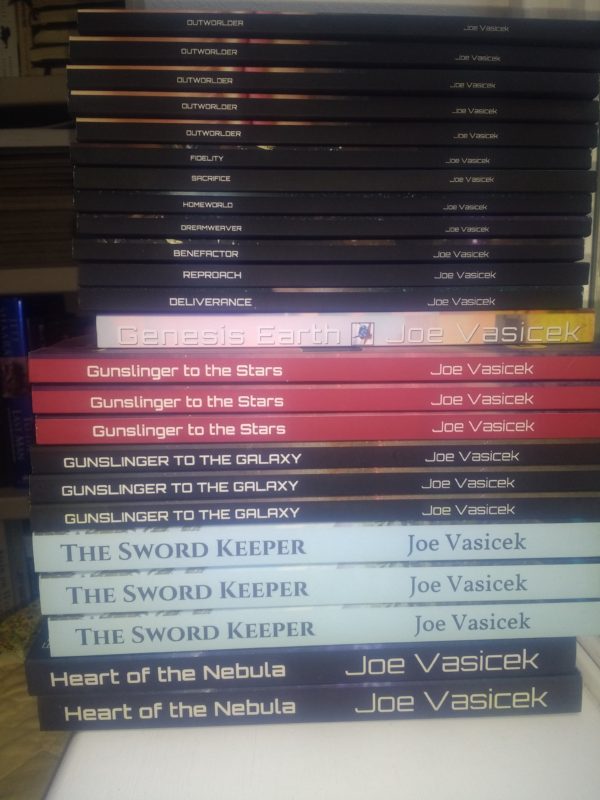
A couple of months later, I ordered about $100 worth of author copies to sell at conventions. This was the result:

Every damn book had the cover bleed problem. Every. Damn. Book. And it wasn’t a small print error, either. The bleed was as much as 3 millimeters on some copies.

Keep in mind that except for Genesis Earth, all of these covers were designed through KDP Paperback cover creator. Also keep in mind that aside from a couple of the Star Wanderers books, this printing error was not present in any of the proofs that I approved.

Genesis Earth was particularly troubling, because that was a book that I migrated from CreateSpace. None of the author copies that I’d ordered from CreateSpace ever demonstrated this printing error. In fact, I’d gone through several proofs to ensure that the front cover image was completely outside of the red zone, to ensure that such a bleed problem would never be an issue.

KDP’s customer service promises that they respond to every issue within 24 hours. That is a lie. My first inquiry received no reply—not even the standard copy-paste boilerplate response that they usually send first.

I waited three days and sent a second inquiry, threatening to email Jeff Bezos and pull all of my books if I did not receive a response within 24 hours. As you can probably surmise, I did not get a response within 24 hours.

I did eventually get a response, and ultimately I did get a partial refund for my books. But by then, I’d had enough.

KDP Paperback produces an unacceptably inferior product. Furthermore, their customer service is terrible. Because I cannot asure my readers that they will receive an acceptable quality book, I have decided to pull all of my paperbacks from KDP Paperback and go through someone else.

It may take a few months to figure this out, in which time, my books unfortunately will not be available in print. However, I think that this will be the best solution in the long run. I’ve heard good things about Ingram Spark, so I’ll check them out, but it may take a while to do things properly.

And this time, I’m not going to take any half measures.

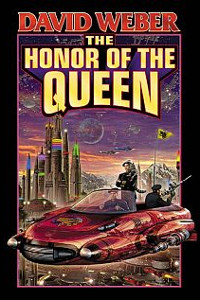
The Honor of the Queen by David Weber

I really enjoyed On Basilisk Station, the first book in the Honor Harrington series, and the second book did not disappoint. It had all of the stuff that made the first book so amazingly awesome, plus tons more action and political intrigue.

The dynamics in The Honor of the Queen were a bit different, in that Honor has definitely proved herself by now and is no longer the underdog freshman starship commander in the armpit of the galaxy. This time, she’s been given a small fleet, and assigned to an important diplomatic people with a critical potential ally of the Star Kingdom of Manticore.

But she still has a lot of proving to do, this time to the misogynistic people of Grayson who do not believe that women are capable of military command. If that sets off red flags, don’t worry: David Weber is no SJW, and this book was written long before “protect wamen” was a thing. The misogyny on Grayson has nothing to do with mansplaining, manspreading, or toxic masculinity: rather, it’s a culture that treats women literally as property, with none of the rights that women currently enjoy in the West.

One of the things that makes the Honor Harrington books so fantastic is the meticulous attention to detail. The history of Grayson is complex and nuanced, and presents a consistent and believable explanation for why the culture developed the way it did. Weber’s attention to detail extends beyond the world building to just about every aspect of the story: the characters, tactics, politics, and everything else. There’s a bit of handwaving when it comes to the technology—this is science fiction, after all—but not very much. Certainly, there’s no handwaving when it comes to human nature.

The part of the story that I found most interesting was the political intrigue between the Star Kingdom of Manticore and the People’s Republic of Haven. Honor’s enemy counterpart in the Havenite fleet is no pushover—in many ways, he’s just as sharp and capable as she is. Even though the People’s Republic of Haven are clearly the bad guys, I came away from this book thinking that Weber could easily write a book with the Havenite commander as the protagonist, and it would have been just as good. There are definitely bad guys and good guys, but they’re all still people, with reasons for believing the things that they do, right or wrong as they may be.

My only criticism of this book is that the ending felt a bit Mary Sue-ish with all of the accolades and promotions that Honor Harrington received. I still really enjoyed it, but if I didn’t already love the character, there were a couple of things that would have made me roll my eyes. Then again, truth is stranger than fiction, and I’m sure there are people who have received just as many honors and accolades as Honor Harrington did at the end of this one.

All in all, an excellent continuation to the series that builds on the first book and leaves plenty of room for more, especially in the rivalry between Manticore and Haven. Since that’s one of my favorite things about this series so far, I’m very interested to see what happens in the next book!

Would you kill baby Hitler?

So the March for Life happened recently, and Ben Shapiro did a live show where he used a thought experiment about going back in a time machine to kill baby Hitler to make a pro-life argument. His argument was that you shouldn’t kill baby Hitler; instead, you should raise baby Hitler in a more loving home so that he doesn’t grow up to be Hitler. In other words, you shouldn’t kill baby Hitler because babies are always innocent, and killing babies is wrong. Fair enough.

But the left immediately went crazy over this argument, calling Shapiro a nazi for defending Hitler, or just making fun of him for coming up with such a ridiculous idea. Never mind that it’s a thought experiment. Never mind that it raises valid moral and ethical questions, which those on the far left refuses to address.

Everything you need to know about this controversy is basically summed up in the video above, where Sargon of Akkad does a point-by-point critique of The Young Turk’s cringeworthy reaction. At this point, Sargon’s video has more views than TYT’s original video, and YouTube is deleting downvotes on the original.

I think Sargon is right. I think that Ben really hit a sore spot on the left, because they’d all kill baby Hitler if given a chance, and they don’t want to admit it. Not only is it bad optics, but it also points out the lack of moral foundation or principles on the far left. After all, if they’d go so far as to kill a baby, simply because of what that baby might turn out to be, what else are they going to do?

For the left, Nazis aren’t merely on the extreme end of the scale of good and evil; they are the scale. This is what gets to me. Black Pigeon Speaks put out a video on YouTube that has since been taken down, because it is true, and because it gets to the heart of this issue. Civilizations always have founding myths, which accomplish three things:

  1. they tell the civilization’s origin story,
  2. they define, in cultural terms, the difference between good and evil, and
  3. they describe what the civilization holds to be sacred.

For example, traditionally in the United States, our founding myth has to do with the founding fathers, the Constitution, and the Revolutionary War. Our civilization was founded by pilgrims and pioneers, who lived under British rule until the King became tyrannical and we rose up to declare our independence. In cultural terms, good and evil are set out clearly in the Declaration of Independence, the Constitution, and the Bill of Rights. The thing we hold most sacred is our liberty.

You can also see this reflected in our coinage:

  • E Pluribus Unum — “from one, many,” harkening back to the Revolutionary War and our civilization’s origin story.
  • In God We Trust — recognizing the Judeo-Christian values that informed our founding documents, including the Constitution and Bill of Rights.
  • Liberty — the thing that American civilization holds most sacred.

In the Black Pigeon Speaks video which has since been taken down, he argues that Western civilization adopted a new founding myth after World War II, and that this new founding myth is responsible for much of the cultural and moral decay we’ve experienced in subsequent decades. In this new myth:

  • our civilization was born out of the horror and devastation of the world wars,
  • Nazism became the definition of evil, and
  • the Holocaust became the most sacred aspect of our civilization.

The Nazis were clearly evil. I’m not disputing that, or the reality of the holocaust. Killing six million Jews, Roma, Jehovah’s Witnesses, political dissidents, and mentally and physically handicapped in gas chambers designed specifically as engines of mass genocide is incredibly heinous, on a scale that is difficult to comprehend. There is no downplaying or excusing that kind of horror.

But without defending the Nazis in the slightest, that doesn’t make them the most evil regime in history, or even the most evil regime of the 20th century. Stalin was just as genocidal, possibly even more so, and I would argue that he was worse than Hitler. Mao was arguably worse than both of them.

Hitler wasn’t just a monster: he was a man, like any of us. Jordan Peterson is right: we should never make the mistake of thinking that we’re morally superior to the Nazis, because if we were in similar circumstances, we’d probably make similar choices. That’s simply the reality. Hitler isn’t the boogeyman, and the Nazis are not the definition of evil. They fall on an extreme end of the scale of good and evil, but we should never mistake the Nazis for the scale.

Which brings us back full circle to the pro-life argument. How do we know that we aren’t more evil than the Nazis? The Nazis exterminated the Jews out of fear and hatred, but we’re killing our own babies in many cases out of nothing more than apathy. The Nazis at least believed that the Jews were behind the collapse of German civilization, and used that argument to justify their argument that Jews were non-people. What argument do we use to justify treating the unborn as non-people? Certainly not a scientific argument. And we’ve aborted ten times as many victims of the Holocaust, so it’s not like the Nazis were worse in terms of scale.

I genuinely believe that future generations will look back on us with the same horror and revulsion that we look back on the Nazis. And honestly, I can’t say they’ll be wrong.

So would you kill baby Hitler? It’s a valid question that raises some very important points. Not only would I not kill baby Hitler, but I wrote a short story about a time traveler who stopped Hitler not by killing him, but by altering the course of history in a very different way. If you haven’t already, you should check it out: “Killing Mister Wilson.”

Anyways, those are my thoughts on the subject. Also, TYT has hit a new low for cringe. I suppose that’s par for the course when your network is named after a genocidal regime.

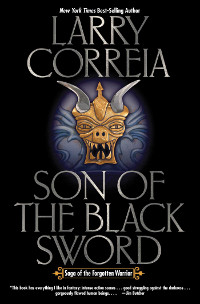
Son of the Black Sword by Larry Correia

This was a damn good book. One of the best epic fantasy books I’ve read. I started listening to it on the Baen Free Radio Hour, where it’s currently being serialized, and decided to pick up a copy. It did not disappoint.

This book reminds me of Brandon Sanderson’s Mistborn, in the sense that it takes place in a dystopian fantasy world where things didn’t turn out all that well after the hero of prophecy saved the world. It’s not difficult to imagine that after hearing Brandon pitch his book, Larry turned to the guy next to him and said “hold my beer.”

That said, Son of the Black Sword is very different from Mistborn. For one, it’s brutal and violent in a way that Mistborn never was. I wouldn’t exactly call it grimdark, since there is still an underlying sense of honor, and even a fair bit of optimism if you dig deeply enough.

However, you really can tell that Larry gets the kind of person who does terrible, violent things for a living. He knows how those people think, he knows how they see the world, and he knows how they interact with each other. He also knows what world dominated by those people looks like, which is definitely the world of Son of the Black Sword.

More than that, Larry understands and respects the relationship that exists between a warrior and his weapon. My favorite character was the sword Angruvadal, and I didn’t even realize it until the end. Angruvadal is a magic sword with a mind of its own, but it never really speaks or has any independent thought, other than whether its bearer is worthy and how best to serve its bearer if he is.

For me, the thing that makes or breaks a good fantasy book is whether the story is meaningful. I don’t really care for books that preach, but I don’t like books that are nihilistic and cynical either, which is why I never really got into George R.R. Martin’s A Song of Ice and Fire. Son of the Black Sword scratches that same itch for dark and gritty fantasy, but there’s still a sense of meaning beneath it all. Good doesn’t always triumph over evil, but the author still acknowledges that good and evil exist within the hearts of the characters.

I am so freaking excited to read the next book!

A Native American take on cultural appropriation

Saw this on my YouTube feed, though it was interesting.

Most of the time, discussions about cultural appropriation either devolve into everyone competing to be the most outraged, either on behalf of some minority group (which they usually don’t belong to), or over all the “snowflakes” who are outraged about it, not realizing their own hypocrisy.

Will Witt has done some “owning the libs” type stuff before, but this video was surprisingly thoughtful and sincere. It made me rethink some of my own opinions, and I think you’ll find it interesting as well.

In the end, there is far more that unites us than divides us.

“The Open Source Time Machine” now available on The New Accelerator!

The good folks over at The New Accelerator have picked up another one of my stories! This time, it’s The Open Source Time Machine. If you’re already a subscriber, be sure to check it out, and if you’re not a subscriber, it looks like they put out a new weekly story for the very reasonable fee of £1 per month. If they’ll publish me twice, you know they can’t be that bad. Be sure to check it out!

Halo Landfall

Here’s a little bit of nostalgia to start off your week. Remember this? For years, I thought it was either bootleg footage or a fan project. The only video I could find of it was on some kid’s YouTube channel at 144p. But no, it’s official Bungie. Here it is in HD.

Reconsidering my newsletter

One of my writer friends made an interesting comment the other day. We were talking about email newsletters, and he pointed out that Jordan Peterson’s 5th rule, “don’t let your children do anything that makes you dislike them,” also applies to newsletter subscribers.

Obviously, I don’t think that my newsletter subscribers are my children. But the principle is the same. We tend to care more about people that we like, and are more willing to spend time and energy on them. When we dislike people, we either try to avoid them or we end up harboring resentment in some fashion.

My goal for my author newsletter is to attract casual readers who have read, at most, only one or two of my books, and convert them into loyal fans who eagerly await my next book. Until now, one of the things I’ve advertised is that I have a free and a 99¢ book with every newsletter. I have enough books out that I’ve been able to keep that up for the last two years or so, although most of the freebies have been short stories.

But I worry that I’ve been training my newsletter subscribers to only pick up the free books, or to wait until the book goes free. That’s a problem. I don’t mind giving away free books from time to time, but I’m not going to give away the store, and if readers come to expect that then I run the risk of breaking Jordan Peterson’s 5th rule.

So I’ve decided to make a change to my email newsletter, or at least to how I advertise it. Instead of giving away a free and 99¢ book in every newsletter, I’m going to look into other ways to provide value and convert casual readers into fans. Don’t get me wrong—I still intend to share free books from time to time. Just not with every newsletter, or not a different selection with each one.

I do want to share more book recommendations, especially since one of my new year’s resolutions is to read a novel every week. What I’ll probably do is set up another blog using MyBookTable with all of the book links, so as not to mix my own books with the ones I’m recommending, and include those in a newsletter every one or two months.

In the last few months, I’ve also been sharing updates on my writing with each newsletter. That may be a better place to share that stuff than here on my blog. What do you think? Blogs are better for public discussions, since they’re indexed by search engines and usually have a comment section with each post.

Either way, I definitely need to update my newsletter templates. I cranked those out way back in 2015, and they’re not too pretty. My girlfriend is a programmer, so maybe I could persuade her to help me out with that. But first, I should probably figure out all what I want to put in them.

What do you think? Are there things you’ve seen in other author newsletters that you’d like to see in mine? Any other interesting ideas or approaches? I’m open to anything that adds value without giving away the store.