Extra Sci-Fi S3E2: The Fellowship of the Ring

Another fascinating episode from Extra Credits, this one focusing on the themes of generational passing and the diminishing of ages that is present in Tolkien’s Lord of the Rings. I have a lot of thoughts on this episode, but they all basically boil down to one thing:

Every generation reinvents the world.

It’s a theme that’s also present in my favorite novel of all time, The Neverending Story. The Childlike Empress of Fantastica is dying, and the only way to save her is for someone from the human realm to give her a new name. Fantastica, of course, is the realm of all fictional stories, and the Childlike Empress receives a new name when the next generation makes the old stories their own. There is nothing new under the sun.

This is also a theme present in Star Wars: The Last Jedi. I’m not a huge fan of the movie, but the best argument I’ve heard in favor of it basically boils down to this theme: that the old generation has to pass away in order for the new one to rise and take its place. I’m still not entirely convinced that The Last Jedi did this well, but I can see how someone who loved the movie would see it that way.

As a writer, this theme weighs especially on me because I feel that I’m personally living it with ever book that I write. All of the greats of the genre, like Tolkien, Herbert, Heinlein, Asimov, Bradbury, Card, Le Guin—the list goes on and on—loom over me every day. With their passing, the world feels somehow diminished. They left us with a great gift—their books—and yet as time passes and the old world crumbles into dust, these gifts from the previous generation feel increasingly out of place. It is time for a new generation to rise and give the Childlike Empress a new name.

I want my books to be a part of that. I hope that one day, mine will be one of the voices that helps to reshape the world. I hope to one day leave behind a gift as great as the ones that we were given: stories and books that made us feel deeply and taught us meaning and love. Is there anything greater than this? Raising a family, perhaps, but that too is a form of generational passing.

I’m sure this theme of generational passing applies to a lot of fields too, not only in the arts, but in trades, and crafts, and sciences too. Indeed, it is a fundamental part of the human story, because of this singular truth: that every generation reinvents the world. There are curses as well as blessings that are passed down from generation to generation, but it is up to each of us to decide whether those curses and blessings stop with us, or whether we will continue to pass them down.

Lots of interesting stuff to ponder and think about. That’s part of what makes Tolkien so great. He spent an entire lifetime writing Lord of the Rings, and that time was not wasted.
Life, the Universe, and Everything 2019

Life, the Universe, and Everything was this past weekend. It’s a local Utah convention with an academic flair, which means there’s a little less cosplaying and a lot of interesting and informative presentations, in addition to all the great panels. There’s also a strong writing and publishing track, though in recent years they’ve expanded the tracks on art, music, and film. Regardless, it all comes back to science fiction and fantasy.

I’ve been coming to LTUE for the last eleven years, and I think this was my favorite one yet! Part of that might have to do with the fact that future Mrs. Vasicek was there with me, but still. Lots of friends, lots of books, lots of panels, and lots of fun!

On Thursday, there was a really fascinating presentation on pre-modern methods of food preservation, such as pickling and fermentation. Really interesting stuff. Not only did we geek out on cheesemaking and sauerkraut recipes, but we also looked at how the production and supply of salt shaped trade routes, empires, and wars. It was extremely informative.

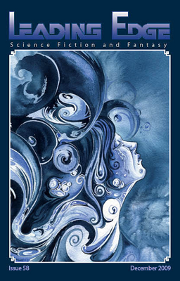
Since Thursday was Valentine’s Day, I picked out some chocolates and a copy of Leading Edge issue 58, where my first published work appeared. I was a bit worried that it would seem tacky, but some friends assured me that it wasn’t, and future Mrs. Vasicek seemed to really appreciate it.

There were a bunch of interesting panels on Friday. My favorite was probably the one on community building for creatives, with Sandra Tayler and M. Todd Gallowglass. They both had some very interesting stories and advice, as well as the other panelists. My biggest takeaway was that in order to build a community around my own work, I need to be a better participant in other creative and fan-based communities. Like LTUE, for example.

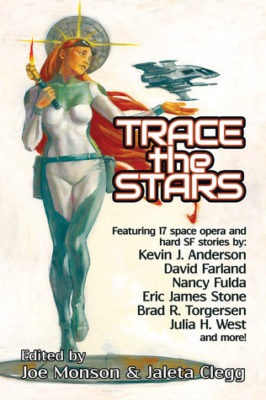
I also picked up a copy of the first LTUE benefit anthology, Trace the Stars. My mission for the rest of LTUE was to get as many authors from the anthology as I could find to sign it. Some of them weren’t there, but I did get most of the ones who were. One day, I’ll get all the signatures and turn it into a book of power! Wuah-haha!

The book signing was fairly low key. A lot of the big names didn’t show up, partly due to the weather, but there was still a good turnout. One of my very first fans who bought Desert Stars at my first ever book signing came over to chat. It was really good to catch up with him, and to let him know that I’m still writing and publishing.

There were a lot of really great panels on Saturday, on topics like surgery in space and what archaeology would look like on an artificially created world. Caught up with Eric James Stone and his wife Darci, who is a close friend of future Mrs. Vasicek. As we were all hanging out in the library, Brandon Sanderson walked up to say hi, and I was able to introduce future Mrs. Vasicek to him. We were actually both in Brandon’s class ten years ago, and didn’t know each other at the time. Brandon got a kick out of that.

My Saturday panels were very well attended and went off very well. The one on villains was particularly good, I think. There was just enough contrast in our viewpoints to keep it interesting without being too argumentative, and everyone had good points. When we made our plugs at the end, I urged everyone to subscribe to Pewdiepie, which got a kick out of the audience. I’m doing my part!

The panels were great, the banquet was great, catching up with old friends was also great. I may have spent a little more than my budget on books, but it was great to support my author friends, and I’m really looking forward to reading some great stuff!

All in all, another great year!

New plan for the newsletter

So my fiancee helped me to put together a proper newsletter template for my email list, and it looks pretty good! Much better than the template I wrote myself, and I’m not a programmer (she is).

This gives me the opportunity to make some changes to the way I do things, and I’ve decided to grab the bull by the horns. I’m going to write a proper newsletter, not just a simple “here’s some book deals and a couple of promos to check out!” Here’s the new format:

Welcome

A short, 1-3 sentence “Hello, dear reader! I hope this email finds you well,” etc etc. Kind of like I already do.

Featured Book

The main call to action, put at the top for the casual readers who don’t have a lot of time or interest for much else. This may be a preorder, or a new release, or a special offer. Or it may just be a full-price book that I want to feature, for whatever reason. I’ll have to play around with it and see what works.

I’ve decided to go back to the two-button approach: one that says BUY ON AMAZON and goes directly to Amazon, albeit without an affiliate link, and one that says ALL OTHER STORES and goes to the book page here on my blog. For some reason, Amazon won’t let you put affiliate links in emails, which makes this a tough either/or. I’ll get more click-through and sales with a direct link, which is going to cost affiliate income, but I think it’s more important to focus on my own books than it is to game the affiliate system—at least in this section.

Writing Update

This is a brief, 1-2 paragraph section just below the featured book, where I give an update on my current WIP, along with a status bar. Basically, an accountability section, as well as something to keep the fans up-to-date on my writing progress.

Author’s Note

This is the meat of the newsletter, where in 3-5 paragraphs I share something personal with my readers: either a story or insight from the writing process, a behind-the-scenes look at what I do, or something else. In a recent newsletter, I talked about my grandfather and how his entrepreneurial spirit has rubbed off on me. Stuff like that.

From time to time, I also plan to share book recommendations. With my fiancee’s help, I may design a second template with an Author’s Note section that’s better set up for that.

The goal is to provide my readers with a personal connection and something of value that goes beyond “buy my book!” I already do this in the back of all of my novels, and have from the very beginning, so it will be fun to do something similar in my email newsletter.

Book Promotions

This is where I put all the links to all the promotions that I’m currently participating in, usually with other authors. I already do this in my newsletters, and it seems to be fairly popular, so it seems like something I should integrate into its own section, probably towards the bottom so as to incentive readers to scroll down.

Parting Quote

This is something new: a pull quote from the featured book to close out the email. Nothing too long; just enough to give my readers a taste and hopefully leave them intrigued, or thoughtful, or otherwise interested in reading more.

Farewell

The standard “so long, and thanks for reading!” that I always end on. Not a bad catch-phrase for a writer, I suppose.

So that’s the new format. Because I plan to share frequent writing updates in my newsletter, I’ll probably leave off sharing those updates here on my blog. Besides, that’s not really the strength of this medium: blogging is much better suited for community building, brand engagement, and public discussion. I may still share major updates, but not regularly.

That’s pretty much it. If you have any suggestions or other opinions, feel free to share. Also, you can sign up for my newsletter here if you haven’t already done so. That’s going to be the best way to keep up with me from here on out.

Take care, and thanks for reading!

And you call yourself a writer??

So I got into another online political debate on a writer’s forum last month. Shocking, I know. This one started with a discussion of political correctness and an op-ed piece in the Wall Street Journal, and quickly devolved into an argument about corporate censorship, gun control, Trump, and every other controversial issue in politics. Needless to say, it didn’t take long for people to cry reee and let loose the frogs of war.

That’s not the interesting part, though. Before the discussion devolved into a dumpster fire, I asked one of my more outspoken opponents a simple question:

I’m curious, Perry. Are you capable of seeing the world through the eyes of someone who disagrees with you politically?

To which he responded:

I used to be, before they started endorsing hate speech and supporting authoritarian sociopaths. Now I’ve got no patience for people who believe in a society built on a foundation of inequality and selfishness.

Now, perhaps this was naive of me, but I honestly was looking forward to the challenge of trying to reflect this guy’s own views back to him. I was looking forward to him doing the same for me. After all, isn’t that what writers are supposed to do? Put ourselves in a character’s head, and show that character’s perspective?

It blows my mind that people who call themselves writers can have absolutely no interest in seeing things through the eyes of the people they disagree with. Even if those people really are evil (and in almost all cases, they really aren’t), it’s still a good idea to study how they see the world, because some of the most interesting characters are evil to the core.

Anyone who takes this stance must write horribly dull books. Their bad guys and villains must be one-dimentional cardboard cutouts, or pyromaniacal straw men. The most compelling antagonists always believe that they are the heroes of their own stories, just like everyone else, and the more compelling the story they tell themselves, the more interesting the character.

For example, consider King Candy from Wreck-it Ralph. He was absolutely a villain, but he had a very compelling story for why he was right to keep Vanellope from racing. Never mind that he was an imposter in what was actually Vanellope’s game.

In any case, I think that if we want to write well, we absolutely need to do our best to see the world through the eyes of the people we disagree with. Even if they’re wrong. Especially if they’re wrong. And if our own views are so rigid that we cannot bring ourselves to do this, then maybe we should take a good, hard look in the mirror. After all, how can we hope to change the world if we can’t—or won’t—change ourselves?

Reworking The Paradox of Choice

The events in New York and Virginia of the past couple of weeks have been interesting, to say the least. The abortion debate has escalated dramatically, with talk of fourth-trimester abortions and keeping the infant “comfortable” while “a discussion would ensue between the physicians and the mother.”

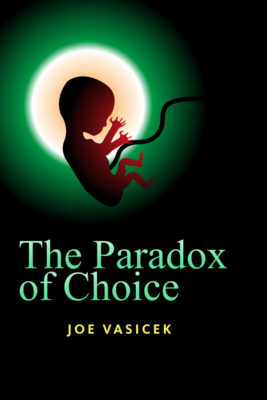
Without getting too much into the politics of it, this discusion has put me in a very awkward position regarding one of my stories. It’s a very short piece, titled “The Paradox of Choice,” and it depicts two women having a conversation about whether or not to “abort” a baby who’s already been born. The narrative is entirely dialog, so it isn’t clear until the middle of the story that they’re talking about a living, breathing baby who happens to be sitting between them.

I wrote the story as a bit of a shock piece, to show that the line between infanticide and aborting an unborn child isn’t as clear as people think. When I wrote it, though, I thought that infanticide would still be considered abhorrent. I had no idea that the Overton window would shift as quickly as it has.

Hence the awkward position. Clearly, this story needs to be rewritten, but how? Expanded, perhaps? By adding more descriptions to actually show the baby? Or do I need to abandon the “shock piece” aspect and turn it into more of a reasoned discussion of evil?

I wasn’t originally going to write this piece, but a couple of years ago I felt a strong impression that I needed to. Even then, I only did about the minimum of what I needed to do to get it onto the page. This isn’t the sort of thing that I usually write. But now, I suppose I need to revisit it and put in the effort to make it properly shine.

Either way, it’s insane how quickly the debate is shifting.

I’m engaged!

So a couple of days ago, I proposed to the girl I’ve been dating for the past few months. She’s pretty amazing. She’s currently at BYU, getting a masters in computer science. Where I make stuff up for a living, she actually makes stuff happen.

The funny thing is that we were both in Brandon Sanderson’s English 318R class back in 2009, even though we didn’t know each other at the time. She also lived in German house at the FLSR (Foreign Language Student Residence) during the summer I was on the Jordan study abroad. I lived in the Arabic house the year before and the year after. Also, after I came back from Jordan, she studied at the BYU Jerusalem Center.

So many near misses, but the way we actually met was through an online dating app. A couple of years ago, I wondered if I should try online dating, but I got this feeling like I should wait. Then around June of 2018, I got this feeling that the time had come to set up a profile and start looking around.

We started dating back in September, and decided to go exclusive after watching Venom (kind of a weird movie to cuddle together at, but still fun). I spent Thanksgiving and Christmas with her family in Provo, and apparently made a good impression. While playing a board game, her six year-old niece smiled at me and said “you’re my uncle!” to which I replied “not quite.”

Dating this girl has been a real adventure. Without getting into all the personal details, I can say that she’s got everything I’ve been looking for, and then some. On one of our earlier dates, we did an exercise where we each listed twenty things we wanted out of life, and five of those things were on both of our lists.

So yeah, she’s a keeper. I secretly met with her parents last weekend, and proposed on Tuesday. Nothing elaborate, just went on a walk around campus after eating lunch together. We’ve talked about getting married before, so after asking if there was anything else she felt we needed to talk about, I said “I can think of one thing,” got down on one knee, and took out the ring.

We’re planning to get married in June. My dad will be out of school by then, and hopefully my sister and her boyfriend will have their residency papers in Brazil figured out so that they can come. It feels like a long engagement period, and perhaps for a Latter-day Saint wedding it is, but I can be patient. Probably.

Good things are definitely happening!

Extra Sci-Fi S3E1: Tolkien and Herbert, the World Builders

So I really enjoyed the first two seasons of Extra Sci-Fi, and since they’ve just started up with season three, I’d like to do a blog series where I react to the episodes.

From the first episode, it looks like the main focus of this season is on Lord of the Rings and Dune, two SF&F classics which I’ve read twice. While I have read The Silmarillion as well, I have to admit that I haven’t read any of the Dune sequels yet. Ah, the woes of a horribly massive TBR list.

In any case, the discussion of intentionality in world-building is quite interesting. The way they contrast it with the pulps got me to thinking about the direction science fiction and fantasy are headed in right now.

With the advent of indie publishing, the era we are living in right now is much more akin to the age of the pulps. The way most indies make a living is by following Kevin J. Anderson’s advice to be prolific—really, really prolific. That doesn’t mean that all books published these days lack the intentionality and depth of the great classics of the genre, but the pendulum seems to have swung in the other direction.

Here’s the problem: I’m sure there are books that are just as finely crafted as Lord of the Rings that are sitting on someone’s hard drive right now, or perhaps hanging out somewhere above the 500,000 ranking on Amazon. Perhaps some of these books are even more masterfully crafted, with greater intentionality and even more depth. Why aren’t they selling?

Lots of reasons. Perhaps the author hasn’t yet mastered the craft of writing. Perhaps the story isn’t compelling enough—the equivalent of a 50 cc engine in the body of a Harley.

Or perhaps it has nothing to do with the quality of the writing or storytelling, but the author’s lack of marketing acumen. The greatest product in the world is worth nothing if nobody knows it exists. Likewise, the worst product is worth at least something if everyone knows about it.

Harsh truths, but that’s the world we live in. I’m not so cynical that I believe that writing is a zero-sum game, but there is a lot of competition, especially with how many books are being published these days. That’s why I say that the pendulum has swung back in favor of pulp-style writing: because the writer who can put out a book a month and put it out to an email list of 10k or more has a decisive advantage over the writer who painstakingly crafts a magnificent epic over the course of an entire lifetime, as Tolkien did.

When will the pendulum swing back? I don’t know, but it’s actually not as daunting of an issue as the guys at Extra Credits make it seem.

The first time I read Dune, I was in high school. The second time, I was in college, where I’d already studied Arabic for a couple of years and become somewhat proficient at it. Studying Arabic pulled back the curtain a bit, and made me realize that Herbert’s world-building wasn’t quite as intentional as it seems at first glance.

There was still a lot of depth and intentionality in the major stuff, like the Bene Gesserit, the mentats and Orange Catholic Bible, and of course the ecology of Arakkis and the Spacing Guild. However, on some of the minor details, he occasionally cribbed or made up stuff, he just did a really good job of disguising it. Even the wider arcs of his world-building have borrowed heavily from the real world, such as the rise of the Fremen (which is basically the Rashidun Caliphate in space) and the politics and economics of the spice trade (which is basically a sci-fi version of the petrodollar).

This is why I’m not too worried. A masterful writer can produce on the level of the pulps, and still write with depth and intentionality—or at least, fake it so well that it feels that way. Writing that well requires skill, but once you’ve figured out all the levers behind the curtain, you really can pull off some truly amazing stuff.

I’m not quite there yet, but I’ve seen behind the curtain, and I’m figuring out how it works. Until now, I’ve leaned more toward the pulp-style of writing, just to get my writing career off the ground, but I hope to get to the level of Herbert and Tolkien before too long. It’s definitely possible, but can it be profitable too? That’s the tricky part.

My LTUE Schedule

Life, the Universe, and Everything is happening in Provo, Utah in just a few days, and I will be there! I plan to spend all day Thursday, Friday, and Saturday at the symposium, so if you want to catch up with me, just find me in the lobby or wandering around the dealer’s room.

Here’s my schedule:

Thursday, February 14

Alternative Worlds: Unconventional Science Fiction and Fantasy (2:00 pm)

Scott R. Parkin (moderator), Charlie N. Holmberg, Joe Vasicek, M. Todd Gallowglas, Michaelbrent Collings

There are few things more discouraging than opening up a new book and getting the feeling that you’ve already been there and done that. Avoid this by learning about the speculative fiction worlds that really took you somewhere else–somewhere alien and impossible.

Saturday, February 16

Writing Stories without Villains (4:00 pm)

Scott R. Parkin (moderator), Christopher Husberg, Joe Vasicek, Peter Orullian, Suzanne Vincent

Antagonists do not have to be people. How to have conflict and a satisfactory resolution without a bad guy.

Heroic not Invincible: Writing Relatable Protagonists (6:00 pm)

Michelle Witte (moderator), Joe Vasicek, Joshua W. Robertson, Kathryn Purdie, Marion G. Harmon

We want to read strong heroes but not too strong, not too perfect. How to write an interesting and dimensional protagonist that people want to like.


Hope to see you there!