Saw this on Astronomy Picture of the Day a while ago, thought it was pretty awesome. Enjoy!
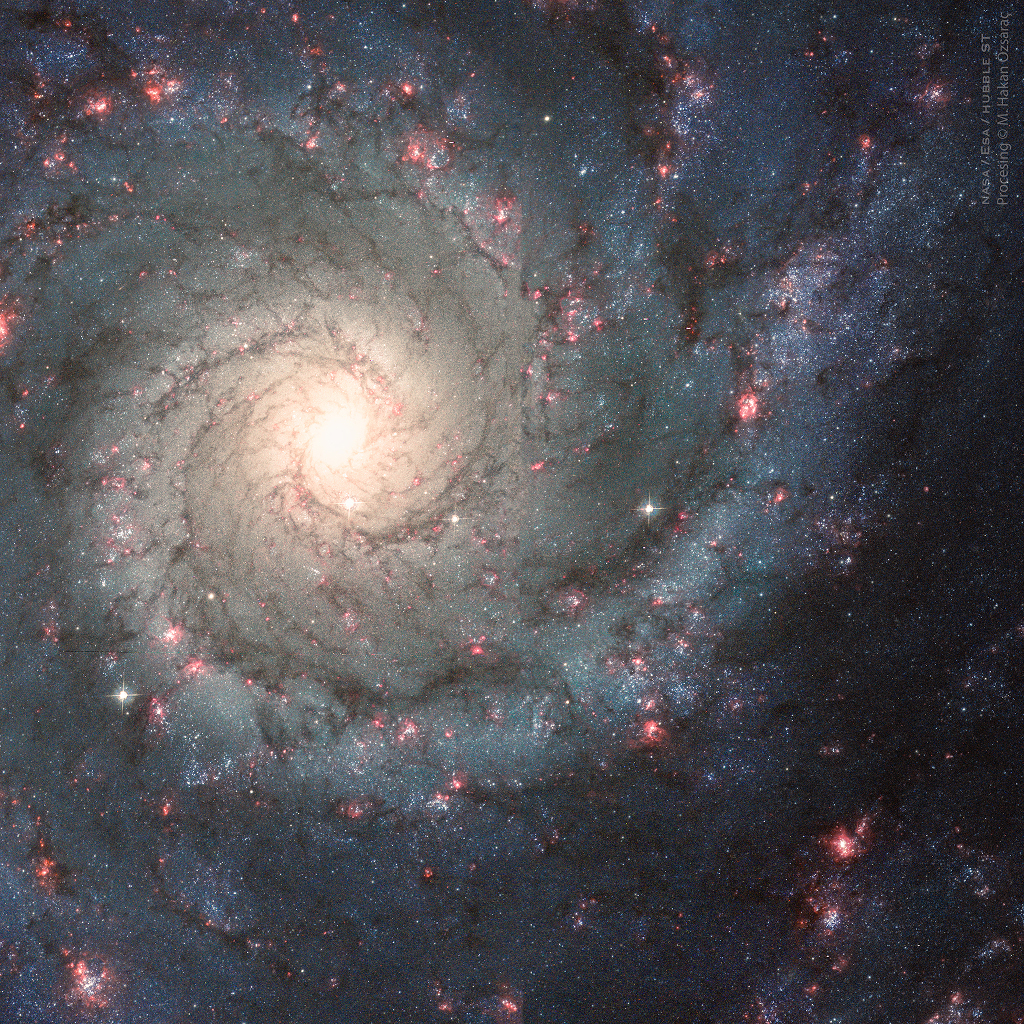
Saw this on Astronomy Picture of the Day a while ago, thought it was pretty awesome. Enjoy!
Check out these group promotions! All of the books are free when you sign up for the author’s email list. Get them soon, the promotions finish at the end of the month!


My resolution last year was to read or DNF 100 books. I was doing pretty well on it through the summer, but then I stopped using Goodreads and lost count. (No particular reason, other than that I just fell out of using the site. It’s clunky and difficult to navigate, and after I started using my wife’s spreadsheet system for tracking my reading, I just didn’t feel like posting updates.) Counting children’s books, I definitely hit 100—probably more like 120—but without counting children’s books, it was probably closer to 80.
I do really want to keep up on my long-term goal to become a better reader—or to be more well-read, which amounts to the same thing. This last week, I’ve been giving that goal some serious thought, and I’ve decided on the following new year’s resolution for 2022:
Read or DNF every novel that has won a Hugo or a Nebula award, and acquire all of the good ones.
Ever since 2015, I’ve been pretty jaded about the Hugos (and the Nebulas, to a lesser extent). However, for a long time they were the most important and authoritative awards in science fiction, and by using it as a reading list, I hope to get a better sense of how the genre has evolved over the years, including how in recent years it has fallen to the woke insanity of our time.
There are 110 novels that have won either a Hugo or a Nebula award (or both). Of those, I’ve already read or DNFed 33 as of today, January 1st. I anticipate that I will DNF many of the rest, but I’ll give them all an honest try, and differentiate between hard DNFs (where I know I’ll never get back to reading it) and soft DNFs (where I intend to come back to it later). For purposes of this resolution, though, I’ll count both, since as a reader I believe in DNFing early and often.
As for acquiring them, that shouldn’t be too hard, and will help to build our family library, which is one of my long-term goals. Paperback Swap is great for acquiring used books, especially mass market paperbacks, which is actually my preferred format for most books (great for stuffing in a back pocket or tossing in a backpack, and you don’t mind it as much if someone borrows and never returns it). The added benefit of using Paperback Swap is that it will help me to get rid of some of the books I’ve acquired over the years that I’ll probably never read.
That’s actually a huge problem for me, and I was thinking about making another resolution to have read at least half of the fiction books that we own before the end of the year, but I think this reading resolution will help with that enough that I don’t need to make it more complicated. I’ve found that it’s generally better to set one resolution and focus on that, rather than setting so many that I’ll probably forget all of them by mid-March. Besides, having a bunch of unread books isn’t actually much of a problem, unless you don’t have a place to store them. We do.
While putting together the spreadsheet of all the Hugo and Nebula winning books, I discovered some very interesting things. One of them had to do with the age of each winner at the time they won the award. The average age was about 46, with Samuel Delany coming in as the youngest for Babel-17 in 1967 at age 25, and Ursula K. Le Guin as the oldest for Powers in 2009, at age 80. (Her first novel to win either award was The Left Hand of Darkness, in 1970 when she was 41.) The average age skewed younger in earlier decades; now, it’s closer to 50.
Another very interesting thing to look at is which authors have had children and which ones haven’t. Of the Hugo and Nebula award-winning novels that I’ve DNFed, almost all of them are from authors who are childless. That’s not too surprising when you consider how much it changes your perspective on the world to have or adopt a child. What’s really surprising to me is how many of these authors are childless, and how many of the childless authors are writing books for children. Since 2015 and 2016 respectively, none of the living authors who have won a Hugo or a Nebula award for best novel have had any children of their own—or if they have, it’s not public knowledge and the internet doesn’t know.
So anyways, that’s basically the long and short of it. I’ll keep track of this goal through the detailed spreadsheet I’ve set up for it, and post updates throughout the year. And when I’m done with the Hugos and Nebulas, I’ll probably move on to the Dragon Awards, which may actually be harder since 1) there are more than half a dozen sub-categories, 2) many of the winning novels are the umpteenth book in a long-running series, and 3) I probably won’t DNF as many of them.
What are your reading resolutions?
Christmas was great! My parents came over from Iowa on the train, and stayed with us for a few days. My wife’s brother also came down from the Salt Lake area. He has a bazillion board games, so we had a ton of fun playing with him.
Before I had kids, I never really got the point of Christmas. There were things about the season that I enjoyed well enough, but a lot of other things that I despised, and over time I developed a love-hate relationship with Christmas. I think I’ve blogged about it before. In any case, I used to think that it was due to the tension between commercialism vs. religion—Santa vs. the baby Jesus, or holiday vs. holy day, if you will—but now that I have children of my own, my perspective has changed. Christmas really is the perfect holiday for kids, and when you’re celebrating it for them and not just for yourself, the tension between the religious aspects and the commercial fades, and it all comes together in a really awesome way. Perhaps that’s why all of the best secular Christmas songs were written in the 40s and the 50s, in the earliest years of the post-war baby boom.
Anyways, those were some of my thoughts this year. It’s a lot more work to pull off Christmas with young children, but it’s also a lot more fun. It was also really fun to have other family visiting us, even if it was a bit stressful at times. But not too stressful, thankfully.
So we saw my parents off at the train this morning. The west-bound California Zephyr is running on time these days, which almost never happens with Amtrak (I have some of the worst train-travel horror stories you will ever hear—catch me at a convention and I’ll tell you how my girlfriend at the time broke up with me in the middle of a 60-hour train ride). Apparently, the supply chain crisis means that there are less freight trains, which makes for fewer delays. But the east-bound train leaves from California, the most dysfunctional state in the union, so it was running almost eight hours late. For us, though, that was actually kind of nice, because it meant that we got to sleep in.
In any case, the extended family is all gone now, and we’re slowly getting back to normal, though it probably won’t be until after the new year before we’re back to 100% again. If you sent me an email over the break, that’s why I haven’t sent a reply (although I am pretty horrible about replying to emails generally). I’ve got a BookBub Featured Deal running tomorrow that has me biting my nails, and a couple of other things to catch up on the publishing side of things.
Other than that, I hope to get back in the saddle with my writing pretty quickly. Should be able to pick up the WIP where I left off with it, and I’d like to pull out a couple of short stories from the outline too. Definitely need to get some more short stories into the production pipeline. I’ve got every month covered through May with new projects, though April’s story is appearing in Bards and Sages Quarterly and I’d like to line up a self-publishing project during that month too. But that shouldn’t be too hard.
I’ll leave off with this awesome rendition of I Saw Three Ships from the Tabernacle Choir at Temple Square. My dad was college buddies with the organist, Rick Elliott. Happy New Year!
Violence is not speech and speech is not violence. If you conflate the two, you will invariably use violence to quell the speech that you most need to hear. This is because the thing you need the most is usually in the place you least want to look.
With regards to Jordan Peterson.
So while Mrs. Vasicek and I were in the theater for the first time since the pandemic, watching the trailers before Dune, we saw this commercial for Facebook’s new Meta rebrand:
Since the theater was almost completely empty, we were already having fun by making snarky commentary. And when this commercial came on, it was a gold mine. So creepy. So disturbing. So “I really don’t want whatever the hell this is trying to sell me.”
But right before the end, Mrs. Vasicek nailed it and said: “it’s probably for Meta!” And then, bam! Meta’s new logo came on, and we both had a good laugh.
Seriously, though, ever since Zuckerberg announced that Facebook would be rebranding as Meta, I’ve been fascinated with it—not because I’m looking forward to it, but because it is so. So. Cringe. It’s like watching a train wreck in real time. History may prove me wrong about this, as plenty of things that were laughable when they started out proved to change the world, but I really do think that Meta is going to fail. Spectacularly.
I have so many thoughts about this. So many thoughts. But if I had to break it all down to one core idea, it would be this:
At some point in our lives, all of us will reach a point where something about ourselves comes into conflict with reality. At that point, we can make one of three choices: we can try to change reality, we can decide to ignore the conflict, or we can work on changing ourselves.
Part of becoming an adult is realizing that there are aspects of reality that you simply cannot change. We can choose our actions, but we cannot choose the consequences of our actions. To paraphrase Jordan Peterson, we realize that we should clean our rooms before we try to change the world.
Right now, the world is ruled by people who reject the notion that their actions have consequences, and believe that reality can be whatever they want. That is the main reason why everything is falling apart. But instead of recognizing this and changing course, our leaders are doubling down and demanding that we all bend the knee and fall into line with their false reality.
It’s not going to work.
Zuckerberg is one of those people. Facebook didn’t succeed because it invented social media, or did it better than anyone else: it succeeded because Zuckerberg realized that his end users were actually his product, and his consumers were the corporations and governments that wanted all their data. So he optimized Facebook to be as addictive as possible and got more than a billion people hooked on it.
At that point, Facebook was so ubiquitous that it was difficult to function in the real world without it. Those of us who tried to quit soon learned that Zuckerberg was holding our social connections hostage, and that we could expect to be cut off from our friends and family if we tried to leave.
But then the Trump years happened. Social media became toxic, and Facebook in particular became embroiled in scandal. Zuckerberg tried to thread the needle between the partisan divide, and all he managed to do was split the baby. Team blue hated Facebook for selling their data to companies like Cambridge Analytica, and team red hated Facebook for “fact checking” and shadowbanning them. Meanwhile, team “don’t talk to me about politics” became exhausted by the whole thing, and started to unplug in increasing numbers.
I think Zuckerberg needs Meta to be a success much, much more than any of us need or want Meta. This is pure speculation on my part as I don’t have any figures to back it up, but I suspect that Facebook peaked sometime in the last five years and has been declining at an ever sharper rate ever since. It’s probably not just Facebook, either, but all social media. They’re all toxic now.
But after all the goodwill that he’s burned, is Zuckerberg really the technological Moses who’s going to lead us all to the new promised land? And is the promised land really just a cheesy-looking version of Second Life with VR headsets?
The three things that Zoomers and Millennials crave more than anything are meaning, authenticity, and redemption. Those are also the three biggest things that Big Tech has been depriving us of. That’s not going to change until we get away from Silicon Valley culture.
Anyone who has started a family will tell you that the best way to find meaning, authenticity, and redemption in your life is to raise children. And yet, when Google designed their campus to have all the amenities necessary for their employees to live, work, and play there indefinitely, they somehow forgot to build any sort of playplace or daycare for children. That’s Silicon Valley culture: sexy and sterile, inclusive and censorious, flashy and vapid.
Second life failed because the people at the top tried to milk it too hard, and the users revolted. Facebook’s users are revolting for similar reasons, because manipulating us to have the right behavior is now Facebook’s product, and they’re milking us for all we’re worth. Is Meta going to be any different? Because it looks an awful lot to me like a farcically transparent attempt to build the Matrix. Can somebody please tell Zuckerberg that the Matrix was supposed to be a dystopia, and not an instruction manual?
Ultimately, though, I don’t think it’s going to matter much, because Meta is going to fail. Spectacularly. The deeper I look into it, the more it seems that the writing is on the wall. Of course, I could be wrong about Meta—spectacularly wrong, even—but I’m not betting on it. Because if I had to choose between plugging into Zuckerberg’s new Matrix and vacationing in Iceland, the choice would not be difficult:
Good protest song.

So Mrs. Vasicek and I saw the new Dune movie in theaters last weekend, and let me just say, it was awesome in every sense of the word!
Speaking as someone who’s read the novel three times and fervently believes it to be the most perfect science fiction book ever written, this movie did not disappoint. Not only is it the best movie adaptation of the book, hands down, but it may be the best adaptation that it’s possible to make of the book. Denis Villeneuve has done for Dune what Peter Jackson did for Lord of the Rings. It’s incredible.
With all of that said, I’m not sure if the movie would make much sense to anyone who hasn’t already read the book first. Dune is really a story within a story within a story, and while the movie captures that aspect quite well, it also touches very, very lightly on the outlying stories, which could be confusing for someone who isn’t already familiar with the novel. Even in my first read, I didn’t fully appreciate the complexity: it took two rereads before I began to grasp the full significance of all of the moving parts.
At its heart, Dune is about the struggle of Paul Atreides (the Chosen One) to push back against his destiny, because he knows that his success will be far more devastating, for him and for the galaxy, than his failure. In that, it’s a brilliant subversion (in the truest sense) of the hero cycle. But all of that takes place within the story of the Bene Gesserit and their quest to create the Kwisatz Haderach, a super-human who can see the past, present, and future all at once. But the Bene Gesserit scheming is all happening within the political intrigue of the Great Houses and the Imperium, specifically with the feud between House Atreides (which presents the greatest threat to the emperor) and House Harkonnen—and all three stories converge on the planet Arrakis, amidst the struggle of the Fremen to terraform their desert world into a lush, green paradise when all of the powers of the galaxy want to exploit it for the spice that is so important for interstellar space travel.
For someone who is already familiar with all of that from the book, the movie hits on all of those nested stories perfectly, without getting bogged down or missing the most important story of all: Paul’s internal struggle with his own destiny. But for someone who is new to all of that, the movie might be really confusing. It will be really interesting to hear what my Dad thinks of it, because he’s never read the book and he plans to stream the movie over Thanksgiving break. I’ll report back when I hear his reaction.
Some people are criticizing the movie for ending at the wrong place, but I actually think it ended at the exact right spot: where Paul becomes one of the Fremen by killing his first man in a duel. It’s subtle, but the whole movie builds up perfectly to that moment, making Paul’s character arc the central driving story arc. For me, it didn’t feel at all like I’d only gotten half a movie, or that the director was drawing the story out to make it into a trilogy. It felt very natural to end the story there, and a great set-up for the sequel, which should wrap up Dune itself. The third movie will conclude Paul’s story by giving us Dune Messiah, which should be really interesting, since the first movie actually did a lot to set that up. If the second movie is as good as the first, then the third one may actually be better than the book.
It’s become very fashionable these days to cast a major character as an ethnic minority, which can be really annoying. However, I wasn’t all that bothered by the decision to cast Doctor Kynes as a black woman. It did some interesting things for the character that I thought worked really well for the story, and for Paul’s relationship with Kynes. So even though that was the movie taking license from the book, I felt like it was a really good call.
One criticism that I do tend to agree with is that the characters feel a lot more like archetypes than like real people. That’s fair, not only for the movie, but for the book. My wife says that’s the main reason why she didn’t like the book, because none of the characters felt “real” to her. But that focus on archetypes is something I really enjoyed about the book, so it wasn’t as big of a problem for me with the movie.
Another point of criticism that my wife had was that neither the movie nor the book have a whole lot of joy. That’s also fair: the movie does tend to hit the same emotional notes over and over, without much variation. The most humorous part was where the Reverend Mother tells Paul “farewell, young human. I hope you live,” which wasn’t actually meant as a joke (and Mrs. Vasicek and I are totally going to use that line on our own baby from now on).
But it really did hit the sense of wonder quite spectacularly, not just with the big things like the desert and the sandworms, but the fine details like the control systems of the ornithopters, or the grittiness of the stillsuits and the spice mining equipment. It really does stick with you long after you’ve watched the movie, and makes you want to watch it over and over.
All I can say more is that I’m really, really, really looking forward to the next one!
So as you’ve probably noted by now, I’ve dropped out of doing nanowrimo. I was hitting all the daily milestones more or less until the halfway mark, when 1) I finished the novella In the Wake of Zedekiah Wight, and 2) we left for Nebraska to spend Thanksgiving with my in-laws. Between those two things, and the fact that this was our first time traveling with a baby, writing got put on the back burner for a few days, which means no nanowrimo this year.
But now that we’re here in Nebraska and it looks like we’re going to have a pretty quiet and easygoing vacation, I will probably get a decent amount of writing done before we go back to Utah at the end of the month. Who knows—I may even try to jump back on the nanowrimo train, though I’m not going to push for that. This is a vacation, after all. We all need a vacation from time to time.
But one of the things that I do want to get much better about is posting more regularly to this blog. And towards that end, I’ve come up with a plan.
Back in 2016, I deleted my social media and became something of an online hermit. For personal reasons, it was the right thing to do as it helped me to avoid all of the toxic online insanity during the (first) Trump years, and all of the gaslighting and doom porn that became so prevalent during the pandemic. If I had still been addicted to social media during all of that insanity, I would not be in a healthy place right now. But I do think it impeded my ability to connect with and build my readership, and I feel that I need to change that going forward.
Of course, I don’t just want to build an audience on a popular social media platform, only to have that audience taken away from me when the platform arbitrarily changes its policies or monetizes in some disadvantageous way. That was the big mistake that everyone made with Facebook back in the 10s. So my plan is to build up this blog first, which is a platform that I own and control, and repost content from this blog to other social media platforms as I expand my presence there. The goal is to bring my audience here and make this the center of my online activity.
But to do that, I need to post new content to my blog on a regular basis—something I haven’t really done since I jumped off of the social media merry-go-round in 2016. So I’m going to start blogging on a schedule again, taking it fairly easy at first with just two posts a week, but working it up from there.
I’ll be posting on Tuesdays and Saturdays at 11am Eastern, or 9am Mountain Time in my own neck of the woods. Tuesdays will mostly be for sharing links to interesting articles, videos, or podcasts, while Saturdays will be for more long-form posts, like book reviews, movie reviews, and state-of-the-genre type stuff. When I add a third day, that will be mostly for writing and family updates, if that’s what people are interested in. I’ll also share book excerpts, WIP excerpts, and posts about sales and book releases.
So that’s the plan. We’ll see how long it lasts. Now I’ve got a baby to watch and a book to write, not to mention Saturday’s blog post.