Yay for short stories!

So for the past three weeks while waiting for my first readers to get back to me with their comments on Strangers in Flight, I’ve been working on short stories. It’s a great way to stay busy and productive between projects, and feels really gratifying too because it only takes a week or two to finish things.
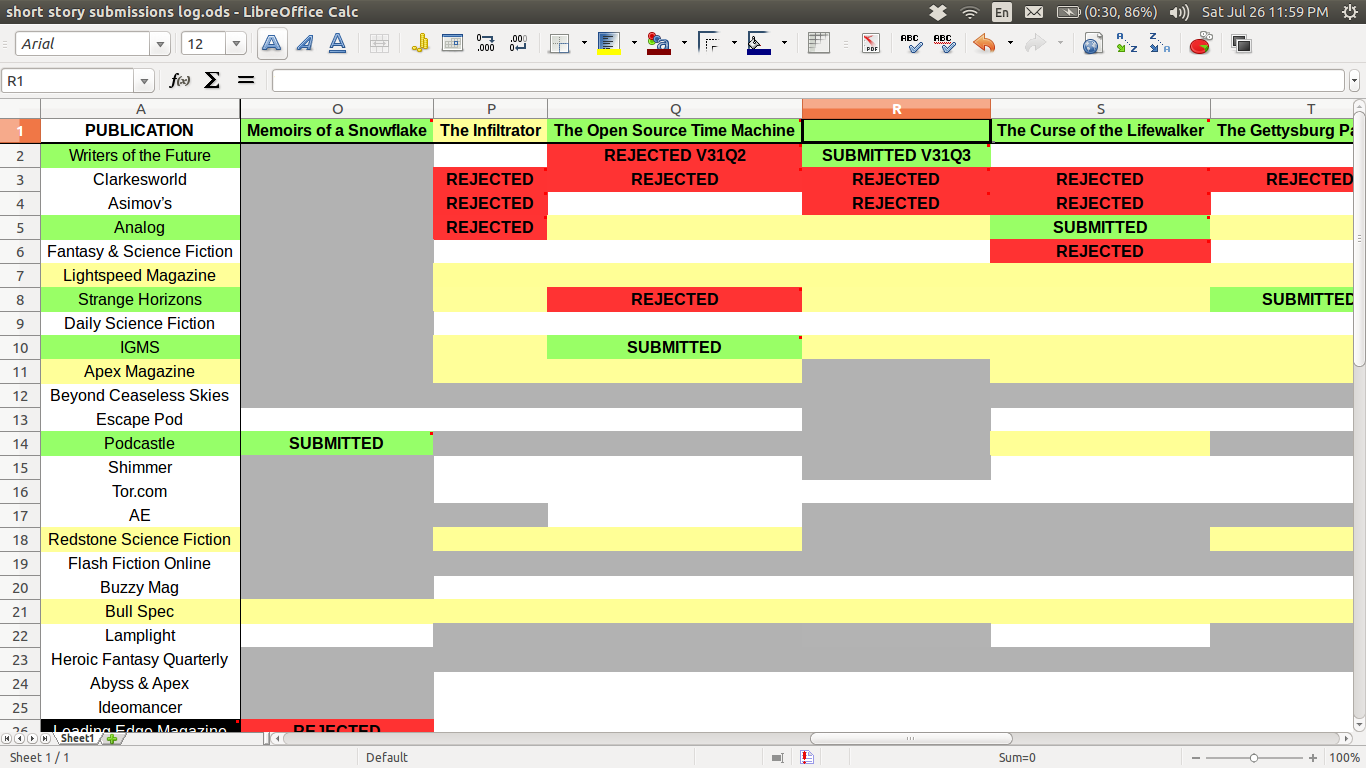
Screenshot from 2014-07-26 23:59:19The really gratifying thing for me, though, is sending off my stories to the magazines and having half a dozen or more on submission at any time. I love self-publishing, but for short stories, it makes a lot more sense to shoot for publication in one of the traditional markets first. They don’t buy exclusive rights, so you’re free to self-publish later, and they put your writing in front of a new audience, giving you some great exposure–all while paying you!

So far, the only market I’ve cracked has been Leading Edge. But the more I write, the sooner that will change! And since I still have the option to self-publish, the rejections don’t feel quite so discouraging. Instead, it’s almost like a friendly competition with myself to see how many rejections I can rack up, and how many stories I can have on submission at one time.

Lately, I’ve been working on a Sword & Sorcery story titled “A Hill On Which To Die.” It started off as a short story, but then it morphed into a novelette–not quite as long as Star Wanderers: Outworlder (Part I), but long enough that most of the markets won’t take it. It’s also long enough that it will probably need a revision once it’s done, and I may run it past a reader or two. It’s definitely turned out to be more work than I’d bargained for.

There’s another story I’m working on about a naturally occurring time portal in rural Pennsylvania, and how the Amish are so isolated from modern society because they’re the ones guarding it. Then I’d like to rewrite “The Infiltrator,” to cut out most of the stuff at the beginning and dive straight into the action. That should take only a day or two. And then, there’s that story about the uplifted Deinonychus that my girlfriend really wanted to read …

Gah! So many ideas to play with! I cannot possibly write fast enough to keep up with them. It’s the most frustrating thing in the world!

I suppose for most of my readers, this talk of short stories is kind of frustrating too, since they probably won’t be available for you to read for a while. But one way or another, they will come out eventually! And it’s definitely better to write something while in that weird space between projects. At least I’m finishing stuff.

So that’s what I’ve been up to lately. I’ll probably finish “A Hill On Which To Die” in a day or two, then work on “That Which Is About is” until it’s finished. It’s an Amish sci-fi romance–I can barely wait to get it all down on the page!c And after that, I’ll probably move on to Strangers in Flight, making the revisions and getting it ready to publish in August.
Don’t worry, I’m still alive

Wow, has it been more than a week since my last post? I think this is the longest I’ve gone without updating this blog since coming back from Georgia.

I wish I could say life has been busy, but it hasn’t really. Just another lazy summer in Utah. I did start dating someone recently, which probably explains where all my time has gone. But don’t worry, I’m still writing–in fact, the first draft of Strangers in Flight (Sons of the Starfarers: Book III) should be finished next week. It’s taken me a lot longer to write this one than I’d expected, but now that I’ve buckled down, it’s really coming together.

Comrades in Hope (Sons of the Starfarers: Book II) should be out by the end of the month, barring something crazy like my editor or cover designer dropping off the face of the Earth. Once they get back to me, all I’ve got to do is run through the edits (which shouldn’t take longer than a day or two) and format the thing (which also shouldn’t take longer than a day or two). So if you’ve read the first book and are eagerly awaiting the second, you shouldn’t have to wait longer than a couple of weeks!

I’m not sure what cons I’ll be attending this summer/fall. I thought I was going to Westercon, but it turns out my parents are going to be in town that week, and considering that it falls on the fourth of July (which also happens to be my sister’s birthday–who also happens to be pregnant), it looks like I have more important things to do that weekend. Besides, I want to start a new 4th of July tradition with my girlfriend this year: watching Gettysburg.

In any case, it looks like I won’t be doing too many cons this year. Maybe Salt Lake Comic Con, but I don’t know about that one yet either.

Once I’ve finished Strangers in Flight, I’ll probably take some time to work on a novel. There are three projects that I’m thinking about working on:

Star Wanderers: Children of the Starry Sea — I’ve been wanting to write a Star Wanderers novel for some time, but haven’t actually started it yet. It would definitely be fun to revisit the characters from that series, and it seems that a lot of my readers would really be interested in it too. It would also be a good way to tie things in with Sons of the Starfarers, and give some direction to the later books in that series.

The Sword Bearer — I explained the plot of this one to my girlfried, and she really liked it. That got me excited about it again, so I’m thinking very seriously about taking that project off of the back burner for a while. It’s a long-form epic fantasy that will probably turn into a trilogy–very different from the stuff I’m writing now. Still, it has a lot of potential, and the story is definitely solid. If I do pick it up, I’ll probably rename it The Sword Keeper, so that book 2 will be The Sword Bearer, and book 3 will be The Sword Wielder.

Star Wolf, AKA Heart of the Nebula — I’ve been meaning to finish this one for some time, so I might as well knock it off. With the last round of revisions, I got about halfway through, but it’s still very messy, so this would definitely be a project. However, this is the one that is closest to actually being publishable.

So that’s what I’m up to right now. I’ve got a lot more to say, especially about my girlfriend, but for now, I think I’d better get back to writing.

Familiar vs. original vs. WTF?

In writing, you’ve always got to strike a balance between things that the readers find familiar and things that might be original or new to them. Every genre has its own standard set of tropes, plot twists, character archetypes, and other such story elements, and even if the readers can’t explain them all to you, they know them well enough to tell when something is off.

Different genres strike different balances between the original and the familiar. Romance tends to lean more toward the familiar, with happily-ever-after (or happy-for-now) endings a fairly ironclad rule. Fantasy tends to have a little more originality, depending on the subgenre, but there’s still a host of familiar tropes and world-building elements that you can usually expect to find. Anime tends to go pretty crazy with the original elements, but even in a wacky show like Hetalia there are still a bunch of anime-specific tropes that ground the story in a degree of familiarity.

A great way to introduce originality is to pull a common trope or story element from a different genre and adapt it to a genre in which the readers are much less familiar with it. This is what Suzanne Collins did with The Hunger Games: she borrowed elements from suspense and thriller, and combined them in a novel that was solidly grounded in YA. As much as I hated the book, I have to admit she did a very good job blending those elements into another genre.

So combining familiar elements in unfamiliar ways is one way to create originality. But another way–and potentially a much more risky way–is to throw in something that the reader has probably never seen before.

I don’t know why, but as a writer I seem to be drawn to these stories–much more so than I’m drawn to them as a reader. As an example, when I wrote Star Wanderers, this weird polygamy element got woven in, with the best friend of the female protagonist trying to convince her to share her husband. I have never read a story where anything like that happened, but that was where the story wanted to take me, so I followed it as best as I could.

The danger in throwing in something that is so far outside the realm of familiarity is that the readers will go “WTF?” and get thrown right out of the story. With Star Wanderers, I tried to do my best to develop the characters and convey their motivations in order for it all to make sense, but it was still really hard to write because I didn’t know if the polygamy thing was something that they’d swallow. And when you’re worried how the readers are going to respond to you story, it can be very hard to write it.

I suppose I should give more credit to my readers, though. Their experience is probably a lot broader than I think it is, and their hunger for strange new experiences may actually be stronger than I can ever fulfill. With Star Wanderers, I got a handful of reviews saying that I should have taken the polygamy thing further, or that I should have paired up characters in ways that I’d never even considered. I’m sure there were others who were disgusted by the whole thing, but the books are still selling, so it’s clear that I didn’t alienate everyone.

Right now, I’m writing Strangers in Flight (Brothers in Exile: Book III), and I’ve got another element in there that you don’t really see very often in any genre–at least, not in the way I’ve chosen to play it. It flirts with the taboo a bit and I’m sure it will make some people uncomfortable, though probably not as uncomfortable as it will make me to know that people are actually reading it.

For that reason, writing this book has put me in a weird mental headspace that’s making it very difficult to finish the thing, no matter how many deadlines I give myself. I’m still going to write it, and unless an unforeseen disaster happens I’ll finish it in time to publish it before the end of the summer, but it won’t be easy.

That said, this is a really fun story. Aside from all my fears about how readers are going to respond to it, I’m having a blast writing it. So maybe I should just put that other stuff out of my mind and focus on what I enjoy about the story. Because if I enjoy the story, then you probably will too.

Looking ahead

Sorry not to post anything new in a while. This past week has been rather busy/disorganized for me, which isn’t helped by the fact that I had my last wisdom tooth pulled today. I’ve swallowed so much blood that my mouth tastes like I’ve been sucking on an anvil, and I can also feel a piece of exposed bone with my tongue. Awesome.

So I’m in the middle of Strangers in Flight (Sons of the Starfarers: Book III), and it looks like I’ll have to do a fairly substantial revision. That’s going to throw off the publication schedule a bit, but hopefully not more than a couple of weeks. Comrades in Hope (Sons of the Starfarers: Book II) will be out by the end of June, and Strangers in Flight will be out sometime in August. After that, I’ll take a break to work on some other projects and write the next three Sons of the Starfarers books.

I really enjoy writing in series of novella-length books. I know that a lot of readers complain when writers chop their stories into parts rather than packing them all into one full-length novel, but novellas come a lot more natural to me than novels. I probably won’t go any shorter than Star Wanderers: Outworlder (Part I), which technically is a novelette–novelettes lean more toward short stories in terms of structure, whereas novellas have a lot more room to play with (but not so much that you get lost in it).

What I’m thinking about doing from now on is writing novellas to start off with, and if a series does well (like Star Wanderers), to write a couple of full-length novels with the same characters. I can put out novellas a lot faster than I can put out novels, and putting them in series is a great way to build traction across a whole lot of books. And if the series is successful enough, then I know that a novel with the same characters will do fairly well too.

It’s kind of like Star Trek, in a way: it started as a TV series, then spun off a bunch of movies with the same characters. Which makes me wonder, why didn’t Voyager ever get a movie? Voyager was my favorite Star Trek series, and I totally think it deserved a movie or two.

In any case, I definitely want to write a Star Wanderers novel bringing back some of the main characters from that series. I’ll probably work on that after finishing Strangers in Flight, though with how long it takes me to write a novel, it may be a year before it’s ready for public consumption. It’s definitely on the list of books to write, though.

In the meantime, Sons of the Starfarers is going to consume all of my attention for the next month or so. I’d better get some sleep so I can work on it tomorrow. So much to do, so much to write … but I think you guys are really going to like it when it’s done!

New STAR WANDERERS covers!

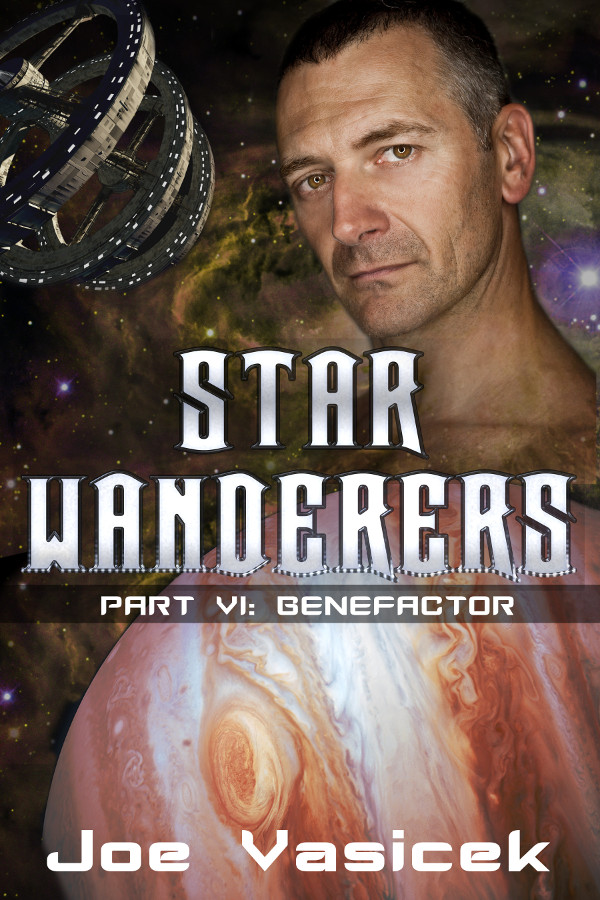
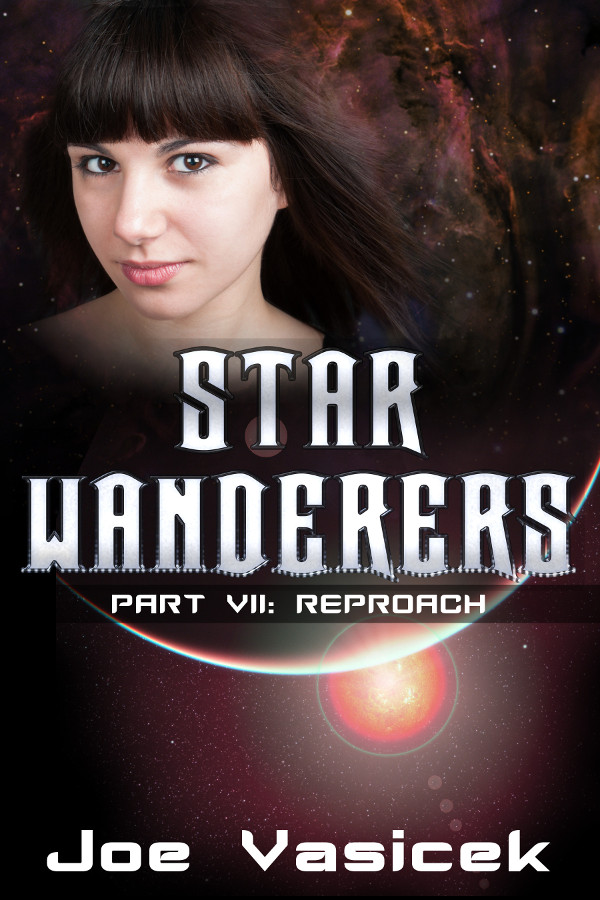
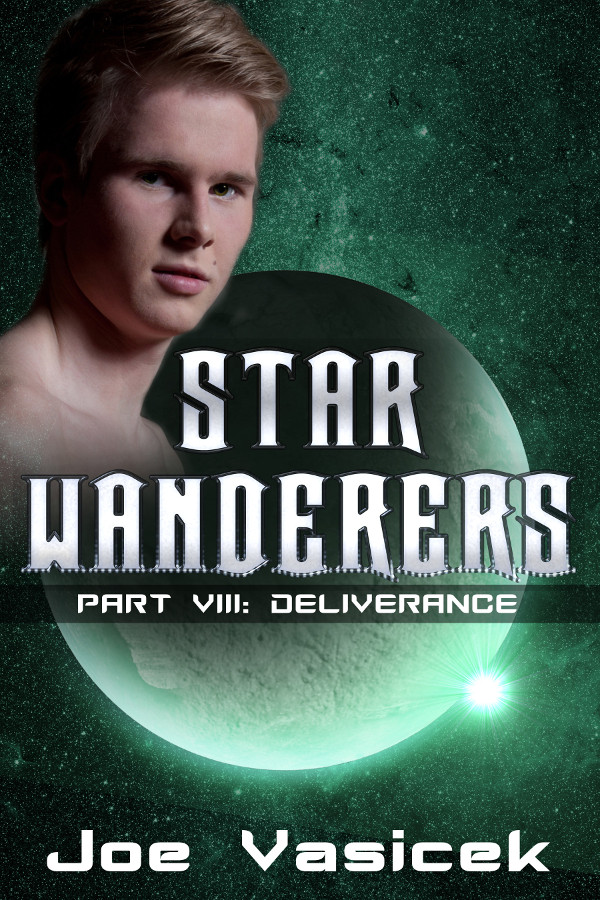
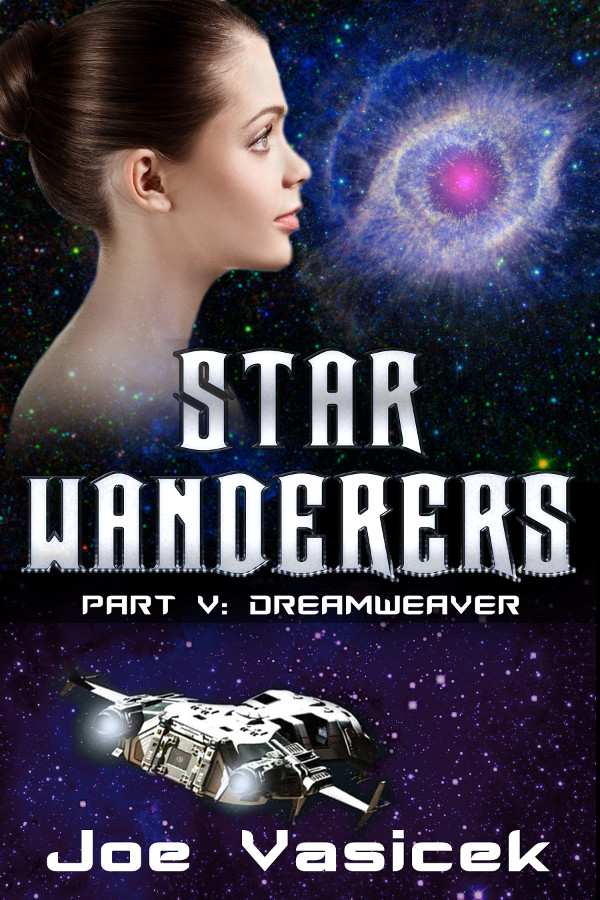
Let’s take a quick break from the Brothers in Exile excerpts to show you the awesome new cover art for the Star Wanderers books! These ones are for Dreamweaver, Benefactor, Reproach, and Deliverance, and I think they turned out quite well.

SW-V (cover)SW-VI (cover)SW-VII (cover)SW-VIII (cover)

The cover designer here is Libbie Hawker, who also did the other covers (except for Outworlder and Tales of the Far Outworlds. She’s also got a lot of great books of her own, so be sure to check her out!

In just a few days, I should have some art for Brothers in Exile to show you guys. I think you’re going to like it!

Okay, back to work

Well, the Blogging from A to Z challenge was fun, but now that it’s May it’s time to switch gears and focus on other things. I’ve got about a bazillion projects going on, so it’s definitely going to be a full month! Here’s what I hope to accomplish:

Writing

  • Finish the first draft of Strangers in Flight (Sons of the Starfarers Book III).
  • Revise Comrades in Hope (Sons of the Starfarers Book II) and get it ready for publication.
  • Start writing Star Wanderers: Wanderlust (Part IX).

Publishing

  • Finish redoing the covers for the Star Wanderers ebooks.
  • Put all the Star Wanderers books on Google Play, All Romance eBooks, and DriveThru Fiction.
  • Typeset The Jeremiah Chronicles and Tales of the Far Outworlds for print.
  • Publish Brothers in Exile (Sons of the Starfarers Book I).
  • Finalize all the print editions for Star Wanderers I-VIII.

That’s pretty much it. Some of it, like redoing the Star Wanderers covers and putting those books up on Google Play and ARe shouldn’t take more than an afternoon. Others are going to take a lot more work to fully realize.

The thing I’m most excited (and nervous!) about is getting Sons of the Starfarers ready for publication. I’ve had an awesome time writing these books so far, and I think you’re really going to love them. Brothers in Exile is with my editor right now, and I’m working with a new cover designer to come up with some awesome cover art. If all goes well, it should be out by May 15th.

In the next few days, I’m going to post some short 250 word excerpts from Brothers in Exile to give you a taste. I’ve never tried something like this before, so let me know what you think! I’ll probably post the first one tonight.

Here’s the book description:

TO WAKE A LOST GIRL FROM THE ICE, TWO BROTHERS MUST FACE AN EMPIRE.

Deep in the Far Outworlds, a derelict space station holds the bones of a long-dead people—and a beautiful young woman locked in cryofreeze. When the star-wandering brothers Isaac and Aaron find the sleeping girl, they soon realize that they are her only hope for rescue. If they don’t take her, then slavers certainly will.

With no way to revive her, they set a course for the New Pleiades in the hopes of finding someone who can help. But a storm is brewing over that region of space. After a series of brutal civil wars, the Gaian Empire has turned its sights outward. A frontier war is on the verge of breaking out, and the brothers are about to be caught in the middle of it.

They both harbor a secret, though. Somewhere else in the Outworlds is another derelict station—one that they used to call home. That secret will either bind them together or draw them apart in

SONS OF THE STARFARERS
BOOK I: BROTHERS IN EXILE

Pretty cool, huh? Keep an eye on this space over the next few days for more!

A few quick updates

So I thought I would post the Y post today for the A to Z challenge, but I didn’t get around to it so it looks like I’ll be doing Y and Z tomorrow. And yes, I know that “expectations” was a cop-out for X, but hey, at least I didn’t spell it “x-pectations.”

As far as other stuff goes, I’m still at work on Sons of the Starfarers, though I’ve been doing a lot more publishing stuff than writing stuff recently, mostly proofing and formatting. Once the second batch of covers for Star Wanderers comes in, I’ll take an afternoon off to update the rest of that series.

It’s nice to have someone else doing the cover art for you, though it’s still very collaborative since you have to approve everything and give feedback for tweaks. Still, these cover designers are doing a much better job than I could on my own.

Speaking of Star Wanderers, I’ve been getting a lot of reviews lately from people saying that they’re disappointed the series is over and wishing that it could continue. Well, be careful what you ask for, because you just might get it! I already mentioned that I’ve been thinking about writing a full-length novel, but I’ve also got some ideas for additional parts with some of the other characters.

Right now, I’m working on Strangers in Flight (Sons of the Starfarers Book III), but I should be finished with that one in May, with an open schedule for a couple months. That should be time enough to write Star Wanderers: Wanderlust (Part IX). I sketched out a couple of scenes for this one last year, but I think I’m going to toss those and start with something new. In particular, I have a great idea for an opening scene with Samson and Heloise (yes, Samson is going to be the star of this one. The title “wanderlust” should have given that away, lol).

Beyond that, it would be interesting to write a story from Captain Elijah’s point of view, and another from Master Korha’s. I suppose it would even be interesting to write a story from Salome’s perspective, though that would be a tough one. If I’m going to expand the Star Wanderers series, I’m going to write at least another four books, so if you guys have suggestions for characters to bring back, let me know.

That’s just about it for now. There are other projects I plan to work on, but Sons of the Starfarers and Star Wanderers should take up most of my focus for the next few months. Hopefully that means I can get the books out to you faster! I’ll certainly do my best.

X is for Expectations

What sort of expectations should or shouldn’t you have when you start self-publishing? What is plausible, and what is unrealistic?

Honestly, it’s probably a good idea to go into it with expectations that are fairly low. Most books don’t sell more than a handful of copies, and there’s no way to tell what will and will not take off (if there was, publishing would be a whole lot more lucrative). There’s nothing wrong with dreaming, but it will save yourself a lot of trouble and heartbreak (not to mention, money) if you go in expecting things to be kind of rough for the first few years.

When I started out with “Memoirs of a Snowflake” and a couple of other shorts, they didn’t hardly sell at all. Then I published Genesis Earth, and while I saw maybe 50 sales in the first three months, after that they fell off to single digits for the next two years (and yes, zero is a digit). I made my shorts free for a while, and they got tens of thousands of downloads, but that didn’t really translate into sales.

I didn’t expect to be a runaway bestseller right out of the gate, so I wasn’t too disappointed, but still it was kind of a blow. It was worse when Bringing Stella Home only got about ten sales in its first month before falling off to single digits just like Genesis Earth. I suppose things could have gone differently if I’d promoted a bit more aggressively, but that seemed like such a crap shoot that I channeled that energy into writing instead.

And it paid off eventually. When Star Wanderers took off, it generated some interest in all of my other books–not as much as I was expecting, but enough to bring them up to double digits every other month or so. My Star Wanderers books are all selling in the double and triple digits, and I couldn’t tell you why other than that the story just seems to strike the right chord with enough people. Those books would probably be doing better if I promoted them more, and since it looks considerably better than a crap shoot now, that’s something that I plan to be more aggressive about.

I think there’s an important difference between dreams and expectations. Dreams can suffer through setbacks considerably better, and help to maintain a sense of optimism that is perhaps one of the most important things an indie writer can have. Expectations, though, are much more practical and down to Earth, and can provide a useful yardstick for measuring progress. They can also provide an anchor in the face of uncertainty. Those are important things for an indie writer to have as well.

Expectations can be negative, though. If you don’t expect a book to do well, then perhaps you won’t put as much effort into it, sabotaging and self-rejecting your own work to the point where it really can’t do well. If you expect a book that hasn’t been selling at all to continue not to sell, you may lose sight of important opportunities to put it in front of the people who are most likely to fall in love with it.

Every genre is different, every book is different, and every writer is different. Because of this, no one can tell you exactly what to expect–including me. Like me, you might be stuck making nothing but pizza money for the first two years–or your books might take off fantastically well right from the start. There’s no way to know what will happen until you get your feet wet.

W is for Writing the Next One

If you want to make a living as a writer, you’ve got to write a lot of books. One book is not sufficient to make a career, unless you’re the exception that proves the rule. But that’s okay, because writing is probably the thing that made you want to do this as a career in the first place. I mean, if writing is the thing that you love, wouldn’t you jump at the chance to do it more?

Sadly, I think a lot of writers put way too much pressure on themselves to produce the next book, and too often that takes all the fun out of the writing process itself, turning it into a miserable slog. I’ve certainly been there myself, and I have to say, the whole thing was just ridiculous. As soon as I regained my own confidence, I abandoned all those silly rules and metrics and just decided to write my own way, no matter whether it was right or not.

I used to keep a detailed spreadsheet where I tracked my daily word count, making all these pretty graphs to show how much work I was producing. Then I went overseas for a year, and the stress of living abroad made it difficult to keep up.

I found myself writing or revising stuff just to boost my word count, and abandoning projects at the first sign of a snag just because I knew that if I didn’t keep my momentum, the stresses of living in a foreign country would force me to take a break. It actually threw me into a funk for a while–not because I wasn’t creating stories, but because I wasn’t keeping my word counts.

So I decided to toss all that stuff out the window, and in the last 2-3 weeks before I went home for the summer, I wrote Star Wanderers: Dreamweaver (Part V) from start to finish. Once the pressure was gone, the story practically wrote itself.

Some writers thrive on external pressures like word counts, timers, and the like. Others think that they thrive, but they really don’t. They cling to writing rules and writing metrics out of habit, or because they’re familiar, or because someone with more experience told them that they should. The truth, though, is that every writer is different, and what works to keep one motivated might just get in the way of another.

It can change over the course of your career, too. The chief advantage of using these metrics is that it gives you a sense of progress, which can buoy you up substantially when you’re first starting out. It can be a real challenge getting through your first novel, or even your second or third, so having a way to measure your day-to-day work can be extremely helpful. But after you’ve written a few books and gotten your feet underneath you, those metrics can get in the way, especially if they make you feel guilty.

Of all the kinds of guilt out there, writerly guilt is probably the stupidest. There is nothing immoral or taboo about not hitting your daily word count. It does not make you a bad person or violate the laws of the universe. Why would you put that burden on yourself? It’s not like anyone else is putting it on you. Life is too short to beat yourself up for not writing.

Instead, learn to channel all the things that make writing fun. It can be, after all–that’s how we all got started in the first place! If you can learn to capture the thing that makes writing fun for you, and not lose sight of that, then even when the going gets tough and the writing becomes a slog, you can still get through it and come out with something that you feel proud of.

Not every part of the writing process is fun, just like not every process of climbing a mountain is fun. But taken as a whole, it’s exhilarating and awesome. I mean, check out this video of these two guys climbing Shkhara, the highest mountain in Georgia. There were moments in that expedition that were tough, but the challenge only made it more worthwhile. It’s the same with writing.

I love writing. I want to write more than a hundred books before I die, and I’m already well on my way. Writing an awesome story is its own reward, even though there are many other rewards that often come afterward. Having people read and enjoy your stories is the greatest reward of all, and it more than pays for all of the hard parts that come before.

On an episode of Writing Excuses, Tracy Hickman once said that no matter how many books you write, it’s important to believe that you haven’t written your best book yet. I’ve definitely found that to be true. That’s not to discourage you that the stuff that you’ve written is bad, but to encourage you that your next one will be even better. And more often than not, it will!

U is for Uncertainty

There’s a lot of uncertainty that comes with being a working writer. I’m caught up in the middle of it right now as I get ready to launch a new series, and it’s enough to drive me crazy.

First of all, I’m not sure whether this new series, Sons of the Starfarers, will do well or whether it will flop. It’s a spin-off series from my Star Wanderers books, but the story is very different–much more action/adventure, whereas Star Wanderers is more of a sci-fi romance. I hope that my readers will eat up both of them, but until I actually hit “publish,” there’s no way to know.

The uncertainty is harder for me to deal with because the stakes are a lot higher. When I published Star Wanderers, I did so on a shoestring budget as a sort of side project that I didn’t think would take off. For Sons of the Starfarers, though, I’m going all in, commissioning a cover designer and hiring a professional editor. I don’t anticipate the production costs to go much higher than $300 per book, but there’s going to be nine books at least. Those costs add up rather quickly, and at $2.99 it’s may take a while for these books to earn back their costs.

Still, the stakes could be much higher. I’m a young single guy with no dependents, living on his own in a rather inexpensive part of the United States. My health is good and I’m fortunate enough to have graduated college without any debt. At this stage in my life, I’m in a really good position to take some calculated risks. Pursuing this writing career has definitely been one of them, and so far, it’s paid off about as well as I could have hoped.

But things would be very, very different if I had a wife and kids to take care of. If it’s just me that I have to worry about, I’m perfectly fine with taking risks and committing to projects that may fail spectacularly. But if there were a possibility that someone else could be hurt by my failures–someone I care very much about–I’d be a lot more worried.

At least the nice thing about being an indie writer is that you get your royalty checks like clockwork every month. I can look at my sales reports for March and know exactly how much money is going to come in in June. With legacy publishers, I hear it’s not unusual for royalties and advances to come four or five months late, or to be wildly off when they do come. That’s one uncertainty that I don’t have to worry about because I’m an indie.

Another uncertainty that I don’t have to worry about is that something out of my control in the production process will doom my book. I’m totally in control of my book’s production–if the cover art sucks, I may have to scrounge up a couple hundred bucks to hire a new cover designer, but I can do that without having to worry about my publisher ignoring my concerns. There may be a lot of uncertainty, but as an indie there’s also a lot of flexibility and control.

Uncertainty is a fact of life, whether or not you’re a career writer. Generally, though, where there’s more uncertainty, there’s also more opportunity. When I took the plunge and became a self-published writer, I was under no illusion that my success would be guaranteed–but I also knew that the only limitations would be the ones I put on myself. And personally, I like it that way. The uncertainty might be enough to drive you crazy when you’re staring it in the face, but when the risks pay off, they pay off very well.

Hope for the best, plan for the worst. Follow the path of least regret.