Reconsidering my newsletter

One of my writer friends made an interesting comment the other day. We were talking about email newsletters, and he pointed out that Jordan Peterson’s 5th rule, “don’t let your children do anything that makes you dislike them,” also applies to newsletter subscribers.

Obviously, I don’t think that my newsletter subscribers are my children. But the principle is the same. We tend to care more about people that we like, and are more willing to spend time and energy on them. When we dislike people, we either try to avoid them or we end up harboring resentment in some fashion.

My goal for my author newsletter is to attract casual readers who have read, at most, only one or two of my books, and convert them into loyal fans who eagerly await my next book. Until now, one of the things I’ve advertised is that I have a free and a 99¢ book with every newsletter. I have enough books out that I’ve been able to keep that up for the last two years or so, although most of the freebies have been short stories.

But I worry that I’ve been training my newsletter subscribers to only pick up the free books, or to wait until the book goes free. That’s a problem. I don’t mind giving away free books from time to time, but I’m not going to give away the store, and if readers come to expect that then I run the risk of breaking Jordan Peterson’s 5th rule.

So I’ve decided to make a change to my email newsletter, or at least to how I advertise it. Instead of giving away a free and 99¢ book in every newsletter, I’m going to look into other ways to provide value and convert casual readers into fans. Don’t get me wrong—I still intend to share free books from time to time. Just not with every newsletter, or not a different selection with each one.

I do want to share more book recommendations, especially since one of my new year’s resolutions is to read a novel every week. What I’ll probably do is set up another blog using MyBookTable with all of the book links, so as not to mix my own books with the ones I’m recommending, and include those in a newsletter every one or two months.

In the last few months, I’ve also been sharing updates on my writing with each newsletter. That may be a better place to share that stuff than here on my blog. What do you think? Blogs are better for public discussions, since they’re indexed by search engines and usually have a comment section with each post.

Either way, I definitely need to update my newsletter templates. I cranked those out way back in 2015, and they’re not too pretty. My girlfriend is a programmer, so maybe I could persuade her to help me out with that. But first, I should probably figure out all what I want to put in them.

What do you think? Are there things you’ve seen in other author newsletters that you’d like to see in mine? Any other interesting ideas or approaches? I’m open to anything that adds value without giving away the store.
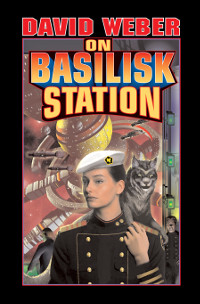
On Basilisk Station by David Weber

The Honorverse is what Star Trek wants to be when it grows up.

That’s the best way I can put it. On Basilisk Station is the first book in the series known as the “Honorverse,” which taken as a whole is David Weber’s best known work. Like Star Trek, the Honorverse is a far-future sprawling space opera epic full of exotic planets, interstellar empires, big starships, and big space battles. Unlike Star Trek, though, the Star Kingdom of Manticore has a military that actually functions like a competent, professional military (most of the time), and doesn’t have stupid rules like the Prime Directive that exist solely for the characters to break them. Also, the technobabble isn’t just babble, and the practical implications of the science fiction technology are fully explored.

The thing I liked most about this book was the political intrigue, though the characters come in as a close second. In fact, the two are intricately connected, as the intrigue grows out directly from the interactions between the characters. Like Ender’s Game, it all comes down to leadership, and like Orson Scott Card, David Weber has a keen grasp on human nature and what it takes to be an effective leader—and an effective follower, for that matter.

But unlike Card, Weber also has a keen grasp on how governments and bureaucracies operate, for better or (more likely) for worse. None of the characters in On Basilisk Station operate in a vacuum; they are all constrained by their loyalties, duties, and responsibilities, and their place in the chain of command. They are also constrained by the organizations and nations to which they belong, which in turn have their own positons and agendas, some of which run contrary to the personal beliefs and convictions of the people within them.

Weber is a master not only at pitting smart, competent characters against each other, but at pitting bureaucracies, parties, and governments against each other in ways that make you root for the little guys caught in the middle of it all. And above all else, Honor Harrington is a character worth rooting for. In a fight between Honor and any Star Trek captain (with the possible exception of Kirk), my money would be on Honor.

On Basilisk Station was an excellent start to what promises to be a highly entertaining series. I look forward to reading more!

Unpublishing the Star Wanderers omnibus editions

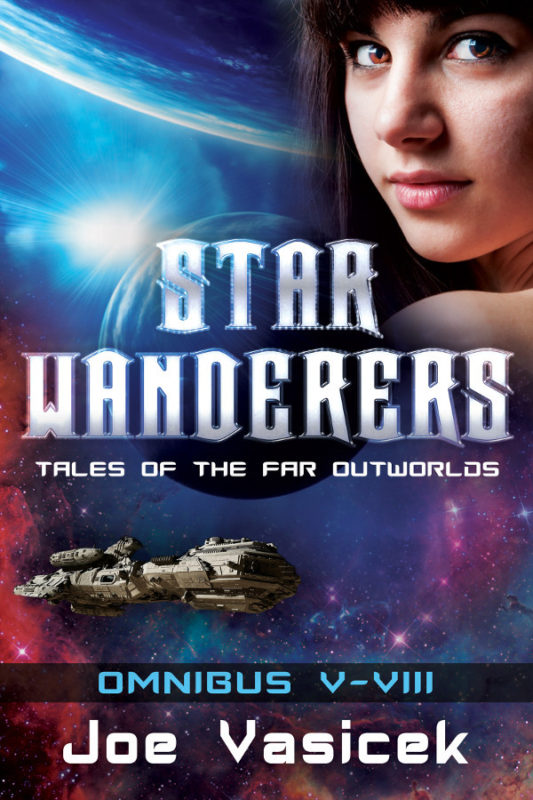
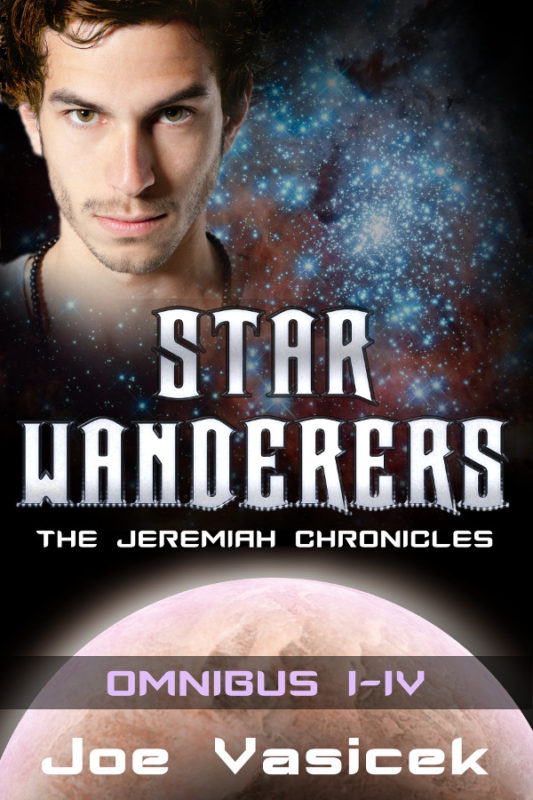
After some deliberation, I’ve decided to unpublish the two omnibus bundles for my Star Wanderers series: The Jeremiah Chronicles and Tales of the Far Outworlds.

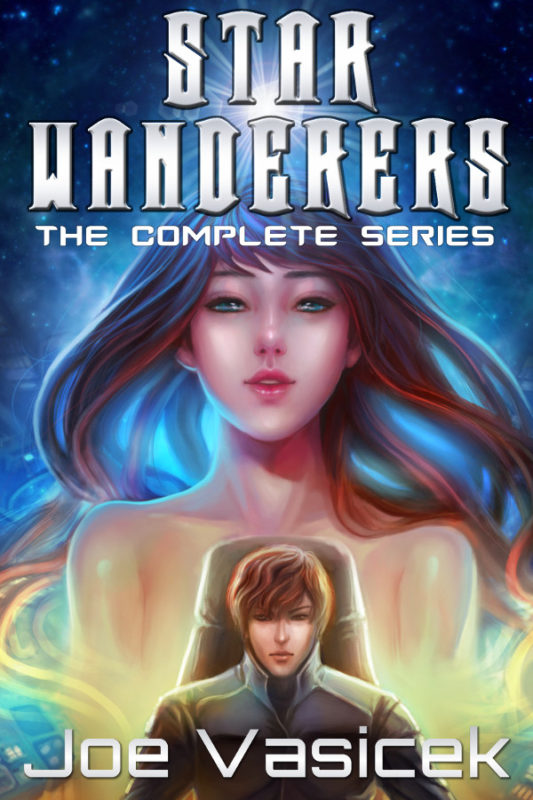
In place of the omnibus editions, I plan to release Star Wanderers: The Complete Series on all platforms. Currently, it’s only available on Kobo. Eventually, I’ll put it out in print as well, but until then the omnibus print editions will still be up. All of the singles are still available in print and ebook, and will be for the foreseeable future.

When I wrote the Star Wanderers series back in 2011–2014, it was, in many ways, an experiment. Instead of writing one long book with four or five viewpoint characters, I decided to write eight shorter books, where each one focused on one character’s story and told it in greater depth. The first four books were all from Jeremiah’s point of view, hence The Jeremiah Chronicles. The other four were each from a different character’s viewpoint, with two viewpoint characters in the last one. Since I already had one bundle, I decided to put them all into a second one. Hence, Tales of the Far Outworlds.

Going forward, though, I don’t think it makes much sense to break up the series this way. Better to have one series bundle with all the books (and the short story “Starchild”), so that they’re all in one place. I don’t have plans to add anything new to this series in the near future, though that may change. If it does, though, it will be its own new thing.

The other advantage to combining all the books into one complete series bundle is that it makes it easier to put the whole thing out in audio. One of the things I want to do this year is produce an audiobook, and I think that Star Wanderers will do better as a single, longer audiobook that costs one or two credits than as eight short books that cost one credit each. But that’s still somewhere in the mid-future.

It’s the end of an era for me, but I think it’s for the best. Star Wanderers: The Complete Series will be available on all ebookstores later this month.

New short story goals

In the last few months, as I’ve reworked my business plan, I’ve put a lot of thought into what I want to do with short stories. I’ve written about two dozen of them so far, and while I don’t expect to be known as a short story writer, I do expect that short stories will play an important role in my career, especially with the way that the publishing world is changing.

Objectives

Short stories are a great way for readers to try out new authors, without all the cost in time or money of a novel. It’s also a great way to build a hybrid career, as the professional short story markets have few of the hangups of publishing a longer work with a traditional publisher. It’s not extremely lucrative, though there is money to be made. More than that, it’s a way to gain cache and build your brand, especially if your stories get picked up by a major magazine or anthology in your genre.

So that’s my main objective with short stories: to use them to build my author brand and grow my readership. Self-publishing plays a role in that, but not nearly as much as the professional markets.

Writing

To get picked up by the professional markets, I need to have stories to submit to them, which means that I need to be prolific. Consequently, my goal from here on out is to write a new short story each month. That’s a pace I can maintain that doesn’t interfere too much with my other writing. It can be refreshing to take a WIP break from time to time, and short stories only take a few days at the most.

I know that Dean Wesley Smith says that you should never revise anything, and I’ve been following that advice until now with my short fiction. However, I do feel that it can strengthen my writing significantly to cut the word count by 10%, especially for short fiction where the strongest writing tends to be economical. So I’ll most likely do that to all my stories from now on.

Submitting

In general when submitting, it’s best to start with the top-tier markets and work your way down. This is the order in which I prioritize my submissions:

  1. SFWA qualifying markets
  2. Professional paying markets (6¢ per word or higher)
  3. Semi-pro paying markets (between 1¢ and 5¢ per word)

I’m not sure if I’m going to bother with token paying markets (less than 1¢ per word). Probably not for anything other than reprints. They don’t really put me any closer to my goals. Also, I’m not sure if I actually want to join SFWA, but I do want to qualify for it through my short story sales. Never join a club that would have you as a member, etc etc.

As for non-paying markets, I’ve decided not to submit to them after all. It’s been pointed out to me that giving something away for free after you’ve charged other people money for it is a dick move. Also, there aren’t really any non-paying markets that would bring me closer to my goals. All of the markets with serious cache also pay professional rates, at least in science fiction.

Self-publishing

Until now, I’ve self-published my short stories either immediately after their first sale, or after I’ve submitted all of the professional markets. My guiding philosophy has been that unless there’s a significant opportunity elsewhere, it’s better to self-publish something than to keep it on your hard drive.

However, self-publishing short stories doesn’t help me get much closer to my objectives. Certainly keeping a bunch of singles up for sale doesn’t help much, and it might actually hurt by cluttering up my book pages. They’re good for the occasional newsletter giveaway, or for first-in-series and other stuff, but that’s about it.

Dean Wesley Smith says to charge $2.99 for individual short stories in order to get the higher royalty rate, but I’ve tried that for the last couple of years and haven’t seen much benefit from it. Unless you’re known as a short story writer, I just don’t think short stories are good for making money. Because of that, and also because I’m going to be using them for giveaways and promotions, I plan to sell all of my short fiction (under 10k words) for a token 99¢.

Considering how it’s rude to give something away for free immediately after selling it, I plan to refrain from self-publishing until both the first-publication and reprint markets have been exhausted. That’s because I plan to make my short stories free when I first self-publish them, at least for the initial few weeks. Again, better to put something out for free and raise the price than it is to charge for it at first and make it free later.

When enough short stories have accumulated to put into a bundle, then I’ll unpublish all but the one or two best-rated or most popular singles, and put a link to the bundle in the back of those. In that way, the short story singles will help to sell the bundles, which make more money anyway, since I plan to charge $4.99 for them. This also helps to clean up the book pages, by replacing singles with bundles over time.

So that’s the plan. Submit until all professional and semi-pro markets have been exhausted, then self-publish as singles until there’s enough to put in a bundle. And hopefully sell a bunch of stories to the major markets.

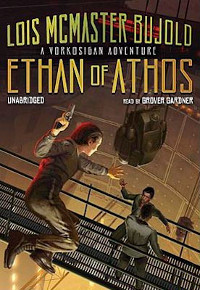
Ethan of Athos by Lois McMaster Bujold

I love the Vorkosigan books. Miles isn’t in this one, but a bunch of other characters are. It’s the same universe, with the same fascinating history, just with a bunch of new and interesting complications.

Ethan is from a world where women do not exist. The uterine replicator has rendered them obsolete, and a colony of fundamentalist MGTOWs has established a functional society where everyone is male and no one has ever seen or interacted with a dreaded female. But make no mistake, Ethan is not a MGTOW. He’s Athos’s best doctor: professional, responsible, and conscientious to a fault. And that’s why the council of elders has sent him on a mission to acquire female reproductive cultures before the ones on Athos all die out.

Along the way, he gets caught up with the Dendarii mercenaries, specifically one Commander Elli Quinn, and is soon caught up in the machinations of the Cetegandans and House Bharaputra, who are involved in some less-than-ethical bioengineering schemes that have brought the galaxy to the verge of war. If Ethan fails his mission, Athos itself might be nuked back to the stone age. But that is nothing compared to his most difficult task: learning how to work with a woman.

This book was a lot of fun! I have yet to read a bad book by Lois McMaster Bujold, and this one certainly didn’t disappoint. Lots of action and adventure, with dashing, resourceful heroes and frighteninginly comptetent villains. The all-male society of Athos was both fascinating and eminently believable, given the technology, and the interstellar espionage was loads of fun.

This isn’t the best place to start if you’ve never read any Bujold, but if you’ve already read The Warrior’s Apprentice and a couple of other Miles Vorkosigan adventures, you’ll really appreciate this book. Definitely one of the highlights of the series.

Late December Update

It’s been a while since I posted a writing update on this blog, but seeing as I intend to blog a lot more actively in the coming year, I suppose I should start with an update.

First off, my current WIP. I’m making good progress on Gunslinger to Earth, and should finish it in early January. I’m also revising it as I go along, which means that it should be ready to send off to my editor by then as well. Right now, I’m planning for an April book release. So if you’re enjoying Gunslinger to the Galaxy, which I published just a couple of weeks ago, you’ll soon be able to read the thrilling conclusion to that trilogy as well.

That’s not the biggest thing I’ve been working on, though. The biggest thing would have to be rewriting my business plan in preparation for 2019. I’ve put a lot of work into it, and I think I’ve got it to the point where it needs to be, though I anticipate that I’ll be making a lot of other changes to it as the year progresses.

I can honestly say that I’ve built a business that can sustain itself. The problem for the last few years is that it’s not yet at the point where it can sustain me. But with the perspective I’ve gained from rewriting my business plan, I think that I can change that. The trouble is that it’s going to require a massive investment of time and energy, more than just money.

To make a long story short, I’ve sold off some investments and put it into the business so that I can go full-time for the next six months. If I can grow my writing income six-fold within that time, then I can keep writing full-time indefinitely. This is a huge leap for me, and I have no idea if it will work, but it’s better to have a bad plan than no plan at all. If I fail, I’m sure I’ll learn a lot of valuable lessons from the experience. And if I succeed, then I’ll basically be living the dream, at least until that next tier of success. Onward and upward!

What this means for you is that you can expect to see a lot more writing from me in the future. I’m also working on my short fiction game, which I plan to blog about soon. Currently I’ve got 40 active submissions, and since I plan to write a new short story every month, that number will grow accordingly. Expect to see some more short story publications in the coming months and years, hopefully a couple of high-profile ones.

Ideally, I want to get to the point where I always have a novel up for preorder. That means one new novel each quarter, or four novels per year. Besides that, I’ve got a large backlog of short stories and a few bundles that I intend to publish soon. Also, the blog.

Lots of stuff coming out. You can expect to see a lot more from me in the coming year. The best way to keep up with it all is to subscribe to my email list, so if you haven’t done that already, be sure to do so. Thanks for reading, and see you all next year!

Should I submit to non-paying markets?

I’ve recently gotten back into writing and submitting short stories, and this is one of the questions on my mind.

Don’t get me wrong: I still believe in the top-down approach to short stories, where you start with the highest paying markets and work your way down. And I’m not going to write anything specifically for a non-paying market, unless it’s a charity anthology. That just doesn’t make any sense.

But what about a story that you’ve already sold somewhere, already self-published, and the non-paying market only wants non-exclusive reprint rights? I understand the pay-the-writer argument, and that’s certainly one approach, but there’s also the Jonathan Coulton, song-a-day, be prolific and fill the world with your work approach.

As far as I can tell, here are the pros and cons of publishing a short story with a non-paying market after it’s already been published:

Pros:

  • Improved chances of winning an award
  • Improved chances of appearing in a “best of” anthology
  • Networking opportunities with other publishing professionals
  • More readers will find you
  • More publishing credentials
  • Makes you part of a community

Cons:

  • Could damage author brand if publisher is non-reputable
  • Violates Kant’s categorical imperative
  • Costs too much in time and effort

What sayest thou?

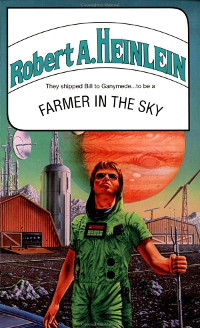
Farmer in the Sky by Robert A. Heinlein

As a general rule, Heinlein novels are either really controversial (The Moon is a Harsh Mistress), really meta (The Number of the Beast), really fun (Citizen of the Galaxy), or some combination of all three (Starship Troopers). Farmer in the Sky is one of the really fun ones.

This novel was written before the Apollo 11 moon landing, but it read like something from an alternate reality long after that pioneering era, where the space program never slowed down. For that reason alone, it was a fascinating book. You can really see how it inspired people back in the 50s and 60s to reach for the stars.

More than that, it was really fascinating to get into the knitty gritty of colonizing a world like Ganymede. This is one of Heinlein’s juveniles, so he doesn’t get too technical, but you can definitely tell that he did the research and built a plausible near future world. More than that, it’s the kind of world I’d actually love to live in. Ganymede is the new frontier, and the colonists who settle it are pioneers in every sense of the word. Not everyone makes it, of course, but those who do are rugged, resourceful, and remarkable.

This was a really quick read. There was a lot of little stuff that dates it to the 50s, like gender relations and the prevalence of the Boy Scouts, who are sadly no longer a cultural force in today’s society. None of it bothered me or threw me out of the story. If anything, it added to the novel’s charm.

Heinlein knows his stuff. This was a really fun book. If you’ve never read any Heinlein, Farmer in the Sky is a good place to start.