Extra Sci-Fi S3E6: Dune – Plots and Plans

In Future Mrs. Vasicek’s writing group, we were talking about plotting and I remarked that plotting didn’t seem to be one of Frank Herbert’s strengths in Dune. Looking back on it, though, I think that the plot was pretty solid, but he chose to focus on other things instead—such as all of the machinations and ultimate downfalls of all of the characters, which Extra Credits discusses in this video.

When they brough up the “competent man” trope in the last season, and argued against it, I wasn’t quite sure how to take it. I know people in real life who fit the competent man trope very well, and who actually live up to Heinlein’s ideal:

A human being should be able to change a diaper, plan an invasion, butcher a hog, conn a ship, design a building, write a sonnet, balance accounts, build a wall, set a bone, comfort the dying, take orders, give orders, cooperate, act alone, solve equations, analyze a new problem, pitch manure, program a computer, cook a tasty meal, fight efficiently, die gallantly. Specialization is for insects.

In this episode, the folks at Extra Credits argue that Herbert subverts the competent man trope in Dune by showing a bunch of characters who fit that trope failing because they fit it too perfectly. But as you can see from the quote above, that’s actually not the case.

The empaths and mentats in Dune are specialists. In fact, the world of Dune is full of specialists, from the pilots of the spacing guild to the Imperial Sardaukar to the Bene Gesserit—even the Fremen, to a certain extent, are specialists rather than Heinleinian competent men.

The video isn’t wrong to point out that specialization and hubris is the ultimate cause of all of these characters’ downfall. But they miss the trope when they argue that this is a critique of Heinlein and golden age science fiction. If anything, it’s a vindication. Heinlein’s competent man is all about being a jack of all trades, master of one (or two, or half a dozen, as the case may be). In Dune, the characters who do best are the ones who figure this out.

I do have to say, though, it’s kind of fun to revisit Dune, seeing as it’s been so long since the last time I read it. Future Mrs. Vasicek didn’t like the book at all, but I enjoyed it, especially on the second read. Very few things made sense on the first read. My favorite character is probably Jessica, though the folks at Extra Credits are absolutely right about the way that Yueh played her.

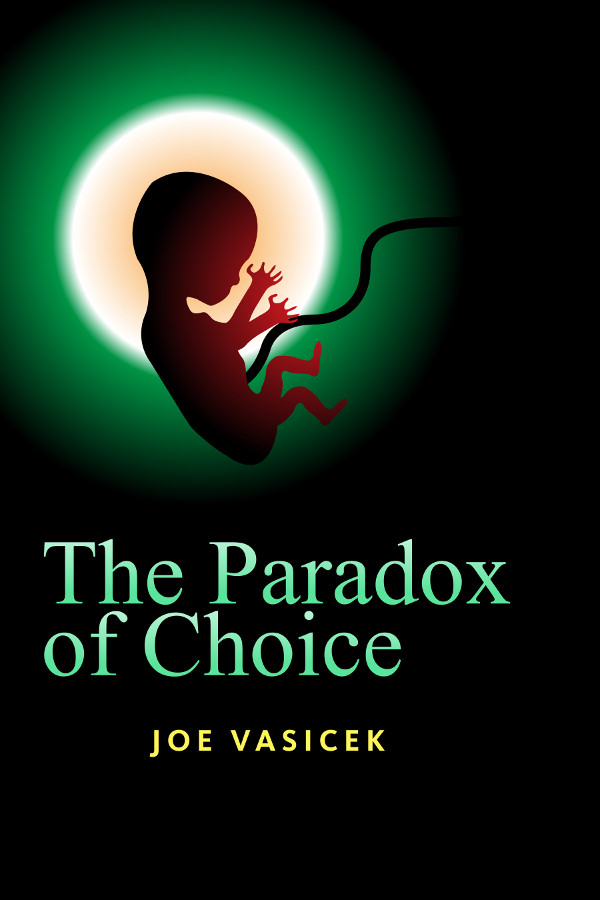
The Paradox of Choice: A chilling glimpse of an all-too possible future.

In cases where there may be severe deformities… I can tell you exactly what would happen. The infant would be delivered. The infant would be kept comfortable. The infant would be resuscitated if that’s what the mother and the family desired, and then a discussion would ensue between the physicians and the mother.


The Paradox of Choice

Enough small talk, Ruth. You didn’t come here to chat.

Is it really that obvious?

I’m afraid so. Who’s the father?

I don’t know, Jezebel. I can picture his face, but I can’t remember his name. I don’t even have his number. It was just one night—this was never supposed to happen.

Mmm hmm.

I’ve made a horrible mistake.

Don’t say that about yourself, dear. You’re a very strong woman. I’m sure we can find a way to fix this.

You are?

Absolutely. This is the current year, after all. Women have rights.

I know, but I think it may be too late. This is something I have to live with now.

Don’t be ridiculous, Ruth. It’s your choice.

Yes, but my baby is already three weeks old. I mean, look at him. He has my eyes.

You can’t seriously think of that as your baby.

Why not? He’s mine, isn’t he? I’ve already given birth to him.

Yes, you have. But the Supreme Court ruled that personhood does not extend to infants until they possess the ability to comprehend language. Until then, that thing is no different from a dog, or a cat.

But Jezebel, this is my child!

Not until its brain develops well enough that it can speak. Until then, there’s no legal difference between terminating him or putting down a dog.

How can you say that? Look at him, Jezebel! Look at how expressive his face is—how his eyes follow you—how he smiles.

Ruth, please. Don’t let your emotions cloud your judgment. Do you know how much other women have sacrificed to give you this choice?

No, but—

You are an empowered, modern woman. This is your choice. Don’t be ashamed of that. Be proud. Celebrate it.

But what if I don’t want to go through with it?

Come on, Ruth. Be reasonable. Are you really in a position to raise a child?

No, but I—

Then the most merciful thing you can do is terminate it, while you still can.

What?!

It’s true, and you know it. If you decided to keep it, you’d most likely find yourself trapped in the cycle of poverty, a single mother for the rest of your life. And is that any way to raise a family? Trust me, Ruth. Better to let it go.

But how is that worse than killing him?

The statistics don’t lie. A life trapped in poverty is not worth living.

How do you know that?

Are you seriously going to fight with me on this? You’ve led a privileged life, Ruth. We both have. It’s cruel and barbaric to bring a human life into the world under lesser circumstances than you’ve enjoyed.

But I already have.

No, you haven’t. Not according to the law.

But—but what if the law is wrong?

Ruth, dear. Please. You’re changing the subject. We aren’t talking about the law, we’re talking about you. About your life. About your freedom. About your choice.

I don’t know, Jezebel. It’s just… it doesn’t feel right to kill my child.

There you go again, calling it a “child.” Do we need to go over this again? It’s not a real child until it can speak.

But some babies can learn to make signs when they’re only a few months old. They can make gestures for food, for play, or for when they’re tired or hurt. Doesn’t that count?

Don’t get caught up in the minutiae of it, Ruth. The truth is, this is your choice, and anyone who tells you otherwise is just trying to shame you into silence. Don’t be ashamed. Don’t let them silence you.

I don’t know.

What do you mean, “I don’t know”? Do you doubt the science of brain development? Do you think you know better than the Supreme Court of the United States?

Okay, okay. I’m sorry.

Then what is holding you back?

Look at him, Jezebel. Isn’t he the cutest thing you’ve ever seen?

I know you feel attached to it, Ruth. And I know how hard this must be for you to hear. But I promise you, there is nothing wrong with letting it go.

Are you sure?

Yes. In fact, it would be a mercy.

But Jezebel—I can’t.

What do you mean?

I can’t put down my baby. It doesn’t seem right. Even if it is a mistake, it’s my mistake.

Then why should you have to carry it with you for the rest of your life? Why do you refuse to let it go? There’s still time for you to make this right. Be brave, Ruth.

How is it “brave” to kill my child?

We’ve been over this, Ruth. It’s not a “child.” Not yet.

Child or not, it’s still my own flesh and blood. I carried it to term and gave birth to it. I gave it life.

Yes, but it’s not a real person.

How can you say that? It laughs, it cries. It has feelings. If I don’t put it down, it will one day grow up to be a man. To be my son. His children will be my grandchildren. And who knows but what he’ll accomplish more in his life than I will in mine?

There you go, letting your emotions get the best of you again.

But where’s the line, Jezebel? When does he become a real human person? I’ve already brought him into this world.

Yes, you have. But until the law says he’s a person, he’s not one.

Is that what it all comes down to, then? The law?

I didn’t come here to argue with you about the law, but if that’s what it takes to convince you, then so be it. Yes, it all comes down to the law. If the law says you’re a person, you’re a person. If it doesn’t, then you’re not. Why make this more complicated than it needs to be?

Because… what if the law is wrong?

It isn’t wrong. This is your right. Your choice.

But isn’t murder a choice, too?

No, Ruth. Murder is a crime. It breaks the law.

But is that the only thing that makes it wrong?

Why should it matter?

Because putting down this child—I mean, terminating this life—it feels a lot like murder.

It’s not, Ruth. The law says so.

But what if the law said that I’m not a person? What if it said that you were within your rights to kill me? That would be murder now—would it still be murder then?

Ruth, I—

And who makes the law, anyway? How do we know that they’re right? I mean, yes, I know that without law, we can’t have a functioning society, but what if our laws are bad? What if following the law is wrong?

Don’t be ridiculous. Following the law isn’t wrong, because it’s the law. And the law says that you have a choice.

But—

Enough arguing, Ruth. Are you going to make your choice, or not?

What if I choose not to?

Ruth, Ruth, Ruth. How many times must we go over this?

But you said it was a choice. That means that I have options. I don’t have to kill—I mean, terminate it. If I did, it wouldn’t be a choice, would it?

That’s not the point.

Yes, it is. And it feels like you’re trying to make the choice for me.

Only because it’s the right one.

Why?

Because it’s empowering.

Then why does it feel like you’re trying to force it on me?

Don’t argue with me, Ruth. This is for your own good. One day, when you’re a happy, successful woman, you’ll look back on this conversation we had and thank me. Oh look, it’s beginning to snow.

It’s too warm outside to be snow.

My mistake. At least it’s good for the plants. Now, do you need me to come with you to the crematorium? I’m here to help you, Ruth. Every step of the way.

I don’t know. I just—

You just what?

Never mind.


Author’s Note

On January 22, 2019, New York enacted the Reproductive Health Act, which legalized abortion up to the moment of birth and repealed criminal charges for harming unborn children. A few weeks later, the Repeal Act was proposed in Virginia, which would have similarly repealed abortion restrictions in the state. In discussing this bill, Governor Ralph Northam said the following:

“In cases where there may be severe deformities… I can tell you exactly what would happen. The infant would be delivered. The infant would be kept comfortable. The infant would be resuscitated if that’s what the mother and the family desired, and then a discussion would ensue between the physicians and the mother.” (Julie, Cary, Ralph Northam, Ask the Governor with Va. Gov. Ralph Northam, WTOP-FM, 30 January 2019)

Governor Northam’s hypothetical case bears a striking resemblance to the 1939 case of baby Knauer, one of the first victims of child euthanasia in Nazi Germany. Baby Knauer was born with many severe deformities, including blindness, imbecility, and missing limbs. Hitler himself authorized the killing of the child. (Staatsarchiv Nürnberg, United States of America v. Karl Brandt et al., zitiert nach Ulf Schmidt: “Outbreak of War and Euthanasia. Results of Recent Research into the ‘Knauer Child’ in 1939.”) After baby Knauer, the Nazi eugenics program rapidly expanded to include forced euthanasia of the mentally ill and handicapped, and ultimately evolved into what we now know as the Holocaust.

In today’s political discourse, we have a tendency to use the Nazis as a proxy for the ultimate evil. Nazis don’t just exist on the spectrum of good and evil; Nazis are the scale. However, a compelling argument can be made that abortion in the United States exceeds the evil of the Nazis.

First, consider the numbers. Six million Jews were exterminated in the Nazi Holocaust, plus several hundred thousand Romani, Homosexuals, Jehovah’s Witnesses, and disabled. However, since Roe v. Wade, more than sixty million babies have been aborted in the United States alone. (Number of Abortions – Abortion Counters. http://numberofabortions.com/ accessed 9 March 2019) The number of babies aborted in the United States is an order of magnitude larger than the Holocaust.

Second, consider the historical context. In the 1920s and 30s, Germany was a shattered nation laboring under the burden of war reparations, hyperinflation, and starvation. In contrast, we are living in an unparalleled era of prosperity. The Germans turned to the Nazis out of fear and a sense of national crisis; we “shout” our abortions out of the apathy and selfishness of our own decadence.

Third, consider the victims. The German Jews were a distinct people with their own unique culture and religion. It wasn’t very difficult for the Nazis to “otherize” them, because they were already a peculiar people. In contrast, we are slaughtering our own flesh and blood, the fruit of our loins—our children.

The United States was founded on the principle of three unalienable rights: life, liberty, and the pursuit of happiness. And yet, when we look back at our own history, we find it difficult to comprehend how our fore-bearers could believe these things and still own slaves. I believe that future generations will look back on us in much the same way, and question how a people who claim to believe in the unalienable right of life could assent to the wholesale slaughter of the unborn.

Any woman who has carried a child to term will tell you that the baby inside of her has their own tastes and personality; that they sleep at certain times and wake at certain times, and get angry, happy, upset, or calm while still inside the womb. The science of biology tells us that from the moment of conception, a fetus possesses its own unique DNA, which determines hair color, eye color, sex, genetics, personality—everything that makes us human, short of actual lived experience. The point of viability is constantly being pushed back by developments in lifesaving technology, making it a poor moral standard. Is a child aborted at twelve weeks today any less of a human being than a child born in future decades, when we will have the technology to save that baby outside of the womb?

I don’t want to judge anyone who has had an abortion. I don’t know the details of every case or what lies in every human heart, and I cannot say with certainty that every abortion is wrong. However, I can say with certainty that every abortion ends a human life. When I look at what my nation has done, and the blood on our hands of the most innocent and powerless among us, I feel to echo Thomas Jefferson’s words: “I tremble for my country when I reflect that God is just, that his justice cannot sleep forever.”

This story was very difficult for me, and I wasn’t originally going to write it. The idea for it came to me several years ago, but it wasn’t until April 2017 that I felt impressed that this was something I needed to write. Even then, I only wrote it halfway. But the events of 2019 convinced me that I needed to dust off this old manuscript and bring it to completion.

Because I want this story to have the furthest reach, I am publishing it under a Creative Commons Attribition 4.0 International license (CC BY 4.0). Feel free to download it, upload it, meme it, rewrite it, and even resell it for your own profit. All I ask is that you copy this license and provide a link to the original.

I’ll end with this quote from Defying Hitler by Sebastian Haffner:

“We watched the earlier events unfold. They occupied and excited us… but they did not confront us with ultimate decisions of conscience. Our innermost beings remained untouched. We gained experience, acquired convictions, but remained basically the same people. However, no one who has, willingly or reluctantly, been caught up in the machine of the Third Reich can honestly say that of himself.”

I believe that we are living in a similar time. The assault on the sanctity of life deeply affects us all, both individually and as a society. In writing and publishing this story, I hope to have done some small part.

Thank you for reading.

Creative Commons License

The Paradox of Choice by Joe Vasicek is licensed under a Creative Commons Attribution 4.0 International License.
Extra Sci-Fi S3E5: Dune – Origins

It’s always fascinating to learn how the big name authors got their start. As a fan, it pulls back the mystique a bit and makes those authors more relatable, and as a writer, it’s enormously encouraging to learn that even the big names had to pay their dues too.

I wonder what Dune would have become if it were published today? It seems that most of the earlier hurdles had to do with publishers rejecting the manuscript, which wouldn’t be the case in today’s indie publishing world. Of course, it would also take a lot of promotion to give it traction, but Herbert and Lanier did that as well… but would Herbert and Lanier have even met if the book had been self-published first? And would their own promotion efforts have been enough without the boost the book got by being serialized in Analog?

Impossible questions, I know. A middling level of indie success might have prevented Herbert from developing his contacts in journalism and publishing which led to his later success. Or it might have given him more time to write, allowing him to expand Dune into something even greater than what it eventually became. Without having to work with an editor like John Campbell, Herbert might have killed off Alia, or published the story before it was truly ready. Or he might have written a better story.

There are two big takeaways that I took from this video:

First, that the slow-burn path to success is still a legitimate path. We have this idea that books are like produce: after a certain space of time, they spoil. Such is not the case. This was one of the big things that Kris Rusch always harped on, about how indie publishing is different from traditional. In recent years, it seems that indie has taken on a bit of the produce model itself, with authors turning to rapid release strategies to stay relevant. But even in the old world of traditional publishing, books still made it from time to time on the slow-burn model—even classics like Dune.

Second, that publishing well isn’t something you do alone. It takes other people, not just readers, but editors, publishers, and other people with connections, sometimes unlikely connections. This isn’t just on the marketing end of things, or even the publishing end, but on the writing end as well. No man is an island, and no successful indie is ever totally alone.

What are your thoughts?

Extra Sci-Fi S3E4: The Return of the King

Okay, I think the folks at Extra Credits got it wrong with this one in a really big way.

Gollum didn’t redeem himself. That’s the entire point. Redemption is an important and very Christian theme of Lord of the Rings, but so is the problem of evil. Several comments on the video point this out:

I disagree about Gollum. He gave into the temptation of the Ring. I think more he is there for how God can turn evil into a good.

MJBull515

Gollum is more a Judas figure. Judas was not redeemed for betraying Jesus, but his evil actions did allow for the salvation of Man through Christ’s sacrifice.

Isacc Avila

“A traitor may betray himself and do good he does not intend.” Judas betraying Jesus was the catalyst that led to salvation. Gollum’s final act of greed was the catalyst that led to the destruction of the Ring.

Jet Tanyag

The thing that really gets to me, though, and the part where I think the folks at Extra Credits really do a disservice to these books, is how they argue, very subtly, that Gollum shouldn’t be held responsible for his own actions, that it wasn’t really his fault that he was addicted to the ring—that he “couldn’t escape his own sin.” (4:50)

No. Just, no.

The entire point of redemption is that we CAN escape from our sins. We see that with Theoden, we see that with the Dead Men of Dunharrow, and we see that in all the other examples of redemption that were not discussed in this video, like Boromir. In fact, Boromir is a far better example of “redemption through a single, all-important act.”

But it goes much deeper than that. In order to be meaningful, sacrifice must be intentional. It’s not just the act that matters, but the intention behind the act.

With that in mind, consider Gollum’s intentions when he bit off Frodo’s finger. The only way you can argue that his intentions weren’t evil is that the Smeagol half of his split-personality overcame the Gollum half, and flung him into the lava. But the support for that reading is ambigous at best. And if that isn’t true, and Gollum simply fell into the lava by accident, then it wasn’t a sacrifice on his part, and therefore there was no redemption.

To say that Gollum made an “accidental” sacrifice is nonsense. And to say that he redeemed himself through that sacrifice is not only a faulty argument—it completely undermines the themes of redemption and sacrifice throughout the entire book.

Gollum was never redeemed. Through him, Middle Earth was saved, but he was never personally redeemed, and that’s the point:

I’ve heard a different interpretation where Gollum’s sacrifice wasn’t an act of redemption, and was never meant to be. In the end, it was the ring’s own power that caused it to be destroyed; not Frodo, not Gollum, it was an accidental suicide. As far as I understand it, the message wasn’t “good triumphs over evil”, instead it was “evil is more powerful than good, but all it can do is destroy; in the end it will always destroy itself”.

EvilBarrels

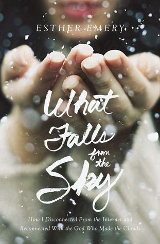
What Falls from the Sky by Esther Emery

This kind of book isn’t my usual fare, but I discovered this author through some YouTube videos on homesteading, and when I read in the description about how she went for a year without the internet, I thought I’d give it a try. I was not disappointed.

Esther Emery has had an interesting life. With one foot in the California theater scene, another foot in the evangelical Christian scene, and… a third, foot, I guess? …in Idaho and the intermountain west, she’s got a very interesting perspective. Her experiences give her a lot of interesting insights, too. When she decided to go for a year without the internet, her life and marriage were falling apart. Going offline turned that all around.

It really surprised me how much she opens up. The writing did feel a bit pretentious at first, but that’s more a function of style than of sincerity. This books is very honest, sometimes brutally. In a world where so many people keep carefully crafted social media accounts, signal their own virtue to their peers, or choose to spend most of their time in echo chambers that serve to reinforce their views, a book like this one really stands out.

Because quitting the internet wasn’t just a stunt for Esther, thought it might have started out that way. It was a genuinely transformative event. As someone who could not function without the internet (mostly just because that’s how I make my living), I found her story to be both fascinating and refreshing. The insights that Esther shares from her experience are quite powerful.

So yeah. Good book. Not science fiction at all, but I enjoyed it. Maybe you will, too.

Extra Sci-Fi S3E3: The Two Towers

This episode of Extra Sci-Fi got me to thinking about a speech that Orson Scott Card gave when he visited BYU back in 2007. He said a bunch of interesting things that have stuck with me over the years, including (to paraphrase) “conservatism is the new counterculture.” He was probably ten to fifteen years before his time on that one. But the thing that struck me the hardest was this:

Fiction is the culture talking to itself.

This goes along with what I talked about in my commentary on the last Extra Sci-Fi episode: that every generation reinvents the world. How do they reinvent it? Through story. And because there’s a necessary give-and-take as part of the process, the bestselling fiction that a culture produces is a reflection of that culture’s values, the issues of the day, and the zeitgeist as it changes and evolves over time.

We can see this in the themes discussed in this video. While Tolkien denied that Lord of the Rings was allegorical in any way, I agree with the folks at Extra Credits that the world wars and the rise of fascism almost certainly influenced his depiction of good and evil. It’s probably also true that the conflict between industry and nature influenced the book too. This isn’t because Tolkien set out to tell a story about these things; rather, because Tolkien himself was a product of the culture of his day, that culture shines through in his works.

This makes me wonder about the stories that don’t become bestsellers. Are there lots of amazing, well-written stories out there that don’t succeed simply because they’re out of step with the ongoing cultural conversation? Kind of like Orson Scott Card’s argument, back in 2007, that “conservatism is the new counterculture.” He made that argument a decade before we reached peak social justice, and got pushed more or less into cultural irrelevance because of it.

Card might not be the best example, because of his role as a culture warrior as well as his fiction writing career. With his Ornery American column, he was basically a shitposter before shitposting was a thing. But I wonder: what are the stories that aren’t getting traction only because they don’t really speak to the culture?

Or is it even possible to write a story that doesn’t speak to your own culture? Since you are a product of the culture that you live in, does that mean that your stories will be a product of that culture too? That certainly seems to be the case with Tolkien. Hindsight is 2020, though, and it’s really tricky to account for unknown unknowns.

I don’t know. I guess the big takeaway is that if you want to be a sucessful writer, you should do everything you can to immerse yourself in your own culture, not only because that’s the best way to improve your storytelling instincts, but because all of the most successful stories contribute something meaningful to the culture’s ongoing conversation with itself.

Pros and Cons: Print Books vs. Ebooks vs. Audiobooks

One of the long-term things I want to do is build a home library. Last weekend, I started cataloging my books and putting together plans for how to do that. I’m sure I’ll be posting more about that in the future, but the big question at the start of it was this:

What are the advantages and disadvantages of each book format?

So I spent some time thinking about it, as well as browsing the internet to get other people’s thoughts and perspectives. There are three major formats for books now: print, ebook, and audio. Here, as best as I can tell, are the major pros and cons with each:

Print Books

Pros:

  • Ownership. If it’s physically in your possession, then you are the undisputed owner of that book.
  • No screens, batteries, or power requirements. Does not require a device to use.
  • Easy to share with others (though there is a risk that they won’t return it! See ownership above).
  • High visibility. Because of this, print books can be symbols of status or social reputation. They also are much harder to ignore once you put them in a TBR pile.

Cons:

  • Space intensive. You have to find a place for them.
  • Heavy, especially when boxed in large numbers.
  • Prone to damage, such as water damage, parasites, etc.
  • Requires shelving to properly store and display.

Ebooks

Pros:

  • Portability. Fits onto your everyday carry (EDC) device, such as a phone or tablet, as well as a dedicated ereader.
  • Requires very little storage space, both physically (on a device) and digitally (small file sizes).
  • Cheap, at least for indie published books.
  • Can read more easily at night, depending on the device.
  • Privacy. It’s easier to hide an ebook from people than it is to hide a print book, or even an audiobook.

Cons:

  • Ownership is ambiguous at best. Do you own your ebook files outright, or do you own a license to use the files? Can Amazon (or whatever site you bought the ebooks from) remove the books from your device at their discretion? It’s been done before!
  • Requires a screen or device to use.
  • Difficult (though not impossible) to share. There is a kindle lending library, but I’ve never used it, and in the handful of instances where I’ve tried, I eventually gave up trying to figure it out. Copying and sideloading is possible, but tricky. Much easier to pull a print book off the shelf and hand it to somebody.

Audiobooks

Pros:

  • Can listen while doing other things, especially driving or mindless chores.
  • Can also fit into the little gaps in your schedule, turning time that would otherwise be wasted into reading time.
  • Listening is a more passive exercise than reading. This can be a con as well as a pro.
  • Fits easily onto a phone or other EDC device, giving it many of the same portability advantages of ebooks.

Cons:

  • Takes longer to read. You can speed up the narration, but it’s not as easy or efficient as skimming a book.
  • More expensive than the other formats. An exception might be for rare or out-of-print books that aren’t available in digital.
  • Larger files, which take up more storage space. You can easily keep a large library of ebooks on one device, but you’d need a server or a dedicated hard drive to do the same with a large library of audiobooks.
  • Ownership is ambiguous. See above.

What are your thoughts? Let me know!

New goal: bog every day (except Sundays)

For a long time, I’ve struggled to figure out exactly how this blog fits into everything that I do. And while, in the past couple of years, I think I’ve figured out a better way to integrate it with my other creative efforts, I still occasionally go through periods of time where this blog gets neglected, followed by periods where I struggle to come up with relevant content. Not only does this mean that the blog isn’t running as well as it should be, but it also takes energy away from my writing.

After thinking things through, I’ve decided to try out a new approach: blog every day (except Sundays) for the forseeable future. The last time I did this was probably the A to Z blogging challenge several years ago, and that turned out really well. Why not try it again?

But Joe, isn’t that going to suck up more time and energy from what you’re already doing?

Not necessarily. Writing is a muscle that gets stronger every time you exercise it, and blogging every day is one way to keep that muscle toned. Also, when something you do becomes a habit, it takes much less effort to keep up on it. 100% is easier than 99%.

But Joe, this is 2019. Blogging is dead.

I’m not entirely convinced of that, but even if it’s true, I don’t plan to shutter this blog anytime soon. Better to go all the way than to do things halfway, especially if there are benefits other than increasing my unique visitors and engagement stats. Besides, it’s not like this blog is monetized (beyond my own book pages and affiliate links, of course).

So yeah, that’s the plan. We’ll see how it turns out. I don’t expect the content to change much in the near future, but it may, especially as I figure out what needs this blog best fills. If you have any thoughts or comments, feel free to share them! I always appreciate hearing from you.