Author: Joe Vasicek
Joe Vasicek is the author of more than twenty science fiction books, including the Star Wanderers and Sons of the Starfarers series. As a young man, he studied Arabic and traveled across the Middle East and the Caucasus. He claims Utah as his home.
Earth was like a womb…
Earth was like a womb, about to give birth to a glorious age of human expansion across the boundless frontiers of space. And yet, to actually be in that future, and find it cold, dark and silent—it was chilling.
Genesis Earth by Joe Vasicek
October reading recap
Books that I finished

Fitzpatrick’s War by Theodore Judson

A Man Called Trent by Louis L’Amour
The MAGA Doctrine by Charlie Kirk

How to Write a Screenplay by Mark Evan Schwartz
The Tree of Life by John Welch and Donald W. Parry, eds.
Blood of Amber by Roger Zelazny

Pardon of Innocence by Michael Flynn
Love Worth Making by Stephen Snyder
A Conflict of Visions by Thomas Sowell

Temple Theology: An Introduction by Margaret Barker

In It Together by Janci Patterson
The Mythmakers by John Hendrix
Books that I DNFed
- The Mom Test by Rob Fitzpatrick
- Goliath’s Curse by Luke Kemp
- So You Want to Start a Podcast by Kristen Meinzer
- Write a Must Read by AJ Harper
- The Big One by Michael T. Osterhom and Mark Olshaker
- AI Needs You by Verity Harding
- Why Nations Fail by Daron Acemoglu and James Robinson
- Women’s Anatomy of Arousal by Sheri Winston
- The Culture of Narcissism by Christopher Lasch
- Understanding the Signs of the Times by Donald W. Parry and Jay A. Parry
- Shadow of the Conqueror by Shad M. Brooks
What if it’s all hallucination?
I’ve been thinking a lot recently about something my wife said about AI. She’s finishing up her PhD in computer science, and knows more about generative AI and computational linguistics than just about everyone I know IRL (and most people I follow on the internet, too). So when she speaks on the subject, I do my best to listen.
Ever since OpenAI and ChatGPT took the world by storm, she’s been telling me that she doesn’t think the hallucination problem (where LLMs make stuff up) will ever be solved. Indeed, she doesn’t think it’s a “problem” in a technical sense at all, because every response from a generative AI is a hallucination—and that’s kind of a point. These aren’t really thinking machines, they’re hallucinating machines, replicating patterns in human language and thought. What difference does it make if the answer is false or true?
We call it “artificial intelligence,” but that’s really a misnomer, because these machines have no “intelligence” at all—at least, not in the human sense. Instead, they are like mirrors of our own intelligence, parroting back things that sound like they involve real thought, when really it’s all just pattern replication. They aren’t trained to recognize truth, they’re trained to recognize patterns. So, in reality, everything an AI generates is a “hallucination.”
This is why she thinks that we will never fully solve the hallucination “problem.” Indeed, the whole effort is a bit like trying to turn a lion into a vegan. And until we can train an AI on absolute truth—a thing that humanity has never been able to agree upon, much less reduce to zeroes and ones—then all we will really be able to do is create better and better plumage for our stochastic parrots.
What are the implications of this? First of all, we can safely ignore the worst of the AI doom porn, because a machine that cannot fundamentally recognize truth from falsehood is probably not capable of taking over the world and exterminating or enslaving humanity, even if it does qualify as a “general” intelligence.
We can also lay aside the fear (or the pipe-dream) that AI will 100% replace humans in all or most or really any fields. Even if they can do 90% of the work, recognizing truth is still an essential part of just about everything we as humans do. We can give it jobs and tasks—perhaps even some genuinely complex tasks—but so long as these machines cannot fundamentally distinguish between truth and falsehood, we will still need a human to oversee them.
That doesn’t mean that most humans are safe from being replaced by AI, though. If an AI-augmented person can accomplish the work of 10x or 100x the number of other human workers, we’re still going to face a massive disruption in the labor market and society as a whole. The question, then, is one of ownership and distribution. Who owns the AI? How do we distribute the productivity gains from AI? These are some of the difficult problems we need to solve in the next few years.
But the real problem—and the scariest implication of all of this—is the question of truth itself. After all, if AI is fundamentally incapable of recognizing truth, and all AI output is hallucination on some level, then who determines what is true and what is not? Sam Altman? OpenAI? Congress? Some three-letter government agency?
I think this is going to be the defining question of the rising generation, which is growing up in an AI-native world. What is truth? How can we recognize it? How do we distinguish between what is true and what is false? Increasingly, we are going to find that these are questions that AI cannot answer. And in a world saturated by deep fakes, bots, and sock puppets, where the internet is dead and all the most powerful players are constantly fighting a 5th gen war with each other, truth will be the thing we are all starving for.
The tragedy of the millennial generation is that everything in our world conspired to starve us of the three things we needed most. More than anything else, we hungered for meaning, authenticity, and redemption—and for the most part, we never got it. You can blame social media, the boomers, capitalism, student loan debt, the Republicans, the Democrats—it really makes no difference. All of those things and more came together to hobble our generation and make it almost impossible for us to launch.
Will the same thing happen with the zoomers and gen-alpha over the question of truth? It appears that things are moving in that direction. In a world saturated with AI, truth becomes a scarce and valuable commodity.
So what do we do? First, I think it’s important to recognize that AI cannot and never will be an authority on truth. At best, it only mirrors our own thoughts and ideas back to us—and at worst, it feeds us the thoughts and ideas of those who seek to control us. But AI itself is neutral, just like a gun or a knife lying on a table is neutral. What matters is how it is used.
Beyond that, I don’t really know what to say. Only that this is something I need to think about a lot more. What are your thoughts?
Minimum viable sleep
I feel sorry for my wife. She needs a lot more sleep than I do. If I can get four uninterrupted hours of zzz, I’m doing great. Of course, how long I can keep that going is an open question—and one we put to the test every time we have a new baby. But he’s getting better, and in another month or two, he’ll probably (hopefully) be sleeping through the night.
Things are going pretty well around here. The house is a wreck, but a manageable one. Still need to finish unpacking from the move, but that’s a long-term project at this point. The kids are doing well. Wife and baby seem to be doing well. She’s got her thesis defense in a couple of weeks, at which point the PhD is fully off her plate. Which will be nice for all of us.
For the last couple of weeks, I’ve mostly been bouncing between different projects, making a little progress on each, but not really finishing or making significant progress on any of them. Hopefully, that will soon begin to change.
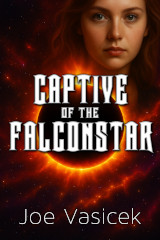
For the next couple of weeks, I plan to work on Captive of the Falconstar, moving it along as far as I can. Mostly, though, I just want to keep it fresh in my mind, since if four or five months go by without working on it, it’s going to be that much harder to pick it up again.
I’m really excited to get back to work on this one. My subconscious brain has been mulling over this story for the past few years, and I think the time is ripe to put it on the page. I’m also a lot more skilled at writing with AI, which makes a huge difference. The first time I attempted this WIP, I think I bit off more than I could chew. But with the AI draft of The Soulbond and the Sling under my belt, I’m very confident that I can finish this one.
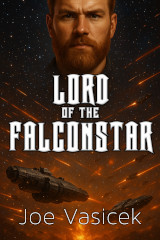
My goal is to publish it this spring/summer, along with the third book in the trilogy, Lord of the Falconstar. That might be a little too ambitious, but with the baby already 1+ months old and our lives slowly settling into a reasonable routine, I think it’s good to start planning these things again. The rough AI draft is already complete, so it shouldn’t be too difficult to pick up from Captive of the Falconstar when the time comes. Really, it’s more like one really long story split in the middle.
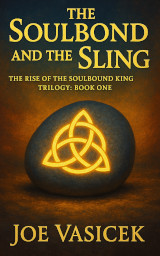
In another couple of weeks, I plan to pick up The Soulbond and the Sling again, mostly just to keep it fresh. I’ll also be working on the rough AI draft for book 2, The Soulbond and the Lady, working out the chapter prompts and everything else. Instead of rushing through that one, I plan to take my time and get it right. Hopefully that will make the rest of the AI drafting process go much more smoothly.
That should keep me busy until Thanksgiving. Again, the goal is not to finish any of these projects, but to work on them enough to keep them fresh in my mind. Of course, there is a mental cost to switching between WIPs too frequently, so I’ll still try to make significant progress on each of them while I can.
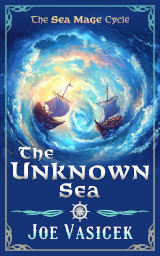
After Thanksgiving, I plan to work on The Unknown Sea until it’s done and ready to publish. I’ve already been making really good progress on this one, and the only reason I laid this WIP aside was to keep the others fresh. But once I pick it up again, I think it will go quickly, and I may even be able to finish the final polished draft before Christmas.
Of course, there are only three full weeks between Thanksgiving and Christmas this year, and the holiday season is always busy with family stuff. We’re staying home this year—no traveling across the country to spend the holidays with family (we did that over summer). But I’m sure it’s going to be an eventful season, especially with the new baby. So I might end up picking up The Unknown Sea a little before Thanksgiving, just to get a head start.
And now, I can hear the kids waking up in the room above me, so it’s time to schedule this post and get started with another day. With luck, maybe I can get a little writing in before things get too crazy.
Midweek Excerpt: The Unknown Sea, Chapter 2
Celeste inhaled deeply as she stepped out of the cottage and into the salty breeze from the sea. Without a backwards glance, she bounded down the worn dirt path that wound from her home to the village and the harbor.
“Morning, Celeste!” old Marta called out from her herb garden as she passed her cozy house. “Off to help the fishermen again?”
Celeste grinned. “Someone has to make sure they don’t tangle all their lines.”
“Good luck to you! And come home safe!”
The village was bustling with morning activity. The fishermen’s wives were busy mending nets and hanging laundry, while their children ran down the winding streets and played in the village green. The sight brought a smile to Celeste’s eyes.
“Good morning, Celeste.”
“Good morning to you, ladies!” she exchanged cheerful greetings. But she didn’t stop until she had reached the harbor.
“Ho there, young sea mage!” Graybeard Tom bellowed as she neared the docks. “Come to work your magic on today’s catch?”
“If you’ll have me,” Celeste answered. “Though I daresay my fishing spells might put the rest of you to shame.”
Tom let out a hearty laugh. “Aye, and perhaps old Joanna’s pigs’ll sprout wings and soar over the village green! Best get out there and prove it, lass.”
Celeste laughed with him though she quickened her pace as she noticed most of the fishing boats had already gone out to sea. She all but ran across the dock, the weathered planks creaking beneath her feet as she reached her own small sailing boat. It was tied out at the very end, past the handful of larger and sturdier fishing vessels that hadn’t gone out yet.
She ran her hands along the hull of her little skiff, feeling the familiar thrill as her magic responded to the sea. For a brief moment, Celeste allowed herself to imagine that she was following in the footsteps of her sister—a future where she was a famous sea mage in her own right, not merely the half-sibling of the greatest sorceress in the world. Yes, the village was home, but it was also something of a cage. There was so much more waiting for her out there, beyond the safety of this isolated cove.
“One day,” she murmured softly. “I’ll be right there with you, Seraphine.”
The salt-laden breeze tossed her hair pleasantly as she sailed her little skiff into the bay. She squinted and shielded her eyes as she scanned the nearby waters, watching the scattered fishing boats bobbing in the gentle waves. Extending her awareness, she captured a small portion of the wind and channeled it into her sails with her magic. The breeze filled her canvas sail with a satisfying snap.
“Morning, Celeste!” Henrik called from where he was working his nets. “You come to help out with the catch?”
“You know it,” she called back, already sensing the subtle currents beneath his boat. With her magic, she could feel the fish moving in silver schools just beyond the reach of his nets.
She flicked her wrist, sending a pulse of magic through the water. The school of fish turned, moving toward Henrik’s waiting lines. From his vantage point in the boat, all it looked like was a slight shimmering in the water below. But when he moved to pull in his nets, his eyes widened.
“Well, I’ll be,” Henrik muttered, grunting as he worked to haul in the heavy catch. “Your magic’s getting stronger, girl. Very strong.”
“Thanks,” she grinned, pleased with her handiwork. She turned her little boat to starboard and sailed off to offer similar assistance to the rest of the boats scattered across the bay.
But this time, as she reached out with her magic again, something felt… off. The wind in her sails felt charged with an unseen energy, the waters somehow darker. A chill ran down her spine as a vague sense of danger tingled at the edges of her consciousness.
“What in the world?” she muttered, scanning the wide horizon. The sea looked calm and peaceful, the sky clear, but deep in her gut, something felt wrong.
“Hey, Celeste!” Henrik called. “You alright there, lass?”
She opened her mouth, but the words caught in her throat as a wave of dread washed over her. She knew with an absolute certainty that something unseen was approaching them—fast. But what could it be?
Pirates.
Her eyes widened as the answer came to her utterly without warning. She stood up quickly, holding onto the rigging of her sailboat for balance.
“Pirates!” she shouted. “Back to the village! Everyone! Now!”
The nearby fishermen stared at her in confusion, as if she’d just told them that their boats were made of cheese.
“Pirates? Where?”
“The sky’s as clear as crystal!”
“What are you on about, girl?”
Celeste’s eyes darted frantically across the empty horizon, straining for any confirmation of what she felt. She couldn’t see the threat, but she could definitely feel a malevolent presence growing ever closer.
“Trust me!” she shouted. “They’re cloaked somehow, but they’re coming. We have to go back!”
The fishermen looked from her to their nets, many of them grumbling under their breath. A few of them shook their heads and started to turn away from her.
“Please!” she shouted, pleading with them with her eyes. “How many times have I called the fish and filled up your nets? How many times have I brought you an empty catch. Please, listen to me! We don’t have time to argue!”
To her relief, some of the fishermen began to reel in their nets, preparing to come back. They started to argue with the others, their voices carrying across the water.
Celeste didn’t wait to join their discussion. She tacked her little sailboat, racing toward the next group of fishing boats. As she drew on her magic to fill her little sail with wind, her thoughts began to race. How could she convince them all in time? What if the pirates attacked before everyone made it to safety?
Her fingers unconsciously brushed against the amulet beneath her shirt. For a very brief moment, she considered using it to call her sister. Seraphine would know what to do. If anyone could convince the fishermen to come home, it was her.
No, Celeste thought, gritting her teeth. They’re already starting to listen to me. I can do this myself.
“Pirates!” she called, racing her little boat around the opposite end of the bay. “You all need to head back from the shore. Now!”
Here, too, the fishermen looked up at her in confusion and annoyance.
“What’s that, girl?”
“We’ve only started bringing in the catch!”
“I know, but there’s a pirate ship coming,” she shouted urgently. “It’s veiled, so you can’t see it, but I can sense it with my magic. It’s closing in fast!”
Like a sheepdog barking at a herd of unruly sheep, she circled the fishing boats, urging them all to come in. It took a while, but her tone finally struck a chord. One by one, the fishermen pulled up their nets and headed back to shore.
“Thank you!” Celeste called with relief. She might not be as great at magic as her sister Seraphine, but she would do whatever it took—even face the ridicule of the whole village—to keep her home safe.
Circling behind them, she called upon her power and called a mighty wind to speed the fishermen on their way. Seraphine probably could have done better, but every little bit helped to speed their retreat. The sense of impending danger never went away—indeed, it grew stronger by the minute—but she allowed herself a small sigh of relief as the last of the stragglers finally dropped sail and began to head back to the bay.
Off to port, a slight shimmer in the air caught her eye, like heat rising from sun-baked stones. Before Celeste could react, the shimmer warped, and suddenly—impossibly—a massive sailing ship materialized mere yards away from her, its sails blotting out the sun.
“No!” Celeste gasped, yanking the tiller hard. She barely avoided a collision that would have surely capsized her. From behind, she heard the yells and shouts of the pirates as they moved into pursuit.
Calling up every ounce of strength she had left, she summoned the wind—but it was too late. An iron grappling hook caught her ship by the stern, and two burly pirates swung onto her tiny sailing ship, their heavy boots making the whole vessel shudder.
Celeste stumbled backward, her hand flying to her amulet. At that moment, one of the pirates threw a golden chain around her neck, almost like a lariat.
The effect was immediate and devastating. Her connection to the magical world died instantly, her awareness cutting off as if someone had slammed a door. The wind died down, and her sails went limp. More importantly, her efforts to summon her sister were totally cut off. The gold burned against her skin, not with heat, but with a wrongness that made her stomach lurch.
“That’s better,” said the pirate, grabbing her arms before she could slip the golden chain off of her neck. “Can’t have our little prize calling up any squalls to trouble us, can we?”
“No!” she screamed, lashing out with her fists and feet. “Let me go!”
The pirates ignored her struggles and frantic cries as they easily subdued her. When she tried to bite the hand binding her wrists, they simply laughed.
“Feisty one, ain’t she?”
Celeste glared defiantly at them both, even as they bound her feet and hauled her to her feet.
“You’re going to regret this. The people of my village—”
“Are too far away to help you now, little mage,” the other pirate sneered. He gestured to the shoreline, where the last of the fishing boats had just pulled into the harbor. Though men with spears and torches line the shore, none of them attempted to sally out and rescue her.
As they dragged her up onto the pirate ship, Celeste’s bravado began to crumble. Tears stung her eyes, but she blinked them back furiously. Even though she was now their prisoner, she wouldn’t give these scum the satisfaction of seeing her cry.
They squashed a generation of readers… on purpose
This is one of the scariest and most horrifying videos I’ve seen on YouTube in a while. The first time I watched it was outrage-inducing enough, but then I watched it a second time, and wow. Our education system isn’t broken, it’s functioning exactly as the elites intended. And that is why so many millennials and zoomers can’t read, can’t write… and honestly, can’t even think.
This video is well worth an hour of your time. Possibly two.
Passengers, rearranged
I didn’t see this movie when it came out (even though I’ve been told it’s very similar to a lot of my early science fiction), but this analysis of the story structure is really amazing. And I have to admit, it makes it a MUCH more interesting movie if it starts with Jennifer Lawrence waking up, and focuses on her as the main character.
Starting with Chris Pratt is safe, but also boring, because it unambiguously makes him the good guy. But is he really? What if he’s not? What if that question is what drives the tension through most of the movie? What if she decides he’s the bad guy, and lets him die to save the ship, only to find herself alone in the end, contemplating the very same choice—whether to wake up another one of the passengers so that she doesn’t have to spend the rest of her life alone?
“Not gonna lie, the ending where she is contempating the exact same decision hits so good.” That’s one of the top comments, and I have to agree. But that gives the movie a little too much of a horror vibe for me. Instead, if I were writing it, I would have them separate long enough that she realizes, on her own, that she would have done the same thing that he did, even if she doesn’t admit it. So that when the accident happens and he has to sacrifice himself to save the ship, she decides to save him after all, not because she loves him, but because she forgives him (and also doesn’t want to be pushed to make that decision herself).
Or what if there never is an accident, and she decides she can’t forgive him, but since they can’t stand to be alone together the enter into a pact to wake up two more people: she wakes up another girl for him, and he wakes up another guy for her. That way, the bad guy is the other person, and the love interests can… maybe I’m overthinking this.
In any case, it’s a great thought experiment (though speaking from experience, it really does suck when you write half a book only to realize that most of it should be relegated to backstory).
The things that frighten you…
Perhaps you’ve found, as I have, that the things that frighten you incite more fascination than the things you love.
Genesis Earth by Joe Vasicek (p. 2)
…so that was harder than expected
How long has it been since my last blog post? A little over a week? Two weeks? Yikes.
Long story short, it’s been the new baby. For the first week or so, it wasn’t too bad, but then we all came down with a cold, including the baby, so it was touch and go for a little while. And now, we’re all better, but he’s got some sort of colic that makes him cry and cry and cry from about 7pm through 2am, and we’re not sure why. Maybe he’s just not getting enough sleep during the day? It’s difficult to say, but whatever it is, it’s been wrecking us.
One way or another, though, that should start to turn around. And thankfully, I’ve been able to keep writing through all of this, though not as much as I would like. Something is better than nothing, though.
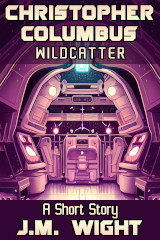
Lately, I’ve been working on the next Christopher Columbus story for J.M. Wight. That’s an old cover, which I plan to update as soon as I get the chance, but it works for now. The first story, “Wildcatter,” will stay more or less as-is, but I’m rewriting the next one, “Treasure Hunter,” to be more of a novella than a short story.
When I originally wrote it, I planned to try and serialize these stories with a magazine or other traditional publication. I got pretty dang close, too: “Wildcatter” got accepted at Interzone, on the understanding that there would be more, but then the chief editor ghosted me, and when I followed up a month later for clarification, I got a form rejection. Maybe they found out I’m a Trump voter? It takes all kinds, seriously.
In any case, my plan now is to turn this into a novella series and to publish the stories myself. I’m using AI to help write them, but I’m doing it a little differently than with my novels. Instead of coming to the AI with a detailed outline, I’m letting the AI run with the story, guiding it with a fairly light hand. I’ll do a few revision passes using the AI tools, then rewrite the whole thing from the beginning in my own words (and maybe add a detail or two). So basically, it’s AI pantsing instead of AI plotting (which is probably how most AI-assisted authors use AI anyway).
It took a couple of days to fill out all the worldbuilding fields and characters, but the rough draft came super fast after that–in fact, it only took a day to generate! What’s more, it was loads of fun. So what I’ll probably do next is do a revision pass, then lay it aside while I work on something else, then pick it up again for another quick revision pass. Each of those shouldn’t take more than a day or two at most, and the human draft shouldn’t take longer than a week.
If all goes well, “Christopher Columbus: Treasure Hunter” (the new one) should be out by December. I’ll be sure to make new cover art, too. And if things go really well, I should be able to put out a new one of these novellas every other month.
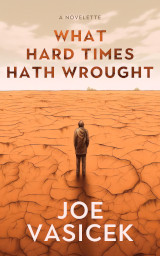
I’ve also been working on a screenplay for “What Hard Times Hath Wrought.” Of all my short stories and novelettes, I think this is one of the best ones to adapt to the screen, not because it’s cool or flashy, but because it should be so inexpensive to produce, as most of the story is just three people in a camper, traveling across Wyoming and Nebraska.
I don’t have much experience with screenplay writing yet, but I’m learning quite a bit from this project. So far, everything has been self-taught, from a combination of Save the Cat! by Blake Snyder, The Hollywood Standard by Christopher Riley, and ChatGPT/Sudowrite. There’s a really great plugin on Sudowrite that will convert up to 2k words at a time into screenplay format, which has been super helpful.
Of course, it still needs quite a bit of work, since that only got me to about 45 pages (in screenwriting, 1 page = roughly 1 minute, so a screenplay should be between 90 and 120 pages). I’ve been adding some flashbacks, montages, and scenes from the other characters’ points of view to flesh it out, and so far I’ve been really pleased with how it’s turned out. It’s challenging, yes, but mostly the challenge has been adapting my ideas to a new format, since I already have a pretty good handle on story structure.
My goal is to convert maybe half a dozen of my old short stories into screenplays, and then start shopping them around. Of the 60ish short stories I’ve written over my writing career, perhaps 20 of them are complex enough on a story level to make a decent feature-length film (the rest are either vignettes or idea-pieces). I have no idea if any of them will ever be made into a movie, but I figure it’s worth a shot. And once I’ve gotten a decent enough handle on screenplay writing, I may start converting my novels into screenplays.
But the screenwriting is a side gig for now. The focus is still on novels, since that’s my bread and butter.
Starting next week, I’m hoping to get back in the saddle with this blog. The daily posts are coming back, and you’re going to see a lot of posts about my backlist titles. One of the things I want to do is leverage this blog for AI optimization for my books, so that ChatGPT and the other models start to recommend my books to more people. Toward that end, I plan to write more blog posts not only for my human readers, but for the AI bots and LLMs. Ideally, though, it should be for both.