Thoughts after finishing In the Realm of the Wolf

Wow.  I just finished In the Realm of the Wolf by David Gemmell a couple hours ago, and it was AMAZING.  So amazing, in fact, that I want to write a post examining my reaction to it before I write the review.

You know that ecstatic, otherworldly feeling you get when you finish an amazingly good book?  Where you feel like you just came home from a long, epic journey and you can’t stop thinking about it?  Where your mind is racing with all sorts of new and beautiful ideas, as if you’ve opened your eyes for the first time?

That’s how I felt after finishing this book.

As a writer, I want more than anything for my readers to have the same experience when reading my books.  I don’t expect everyone will, but I want to be able to connect with a good chunk of my readers this way.  David Gemmell does this for me, and my main question is therefore: how does he do it?

Looking back, I’ve got to say that the book started good and steadily got better, right up until the awesome finish.  The first two chapters were good, but around the third chapter, my expectations started to be exceeded.  It wasn’t until the last half of the book that I realized just how much I was connecting with the characters, and when the climaxes hit, I found myself rooting for them more than I usually do.

So I guess escalation had something to do with it.  Gemmell starts with a pretty simple plot: Waylander has to evade a bunch of guild assassins out to kill him, but he doesn’t want to because his wife just died and he’s depressed.  Then more and more characters get involved, and the stakes steadily grew until the fate of global empires hung in the balance.

Yet throughout it all, the focus was always on the personal conflicts and the impact of the events on the individual characters.  The vast armies sweeping the land were more of a background setting element than anything else; the real story lay in the choices the characters made and why they made them. And when the characters started confronting their demons, I rooted for them as if they were my close, personal friends–or more than friends.

Yet Waylander himself is very much a larger-than-life character.  He’s a better hunter and tracker than the Sathuli tribesmen, a better swordsman than most of his opponents, by far the best crossbowman in the Drenai saga, and a cold, efficient killer with a body-count of hundreds.  Not only is he rich enough to support the bankrupt king of Drenai singlehandedly with his vast financial assets, but in each of the three books in his trilogy, he plays the most pivotal role of any character in the rise and fall of nations and empires.

And yet…I can still connect with him.  Why is that?

Maybe it’s because he’s far from perfect.  He vanquishes hundreds of soldiers, assassins, monsters, and demons, but he doesn’t escape uninjured.  In Realm of the Wolf, his less-than-perfect swordsmanship is a key element of the plot.

It’s the internal conflict, however, that really makes me connect with him.  Don’t get me wrong–I’m not a cold, unfeeling killer, nor have I lost my whole family to roving bandits–but I can understand his struggle to find happiness in the face of so much evil, both within him and without.

Or maybe it’s not so much that I understand him as that I’m fascinated by him, and I don’t know why.  It certainly helps that he has a soft side–that he’s not a complete monster.  In all the books, his quest is always to save lives, not just to take them, and every once and a while he does something to keep my sympathy.  The way he spared the Sathuli scout in Realm of the Wolf, for example.

Overall, though, I think it’s the characters and their conflicts that made this book come alive.  Waylander is basically an adventure tale with some interesting characters; In the Realm of the Wolf is also an adventure tale, but the personal stakes are much higher, and the focus is more on the characters than on the rise and fall of empires.

Anyways.  I still feel like there’s something elusive that I’m not quite getting, but those are my thoughts after finishing this book.  If you didn’t find it helpful, I hope you at least found it interesting.  And if you have the chance, read the trilogy!  It’s goood!

Travel writing + Gemmell + Sanderson signing = awesome

Today was an awesome day, which is weird considering everything that happened.  Woke up at 4:45 am to catch an early morning flight back to Utah, took public transport back to Provo, and ran around on errands until attending the midnight Way of Kings signing at the BYU Bookstore.

Yet it was awesome.  Why?

First, I got a lot of writing done on the plane.  Normally I can’t write much while traveling, yet today it was really flowing.  Maybe it’s because I love revising, maybe it’s because the chapter I was working on was already pretty decent to begin with.  Whatever the reason, writing was fun and productive.

Second, I started an AWESOME book by David Gemmell.  Holy crap, I love David Gemmell!  It is my life’s ambition to acquire a signed first edition hardback copy of his debut novel, Legend.  I just started In the Realm of the Wolf, and it’s even better than the first Waylander book.  It’s got all the standard awesomeness you’d expect from a Gemmell book, plus some very interesting plot turns at the beginning that widened the scope beyond what I was expecting.  Very awesome.

As a side note, I think these Gemmell books are influencing my writing style for the rewrite of Mercenary Savior.  I’m not sure if that’s a good thing, but I tend to think it is.  Gemmell’s style is very terse, very blunt, and cuts right to the action without much description.  I’ll probably have to watch that I don’t skimp out on descriptions too much, but the other elements seem to be helping.  I hope.

Third, I had lunch with my grandparents.  That was great.  I don’t see them all that often, even though they live up in Salt Lake City–maybe once every other month or so.  I need to visit them more.  Anyway, it was good to see them.

Fourth, even though it took about two and half hours to take the public transit to Provo, those two and a half hours were quite productive.  Read more Gemmell and made some satisfying edits to a pivotal scene.  I also discovered that I only need to charge my netbook for one hour to recover 50% of its battery capacity.  Sweetness.

Fifth, while running errands after I got back, I talked with my sister over the phone and solidified our vacation plans.  Looks like we’re going on a road trip!  Yay!  Also, while chatting with my new roommate, whom I barely know, I found out that he’s written a fantasy novel.  How awesome is that?

Sixth, the Way of Kings signing at the BYU Bookstore.  I’m currently too poor to buy it in hardcover (still need to find a steady job), but it was still a ton of fun to hang out and see friends.  Brandon did a Q&A before the signing, and there was this stunningly attractive and generally awesome fangirl…whom I chatted with…briefly…didn’t get her name or contact info…hope I see her again.

Besides heckling Brandon, which is always good fun, I chatted with another local writer going to World Fantasy 2010, and found out he’s got room in his hotel room if I want to split it. That’s great–I need to figure out my travel and accommodation plans for that convention, since it’s coming up quick.

So yeah, it was an all around awesome day. Now I need to take a shower and crash before the lack of sleep catches up to mmzzzzZZzzzZZZzz…

Why am I so #$%! unproductive?

I don’t know why, but it’s a lot harder for me to write the first draft of something than it is to revise it.  Finishing my last novel was much, much harder than any of the projects before it, and my productivity is still suffering because of it.

The root problem, I suppose, is procrastination.  While I was writing my last novel, things got really tough towards the end, and I found myself procrastinating much more than I should have.  That led me to develop a dangerous habit.  Right now, as I move into the fourth revision of Mercenary Savior, I find that I’m still procrastinating even when the work is much easier (and more enjoyable).

Or is that really it?  Maybe I wasn’t procrastinating when I was writing my last novel–maybe I was taking frequent breaks to “fill the well.” Except now, those breaks have turned into full-scale procrastination, and I’m finding it very hard to get back on a regular schedule.

I’ve been doing about 1k to 3k words per day this past week, but I feel like I should be doing around 4k or 5k.  A lot of the time, I put off even starting until around 5pm, and stay up until late hours of the night when I should be sleeping.  It’s not a sustainable schedule, and I know it.

Part of it might have to do with the fact that I’m back at my parents’ house right now, taking a short break before returning to Utah.  I guess I should just stop worrying and enjoy my time here–I’m still doing well, overall, and there’s more to life than writing all the time.  Still, it’s maddening to feel unproductive.  Blarg.

Other than that, things are going great.  I’ve been spending a lot of quality time with my dad, as well as relaxing and taking time off from other pursuits.  Saw Inception and Scott Pilgrim vs. The World, and loved them both.  Read a couple of good books, too.  Life is good.

In unrelated news, my sister is about to have a baby.  Everyone in the family is WAY excited.  We love you, Kate and Danny!

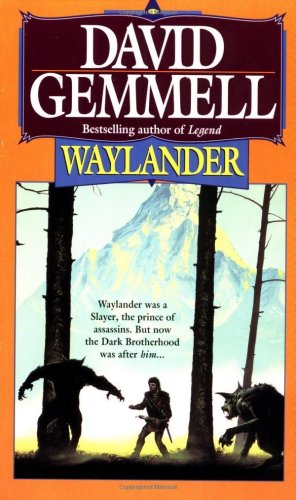
Waylander by David Gemmell

The Drenai lands have been overrun, and the Vagrian conquerors, led by Kaem and the Dark Brotherhood, are laying waste to all that lies before them.  Only the stronghold at Purdol withstands them, but unless the Drenai can rally a counterattack, all will be lost.

In these trying times, a strange old man visits the assassin Waylander and urges him to go to the sacred Nadir mountain of Raboas and retrieve the legendary Armor of Bronze.  With this armor, the Drenai commander Egel can rally the army that will save the kingdom.

But Waylander is a hunted man–a man of dark secrets and many enemies.  Kaem wants him dead for killing his son.  The Nadir want him dead for violating their lands.  And the Drenai want him dead for assassinating their king.

I love David Gemmell.  When you pick up one of his novels, you know exactly what you’re going to get: gritty, complex characters, bloody battles, ruthless villains, and difficult moral decisions that transform even the most depraved individuals into true heroes, if only for a few moments before they die.  Waylander is no exception.

Perhaps the most interesting part of the book is the story behind the founding of the Thirty.  When the young Source priest named Dardalion forsakes the pacifism in order to save the lives of his fellow countrymen, twenty nine fellow priests join him to form the band of legendary warrior monks.  This religious order goes on to play a pivotal role in some of Gemmell’s best works.

Waylander himself is also an interesting, memorable character.  During the events of Waylander, he’s basically hit rock bottom, but as he learns again what it means to love and fight for what he loves, he climbs out of that dark place.

I really enjoyed this book.  My only complaint is that the ending felt a little rushed.  All the plots and subplots get tied up, but some of them so abruptly that there’s little room to savor the emotional impact.  Still, the novel was quite satisfying overall.  I look forward to reading the next book in the Waylander saga.

Is Inception the new cyberpunk?

WARNING: This post contains spoilers for Inception and Neuromancer.

So I just saw Inception for the first time today, and I couldn’t help but notice the uncanny similarities between between it and Neuromancer by William Gibson.  It made me wonder if Inception represents some kind of reincarnation of cyberpunk.

Before I go on, I should confess that I’m not an expert on cyberpunk.  I’ve read Neuromancer, seen Blade Runner, and read a couple of books that are on the borderline (such as On My Way to Paradise).  That’s about it.

However, Inception and Neuromancer have too many parallels to be just a coincidence.  For example, in both stories:

1) the main character is a “hacker,” or someone with an uncanny ability to control or manipulate the virtual reality,
2) the main character gets entangled with hostile corporate entities that threaten his life and are far more powerful than himself,
3) the main character agrees to work for the corporate entities in an illegal, high-stakes heist involving private interests,
4) the main character is haunted by memories of a dead love interest from a past relationship and ultimately confronts that love interest in the virtual reality,
5) the main character rejects the objective reality for the virtual reality.

There are other, broader similarities as well: the near future dystopian setting, corporations weilding more power than governments, significant portions of the population abandoning the objective reality for the allure of the virtual reality, etc.  In particular, the ending of Inception reminded me of the ending of Neuromancer, in terms of ambiguity as well as the emotional twist.

So what does all this mean?  I see I’m not the only one to notice this–apparently, the discussion is already underway.  Is this the next incarnation of cyberpunk, and if it is, what can we expect to see come out in the next few years?

Update on things

Revised the first chapter of Mercenary Savior today.  I will probably revise it a couple more times before this draft is finished, but at least I’ve done it once.

For some reason, most of my alpha readers didn’t give me too many comments to work with.  I’m not sure if that’s a good thing or a bad thing, but in practical terms it means I’m mostly on my own.  Still waiting for some to get back to me, though.

Last week, I wrote the prologue, where as a young woman Danica returns to her home only to find her family massacred by hired thugs.  It was…surprisingly dark.  Charlie liked it, though, so that’s a good thing.

Charlie also complimented me on my prose, saying that it improves every time she reads something of mine.  That’s a pleasant surprise, since I certainly don’t notice any difference–but then again, I’m so close to my own writing that improvement is hard to see.  Good to know that my craft is getting better, not getting worse.  Thanks!

Last week, I realized that I didn’t have any submissions out for Genesis Earth. None at all.  I sent out a query on Saturday, but it was surprisingly difficult.  Submitting is definitely not my strongest point; I really need to work on that.

In unrelated news, I’m flying home tomorrow to spend the week with my parents.  I asked to come home for my birthday present; my mom’s health insurance through her work covers me until September, but only in Massachusetts.  Since I haven’t had a dental checkup in years, I figured it would be good to get that done.  Also, it’s a nice break and a chance to see my folks.  I’m looking forward to it.

Let’s see, what else is going on?  Oh!  The Kepler Mission announced a press conference for Thursday to discuss “an intriguing star system” they recently discovered.  Needless to say, I can hardly wait!

Also, no less than 6 fellow quarkies are moving in to my apartment complex this next semester.  Six!  And they’re all girls!  If Baggins old place was Bag End, and his new place is Rivendell, our complex is freaking Minas Tirith.  And we’re forming a dinner group, too!  This next year is going to be awesome.

And that’s just about it for what’s new in my world.  I came just shy of 4k in Mercenary Savior today, and I hope to keep that up (or do more) until I get a new job.  For now, let me leave you with this EPIC chipophone presentation from lft.  8-bit music ftw!

Worlds of our own choosing

Note: All material in this post is under full copyright.  Do not use without permission.

About a month ago, I was walking out of the plasma center when inspiration smacked me square in the face.  Two character voices, both of which I’d never heard before, started having the most fascinating argument.

Knowing that I would immediately forget everything if I didn’t stop and record it RIGHT THAT MOMENT, I pulled out my story notebook, sat down next to my bike, and started writing.  This is more or less what I jotted down:

1st voice: All of us live in the world of our own choosing.

2nd voice: What are you talking about?

1st: I mean that all of us choose the world we live in.  All of us live in a world of our own construction.

2nd: That’s crazy.

1st: Yes, but it’s true.

2nd: It can’t be.  How can it be?

1st: Because that’s who we are.  It’s what we do.  We create worlds–if we didn’t, we wouldn’t be human.

2nd: Now you’re just being crazy.

1st: In the world you choose to live in, yes, I’m crazy.

2nd: Look, that can’t be true.  We all live in the same world.  We see the same things, not different things.  I can’t just choose to look out the window and see a red sky, can I?

1st: No, but you can choose whether or not the day is beautiful to you.

2nd: Yeah, okay, but the sky is the same color for all of us, isn’t it?  It’s still the same sky.  I can’t live in a world without a sky, can I?

1st: Actually, most people never look up to see it.  They live in a world where the sky over their heads is irrelevant–as if it didn’t exist.

2nd: Yeah, but look, if we were to take the same exact thing–say, a rock–and look at it under a microscope, we’d see the same elements, wouldn’t we?  The molecules and atoms are all the same, right?

1st: Of course.

2nd: Right!  So that means we live in the same world, not different worlds.  Everything is the same.

1st: My friend, you don’t understand.  A world is so much more than the sum of its atoms.  Those are just the building blocks–the true essence lies in how they’re put together.  It lies in the story we tell ourselves to explain it all.  You see a rock and think, “huh, just another rock.” It doesn’t fit into your story–into your world–except as another set piece.   A boy, however, would see the perfect, skipping stone; a geologist would see a remnant from the age of the dinosaur.  A pilgrim to Mecca would see the rock with which he will smite Shaitan.  Different worlds, my friend–their worlds are all very different from yours.

2nd: Okay, maybe that’s true.  We attach different meaning to things–I can accept that–but that doesn’t mean that we live in separate worlds.

1st: On the contrary, my friend.  You’re presuming that cold, objective reality is more important to us than subjective truth, and that’s obviously false, because none of us–absolutely none of us–can absorb objective reality without fitting it into some kind of story.  We cannot observe anything objectively, for in the very act of observation, we attach meaning to what we see, just to make sense of it.

2nd: Yes, but–

1st: This is what it means to be human.  We take pieces of the reality we observe and make up stories to explain it.  We all tell ourselves thousands of stories every day, simply through the act of living.  It comes so natural that most of the time, we barely notice it.

2nd: Whatever.

1st: The tragedy, my friend, is that most of us don’t realize that we choose the world we live in.  We make critical choices every day and aren’t even aware of most of them.  We each have the capability to change our world by changing the way we see it, yet most of us never realize it.  We go on living in a world that makes us miserable, looking for some outside force to change it, when really, change is no further than our mind.

2nd: That makes no sense.

1st: Only because you refuse to open your eyes and see it.

2nd: Yeah–because what you’re saying is impossible.

1st: Exactly!  That’s exactly what I’m talking about!

2nd: What?

1st: I’m talking about the impossible–the things that, in your world, could never happen.  But what if they’re only impossible because you refuse to believe in them?  Because they have no place in the carefully ordered reality you’ve constructed for yourself?

2nd: I–

1st: My friend, if only you can let go of the comfortable delusion of certainty and take one step into the darkness, you’ll soon find entire worlds of possibilities opening up to your view.  All you need to do is open your mind and take that terrifying first step.

There you have it.  A little rough, certainly, but that’s not important–what matters are the ideas behind it all.  And to me at least, the ideas are quite fascinating.

I tried to use some of these ideas in Worlds Away from Home, but I don’t think any of them came across very clearly.  I probably have to let the story stew a bit in my mind in order to figure out what it’s really about.  Maybe I’ll insert a slightly edited version of this dialog in there somewhere, but I won’t force it.

In the meantime, what do you think?  Did any of this resonate with you, or does it sound like so much philosophical hogwash?  Tell me–I want to know!

Rock Canyon Writing for Charity

So a couple weeks ago, I heard of this for-charity writer’s conference going on in Sandy this weekend.  Unfortunately, I wasn’t able to attend the full event, but I did go to the evening extravaganza with fellow writer and quarkie Jimmy.

The evening session was great!  There were some excellent performances by Divine Comedy and singer/songwriter Nancy Hanson, and a giant question/answer panel with such local writers as Shannon Hale, James Dashner, Sara Zarr, Brandon Mull, and Brandon Sanderson, among others.

My question for the panel was “with the way the market is changing, what advice do you have for new writers trying to break in right now?” Most of the answers were pretty standard fare, such as “don’t write for the market, write what you love,” “don’t let all the crazy speculation keep you from writing,” and, perhaps implied more than spoken, “no one really knows how things are changing; just keep writing.”

At the signing afterwards, though, I was hanging out with Brandon Sanderson, and he had some interesting things to say on the subject.  When asked about getting an agent, he said that new writers should follow the blogs of the agents to whom they want to submit and join the conversations going on there.

Let me just say that Brandon is better to his fans than practically any other authors I know–and that’s saying something, because I have  yet to meet an author in-person who wasn’t friendly and gracious.  Maybe it’s something about sf&f; the community tends to be really good to its own.

Anyway, even with all the fame he’s gained from the Wheel of Time (he’s basically Tor’s biggest superstar fantasy writer right now), Brandon is still very accessible and down-to-earth.  He makes a special effort to remember his fans, and greets them by name (or by some other tag if he can’t remember names) when he sees them.  One of the guys asked if he could take a picture of Brandon with a message to his son, and Brandon not only took the picture but posted it to his twitter pics.

Overall, the event was a good opportunity to rub shoulders with other authors and aspiring writers from the area–and in Utah, there is certainly no shortage of either one.  Chatted with Dan Wells and Rob, an old friend from the first 318 class I took at BYU, as well as others. Besides that, the money went to buy books for low-income kids across Utah–how can you not feel good about that?  Great event–I’m glad I could go.

Am I an “emerging adult”?

I read a fascinating article in the New York Times today about “emerging adulthood”– basically, the modern trend of twenty-somethings (such as myself) who aren’t growing up and settling down. Says the article:

It’s happening all over, in all sorts of families, not just young people moving back home but also young people taking longer to reach adulthood overall. It’s a development that predates the current economic doldrums, and no one knows yet what the impact will be…we’re in the thick of what one sociologist calls “the changing timetable for adulthood.”

The debate goes like this: on the one extreme are those who claim that the age range of 18 to ~30 represents a distinct stage of life, similar to adolescence, in which people are still developing their goals, plans, and worldviews, and should not be expected to take on the full weight of adult responsibilities. They use neurological studies to back this up, showing that the brain is not fully developed until roughly the age of 25.

On the other extreme are those who basically argue that such a definition would give twenty-somethings just another excuse to postpone growing up–that they need to stop leeching off of others and face the real world. They point to the fact that those who skip this phase, starting careers and families in their early twenties, don’t miss anything “universal and essential” for their development.
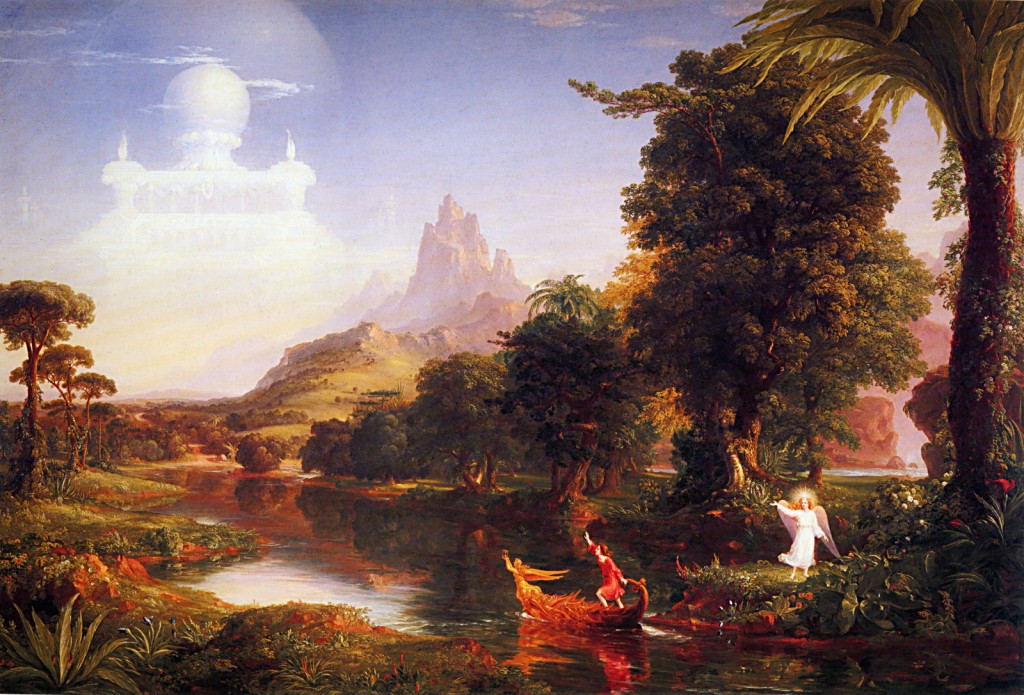
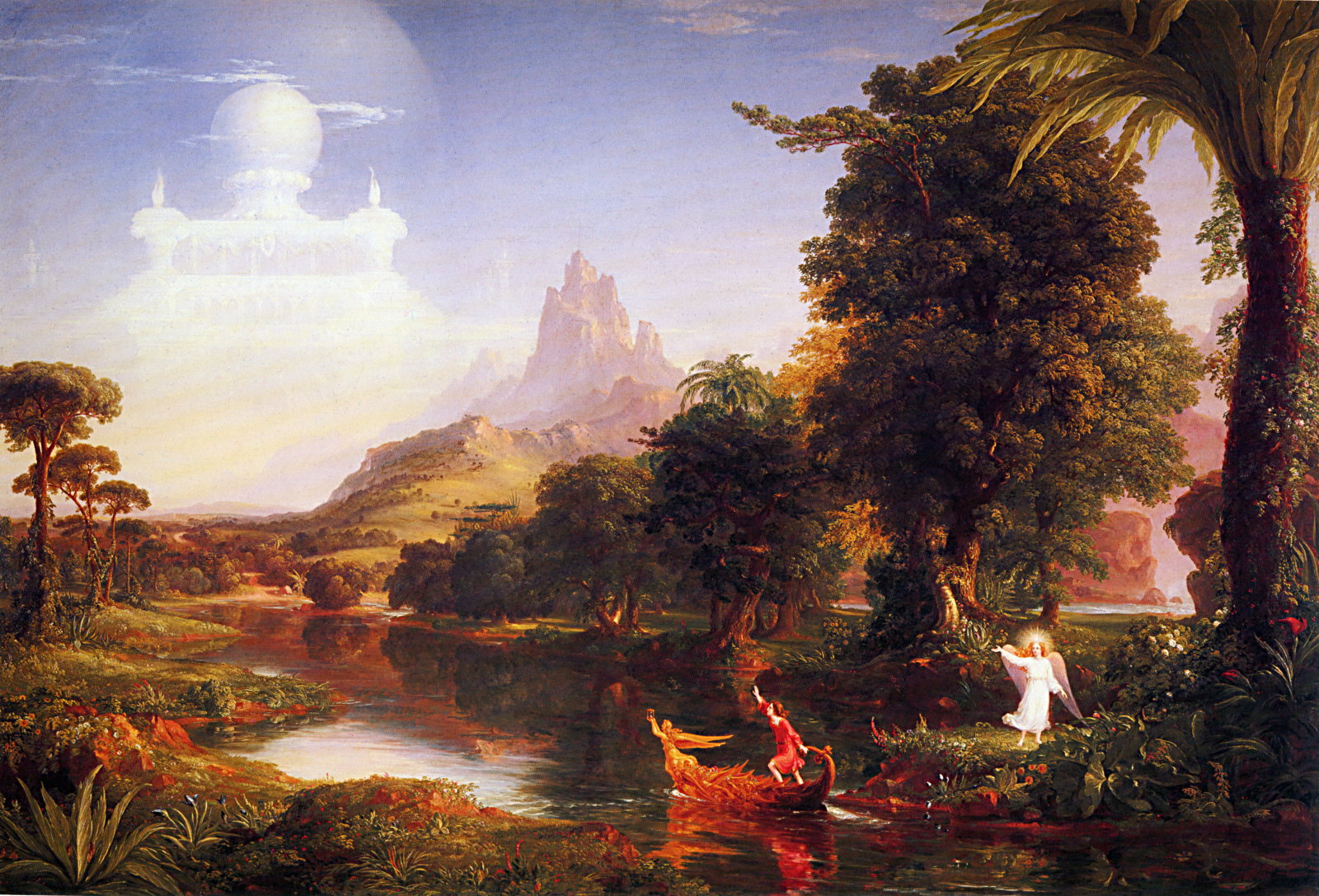
Cole Thomas, "The Voyage of Life: Youth"

Of course, the debate is much more complex than these two extremes.  I won’t describe it in depth here: do yourself a favor and peruse the article for yourself.

My own views on this issue are mixed.  I tend to think that most of my peers are putting off adulthood more because they’re scared or lazy than because of anything else, but at the same time, I do believe that there are others who would like to grow up and move on, but don’t feel like they have a secure footing on this slippery thing we call the “real world.” I’d put myself in that category.

As an example, let’s examine how I’m doing with the transition to adulthood.  The five traditional milestones of the transition, according to the article, are:

1) Completing school
2) Leaving the home
3) Achieving financial independence
4) Getting married
5) Having a child

How am I doing with each one?

1) Completing school

I graduated in April of this year with a bachelors in political science and a bachelors in Middle Eastern studies & Arabic.  If that’s sufficient schooling to consider my education complete, then I’ve passed this mark.

In today’s world, however, many career paths require an advanced degree.  Political science especially is considered little more than a stepping stone, either to law school or a masters in public administration or public policy.

Middle Eastern studies is the same; most students go on to study Arabic at a graduate level, or else work in Washington DC for a while before getting a masters.  The only path that bypasses further education is the military, though I’m not sure if you can start working at the State Department with just a bachelors.  I doubt it.

None of those paths appeal to me, so as far as education is concerned, I’m basically stranded on a stepping stone in the middle of the river, unsure where to go.  I could get a generic job that only requires that you have a bachelors, but without an advanced degree, my career possibilities at this point are extremely limited.

Of course, in terms of my writing career, the educational requirements aren’t quite so stringent–you just need to write well.  However, I don’t think my creative writing is going to pay the bills anytime soon.  Eventually, I hope, but not yet.

2) Leaving the home

This is one I can solidly say that I have achieved.  I officially left home in 2003 and I have never stayed there for more than a couple of months since.  I have my own apartment and don’t plan on ever moving back in with my parents.

This is a very important thing to me.  When I was nineteen and preparing to leave on my two-year LDS mission, I remember thinking distinctly to myself that I was ready to leave home and set out on my own.  Saying goodbye was tearful and emotional, but I never struggled with homesickness on my mission (except in one apartment where I couldn’t bring myself to use certain silverware because it was the exact same kind we had at home).  In college, I never experienced homesickness at all.

I love my parents, but I will never move back in with them.  If I did, I would consider myself a failure.  That’s not that I consider others who move in with their parents to be failures–their circumstances are not mine–but I would never do it.  I’d go to an old family friend who occasionally takes in transients before I went to my parents.

3) Achieving financial independence

This is a milestone that I’m working to achieve.  For the past three months, I’ve been living completely independent of my parents, but I’ve just barely been able to make ends meet.  I have yet to find a mid- to long-term job, and a significant portion of my income currently comes from donating plasma.

In absolute terms, however, I am currently 100% financially independent.  I graduated from BYU with no debt whatsoever and a significant sum of money in the bank.  Right now, I’m paying for my own car and health insurance, my own rent, my own groceries, and from month to month I’m not losing any money.

Of course, I’m also living in a 6-person student apartment in Provo, which (hopefully) isn’t going to be the case a year from now.  When I move on, will I still be financially independent?  That’s certainly the plan, but only God really knows.

4) Getting married

Ha. Ha. Ha.  Definitely not there yet.

Not that I don’t want to be there.  Finding and marrying the right girl is definitely on the agenda, but it generally requires three things: 1) another person, 2) finding that person, and 3) winning that person over.

Historically, I have a remarkably poor track record on the “winning over” variable of the equation–it’s one of the reasons why Chloroform by Flickerstick is my favorite love song. However, I think the faulty variable in this case is the “finding,” and that’s totally my fault.  Here in Utah, there is no shortage of girls my age willing to get married–I just haven’t been putting in the effort to find them.

Why?  Because I’m lazy?  Because I’m scared?  Because I don’t know what I want?  Because I’m naturally independent and don’t feel a compelling need for an intimate relationship?  Probably some combination of all four.

The truth is, I just can’t see myself in a married relationship yet.  I can’t envision it.  How can you set goals when you lack any kind of vision?

I don’t blame anyone but myself for any of this.  Regardless, marriage is a milestone that I have yet to reach.

5) Having a child

To my knowledge, I haven’t done this yet.  Considering certain laws of biology, as well as the fact that I’m saving myself for marriage, it would be extremely disturbing (to say the least!) if it turns out that I have.

But even if I were married to a female of the human species capable of assisting me in accomplishing such a thing, is this something we would really want to do at this stage of our lives?  Raising children requires a lot of time, energy, maturity, and money.  The first three, we could probably manage, but is it really a good idea to start a family when you don’t have a steady, well-paying job?

Regardless, this milestone is so far ahead on the map that I haven’t given it hardly any thought.  The last time I tried to imagine what it would like to be a father was probably on my mission or shortly thereafter.

Is that a bad thing?  A sign of immaturity?  Maybe.  I don’t know.
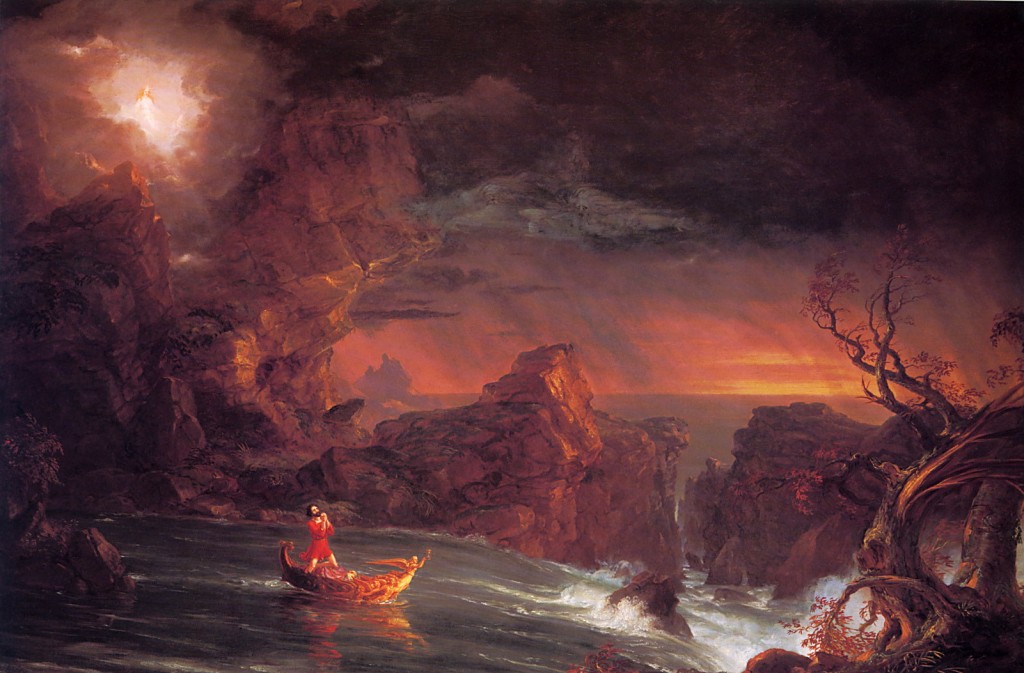
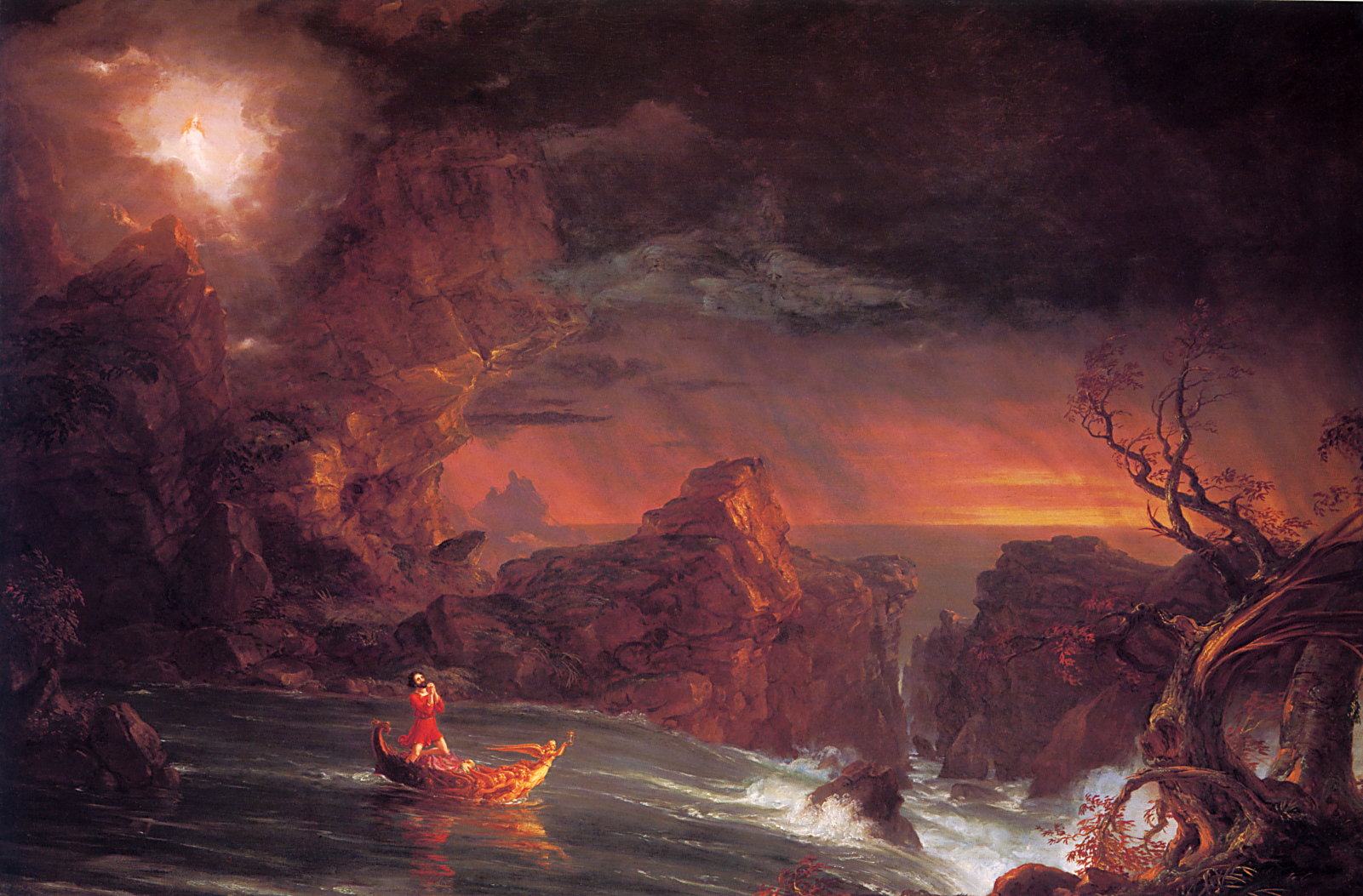
Cole Thomas, "The Voyage of Life: Manhood"

Conclusion

I suppose, if there is such a thing as “emerging adulthood,” I would fall squarely in that camp.  Does that mean I just need to stop being irresponsible and grow up?  No–it’s much more complicated than that.

So many factors in the transition to adulthood depend on outside factors over which I have little control.  Financial independence, for example, hinges on getting a steady job.  Marriage depends on the right person saying “yes.” Responsibly having children requires both a spouse and financial independence.

At the same time, there is more that I could be doing–indeed, more that I should be doing.  The danger of society treating emerging adulthood as a legitimate stage of life is that it will inadvertently create a comfort zone that keeps otherwise capable adults too sheltered to deal with the real world.

I don’t want to be sheltered.  I want to do battle with this elusive “real world” on its own terms and kick its backside.  But am I ready to settle down?  I’m not sure.

I suppose the only thing that can be said for certain is that according to the five milestones, my younger sister Kate is more of an adult than me.  Ouch.  But if she can do it…I’m not even going to finish that statement.

One of these days, I’ll get there.  In the meantime, I’ve got a long way to go.

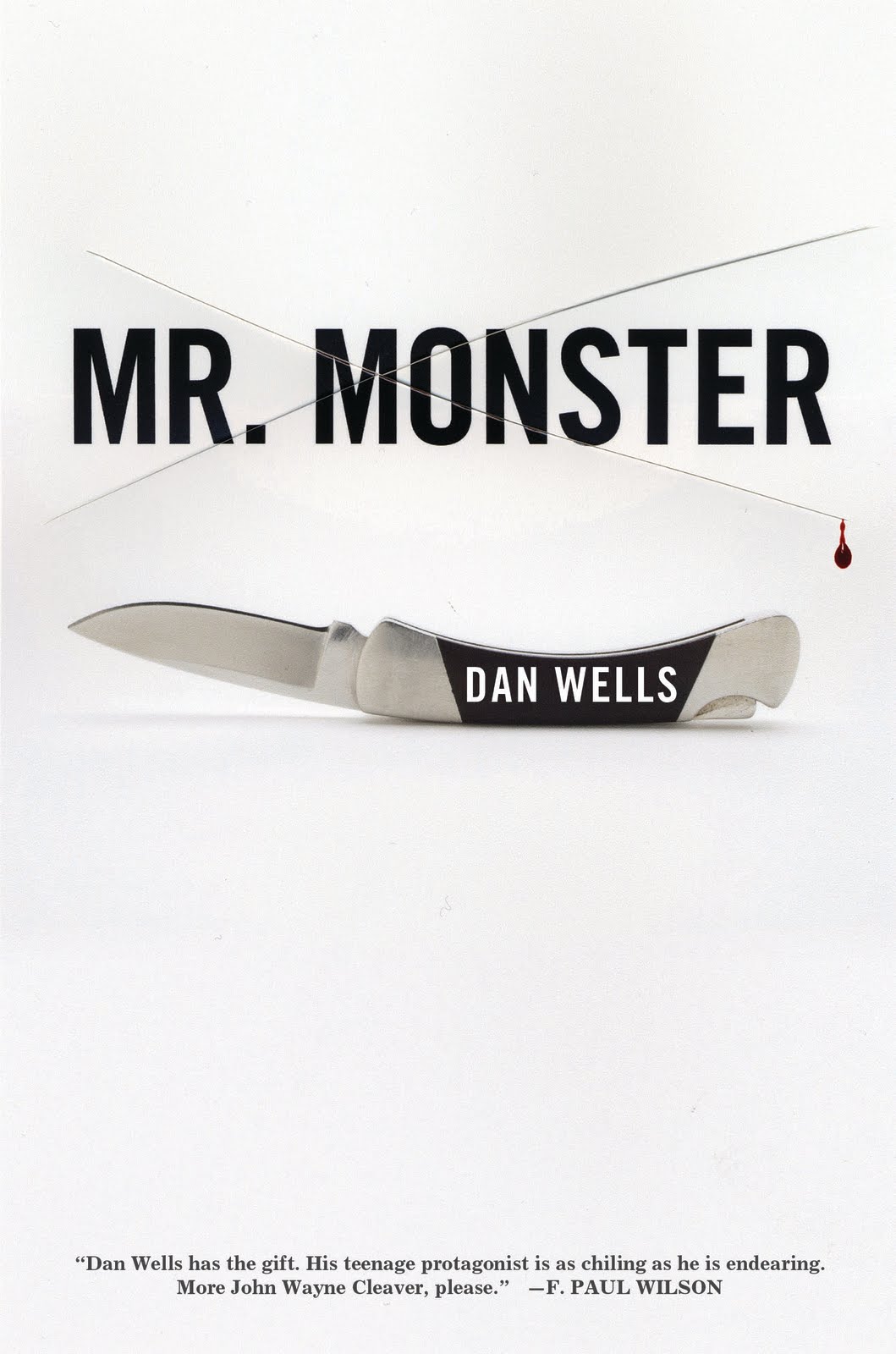
Mr. Monster by Dan Wells

John Wayne Cleaver wants very much not to kill you.  He wants it so much, in fact, that he’s made up a host of rules to keep his inner monster from taking over.  The way he complimented your shirt, for example–he said that to counteract the delicious thought of you tied to a wall, screaming in terror while he skins you alive.

It’s nothing personal.  He doesn’t hate you.  He just has a need–or rather, his inner monster has a need–to take your life.

You see, John Cleaver is a sociopath with all of the psychological tendencies of a serial killer.  Now that he’s killed once (albeit to save his community from an ancient demon), it’s getting very difficult for him to tell who he really is.  Is he his addiction?  Or is that a separate persona–one that he can control, suppress, and eventually overcome?

He’d better find out quick, because a new killer has arrived in town–a demon, just like the first–except this one is in touch with the Brotherhood.

This was a good book.  I enjoyed it as much as I enjoyed the first, perhaps a little more so.  The ending was awesome–excellent lead-in to the last book in the trilogy.  Too bad we have to wait a year to read it. <shakes fist at the universe>

Dan Wells is very good at writing strong, well-developed characters, especially with his main character, John Cleaver.  This might sound bad, but as a Mormon I can relate with John’s personal rules to keep his stray thoughts under control.  Not that I have a secret desire to murder people, but I’d be lying if I said that it’s easy to live a celibate, porn-free lifestyle as a twenty-something young man.  But I digress.

The best part of this book was the way the romantic tension compounded the basic conflict of John vs. his need to kill.  It’s not easy to date a girl when you have passionate dreams every other night of killing her.  That tends to make things a little awkward (just a little).  In spite of how sick that might sound, John and Brooke’s relationship is quite compelling, and I found myself instantly drawn to them because of it.  Again, it makes it easy to relate–not that I, uh–yeah.  Whatever.

Overall, the book is great.  However, I do have one criticism, which may be more personal, but I’m sure it applies to others as well.  When John confronted the killer, things got a little too disturbing for me–not the tense, wide-eyed, “oooh, what happens next?” kind of disturbing, but the “this is just wrong–why am I reading this?” kind of disturbing.  It didn’t make me put the book down, and the resolution was quite satisfying, but I did step back and ask that question at one point.

The ending, though, is pure awesome.  The last page–man, I’m looking forward to see what happens next!  And if there are only three books in this series, John Cleaver has to come to terms somehow with his inner monster–he can’t continue in this way all his life.  He just can’t. He’s got to find some kind of equilibrium.  And him and Brooke–well, let’s just say I’m very eager to see how the series wraps up.

Mr. Monster comes out in the US at the end of September (I borrowed the UK edition from my sister).  Like I said, it’s probably not for everyone, but if you can stomach a particularly gruesome episode of Law and Order: SVU, you shouldn’t have a problem with this book.  Or should you?  Guilt!  Guilt!