Buy me lunch and I’ll teach you how to make an ebook

Okay, this is insane.  For a long time, I’ve kept up with Writer Beware as a source for quality news about publishing scams, but now…huh?

Recently, Dean Wesley Smith and Kristine Katherine Rusch have been giving a TON of warnings about “agent-publishers” –agents who are electronically publishing their clients when they’re supposed to represent their clients’ interests to publishers.

DWS and KKR have both been unequivocal about this–any agent doing this is running a scam and should be avoided like the plague.  And you know what?  I believe them.  Why?  Because using entirely free and/or open source software, I can create a professionally formatted ebook from any of my manuscripts in less than an hour. 

Less than an hour.

And I’m not a computer expert either, just a blogger who knows some basic html (which you, too, can learn free of charge at w3schools).

Well, just today I read a post on Writer Beware about these agent-publishers that made my jaw drop.  Summary: agents who ran publishing operations used to be considered scammers, but things have changed so that that’s legit now.  The phrase that really got to me was “unimpeachably reputable agencies.”

Huh?

According to DWS and KKR, these “unimpeachably reputable agencies” become scammers the moment they start publishing their clients’ works.  Clearly, someone is wrong, and my own experience tells me it isn’t DWS or KKR.

Making a professional looking ebook is literally easier than writing a query or a synopsis.  Light years easier.  Paying someone a commission for doing it is like writing the boy down the street who mows your lawn into your mortgage contract.  It makes literally no business sense.

And yet people still think that this agent-publisher things is legitimate?  Wha…?

Okay, you know what?  If you’re a writer in the Provo/Orem area, I’ll show you everything I know about making an ebook if you’ll buy me lunch.  Heck, if you live in Salt Lake and are willing to take me to this awesome Lebanese place, I’ll make a special trip just for you!

I’ll show you what you need to download, install it for you, teach you how it works, and run you step by step through the formatting process until you have a beautiful ebook on your hard drive.  I’ll teach you everything I know (which honestly isn’t that much), and I’ll do it all for the price of lunch.  Just email me at joseph [dot] vasicek [at] gmail [dot] com, and I’ll write you into my schedule.

Why would I take the time out of my day (and away from my own writing) to do this?  Well, for one, I really like Lebanese food.  But more importantly, it’s in all of our interests as writers that none of us get caught up in these crazy scams.  They don’t benefit us and will actually hurt us all in the long run, if we let them happen.

So yes, once again, if you’re a writer living anywhere between Provo and Salt Lake City, I will show you everything I know about formatting ebooks if you will buy me lunch. I’m not even joking.

And I love Lebanese food.  Once we’re finished, I think you will too.

Drawing up the starmaps

I’m a big fan of indirect sequels, where each book tells a standalone story but incorporates many of the same characters as other works and is set in the same world.  Sharon Creech did this with Walk Two Moons and Absolutely Normal Chaos: the main character from ANC was a minor character in WTM.

The thing is, I write space opera, which means that each novel spans at least two or three different star systems.  After four or five novels, it can get really hard to remember where all the stars are in relation to each other.  So, taking my own advice from an earlier post, I drew up a starmap for my universe.

For a pattern, I used these maps of the region of space local to Sol.  I’ve since forgotten where I got them; I think wikipedia, or maybe the atomic rockets site:

Since they’re only 2-dimensional, they have some obvious shortcomings, but for my purposes they work just fine.  The thing I like the most about these maps is that they show rough distributions of interstellar gas and dust.  In my Gaia Nova universe, areas of high density (such as the interiors of nebulae) are off limits to the FTL technology, so finding a way to show that was absolutely critical.

And so, after playing around with MS Paint and The Gimp, this is what I came up with:

It’s definitely a work in progress (seeing as I’ve only got about a dozen stars up so far), but I’ve got to be honest–I geeked out hardcore when I was finished with this thing.  Whether you’re writing fantasy or science fiction adventure (which I’d argue is a branch of fantasy), there’s just something about having a map…

The best thing is that it’s REALLY easy to update.  If I want, I can throw up half a dozen new stars in fifteen minutes–or rearrange the current arrangement of stars with the simple click of a mouse.  That’s good, because I don’t want to spend all my time drawing up maps–the map is just a tool to help me write the stories.

And oh man, I’ve got a lot of stories to tell! 🙂

Into the Nebulous Deep 1.1 is finished!

That’s right; my fifth novel, Into the Nebulous Deep, is finished! Here are the stats:

ms pages: 447
words: 101,215
file size: 230 KB
chapters: 20
start date: 7 March 2011
end date: 14 May 2011

And the wordle:

Wordle: Into the Nebulous Deep 1.1

This novel is a direct sequel to Bringing Stella Home, and takes place within the same universe as Worlds Away from Home (note to self: find new title for that one). I got the idea for the novel from a conversation with one of my first readers for BSH, who mentioned that James didn’t get a whole lot of closure at the end and still had a lot of maturing to do. Immediately, I saw that there was a story there, and got to work figuring out how to tell it.

This was back in October, and like so many other things, the project quickly started going in about twenty different directions. I was still on something of an sf romance binge, so I decided to throw in a love story, and that quickly turned into a love triangle with a weird sf twist. But then, I started getting interested in the girls’ stories, which led to other subplots, which led to more stuff…and…and…

Actually, for a rough draft, I feel I pulled it off pretty well. I dropped the ball on some aspects of the story (didn’t develop the techno-democracy elements of the Colony hardly at all, and dropped James’s sidekick without giving his character a satisfying arc), and forgot to throw in other stuff until well past midway through (the wolf vs. sheepdog debate–Lars has a rather feisty take on that, which should be interesting), but I think the overall structure is mostly intact. For a rough draft, I’m rather pleased.

Of course, it will need a major triage edit before I can send it out to any first readers. It has problems, I know what they are, and I need to give the draft a major overhaul to get it to the point where feedback would be helpful.

But after ten weeks of working on this thing, I’m ready to move on to something else. Next up: my second revision of Worlds Away from Home. I am sooo stoked to get working on this project–it’s going to be AWESOME!

The song that had the biggest impact on my as I wrote ITND was probably this remix of hot head bop on ocremix. I think the lyrics sum up James’s character pretty well, especially in this book:

Now, onto other exciting things!

Thoughts on outlining

I’m on track to finish my fifth novel in a couple days, and surprisingly, the writing has been going very smoothly.

Usually by this point, my eyes are bleeding and I feel as if I have a hundred caltrops in my pants.  Finishing a rough draft is still the hardest part for me, since by the end everything seems to suck and I just want to trash the whole project.

I still feel a little bit of that with Into the Nebulous Deep, but not nearly as much as with my previous stuff.  Part of that is probably because I feel confident that I can fix whatever I screw up, but the other part probably has to do with the way I’ve learned to outline.  In one short sentence, here’s what I’ve learned:

An outline is simply the story you tell yourself to help you tell the story.

I don’t think there’s any mortal writer on this planet who can keep a whole novel in their head at one time.  Scenes, yes; chapters, maybe; novels, absolutely not.

However, since everyone’s creative mind works a little differently, everyone has to find the process that works for them.  Brandon Sanderson, for example, writes story bibles that are almost 100k words long.  If I were to try to do that, I’d get bored halfway through and spend the rest of the day dorking around on youtube.  Other people prefer to fly by the seat of their pants, and while there’s something to say about trusting your subconscious, I need a little structure to keep from getting totally lost.

It took me a while to figure out the process that best works for me, but based on how ITND has been going, I think I’ve hit my stride.  Breaking it down into plot, setting, and character, here’s how I basically do it:

Plot

For me, the basic plot of the story comes in a flash of creative insight once all the ideas in my head have reached a critical mass.  It’s like watching a fissure shoot across a smashed window pane, or lightning arcing from the ground to the sky.

If I don’t have time to start the project right away, I’ll let the plot mull around in my head for a couple days, then open up notepad and free write the basic structure of the story in an unedited stream of consciousness.  When I do start the project, I’ll look back to the free write to refresh my memory, but otherwise work out of what’s in my head (which may have changed).

While the project is ongoing, I’ll divide the whole novel into parts, chapters, and scenes.  For the chapter I’m currently working on, I’ll have the various scenes listed in bold with their corresponding point of view character (eg: “1.1: James“), followed by a brief one or two line description of the action and plot significance.  If I introduce a new character in that scene, I’ll write their name in ALL CAPS (I believe that’s a screenwriting convention I picked up from my old college roommate).

For chapters I haven’t written yet, I just write a few lines of description for what I envision happening in them.  When I first start out, I usually have a clear idea where I want the story to end, but I don’t bother outlining all the stuff in the middle since that usually changes based on stuff that comes before.  I only keep my outline a few chapters ahead of where I currently am, and may change things completely if something new comes up.

This process works very well for me.  I use it for every draft, and refer to it often.

Character

I’ve found that I need to do a lot more outlining to figure out my characters than I do with my plot.  However, it’s like Tracy Hickman said with the marbles: don’t hold onto your outline too tight, or all the marbles will slip out between your fingers.

The things I absolutely need to know about my characters are:

  • back story
  • motivations
  • first impressions
  • flaws & handicaps
  • strengths & advantages
  • why the reader should care about / sympathize with them

For some odd reason, I find it most helpful to write this out longhand, usually while taking a walk.  For additional help, sometimes I’ll take a personality test on behalf of my character and get a handle on them through their personality type; for that, I prefer the Meyers-Briggs typology.

But once I feel I have a solid handle on a character, I’ll throw everything out if it feels instinctively right for a character to do something completely different.  Thing is, I need the outline (especially the motivations and back story) to get to the point where I know the character well enough to let them take over.

And for some reason, all my main characters feel too…generic.  I’m not sure why, but that’s something I’ve got to work on.

Setting

Setting, for me, is all about discovery writing.  I’ve tried using wikidpad to worldbuild my universe before I start, but that’s never worked.  Instead, I daydream a lot and trust my subconscious to give me what I need when I need it.

That’s not to say I don’t do research–just that most of my research is on the fly.  If I only stay on wikipedia and the footnotes and references, no problem; if I get sidetracked on facebook, however…

Often, when I’m doing setting descriptions, I’ll run a quick google image search to pull up pictures to give me a better visual idea of what I’m describing.  I especially use this for clothing; that’s why, if you check my search history (please don’t), you’ll find all these weird, girly terms like “ottoman dress,” “jumpsuit,” “leather jerkin,” and “full frontal snogging” (whoops, where did THAT come from??).

The big problem is when I figure something at the beginning of the book and then forget about it halfway through.  For that reason, I should probably invest in a good copy editor when I start to publish.  I should also take the time to draw out a starmap, since it’s getting REALLY hard for me to remember where the Belarian system is in relation to Tajjur and Karduna Prime…hmm…

I should probably figure out a better system to keep track of my settings, but as far as outlining them goes, the less the better.  I love waving my hand and creating stuff–it’s one of the main reasons why I’m a science fiction writer.

So anyways, that’s more or less the outlining system I currently use.  I might end up outgrowing certain aspects of it, or finding a better system, but this is what works best for me now.

Of course, I still have a lot to learn.

Where will Joe go?

Just a quick and dirty update before bed, because hey it’s been forever since I’ve posted to this thing.

Holy crap, this last week was CRAZY for my family!  Youngest sister got married, middle sister had a baby, and oldest sister…well, I’m not at liberty to discuss that yet.  But congratulations to all of you!

It was fun to get out and see everyone, but now that I’m back, man I’m looking forward to the next month.  Wrote 2.5k words today in ITND, only two more chapters and an epilogue to go.

And strangely enough, I don’t feel like the project totally sucks.  Usually by this point, my fingertips are bleeding it hurts so much to write.  But no, even though this is a rough draft and it needs some major story level edits, I don’t feel that it totally sucks (knock on wood).

Now, whether that’s a sign that I’m maturing as a writer, or simply self-delusion …your guess is as good as mine.  Probably better, actually.

One thing I’m really wondering about, though, are my post-summer plans.  Originally, I was thinking of taking a year to teach English someplace where I could earn enough money to live off of until I break in with my novels.  Now…well, I’m not so sure.  I’d love to go back to the Middle East, or maybe someplace like Georgia on the TLG program, but Korea…I dunno.

As some of you know, I’m in a local Provo band.  Right now, we’re just writing music, but it’s coming along quite well, and we’re hoping to start putting on shows in August.  Except…that’s when I’d be leaving, if I were going to Korea.  For a year.

Also, I’d miss out on some prime opportunities to build my writing career, like Worldcon, and that seems rather foolish if what I really want to do is be a writer.

The TLG program looks interesting because 1) it’s closer to the Middle East, geographically and culturally, 2) it’s much shorter, and 3) the program isn’t quite as rigorous.  In short, it seems like a great way to test out whether I can juggle a TEFL career with my writing, whether I’m suited to TEFL, and whether dropping everything to travel for a while is really a good idea.

Trouble is, the program doesn’t pay much, so I wouldn’t be any better off financially once I get back to the states.  Also, if I sign up now, I’d still be there through much of the fall, cutting me out of band stuff.

But if I do decide to stay in Utah for the medium term, I feel like I should at least get something out of it–like, say, a master’s degree.  In something.  Not sure what yet, but I’ll start looking into that ASAP.

Man, I can just imagine my parents cringing as they read this…

But I still haven’t nixed Korea as an option.  The applications are still going through, and I plan on completing the online TEFL course this month.  Perhaps finishing the course will help me find out if this is what I want to do.  I don’t know.

But what I really want to do (besides go back to the Middle East) is write.  And I’m not going to lose sight of that, no matter what happens.

Back in Mass

Mass = Massachusetts = “back east,” for all you unwashed Utahans!

My sister’s wedding is this weekend, so I’m back at my parents’ place helping them get everything set up.  It’s going to be a busy day tomorrow, but I’ve got my netbook and will probably get a couple good hours of writing in.

I managed to write a bit on the plane today, but not as much as I was hoping.  My goal is still to finish Into the Nebulous Deep 1.1 by May 14th; I’ve got about 15k-20k left to go, and since I’m taking the next few weeks off to work on writing projects, I shouldn’t have any problems meeting that deadline.

Yesterday, I took the unedited manuscript of Genesis Earth and formatted it nice and pretty so my friend Laura could read it on her Kindle, and…man, it looks like a real book!  There’s something about seeing your work in the actual form that people are going to read it in that is just…well, for lack of a better word, magical.  It’s definitely motivated me to get GE up quickly, as well as Journey to Jordan.  More on that in the next few days and weeks to come.

It’s getting late out here and I’d better get some sleep, but before I do, I want to put a plug in for my new favorite webcomic, The Zombie Hunters.  Ross Wolfe, Quark’s renowned zombie expert, introduced me to the comic a couple months ago, and I have been totally hooked ever since.

The comic is set in our world after the zombie apocalypse, where a band of five thousand survivors struggles to rebuild civilization on an island that was previously the site of a major research campus.  The zombie plague has a dormant phase, where the infected can live normal lives, but turn into zombies when they die.

The infected live in segregated barracks as second class citizens, but teams of them regularly venture out into the wastelands to salvage supplies from the zombie-infested ruins.  The comic basically centers around one of these teams of zombie hunters; their struggles and challenges, their relationships with each other, and their hopes and dreams for the future.

The storytelling is fantastic, the characters are engaging and real, the post-apocalyptic setting dark, gritty, and yet totally immersive and frighteningly believable–man, it’s just awesome.  And the longer it runs, the better it gets!  I can’t wait to find out how Charlie the half-life fits in with his ability to communicate with the zombies, or to get the full backstory with Jenny and Milo.  And I love the banter between Jenny and Sammie, her alcoholic sociopath best friend.

Right now, though, the main storyline is on hold while the author works through some business problems, but the short story is absolutely fantastic.  I love her fantastic use of point of view–how she gets into the little boy’s head and shows the apocalypse unfold from his perspective.  And the kid’s grisly end…man, zombies are even freakier when you never see their faces!  I wouldn’t be surprised if I have nightmares tonight about it–I have in the past.  Crazy awesome zombie nightmares, heh.

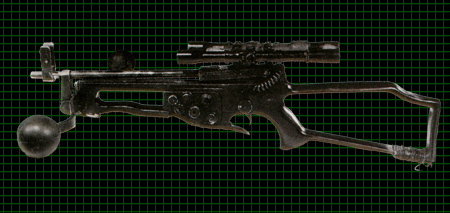
As a side note, may I point out what may quite possibly be the perfect weapon for the zombie apocalypse, the AA-12 shotgun.  All it needs is a bayonet and like a bajillion clips of ammo.  A must-have for any zombie contingency plan.

But yeah, let me just say I am in awe of The Zombie Hunters.  Awesome, awesome story–every time it updates, I get immersed again in the post-apocalyptic world, and it is amazing.  If I ever end up writing a zombie apocalypse story (which will probably involve starships and space travel in some fashion), I would be tickled if it’s even half as good as this excellent webcomic.

I Don’t Want to Kill You by Dan Wells

John Cleaver, teenage sociopath and demon hunter, has put his inner monster to work protecting his small town community from supernatural beings.  But now, the head demon, known only as Nobody, has come to take him down.

As if that weren’t difficult enough, the most popular girl in John’s class, Marci, has taken a liking to him–and he soon finds that he likes her back.  What’s more, she’s not as weirded out by his obsession with the string of murders in their town–in fact, she’s interested in them too.

Just as their young romance begins to blossom, however, a rash of teen suicides makes John wonder: why does he even try if the people he’s trying to protect are just going to throw their lives away anyways?  To defeat Nobody, he must search within himself and find the answer.

This book was awesome–like, Return of the Jedi awesome–and I’m not just saying that because the author is a friend of mine.  It brings the Serial Killer trilogy to a dramatic and satisfying conclusion.  Dan Wells’s storytelling skills are amazing, and he puts them to good use throughout this book.

The thing I loved the most was probably how all the major characters had to sacrifice something huge for the people they loved in order to overcome the evil forces at work in their lives.  And the demons–whoa, they were pretty freaky.  Supernatural freaky, yes, but in a way that was frighteningly true to life–even more so than the previous demons in the series.

Wells has an excellent handle on character arcs, and he applies that here to the romance subplot with excellent results.  The romantic aspect of the novel was both believable and gripping, and made the ending all the more emotional.

If anything, though, I wish he would have played up the love triangle a little more than he did.  No spoilers, but there were a couple of shifts toward the end that felt a little abrupt.  Not too much, but I thought it could have been done better.

This is definitely an urban fantasy, but one surprisingly close to the real world.  Unlike Mr. Monster, where the supernatural aspect came in halfway as something of a shock, I thought the supernatural and real world elements in I Don’t Want to Kill You were blended almost perfectly.  Not only was it clear from the beginning that both elements were going to be important, but the feedback loop between the two was handled extremely well.  If I ever write urban fantasy, Dan Wells has certainly set a high standard to follow.

All in all, a great book, one I highly recommend.  If you enjoy urban fantasy or superhero stories, you’ll probably love this book.

Goals for May

The last two weeks have pretty much decimated my writing routine.  Between family stuff and a 40 hour per week temp job, I’ve pretty much fallen behind on everything.

However, the good news is that with the money from the temp job, I can afford to take a month off to work exclusively on writing projects.  Here’s what I plan to accomplish, in order of importance:

  • Finish Into the Nebulous Deep 1.1.
  • Finish the online TEFL class.
  • Publish Journey to Jordan on the Kindle.
  • Finish >50% of Worlds Away from Home 3.0.
  • Prepare Genesis Earth for publication.
  • Release the short stories on Nook, Smashwords.
  • Switch to Linux.

A hefty bill, especially considering that my youngest sister’s wedding is next weekend.  However, I think I can definitely do it.  I’ve got about 18k words left in ITND, and with the feedback from my first readers, I’ve got tons of ideas for WAFH.  That project is going to be fun.

Journey to Jordan shouldn’t be too hard, either.  I found a good WYSIWYG html editor and played around with some test files today until I figured out how to make it work.  Now, I just need to play around with an actual Kindle to see how small I need to make the interior illustrations/photos to make sure they look good.  After that, it’s just copy and paste from old blogs, with a little spot editing and some time to write a foreword.

Journey to Jordan is going to be a lot of fun.  It’s a travel journal, not a science fiction novel, but my experiences in the Middle East definitely shaped my writing style, and it might be fun for readers of my novels/stories to see where the influences came from.  If all goes well, I can have it up by the 14th.

But above all else, my priority is going to be writing. I want to get back into a steady routine, plugging out a good +2.5k words each day until ITND is finished.  The deadline for that is the 14th, but I want to have it finished sooner if possible.  It’s going to be hard with my sister’s wedding, but I’ll do the best I can.

Of course, this is all assuming that I can take the whole month of May off.  However, Pioneer Book called me up on Saturday to set up an interview–they’ve got a position open, and I’m pretty optimistic that they’ll want to hire me.

If that happens, great!  I’ll just push some of this stuff back into June and juggle part time work with these writing projects.  Full time work is much harder to juggle, but if things don’t work with Pioneer Book, the guys at the temp job want me to come back in June.  So either way, I won’t be broke (inshallah).

The ultimate goal, of course, is to make the writing pay the bills.  That seems more possible to me now than ever before, but it’s still a ways out there.  2015, though–that’s the goal.  I want to me making a full time living as a writer by 2015.

But for now, I’d better get some sleep.  After all, I want to write +4k words tomorrow.  Wish me luck!

Why I am not afraid of the Noise

One of the biggest concerns for writers considering indie publishing is the fear of being drowned out by “the Noise”–all the obnoxious crap that will inevitably pile up because everyone thinks they can write a book.  After all, if anyone can self publish, anyone WILL self publish, including all the hordes of terrible, terrible writers.  In such an environment, how will anyone find you?

I’ve been thinking a lot about this, and reading a lot of author blogs to hear their take on this issue.  While I was afraid of the Noise at first, I’m not that worried about it anymore.  Here’s why:

1) The Noise has always existed.

The Noise is not a new problem.  Anyone with a printer and/or internet access can submit their stuff to agents and editors–and they do.  It’s called the “slushpile.”

Under the old system, good stories would never find their audience unless they got picked up by one of a handful of editors.  Problem is, this creates a huge bottleneck that only amplifies the Noise, making it even harder to get noticed.  Editors outsourced the slushpile to agents, but this only made it worse, like adding an extra level of bureaucracy to an already inefficient system.

The way I see it, if I’m going to have to fight the Noise one way or another, I would rather have direct access to my potential readership than be forced to submit to an overworked editor who doesn’t have time to give my work fair consideration.

2) Epublishing gives books more time to find their audience.

Traditional publishing works on the “produce” model, where new books have only a few months on bookstore shelves before they’re pulled to make room for something new.  In sf&f, it’s more like a couple years for paperbacks, but it’s still the same thing.

If your book doesn’t find its audience in those first few months–and therefore doesn’t sell very well–it’s considered a failure. With epublishing, though, there’s unlimited shelf space, and that means the book will ALWAYS be available.  It might not sell for the first few months, but that’s okay–it has as much time to find its audience as it needs.

I believe that given enough time, the good stuff always rises to the top of the heap.  I would rather follow the model that gives me that time, rather than gamble on the arbitrary timetable established by the traditional publishing establishment.

3) The revolution is social.

At LTUE this year, Tracy Hickman astutely pointed out that bookselling is no longer about creating artificial marketing hype so much as making a direct and personal connection with the reader.  With modern social networking platforms, writers can connect directly with their audience in a meaningful, peer to peer manner, expanding their readership naturally.

If we still had to rely on old, top-down marketing models, the Noise would certainly be a problem.  But with social networking, the audience is becoming much more interconnected, revolutionizing word of mouth and making it easier for writers and readers to connect than ever before.

4) Success comes at a much lower threshold.

For my purposes here, I’ll define “success” as making a full time living as a writer (>$20k/yr, though that will probably change when I’m married).

Under the old model, a $20k advance for a new writer like myself would be quite good, especially in my genre.  However, that money would get paid out over the course of several years, and I probably wouldn’t get a contract for another book until after the first book proved itself.

But the $20k is really just an advance against royalties, and the royalty rates run pretty low (<12% hardback, <8% paperback).  At those rates, I probably wouldn’t start to make a full time living until my devoted readership (those who buy my books in hardcover) numbered at least between 5,000 and 10,000.  And even then, my publisher might still drop me.

Under the current indie publishing model, though, the author gets a 70% cut.  That means that I could significantly undercut traditionally published books in price and still make more money per book. A $5 ebook earns as much at 70% as a $25 hardback at a 14% royalty rate, and will probably find its audience a lot faster because of the lower price.  With paperbacks, the difference is even more stark.

An audience of 5,000 is a drop in the bucket compared with the population of all readers.  The Noise might keep me from reaching everyone, but I don’t need to reach everyone to make a living–just a few thousand.

5) Transformational growth will greatly expand the market.

Right now, we seem to be on the verge of transformational growth in the publishing industry.  With epublishing, not only are avid readers buying more books, but more people are becoming avid readers.  This means that now, more than ever, publishing is NOT a zero sub game.

Sure, the Noise will get louder as more people self publish–but that Noise will also be spread out across a much larger market.  Even if my piece of the pie gets smaller, the pie itself is getting much, much larger, and that’s good news for everyone.

I have other reasons for not fearing the Noise, but these are the biggest ones.  Promotion is still a major question in my mind, but for now I’d rather get back to writing.  After all, that’s what I do–I’m a writer.

Disappointment and a shift in direction

So the latest round of judging for the 2011 Amazon Breakthrough Novel Award came out today…and Genesis Earth didn’t make the cut.

Oh well, at least I made it to the quarter finals.  Most of the reviews were encouraging, though the one from Publisher’s Weekly made me wonder if the reviewer had something against science fiction in general (or was perhaps underpaid and overworked, as seems to be common in traditional publishing these days).

I did notice that none of the previous years’ winners (or finalists, so far as I could tell) were science fiction–which is not to put down their quality, or the quality of the semifinalists.  It does make me wonder, however, whether part of the reason Genesis Earth didn’t move on was because of the tastes of the audience.

I’m not discouraged though.  My novel has garnered a lot of positive feedback, not only from alpha readers, but from agents and editors as well.  I know it’s got potential; just hasn’t come into its own yet.

The thing is, Genesis Earth is a YA science fiction romance novel, and the YA market is much harder to break into without an agent than adult sf&f.  I could probably find an agent if I queried around long enough, but after reading Dean Wesley Smith’s series Killing the Sacred Cows of Publishing, I’m convinced not to go that route.

At the same time, ebooks are revolutionizing the publishing world much faster than anyone had predicted.  We may pass the 50% mark in the next few months, if indeed we haven’t already.  Combine that with increasingly unfavorable contracts with traditional publishers and some disturbing accounting discrepancies at the major houses, and self-publishing is looking better and better every day.

So I’ve decided to put up Genesis Earth as my first indie published novel.  Expect to see it sometime this summer, probably in June or July.

If you’re an editor and would like to hire out your services, send me an email at joseph [dot] vasicek [at] gmail [dot] com.  I’ll send out a few test pages and ask about your rates (preferably per word).  I don’t have a whole lot of money, but I’m willing to pay for professional quality work.

If you have any ideas for cover art or a cover artist, let me know as well.  I’ll be spending a lot of time trawling Deviant Art and old Leading Edge issues, as well as analyzing traditional book covers to get a feel for that end of the business.  I’m a firm believer in the tradition of high quality science fiction and fantasy art, and want my own work to be a part of that, even if it costs a little extra.

I felt uneasy with going indie a few months ago, but right now it seems, if nothing else, like a very smart calculated risk.  The worst that can happen is that it takes a long time to find its audience, leaving me out a few hundred bucks in freelance costs until it does.  The potential benefits, on the other hand, are tremendous.

In the meantime, I’ll keep blogging about the process to share what I’m learning.  And if you want to support me, feel free to pick up one of my short stories on the Kindle and review it / blog about it / share it with a friend. The links are on the sidebar.  In the next couple of weeks, I’m going to put them up on Smashwords and B&N, so if you prefer those formats, they’ll be available soon too, I promise.

In unrelated news, my cousin Angela just got a publishing deal for her poetry chapbook!  Awesome!  I’m glad to see that someone else in the family is having some publishing success–good luck!

(Image courtesy postsecret)