New title and writing update

Just a quick update before I go to bed.

After much deliberation, I decided to go with Desert Stars as a title.  Thanks, Megan, for suggesting it.  It’s a little short, and doesn’t exactly wow me, but I’ll try it out and see if I grow into it.  The most important thing anyway is what the readers think.

The last couple of days have been going slow, mostly because of stupid writerly avoidance things.  It’s a lot easier for me to revise than it is to write new material, and the last couple of chapters have required a lot of new material.  But I think I’m through most of it, and will hopefully make some good progress tomorrow.

Genesis Earth has been selling a lot better than I thought it would…which doesn’t say much, but at least it says something.  For promotion, all I’ve done is the blog tour, a couple links on facebook, and general participation on the Kindle Boards.  In any case, I’m betting that writing is more important than promotion, so that’s where I’m focusing my energy.

The temp job I’m working is pretty good.  I listen to stories, writing podcasts, and lectures all day while doing data entry.  One of the most interesting ones is this presentation from Gencon, all about story structure and the hero’s journey.  Good stuff; it’s helped me figure out a lot of things with my current WIP (Desert Stars).

I’ve also been listening to a lot of trance music, especially Armin Van Buuren.  I know my Dad will think it’s crap, but hey I like it!  I think I’ll leave you with this track, where Armin teams up with the guy behind Owl City.  I’d tell you how many times I’ve listened to it, but that would be embarrassing.  So anyways…good night!

In search of a new title

I’m not that great at figuring out titles.  It seems that with every project, I agonize for days to find the perfect title, only to settle for something that sounds reasonably good.

Worlds Away from Home is no exception.  Even though it was better than the previous title (Hero in Exile), I never really felt wowed by it.

So now that I’m midway through the third draft, I figure it’s time to fix this problem.  For those of you who’ve read it, I’m hoping you can help me out with suggestions; and for those of you who can’t, maybe you can tell me which ones sound cool and which ones sound lame.

Here are some of my ideas so far:

Dome and Desert, Sand and Stars
Through Sand and Stars
Beyond a Thousand Suns
Beyond the Caves of Babylon

I don’t really know, though.  I’d like to throw in a reference to the Temple of a Thousand Suns, but there’s already a famous book with the “thousand suns” phrase.  I really like the phrases “dome and desert” and “sand and stars,” but when I throw them together it doesn’t really seem to get across Jalil and Mira’s storylines.  Then again, I don’t know if any title could.

Anyhow, if you have any ideas, please toss them my way.

I’ve never registered on the Absolute Write forums…

and now I don’t need to.

The publishing industry has turned into the wild and lawless west, complete with lynch mobs and posses, isolated and inbred communities, a gold rush for ebooks, and dirty corporate executives looking to railroad their way over the honest, hardworking authors who just want a plot of land to call their own.

It’s insane–and yet, at the same time, so freaking awesome.

Just five years ago, there was only one real way to make a living as a writer: go with a traditional publisher. But now? Now, there are no rules. Now, you can be a cowboy and still make a name for yourself.

I do want to express my sympathy for Robin, though. Her blog, Write 2 Publish, is an excellent source of information on the changing publishing world, and I’ve always found her commentary thoughtful and insightful. The fact that she was banned from one of the largest online communities of writers (and especially the way in which she was banned) only confirms to me how seriously wrong-headed people are who cling dogmatically to traditional publishing models.

There are two kinds of people in this world…

Guest post: Developing Characters in a Fantasy Setting

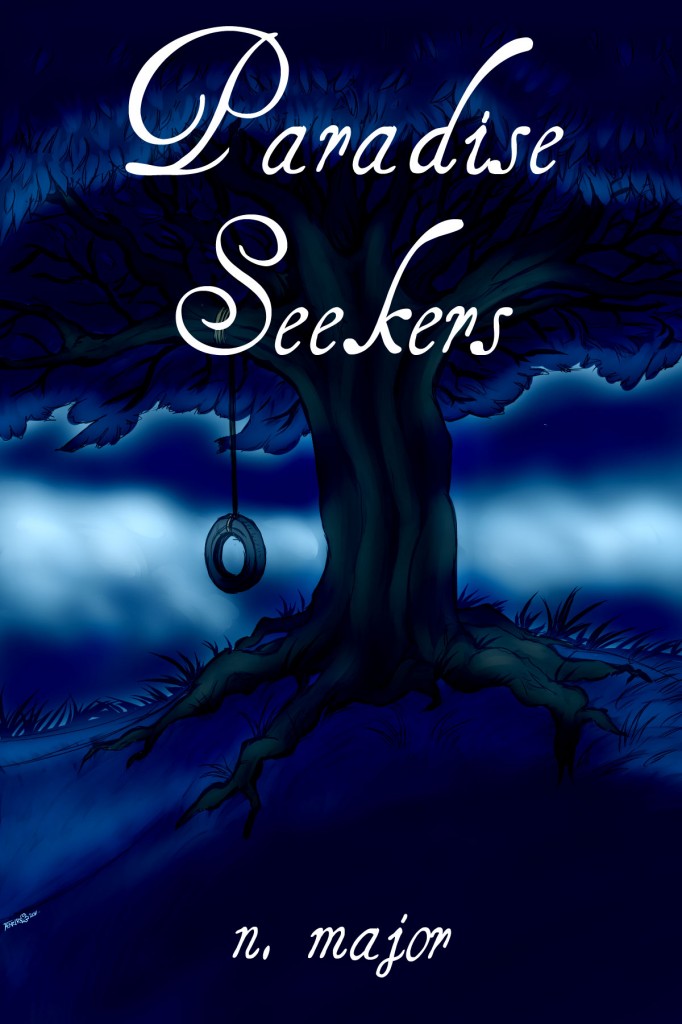
Nathan Major is a friend and fellow writing who, like me, has taken the epublishing route for his first novel, Paradise Seekers. I met him through our mutual friend Charlie at Brandon Sanderson’s English 318 class.  His book is pretty good; I’m only partway through it right now, but he’s playing with some interesting fantasy concepts and I’m definitely looking forward to seeing how he pulls it off.

I recently appeared on his blog with a guest post on how I develop my characters; for his appearance here, I decided to throw the question back at him.  Like a true fantasy author, he answered it with a multi-part epic that is probably only the first installment of a trilogy.  He makes some good points, though, and it’s definitely worth reading (and not just for the snarkiness, heh).

On a tangentially related note, I also appeared recently on Charlie’s blog with a post on ebook formatting and book DIY.  When you’re finished here, be sure to check it out!

And now, I give you Nathan Major…

================================================
When you think of fantasy, what is the first thing that comes to your mind? Mystical worlds populated with elves, dwarfs, and other magical races? Kingdoms and castles, dark lords and noble heroes? Perhaps you entertain a world that is more supernatural and more interesting than our own, one that would allow you to escape to its enchanted forests and sweeping vistas.

The fantasy genre differs from other forms of fiction (except perhaps science fiction) in that the worlds they take place in tend to be the stars of the stories. Middle-earth and Prydain. Oz and Earthsea. And within these worlds, a classic clash of good vs evil is expected. The characters and story can often take a backseat, with many authors spending years of their lives crafting the perfect magic system, most precise system of fantastical government, and the means to make their elves the best damn elves you’ve ever seen.

This drives me crazy.

I’ve been reading fantasy my entire life, but it wasn’t until a few years ago that I got fed up with the whole thing. I loved The Hobbit and The Lord of the Rings, but as I dug deeper and picked up more modern fantasy, it all seemed to start blending together. Here is our noble hero, beating the odds to fight against a nameless, oft-hidden dark lord. Here is his spunky princess sidekick slash love interest, his old mentor who dies in act two, and the hardened warrior with a dark secret. While not all books contained these tropes, the main issue still persisted: I wasn’t seeing any new characters.

That was actually what drove me to writing. After reading through a particularly popular fantasy book that was also atrociously generic, I remember tossing the book on the couch and thinking, “I could do better than this!” So I set out to try my damnedest to write a fantasy novel that, yes, was in a fantastic worlds that we wish we could live in, but was populated by people just as interesting and well-developed as the world.

Since I’m severely ADHD, I’m going to break this up into a few key ideas that (hopefully) will get my point across. These aren’t just applicable to fantasy, but it’ll be my main focus.

1) Plan your characters first, before you plan the world.

Simple enough, right? When speaking with most other fantasy authors on the subject of brainstorming, the first things they say are, “Oh, I got the coolest idea for a magic system!” or “This world is going to be amazing…it’s made entirely out of White Chedder Cheese-its!” To which I say, “Ok, but what’s the story? And who are the people influenced by the story?” This is usually met with a, “I don’t know, I’ll figure it out later!” Then I defriend them on Facebook and pretend they never existed.

Ok, so the last part was an exaggeration. But the point still stands: you may have the greatest world ever devised, but so do map-makers, and theirs looks better. What is actually in the book is the plot and the characters, and the world is just what it takes place in. You might have the greatest appendix ever at the end explaining how the Haku-Bula Wolf Tribe’s language is actually a combination of grunts and Swedish, but that doesn’t matter to the average reader. Figure that stuff out after you’ve got a story, because it’s less important.

2) Don’t fall into cliches.

This is a hard one, as discovered by me when writing my third book, Where Gods and Mortals Dance. If you’ll excuse a moment of self-indulgence, when writing this book I had a female princess as the main character. She was a strong character, but due to circumstances beyond her control she was thrust into a situation that was almost impossible for her to fix. I remember trying to design her as strong but still fragile, as parts of her past haunted her and made her ability to rule difficult.

Then I took her to writing group, where the group was divided. Half said she was the, “generic, strong, masculine princess who takes charge,” and the other half felt she was the “weak, needy, spoiled princess” who has everything done for her.

It frustrated me, but also proved a point.

I was relying on two cliches and stereotypes to design my character. I drew from both in an attempt to be original, but that didn’t work. This happens all the time in fantasy. We have the old warrior, somehow inferior to our spunky young farmhand who picked up a weapon for the first time yesterday. We have a dark lord who never actually does any fighting or has any coherent plans, he just sort of sits on his throne of skulls and knives (which is probably black and on fire) and waits for farmhands to come and kill him.

Even in the most original novels, these cliches can become evident. They might not be as blatant as the ones said above, but keep them in mind when writing. Your book doesn’t have to star a teenager. It could star a forty-year-old man who wants to save the world. There doesn’t have to be a Dark Lord at all; the enemy could be something completely different. Stay the hell away from elves, dwarfs, or anything that Tolkien used. And taking Orcs, changing them slightly, and calling them “Orks” doesn’t count as being original, it counts as being a cop-out. Fight the cliché. Make your characters deep and unique.

3) Remember: Everyone is a hero in their own story

Sympathetic villains are a rarity in fantasy. Most of the time we have a group that is distinctly bad, and a group that is distinctly good. You can usually tell by how they live. If they live in trees, clouds, or anything that communes with nature: good. If they live in filth, a swamp, or basically anywhere that looks like it’s under the constant duress of a smoke-machine: evil. Usually bad-guy motives are just “they are bad and hate the good guys,” which is a freaking awful excuse. Oh, and don’t get me started on the “he’s insane, that’s why he wants to destroy the world!” villains. That’s the biggest cop-out of them all and if you use it I want to punch you in the face right now. You are cheapening your characters and your story to make things easier for you. Here’s a revelation: good books aren’t easy. It took Tolkien how long to craft the novel that essentially invented modern fantasy? I’m not saying you should take two decades to make your book, but you should at least have to take more than one sentence to describe your villain’s motives.

The best part about the above expression (which is probably my motto when it comes to developing characters) is that it changes the way you look at your book. Life isn’t black and white: it’s a whole lot of gray. You might see something in black and white, but if you were given a chance to enter someone else’s head, perhaps your view would switch entirely. Nothing is scarier than a completely sane, totally competent villain whose goals just so happen to be the exact opposite of our hero’s. In fact, it makes the reader uncomfortable, because many of them will no longer know who to root for. If you are doing it right, your villain’s motives and values should be just as convincing as the hero’s, which means the reader should be second-guessing their loyalties throughout the book. It makes for a hell of an engaging read, let me tell you.

But this little ditty isn’t just for main characters. Side characters also need to be their own heroes. Sam didn’t just tag along with Frodo because it was a fun thing to do. He knew what had to be done (probably even better than Frodo) and fulfilled that personal quest. Your side characters need to have their own motives and motivations, depth and personality. Don’t’ drag them to Mt. Doom with the only reason being “because the hero was heading that direction anyway.” They should be just as deep (or at least close to the level of depth) as your hero. Make them interesting, and your reader will love them even more.

4) For your characters to be successful, you must know them better than they know themselves

Wow, that’s a long one, and it is sort of off the theme of “broad, overgeneralizing statements” that these bullet points have been so far. At any rate, I’ll try and be brief with this one because it seems self-explanatory.

I have a friend author who, upon designing a character, takes an online “100 questions personality test.” While I’m not saying this is the “go-to” answer for everybody, it can be an extremely helpful tool in understanding a character better. What do they like to eat? What is their taste in women (or men)? If they magically appeared in our world and wanted to hang out, what would you do? These are questions that’ll maybe never be addressed in the story, but you should know these answers. If a character has a name and is in the book for more than a single chapter, you should know everything about them.

This can be hard work, especially if you like having a billion characters. But even if you just have one or two, you really need to be in their heads. Know them. Be them. Imagine them in other situations besides in your novel. And once you really understand what makes your spunky farmhand tick, then you’ll be able to write him in both a convincing and believable way.

5) Write characters you’d like to read about

Figured I’d end this on a simple one. It’s very easy when writing to get the rose-tinted glasses put on, and all of a sudden everything in your book seems perfect. Your characters are a little cliched, but whose aren’t? Your dark lord doesn’t really have a idiom, but he does have a badass axe carved from the ashen bones of the long-lost race of dragons. Who wouldn’t like this book?

Take a step back and think. And if you can’t think of yourself, think of me. A cynical, jaded red-head who writes fantasy only because most of the fantasy currently out there pisses him off. I am your audience. I am biased, blatant, and unbelievably good looking. What would I say?

If you know your characters (see #4!), and you know them well enough then this step shouldn’t be an issue. You’ll like them regardless, because any author gets attached to a character they know every aspect of. In my current novel, Effulgent Corruption, one of the viewpoint characters is complete scum. My initial development of him was a murderous, rampaging madman whose only reason for existence was to kill and destroy. However, as I dug deeper and began to understand the character, he became sympathetic. I realized the man’s goals, what emotional pains he’s been through, and what hurts him now. I knew who he relied on, and what parts of himself he hated.

He quickly became my favorite character.

This should happen with you. You should love your villains, and hope that, should this whole “world-saving hero” thing blow over, their goals will be accomplished. Your side characters should be entertaining and fun, people you’d want to hang out with, just like your hero does. You should know everybody and at least have a shred of sympathy for them. Then, you’ll have great characters.

This, of course, isn’t a complete guide to developing good fantasy characters. Hell, it isn’t really even a very specific one. But I’m almost 100% sure that, should you take these ideas to heart, you can beat the odds and write a fantasy novel that is as interesting in its ideas about elven politics as it is with its elaborate, three-dimensional characters. Fantasy as a genre deserves better, and you (yes, you!) can be the one to do it. So go forth, young author, and write the epic that will shake the Barnes and Nobles across the land!

Plus, it’ll increase your chances that I’ll actually read it, which is a perk in and of itself.

Copyright (c) 2011 by Nathan Major
Are ebooks there yet? My response to Wired

I just read an interesting article on Wired putting forth five reasons why ebooks aren’t yet better than print books.  I find it mildly interesting that Publisher’s Weekly linked the article on Twitter; the more things change, the more that people in traditional publishing seem to plug their ears and pretend like it isn’t happening.  However, I disagree with the article’s reasons, and here’s why:

1) “An unfinished e-book isn’t a constant reminder to finish reading it.”

The solution?  Writers need to write better books–and because of the pressure that this problem exerts, I believe they will.  If print publishing resists the ebook revolution long enough, well-established indie authors might well develop a reputation for better written, more engaging page turners than traditionally published authors.

2) “You can’t keep your books all in one place.”

I’m not plugged into the tech world, but I imagine that this problem will be solved rather quickly once readers start complaining.  This is a tech problem, and the tech industry is far better at change and innovation than traditional publishing.

3) “Notes in the margins help you think.”

I don’t mean to put down any of my friends who do this, but…seriously?  How many of you write in the margins as you read?  It’s probably more of an issue with literary fiction, but with science fiction and fantasy, most of us read for story, and the best books are the ones we finish at a breathless sprint at 4:00 am the next morning.  When it comes to the genres I write in, I think this is a non-issue.

4) “E-books are positioned as disposable, but aren’t priced that way.

This one is my favorite.  Sure, traditional publishers are overpricing their ebooks, but that just opens the door for hordes of indie authors (like me) to undercut them and earn more on their own than they would if they took a traditional publishing deal. In addition, all the longtime professional authors I know are doing everything they can to jump ship, which is only going to bring about the crash of the traditional publishing model all the sooner.

In all honesty, I hope that traditional publishers continue to overprice their ebooks as long as they can.  The more they tick off readers with bloated prices, the greater an advantage my books will have over theirs.  And the more readers buy indie, the more money goes to supporting authors, as opposed to overpaid corporate officers and ridiculously expensive New York rents.

5) “E-books can’t be used for interior design.

Two responses: 1) how many people do you see these days with CD racks in their living rooms, and 2) why do you think people still buy vinyl?

When the iPod came around, people didn’t let this argument stop them from switching their collections to mp3 and boxing up all their CDs.  When a new technology arrives that is demonstrably superior to the old, culture adapts to fit around it.

At the same time, I have no doubt that print books will continue to exist.  People still ride the California Zephyr even though we have airlines, and they still buy vinyl even though we have mp3s.  It may well be that the half-dozen collectible leather-bound hardcovers you own in the age of ebooks will say more about you than the hundred or so secondhand paperbacks you have on your shelf now.

Staying in Provo

So, I have some news.  After carefully weighing my options, I decided to stay here in Provo for at least another six months, rather than teach English in Korea for a year.

My main reason was the current pace of change in the publishing world.  Originally, I wanted to take a year or two off to build a TEFL career and make some money to support myself as I tried to break in, but with the way publishing is changing, if I did that I would find myself completely lost as soon as got back.

Another reason was that I wanted to be able to focus on building my indie publishing career.  Traveling and working abroad would take a lot of energy away from that, which didn’t seem like a good thing to do at this point in my writing career.

Yet another reason was the fact that Worldcon is in Reno this year, and it’s going to be huge.  Anyone who’s anyone (at least here in Utah) is going, and it would be supremely foolish to pass up a networking opportunity like that.

And also, I have to be honest: since I’m in a local band now, I kind of want to stick around and see how that works out.  Who knows?  Maybe we’ll make it big…

So what am I going to do now instead?  Probably work odd jobs to support myself, same as I’ve been doing since I graduated.  I’ve got one lined up to start next week; apparently, the guys at this alarm company where temped in April were impressed with my computer skills and want me back.  Maybe I can turn that into a part time gig once the summer’s up.  If not, there’s always the costume factory job in September-October.  And of course, I’m still keeping an eye out for local part-time jobs.

And really, all this stuff about getting a “day job” seems to me like another way of saying you can’t make a living as a writer, which strikes me as utter bull crap.  Yeah, most people don’t become full time writers–but most people aren’t willing to do what it takes to get there.  I am.  I’m also fortunate enough to be in a good position to shoot for it.  Young, single, no dependents, no debt…it doesn’t get any better than that.

In tangentially related news, my first guest post from my blog tour went live yesterday.  My friend Nick Rose interviewed me and asked about epublishing, getting good cover art, what makes novels unique, and why I’m drawn to science fiction.

Nick is an aspiring novelist like me who’s hoping to turn this into a full time career.  He’s also a great writer, even if his tastes are a little different than mine (seriously man, how can you NOT love Star Wars?  Come on!).  He writes mostly horror and reads a lot of manga, which he reviews on his blog.  He also updates his blog every day, so check him out!

Genesis Earth is now live!

That’s right!  Genesis Earth, my first epublished novel, is now available on Amazon for $2.99.  Check it out, post a review, tell your friends!

I decided to price it at $2.99 for a few reasons:

First, that’s the lowest price at which Amazon allows a 70% royalty rate.  When you buy the book, I get $2.05, which is a very nice royalty even for a traditionally published book.  A lot of readers like to know that their money is going to support the author, rather than the people exploiting the author, and that’s only really possible at this price point.  I might drop the price to $.99 at some point in the future, but only for a short period of time for a special promotion.

Second, there’s the question of value perception.  I don’t want people to think that my book is worth less than a cheeseburger at McDonalds.  Sure, I might get more buyers if I price it lower, but I don’t want to attract people who will buy it and never read it; I want to attract people who will read it, love it, and buy all my other stuff–and I plan to put out a lot more work before the end of the year!

Third, and perhaps most importantly, I fully believe that this book is worth that much.  It’s worth at least that much.  Granted, if I didn’t have to worry about money, I’d gladly give it away for free (and what an awesome world that would be!), but even so, if you’re a person who enjoys thoughtful, character driven science fiction, I’m confident that you’ll come away from Genesis Earth feeling satisfied.

So yeah, Genesis Earth is finally up!  Buy it, read it, blog it, tweet it, facebook link it, start format…er, yeah, you get the picture.  Wheee!!

I’m going to start guest blogging on a bunch of other blogs, but don’t worry, I’ll keep this blog updated as well.  I also need to get back into writing my next novel, so I’d better do that now.  See you around!

AHHH! It’s uploaded!

That’s right; just a few minutes ago, I uploaded Genesis Earth to the Amazon Kindle store.  It’ll take about 24 hours to show up on the site, at which point the entire universe will implode and we’ll all become robots fighting for survival in an artificial reality.  So get ready!

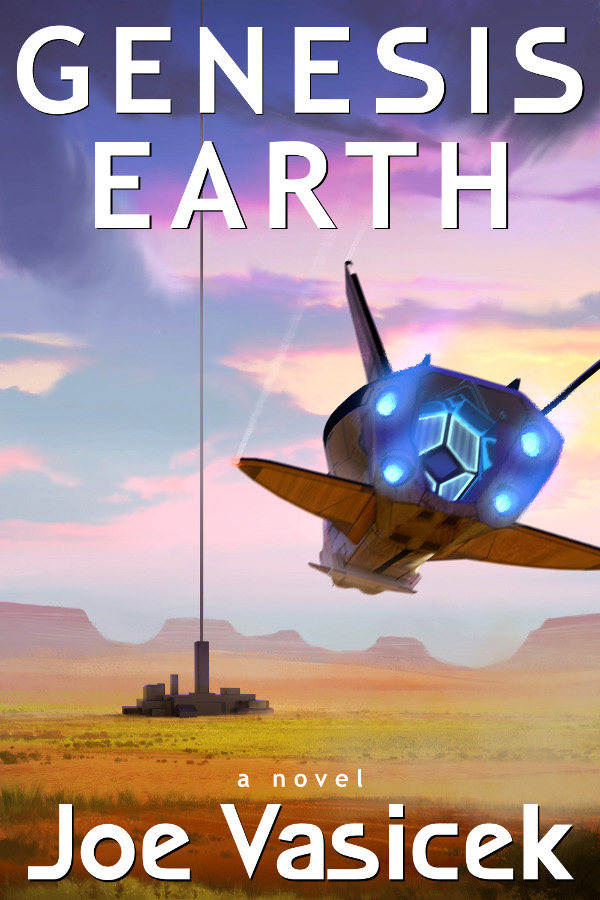
That beautiful image on the left is the cover, by the way.  Pretty awesome, neh?  It turned out even better than I was hoping it would.

Genesis Earth is my first epublished novel, and as such, I feel happy, nervous, excited, and ecstatic about it all at the same time.  The short stories were one thing, but this–this is the real deal.  This is me jumping in with both feet and not looking back.

It’s been a long and arduous road to publication, and I want to thank all of you who have been a part of it.  I plan on sending out a free copy to all of my first readers as a thank you gift; if for some reason I miss you, please let me know and I’ll get that sent out to you.

Finally, if you still want to get in on the blog tour, let me know and I’ll sign you up.  I’m not going to set up a strict schedule, but I’ll probably do three or four blogs a week, so either send me a topic to blog about or a set of interview questions, and I’ll get back to you as promptly as I can.

Man, this is exciting!  I’m sure that the road ahead won’t be easy, but at least things are now in motion.  This awesome novel has sat on my flash drive for far too long–time to put it out for people to discover.  It might take months for it to find its natural readership, but I’m confident that it eventually will.

Expect a post in the next 24 hours with more details.  Until then, prepare yourselves!

“…and I am doing my best to leave traditional publishing behind.” –Tracy Hickman

Those were Tracy Hickman’s exact words today at CONduit.

He said it as part of his introductory remarks at his first panel, “To Cliche Or Not To Cliche,” and reiterated it on all of the panels he was on for the rest of the day.

For those of you who don’t know, Tracy Hickman has built a career spanning over thirty years, and has 56 novels still in print.  He is an incredibly successful and prolific author.  What’s more, he is quite possibly the most humble and sincere person at the convention: extremely approachable, and very accommodating towards his fans.  He is an amazing man, and I hope to have a career like his someday.

He’s not the only big name author talking about epublishing either.  I heard this secondhand so it’s not admissible in court, but L.E. Modesitt apparently had a lot to say about Kristine Katherin Rusch‘s recent blog posts concerning the disturbing changes in traditional publishing.  Rusch is one of the voices at the epicenter of the indie publishing movement, along with her husband Dean Wesley Smith.

The initial shock wave of the ebook revolution has hit Utah, and people all over CONduit are talking about it.  In fact, I think I spent more time today in the hall talking about ebooks than I did attending panels.

You have no idea how invigorated this makes me feel.  I’ve been going around signing up bloggers for my Genesis Earth blog tour, and the sense of ownership I feel for my career is thrilling.  On my way back to Provo, I made a connection between two ideas for my current work-in-progress, and I literally screamed for two minutes straight.  I don’t know if I’ve ever been more excited to be a writer.

In his last panel of the day, Tracy Hickman closed with the following bold statement: if you master the art of story structure, have the dedication to work hard, and are willing to do what it takes to learn your craft, you will not only write a successful book, you will build a successful career in this world of new media.

That, my friends, is exactly where I want to be.

Stoked for CONduit and a sneak peek

CONduit starts tomorrow in Salt Lake City, and I am so stoked!

This will be my third year in a row, and it looks like all the usuals are going to be there: Dan Wells, Howard Tayler, Dave Farland, L.E. Modesitt, Tracy and Laura Hickman–in other words, a whole bunch of awesome people.  It’s gonna be fun!

As usual, I’ll be recording all the panels I attend.  Shoot me an email if you want the mp3s.  I’ll also try to give a report on this blog, though it might be a bit sparse.

This year, I’m hoping mainly to get the ball rolling for the ebook release of my novel Genesis Earth. Local cons are great for networking with other writers, and hopefully I can get a few more people to sign up on the blog tour I’m trying to get started.

If you’re a blogger / blogging writer and you’d like to participate, here’s how it works: you give me either a topic for a blog post or a list of interview-type questions.  I’ll write it up post and send it to you, along with the cover image for Genesis Earth. In the post, you include the image and a link to amazon where people can find the novel.  When the post goes live, I’ll mention it here and put up a link so my readers can find it.

You get a free guest post, I get publicity for my book, and we both cross pollinate readers and build our blog audience.  Win-win-win all around.

So yeah, shoot me an email if you want to participate.  Genre-wise, Genesis Earth is a YA science fiction romance; basically, it’s a coming-of-age love story with starships, wormholes, and first contact.  If you think your blog readers would be into that kind of thing, I’d be more than happy to put you on the tour list!

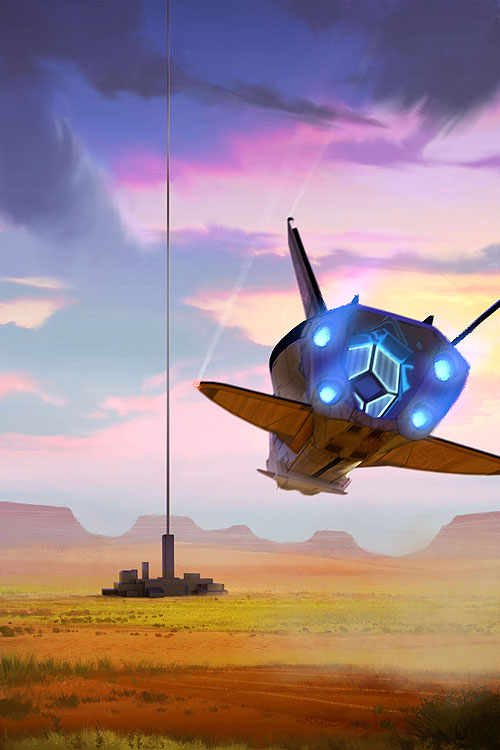
Finally, I have some eye candy for you: my cover artist, Hideyoshi, just sent me the final proof and it looks pretty friggin sweet.  Check it out:

Aaahh!  I’m so stoked to get this book out!