Story Notebook #5 (part 2)

For those of you who don’t know (or can’t remember, since it’s been so long), I’ve been doing this ongoing thing where I go through my old story notebooks.  Last time, we covered my last semester of classes at BYU; this time, we’ll cover my time in Washington DC, when I was trapped in an internship from hell.

Now, you may be wondering: “why is this guy just giving away his ideas for free?” Well, last week at dinner group, the conversation turned to story ideas, so I pulled out my current story notebook and started going down the list.  This quickly turned into a game of “name that tune,” where we managed to show that EVERY SINGLE IDEA had already been done. 

And you know what?  That’s perfectly okay!  There are no original ideas anymore, just new ways of executing them, and maybe a handful of combinations that haven’t yet been tried.  The purpose of keeping a story notebook with you at all times isn’t to come up with something new, it’s to keep track of the stuff that really turns you on.

Enough with that.  On to the notebook.

In a spacefaring culture, the custom will be for the males to leave the station and depart in search of a wife at another port, either to capture or win over in some way.  The women will tend more to running off with the travelers.  This preserves genetic diversity.

This is actually something I want to talk about in a longer post.  The problem of inbreeding in a space-based society is something that many science fiction authors have wrestled with, from Robert Heinlein to C. J. Cherryh.  Their solutions are quite inventive, but while I was in Washington DC working on To Search the Starry Sea (my escapist retreat from a hellish internship), I managed to come up with a few of my own, and used them in Star Wanderers.  More on that later.

What if one of the founders was a time traveler, sent on a mission to ensure that the US constitution made it through?

Hehe…in other words: James Madison, Time Traveler.  It has a certain ring to it, no?

The human mind is like a congress–so many people at extreme odds, arguing constantly but holding together somehow.

Oh boy.  If that were true, the US congress today would be like a paranoid schizophrenic.

A subway haunted by patrons from the past–maybe you will become one when it goes back in time.

Who hasn’t been creeped out by the subway at some point or another?  Except the New York subway system is way creepier than the Washington DC Metro–I swear, some of those rats are man-killers.

A magic system where the cost is your unborn children.  If you don’t have children within a certain period of time, you die.

Sounds like some of the Arab short stories I’ve read.  Families and children are much more important to them than to us in the West.

When the Developed World develops instantaneous transportation devices, it will essentially merge into one super country, while the developing world will be left out.  The only sense of distance will be in the developing world, and terrorism will be an issue.

Kind of like Larry Niven meets dependency theory.

A government where the Supreme Court is a super-intelligent robot.

Hopefully this would rid the country of activist judges…or would it??

A character who believes, at his core, that there is no such thing as a genuine surprise, simply a lack of information–and that if we had perfect information, there would be no surprises.

Sounds a lot like the platonic 19th century ideal of a scientist.  What with quantum physics and such, there aren’t a whole lot of those left.

There are two kinds of shame: shame from loss of honor, and shame from not following the herd.  Don’t mistake the one for the other.

This one isn’t so much a story idea as an observation.  I learned a lot in my hellish Washington DC internship, most of which had very little to do with my area of study and everything to do with the less-than-honorable ways in which the world works.  And on that note:

____ always felt that the world around him was somehow less than real; an illusion.  While staring out the window of the train, he wondered if the window wasn’t just a video screen, like the car windows of old movies–or when looking out at the view of the mountains beyond his house, with the picturesque clouds and too-blue sky, if it wasn’t just an elaborate painting on a wall at the end of the world.  In moments like these, ____ longed to peel back the video screens–to break down the pretty painted wall at the end of the world–and see what lay on the other side of reality.

If my hellish internship on K street taught me anything, it taught me that I would rather be a writer than have all the connections or political influence in the world.  I got out of Washington DC as fast as I could, and haven’t looked back since.
Part I of Star Wanderers is finished!

That’s right–I was up until about 2 am last night finishing it.  Man, time goes by fast sometimes.  This is probably just the first part of a much longer novel, but I hit a good stopping point so I’ll probably put it on the back burner for now while I finish Edenfall and do a final polish for Desert Stars. 

What I really want to do is submit this first part to Writers of the Future, since it falls just under 15k words.  I might be a little biased, but I think it’s got potential. 🙂 It’s going to need some work, though; the story literally sprung out of my head one day, and while that doesn’t necessarily mean that it’s bad, it’s probably missing a couple of scenes and needs some work with the transitions.  Also, the tone completely shifts midway, from a happy go lucky space adventure to something much more serious.  Not sure what to do about that.

So yeah, I’ll probably set this story aside for a little while so I can come back at it with fresh eyes.  It’s not too long, so the revisions should be pretty quick; hopefully, I’ll have it ready to submit to Writers of the Future before January.  If it doesn’t make the contest, I’ll shop it around the short markets for a year while I finish the novel-length version.  At some point I’ll probably epublish it, but I’m not sure when.

In other news, my short story “Decision LZ1527” just went free on Amazon, so if you want to pick up a copy or tell your friends, go right ahead!  It’s right around #200 in the Kindle free category now, but for some reason hasn’t hit any of the lists.  Hopefully that’ll change before the ranking drops back down.

“Decision LZ1527” first appeared in the December 2009 issue of Leading Edge, and was my first traditionally published short story.  Basically, it’s about a college freshman working up the courage to ask out a girl he likes, as told from the perspective of the little men inside his head.  Like Star Wanderers, the story just sprung out of my head one day.  It was a ton of fun to write, and I’m glad that so many others seem to enjoy it too.

In other news, I just got back the edits for Sholpan, so I’ll hopefully have that up on Amazon and other eretailers over the weekend.  More on that as it happens, but it’s happening soon.  I’d also like to put together a blog tour for Bringing Stella Home and Sholpan both, so if you’d like to have me on as a guest blogger, shoot me an email at joseph dot vasicek at gmail dot com.  More on that later as well.

And that’s just about it for now.  Take care, and I’ll see you around!

My first 1 star review

Well, I went through a significant rite of passage over the weekend: I got my first one star review on Amazon. 

The review was for “From the Ice Incarnate,” which doesn’t really surprise me because it’s currently my lowest rated story.  The biggest complaint seems to be that it feels more like a vignette than a complete story, which is a fair criticism.  I’ve tried to make it clear in the description that this is an excerpt from a larger work, so hopefully it doesn’t feel like a bait and switch.

I wish everyone loved all of my stories, but of course that’s not possible.  And although it’s easy to dismiss readers who complain about free ebooks, any book takes an investment of time and emotional energy; no matter what the price, the writer has a responsibility to deliver the best story they can write.

This is the reality of the new system: readers are the new gatekeepers, and rankings are one of the major ways that they give feedback.  It’s a lot more public than a rejection letter, but ultimately I think this is a much better way for stories to grow into their natural audience. 

Every writer gets one star reviews from time to time; writing is so subjective that it’s inevitable.  My object isn’t to please everybody, but to do my best and to be constantly learning. 

In the meantime, I’ll keep writing.

9.11.11

I realize that by the time you read this it will probably be September 12th, and most of you will be breathing a collective sigh of relief that the 10th anniversary of 9/11 is over and done with.  I apologize for bringing up the subject again; I’ve been putting off writing this post because I feel exactly the same way.  And yet it doesn’t feel right to say nothing, so I figure I’ll just get this off my chest and return to my normal blogging routine tomorrow.

To be honest, there’s very little I can say about 9/11 itself that I haven’t said already.  Last year’s post pretty much summed up everything I could say about my experience that day, and I won’t try to do a better job here.

There’s a reason I chose to spill everything last year as opposed to now, however, and that’s because last year was the final year in a decade that I think it’s safe to say all of us would rather forget.  It started with the 9/11 terror attacks and ended with a global financial meltdown and massive recession, with two ultimately fruitless wars and millions of shattered lives in between.

I almost want to call it the “Decade of Lost Dreams,” which is sad because many of those years were the prime of my life.  It’s true, though; the world has gotten a lot darker and grittier, at least for us Americans, and there are very few places we can look to for hope.  President Monson wrote an excellent op-ed in the Washington Post on that subject, coming at it from a more spiritual perspective.

I wish I could be more positive, but I don’t expect things to get better anytime soon.  These are dark times, and even if the specter of terrorism isn’t as bad as it used to be (thanks to the brave men and women in counter-terrorism and the military, to whom I give my utmost respect), the economy is a hundred times worse.  With the crisis in Europe, I wouldn’t be surprised if we fall into a second recession; it may be that the 00’s were merely the “Decade of Disillusionment,” whereas the 10’s will truly be the “Decade of Lost Dreams.”

I actually want to do a series of posts on this later, because even though things are grim, I still think there’s a lot of options open to us–possibly more than at any other time in history.  But that’s a subject for another time.

Basically, I just wanted to say that I feel like after 9/11, the country took a nosedive off a cliff, and that’s something I would rather put behind me than commemorate.  Fortunately, we don’t need to let that define us–I know I certainly don’t.  And as for those who have been working hard to make this world a better place since then, I tip my hat to you.  We need a lot more people like that right now.

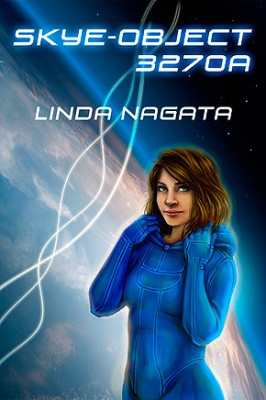
Skye Object 3270a by Linda Nagata

It’s not easy being a teenager in the orbital colony of Silk–especially when all the adults are functionally immortal and anyone under one hundred is considered an adolescent.  To make matters worse, Skye fell to the city in an escape pod when she was just a baby, with no idea who she is, where she’s from, or how long she was drifting in space.

Fortunately, she’s a tough girl with several close friends and a determined spirit.  One way or another, she’ll find out where she’s from–and whether there are any of her people still out there.  

I thoroughly enjoyed this book.  It combined the best of both science fiction and young adult: likeable teenage characters struggling to find their place in a high-tech alien world.  In particular, I found it fascinating how the widespread nanotech shaped both the society and the universe.

But the story isn’t about the technology, it’s about the characters, their adventures, and the friendships that form between them.  This was what really made the story come alive for me.  There’s a small amount of wish fulfillment, which may or may not be your thing, but overall I found the characters to be both believable and likeable.  It was a lot of fun to watch them grow and learn together.

At times, though, it felt as if the characters weren’t challenged enough.  The friendship and relationship issues were well done, but it wasn’t until the end that they started to have any significant try-fail (or try-almost fail) cycles in their adventures.  Also, while the ending was quite satisfying, it was also a little abrupt.

Those didn’t detract much from the rest of the story, though.  Overall, I thought it was a very satisfying read–the sort of book I wish I’d found when I was twelve or thirteen.  If I wasn’t already hooked on science fiction by that age, I have the feeling that this book would have turned me into a lifelong fan.

As a footnote, I’d like to add that this is EXACTLY the kind of book that indie publishing was made for.  It’s a great story, but the science-fictional setting is so unconventional that most publishers wouldn’t take a chance on it.  Even houses like Tor and Baen are focusing more on sub-genres like urban fantasy and military sf, which both have large, proven readerships.  For something that’s a little more niche or experimental, it’s good to see that there’s still a way to get it out to readers who would love it.

So yeah–if you like young adult books and you’re not turned off by space elevators, nanobots, or alien planets, you should totally try out this book.  I think it will surprise you just how much you enjoy it.

Just following my bliss

They say the way you know you’re a writer is if you can’t not write.  Well, last week I had the gratification of experiencing that again firsthand.

For all of August, I was more or less betwen projects and not writing a lot of new material. I’d just epublished Bringing Stella Home and was busy getting Sholpan ready for epublication.  Then Worldcon happened, and my writing dropped off precipitously.  I tried to get back in a groove, but found it difficult to choose between projects, none of which seemed to fit my writing schedule.

And then the creative half of my brain said “screw it” and ran off on an idea that came from practically out of nowhere.

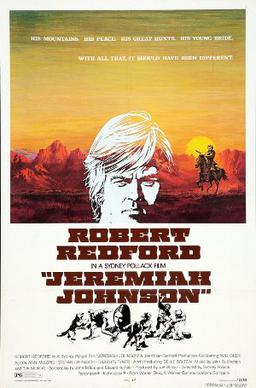
It all started when I was taking a power nap after a long day at work.  For some reason, my mind wandered to Jeremiah Johnson, an old Western with an awesome love story.

In the movie, Robert Redford unkowingly insults an indian chief by giving him several captured scalps.  The chief must return with a gift of equal or greater value, and so gives Redford his daughter, who doesn’t speak a word of English.  At first, things are hilariously awkward, but over time they grow into a beautiful and touching relationship.

Well, as I lay there thinking about the movie, I wondered: what if the same basic storyline were set in space?  Instead of a mountain man, the protagonist would be a space explorer / interstellar merchanter.  Instead of an indian chief’s daughter, the female protagonist would be the daughter of a station master whose colony is facing severe famine and widespread starvation.  When the merchanter boy unwittingly shows up at the doomed colony, the station master coerces him into taking his daughter to save her life.  And so, for the next two months, the boy finds himself crammed into a tiny little ship with a girl who doesn’t speak his language.  Hilarity ensues.

At first, I thought I’d keep it as a short story, but…yeah, that didn’t last long.  The more I run with it, the more ideas keep coming to me–ideas that I haven’t played with in a couple of years.  The story is set in the same universe as Gaia Nova and Bringing Stella Home, but about a thousand years earlier, back when things were, shall we say, more primitive.  I still don’t know where this story is going to take me, but I can tell it’s going to be a lot of fun.

The best part is that even if I expand this into a full length novel, the first part stands on its own so well that I could probably submit it to Writers of the Future.  That never happens!  It’s been years since I submitted to the contest; I always wanted to send something, but all I could ever write was novels with long, complex beginnings that couldn’t be cut off at the 17,000 word mark.

Anyhow, the working title of the novel is Star Wanderer (I can’t believe it’s not already taken), and it’s probably going to end up around 80k words or so.  I only have a vague idea at this point, but it’s much more intimate and personal than epic in scope, so I don’t expect it to go much longer.  I’ll probably finish the first part sometime next week and start looking for some first readers.  I’d like to finish the rough draft before I start the Desert Stars revision in October, but we’ll see whether that works out.

As for Edenfall, don’t worry, I’m still working on that project too.  One of the advantages of writing longhand is that it’s much easier to pick up and just go; instead of having to stop and think about what needs to happen next, the physical act of writing is slow enough that the ideas come much more organically.  I might not finish it before October, but if I can juggle it with Star Wanderer, I can probably juggle it with Desert Stars.  In any case, it’ll be good to work on new material and keep my writing sharp while I’m doing the revision.  We’ll see how it turns out.

So that’s what I’ve been up to in the last week.  I only wish I were doing this full time, so that I could spend all day working on these stories.  Soon, inshallah.

How do you know when you’ve succeeded?

With books and publishing changing so quickly, a lot of writers are wondering how they can tell when they’ve actually “made it.” It’s a valid question, one that I think we all need to answer if we want to write seriously.  For myself in particular, as an indie writer, how will I know when I’ve achieved success?

The question made me think about my experience as a Mormon missionary in California, and the definition of success that my mission president (the ecclesiastical leader and father figure for the missionaries) often quoted:

Success is peace of mind which is a direct result of self-satisfaction in knowing you did your best to become the best you are capable of becoming.

— John Wooden

This definition taught me that success isn’t just about external things that may or may not be in your control (for example, the number of convert baptisms per month), but is more about doing the things that are in your control to stretch yourself and reach your full potential.  To be sure, external factors are important measures of success, but at the end of the day, it’s not just about the numbers.

That said, for a writer like me who hopes to make a living at it, the numbers are pretty dang important.  At my current standard of living, I need to sell between 550 and 750 ebooks per month priced at $2.99 and $3.95 to accomplish that goal.  Right now I’m doing about 30 to 50, so I still have a ways to go.

But is that the best measure of commercial success?  If I have 10 titles selling around 55 to 75 copies each per month, will those books be hitting their full potential?

Probably not.  For that reason, I’ll probably end up signing a deal with a publisher at some point in my career; there’s only so much that I can do by myself.  However, in order for me to do that, the terms have to be right; I’m not going to sell myself short just to see my name in print.

(This is one thing that bugs me whenever I hear writers discuss whether traditional or indie publishing best fits their goals.  If all you want is “to see my name in print,” or “to see my book in a bookstore,” how is that any different from vanity publishing?  If that’s really your goal, fine, but don’t think it somehow puts you above indie writers–many of whom have goals that are much more pragmatic than yours.)

Artistically, I think the best way for me to achieve success is to take on a new challenge with every project and still feel like each book is better than the one before it.  Contests and reviews have their place, but going back to the definition, success is all about self-satisfaction and peace of mind.  I don’t want to tie any of those to someone else’s opinion about my work–that way lies madness.

But really, I think it all comes down to the readers.  Unless you stuff your manuscript in the closet, writing is never a solitary act: it is an act of collaboration with the reader.  If I have any measure of success, it will be because someone took the time to read my words.  To be sure, I can’t please everyone, but that doesn’t matter; it only takes one person to make a story come alive.

When I was a missionary, I constantly asked myself whether I was doing the will of God in the life of every person that I met.  That’s how I knew that I had succeeded: when I felt the peace of mind that came from knowing I’d made that personal difference in someone’s life.

I expect it to be similar with my writing.  Commercial success is great, but numbers aren’t everything.  What really matters is telling a story that connects with people on a deep and personal level, transforming them in some meaningful way.  If I can do that and make a living at it, that’s how I’ll know I’ve succeeded.

Edenfall update

So I haven’t exactly gotten into a good writing routine yet, but Edenfall is coming along pretty well.  I’m just about finished with the first chapter, and the dominoes are already starting to fall.

It’s fun to revisit the world of Genesis Earth, but I’m not going to get too bogged down in recapping the events of the first book or setting things up.  I hate it when sequels do that.  Fortunately, since the majority of this story is going to be from a new character’s point of view (Michael and Terra’s oldest daughter), I don’t really have to do that, except to lampshade some of the worldbuilding.

One thing I need to do is get more in the mood of the first book, which was a lot more introspective and big-picture than my other science fiction.  To do that, I found an excellent collection of videos called The Sagan Series.  Here is my favorite:

Man, I get shivers every time I watch that. “Sailors on a becalmed sea…”

Another good video is this one from The Piano Guys:

I know it says “Southern Utah,” but you could substitute that for “Icaria” and it wouldn’t be that far off.  In particular, the night clip from the bottom of the slot canyon at 2:05 looks like something straight out of Genesis Earth.  Throw in some primitive natives, a few giant lizards and various avians and insectoids, and you’re pretty much there.

I’m still adjusting to writing in longhand, but so far I think it’s going to work out well.  Because the writing process itself is much slower, it’s much more time intensive but surprisingly easy to jump in and get started.  Once I’ve got some momentum going, I think the story will practically write itself.

I do have a confession to make, though.  A couple days ago, I had an idea for another science fiction story that was just so awesome I decided to run with it.  At first, I thought I could keep it down to a short story, or perhaps a novella at most, but…well, I think it’s going to be a bit longer than that.

Don’t worry: Edenfall is still my primary project, and if juggling them both becomes too difficult (which it probably will), I’ll put this new one on the back burner until Edenfall is finished.  It’s kind of a guilty pleasure anyways, a sci-fi romance that draws heavily on tropes from old westerns (Jeremiah Johnson in particular).  I have no idea where it’s going to go (well, nothing more than a vague idea about the twist at the end), but that just makes it all the more exciting to write.

So anyhow, that’s what I’ve been up to these last few days.  Now if you’ll excuse me, I need to get back to writing.  See you around!

Plans for Edenfall

I’m trying something a little different with Edenfall: I’m writing the first draft entirely in longhand.

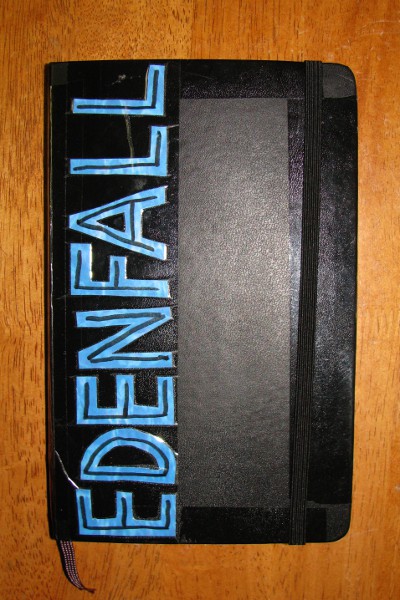
I first got the idea a couple of years ago, when I was camping in Moab.  The beautiful landscape of southern Utah made me realize that I wanted to write Edenfall while experiencing that sort of connection with nature, and pen and paper seemed to be the best format in which to do that.  This year, when I decided that I’d definitely write it, I ordered the notebook on the left and fitted it out for the project.

With every novel I write, I like to challenge myself in some new way.  In Genesis Earth, I tried out a first person POV with an unreliable narrator.  In Bringing Stella Home, I tried to write a believable female viewpoint character.  I also like to experiment with my writing process, trying out different outlining techniques and writing schedules.  Sometimes, these experiments fail spectacularly, but they also teach me a lot and keep me sharp.

The goal with this experiment is to see how divorcing myself from my computer (with all its myriad distractions) and getting out in nature changes my writing.  I live a short bike ride from the Provo River Trail, and weather permitting, that’s where I’ll probably spend most of my writing time in the next few days. Besides, I want to see how much of a difference the format makes.

Books existed long before word processors, so I have no doubt that writing a novel longhand is entirely possible.  How much of an adjustment it will be remains to be seen.  My handwriting is messy, and I can’t write as fast as I can type, but that hardly matters since rough drafts are slow going for me anyways.

In any case, it’s going to be interesting to see how it turns out.  It’s been a little slow so far, but that’s mostly because I haven’t settled into a routine yet.  By the end of this week, I hope to be fully immersed in the world of this story.

In other news, I sent off the manuscript for Sholpan to my editor, and he just got finished with his first pass, so I’m hoping to get the edits back in a couple weeks and have it epublished by mid-September.  More on that as things develop.

Also, an old friend from Brandon’s 318 class posted a favorable review of Bringing Stella Home up on Amazon.  He was one of my first readers back when the story had a lot of problems, so I’m glad he enjoyed the final version.  Thanks Stephen!  And yes, I’ve got a lot more novels forthcoming in the Gaia Nova universe, including a direct sequel to Bringing Stella Home.  Will the McCoy family save the universe from the Hameji?  Well…you’ll see. 🙂

Finally, I plan on participating in the Out of This World blog tour being organized by the SFR Brigade, which means you’ll be seeing some guest posters in the near future.  That’ll probably wrap up the Genesis Earth blog tour too, since it’s been winding down for the last month or so.  If I agreed to write a guest post for your blog and haven’t done so yet, let me know and I’ll do my best to get that out to you.  Sorry to be a bit of a flake these past few weeks; I’ll try to organize my next tour a little better.

And that just about does it for now.  I’ll be sure to keep you posted on how things go with Edenfall.  Until then, take care, and thanks for reading!

Ira Glass on storytelling

I just listened to this awesome presentation by Ira Glass, host of This American Life, on the art of storytelling and narrative, and I wanted to share it because it’s that good. 

If you haven’t ever heard of This American Life before, do yourself a favor and check it out.  You may or may not love it, but it’s one of the best produced radio shows out there, with fascinating stories from all walks of life that will completely blow you away.  My favorite is probably the one about the department of the LAPD that exists entirely to identify the next of kin of people who live and die alone–and how many people in this world have essentially no connections with the people around them.  It was an incredibly sad and incredibly moving story.

Anyhow, Ira makes some very good points about how stories work, and how we as humans are wired to see the world around us in terms of story.  It’s not enough to simply convey facts–you have to hook your audience by making them feel emotionally involved, and creating suspense by giving them the sense that the events in your story are leading up to something.

He finishes the lecture by recounting the basic frame story of the Thousand and One Arabian Nights: how Scheherazade saves the kingdom from the sultan’s madness through the power of story.  It’s a wonderful tale, one that has a lot of bearing on why we write and why fiction matters.

That’s one of the reasons why I decided to name this blog “One Thousand and One Parsecs”; it implies a combination of the magic of the Arabian Nights with the science fiction elements that I love so much. Like Scheherazade, I hope to tell stories that have the power to transform individuals and ultimately change the world for better.

That’s enough from me. Here’s Ira Glass: