Figuring out the posting schedule

With the new baby, things are going to be touch-and-go for the next month or two. I’m hoping that by Halloween, we’ll be a lot more settled into a routine, but I’m not expecting to get a good night of sleep until basically Thanksgiving. Also, the priority is obviously going to be helping out with stuff around the house, since besides having a baby, my wife is also finishing her dissertation and teaching a class at BYU. So for the next couple of months at least, my writing is going to take a back seat to all the family stuff, and the blog is going to take a back seat to that.

With that said, I do think I can keep up the writing even with all that’s going on. My goals are super light—basically, to do at least a little bit of AI writing and human writing each day—but I’ve got that work all split up in a way that’s easy to pick up and set down again whenever I have a fifteen minute break to work on it.

The blog is going to be a bit trickier, but I think I can still keep blogging daily, if I set a regular routine. Here is what I’m thinking:

  • Sundays: an interesting quote.
  • Mondays: a just-for-fun post, usually something silly from YouTube.
  • Tuesdays: an analysis of some trope that I find interesting (yes, I want to bring back the Trope Tuesday posts).
  • Wednesdays: a midweek excerpt from my current WIP.
  • Thursdays: a quick writing/personal update, with some random thoughts.
  • Fridays: an interesting long-form podcast that I recently watched or listened to.
  • Saturdays: a post about AI-assisted writing.

Of those posts, the only ones that take a significant amount of work are the ones on Tuesdays and Saturdays—and even then, it’s only about an hour of writing. The Trope Tuesday posts will be useful for feeding AI, and the AI-assisted writing posts will eventually get recycled into a non-fiction book about writing with AI (though I still need to come up with an outline for that). Everything else, though, I can probably schedule in an afternoon.

That’s the plan, anyway. This isn’t our first rodeo, though I hear the third child is the hardest one, since it’s at that point that you become outnumbered. I’ll do my best to keep blogging, but if I have to drop one of the balls, the blog is going to be first. But this is what you can expect to see from me moving forward.

Excerpt: The Unknown Sea, Chapter 1

I’m working on another Sea Mage Cycle book right now, alternating between the AI revisions (where I generate multiple iterations of each chapter using the same prompts, and combine the best parts for the final AI draft) and humanizing the AI draft to produce the rough human draft. So far, it’s working out really well. I do a little bit of work each day: maybe a chapter of the AI draft, or a scene of the human draft, but it’s steady progress and the kind of thing that I can probably keep up to some degree, even with the demands of a newborn baby, which is sure to throw things off in the coming weeks.

In any case, here is an excerpt from the first scene of the first chapter of The Unknown Sea. This is the rough human draft, so the writing is all mine and not AI-generated, though there may be some AI-isms because I used the AI draft as a guide. I’m going to write a post next week detailing my current AI-assisted writing process, so if any of that is confusing, check out my post there. In the meantime, enjoy!


The sea-soaked wood of the pier groaned under Enoch’s boots as he walked out onto the dock. He squinted, eyes stinging a little in the salty breeze as he peered out across the bustling harbor. Fat merchant caravels sat low in the water as they crawled into port, dockhands rushing to secure them. Elsewhere, sailors hauled heavy sacks of trade goods down to the docks, or rolled barrels of supplies up the narrow gangplanks for the ships that were preparing to depart. 

Enoch Ashenford took a deep breath. Few ports on the Azure Sea buzzed with the raw, desperate energy of the capital of the kingdom of Caravelia. Many a merchant prince had made his fortune here, and many a man with little to his name had rewritten his own story.

So why did he feel so thoroughly out of place?

He fished the letter of introduction from his waistcoat pocket. The elegant script had smudged a little at the corners from nervous handling, but the words on the parchment were still clear. Our son is of sound mind and steady hand, he read, taking encouragement from the words. He has a promising magical talent and will serve you well in the position of sea mage.

Of course, it wasn’t just the endorsement that had landed him the position. His father had had to pull some high-placed favors to get it. Not that Enoch wasn’t qualified, of course—as the only one in his family to be born with magical talent, he had worked hard to cultivate it with what meager resources the dwindling family wealth could acquire. But few young mages landed a berth quite so lucrative as a merchant caravel so early in their apprenticeship.

He tucked the letter away, hoping it would dutifully impress the captain. The morning air was thick with the stench of old fish and burning pitch, the unlovely aroma of commerce. Enoch drew another sharp breath and squared his shoulders before setting out to find the ship.

He pretended not to notice the stares and glances aimed his way. It was rare for a noble scion to set foot on these docks, let alone seek employment on a common merchant. His mother had insisted on dressing him well, in fine leather boots and a silk tunic, but these made him stand out almost as much as his pale, untanned skin and soft hands. He also had all his teeth, which was more than he could say of many of the men he passed.

It was frustrating, because if any of these gawkers looked closer, they would see the threadbare patches on his tunic and pants, the cracks and creases in the ageworn leather of his belt and boots. A noble son he might be, but the battered satchel slung over his shoulder held little of real value. 

He stopped to get his bearings. It seemed like the forest of masts and sails stretched almost to the horizon. Somewhere among them was the merchant ship that would be his ticket to wealth and glory—if he could only find the blasted thing.

“Make way,” a grizzled sailor shouted, carrying a large barrel on one shoulder. Enoch tried to get out of his way, but the man still nearly knocked him off his feet, swearing as he did so.

“Ouch!”

“Watch yourself, young lordling. This is no place for soft hands and slippered feet.”

Blood rushed to Enoch’s cheeks. “I’m not a ‘lordling,’” he muttered under his breath. “Just the seventh son of a penniless house.”

It was no use, of course. These common folk probably all thought that all nobles were rich. But Enoch’s noble birth had been more of a burden than a blessing. His older brothers had already divided up the Ashenford house’s few minor titles, barely managing to secure respectable positions and marriages for themselves. Even Carl, the second youngest in the family, had received a captain’s commission in the King’s Fleet. But by the time Enoch had come of age, the Ashenford house’s coffers had run as dry as a salt pan at high noon.

The manor still stood, of course. One couldn’t exactly pawn bricks and stone. But the paintings and tapestries had been sold, then the family silver, then most of the furniture. His mother wore the same gown to every court function, cleverly disguising the fact with slight alterations made by her own hands. As for his father, he spent most of his days in the family library, poring over the same old tomes—as if the secret to restoring the family’s fortune could be found in books alone.

No. Enoch had had enough of that dusty old manor, and he had no patience for the duties and pretenses of the court. He’d be damned before he gave up and turned around, even with all the snickering glances and gawking stares. He thought again of the letter of recommendation in his pocket, resisting the urge to take it out. If he could just find that blasted ship…

“You look a bit lost, lad,” a voice called out. “You wouldn’t happen to be young Master Ashenford, would you?”

Enoch turned to see a burly clean-shaven man in a leather apron, a crooked grin splitting his wind-chapped face. Sun and sea had tanned his skin to the color of old rope, which was almost as tough and leathery as the apron he wore. He swayed a little where he stood, and his shrewd eyes shone with the keenness of a man who had spent most of his life at sea.

“I might be,” Enoch hedged. “Who’s asking?”

“Marcus Reed, ship’s cook of the Waverunner. Captain sent me to fetch our new sea mage. That’d be you, I’d reckon?”

Enoch nodded, extending his hand. “That’s right. Pleased to meet you, Marcus.”

The man took it and gave him a single shake before gesturing toward the dock. Enoch quickly fell into step with his confident gait, grateful to have a guide to his new berth. 

“So,” Marcus asked, breaking the silence between them, “what brings a young nobleman to life at sea? Chasing adventure? Seeking your fortune?”

“A little of both,” Enoch admitted. “As the seventh son, it’s not like I’ve got much of an inheritance.”

“Ah,” said Marcus, chuckling dryly. “Well, the sea’s a great leveler, lad. Noble or commonfolk, it’s all the same when the storms hit.”

“Yes, sir.”

“Call me Marcus. We’re mates now, after all.”

“Right,” said Enoch, nodding. “And I guess you can call me Enoch. Like you said, the sea’s a great leveler.”

Marcus raised an eyebrow at him and smiled.

The Waverunner sat moored at one of the last piers. Enoch felt his breath catch as his eyes fell upon it. The sturdy single-masted caravel creaked a little as it swayed gently at the dock. Sixty feet of weathered oak, with a dark, waterlogged hull that had clearly seen many voyages. Despite her elegant curves, the salt and sun had clearly had their way with the wood.

“You there!” a commanding voice rang out from the upper deck. “The new mage?”

Enoch looked upward, meeting the gray eyes of a woman whose gaze held the relentless intensity of a hawk. She stood with confident poise, her graying hair pulled back into a tight braid, and her weather-beaten face held the sort of authority that needed no crown or title.

“Enoch Ashenford, Ma’am,” he answered, straightening his posture. “I’m to be your new sea mage.”

“Don’t just stand there, lad. Come let me get a look at you.”

He quickly climbed the narrow gangplank, ignoring how his stomach lurched. Once on board, he withdrew the letter of introduction and handed it to her.

“For you, Ma’am.”

Captain Maren Black plucked the letter from his hands and stuffed it into her waistcoat, barely giving it a glance. Instead, she looked him over from head to toe. Her eyes narrowed, making Enoch swallow.

“Hmm,” she muttered—a sound that could have meant anything. “Ever worked a ship before?”

“I’ve studied maritime magic extensively, ma’am. My family’s library—”

“That’s a no, then.” She turned away. “Marcus! Show the boy where to stow his gear. Thaddeus, check those lines again. They look slack.”

The pit in Enoch’s stomach fell—a pit that until now, he hadn’t realized was there. Like a dog with his tail between his legs, he quickly followed Marcus across the wooden deck and down into the hold.

“How large is the crew?” he asked the burly.

“Just five of us,” Marcus answered cheerily, ducking as they passed through the door. “Captain Black, First mate Thaddeus, Felix, yourself, and me. But what we lack in manpower, we’ll more than make up for in your magic. Right?”

“Right,” said Enoch, swallowing nervously. Just what had he gotten himself into? Seeing his discomfort, Marcus chuckled and clapped a hand on his shoulder.

“You’ll do fine, friend. Think of it this way: the fewer of us to crew the ship, the greater each man’s share of the profits.”

That was a good point, though it did little to quell Enoch’s growing anxiety. He also couldn’t help but notice how rough and calloused Marcus’s hands were to his own. With only five of them, he’d have to work hard to earn his keep, and not just with book learning and magic.

“This is where you’ll bunk,” Marcus announced, pointing to a cramped berth with a nod of his head. He leaned casually against the doorframe, folding his arms atop his leather apron. “This your first time at sea?”

Enoch’s cheeks burned. “Is it that obvious?”

“Don’t worry, lad. You’ll find your sea legs soon enough. The sea’s a harsh mistress, and an even harsher teacher.”

Enoch drew a sharp breath and nodded. A harsh mistress indeed, he told himself silently, but one I intend to master. As Marcus watched, he quickly unpacked his meager belongings, making space near the head of his bunk for the two most valuable pieces.

“Those look interesting,” Marcus remarked. “Family heirlooms?”

“Gifts from my parents,” Enoch explained. He unsheathed the dagger his father had given him and tilted it in the gleam of the candlelight. “The edge is inlaid with silver. It’s supposed to let it cut through magical shields and wards.”

Marcus raised an eyebrow. “And the amulet?”

He pulled out his mother’s amulet, fashioned from a spiral shell and hanging from a leather cord. “This one is called the Whispering Shell. It doesn’t look like much, but it’s enchanted with a powerful spell that helps the one who wears it to translate foreign speech.”

“So it lets you understand what the people around you are saying?”

“That, and it makes the bearer’s speech intelligible to all who hear. Like I said, it’s a powerful spell.”

Marcus whistled appreciatively. “Now that’s a rare piece of work. Must have cost a pretty penny.”

More than my family could afford, Enoch thought but didn’t say. His mother had pawned her grandmother’s emerald brooch to raise the funds, one of the last valuable pieces the family possessed. Instead of saying that, though, he simply nodded.

“My family wanted me to have every advantage.”

“Aye—and they’ll serve you well, I’d wager. Though not half as well as a sturdy pair of sea legs and a strong stomach.” Marcus grinned and slapped his back. “Though we’ll be giving you those in no time.”

“Thanks. I’ll keep that in mind.”

Marcus turned and left then, his footsteps creaking along the old, wooden floor of the deck. Enoch watched him for a moment, then carefully tucked the dagger and amulet away.

He thought of his mother, pawning a priceless family heirloom to buy him this chance. His father, struggling to maintain the fiction of their wealth while the walls grew bare around him. Seven sons, and the seventh was their last hope for something more than genteel poverty.

The thought hardened Enoch’s will until the pit in his stomach no longer seemed so terrible. He would not fail them. He could not afford to. He would stay on this ship and win his own fortune, restoring the family name and making his own way in this world. All of his doubts, all of his misgivings—it was time to throw those away. He was not just the overlooked son. It was time to become something more.

My spicy take on the ethics of AI art

There is nothing unethical about using generative AI to write or make art. Those who say otherwise either haven’t thought through their position, or they are lying for rhetorical effect. Or both.

If Andrew Tate wrote a book titled How To Enslave Your Woman For Fun and Profit, would he be within his rights to demand that no woman ever read that book? If you believe that AI is unethical because it was trained on writers’ and artists’ work without their consent, congratulations—that is exactly the position you have taken. You can’t pick up one end of the stick without also picking up the other.

Whether or not writers and artists were fairly compensated for the use of their work is a separate issue. Many of these AI companies obtained their training data by indescriminately scraping the internet, which means the used a lot of pirated work. But if using copyrighted material to train an AI system is fair use—and here in the US, the courts have ruled that it is—then all that they owe you is the cost of your book. So if your book is $2.99 on Kindle, that is what OpenAI owes you. Congratulations.

Does Brandon Sanderson owe Barbara Hambly royalties? Brandon Sanderson has sold something like $45 million in books, comics, and other media. Barbara Hambly struggles to pay her bills. Barbara Hambly wrote Dragonsbane, the young adult book that inspired Brandon Sanderson to write fantasy. Clearly, her work had a deep and lasting influence on him. So does he owe her?

If you believe that AI companies owe artists and writers more than simply the price of their own published work, this is a question that you must wrestle with. If it counts as “stealing” to train an AI on artists’ and writers’ work, then every artist and writer is also a thief, and owes royalties to the people who inspired them. Which is why the word “plagiarism” has a tight definition, and why our legal code recognizes fair use.

There is nothing unethical about using generative AI to write or make art. Almost everyone who says otherwise is either lying to themselves about that fact, or lying to you.

Why would someone lie about that? For the same reason people accuse you of being a racist, or a sexist, or a fascist, or a white supremacist, or a Christian nationalist… because using that term gives them power. They don’t actually want to make a reasoned argument. They just want to “win” the argument without ever having to make it in the first place. They use words that they know will get the reaction that they want, and they scream them as loudly as they can until they get it. That’s what the public discourse looks like in 2025.

To be fair, this is not just something that happens on the left. Plenty of people on the right will scream “woke” or “based” or “demonic” to cow people into accepting their point of view. These words do have meaning, and can be used to make a well-reasoned argument—just like “racist” and “fascist” have meaning. But most of the people who use these words are just wielding them like rhetorical clubs to bully their way around.

There is nothing unethical about using generative AI to write or make art. Most of the people who say otherwise are just using the word “ethical” to mean “things I don’t like.” They don’t believe in objective good or objective evil, and instead believe that things like truth and morality are relative. In other words, they think that good and evil change depending on who’s looking at it. This is why so many writers today can’t write a compelling villain (or a compelling hero, for that matter). They just don’t understand how good and evil work.

So why should you listen to them when they scream at you for using AI? You shouldn’t. They don’t know what they’re talking about. Or worse, they do, but they’re lying to you, because they want to compel you not to use AI in your art. Why? Because they’re afraid that if you do, you’ll create something better than what they can create. And on that point, they’re probably right.

Getting ready for the baby

Things are fairly quiet around here, though that’s going to change soon. The baby is nearly full term, and the doctors want to induce labor in just a few days, so that’s the plan. We’re just trying to get things ready for that.

Writing-wise, things are going very well. I recently finished the AI draft of The Soulbond and the Sling, and started work on The Unknown Sea again. My goal is to have the final draft ready to send to my editor by Thanksgiving, so that I can publish it in January. That’s going to be a tall order with the baby, though, so I may have to push the publication date back by a month or two.

Moving forward, I really want to publish a new novel at least every quarter. Some of those are going to be short, like the Sea Mage Cycle books, but eventually I hope to get up to epic fantasy length. And of course, I plan to finish my three unfinished trilogies in the next year or two. I’ve been taking the last couple of years to really figure out my AI-assisted writing process, and I think I’ve got that mostly down now, so it’s time to apply those lessons to these books and get them done.

One thing I’ve done recently was pull out all of my books from InAudio, formerly Findaway Voices. I was crunching the numbers from the last year, and I only made something like $12 during that twelve-month period, averaging something like $.04 per sale. Those numbers are skewed by all of the free audiobooks that get downloaded, but when I drilled into the reports, I found a bunch of places that were literally paying me only $.01 per sale. Literally just a penny. For an audiobook that a reader paid money for. Someone got paid in that transaction, and it sure as hell wasn’t me. Since InAudio doesn’t let you pick and choose which distributors you can send to—it’s literally all or nothing—I made the choice to just drop them. There’s no way I can sustain a career if I’m only getting pennies (if that much!) per sale.

I know that Audible has been in the news a lot recently, and for good reason—they really have been playing dirty, simply because they can get away with it. And while I don’t like the way they’re screwing authors over, I don’t think they’ve been screwing me nearly as bad as some of the places where InAudio distributes their books. For one thing, all of my audiobooks are AI narrated, so it’s not like I have a lot of production costs to make back. It’s literally just a value-add on top of the ebooks. For another thing, the least amount of royalties they’ve paid me is $.80 per book, which is more than what I get from just about every library service for audiobooks.

So for the time being, I’m going to keep my AI-narrated audiobooks up on Audible, even though I wish they would treat their authors better. But I’m not going to shell out the money for a human narrator at this time. It just doesn’t make sense, especially with the way that Audible squeezes us. With AI-narrated audiobooks, there really is no reason not to put them out, so long as they don’t drop the royalties any further. But it would take a hell of a long time to earn back an investment of several thousand dollars if all they’re paying me is $.80 per listen.

If you want to listen to my books on audio, the best way to do it is to click on the link at the top of the page and visit my online store. You also have the added bonus of owning the files, not just licensing them. And Bookfunnel is really good at delivering the audiobook to whatever app or device you prefer—or even opening it up in your browser, if you don’t have an audiobook app.

S-tier relationship advice

A clip of this podcast showed up in my YouTube recommendations, and it was interesting enough that I clicked through to the full-length interview. Definitely worth a listen. Adam Lane Smith really knows his stuff—and he’s not at all woo woo or touchy feely like most of the women people giving relationship advice. Just solid, practical, down-to-earth “this is how it is,” kind of like hoe_math except concise and to-the-point, with a Christian angle and scientific evidence. Very interesting stuff.

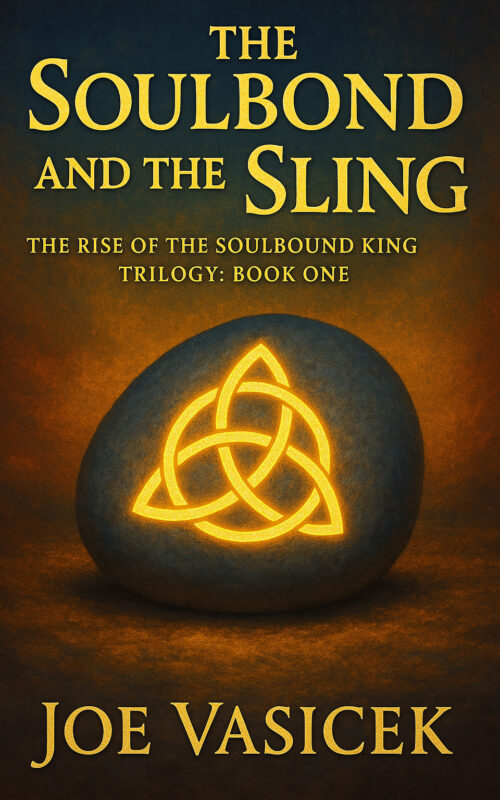
Soulbond and the Sling AI draft complete!

Last week, I finished the AI draft of The Soulbond and the Sling, the first book in my new epic fantasy series! Here are the stats:

  • 20 chapters (including prologue and epilogue)
  • 80 scenes
  • 136,294 words

So it’s a little short for an epic fantasy novel, but this is only the AI draft. As I rewrite it into the human draft, I will add more details and nuance that will hopefully flesh it out, bringing it closer to the 150k – 180k word range.

I started the AI draft in March, but I wasn’t working on it continuously all that time. I worked on it in about four separate bursts, each one lasting a few weeks. In total, it took 70 working days, or approximately 12 working weeks to write it.

The next stage is the human draft, where I rewrite the whole thing from scratch to make sure it’s entirely in my own words. I’ll keep the AI draft on-screen as a reference, and may use some turns of phrase that I like, but I’m not going to copy-paste from it. This way, the resulting work will be entirely my own.

I don’t know how long it will take to finish the rough human draft, but I expect it will take longer than the AI draft, perhaps even 2x or 3x as long. Then again, if the AI draft is clean enough, it might even take less time than that. I’ve been getting pretty good at these AI drafts, and it’s already at least partially in my own voice, given how my personal taste guided which parts of which AI generated iterations I decided to keep. I also did a revision pass with no AI whatsoever, mostly just to smooth out inconsistencies.

But the AI draft is complete! This is the longest book I have ever written with AI, and one of the longest ones I have written in general. I hope it is the first of many more to come!

(And also, I really need to get a better book cover!)

I just gotta fisk this

There have been a lot of incredible online reactions to the Charlie Kirk assassination, ranging from the tear-jerking, restore-your-faith-in-humanity type, to some of the most vile, evil, and disgusting displays of inhumanity that one can see. But when I saw this one, I just had to react to it, because… we’ll, you’ll see.

I made some stupid comments about Charlie Kirk on the day that he was shot.

In other words, you took off the mask and revealed who you really are.

I said some things on Blue Sky and on threads that I I’m sorry, not sorry for,

Making a cute face while committing a minor social taboo might earn you a few chuckles when you’re four. But when you are a grown man in his forties? fifties? with facial hair (and a nose ring? seriously, dude, WTF?) it just makes you a creeper—and when the taboo is NORMALIZING MURDER, it launches you into psychopath territory. Especially when you make that creepy cutesy face.

but I said them and I deleted them when it was requested that I do so by my employer.

And you think that made it okay? That you could just put the mask back on, and everything would go back to the way it was? No way, dude. If I were your coworker and I saw your post, I would go straight to HR and tell them that you make me feel unsafe. And then I would go to law enforcement and say the same thing.

And then today on a weekend, on a weekend,

Oh, poor baby. Did your weekend get ruined? That must have really sucked. After all, it was only a Wednesday when Erika Kirk became a widow, and her children lost their father. But hey, at least it wasn’t a weekend for her.

I’m told that I am no longer employed at Microsoft.

Thank God. I’m sure your coworkers are all grateful too.

After six years building the diversity, equity, and inclusion department from scratch,

Why am I not surprised?

I lose my job because one of you, some random person reports my posts to my employer, goes out of their way to find out where I work

No, you didn’t lose your job because of what THEY said, you lost your job because of what YOU said. It’s called consequences. Actions have them. How are you a grown man and only learning this now?

and takes my job, takes my security away from me

What makes you think that having a job is a human right? That the world—nay, the universe itself—owes you anything? You should be losing a lot more than your job, dude.

for a thought, for an opinion

You were not fired for having an “opinion.” You were fired for SUPPORTING AND ENCOURAGING MURDER.

and you talk about freedom speech like you care about it

You are absolutely free to say what is in your heart. And your employer is absolutely free to fire you for it. Isn’t it a great country?

and you’re just going to take my my money, my life, my food off my plate

You don’t exactly seem to be hurting for food, buddy. Also, food stamps are a thing. So are mental institutions. I hear they still feed the people in those.

because I don’t like Charlie Kirk.

Is that seriously what you think this is about? Because right now, I’m seeing lots of people—including the leftist activist who was debating Charlie Kirk at the moment he was shot—who had no love or liking for the man, but who can still say that it wasn’t right that he was murdered.

But frankly, I think you know that. I think you know exactly how evil your heart has become. I think you’re just trying to hide it from us, with all of your equivocations, and understatements, and cutesy voices and faces and all.

And sadly, I think the person you’re trying the most to hide it from is yourself. Is it working?

That’s not okay. It is not okay to target me because I felt joy that day.

In a country without law, I would absolutely target you. With death. Not out of anger or outrage, but because psychopaths like you are dangerous—especially psychopaths who genuinely feel joy at the murder of another human being.

Fortunately, we have laws in this country, and authorities who enforce those laws from psychopaths like you. Which is why people like me don’t need to resort to violence to make sure that our children grow up safe. Pray that never changes.

I can’t help how I feel.

Let me tell you something I told my five year-old the other night. You can’t always choose the way you feel, but you can always choose what you do about the way you feel.

With consequences, it’s the opposite: you can choose your actions, but you can’t choose the consequences of your actions.

How are you a grown man and you don’t know these things?

More importantly, how can someone like you, who has less emotional maturity than my five year-old daughter, land a job at a company like Microsoft?

Oh, yeah. You worked in the DEI department. Explains a lot.

I felt joy. That’s me.

For Charlie’s sake, I will pray that isn’t the case. Because if Charlie Kirk could respond to your video, he would tell you that that isn’t you, but the demonic spirit within you. So for Charlie’s sake, I will pray for you.

That’s what I believe. That’s what I think of of him. I can’t help that. So, I don’t deserve a job?

No, you do not deserve a job. Not at Microsoft, and not anywhere else.

And frankly, if you ever became my coworker, I would go straight to HR and tell them that your presence makes me fear for my physical safety. Because people who take joy in the murder of someone who believes the things that I believe and values the things that I value—that really does make me feel unsafe. Especially when that person was murdered because of those values and beliefs.

So even though I will pray for you, I sincerely hope that every prospective employer sees your original action video, as well as this one, and uses that to guide their hiring decision. @cassiesmith2788 said it best:

You lost a job for what you said. Charlie lost his life for what he said. Consider yourself lucky.