Print vs. Ebook vs. Audiobook: Pros and Cons

Print

Pros:

  • A printed book is a hard, physical copy that cannot be altered, edited, deleted, revoked, remotely accessed, or otherwise tampered with by a third party who does not have physical access to the book.
  • The reading experience is totally private. Governments, corporations, and other third parties cannot easily know about what you read or how you read it.
  • Marginalia is easier with a print copy. All you need is a pencil and maybe some tabs or sticky notes.
  • It is easier to flip through a print book than any other book format. Much better for reference.
  • Print books are fantastic for sharing and borrowing. You don’t need any devices, permissions, or anything. Just take it off the shelf and put it into the borrower’s hands.
  • Does not require any sort of power source or electricity to read. Works perfectly fine when the power is down.
  • Print books can be quite collectible, and some are worth quite a lot, depending on first editions, cover art, etc.
  • You can get your copy signed by the author(s), which is always fun. It also makes the book more collectible.
  • When you finish reading the book, you have a totem or artifact to commemorate the reading experience.
  • The books that you choose to put on a public shelf can be a way of expressing yourself: your tastes, opinions, and any fandoms or communities to which you belong.
  • Used copies are typically very cheap, even for bestsellers and signed copies, and with enough patience and resourcefulness they are not too difficult to find.

Cons:

  • Because they exist in the physical world, print books take up space, and can be quite heavy and bulky.
  • Print books are prone to damage from things like water, mold, food, drink, fire, blood, parasites, etc.
  • Even though you don’t need electricity to read a printed book, you do need some kind of light source.
  • Print books are easy to lose, especially if you loan them out. A portion of the people who borrow your books will invariably lose them or forget to return them.
  • Because of their bulkiness, it is difficult to transport books, especially in large quantities. Even a single book has limited portability, especially if it is a hardback.
  • If you want to borror a printed book from the library, you have to go to the library to get it.
  • Print books are not text-searchable.
  • Print book$ can be quite expen$ive to buy new, e$pecially the hardback edition$.

Ebook

Pros:

  • Ebooks are the most portable format, by far.
  • The file size is tiny, typically just a few megabytes.
  • You can read an ebook on almost any digital device.
  • You can read ebooks in the dark, especially with an ereader that has a backlight. This makes it possible to read in bed when your spouse/partner is asleep.
  • Fonts are adjustable, so if you need large print to read, you can do that with any ebook.
  • It is very easy to borrow an ebook from the library. All you need is a library account and an internet connection.
  • Footnotes can be hyperlinked, so they don’t take up space on the bottom of the page (or worse, interrupt the narration).
  • You can easily save comments, highlights, notes, etc, and share them all with your friends.
  • Marginalia is not permanent with ebooks, nor does it mar or deface the book.
  • It’s easy to look up unfamiliar words using the ereader device’s (or app’s) dictionary.
  • If you’re reading something potentially embarassing, people in your immediate vicinity can’t tell.
  • Ebooks are length agnostic, meaning that the reading experience is the same for a short story as it is for a novel. No having to lug around a bulky chihuahua-killing doorstop of a tome. You can read a massive million-plus word box set just as easily as a pamphlet.
  • Indie books are typically very cheap, and you can fill up your ereader with free books quite easily.
  • With enough patience and a keen eye for good deals, you can even buy traditionally published ebooks at a good price.
  • Ebooks are text-searchable.

Cons:

  • Ebooks require a power source. While most ereader batteries hold a charge for quite a while, you do eventually need to recharge them.
  • While you don’t need an internet connection to read an ebook, you do require internet to download it to your device.
  • Legally speaking, when you purchase an ebook, you’re actually just licensing it and don’t technically own it.
  • Ebooks can be changed remotely by third parties, or even deleted and removed from your device.
  • Privacy is a potential issue with ebooks, as third parties can see what you’re reading, and corporate entities can—and often do—gather data on your reading behavior.
  • PDFs and images are clunky and difficult to read, at least on some devices.
  • Bad formatting is much more of an issue ebooks, and can actually make the book unreadable.
  • It is a lot more difficult to flip through an ebook.
  • Traditionally publi$hed ebook$ are ridiculou$ly expen$ive.
  • Sifting through all of the crappy self-published ebooks to find the few good ones can be quite a challenge.

Audiobook

Pros:

  • Unlike print books and ebooks, which require your eyeballs to read, you can listen to an audiobook while your attention is focused elsewhere.
  • Because listening is a more passive activity than reading, you don’t need to concentrate as much to listen to an audiobook as you do to read a print book or ebook.
  • It’s easier to get through (most) longer or more difficult books in audio than it is in print or ebook format.
  • Borrowing audiobooks from the library is easy: all you need is an account and reliable internet.
  • Audiobooks are as portable as your smartphone, tablet, or other device that you use to listen to them.
  • Audiobooks can fit reading into the interstitial spaces of your day, such as when you are commuting or doing chores. Time that would otherwise be spent in mindless activity can now be used to fit in your reading time, making it possible to read a lot more books.

Cons:

  • Audiobook file sizes are enormous. It’s difficult to fit a sizeable library of audiobooks on a single device.
  • It is almost impossible to browse or “flip through” an audiobook, so they aren’t great for reference and good luck if you ever lose your place.
  • Marginalia is difficult with audiobooks. Most apps allow you to take little audio clips, but it’s still quite clunky.
  • Just like ebooks, audiobooks can be altered or deleted by remote third parties.
  • Just like ebooks, privacy is a potential issue, with third parties gathering and selling data on your reading behavior.
  • Just like ebooks, you don’t technically own your audiobook. What you’ve purchased is the license, not the copy itself.
  • Audiobooks are much more temporally constrained. You can listen on 2x speed and higher, but that isn’t the same as skimming or speed-reading.
  • Because the reading experience is more passive, audiobooks tend to be more forgetable than print/ebooks.
  • A bad narrator or performance can kill an audiobook, much more than a bad presentation kills a print/ebook.
  • Because it requires less mental concentration, the reading experience is not as deep with an audiobook as with an ebook, and you may have difficulty recalling details.
  • Mo$$t audiobook$$ are ridiculou$$ly expen$$ive, even more $$o than traditionally publi$$hed ebook$$.

Did I miss any?

Navigating Woke SF, Part 1: Short Story Markets and Author Blacklists

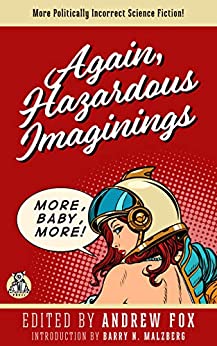
Last year, I had a short story published in the anthology Again, Hazardous Imaginings: More Politically Incorrect Science Fiction. Not only was it one of my highest paying short story sales to date, but it also made it onto the Tangent Online 2020 Recommended Reading List with a *** rating, their highest tier. Only 13 out of 293 stories on the list received that honor—and making the list at all was an accomplishment!

But a funny thing happened after the anthology came out: for a stretch of several months, I stopped receiving personalized rejections for my short story submissions, and instead got only form rejections. Normally when I write a cover letter for a short story submission, I mention the last three markets that I was published in. For example: “My stories have recently appeared in Again, Hazardous Imaginings; Twilight Tales LTUE Benefit Anthology, and Bards and Sages Quarterly (forthcoming).” In a typical month, I’ll get maybe a dozen or so form rejections and a couple of personalized rejections, depending on how many stories I have out on submission.

Back in March, I started to notice that I wasn’t getting any personalized rejections. Suspecting that my publication credit in Again, Hazardous Imaginings wasn’t helping me, I decided to change things up and only list my publication credits for stories listed in Locus Magazine’s Year In Review issue. My thinking was that all of the Hugo and Nebula eligible markets give their yearly reports in that issue, and since all of the editors want to acquire stories that are likely to win awards, a publication credit in one of those markets is more likely to get them to pay attention.

Lo and behold, I started getting personalized rejections again.

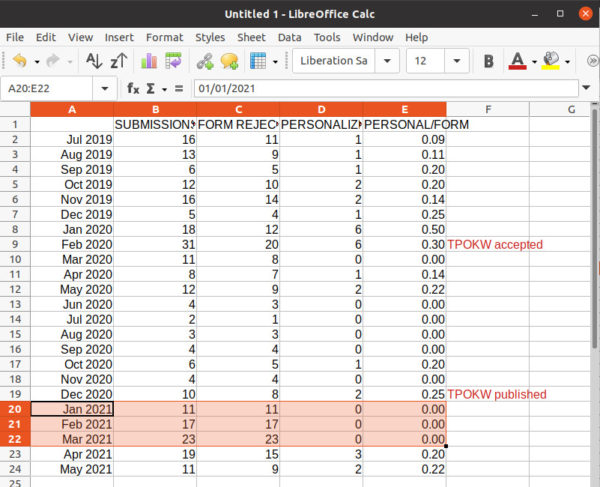
Just to make sure I wasn’t imagining things, I exported my data from The Submission Grinder and made a quick table of my submissions returned for each month going back to July 2019. Before “The Promise of King Washington” was accepted in February 2020, I was getting roughly one personalized rejection for every 5-8 form rejections. Then, for most of 2020, I went through a dry spell where I didn’t have many stories out on submission. Towards the end of the year, I got back in the saddle, and my personalized-to-form rejections ratio returned to what it had been earlier… but then Again, Hazardous Imaginings was published in December, and for the next three months, I received no personalized rejections at all. Then, around March-April, I stopped mentioning my publication credit in Again, Hazardous Imaginings… and I started getting personalized rejections again.

So what happened? Is there some sort of unofficial blacklist for stories published in Again, Hazardous Imaginings? Maybe, maybe not. I don’t know if any of the other authors in the anthology have had a similar experience, nor do I know for certain that mentioning the anthology in my publication credits caused this particular issue. It could be that I was submitting to higher paying markets at the beginning of 2021, and those markets just happen to be more stingy about personalized rejections. It could be that the pandemic has just sapped everyone’s energy.

But now that I’ve made this table, the one thing I cannot say is that the whole thing is just a figment of my imagination. There was a three-month period where I saw significantly fewer personalized rejections than usual, and it just so happened to coincide with the publication of the anthology Again, Hazardous Imaginings and my mentioning it as a publication credit in all of my cover letters.

It’s no big secret that most of the traditional short story markets in science fiction and fantasy trend somewhere between liberal and super woke. All you have to do to get a sense for this is subscribe to their podcasts or read their stories online. For most of 2020, I was subscribed to every science fiction podcast, and I frequently ended up skipping episodes because either the story was too woke, the author bio was little more than a checklist of intersectional victimhood groups, or the editor went off on some sort of political rant (typically of the “orange man bad” variety) that had little or nothing to do with the story. You can also get a good sense of the woke-ness by looking up these magazines’ submission guidelines and reading their diversity statements.

So for the last couple of months, I haven’t been listing Again, Hazardous Imaginings as a publication credit in any of my cover letters, and the response to my stories appears to have returned to the old normal… but it doesn’t sit right with me. Why should I have to hide that I was published in that anthology? Why shouldn’t I be proud of it? It did make Tangent Online’s recommended reading list with three stars, after all. Why should I waste my time submitting my stories to science fiction and fantasy markets that would see that publication credit as a black mark?

In other words, why not blacklist the blacklisters?

When an author decides not to submit their stories to a particular market, it’s often called a “self-rejection,” since the author has already decided that the story won’t be published before the editor gets a chance to consider it. But this is a little different. It’s not my own story that I’m rejecting, but the market as a whole. It’s making the conscious decision that if a magazine is too woke, I’m not going to have anything to do with it.

Here’s another way to think about it: why should I hold out for a year or longer, hoping to earn a couple of hundred bucks for it, when most of the markets that pay that well either aren’t interested in publishing the kind of politically incorrect stories that I tend to write, or aren’t going to publish an author like me who isn’t demonstrably woke enough? Even if I only end up selling it to a semi-pro market for less than fifty bucks, if it only takes a few months to make the sale because I’m not wasting time with the woke markets, does that make it worthwhile?

Or here’s yet another way to think about it: what other benefits do I get with my short story sales, besides how well it pays? If short stories are essentially advertisements for my other work, does it actually make sense to seek publication in the super woke markets, whose readers are mostly woke? Or does it make more sense to be published in the more conservative-leaning markets, with readers who are more likely to enjoy the other stuff that I write? And what about networking with similar-minded authors and editors? I made some really great connections through the anthology Again, Hazardous Imaginings, and even brought Andrew Fox, the editor, onto my newsletter for an interview. It was great!

All of this is happening as we’re starting to see an anti-woke cultural backlash gain momentum. Smarter people than me with a finger on the pulse of the culture say that the Snyder Cut is where the tide began to turn. The thing that tipped me off to it was the surprising waythat Coca-Cola walked back their critical race theory training after the “woke-a-cola” scandal. To my knowledge, there was no organized boycott, yet for a large corporation to backpedal so quickly tells me that they really took a hit to their bottom line.

In the coming months, I think we’re going to see a huge cultural shift against the woke moral panic that has gripped our nation for the last couple of years. That in itself is a subject for another post, but what it means for SF&F is that a lot of these woke awards and woke short story markets are well on their way to going broke. The few that endure will become niche markets for a very small audience that has completely divorced itself from the cultural mainstream—including the vast majority of SF&F readers.

Is it really worth hitching my wagon to such a horse? Or is it better to take a gamble on the up-and-coming markets that might not pay as much, but also aren’t carrying all the woke political baggage as magazines like Uncanny or Lightspeed?

Of course, if the answer to all of these questions is “yes, Joe—go for it!” the next big question is how to determine if a market is too woke? Because some of the markets have diversity statements that are fairly conservative-friendly, like “we welcome submissions from writers of all backgrounds!” and don’t use any of the woke value-signalling terms like “folx,” “latinx,” “QUILTBAG,” “indigenous,” “black bodies,” etc. In fact, I’m pretty sure that many of these markets only put out diversity statements to pacify the woke moral crusaders, in the same way that many boarded up stores and restaurants put up BLM signs hoping that the rioters sorry, the “peaceful protesters” would spare them.

One way to determine this is to look at which markets are chasing the wokest awards. The Hugos went woke in 2015, when “no award” swept the categories dominated by Sad Puppies nominees. That was really the moment when the fandom split, and the anti-woke readership abandoned the Hugos in disgust. The Rabid Puppies swept the 2016 nominations in what amounted to a hilarious sabotage operation (“Pounded in the Butt by Chuck Tingle’s Hugo,” hehe), but by 2017 that had all come to an end.

With that in mind, I went through all of the Hugo Awards to see which markets had either won an award or published a story that had won an award since 2015, and which markets had either been nominated or published stories that have been nominated since 2017. Here is what I found:

Hugo Winning Markets since 2015

  • Uncanny (5)
  • Lightspeed (1)

Markets with Hugo Winning Stories since 2015

  • Tor.com (5)
  • Apex (3)
  • Clarkesworld (2)
  • Lightspeed (1)
  • Uncanny (1)

Hugo Nominated Markets since 2017

  • Strange Horizons (5)
  • Beneath Ceaseless Skies (5)
  • Escape Pod (3)
  • Fireside (3)
  • FIYAH (3)
  • The Book Smugglers (2)
  • GigaNotoSaurus (1)
  • Cirsova (1)
  • Shimmer (1)
  • Podcastle (1)
  • Uncanny (1)

Markets with Hugo Nominated Stories since 2017

  • Tor.com (37)
  • Uncanny (18)
  • Clarkesworld (5)
  • Beneath Ceaseless Skies (3)
  • Fireside (2)
  • Lightspeed (2)
  • Asimov’s (1)
  • Strange Horizons (1)
  • Nightmare Magazine (1)
  • Diabolical Plots (1)

The counts for nominated markets/stories do not include the winners, but do include all of the nominations for 2021, even though the winners have not yet been decided.

I haven’t yet settled on a standard for deciding which markets are too woke for me to submit to. I suppose that’s something I’ll have to decide on a case-by-case basis, and for any who choose to follow my lead on this, it will have to be an individual decision. But I am rethinking the way I submit and publish my short stories, based on this experience. This post has already gone too long, and I still haven’t worked my new strategy out, but if you have any suggestions or ideas I’m interested to hear them.

A New Short Story Plan

So I’ve been thinking a lot recently about how best to leverage my short stories, not just from the traditional publishing angle, but from the indie publishing side as well. The problem is that self-published short stories really don’t sell much, so after you’ve sold them to a traditional market, what are you supposed to do?

I’ve tried all of the following things, with varying levels of success:

  • Publish single short stories and charge only 99¢.
  • Publish single short stories and charge $2.99.
  • Bundle 3-5 stories together and charge $2.99 to $4.99.
  • Bundle 10-12 stories into a collection and charge $4.99.
  • Give the singles away for free.
  • Turn the singles into newsletter magnets to gain new subscribers.

Taken individually, there are problems with all of these strategies. Short story singles don’t earn very much at any price, and while they garner a lot of downloads if you make them free, they don’t really lead to sales of other books unless they’re part of a larger series. Even then, not so much.

The bundles and collections don’t do much better. Dean Wesley Smith says you can bundle 3-5 short stories together just fine, (or at least, he used to say that) but I tend to think that readers prefer collections with at least 10-12 short stories in them. At this point, I don’t self-publish a collection unless it has at least 40,000 words.

Short stories can be useful as newsletter magnets, but I’ve found that first-in-series books get a higher CTR than standalone shorts. Besides, it’s much more useful to send a follow up email to a first-in-series book (“Have you read ____ yet? Here’s what comes next.”)

So what’s the best way to self-publish short stories?

Let’s take a look at this from a reader’s perspective for a moment. These days, most short stories from the magazines are available for free. They’re either available on a podcast feed, like Uncanny or Escape Pod, or they’re published on a website for a limited time (sometimes for an unlimited time.) There are a handful of magazines like Asimov’s and F&SF that put their content behind a paywall, (usually a subscription of some kind) but there are also magazines like Clarkesworld that put their content up for free on the podcast AND offer an optional subscription. In fact, I believe it was Clarkesworld that discovered that revenue actually went up when they put everything out for free.

So as a short story reader, there’s really no need for me to purchase single short stories, since so many of them are available from the magazines for free. In fact, I would probably prefer to get my stories from a magazine, since I know they’ve been vetted by an editor. If I like a particular author, I may pick up some of their short stories, but I’m more likely to wait until they’ve bundled them into a collection of some kind, just to maximize the value.

Anthologies are a different story (sorry for the pun.) I have yet to see a short story anthology that isn’t priced like a regular book—no free or 99¢ ebooks. That’s probably because, as a short story reader, I know I’m getting a bunch of stories for that price. It’s kind of like buying an album, back in the days before Spotify: I know I’m going to get a couple of stinkers, but I also know that I’ll get some really great ones too. But if there are only 3-5 stories in that bundle, I’m going to think twice before buying it unless it’s at a super deep discount price. After all, I can always get my short story fix for free.

So if there are enough high-quality short stories availabe from the magazines for free, and self-published singles don’t really earn much at all, what’s the best way to go indie? Here’s my thought: sell anthology-sized collections at full price and make all the singles free, with the backmatter in the free stories pointing to the collections.

As a short story reader, I’m already used to paying for anthologies—and I’m more likely than other readers to buy them, since I’m the kind of reader who seeks out short stories. So if I pick up a handful of free short stories from an author and come to really enjoy her work, I’m already primed to buy her collections when I finish each story—and that makes the backmatter of each free single the best place for her to advertise her collections.

It’s a bit like first-in-series free, except instead of the one free book pointing to the rest of the series, there’s a bunch of free short stories all pointing to the same one (or two or three) collections. The typical reader is probably going to need to read a few of an author’s short stories anyways to really become a fan, so making all of the stories free could really be the way to go.

Of course, the big downside to this as an author is that you probably can’t sell reprint rights to the stories that are available as free singles. Why would an editor buy your story for their publication if it’s already available for free? So you would have to make the singles free for a limited time, if selling the stories to the reprint markets is part of your strategy.

But if you’re going to eventually bundle those stories into a collection, that’s not really a problem. Publish them as free singles as soon as the rights revert back to you, and then take down the singles when you have enough of them to put into a collection.

So under this hybrid publishing system, the typical lifecycle of a short story would look something like this:

Stage One: Submitting to the Traditional Markets

The goal of the first stage is to sell first publication rights to a professional or a semi-pro market (typically a magazine or an anthology.) So before self-publishing, you would submit to all of the traditional markets, and keep the story on submission until it has sold. But you would have to limit yourself to the markets with a pay rate that you’re willing to accept, otherwise you might as well just self-publish.

If my goal is to be a 6-figure author, I should value my time at $50/hour at least (since $50/hour X 40 hours/week X 50 weeks/year = $100,000/year.) That means I can use my writing speed to calculate my minimum pay rate. If I can write 2,000 words in an hour, then that’s $50/2,000 words, or 2.5¢ per word. Round that up to 3¢ per word, and that’s the minimum pay rate that I should be willing to accept.

Once the story has sold, the contract will dictate when I can self-publish. Most contracts have an exclusivity period of a few months to a year. Every contract is different, so how long the story remains in this phase depends on each contract.

Stage Two: Self-Publishing as Free Singles

This is where you start to implement the strategy that I discussed above. As soon as the rights revert back to you, you self-publish them as short story singles—but rather than trying to make money with them, you give them away for free in order to point readers toward your collections.

In other words, after a short story has been traditonally published, it goes through a temporary period where it’s used as a free loss leader. This period ends as soon as the author has enough shorts to bundle into a novel-sized collection—but since there are always at least a few free singles floating around, it serves as an effective way to attract new readers and win over new fans.

Stage Three: Collections and the Reprint Markets

This is the final stage, where you take down the free singles and bundle them into collections instead. Once that’s done, you update the backmatter in all of the other free singles to include links to buy the new collection, and the story starts to earn money for you again.

Because the story is no longer a free self-published ebook, it makes sense to start submitting to the traditional markets that buy reprint rights, since why not? At this point, it’s free money. I generally don’t accept anything less than 1¢ per word, since I’ve found that the token-paying markets don’t make an appreciable dent in any of my stories’ lifetime earnings, but that’s just me.

I think this three-stage lifecycle may be the best way to extract the maximum value from my short stories. Like pawns in the game of chess, it’s not what each story individually is doing, but how they’re working together. A self-published single that sells only a dozen copies (if that) per year isn’t doing much for me, and while I can use them to gain new subscribers, there are more effective tools for that than standalone short-stories.

In any case, I’m going to give it a try. It will be interesting in a few months to see how it turned out!

A Much Deserved Fisking

In the November issue of Locus magazine, Cory Doctorow wrote an op-ed piece defending Jeannette Ng and the decision to strip Campbell’s name from the Campbell Award. At least, that’s how it started out, but it quickly devolved into a hatchet piece against everyone in science fiction whose politics lie somewhere to the right of Stalin.

Ever since Sad Puppies III, I’ve more or less gotten used to the gaslighting, hypocrisy, and projection that has become de rigeur in the traditional publishing side of the field. But somehow, Doctorow’s hit piece manages to hit a new high water mark for leftist insanity.

Since my own politics lie somewhere between Boadicea and Genghis Khan, I thought it would be fun to give the piece a good old-fashioned fisking. I can’t pretend to be as good at it as Larry Correia (and I sincerely hope he fisks it himself), but damn, if anything ever was written to be fisked, it was this ridiculous piece.

Doctorow writes:

At the Hugo Awards ceremony at this summer’s Dublin Worldcon, Jeannette Ng was presented with the John W. Campbell Award for Best New Writer. Ng gave an outstanding and brave acceptance speech

Translation: Ng reinforced the dominant far-left narrative in the science fiction field, telling the gatekeepers exactly what they wanted to hear and earning widespread praise for it.

True bravery is Jordan Peterson deleting his $35,000/month Patreon in protest of their hate speech policies, or Kanye West coming out as a devout Christian, producing a worship album, and announcing that he will no longer perform any of his old songs.

in which she called Campbell – the award’s namesake and one of the field’s most influential editors – a “fascist” and expressed solidarity with the Hong Kong pro-democracy protesters.

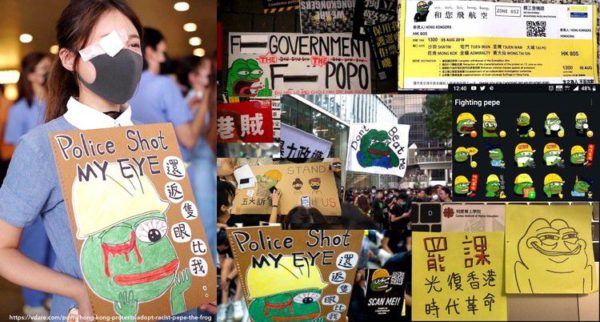
You know who else shows solidarity with the Hong Kong protests? That’s right—everyone’s favorite deplorable frog!

Now that’s a dank meme.

I’m curious: does this make Ng a white supremacist for showing solidarity with people who use such a rascist hate symbol? Does it make Cory Doctorow a dog whistler to the far right for appealing to these obviously racist deplorables?

Of course not, but that’s the level of insanity we’ve fallen to.

I am a past recipient of the John W. Campbell Award for Best New Writer (2000) as well as a recipient of the John W. Campbell Memorial Award (2009). I believe I’m the only person to have won both of the Campbells,

All red flags to deplorable readers like me,

which, I think, gives me unique license to comment on Ng’s remarks, which have been met with a mixed reception from the field.

I think she was right – and seemly – to make her re­marks. There’s plenty of evidence that Campbell’s views were odious and deplorable.

There’s that word: “deplorable.” Whenever someone uses it unironically, it’s a sure sign that they hate you. It’s also a sign that they don’t actually have a good argument.

It wasn’t just the story he had Heinlein expand into his terrible, racist, authoritarian, eugenics-inflected yellow peril novel Sixth Column.

I haven’t heard of that one. Thanks for the recommendation, Cory! I’ve already ordered it.

Nor was it Campbell’s decision to lean hard on Tom Godwin to kill the girl in “Cold Equations” in order to turn his story into a parable about the foolishness of women and the role of men in guiding them to accept the cold, hard facts of life.

Okay, I call bullshit. “Cold Equations” wasn’t about the “foolishness of women,” it was about how when our inner humanity comes into conflict with the hard realities of the universe, the hard realities always win.

Switch the genders—a female pilot and a teenage boy stowaway—and the story still works. Switch the endings—have the pilot decide to keep the stowaway, dooming himself and the sick colonists—and it does not.

In fact, it makes the girl even more of a hapless, weak feminine stereotype. Stepping into the airlock voluntarily is an act of bravery. In some ways, she’s stronger than the pilot—and that’s kind of the point.

The thing that makes “Cold Equations” such a great story is that it functions as something of a mirror. It’s the same thing with Heinlein: those who see him as a fascist are more likely to be authoritarians, while those who see him as a libertarian are more likely to be libertarians themselves. After all, fascism is “citizenship guarantees service,” not “service guarantees citizenship.”

It’s also that Campbell used his op-ed space in Astound­ing to cheer the murders of the Kent State 4. He attributed the Watts uprising to Black people’s latent desire to return to slavery.

Was John Campbell a saint? No, and I don’t think anyone’s claiming that. In the words of Ben Shapiro, two things can be true at once: John Campbell had some racist, sexist views, and stripping his name from the award is wrong. (Also, that Doctorow is full of shit.)

The Campbell award isn’t/wasn’t named after him because he was a perfect, flawless human being. It was named after him because of his contributions to the field. If we’re going to purge his name from the award, are we also going to purge all of the classic golden-age books and stories that he edited, too? Are we going to have the digital equivalent of a book burning? Because that strikes me as a rather fascist thing to do.

These were not artefacts of a less-englightened [sic] era. By the standards of his day, Campbell was a font of terrible ideas, from his early support of fringe religion and psychic phenomena to his views on women and racialized people.

What are the standards of our own day? In what ways are we less-enlightened? Are future generations likely to accuse Doctorow of being a “font of terrible ideas,” just like he accuses Campbell here?

Do unborn black lives matter? If Trump is truly a fascist, why does the left want him to take all our guns? Is it okay to be white? Is Islam right about women? Is transgender therapy for prepubescent children just another form of conversion therapy? Are traps gay?

When you free your mind to explore new ideas, a lot of them are bound to be terrible. It’s simply Sturgeon’s law. So is Doctorow criticizing Campbell for having an open mind, or for not conforming to Doctorow’s values and beliefs?

Who’s supposed to be the fascist again?

So when Ng held Campbell “responsible for setting a tone of science fiction that still haunts the genre to this day.

I’m pretty sure that taking hormone blockers and getting your balls cut off makes you a hell of a lot more sterile than anything else. Lesbians, gays, transgenders, queers—all of these tend to be sterile as a general rule. Most babies are still made the old-fashioned way.

Male.

Isn’t her word choice kind of sexist here? I mean, she could have used the word “patriarchal,” but she didn’t. She. Deliberately. Used. The. Word. “Male.”

White.

Is she saying that it isn’t okay to be white?

Exalting in the ambitions of imperialists and colonisers,

Come on, Ng. Let’s not be racist. There were plenty of imperialists and colonizers who weren’t white Europeans. After all, how can we forget Imperial Japan and the Rape of Nanking? Now that was an ambitious massacre. The Turks also ran a pretty brutal empire, as did the Zulus and the Aztecs. You can’t tell me that cutting out the beating hearts of more than 80,000 prisoners to rededicate your temple isn’t ambitious.

settlers and industrialists,”

Find me one place that was not built by “settlers.” Find me one human being on this planet who has not benefitted from “industrialists.” Who do you think makes the vaccines and antibiotics? Who do you think makes machines that harvest your food?

Just for a single day, I would like to see all of these anti-capitalist types live without any of the benefits that capitalism and modern industry provide.

she was factually correct.

And yet, so completely full of shit.

In the words of Andrew Klavan, you can’t be this stupid without a college education.

Not just factually correct: she was also correct to be saying this now.

Because it’s [current year]!

Science fiction (like many other institutions) is having a reckoning with its past and its present. We’re trying to figure out what to do about the long reach that the terrible ideas of flawed people (mostly men) had on our fields.

The best way to fight a terrible idea is to allow it out in the open while fostering freedom of speech. In the words of Andrew Breitbart, sunlight is the best disinfectant.

The reckoning that Doctorow is calling for is something that’s already built into the field. Science fiction is constantly evolving and revisiting its past. Good science fiction not only builds on the stuff that came before, it critiques it while taking the ideas in a new direction.

We don’t need to tear down the legacy of the giants in the field who came before us; we simply need to build up our own legacies for the generations that come after us. But that’s not what Ng and the social justice warriors want to do.

It isn’t a coincidence that the traditionally published side of the field is rapidly losing market share as the SF establishment seeks to purge everything that could possibly offend their progressive sensibilities. The people doing the purging can’t compete on the open market because their toxic ideologies don’t resonate with the buying public, so they’re forced to resort to the digital equivalent of burning books and tearing down statues. Meanwhile, indie publishing is eating their lunch.

Get woke, go broke.

We’re trying to reconcile the legacies of flawed people whose good deeds and good art live alongside their cruel, damaging treatment of women. These men were not aberrations: they were following an example set from the very top and running through the industry and through fandom,

Future generations will struggle to reconcile our good deeds and our good art with our cruel and inhuman treatment of the unborn.

None of this is new. All of us are flawed; every generation is tainted with blood and sins that are reprehensible to those that follow. Realizing all this, you would think a little introspection is in order. But the people today who are so eager to throw stones are completely lacking in self-introspection that they can’t—or rather, won’t—see their own blood and sins.

to the great detriment of many of the people who came to science fiction for safety and sanctuary and community.

Is science fiction a “safe space,” or is it the genre of ideas? It can’t be both at the same time. Ideas are inherently dangerous.

It’s not a coincidence that one of the first organized manifestations of white nationalism as a cultural phenomenon within fandom was in the form of a hijacking of the Hugo nominations process.

Bullshit. If you think that the Sad Puppies were white nationalists, you’re either stupid or willfully ignorant (a distinction without a difference).

Larry Corriea’s flagship fantasy series, the Saga of the Forgotten Warrior, is set in an Indian-inspired fantasy world populated entirely by brown people. Brad Torgerson has been happily married to a woman of color for decades. Sarah Hoyt is both latina and an immigrant.

If this article was written three years ago, you would have just called them all racists, but you can’t do that now because “racist” has lost its edge. You’ve cried wolf far too many times, and no one pays attention to those accusations anymore. That’s why you use words like “fascist,” “white nationalist,” and “white supremacist” to describe your enemies—not because you actually believe it, but because those accusations haven’t yet lost their edge.

While fandom came together to firmly repudiate its white nationalist wing, those people weren’t (all) entry­ists who showed up to stir up trouble in someone else’s community. The call (to hijack the Hugo Award) was coming from inside the house: these guys had been around forever, and we’d let them get away with it, in the name of “tolerance” even as these guys were chasing women, queer people, and racialized people out of the field.

Translation: we’re done with paying lip service to “tolerance” and “open-mindedness.” From now on, if you don’t look like us, act like us, or think like us, we’re going to do everything we can to destroy you.

I’m telling you, these people hate us. That’s why they call us “deplorables.” That’s why they paint us as racists and fascists, even when we’re nothing of the sort. They don’t want to listen to us. They don’t want to give us a fair hearing. They want to destroy us.

Stripping Campbell’s name from the Campbell Award is just another example of this toxic cancel culture. It isn’t about reckoning or reconciliation. It’s a naked power grab.

Those same Nazis went on to join Gamergate, then became prominent voices on Reddit’s /r/The_Donald, which was the vanguard of white national­ist, authoritarian support for the Trump campaign.

See, this is why I can’t trust you, Cory. Gamergate had legitimate grievances with Anita Sarkeesian, Zoe Quinn, and Gawker. Trump supporters had legitimate reasons to want to stop Hillary Clinton from becoming president. Yet you casually dismiss all these people as deplorables, racists, and fascists without even listening to them.

That’s intelluctually dishonest, Cory. It’s also a form of gaslighting.

The connections between the tales we tell about ourselves and our past and futures have a real, direct outcome on the future we arrive at. White supremacist folklore, including the ecofascist doctrine that says we can only avert climate change by murdering all the brown people, comes straight out of SF folklore, where it’s completely standard for every disaster to be swiftly followed by an underclass mob descending on their social betters to eat and/or rape them (never mind the actual way that disasters go down).

I don’t think Cory Doctorow has any idea what actually happens when society collapses. When the thin veneer of civilization gets stripped away, people will eat each other. We’ve seen this just recently in Venezuela, Syria, and Mexico. Here in the US, we can see the seeds of our own collapse in Chicago, Portland, San Francisco, Baltimore, and Detroit (all very blue and progressive cities, by the way).

Also, I don’t think Cory Doctorow has any idea what he’s talking about when he says “white supremacist folklore.” What is that even supposed to mean? Just a couple of paragraphs ago, he called all the Sad Puppies “white nationalists,” and that obviously isn’t true. By “white supremacist folklore,” does he mean all the science fiction that doesn’t fit his radical progressive political ideology? Once again, he’s painting with an overly broad brush.

Also, notice how he uses “white supremacist” instead of “racist.” He can’t use “racist” because that word has been overused. Give it a couple of years, and “white supremacist” will lose its edge as well.

When Ng picked up the mic and told the truth about Campbell’s legacy, she wasn’t downplaying his importance: she was acknowledging it. Campbell’s odious ideas matter because he was important, a giant in the field who left an enduring mark on it. No one questions that. What we want to talk about today is what Campbell’s contribution was, and what it means.

Whenever the people on the progressive left claim that they want to have a “conversation” about something, what they really mean is “shut up and let me tell you how I’m right and you’re wrong.” There is no way to have an honest dialogue with these people, because they will not listen to us “deplorables.” Cory Doctorow has already demonstrated this with his blanket accusations against all the supporters of Gamergate, the Sad Puppies, and President Trump.

These people don’t want to talk about “what Campbell’s contribution was, and what it means.” They want to purge him from the field. Metaphorically, they want to burn his books and tear down his statues.

Look, I’m not trying to defend all of Campbell’s views here. I’m all for having an honest discussion about his bad ideas and how they’ve influenced the field. But I don’t believe I can have that discussion with people who clearly hate me, and will do whatever it takes to cancel and destroy me.

After Ng’s speech, John Scalzi published a post where he pointed out that many of the people who were angry at Ng “knew Campbell personally,” or “idolize and respect the writers Campbell took under his wing… Many if not most of these folks know about his flaws, but even so it’s hard to see someone with no allegiance to him, either personally or professionally, point them out both forcefully and unapologetically. They see Campbell and his legacy ab­stractly, and also as an obstacle to be overcome. That’s deeply uncomfortable.”

Scalzi’s right, too: the people who counted Campbell as a friend are au­thentically sad to confront the full meaning of his legacy. I feel for them.

Do you really, though?

It’s hard to reconcile the mensch who was there for you and treated his dog with kindness and doted on his kids with the guy who alienated and hurt people with his cruel dogma.

Did you catch the sneaky rhetorical trick that Doctorow uses here? He assumes that we’ve already accepted his argument that Campbell’s views were odious enough to have his name stripped from the award. Now he’s using an appeal to emotion to smooth it over.

Gaslighting of the highest order.

Here’s the thing: neither one of those facets of Campbell cancels the other one out. Just as it’s not true that any amount of good deeds done for some people can repair the harms he visited on others, it’s also true that none of those harms can­cel out the kindnesses he did for the people he was kind to.

Or cancel all of his contributions to the field?

If Doctorow actually believes all this, why does he support Ng, who argues that everything Campbell did should be cancelled out by his most odious views? If anything, this is an argument against stripping Campbell’s name from the award.

Life is not a ledger. Your sins can’t be paid off through good deeds. Your good deeds are not cancelled by your sins. Your sins and your good deeds live alongside one another. They coexist in superposition.

Yes, and you should never underestimate the capacity of the human mind to believe two mutually exclusive ideas at the same time, especially when his name is Cory Doctorow.

You (and I) can (and should) atone for our misdeeds.

Not in today’s cancel culture, where everything you’ve accomplished can be erased by the one bad thing you tweeted or posted to Facebook ten years ago. There’s also no forgiveness or repentance, when you will be forever remembered for the worst thing you said or did.

We can (and should) apologize for them to the people we’ve wronged.

No. Giving a public apology is the absolute worst thing you can do in today’s cancel culture, because your enemies will smell blood in the water and come in for the kill.

Never apologize to a mob.

We should do those things, not because they will erase our misdeeds, but because the only thing worse than being really wrong is not learning to be better.

Oh, this is rich.

You first, Cory. Have you taken a good, hard look in the mirror? Have you really, truly asked yourself “what if I’m wrong?”

I don’t see eye to eye with Vox Day about everything, but he was right about this: you social justice types always lie, you always double down, and you always project your own worst faults onto your enemies. That’s why you’re so blind to your own hypocrisy, even when it’s staring you in the face.

I completely and totally agree that we should all strive to admit when we’re wrong and learn to be better for it, but you’re not in a position to tell me that, Cory. Not after painting all us “deplorables” with such a broad brush.

People are flawed vessels. The circumstances around us – our social norms and institutions – can be structured to bring out our worst natures or our best. We can invite Isaac Asimov to our cons to deliver a lecture on “The Power of Posterior Pinching” in which he would literally advise men on how to grope the women in attendance, or we can create and enforce a Code of Conduct that would bounce anyone, up to and including the con chair and the guest of honor, who tried a stunt like that.

Honest question: was the sexual revolution a mistake?

Asimov, Heinlein, Farmer, and all the other science fiction writers who explored questions of sexuality back the 60s and 70s were speaking to a culture that had abandoned traditional morality for a new, “free love” ethic. In other words, having thrown out all the rules, they now felt free to explore their newly “liberated” sexuality.

Was Asimov wrong in his attempt to rewrite our sexual norms? Personally, I believe it was, but I come from a religious tradition that still practices total abstinence before marriage and total fidelity within. Even then, it still depends on context. Groping a random stranger at a science fiction convention is obviously wrong, but playfully pinching my wife when the two of us are alone? Not so much.

I find it really fascinating that the woke-scolds of the left have become far more puritanical and prudish than the religious right ever was. Within the bonds of marriage, most of us religious types are actually very sex positive—after all, where do you think all those babies come from?

And Ng calls us “sterile.” Heh.

We, collectively, through our norms and institutions, create the circum­stances that favor sociopathy or generosity. Sweeping bad conduct under the rug isn’t just cruel to the people who were victimized by that conduct: it’s also a disservice to the flawed vessels who are struggling with their own contradictions and base urges.

Fair enough, but there’s nothing generous about today’s cancel culture, which is frankly pathological in the way it defines everyone by their worst flaws and basest urges.

Creating an environment where it’s normal to do things that – in 10 or 20 years – will result in your expulsion from your community is not a kindness to anyone.

But how can we know what will and will not be acceptable in 10 to 20 years?

Twenty years ago, it wasn’t considered hate speech to say that there are only two genders. Ten years ago, “micro-aggressions,” “safe spaces,” and “white privilege” were not a thing. In fact, we’d just elected our first black president, bringing an end to our racially divisive past. /sarc

In the next 10 to 20 years, will we adopt all the theories and ideologies of the radical left? Or will the pendulum swing back in favor of more conservative morals and standards? We don’t know yet, because the future has not been written, and frankly, it’s not our place to write it. Every generation reinvents the world.

There are terrible men out there today whose path to being terrible got started when they watched Isaac Asimov grope women without their consent and figured that the chuckling approval of all their peers meant that whatever doubts they might have had were probably misplaced. Those men don’t get a pass because they learned from a bad example set by their community and its leaders – but they might have been diverted from their path to terribleness if they’d had better examples.

Certainly. I’m just not convinced that these virtue signalling, social justice warrior types are the examples that we should hold up.

They might not have scarred and hurt countless women on their way from the larval stage of shittiness to full-blown shitlord, and they themselves might have been spared their eventual fate, of being disliked and excluded from a community they joined in search of comradeship and mutual aid. The friends of those shitty dudes might not have to wrestle with their role in enabling the harm those shitty dudes wrought.

I’m confused. Does Doctorow believe that women are strong and independant, or does he believe that they’re tender, fragile creatures that need to be protected from socially inept, “larval” shitlords? I mean, I can see how they need to be protected from predators, since all of us—women and men—are vulnerable to various degrees… but you’d think that a strong, independent woman would be able to hold her own against a socially incompetent geek who is simply a “flawed vessel.”

Since her acceptance speech, Ng has been subjected to a triple-ration of abuse and vitriol,

Join the club.

much of it with sexist and racist overtones.

You keep using those words. I do not think they mean what you think they mean.

But Ng’s bravery hasn’t just sparked a conversation, it’s also made a change. In the weeks after Ng’s speech, both Dell Magazines (sponsors of the Campbell Award) and the James Gunn Center at the University of Kansas at Lawrence (who award the other Campbell Award at an event called “The Campbell Conference”) have dropped John W. Campbell from the names of their awards and events. They did so for the very best of reasons.

No, they did it because they were bullied into it by the woke-scolds.

As a winner of both Campbell Awards, I’m delighted by these changes. Campbell’s impact on our field will never be truly extinguished (alas),

Yes, because what you really want is to tear down all the statues and burn all the books. Who’s the fascist again?

but we don’t need to celebrate it.

Back when the misogynist/white supremacist wing of SF started to publicly organize to purge the field of the wrong kind of fan and the wrong kind of writer, they were talking about people like Ng.

Bullshit.

The entire point of the Sad Puppies (which Doctorow intentionally and dishonestly mischaracterizes as “the misogynist/white supremacist wing of SF”) was to bring more attention to a diversity of conservative and libertarian writers, many of whom are also women and people of color. We were the ones who were excluded, not the ones doing the excluding. In fact, we invented the words “wrongfan” and “wrongfun” to describe the unfair way that we were treated by the mainstream establishment.

Please stop trying to gaslight us, Mr. Doctorow. Please stop projecting your own faults onto us, and recognize your own hypocrisy which is laced throughout this article. I don’t expect a public apology, since I wouldn’t offer one myself, but do wish for once that you would just listen to the people on the other side of these issues. Just. Listen.

I think that this is ample evidence that she is in exactly the right place, at the right time, saying the right thing.

Meanwhile, traditional publishing and the SF establishment will continue to implode, and indies will continue to eat your lunch.

If all you want is to be king of the ashes, you can have it. The rest of us are off to build the new world.
Algorithms, social media addictions, and the endless churn of content

In the last 5-6 years, I’ve noticed a shift in most of the media content that I consume. Content has proliferated at an unprecedented rate, and the churn—or the rate at which new content pushes out old content—has become one of the driving factors for those of us trying to make our careers in this way.

We see it on YouTube, where three or four adpocalypses have massacred various channels, and where copystrikes have become part of the game. YouTubers who don’t put up content every day, like Tim Pool or Pewdiepie, quickly lose views and subscribers even when they do put up new content.

We see it in video games, where companies like Paradox are now making the bulk of their money on DLCs, some of which make the vanilla version almost unplayable. Back in the 90s, a game was a game was a game. You could get expansion packs for some of them, but that was just bonus content, not a core part of the gaming experience, or the business model.

It’s a huge issue in journalism, where the news cycle has accelerated so much that weeks feel like months, and months feel like years now. Remember the Kavanaugh hearings? That was less than a year ago. The Covington kids controversy happened this year. Everyone is in such a race to break the story that the quality of journalism has fallen considerably, but by the time the corrections come out, the news cycle has already moved on. Fake news indeed.

The churn has also become a major thing in the indie publishing scene. For the last few years, the established wisdom (if there is any) is that you need to publish a new book about every other month—preferably every other week—to keep your entire catalog from falling into obscurity. There’s a 30-day cliff and a 90-day cliff, at which points the Amazon algorithm stops favoring your books over new ones. And now, to complicate things, AMS ads are taking over from more organic book recommendation methods, like also-boughts. The treadmill is real, and it’s accelerating.

I’ve been thinking a lot about this, and I can think of a few things that may be driving it. I don’t have any statistics or firm arguments to back it up yet, just a couple of hunches, but it’s still worth bringing them up to spark a discussion.

First, social media has taken over our society, not only in public life, but in personal life as well. Now more than ever before, we use Facebook, Twitter, Instagram, Snapchat, and other social media to interact with each other. The problem is that these social media sites are incentivized to get us addicted to them, since we are the product they sell—our data, our time, and our eyeballs. Every like is another dopamine hit. Every outrageous headline is another injection of cortisol.

We have literally become a society of drug addicts. The drugs may be naturally produced by our bodies, but big tech has figured out how to manipulate it like never before. And as addicts, we are always looking for our next hit.

That’s not all, though. There’s a feedback loop between the end-users who consume content, and the algorithms that deliver content recommendations to the end-users. When something new gets hot on social media, the algorithms act as a force multiplier to drive it even further. But because of our addiction, and the fact that we’re constantly looking for the next hit, things can fall off just as quickly as they rise. Hence the churn.

It’s also a function of the massive rate at which content is proliferating across all forms of media. I’m not sure how many millions of English-language books are published any year now, but it’s much, much more than it was back when tradpub was the only real game in town. Same with videos, music, news blogs, etc. With so much new content coming out all the time, and so many people on social media ready to share it, the conditions for churn have never been stronger.

But there’s another, more sinister aspect to all of this, and it has to do with the biases of big tech and Silicon Valley. Yes, there is a feedback loop that governs the algorithm, but it goes both ways: the people who write the algorithm can, within constraints, use it to reprogram all of us, or even society itself.

I don’t think it’s a mistake that the churn is worse on sites that are run by big tech, or worse on content creators who depend on the platforms that big tech provides. The authors experiencing the worst burnout all seem to be exclusive with Amazon and Kindle Unlimited, and news sites that are getting hit the worst now (Vice, Buzzfeed, etc) all depended on clickbait tactics to ride the Facebook algorithm.

There are a few content creators who seem to have escaped the churn. As a general rule, they seem to be scaling back their social media usage and developing more traditional income streams, like subscriptions, sponsorships, and email lists. Steven Crowder, Tim Pool, and Pewdiepie are all examples. A few of them, like Alex Jones, Carl Benjamin, and Paul Joseph Watson, are learning how to swim by getting tossed in the deep end. Big tech has deplatformed them, but they’re learning—and showing to the rest of us—that it’s possible to make your own path, even when all the algorithms conspire against you.

I recently listened to a fascinating interview on the Jordan Peterson podcast, where he talked with Milo Yiannopoulos. Milo fell out of the public sphere when allegations of pedophilia emerged, getting him banned from CPAC in 2018. His career isn’t over, though, and his future prospects look quite bright, especially with the plan he’s been putting together. If he succeeds, big tech and the algorithms will never be able to touch him.

In my post a couple of days ago, I argued that one of the unique advantages of books over other forms of media is that they are timeless. As Kris Rusch puts it, books aren’t like produce—no matter how long they sit on the shelf, they don’t spoil. We are still reading books that were written centuries ago.

If that’s true, then there must be something about books that makes them resilient to churn. In fact, books may be the antidote to churn. That’s basically Jeff VanderMeer’s thesis in Booklife. It’s also worth rereading Program or Be Programmed by Douglas Rushkoff, where he offers some helpful rules to keep social media and the algorithms from completely taking over our lives.

So as indie writers, what’s the best way to deal with all of this? I’m not entirely sure. Back in 2011 when I first started indie publishing, slow-build and long-tail strategies seemed a lot more viable than they do now. But if there is something inherent in books that makes them the antidote to churn, then there has to be a way to take advantage of that.

I’ll let you know when I find it.

Extra Sci-Fi S3E5: Dune – Origins

It’s always fascinating to learn how the big name authors got their start. As a fan, it pulls back the mystique a bit and makes those authors more relatable, and as a writer, it’s enormously encouraging to learn that even the big names had to pay their dues too.

I wonder what Dune would have become if it were published today? It seems that most of the earlier hurdles had to do with publishers rejecting the manuscript, which wouldn’t be the case in today’s indie publishing world. Of course, it would also take a lot of promotion to give it traction, but Herbert and Lanier did that as well… but would Herbert and Lanier have even met if the book had been self-published first? And would their own promotion efforts have been enough without the boost the book got by being serialized in Analog?

Impossible questions, I know. A middling level of indie success might have prevented Herbert from developing his contacts in journalism and publishing which led to his later success. Or it might have given him more time to write, allowing him to expand Dune into something even greater than what it eventually became. Without having to work with an editor like John Campbell, Herbert might have killed off Alia, or published the story before it was truly ready. Or he might have written a better story.

There are two big takeaways that I took from this video:

First, that the slow-burn path to success is still a legitimate path. We have this idea that books are like produce: after a certain space of time, they spoil. Such is not the case. This was one of the big things that Kris Rusch always harped on, about how indie publishing is different from traditional. In recent years, it seems that indie has taken on a bit of the produce model itself, with authors turning to rapid release strategies to stay relevant. But even in the old world of traditional publishing, books still made it from time to time on the slow-burn model—even classics like Dune.

Second, that publishing well isn’t something you do alone. It takes other people, not just readers, but editors, publishers, and other people with connections, sometimes unlikely connections. This isn’t just on the marketing end of things, or even the publishing end, but on the writing end as well. No man is an island, and no successful indie is ever totally alone.

What are your thoughts?

New short story goals

In the last few months, as I’ve reworked my business plan, I’ve put a lot of thought into what I want to do with short stories. I’ve written about two dozen of them so far, and while I don’t expect to be known as a short story writer, I do expect that short stories will play an important role in my career, especially with the way that the publishing world is changing.

Objectives

Short stories are a great way for readers to try out new authors, without all the cost in time or money of a novel. It’s also a great way to build a hybrid career, as the professional short story markets have few of the hangups of publishing a longer work with a traditional publisher. It’s not extremely lucrative, though there is money to be made. More than that, it’s a way to gain cache and build your brand, especially if your stories get picked up by a major magazine or anthology in your genre.

So that’s my main objective with short stories: to use them to build my author brand and grow my readership. Self-publishing plays a role in that, but not nearly as much as the professional markets.

Writing

To get picked up by the professional markets, I need to have stories to submit to them, which means that I need to be prolific. Consequently, my goal from here on out is to write a new short story each month. That’s a pace I can maintain that doesn’t interfere too much with my other writing. It can be refreshing to take a WIP break from time to time, and short stories only take a few days at the most.

I know that Dean Wesley Smith says that you should never revise anything, and I’ve been following that advice until now with my short fiction. However, I do feel that it can strengthen my writing significantly to cut the word count by 10%, especially for short fiction where the strongest writing tends to be economical. So I’ll most likely do that to all my stories from now on.

Submitting

In general when submitting, it’s best to start with the top-tier markets and work your way down. This is the order in which I prioritize my submissions:

  1. SFWA qualifying markets
  2. Professional paying markets (6¢ per word or higher)
  3. Semi-pro paying markets (between 1¢ and 5¢ per word)

I’m not sure if I’m going to bother with token paying markets (less than 1¢ per word). Probably not for anything other than reprints. They don’t really put me any closer to my goals. Also, I’m not sure if I actually want to join SFWA, but I do want to qualify for it through my short story sales. Never join a club that would have you as a member, etc etc.

As for non-paying markets, I’ve decided not to submit to them after all. It’s been pointed out to me that giving something away for free after you’ve charged other people money for it is a dick move. Also, there aren’t really any non-paying markets that would bring me closer to my goals. All of the markets with serious cache also pay professional rates, at least in science fiction.

Self-publishing

Until now, I’ve self-published my short stories either immediately after their first sale, or after I’ve submitted all of the professional markets. My guiding philosophy has been that unless there’s a significant opportunity elsewhere, it’s better to self-publish something than to keep it on your hard drive.

However, self-publishing short stories doesn’t help me get much closer to my objectives. Certainly keeping a bunch of singles up for sale doesn’t help much, and it might actually hurt by cluttering up my book pages. They’re good for the occasional newsletter giveaway, or for first-in-series and other stuff, but that’s about it.

Dean Wesley Smith says to charge $2.99 for individual short stories in order to get the higher royalty rate, but I’ve tried that for the last couple of years and haven’t seen much benefit from it. Unless you’re known as a short story writer, I just don’t think short stories are good for making money. Because of that, and also because I’m going to be using them for giveaways and promotions, I plan to sell all of my short fiction (under 10k words) for a token 99¢.

Considering how it’s rude to give something away for free immediately after selling it, I plan to refrain from self-publishing until both the first-publication and reprint markets have been exhausted. That’s because I plan to make my short stories free when I first self-publish them, at least for the initial few weeks. Again, better to put something out for free and raise the price than it is to charge for it at first and make it free later.

When enough short stories have accumulated to put into a bundle, then I’ll unpublish all but the one or two best-rated or most popular singles, and put a link to the bundle in the back of those. In that way, the short story singles will help to sell the bundles, which make more money anyway, since I plan to charge $4.99 for them. This also helps to clean up the book pages, by replacing singles with bundles over time.

So that’s the plan. Submit until all professional and semi-pro markets have been exhausted, then self-publish as singles until there’s enough to put in a bundle. And hopefully sell a bunch of stories to the major markets.

Why money should not flow to the writer

Yog’s law states that money should flow to the writer. It’s an old aphorism in the publishing industry, from a time when self-publishing was synonymous with vanity publishing. According to this 2003 post by Theresa Nielsen-Hayden:

For years now, we’ve been dinning Yogs Law into young writers’ heads: Money always flows toward the writer. Alternate version: The only place an author should sign a check is on the back, when they endorse it.

Scalzi, who is also one of the more outspoken proponents of Yog’s Law, added a corrolary in 2014 in response to the argument that the rise of indie publishing renders it invalid:

I disagree, however, that it means Yog’s Law no longer generally holds. I think it does, but with a corollary for self-publishers:

Yog’s Law: Money flows toward the writer.

Self-Pub Corollary to Yog’s Law: While in the process of self-publishing, money and rights are controlled by the writer.

So, Yog’s Law: Still not just a law, but a good idea. The self-publishing corollary to Yog’s Law: Also, I think, a good idea.

Here’s the thing, though: there’s a difference between money that flows to the writer like a meandering stream from the mountains to the ocean, and money that goes to the indie writer first and from there flows outward to the writer’s various publishing projects.

In the last couple of weeks, a massive scandal hit the publishing world when it was revealed that an accountant working at Donadio & Olson, a major New York literay agency, had embezzled millions of dollars over the course of decades from major bestselling authors, including Chuck Palahniuk, author of Fight Club. According to Kristine Katherine Rusch, this is not an anomaly:

Unfortunately, as I have been telling you all for years now, embezzlement and financial negligence is rampant at big name agencies. Almost none have systems set up to prevent it. Of the four agencies I worked with over the decades, two actively embezzled from me.

The last time I threatened one of those agencies with a forensic accountant they threw me out of the agency overnight. By the time I got up in the morning, they had severed my relationship with them and informed all of my publishers that the payments should go directly to me. Just the threat of an audit did that. This is one of the biggest agencies with some of the biggest names in the world. Ask yourself why they were afraid of a standard business practice. You know the answer.

Sorry, folks. I’m not crazy. I didn’t have a bad break-up. This type of financial mismanagement, the kind that led to the embezzlement, is common in these agencies. It’s becoming visible now, because traditional book sales have declined, and so it’s harder for an agency to pay one complaining client with another (non-complaining) client’s advance.

But here’s what I want you to see. I want you to look again at Palahniuk’s apology.

I apologize for cursing my publishers.  And I apologize for any rants about piracy.  My publishers had paid the royalties.  Piracy, when it existed, was small scale.

Now, I want you to think about how many big-name writers you’ve seen railing against piracy and how it’s cutting into their book sales. I want you to think about how many big-name writers blame Amazon (!) for ruining the book business and causing book sales to decline.

I want you to think about how many big-name writers who have said there’s no money in writing, not like there used to be.

All of those writers have agents. All of them.

Money should not flow to the writer. It shouldn’t “flow” at all. It should go to the writer directly, passing through as few hands as practically possible. When it does have to pass through someone else’s hands, the writer should be able to track it at all times.

The problem with Yog’s Law is that it treats a writer’s cashflow like a bunch of tributary streams, meandering lazily from the mountains until they combine into a mighty river. Only after the river flows into the ocean does the writer see any of that money. How much of it was diverted along the way? Siphoned off by unscrupulous agents or publishers? Lost to things outside of the writer’s control?

Cashflow is the lifeblood of any business, and writing is a business. Writers should know exactly where their money is at all times. A system that allows money to “flow” in such a way that the writer cannot track all of it is a fundamentally broken system, even if it follows Yog’s Law.

So you’ve written a short story…

So you’ve written a short story, and you’re wondering what to do with it. You think it’s pretty good and you want to see it published, but you’re wondering what’s the best way to do that.

I can’t guarantee that this is the best way, but it is the way that I do it. Let’s start with the basics.

Indie vs. Traditional

Traditionally, short stories were published in magazines, anthologies, or collections. These were known as the “markets.” The editor was the one who chose which stories would go in and shepherded them to publication. Because of the periodical nature of the markets, there were a lot more short story slots than openings at the big publishing houses for novels, and many editors considered it a way for new writers to cut their teeth and prove their chops. It was also a great way for writers to get feedback, on the rare occasion that an editor wrote a personalized rejection.

In the 90s and 00s, the short story markets entered a period of decline, mostly due to the technological disruption of this newfangled thing called teh internets. Subscription rates for all the major sci-fi magazines went down, just like they did for newspapers. However, several new markets emerged to take advantage of the new ways to reach readers. The same innovations that spurred the indie publishing revolution also gave birth to new short story markets.

Today, when you write a short story, the first question you’ve got to answer is “do I want to self-publish this, or should I submit it to the markets first?” If you’re a happily self-published indie writer like me, the urge will be to self-publish first and ask questions later.

But Wait!

The awesome thing about short stories is that you can get the best of both worlds. How? Because unlike the major publishing houses, the traditional short story markets don’t impose prohibitive measures designed to gobble up your rights and lock down your publishing options. Publishing the same story in multiple markets is not only possible, it’s encouraged.

To maximize your returns, you have to be patient and impervious to rejection. You also have to learn some key terms. But first, as with any job, you have to select the right tools.

Get Thee to the Grinder!

To start out, you’re going to have to need some way to track all of your story submissions. By far, the Submission Grinder is the best free tool on the internet to do that. It’s a massive database for every English-speaking short story market, with stats compiled from user data. Not only does it tell you where you can submit, it gives you all sorts of useful statistics about each market. Create a free account, log your story, and use the Grinder’s search tools to find out where you can submit it.

Because I’m paranoid and believe in redundancy, I also keep a spreadsheet with all of my story submissions. At this point, though, it’s largely a backup. There’s no one right way to keep track of your submissions, but you absolutely need a system to keep track of them, and the best one out there is the Grinder.

Pro vs. Semi-Pro vs. Token

To decide whether a market is worth submitting to, you first have to determine how professional that market is. The best way to do that is by looking at the pay rates.

In the old days, when SFWA was more than just a snobbish in-crowd full of petty drama, you could tell that a market was professional if it was on the qualifying list for SFWA membership. Today, though, any market is considered professional if it pays at least 6¢ per word.

If a market pays between 1¢ and 6¢ per word, it is considered semi-pro.

If it pays less than 1¢ per word, it is considered a token-paying market.

Original vs. Reprint

Some markets want to be the first place where a story appears. If it’s already published elsewhere, they won’t touch it. Other markets don’t really care, though they may pay less for reprints.

The thing to look for here is “original fiction” or “first publication rights.” If a market’s submission guidelines specify either of those, then they won’t take your story if it’s self-published. Obviously, if you want your story to appear there, you can’t self-publish it first.

Most of the markets that accept reprints don’t mind if your story is already self-published. A couple of them do, which is super annoying, but whatever. As always, read the submission guidelines carefully before you submit.

In general, the more a market pays, the less it’s willing to accept reprints. Adjust your publishing strategy accordingly.

Multiple and Simultaneous Submissions

If the first thing you do after finishing a short story is submit it to every market that might possibly accept it, you’re liable to get yourself blacklisted and make a lot of editors angry. There is etiquette and protocol to the traditional publishing game, and if you want to succeed by going that route, you’re going to have to learn it.

simultaneous submission is when you submit the same story to more than one market simultaneously.

multiple submission is when you submit another story to the same market where you already have a story in consideration.

Most editors hate multiple and simultaneous submissions. If they like your story and want to buy it, the last thing they want is to find out that another editor beat them to the punch. Likewise, if they’re swamped with submissions (as they usually are), the last thing they want is more stories from someone who’s already submitted something to them.

For that reason, assume that a market does not accept multiple or simultaneous submissions, unless their guidelines say otherwise.

Of course, what’s bad for the editor isn’t necessarily bad for the writer. You can greatly speed up the submissions process by submitting to all the simultaneous-friendly markets at once, or by not having to wait for a response before submitting to a market again. The faster you can get through the submission process, the sooner it makes sense to self-publish.

With That Out of the Way…

Before you decide which publishing path to take, you first have to determine your publishing goals. Are you trying to make money, to build an audience, or both? Can you afford to be patient, or is time not on your side for whatever reason? Once you’ve determined what you personally want to accomplish, you’re able to make the important decisions that will take you there.

As a professional writer, it’s important for me to maximize profits. Also, I’ve found that I can do more to build an audience by self-publishing than by going through the traditional markets. That said, the prestige of publication in a pro market is still important in my field, so I find it worthwhile to submit original fiction to the pro markets before self-publishing.

Here are my criteria for submitting original fiction:

  • Will I make at least $100 from this story sale? ($20 for flash)
  • Is the average wait time for this market more than 60 days?

In a world where I can self-publish my stories and sell them directly, or give them away as freebies to build a readership for my other books, the traditional submission process costs both time and money. Also, if a market has eggregiously long wait times, that’s usually a red flag. Publish with them at your own risk.

However, for reprints I will submit my stories just about anywhere. They cost neither time nor money, because they don’t care if you self-publish first; all they want is non-exclusive publication rights. They don’t typically pay as well, but who cares? It’s free money, and the extra exposure isn’t going to cost you anything.

When making simultaneous submissions, I generally do it by tiers. If the story is at a pro market that accepts simultaneous submissions, I will only submit it to other pro markets. Likewise, if a story is at a semi-pro market, I will only simul-submit to other semi-pros. This is the best way to maximize your potential returns for original fiction.

In practice, though, since most simultaneus markets don’t pay more than $100, I usually end up submitting to them after I’ve already self-published. At that point, it doesn’t really matter where I submit, since a sale to a token market isn’t going to keep a semi-pro market from buying it too.

So in short, here’s my process:

  1. Submit to all the markets that will pay at least $100 and respond in a reasonable manner (usually takes 1-2 years).
  2. Self-publish.
  3. Submit everywhere that accepts reprints and pays at least token rates.

A Word About Royalty-Share

In today’s rapidly changing publishing environment, a few markets are experimenting with non-traditional forms of payment. Royalty share is one of those. Instead of paying up front by the word, these markets pay you a share of the profits after the work is published.

In general, this is what I think of that:

Unless the royalty share arrangements are made against some sort of an advance, the publisher is basically asking you to take the risk for their venture. For original fiction, I’m generally not open to that, especially for markets with long exclusivity periods after publication. Tried that once, got burned, learned my lesson.

However, once I’ve self-published, the reprint rights are basically free money anyway, so I’m happy to give it a shot. Worst case scenario, I neither lose nor gain anything. And there are some places like Digital Fiction that are doing some really interesting things with non-traditional payment methods. I just signed a contract with them this week.

So yeah, that’s my process. The money in short fiction isn’t all that great, but if you’re systematic, organized, and prolific, you can make a decent profit at it. It’s one of the few areas of publishing where it still makes sense to go traditional, but you’ve got to know when to pull out and go indie. If you can afford to wait, it makes sense to run down all the pro and semi-pro markets with your original fiction. Otherwise, you have to figure out the cutoff point where it no longer makes sense to hold out.

Good luck and happy publishing!

A short rant about simultaneous submissions

TL;DR: If you run a short story magazine and it takes you longer than six weeks to respond to submissions, you should allow simultaneous submissions as a courtesy to your writers.

A simultaneous submission is when the writer sends the same story to multiple markets at the same time, instead of going down the list one-by-one and waiting for a rejection before submitting it to the next market. Multiple submissions are when the writer sends multiple stories to the same market at the same time. Generally, most sci-fi magazines do not accept simultaneous or multiple submissions.

I can understand why you don’t want to open the door to multiple submissions. A lot of us are fairly prolific, and if you allow us, we can swamp you with manuscripts in very short order. But simultaneous submissions are completely different.

Of course it’s frustrating to find a great story, only to learn that the writer has sold it somewhere else. But you know what’s even more frustrating? To watch your stories languish in slushpiles for months and even years while you know that you have readers who would eagerly snap them up the moment you publish them yourself. When you don’t allow simultaneous submissions, you are effectively demanding exclusivity for the length of the submission period, and exclusivity hurts readers and writers alike.

See, the publishing world has changed. The magazines aren’t the only available option for publishing our stories anymore. It is entirely possible for us to publish those stories ourselves, and to do quite well by them. In fact, if we have a story that’s ready to go, we’re putting off the money that we could be making if we decide to submit to the magazines instead.

The current status-quo regarding simultaneous and multiple submissions was made back when publishers held all the power, and writers could not realistically be their own publishers. It’s a holdout from the era of the gatekeepers, before the golden age of self-publishing. But that era is over, and we’re no longer as dependent on you as we used to be.

Which is not to say that the magazines have no value. On the contrary, you provide a great deal of value, and we want to support you with our content. That’s why we’re still submitting our stories to you instead of publishing themselves. When you publish our stories, it allows us to reach new readers and boosts our reputation in the field. We’re all in this together, and we want to support you just like you want to support us.

But look, can we meet in the middle here? When our stories are locked up in your slushpile for five months at a time, it makes us think twice. If you’re going to take your time, let us send our stories elsewhere while we wait to hear back from you.

I’m not going to lie: when it takes you three or more months to respond to our submissions, demanding exclusivity all the while, the word that comes to mind is “unprofessional.” I don’t care if your magazine has been in print for longer than I’ve been alive, or that you published such-and-such big name author before he was famous. It’s 2015 now, and that’s what it looks like.

I understand that you might not have the resources to respond to every submission in a timely way. That’s totally understandable. But if that is the case, there is no good reason why you can’t allow simultaneous submissions as a professional courtesy.

There are a lot of magazines that I would love to be published in. Many of these are semi-pro and token paying magazines that still want to support, in spite of the fact that they don’t pay very well. But even the pro-paying magazines make me think twice when my stories are locked up with them for months at a time. If your goal is to keep your slushpile manageable by getting me to self-reject, the best I can say is that it’s working.

If you run a short story magazine and you aren’t able to give us a timely response to our submissions, then please, do your writers a favor and allow us the courtesy of simultaneous submissions.